How Much Is a Testicle Worth? Causes, Explanations, and Next Steps

A testicle cannot be given a simple medical "worth"; the real issue is whether there is a symptom that needs evaluation. Many causes of testicular discomfort or changes are benign, such as minor injury, cysts, or temporary inflammation.
Key Takeaways
- A testicle cannot be given a simple medical "worth"; the real issue is whether there is a symptom that needs evaluation.
- Many causes of testicular discomfort or changes are benign, such as minor injury, cysts, or temporary inflammation.
- Urgent assessment is needed for sudden severe pain, marked swelling, nausea, fever, or a new hard lump.
- Doctors usually assess symptoms with an exam, ultrasound, and sometimes urine or blood tests.
- Early evaluation can help protect fertility, ease pain, and rule out serious conditions.
Medically reviewed by the Acıbadem International Medical Board — July 24, 2026
Most concerns behind the question "how much is a testicle worth" are not about money at all. In health terms, the important question is what a testicular change, pain, lump, or swelling might mean, which problems are harmless, and which symptoms should be checked promptly.
Overview: what this question usually means
When people search for how much is a testicle worth, they are often not asking about a fixed price. More commonly, they are trying to understand a symptom, a possible injury, a legal concern, or what might happen if one testicle changes in size, hurts, or needs treatment. From a medical point of view, there is no simple number that captures a testicle’s “worth,” because its importance depends on health, hormone production, fertility goals, and the cause of the problem.
In many cases, a testicular symptom turns out to be harmless or treatable. Mild soreness after exercise, a small fluid-filled sac, or a temporary infection can all cause worry without meaning something dangerous. Even so, the scrotum is an area where new symptoms should not be ignored, because some problems need quick treatment to prevent damage.
A more useful way to approach this question is to ask: Is there pain, a lump, swelling, redness, heaviness, or a change in size? How suddenly did it happen? Those details help doctors distinguish common, non-urgent causes from conditions that need prompt care, such as testicular torsion, infection, or cancer.
Common signs and symptoms to notice
Testicular and scrotal symptoms can appear in different ways. Some people feel a dull ache or heaviness, while others notice a visible lump, one-sided swelling, or discomfort during activity. Symptoms may involve the testicle itself, the epididymis, the spermatic cord, or the surrounding tissues in the scrotum.
Changes that often bring people to the doctor include a new lump, enlargement of one side, tenderness, pain after minor trauma, or a dragging sensation in the groin. A condition such as testicular cancer may first present as a painless lump or firmness rather than severe pain, which is why self-awareness matters.
Symptoms that deserve special attention include:
- Sudden, severe pain in one testicle
- Rapid swelling or redness of the scrotum
- A hard or irregular lump
- Fever, chills, or burning with urination
- Nausea or vomiting along with scrotal pain
- Persistent heaviness or a noticeable change in size
Some conditions cause symptoms that come and go, while others stay constant. Even if the discomfort is mild, any change that lasts more than a short time or keeps returning is worth discussing with a qualified doctor.
What can cause a testicular change?
There are many possible causes of testicular pain, swelling, or a lump, and most are not related to any concept of “worth.” Minor injury, muscle strain in the groin, irritation after exercise, and temporary inflammation are common explanations. In younger adults, infection or twisting of structures in the scrotum can also occur.
Doctors often think about several broad categories: infection, injury, fluid collections, blood vessel changes, hernias, and growths. For example, an epididymal cyst or hydrocele may cause swelling without serious harm. A varicocele, which is an enlarged vein in the scrotum, may feel like a soft bundle and sometimes affects comfort or fertility.
Other possible causes include:
- Testicular torsion: twisting that cuts off blood flow and needs emergency care
- Epididymitis or orchitis: inflammation, sometimes due to infection
- Inguinal hernia: tissue pushing into the groin or scrotum
- Hydrocele: fluid around the testicle causing swelling
- Varicocele: enlarged veins, often more noticeable when standing
- Tumors: usually a firm mass or change in shape
The same symptom can have more than one explanation. That is why self-diagnosis is often unreliable. A careful exam and ultrasound are usually the safest way to identify the cause and guide treatment.
When it may be harmless and when it may be urgent
Many scrotal symptoms are not emergencies. Mild aching after physical activity, a long-standing soft swelling that has not changed, or tenderness that improves with rest may be due to a less serious cause. Benign conditions such as hydrocele or varicocele are common and can often be monitored or treated electively if they cause discomfort, cosmetic concern, or fertility issues.
However, some red flags should never be delayed. The most important is sudden, intense one-sided pain, especially if it starts within minutes or a few hours. This can suggest testicular torsion, in which blood flow is reduced. Prompt treatment can be crucial for preserving the testicle.
Other reasons for urgent review include a rapidly enlarging scrotum, fever with pain, significant redness, trauma followed by severe swelling, or a newly discovered hard lump. Persistent symptoms also matter. A painless lump is not automatically harmless and should be assessed, especially to rule out a testicular tumor or another structural condition.
In short, it is reassuring that many causes are manageable and non-cancerous, but the safest approach is to seek medical advice if a symptom is new, unexplained, or worsening.
How doctors evaluate the problem
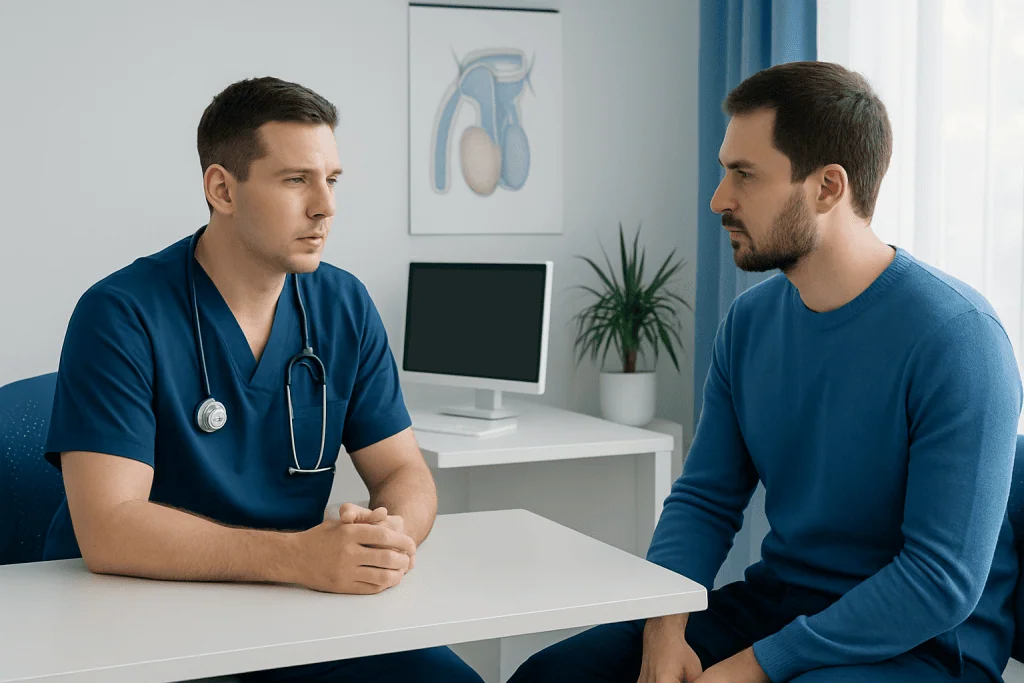
Medical evaluation usually begins with questions about the symptom itself: when it started, whether it was sudden or gradual, whether there was injury, fever, urinary symptoms, sexual history, or changes in fertility. Doctors also ask if the pain stays in the scrotum or spreads to the groin, lower abdomen, or back.
A physical examination can provide important clues. The doctor may gently examine the scrotum, testicles, groin, and lower abdomen to assess swelling, tenderness, the location of a lump, and whether a hernia may be present. Although the exam can feel sensitive or embarrassing, it is routine and usually brief.
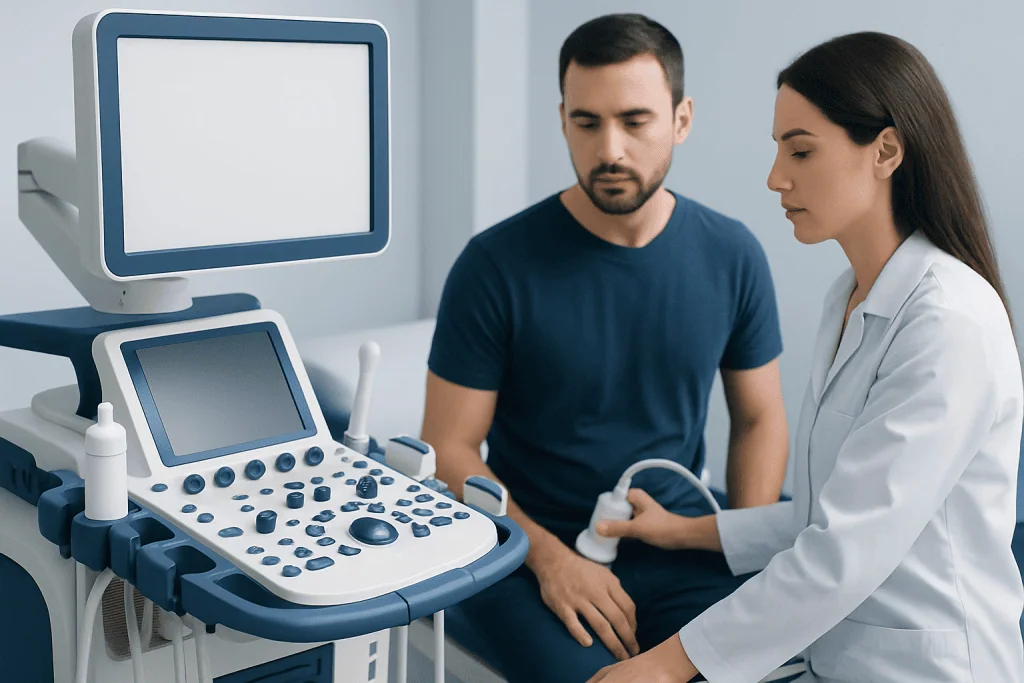
Ultrasound is one of the most useful tests because it can show blood flow, fluid collections, cysts, enlarged veins, and solid masses without radiation. Additional tests may include urine tests to look for infection, blood tests in selected cases, and sometimes tumor markers if a suspicious mass is found. If a condition such as torsion, a hernia, or a concerning lump is suspected, a urology team may become involved quickly.
Where needed, treatment planning may include urology care and imaging support. The goal is not just to name the condition, but also to protect pain control, testicular function, and reproductive health where relevant.
Treatment options and next steps
Treatment depends entirely on the cause. Minor injury may need rest, supportive underwear, and time. Infections may require medication and follow-up. Fluid collections or varicoceles are often watched if symptoms are minimal, but they can also be treated when they cause pain, recurrent swelling, or concerns about fertility.
Urgent surgery may be needed for torsion because restoring blood flow quickly is a priority. An inguinal hernia that extends into the scrotum may need hernia repair if it causes pain or becomes trapped. If a suspicious mass is seen on ultrasound, the next step is usually evaluation by a specialist to determine whether surgery is needed and whether the mass could represent testicular cancer.
Some people worry that losing one testicle automatically means infertility or loss of masculinity. In many cases, one healthy testicle can still produce testosterone and sperm. The outcome depends on the person’s baseline health, age, the condition involved, and whether treatment is prompt. This is another reason early assessment matters more than trying to assign a financial or personal “value” to the organ.
For international patients who need assessment or treatment, Acibadem International’s multidisciplinary specialists and JCI-accredited hospitals provide diagnostic and treatment pathways, including testicular cancer treatment when appropriate.
Self-care, monitoring, and prevention
Not every symptom can be prevented, but some practical steps can reduce risk or help people notice changes early. Wearing appropriate athletic protection during contact sports may lower the chance of injury. Supportive underwear can sometimes ease discomfort from minor strain or varicocele-related heaviness.
Regular self-awareness is also useful. This does not have to be complicated. Becoming familiar with the usual size, shape, and feel of the testicles can make it easier to notice a new lump, firmness, or persistent asymmetry. A doctor can explain how to check safely if someone is unsure.
General measures that support urologic health include seeking prompt treatment for urinary or sexually transmitted infections, avoiding delayed care for groin pain, and attending follow-up visits if a doctor recommends monitoring a known hydrocele, cyst, or varicocele. People with fertility concerns may benefit from earlier review if they also have scrotal symptoms.
Self-care should not replace medical assessment when symptoms are severe, sudden, or persistent. Home observation is reasonable only for mild symptoms that improve quickly and clearly relate to a minor cause, such as a small knock during exercise.
When to seek medical care
Medical care should be sought urgently for sudden severe testicular pain, swelling that develops quickly, pain with nausea or vomiting, fever with scrotal tenderness, or a significant injury followed by bruising or enlargement. These symptoms can point to conditions that need same-day assessment.
A non-urgent appointment is still important for a new lump, ongoing aching, a feeling of heaviness, a visible change in size, recurrent swelling, or fertility concerns. Even painless changes deserve evaluation because they can occasionally reflect an early tumor or another condition that is easier to treat when found sooner.
If someone is unsure whether a symptom is serious, it is safer to ask. Primary care doctors, urgent care clinicians, emergency physicians, and urologists are all used to evaluating this part of the body. Seeking help promptly is a practical health decision, not an overreaction.
Frequently asked questions
What does "how much is a testicle worth" mean medically?
Medically, there is no single number that defines a testicle's worth. Doctors focus instead on its function, symptoms, and whether a condition is affecting pain, hormones, fertility, or cancer risk.
Is testicle pain usually serious?
Not always. Many causes are minor or treatable, including strain, mild injury, or inflammation. However, sudden severe pain should be treated as urgent because it can signal testicular torsion.
Can a lump on a testicle be harmless?
Yes, some lumps or swellings are benign, such as cysts, hydroceles, or varicoceles. Still, any new lump should be examined by a doctor because a painless hard lump can sometimes be a sign of cancer.
How do doctors check a testicular problem?
They usually start with a history and physical examination. An ultrasound is commonly used because it can show blood flow, fluid, veins, cysts, and masses clearly and without radiation.
Can one healthy testicle be enough?
In many cases, yes. One healthy testicle can often produce enough testosterone and sperm for normal hormonal function and possible fertility, though this varies from person to person.
When should someone go to the emergency department for testicle symptoms?
Emergency care is appropriate for sudden severe pain, rapid swelling, scrotal redness with fever, nausea or vomiting with pain, or major trauma. These symptoms can indicate conditions that need immediate treatment.
References
- American Urological Association
- National Institute of Diabetes and Digestive and Kidney Diseases
- National Health Service
- Urology Care Foundation
- Mayo Clinic
This article is for general information only and is not a substitute for professional medical advice. Please consult a qualified doctor about your individual situation.
Explore treatments in Turkey — costs, top hospitals & a free quote
JCI-accredited · board-certified surgeons · reply within 24h