

Meniscus Tear Physical Therapy: Diagnosis, Outlook, and Modern Treatment Approaches
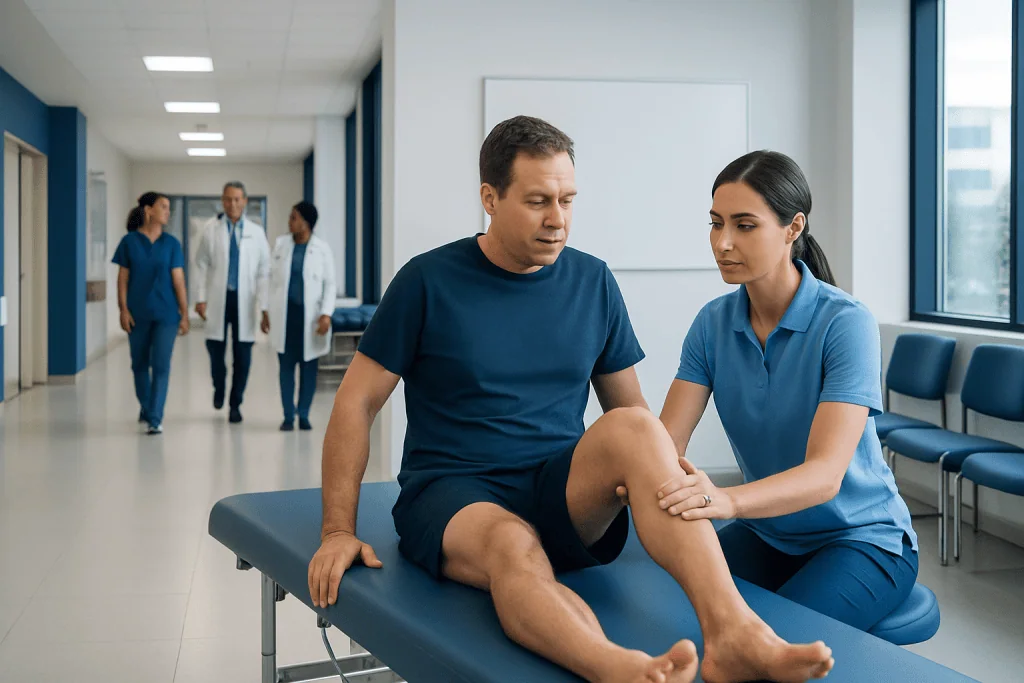
Physical therapy is a common first-line treatment for many meniscus tears. A proper diagnosis helps determine whether conservative care, injection therapy, or surgery is most appropriate.
Key Takeaways
- Physical therapy is a common first-line treatment for many meniscus tears.
- A proper diagnosis helps determine whether conservative care, injection therapy, or surgery is most appropriate.
- Recovery usually focuses on reducing swelling, restoring motion, strengthening the leg, and improving balance and movement patterns.
- Some tears heal with non-surgical care, while others may need surgery, especially if the knee locks or remains unstable.
- Early medical evaluation is important after a twisting injury, significant swelling, or persistent knee pain.
Medically reviewed by the Acıbadem International Medical Board — July 25, 2026
Meniscus tear physical therapy is often a key part of treatment, helping many people improve pain, movement, strength, and knee function without or after surgery. The best plan depends on the tear pattern, the person’s age and activity level, and whether the knee locks, gives way, or has other injuries.
Overview: How Physical Therapy Helps a Meniscus Tear
Meniscus tear physical therapy is designed to reduce pain, improve knee movement, rebuild strength, and help a person return to daily activity as safely as possible. In many cases, especially for smaller or more stable tears, structured rehabilitation can be an effective main treatment. It is also commonly used before and after surgery to support better knee function.
The meniscus is a C-shaped piece of cartilage in the knee that helps absorb shock and distribute weight. Each knee has two menisci, one on the inner side and one on the outer side. A tear can happen suddenly during sports or twisting, or gradually over time as the tissue becomes less resilient with age.
Physical therapy does not “erase” every tear, but it can improve how the knee works and how a person feels. Treatment usually includes swelling control, range-of-motion exercises, muscle strengthening, balance work, and a gradual return to walking, stairs, work, or sport. The exact program should be tailored to the type of tear and the person’s symptoms.
What a Meniscus Tear Feels Like
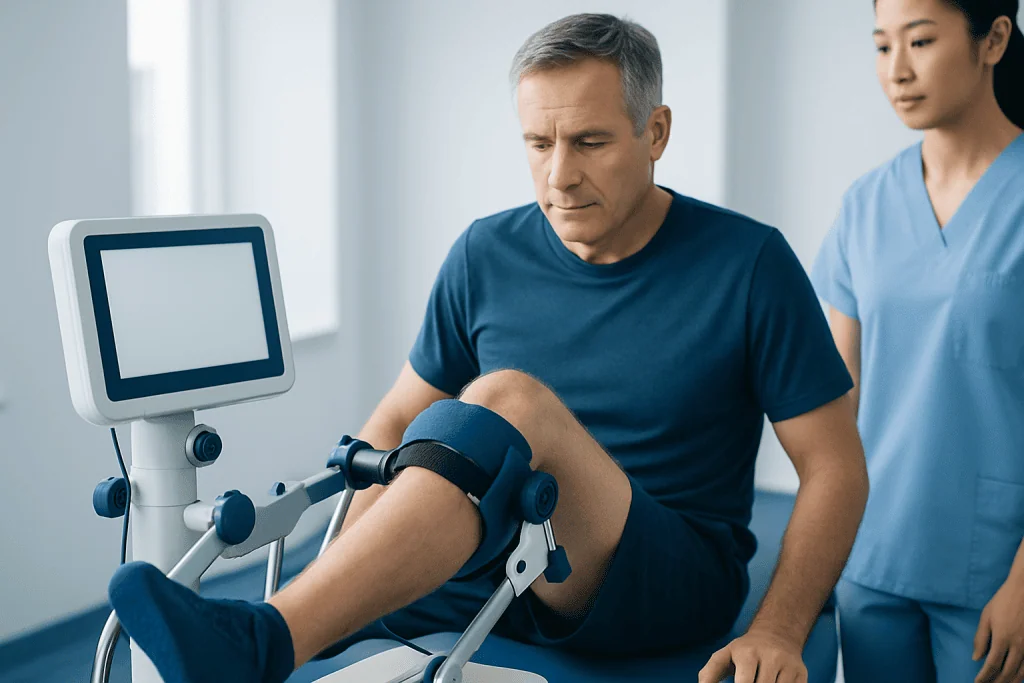
Symptoms vary depending on the size and location of the tear. Some people notice a sharp pain after twisting the knee, while others mainly feel stiffness and swelling later the same day or the next day. Pain is often felt along the joint line, especially during squatting, turning, kneeling, or getting up from a chair.
Common symptoms can include:
- Knee pain with twisting or bending
- Swelling or a feeling of fullness in the joint
- Clicking, catching, or popping sensations
- Reduced range of motion
- A feeling that the knee may give way
- Locking, where the knee cannot fully bend or straighten
Not every painful knee problem is a meniscus tear. Similar symptoms may also occur with ligament injuries, cartilage wear, tendon problems, or inflammation. For that reason, ongoing symptoms should be assessed by a qualified clinician rather than self-diagnosed.
Meniscus symptoms also overlap with other knee conditions, including ACL tear or knee osteoarthritis, especially in older adults. A careful history and physical examination help distinguish these possibilities.
Why Meniscus Tears Happen and Who Is at Risk
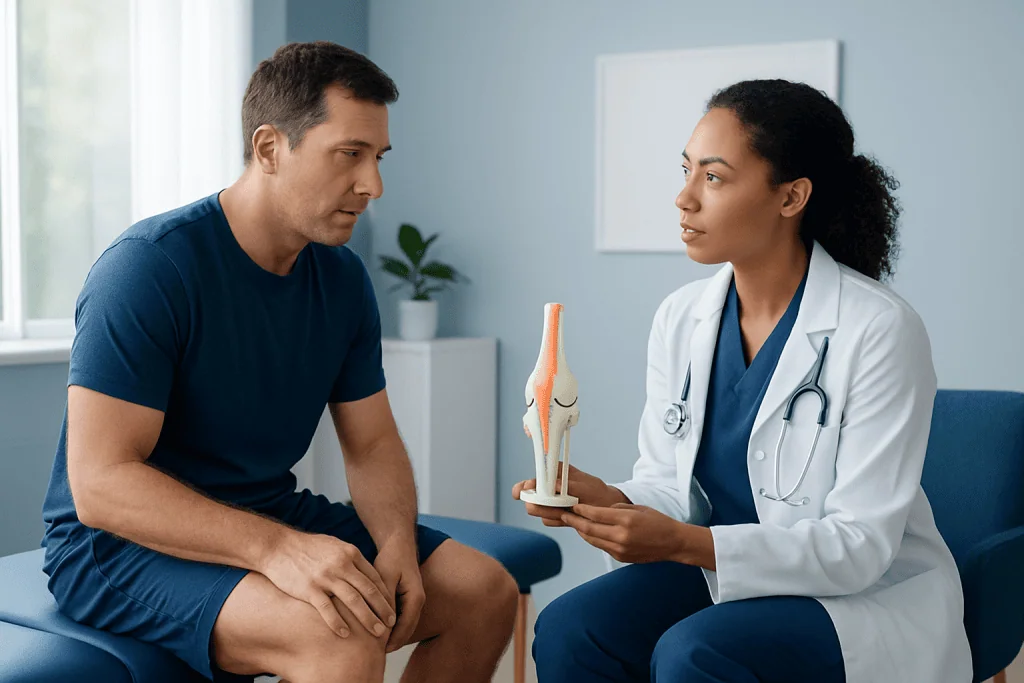
A meniscus tear often happens during a sudden twist of the knee while the foot stays planted. This is common in sports such as football, basketball, tennis, and skiing. It can also happen during everyday movements like turning quickly, kneeling, or lifting something heavy while pivoting.
In older adults, the meniscus may weaken gradually over time. These degenerative tears can develop with less force and may appear alongside age-related joint changes. In this setting, symptoms sometimes begin without a clear injury event.
Risk factors include prior knee injury, sports with cutting or pivoting movements, repetitive squatting or kneeling, reduced leg strength, poor movement mechanics, and increasing age. Excess body weight can also place more load across the knee joint, which may worsen symptoms.
The pattern of the tear matters. Some tears are small and stable, while others are displaced and more likely to cause locking or persistent pain. Tears can also occur together with ligament damage or cartilage injury, which may change the recommended treatment approach.
Diagnosis: From Examination to Imaging
Diagnosis begins with a review of symptoms, how the injury happened, and whether the knee swells, catches, locks, or feels unstable. During the physical examination, a clinician checks joint line tenderness, knee motion, swelling, walking pattern, and whether certain movements reproduce the pain. The hips, leg alignment, and surrounding muscles may also be assessed because they affect knee mechanics.
X-rays do not show the meniscus itself, but they can help identify arthritis, fractures, or other causes of knee pain. Magnetic resonance imaging, or MRI, is the main imaging test when a meniscus tear is suspected and the diagnosis is unclear, symptoms persist, or surgery is being considered. MRI can show tear location, tear pattern, and whether other structures in the knee are also injured.
Not every meniscus tear seen on MRI is the main source of pain, especially in middle-aged and older adults. Imaging results need to be interpreted together with symptoms and examination findings. This is one reason treatment decisions are often more individualized than patients expect.
In some cases, the orthopedic team may consider a broader knee evaluation that includes knee arthroscopy if symptoms are mechanical and do not improve with non-surgical care. The goal is to match treatment to function, not imaging alone.
What Physical Therapy Usually Involves
Physical therapy for a meniscus tear usually progresses in phases. Early treatment aims to calm the knee by reducing swelling and avoiding motions that sharply increase pain. Depending on symptoms, this may include temporary activity modification, ice, compression, and guided exercises to restore gentle motion without aggravating the joint.
As pain settles, the program typically shifts toward rebuilding strength in the quadriceps, hamstrings, hips, and calf muscles. Stronger muscles help support the knee and can reduce excessive joint stress. A therapist may also focus on balance, coordination, and walking mechanics, since poor movement patterns can keep symptoms going even after the initial injury improves.
Later stages of rehabilitation often include squatting patterns, stair control, step work, light jogging if appropriate, and sport-specific drills for active individuals. The pace depends on the person’s goals, age, the tear type, and whether surgery was performed. Returning too quickly can delay recovery, so progression is usually based on function rather than a fixed timeline.
Many people ask whether rest alone is enough. Relative rest can help in the early days, but prolonged inactivity may weaken the leg and stiffen the knee. Guided exercise is usually more helpful than complete rest once serious injury has been ruled out.
Modern Treatment Approaches Beyond Therapy Alone
Meniscus tear physical therapy is often central to recovery, but it is not the only option. A clinician may recommend non-surgical care, surgery, or a combination of both depending on the tear’s location and symptoms. Pain-relief medication, temporary bracing, and carefully selected injections may sometimes be used to support function while rehabilitation continues.
If the tear causes repeated locking, significant instability, or persistent symptoms despite appropriate therapy, surgery may be considered. Surgical options may include meniscus surgery to repair the tear or trim unstable tissue when repair is not possible. In general, preserving as much meniscal tissue as possible is preferred because the meniscus helps protect the knee over time.
When there are combined injuries, treatment planning may be more complex. For example, a meniscus tear that occurs with a major ligament injury may need coordinated management, sometimes including ACL surgery. The decision is based on knee stability, activity goals, age, and the expected benefit of each treatment option.
For international patients seeking evaluation, Acibadem International’s multidisciplinary specialists in JCI-accredited hospitals assess meniscus injuries with orthopedic, imaging, rehabilitation, and surgical expertise to create an individualized treatment plan.
Outlook, Recovery, and Return to Activity
The outlook for a meniscus tear depends on several factors: the type and location of the tear, whether there are other knee injuries, the person’s age, and how well the knee responds to rehabilitation. Tears in areas with better blood supply may have more healing potential than tears in poorly supplied regions. Even when a tear does not fully heal, symptoms and function can still improve significantly.
Some people feel better within weeks of starting conservative care, while others need a longer rehabilitation period. Recovery may be slower if there is ongoing swelling, stiffness, weakness, or coexisting arthritis. After surgery, physical therapy remains important to restore motion, strength, and confidence in the knee.
Returning to work, exercise, or sports should be gradual. A person is usually better prepared to resume activity when pain and swelling are controlled, range of motion is near normal, leg strength has improved, and functional tasks such as walking, stairs, squatting, or light pivoting can be done safely. A rushed return can increase the chance of ongoing symptoms.
Long-term knee health also matters. Protecting the joint through strength training, movement quality, and weight management where appropriate may help reduce future problems. Persistent or repeated knee injuries can raise the risk of later joint wear, so follow-up care is worthwhile when recovery does not progress as expected.
Self-care and When to Seek Medical Care
Self-care after a suspected meniscus injury usually starts with reducing stress on the knee for a short period. This may include avoiding twisting, deep squatting, running, or impact activity until the knee is assessed. Ice, compression, elevation, and gentle movement within a comfortable range may help with swelling and stiffness, but they are not a substitute for diagnosis when symptoms are significant.
To support recovery, people are often advised to follow a structured rehabilitation plan rather than relying only on rest. Good footwear, gradual activity progression, and attention to hip and thigh strength can all help. If the injury happened during sport, retraining cutting and landing mechanics may reduce the chance of reinjury.
Medical care should be sought promptly if the knee locks, cannot fully straighten, gives way repeatedly, becomes very swollen after injury, or if walking is difficult. Evaluation is also important when pain lasts more than a few days, symptoms return whenever activity increases, or there is concern about another injury such as a fracture or ligament tear.
Anyone with fever, marked redness, sudden calf swelling, or severe worsening pain should seek urgent medical attention, as these symptoms may suggest a different problem. A qualified clinician can explain whether imaging, rehabilitation, or referral to an orthopedic specialist is the next best step.
Frequently asked questions
Can a meniscus tear heal with physical therapy alone?
Some meniscus tears can be managed successfully with physical therapy alone, especially if they are stable and do not cause locking. Therapy helps improve pain, strength, motion, and knee control. Whether the tear itself heals depends on its location, pattern, and blood supply.
How long does meniscus tear physical therapy usually take?
Recovery time varies widely. Some people improve within a few weeks, while others need several months of rehabilitation, especially if symptoms are longstanding or surgery is involved. Progress is usually based on function and symptom control rather than a single fixed timeline.
Is walking good for a meniscus tear?
Gentle walking is often acceptable if it does not worsen pain, swelling, or limping. However, walking too much too soon may irritate the knee, particularly after a fresh injury. A clinician or physical therapist can help set safe activity limits.
When is surgery needed for a meniscus tear?
Surgery may be considered when the knee locks, remains unstable, or continues to be painful despite appropriate non-surgical treatment. It may also be recommended for certain tear patterns or when other injuries are present. The goal is to preserve knee function while protecting joint health as much as possible.
Can an MRI confirm a meniscus tear?
MRI is the main imaging test used to evaluate a suspected meniscus tear. It can show the tear’s location and whether there are other injuries in the knee. Still, MRI findings must be interpreted together with symptoms and examination results because not every tear seen on MRI is causing pain.
What exercises are usually included in physical therapy for a meniscus tear?
Programs often begin with range-of-motion and swelling-control exercises, then progress to strengthening for the quadriceps, hamstrings, hips, and calf muscles. Balance training and movement retraining are also common. The exact exercises should be personalized to the injury and the person’s goals.
References
- American Academy of Orthopaedic Surgeons
- National Institute of Arthritis and Musculoskeletal and Skin Diseases
- American Physical Therapy Association
- OrthoInfo
- National Health Service
This article is for general information only and is not a substitute for professional medical advice. Please consult a qualified doctor about your individual situation.
Explore treatments in Turkey — costs, top hospitals & a free quote
JCI-accredited · board-certified surgeons · reply within 24h

More from the Health Library



Related Specialists

Dr. Emin Yıldırım
Emergency Service
Prof. Dr. Ahmet Keskinoğlu
Pediatric Nephrology
Prof. Dr. Ali Bülent Antmen
Pediatrics
Dt. Ece Yetiş Eroğlu
Oral & Dental Health