Nyctalopia Disease: Symptoms, Causes, and Treatment Options

Nyctalopia disease usually refers to night blindness, a symptom that makes vision worse in dim settings. Common causes include refractive errors, cataracts, retinal disorders, vitamin A deficiency, and some medications.
Key Takeaways
- Nyctalopia disease usually refers to night blindness, a symptom that makes vision worse in dim settings.
- Common causes include refractive errors, cataracts, retinal disorders, vitamin A deficiency, and some medications.
- Diagnosis typically includes a detailed eye exam and may require retinal testing, visual field testing, or blood tests.
- Treatment depends on the cause and may involve glasses, cataract surgery, nutritional treatment, or care for retinal disease.
- Prompt medical assessment is important if night vision changes suddenly or comes with flashes, floaters, or side-vision loss.
Nyctalopia disease, commonly called night blindness, is difficulty seeing in low light or darkness rather than a disease on its own. It usually points to an underlying eye or health condition, so evaluation focuses on finding the cause and treating it when possible.
Overview: What nyctalopia disease means
Nyctalopia disease is the term many people use for night blindness, meaning trouble seeing in dim light, at dusk, or in dark environments. It is not usually a separate disease by itself. Instead, it is a symptom that suggests the eyes are not adapting well to low-light conditions.
People with nyctalopia may notice difficulty driving at night, moving safely in poorly lit rooms, or adjusting after stepping indoors from bright daylight. Some describe glare from headlights, reduced contrast, or a sense that their vision becomes much worse once the light fades.
Night vision depends on several parts of the visual system working together, especially the retina, the eye’s focusing structures, and healthy levels of certain nutrients such as vitamin A. Problems affecting any of these areas can interfere with vision in darkness.
Because nyctalopia can be caused by something simple, such as an uncorrected vision problem, or something more complex, such as a retinal condition, a proper eye examination is the best way to understand what is causing the symptom.
Symptoms and how night blindness affects daily life
The main symptom of nyctalopia disease is reduced ability to see in low-light settings. This may be most noticeable at night, in movie theaters, in dim hallways, or during rainy or foggy weather. The difficulty can range from mild inconvenience to significant problems with mobility and safety.
People may also experience slower adjustment when moving from bright to dark places. For example, after entering a dark room, the eyes may take much longer than expected to adapt. Some people feel comfortable in daylight but become hesitant or unsteady in darker environments.
Associated symptoms depend on the underlying cause. These can include blurry vision, increased glare, halos around lights, loss of side vision, poor depth perception, or reduced visual clarity despite wearing glasses. In inherited retinal disorders, night vision changes may develop gradually over years.
A person should pay attention to patterns such as whether symptoms affect one or both eyes, whether they are getting worse, and whether there are new symptoms like flashes, floaters, eye pain, or a shadow over vision. These details can help guide diagnosis.
Causes and risk factors

Nyctalopia disease has many possible causes. Some involve the front structures of the eye, which affect how light enters and focuses. Others involve the retina, especially the rod cells responsible for seeing in low light. General health problems and nutritional deficiencies can also play a role.
Common causes include:
- Uncorrected refractive errors, especially significant nearsightedness
- Cataracts, which cloud the lens and reduce light transmission; this is a common reason older adults notice poorer night driving vision and may lead to evaluation for cataract surgery
- Retinal disorders, including inherited conditions such as retinitis pigmentosa, which often starts with night vision difficulty
- Vitamin A deficiency, which affects retinal function and dark adaptation
- Diabetic eye disease and other retinal changes that interfere with normal vision
- Keratoconus or corneal disease, which can worsen glare and vision quality in low light
- Certain medicines, including some that affect the retina or the ability of the pupil to adapt
Risk factors depend on the cause but may include older age, family history of inherited eye disease, diabetes, poor nutrition or conditions that affect nutrient absorption, previous eye surgery, and long-term use of particular medications. A detailed medical history is often essential because nyctalopia may be one of the earliest clues to an underlying condition.
Although many cases are related to eye disease, night blindness can occasionally be linked to broader health issues. This is why both eye health and general health may be considered during assessment.
How doctors diagnose nyctalopia
Diagnosis starts with a conversation about symptoms, timing, and medical history. An eye doctor may ask when the problem began, whether it is worsening, whether it affects driving or walking in dim places, and whether there is a family history of retinal disease. Medication use, nutrition, and other health conditions also matter.
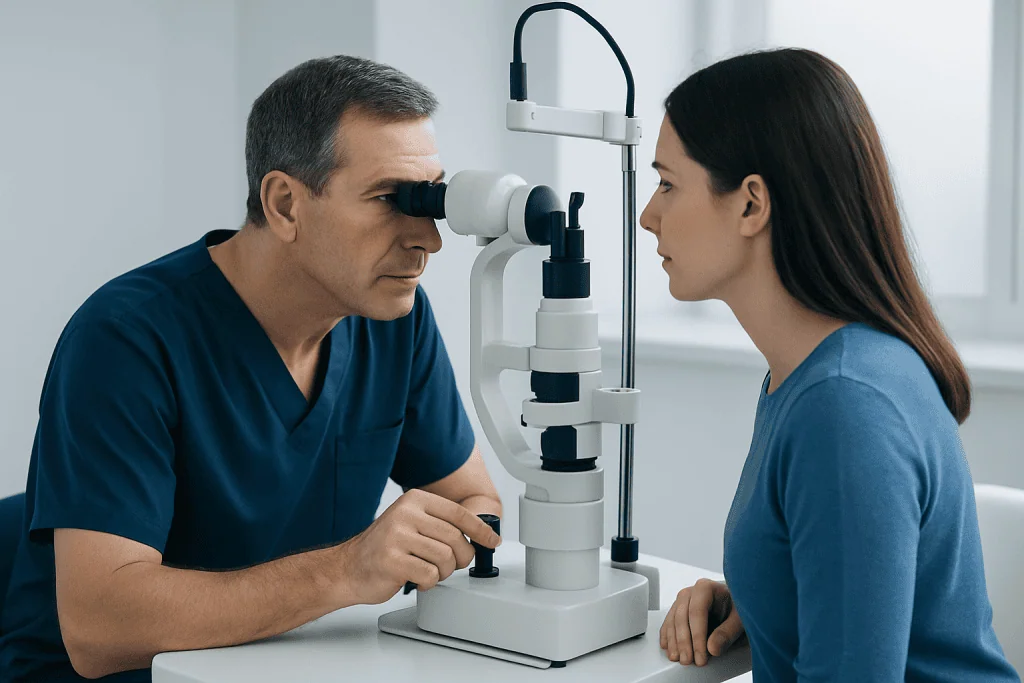
A comprehensive eye examination usually includes checking visual acuity, refraction to see whether glasses need updating, pupil responses, eye pressure, and examination of the lens and retina. The doctor may dilate the pupils to look closely at the back of the eye for signs of retinal disease, diabetic changes, or other abnormalities.
Depending on the findings, additional tests may be recommended. These can include visual field testing, optical coherence tomography, electroretinography to assess retinal cell function, dark adaptation testing, or blood tests if vitamin A deficiency or another systemic issue is suspected. In some cases, genetic counseling or testing may be discussed when inherited retinal disorders are likely.
Diagnosis is not only about naming the symptom. It is about identifying the specific reason for reduced night vision, because treatment and outlook can differ greatly between cataracts, nutritional deficiency, and retinal degeneration.
Treatment options and what improvement to expect
Treatment for nyctalopia disease depends entirely on the cause. If the problem is due to an uncorrected refractive error, updated glasses or contact lenses may significantly improve vision in dim settings. If glare and cloudiness are caused by cataracts, treatment of the cataract may improve night vision and daily comfort.
When cataracts are the main problem, surgery is often considered after an ophthalmologist confirms that the lens changes are affecting quality of life. If retinal disease is suspected, a person may need specialized assessment and ongoing retina care to monitor vision and manage complications where possible.
If vitamin A deficiency is identified, treatment focuses on correcting the deficiency under medical supervision and addressing any dietary or absorption problem behind it. In people with diabetes, careful management of blood sugar and routine eye follow-up are important, especially if diabetic retinal disease is present and treatment such as care for diabetic retinopathy becomes necessary.
Not all causes are fully reversible. In inherited retinal disorders, treatment may focus on monitoring, visual rehabilitation, safety strategies, and support for daily function. Even when a cure is not available, an accurate diagnosis can help people protect their remaining vision and plan appropriate follow-up.
Prevention, self-care, and living with reduced night vision
Not every case of nyctalopia can be prevented, but good eye care can reduce risk and help identify problems early. Routine eye examinations are especially important for older adults, people with diabetes, and anyone with a family history of inherited eye disease. Keeping prescriptions current may also improve night-time visual function.
General health habits matter as well. A balanced diet that includes vitamin A-rich foods, diabetes management, and avoiding smoking can support long-term eye health. People should not start vitamin supplements specifically for night blindness without medical advice, because excess supplementation can also cause harm.
If night vision is already reduced, practical safety steps can help:
- Avoid driving at night until the cause is assessed
- Improve lighting at home, especially in hallways and stair areas
- Use anti-glare measures when appropriate, based on professional advice
- Allow extra time for the eyes to adjust when entering darker spaces
- Attend follow-up appointments to monitor any underlying eye condition
For people living with chronic retinal disease, low-vision support and individualized advice can make daily activities safer and more manageable. The goal is not only treatment, but also preserving independence and quality of life.
When to seek medical care
A medical appointment is appropriate if night vision has gradually worsened, if driving at night has become difficult, or if dim environments feel less safe than before. Even mild symptoms deserve attention if they persist, because some causes are treatable and others benefit from early monitoring.
More urgent assessment is needed if reduced night vision appears suddenly or is accompanied by warning signs such as flashes of light, new floaters, a curtain-like shadow, eye pain, sudden blur, or loss of side vision. These symptoms can point to retinal or other eye problems that should not be ignored.
Children who seem clumsy in dark rooms, avoid poorly lit spaces, or have a family history of inherited retinal disease should also be evaluated. Early recognition can support safer daily function and appropriate specialist care.
Near the end of the evaluation pathway, some people may benefit from multidisciplinary care involving ophthalmology, retinal specialists, nutrition assessment, or genetic evaluation. Acibadem International’s multidisciplinary specialists and JCI-accredited hospitals diagnose and treat eye conditions for international patients when advanced assessment is needed.
Frequently asked questions
Is nyctalopia disease the same as night blindness?
Yes. Nyctalopia is the medical term commonly used for night blindness, which means difficulty seeing in dim light or darkness. It is usually a symptom of another eye or health problem rather than a separate disease by itself.
Can nyctalopia be cured?
Sometimes it can improve significantly if the cause is treatable, such as cataracts, an uncorrected vision prescription, or vitamin A deficiency. In other cases, especially some inherited retinal disorders, treatment may focus more on monitoring, support, and protecting remaining vision.
What vitamin deficiency causes night blindness?
Vitamin A deficiency is a classic cause of night blindness because vitamin A is important for normal retinal function in low light. However, not all night blindness is related to vitamins, so a person should not assume supplements are the answer without medical evaluation.
Is it safe to drive with nyctalopia disease?
If night vision is reduced, driving in low light may become unsafe. It is wise to limit or avoid night driving until an eye doctor evaluates the cause and advises whether vision is adequate for safe driving.
Can children have nyctalopia?
Yes. Children can develop nyctalopia from inherited retinal conditions, nutritional problems, or other eye disorders. If a child seems to struggle in dim settings or has a family history of eye disease, an eye examination is important.
What tests are used to diagnose night blindness?
Doctors usually begin with a comprehensive eye exam, including vision testing and a close look at the retina. Depending on the case, they may also use visual field testing, retinal imaging, electroretinography, or blood tests to identify the underlying cause.
References
- American Academy of Ophthalmology
- National Eye Institute
- MedlinePlus
- Mayo Clinic
- National Institutes of Health
This article is for general information only and is not a substitute for professional medical advice. Please consult a qualified doctor about your individual situation.
Explore treatments in Turkey — costs, top hospitals & a free quote
JCI-accredited · board-certified surgeons · reply within 24h