Worm Inside Eyeball: What Patients Need to Know

A worm inside eyeball is rare, but it can affect vision and needs prompt medical evaluation. Symptoms may include eye pain, redness, floaters, blurred vision, or the sensation of movement.
Key Takeaways
- A worm inside eyeball is rare, but it can affect vision and needs prompt medical evaluation.
- Symptoms may include eye pain, redness, floaters, blurred vision, or the sensation of movement.
- Diagnosis often involves a detailed eye exam and sometimes imaging or blood tests.
- Treatment depends on the parasite and may include medicines, careful monitoring, or surgery.
- Good hygiene, food safety, insect bite prevention, and pet care can lower risk.
A worm inside eyeball usually refers to a rare parasitic infection affecting the eye or nearby tissues. It is uncommon, but it should be assessed quickly by an eye specialist because early diagnosis and treatment can help protect vision and treat the underlying infection.
Overview: what “worm inside eyeball” usually means
The phrase worm inside eyeball is commonly used to describe a parasitic infection involving the eye. In medical practice, this can mean a parasite inside the eye itself or in nearby tissues such as the eyelids, conjunctiva, or tissues around the eye. Although the idea sounds alarming, these infections are rare, and several different parasites can be responsible.
The exact problem varies by location and cause. Some parasites remain in surface tissues and cause irritation or redness. Others may affect the retina, vitreous, or other internal eye structures, where they can lead to blurred vision, floaters, inflammation, or pain. In some cases, people do not feel severe pain but notice a change in vision or an unusual moving shadow.
Doctors often use more precise terms than “worm inside eyeball,” such as ocular parasitic infection, ocular larva migrans, onchocerciasis, loiasis, or intraocular parasitosis. The treatment plan depends on which parasite is involved, where it is located, and whether it is alive, dead, or causing inflammation. Because vision can be affected, a prompt eye examination is important.
Symptoms and how it may feel
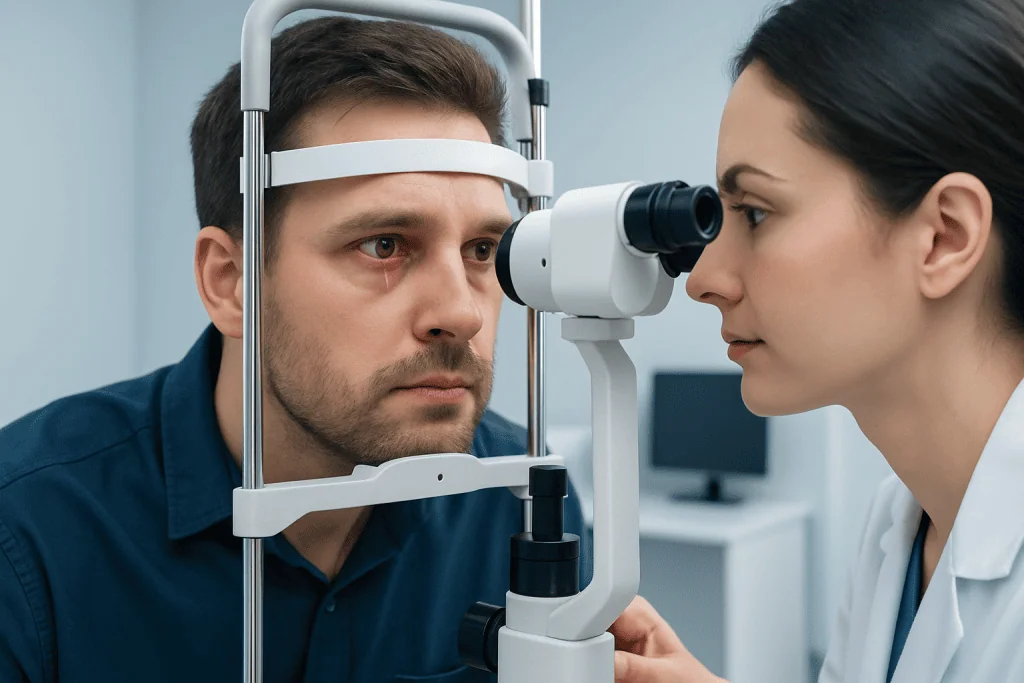
Symptoms can be quite variable. Some people feel irritation on the eye surface, while others mainly notice visual symptoms. A parasite that affects the inner eye may trigger inflammation, and sometimes the body’s immune response causes many of the symptoms rather than the organism itself.
Possible symptoms include:
- Redness or eye irritation
- Eye pain or pressure
- Blurred or reduced vision
- Floaters or moving spots
- Sensitivity to light
- Tearing or discharge
- Swelling around the eye
- A visible thread-like structure or sensation of movement
Not every eye problem that feels unusual is caused by a parasite. Conditions such as inflammation, retinal disorders, or infection from bacteria or viruses can cause similar symptoms. For example, redness and pain may also occur with uveitis, and sudden changes in vision may have several different causes.
If a patient notices a visible moving structure, sudden floaters, or a rapid decline in vision, this should be treated as an urgent reason to seek care. Even when symptoms seem mild, an eye specialist can help determine whether the problem is parasitic or due to another eye condition.
Causes and risk factors

A worm inside eyeball is usually caused by a parasite entering the body through contaminated food or water, insect bites, skin exposure, or contact with animals that carry certain parasites. In some situations, the organism migrates through the bloodstream or tissues and eventually reaches the eye.
Examples of parasites that may involve the eye include roundworms such as Toxocara, tissue parasites such as cysticercosis related to tapeworm infection, filarial worms, and some other less common organisms. The type seen depends partly on geography, travel history, food exposures, insect exposure, and contact with pets or livestock.
Risk factors may include:
- Travel or residence in regions where certain parasitic infections are more common
- Eating undercooked meat, fish, or contaminated produce
- Drinking unsafe water
- Exposure to mosquitoes, flies, or other biting insects
- Poor hand hygiene after soil contact or animal contact
- Close contact with infected dogs, cats, or farm animals
- A weakened immune system in some situations
Many people who develop an ocular parasitic infection have no obvious warning sign beforehand. That is why doctors ask detailed questions about travel, diet, work, hobbies, animal exposure, and previous infections. This history can be just as important as the eye examination itself.
How doctors diagnose a parasitic eye infection
Diagnosis begins with an urgent but careful eye assessment. An ophthalmologist usually examines vision, eye pressure, and the front and back of the eye using specialized lights and lenses. If the parasite or related inflammation is inside the eye, the doctor may be able to see signs directly during the exam.
Additional tests may be needed to confirm the cause and check whether other parts of the body are involved. These can include blood tests, stool tests in selected cases, ultrasound of the eye, optical coherence tomography, fundus photography, or CT or MRI if surrounding tissues or the brain also need evaluation. If neurological symptoms are present, doctors may also consider related conditions such as brain tumor or other causes of visual change until the diagnosis is clarified.
In some cases, the diagnosis is based on a combination of findings rather than a single test. A doctor may look at the appearance of the lesion, the pattern of inflammation, laboratory clues, and travel or exposure history. If a parasite is removed, it may be sent to a laboratory for identification.
Because some eye infections can look similar, self-diagnosis is not reliable. A person should avoid trying to remove anything from the eye at home. Delaying expert care can increase the risk of scarring, retinal damage, or longer-lasting visual problems.
Treatment options and what recovery may involve
Treatment depends on the type of parasite, the part of the eye involved, and how much inflammation is present. Some infections are treated with antiparasitic medicine, while others may require a procedure to remove the organism or repair damage. Doctors may also prescribe anti-inflammatory treatment to reduce tissue injury caused by the body’s immune response.
When the parasite is inside the eye, surgery may be the safest way to remove it and protect vision. In selected cases, specialists may use vitrectomy to remove material from the vitreous and access the parasite or inflammatory debris. If there is associated retinal damage, treatments used in retina treatment may also be part of care.
Not every patient needs surgery. If the parasite is outside the globe or the infection is causing mainly tissue inflammation, medicines and monitoring may be enough. Follow-up is important because symptoms can change as the organism dies or as inflammation evolves over time.
Recovery varies. Some people improve quickly after treatment, while others need longer observation if there has been retinal injury or significant inflammation. In complex cases, care may involve ophthalmology, infectious disease specialists, radiology, and sometimes neurology. Near the end of the care pathway, patients seeking international evaluation may also choose centers such as Acibadem International, where multidisciplinary specialists and JCI-accredited hospitals diagnose and treat complex eye conditions for international patients.
Prevention and self-care
Prevention focuses on reducing exposure to parasites. Good hygiene, safe food handling, and protection from insect bites are practical steps that can lower risk. For many people, especially travelers, prevention is simpler and more effective than trying to recognize an infection after it develops.
Helpful preventive measures include:
- Wash hands well after gardening, handling soil, or touching animals
- Cook meat and fish thoroughly
- Wash fruits and vegetables carefully
- Drink safe, clean water
- Use insect repellent, protective clothing, and bed nets when appropriate
- Keep pets on regular veterinary parasite prevention plans
- Avoid rubbing the eyes with unwashed hands
Self-care should never replace medical assessment if a parasite is suspected. Home remedies, over-the-counter eye drops, or attempts to remove a visible structure can worsen irritation or cause injury. If symptoms began after travel or after exposure to insects, pets, or undercooked food, sharing that information with the doctor can help speed diagnosis.
People with persistent redness or visual symptoms may also need assessment for other eye disorders. A comprehensive eye examination can help identify whether symptoms are due to a parasite, inflammation, retinal disease, or another eye condition.
When to seek medical care
A person should seek medical care promptly if they think there may be a worm inside eyeball or if they notice sudden visual changes with eye discomfort. Early evaluation gives the best chance of identifying the cause and protecting vision.
Urgent medical attention is especially important if there is:
- Sudden blurred vision or vision loss
- New floaters, flashes, or a moving shadow
- Moderate to severe eye pain
- Significant redness with light sensitivity
- Swelling around the eye
- A visible moving object in or on the eye
- Fever, headache, or neurological symptoms along with eye complaints
If an injury happened at the same time, or if the person wears contact lenses and has severe pain or discharge, same-day assessment is advisable because other urgent eye problems can look similar. Eye emergencies should not be managed by waiting to see if symptoms settle on their own.
Even if symptoms improve temporarily, follow-up still matters. Some parasitic and inflammatory eye conditions can quiet down and later recur or leave behind changes that only a specialist can detect.
Frequently asked questions
Can a worm really live inside the eyeball?
Yes, but it is rare. A parasite can sometimes affect the inside of the eye or nearby tissues, and the exact type depends on exposure, travel history, food sources, and animal contact. An ophthalmologist needs to confirm the diagnosis because many other eye conditions can look similar.
What does a worm inside eyeball feel like?
Some people notice redness, pain, floaters, blurred vision, or sensitivity to light. Others describe a moving shadow or the sensation that something is in the eye. Symptoms vary depending on whether the parasite is on the surface, around the eye, or inside the eye.
Is a worm inside eyeball an emergency?
It should be treated as urgent, especially if there is sudden vision change, significant pain, or a visible moving structure. Early care can help protect vision and reduce inflammation. The condition is not common, but prompt evaluation is important.
How do doctors remove a worm from the eye?
Removal depends on where the parasite is located. Some can be removed with a minor procedure, while others may need a more specialized eye surgery. In other cases, doctors focus on medicines and controlling inflammation rather than mechanical removal.
Can medicine alone treat a parasitic eye infection?
Sometimes yes, but not always. The best treatment depends on the parasite, whether it is alive or dead, and how much inflammation or tissue damage is present. A doctor may use antiparasitic medication, anti-inflammatory treatment, surgery, or a combination of these.
Can vision return to normal after treatment?
Many patients improve, especially when the condition is diagnosed early. The final outcome depends on how long the infection has been present and whether the retina or other sensitive eye structures were damaged. Regular follow-up helps doctors monitor healing and manage any complications.
References
- World Health Organization
- Centers for Disease Control and Prevention
- American Academy of Ophthalmology
- National Eye Institute
- Merck Manual Professional Edition
This article is for general information only and is not a substitute for professional medical advice. Please consult a qualified doctor about your individual situation.
Explore treatments in Turkey — costs, top hospitals & a free quote
JCI-accredited · board-certified surgeons · reply within 24h