Passive Range of Motion: A Complete Medical Overview
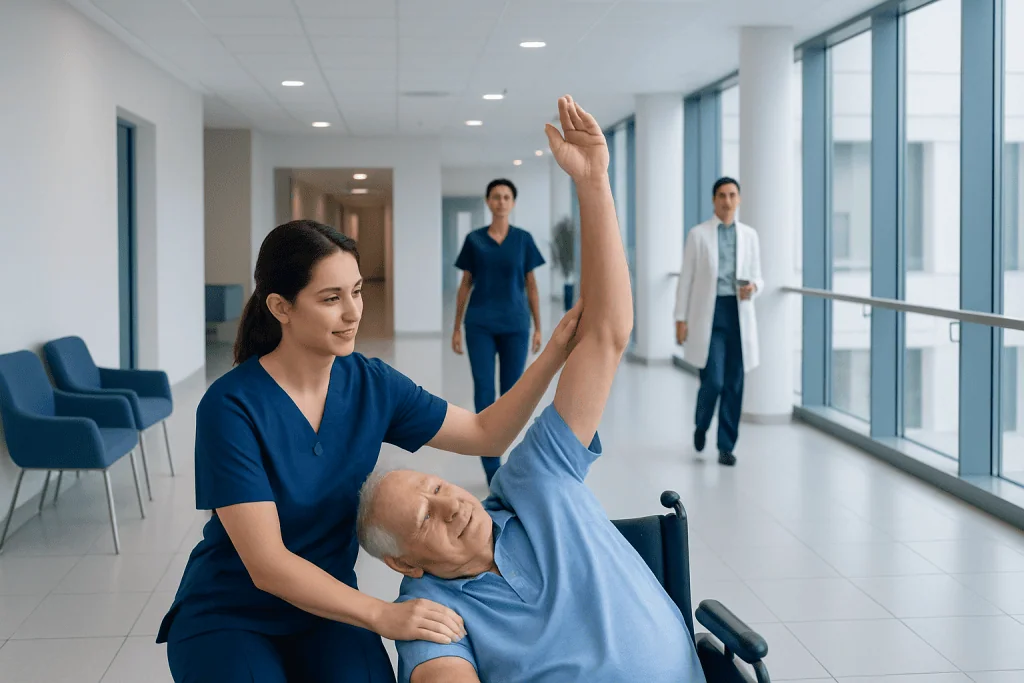
Passive range of motion means a joint is moved without the patient actively using the muscles of that body part. It can help maintain mobility, reduce stiffness, and support recovery after surgery, injury, stroke, or prolonged bed rest.
Key Takeaways
- Passive range of motion means a joint is moved without the patient actively using the muscles of that body part.
- It can help maintain mobility, reduce stiffness, and support recovery after surgery, injury, stroke, or prolonged bed rest.
- These movements should be gentle, controlled, and guided by a qualified healthcare professional when needed.
- Pain, swelling, recent trauma, or joint instability may require medical evaluation before exercises begin.
- Passive range of motion is different from active and active-assisted motion, which involve some muscle effort from the patient.
Passive range of motion is the movement of a joint by another person or by a device when the individual cannot move that body part fully on their own. It is commonly used in rehabilitation to help maintain flexibility, support circulation, reduce stiffness, and protect joint function during illness, injury, or recovery.
Overview: What Passive Range of Motion Means
Passive range of motion, often shortened to PROM, refers to movement of a joint performed by someone else or by a mechanical aid rather than by the person’s own muscles. In practical terms, the arm, leg, wrist, ankle, neck, or other body part is gently moved through part or all of its normal motion while the patient stays relaxed. This approach is widely used in hospitals, rehabilitation settings, and home care.
The main goal of passive range of motion is to help preserve joint mobility when active movement is limited. This may happen after surgery, during recovery from injury, after a neurological event such as stroke, or when pain, weakness, paralysis, or sedation makes normal movement difficult. PROM does not build strength on its own, but it can play an important role in preventing stiffness and supporting comfort.
Passive movement is different from active range of motion, where a person moves independently, and active-assisted range of motion, where the person moves with some help. Knowing this difference matters because each method has a different purpose in rehabilitation. A clinician may use one or more of these approaches as recovery progresses.
Why It Is Used in Medical Care and Rehabilitation
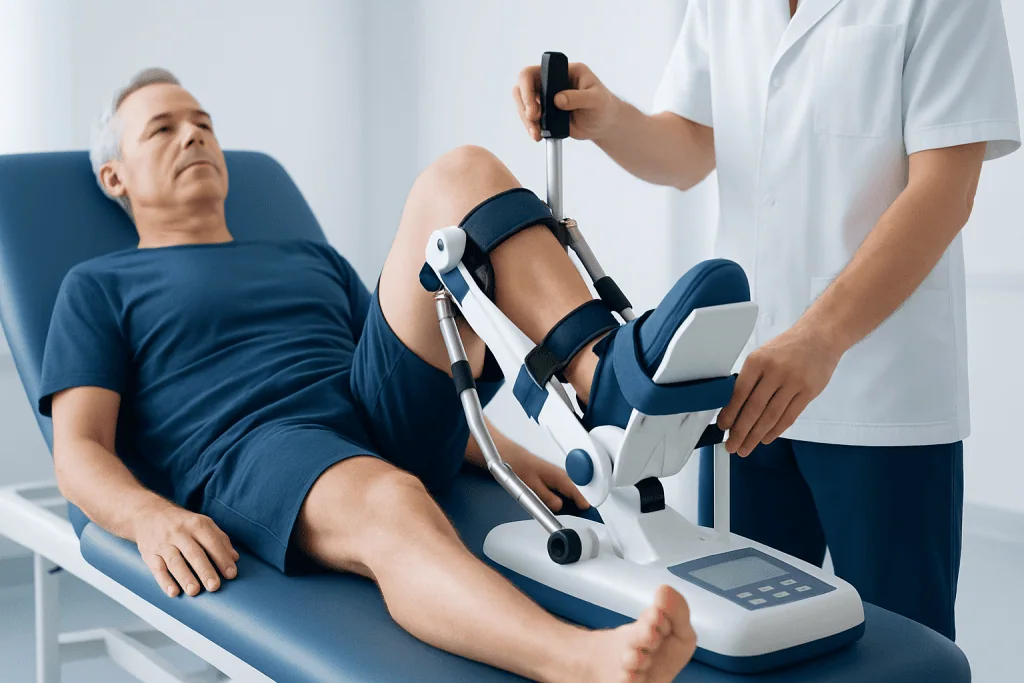
Joints and soft tissues work best when they are moved regularly. When a person is unable to move normally for days or weeks, muscles can shorten, connective tissues can tighten, and joints may become stiff. Passive range of motion helps address this problem by gently moving the structures around the joint, helping maintain available motion and tissue flexibility.
PROM is commonly used after orthopedic procedures, during intensive care, in older adults with reduced mobility, and in people with neurological or musculoskeletal conditions. It may be part of a broader physical therapy and rehabilitation plan that also includes strengthening, balance training, posture work, and safe walking practice. In some cases, it is a temporary step until active movement becomes possible again.
There are several reasons a healthcare team may recommend passive range of motion:
- to reduce joint stiffness and contracture risk
- to help maintain soft tissue length
- to support circulation and comfort during immobility
- to improve body awareness after neurologic injury
- to prepare the body for more active rehabilitation later
Although PROM is often associated with recovery, it can also be part of long-term care. For people with chronic mobility limitations, regular assisted movement may help preserve function and make positioning, dressing, hygiene, and daily care easier.
Common Situations Where Passive Range of Motion Helps
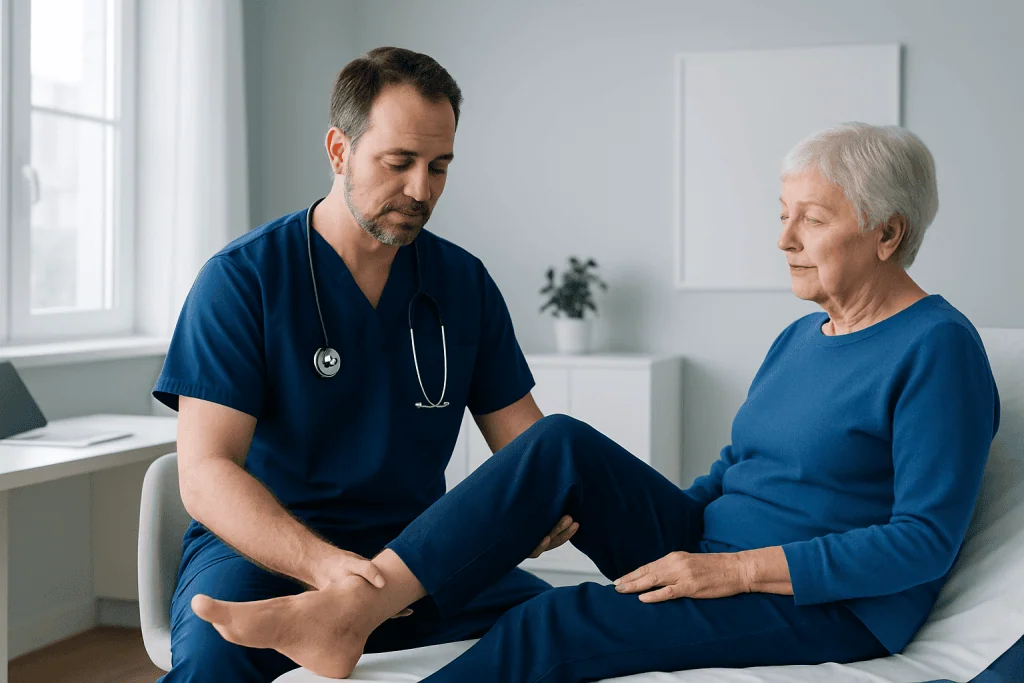
Passive range of motion is not a single treatment for one diagnosis. Instead, it is a technique used across many medical situations. It may be recommended after fractures, joint surgery, ligament injuries, prolonged bed rest, spinal cord injury, severe arthritis flare-related immobility, or weakness caused by neurological disease.
In stroke rehabilitation, passive movement may be used early when a person cannot yet move an arm or leg effectively. It can also support positioning and comfort while the care team works on broader recovery goals. In orthopedic care, PROM may be introduced after procedures such as joint reconstruction or knee replacement when protecting healing tissues while maintaining motion is important.
Children and older adults may also benefit from PROM in certain situations. For example, it can support mobility in those with developmental or neuromuscular disorders, and it may be helpful in frail adults who spend long periods sitting or lying down. In some people recovering from complex injury or pain-related immobility, clinicians may combine passive techniques with orthopedic rehabilitation to restore function gradually.
Because the underlying cause of limited movement varies widely, the exact exercises, the number of repetitions, and the speed of movement should be individualized. What is appropriate after one type of surgery or illness may not be appropriate after another.
How Passive Range of Motion Is Performed Safely
Safe passive range of motion should be slow, smooth, and controlled. The person performing the movement supports the limb above and below the joint and moves it only within a comfortable range. The goal is not to force the joint farther, but to maintain or gently improve motion without causing pain or stress to healing tissues.
Before exercises begin, a clinician may assess joint alignment, muscle tone, pain level, swelling, wound healing, and any post-surgical precautions. For example, some shoulder, hip, or knee procedures have specific movement limits in the early recovery period. People with fractures, severe osteoporosis, unstable joints, blood clots, or acute inflammation may need special precautions or may need to avoid certain movements altogether.
A passive routine may involve one or more joints and can include movements such as bending and straightening, rotating inward and outward, or moving a limb away from and toward the body. It is generally stopped if the patient feels sharp pain, the joint resists unexpectedly, swelling increases, or there are concerning symptoms such as redness, warmth, or sudden muscle spasm.
At home, family members or caregivers should only perform PROM after receiving clear instruction from a qualified professional. This is especially important after surgery or in people with neurological conditions, where poor technique can lead to discomfort or injury.
Benefits, Limits, and What to Expect
Passive range of motion offers meaningful benefits, but it also has limits. It can help maintain existing mobility, reduce stiffness, support comfort, and make later rehabilitation easier. For individuals who cannot move well on their own, even gentle assisted motion can be an important part of preserving function during recovery.
However, PROM does not replace active exercise when active movement is possible. Because the patient is not generating the movement, it does not significantly improve muscle strength, endurance, or coordination by itself. As healing or neurological recovery progresses, clinicians often shift toward active-assisted and active exercises to build practical function.
Some people notice mild stretching sensations during PROM, which can be normal. Strong pain is not expected and should be discussed with a clinician. Progress may be gradual, especially when stiffness has developed over time or when the underlying condition affects nerves, muscles, or connective tissues.
In more complex cases, rehabilitation may include imaging, specialist evaluation, and coordinated care. Conditions involving persistent joint damage, tendon injury, or advanced mobility loss may overlap with problems seen in arthritis or other musculoskeletal disorders, and treatment plans may need to address more than motion alone.
How Doctors and Therapists Assess Range of Motion
Assessment usually begins with a history and physical examination. The clinician asks what is limiting movement, how long the problem has been present, whether there was surgery or trauma, and whether symptoms such as swelling, weakness, numbness, or instability are present. They then observe how the joint looks and feels and compare active and passive movement.
Range of motion may be measured with a tool called a goniometer, which helps estimate joint angles. This can be useful for tracking progress over time. The clinician also checks pain, muscle tone, strength, and how movement affects day-to-day activities such as walking, dressing, reaching, or transferring from bed to chair.
Additional testing is sometimes needed. X-rays, ultrasound, MRI, or nerve studies may be ordered if there is concern about structural injury, inflammation, or nerve involvement. Rehabilitation professionals may also look at posture, gait, and balance to understand the broader cause of limited movement and whether treatments such as robotic rehabilitation or other specialized therapies could be appropriate.
Self-care, Prevention, and When to Seek Medical Care
For people at risk of stiffness, prevention often starts with regular safe movement, good positioning, and following recovery instructions closely. Sitting up, changing position, doing prescribed home exercises, and attending therapy sessions can all support joint health. After injury or surgery, it is important to follow movement restrictions exactly rather than trying to push too far too soon.
Hydration, pain management, and gentle daily activity can also make movement more comfortable. People with chronic conditions should ask their clinician whether they need a structured home PROM program and how often it should be performed. If a caregiver is helping, written instructions or a supervised teaching session can improve safety.
Medical advice should be sought if a joint becomes suddenly swollen, hot, red, unstable, or sharply painful during movement. A person should also contact a doctor if they develop new weakness, numbness, fever, calf pain, shortness of breath, or a rapid loss of mobility. After surgery, any concerns about wound healing or unexpected pain should be discussed promptly with the treating team.
For international patients who need coordinated evaluation and rehabilitation, Acibadem International’s multidisciplinary specialists and JCI-accredited hospitals diagnose and treat mobility-related conditions with individualized care plans.
Frequently asked questions
What is the difference between passive and active range of motion?
Passive range of motion means a joint is moved by another person or a device while the patient stays relaxed. Active range of motion means the person uses their own muscles to move the joint. Active-assisted range of motion is in between, with the person helping as much as they can.
Does passive range of motion build muscle strength?
Not significantly. Passive movement is mainly used to maintain joint mobility, reduce stiffness, and support comfort when active movement is limited. Building strength usually requires active exercise once it is medically safe.
Can passive range of motion be painful?
It may create a mild stretching sensation, but it should not cause sharp or severe pain. If pain increases during the movement, the exercise should be stopped and discussed with a healthcare professional. Pain can signal that the joint is being moved too far or that another problem needs attention.
Who may need passive range of motion exercises?
People recovering from surgery, injury, stroke, prolonged bed rest, or neurological conditions may benefit from passive movement. It can also help those who have weakness, paralysis, or severe pain that limits active motion. A doctor or therapist can decide whether it is appropriate.
Can family members do passive range of motion at home?
Yes, but only after proper instruction from a qualified clinician. The technique needs to be gentle, correctly supported, and tailored to the person’s condition. This is especially important after surgery or when joints are unstable or fragile.
How often should passive range of motion be done?
The right schedule depends on the diagnosis, the joint involved, and whether there are surgical precautions or other risks. Some people may need daily movement, while others need a more limited plan. A physical therapist or physician should provide individualized guidance.
References
- American Physical Therapy Association
- National Institute of Neurological Disorders and Stroke
- National Institute of Arthritis and Musculoskeletal and Skin Diseases
- MedlinePlus
- American Academy of Orthopaedic Surgeons
This article is for general information only and is not a substitute for professional medical advice. Please consult a qualified doctor about your individual situation.
Joint and spine care in Turkey — expert assessment & treatment
JCI-accredited · board-certified surgeons · reply within 24h

More from the Health Library
Related Specialists
Assoc. Prof. Dr. Alpay Yılmaz
Gynecologic Oncology
Asst. Prof. Dr. Ezgi Yakupoğlu
Neurology
Dyt. Merve Gizem Bahçıvan Ayla
Nutrition and Diet
Dr. Sinem Keskin Kayalar
Anesthesiology