Adnexal — Explained by Medical Evidence, Not Myths

Adnexal describes the area beside the uterus, especially the ovaries and fallopian tubes. An adnexal mass or cyst can be harmless, but it still needs proper evaluation.
Key Takeaways
- Adnexal describes the area beside the uterus, especially the ovaries and fallopian tubes.
- An adnexal mass or cyst can be harmless, but it still needs proper evaluation.
- Ultrasound is often the first test used to assess adnexal symptoms or findings.
- Treatment depends on the cause and may range from observation to medication or surgery.
- Urgent care is important for sudden severe pain, fainting, fever, or suspected pregnancy-related complications.
Adnexal is a medical term for structures next to the uterus, mainly the ovaries, fallopian tubes, and nearby connective tissues. When clinicians mention an adnexal finding, they are usually describing pain, a cyst, or a mass in that area rather than naming one single disease.
What does adnexal mean?
Adnexal is a descriptive medical term, not a diagnosis by itself. In gynecology, it refers to the structures adjacent to the uterus, most importantly the ovaries and fallopian tubes, as well as nearby ligaments and connective tissue. A report may mention an adnexal mass, adnexal tenderness, or adnexal cyst to describe where a problem is located.
This matters because many different conditions can affect the adnexal area. Some are common and temporary, such as a simple ovarian cyst related to the menstrual cycle. Others may need prompt treatment, including infection, ovarian torsion, ectopic pregnancy, or less commonly, a tumor.
The term can sound worrying when seen on an ultrasound or exam note, but an adnexal finding does not automatically mean cancer or surgery. The next step is to identify the exact cause by looking at symptoms, age, pregnancy status, imaging features, and sometimes blood tests.
Common adnexal problems and what they may mean
Clinicians often use adnexal terminology when they identify a lump, fluid-filled sac, tenderness, or abnormal appearance near an ovary or fallopian tube. The most common explanation is an ovarian cyst, especially in people of reproductive age. Many cysts form as part of normal ovulation and disappear on their own.
Other adnexal causes include endometriomas related to endometriosis, benign growths such as dermoid cysts, tubo-ovarian abscesses linked to pelvic infection, and hydrosalpinx, which is a fluid-filled fallopian tube. Pregnancy-related conditions can also involve the adnexa, especially an ectopic pregnancy in the tube.
In some cases, an adnexal mass may be suspicious and require more detailed assessment to rule out ovarian or fallopian tube cancer. Risk tends to differ by age, menopausal status, family history, and imaging characteristics. This is why the same word, adnexal, can describe conditions that range from routine to urgent.
- Functional ovarian cysts
- Benign ovarian tumors
- Endometrioma
- Pelvic inflammatory disease or tubo-ovarian abscess
- Ectopic pregnancy
- Ovarian torsion
- Less commonly, ovarian or tubal cancer
Symptoms associated with adnexal conditions

Some adnexal findings cause no symptoms and are discovered incidentally during a pelvic exam, ultrasound, or imaging for another reason. When symptoms do occur, pelvic pain is the most common. The pain may be dull, intermittent, pressure-like, or sudden and severe depending on the cause.
Other possible symptoms include bloating, pelvic fullness, pain during intercourse, irregular bleeding, urinary frequency, nausea, or changes in bowel habits caused by pressure in the pelvis. Infection may lead to fever, abnormal discharge, and increasing lower abdominal tenderness. Symptoms can overlap, so they do not confirm a diagnosis on their own.
Sudden intense one-sided pelvic pain deserves urgent evaluation because it can occur with ovarian torsion, cyst rupture, or ectopic pregnancy. Adnexal symptoms during pregnancy should also be assessed promptly. A careful medical review helps separate common causes from emergencies.
Causes and risk factors
The causes of adnexal findings vary with life stage and overall health. In younger, premenopausal patients, functional ovarian cysts are very common. Hormonal cycles, ovulation, and conditions such as polycystic ovary syndrome can influence ovarian changes, although not every cyst is related to PCOS.
Inflammation or infection may involve the fallopian tubes and ovaries, especially in pelvic inflammatory disease. Endometriosis can create blood-filled cysts called endometriomas. Prior pelvic surgery, infertility history, or previous infection may increase the chance of scar tissue or tubal abnormalities.
After menopause, any new adnexal mass deserves careful assessment because the chance of malignancy is relatively higher than in younger patients, even though many masses are still benign. Family history of ovarian, breast, or related cancers, inherited cancer syndromes, and certain imaging features can influence risk and determine how urgently further testing is needed.
How doctors diagnose an adnexal finding
Diagnosis begins with a medical history and physical examination. A clinician will ask about the timing and pattern of pain, menstrual history, pregnancy possibility, fever, bleeding, digestive or urinary symptoms, and any prior gynecologic problems. During a pelvic exam, tenderness or a palpable mass may help narrow the possibilities.
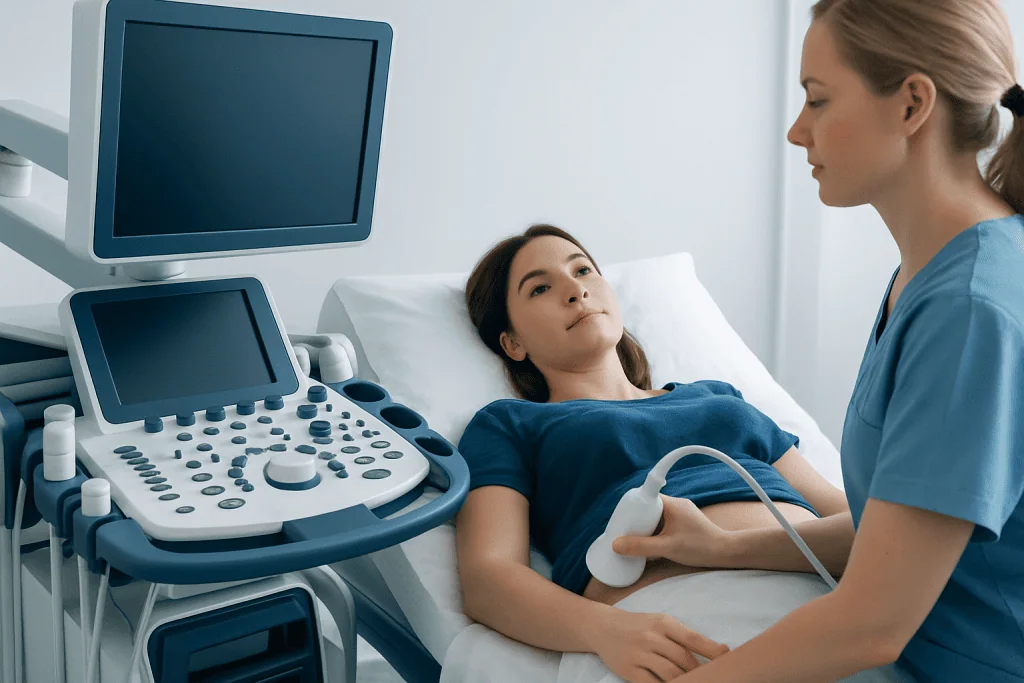
Ultrasound, especially transvaginal ultrasound, is usually the first and most informative imaging test. It can show whether a mass is simple and fluid-filled, solid, complex, twisted, inflamed, or associated with free fluid. In selected situations, additional imaging such as MRI or CT may be used to clarify uncertain findings or plan treatment.
Laboratory tests depend on the clinical picture. A pregnancy test is essential when pregnancy is possible. Blood tests may check for infection, anemia, or tumor markers in selected cases, though tumor markers alone cannot diagnose cancer. If symptoms point to acute complications, the patient may need same-day assessment by gynecology, including possible laparoscopy for diagnosis and treatment.
Treatment options for adnexal conditions
Treatment depends entirely on the underlying cause, the severity of symptoms, the person’s age, and whether pregnancy is involved. Many simple ovarian cysts can be safely monitored with repeat imaging because they often resolve without intervention. Mild pain may be managed with general supportive care and clinician-guided symptom relief.
Infections usually require antibiotics and close follow-up. If an abscess forms or symptoms are severe, hospital care may be needed. Suspicion of ectopic pregnancy, ovarian torsion, or internal bleeding requires urgent treatment because these conditions can quickly become serious and may threaten fertility or overall health.
When surgery is needed, doctors aim for the safest and least invasive option appropriate for the situation. Procedures may include ovarian cyst surgery to remove a cyst while preserving healthy ovarian tissue when possible, or a broader operation if there is concern about malignancy. In complex cases, care may involve gynecology, radiology, pathology, and oncology specialists working together.
Self-care, follow-up, and prevention
There is no single way to prevent all adnexal conditions because they arise from many different causes. Still, routine gynecologic care, attention to menstrual and pelvic symptoms, and timely evaluation of new pain can help problems be identified early. Preventing sexually transmitted infections may reduce the risk of pelvic inflammatory disease and related tubal damage.
Follow-up is an important part of care, especially after an ultrasound finds a cyst or mass that does not need immediate treatment. Repeat imaging may be recommended to confirm that the finding is stable or has resolved. Patients should ask when to return, what symptoms to watch for, and whether activities need to be modified.
General health habits also support reproductive and pelvic health. These include not smoking, keeping up with preventive care, and discussing any family history of gynecologic or breast cancer with a doctor. For patients who need specialized assessment, Acibadem International’s multidisciplinary specialists and JCI-accredited hospitals diagnose and treat adnexal conditions for international patients.
When to seek medical care
Medical care should be sought if pelvic pain is persistent, keeps returning, worsens over time, or is accompanied by bloating, abnormal bleeding, fever, nausea, or pain during intercourse. New symptoms after menopause also deserve prompt assessment, even if they seem mild at first. A pelvic ultrasound can often provide reassurance or identify the next appropriate step.
Emergency care is important for sudden severe one-sided pelvic pain, fainting, shoulder pain, heavy bleeding, fever with increasing abdominal pain, or symptoms occurring with a positive pregnancy test. These features may suggest ovarian torsion, rupture, severe infection, or ectopic pregnancy. Quick evaluation helps protect health and, in some cases, fertility.
People who already know they have an adnexal cyst or mass should follow the care plan closely and return sooner if symptoms change. A qualified gynecologist can explain whether observation is appropriate or whether more urgent treatment is needed.
Frequently asked questions
Is adnexal a disease?
No. Adnexal is a location-based medical term that refers to structures next to the uterus, especially the ovaries and fallopian tubes. It is used to describe where a finding is, not to name one specific illness.
What is an adnexal mass?
An adnexal mass is a lump or abnormal area seen in the region of the ovaries, fallopian tubes, or nearby tissues. It may be a simple cyst, a benign growth, an infection-related collection, or more rarely a cancerous mass.
Are adnexal cysts always dangerous?
No, many adnexal cysts are harmless and may resolve on their own, especially simple ovarian cysts in premenopausal patients. The level of concern depends on symptoms, size, ultrasound features, age, and whether the person is pregnant or postmenopausal.
How is an adnexal problem usually diagnosed?
Doctors usually begin with a medical history, pelvic exam, and ultrasound. Depending on the situation, they may also order a pregnancy test, blood tests, or additional imaging to better define the finding.
Can adnexal pain be an emergency?
Yes. Sudden severe pelvic pain can signal ovarian torsion, cyst rupture, ectopic pregnancy, or serious infection. These conditions need urgent medical evaluation rather than home treatment alone.
Does an adnexal mass mean cancer?
Not necessarily. Most adnexal masses are not cancer, particularly in younger patients, but some do need careful investigation. Imaging appearance, menopausal status, symptoms, and family history help guide the level of concern.
References
- American College of Obstetricians and Gynecologists
- National Institute for Health and Care Excellence
- Radiological Society of North America
- Merck Manual Professional Edition
This article is for general information only and is not a substitute for professional medical advice. Please consult a qualified doctor about your individual situation.
Joint and spine care in Turkey — expert assessment & treatment
JCI-accredited · board-certified surgeons · reply within 24h
Check your numbers in seconds
BMI, calories, due date, blood pressure and 30+ more clinical calculators — free, instant, doctor-reviewed ranges.