Eye Freckle: An Evidence-Based Guide for Patients

An eye freckle is commonly called an ocular nevus and may appear on the iris, conjunctiva, or inside the eye. Most eye freckles do not cause symptoms and are found during routine eye examinations.
Key Takeaways
- An eye freckle is commonly called an ocular nevus and may appear on the iris, conjunctiva, or inside the eye.
- Most eye freckles do not cause symptoms and are found during routine eye examinations.
- Doctors monitor eye freckles over time because some pigmented lesions can change and may rarely become cancerous.
- Diagnosis usually involves a dilated eye exam and imaging to document size, thickness, and location.
- Prompt medical review is important for new visual symptoms, noticeable growth, or changes in the appearance of the spot.
An eye freckle is usually a harmless pigmented spot on the eye, most often on the iris or deeper inside the eye. Even though many eye freckles are benign, regular eye examinations are important because a small number can grow or develop features that need closer evaluation.
What Is an Eye Freckle?
An eye freckle is a small area of increased pigment in or on the eye. In medical terms, many of these spots are called an ocular nevus. They may develop on the colored part of the eye (the iris), on the clear membrane covering the white of the eye (the conjunctiva), or deeper inside the eye in a layer called the choroid.
Most eye freckles are benign, meaning they are not cancer. In many people, they stay stable for years and never affect vision. However, because some pigmented lesions can look similar at first, eye specialists usually recommend periodic monitoring rather than assuming every spot is harmless.
This is one reason an eye freckle is different from a skin freckle. A skin freckle is often related to sun exposure and usually does not require special imaging. An eye freckle may need careful examination with magnification, photographs, and sometimes ultrasound or other tests to make sure it remains stable over time.
Types of Eye Freckles and Where They Occur
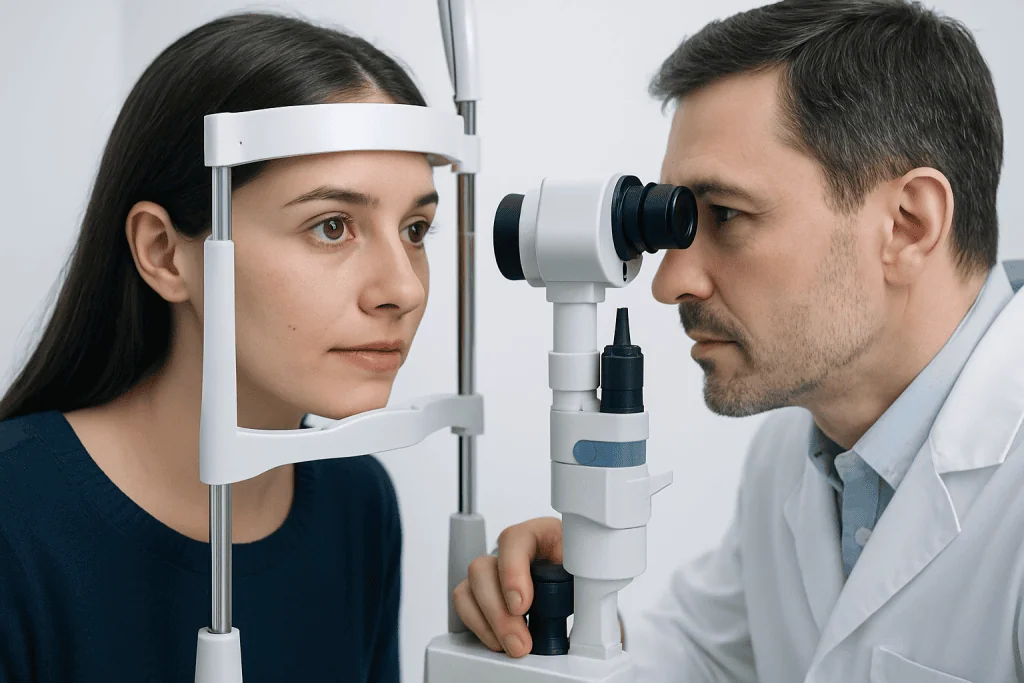
Eye freckles can occur in different parts of the eye, and the location influences how they are monitored. An iris freckle is a flat, pigmented spot on the colored part of the eye. These are often visible in a mirror or photographs and are commonly benign. A related lesion called an iris nevus may be slightly thicker or more defined and may need closer follow-up.
A conjunctival nevus appears on the surface of the eye, often near the colored part. Because it is on the outer eye, it may be noticed by the patient or family members. These lesions are usually benign, but an ophthalmologist will look for changes in color, size, or blood vessel patterns.
A choroidal nevus forms deeper inside the eye and is usually not visible without an eye examination. It is often found during a dilated retinal check. Some patients being assessed for a deeper lesion may also need evaluation by specialists in eye cancer and retinal disorders, because the main goal is to distinguish a harmless nevus from a lesion that requires treatment.
Symptoms and What Patients May Notice
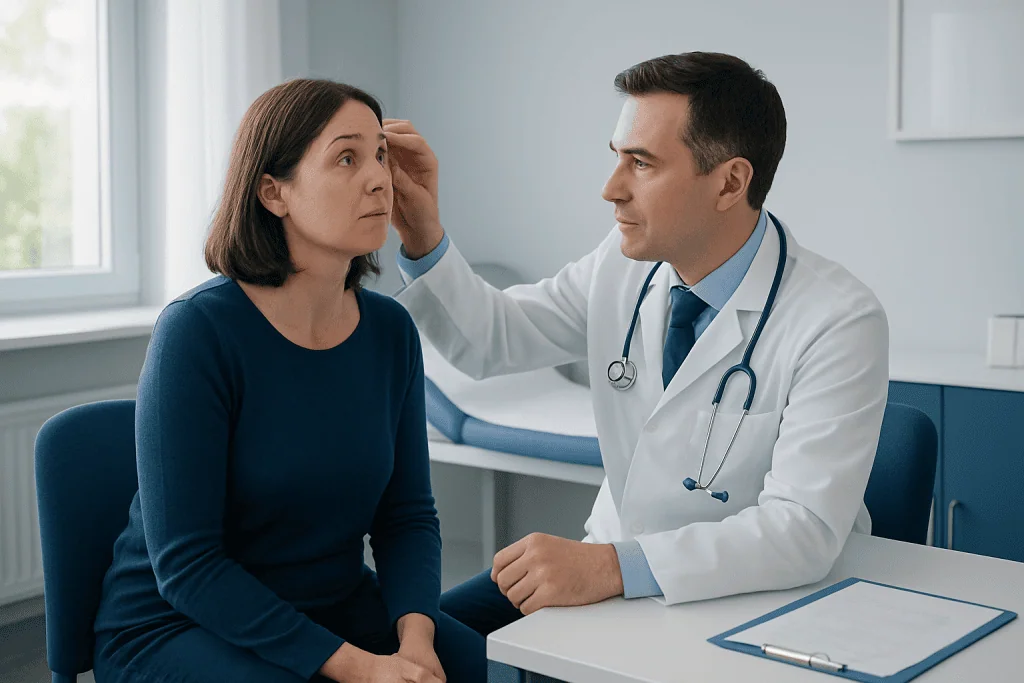
Many people with an eye freckle have no symptoms at all. The spot is often discovered during a routine eye exam, especially when the pupil is dilated and the back of the eye can be seen clearly. This is particularly true for choroidal nevi, which are hidden inside the eye.
If an eye freckle is on the iris or conjunctiva, a person may notice a brown, tan, or black spot that seems stable over time. In most cases, it does not hurt, does not cause redness, and does not interfere with sight. A visible spot alone does not mean something serious is happening.
Symptoms are more concerning when they involve vision changes. Blurred vision, flashes, floaters, a shadow in the field of vision, or a spot that appears to enlarge should be assessed promptly. These symptoms do not always mean cancer, but they deserve professional evaluation because they can signal changes in the lesion or another eye condition.
- Often no symptoms
- Visible pigmented spot on the iris or eye surface
- Usually no pain
- Possible blurred vision or visual disturbance if the lesion affects nearby structures
- Need for urgent assessment if new or worsening symptoms occur
Causes, Risk Factors, and Why Monitoring Matters
The exact cause of an eye freckle is not always clear. Like moles on the skin, eye freckles result from clusters of pigment-producing cells. Some are present for many years, while others are first noticed in adulthood. Having an eye freckle does not necessarily mean a person has done anything to cause it.
Certain factors may be associated with pigmented eye lesions, including lighter eye color, fair skin, and individual genetic tendencies. Sunlight and ultraviolet exposure have been studied, especially for lesions on the eye surface, but the relationship is not as straightforward as it is for skin freckles. Protective sunglasses may still be advised as part of overall eye health.
Monitoring matters because a small number of lesions can change over time. Eye specialists look for warning features such as growth, increased thickness, fluid, orange pigment, or changes near sensitive parts of the retina. If these features are present, the doctor may recommend more frequent visits or referral for advanced imaging and specialist care, including eye examination and ocular imaging.
How Doctors Diagnose an Eye Freckle
Diagnosis begins with a detailed eye history and a comprehensive examination by an ophthalmologist or optometrist. The doctor will ask whether the spot is new, whether it has changed, and whether the person has any visual symptoms. They will also ask about personal and family history of eye disease, skin moles, and previous eye problems.
A dilated eye exam is often the most important first step, especially for lesions inside the eye. The doctor may take photographs to record the size and appearance of the lesion so that future changes can be compared accurately. Surface lesions may be examined under magnification with a slit lamp, while deeper lesions may require imaging.
Additional tests can include ocular ultrasound, optical coherence tomography, and specialized retinal photography. These tests help measure thickness, assess nearby fluid, and evaluate the lesion’s structure. If there is uncertainty, the patient may be referred to a center with expertise in retinal examination or comprehensive eye check-up for ongoing surveillance.
Treatment Options and Follow-Up
Most eye freckles do not need active treatment. If the lesion has a typical benign appearance and no high-risk features, the usual approach is watchful monitoring. This means regular follow-up visits so the doctor can compare photographs, measurements, and imaging over time.
If an eye freckle shows suspicious features or clear growth, management may change. The exact next step depends on the type and location of the lesion. Some patients are referred to an ocular oncology specialist to determine whether the spot remains a nevus or represents a melanoma or another pigmented lesion that needs treatment.
Treatment is tailored to the diagnosis. Options may include continued observation, surgical removal for selected surface lesions, or oncology-based care when cancer is confirmed. Because decisions depend on precise imaging and expert assessment, patients should avoid self-diagnosing based on appearance alone and should seek review from a qualified eye specialist.
Protecting Eye Health and Living With an Eye Freckle
For most patients, living with an eye freckle means staying consistent with follow-up rather than making major lifestyle changes. Keeping scheduled eye appointments is the most practical way to protect vision and catch any important change early. Many people are reassured once they understand that monitoring is a standard part of care.
General eye health habits may also help. Wearing sunglasses with ultraviolet protection, avoiding smoking, and managing overall health conditions such as diabetes or high blood pressure can support long-term eye wellness. These steps do not remove an eye freckle, but they contribute to healthier eyes overall.
It can also help to keep a record of past eye exams, especially if the lesion was photographed. If a person sees a new doctor or travels for care, those records make comparison easier. Near the end of the care pathway, some international patients choose centers such as Acibadem International, where multidisciplinary specialists in JCI-accredited hospitals diagnose and treat eye conditions with coordinated follow-up.
When to Seek Medical Care
A person should arrange an eye examination if they notice a new pigmented spot on the eye, especially if it was not present before or appears to be changing. While many visible spots are benign, it is safest to have a clinician document the lesion and decide how often it should be checked.
Prompt medical care is especially important if the eye freckle seems to enlarge, becomes raised, or is associated with blurred vision, flashes, floaters, loss of side vision, or a dark curtain-like shadow. New eye pain, persistent redness, or irritation should also be assessed, even though these symptoms are not specific to a freckle.
People who have already been told they have an ocular nevus should follow the monitoring schedule recommended by their specialist. Missing follow-up visits can make it harder to recognize subtle changes. Early review does not mean something serious is likely; it simply helps ensure the lesion is managed safely and appropriately.
Frequently asked questions
Is an eye freckle the same as eye cancer?
No. Most eye freckles are benign pigmented spots called nevi and are not cancer. They are monitored because a small number can develop suspicious features over time, which is why regular eye exams are important.
Can an eye freckle affect vision?
Many eye freckles do not affect vision at all. Vision problems are more likely if the lesion is inside the eye and affects nearby structures, or if another eye condition is present. Any new visual change should be assessed by an eye doctor.
How is an eye freckle diagnosed?
Diagnosis usually involves a complete eye examination, often with dilation of the pupil. The doctor may also use photography, slit-lamp examination, ultrasound, or retinal imaging to measure and document the lesion.
Do eye freckles need to be removed?
Usually not. Most are simply observed over time with scheduled follow-up visits. Removal or other treatment is considered only if the lesion has concerning features, grows, or is found to be another condition.
Can children get an eye freckle?
Yes, pigmented lesions can appear in children as well as adults, especially surface lesions such as conjunctival nevi. Any new or changing spot should still be examined by an ophthalmologist to confirm what it is.
What changes in an eye freckle are concerning?
Doctors pay attention to growth, increased thickness, changes in shape, associated fluid, and new symptoms such as blurred vision or flashes. These changes do not automatically mean cancer, but they do require professional reassessment.
References
- American Academy of Ophthalmology
- National Eye Institute
- American Society of Retina Specialists
- National Cancer Institute
This article is for general information only and is not a substitute for professional medical advice. Please consult a qualified doctor about your individual situation.
Oncology care in Turkey — second opinion and treatment plan
JCI-accredited · board-certified surgeons · reply within 24h