Pink Eye vs Allergies: Key Differences and How Doctors Tell Them Apart
Itching is more typical of eye allergies, while thick discharge and crusting are more typical of infectious pink eye. Allergies often affect both eyes at the same time and may come with sneezing or a runny nose.
Key Takeaways
- Itching is more typical of eye allergies, while thick discharge and crusting are more typical of infectious pink eye.
- Allergies often affect both eyes at the same time and may come with sneezing or a runny nose.
- Doctors distinguish the two by asking about symptom pattern, exposures, discharge, and associated cold or allergy symptoms.
- Most cases are diagnosed with an eye exam; laboratory testing is only needed in selected situations.
- Urgent medical assessment is needed for eye pain, light sensitivity, reduced vision, or contact lens-related redness.
Pink eye vs allergies can look similar, but they are not the same. Pink eye is more often linked to infection or irritation, while eye allergies usually cause itching, watering, and symptoms in both eyes, especially around allergy triggers.
Overview: Pink Eye vs Allergies at a Glance
Pink eye vs allergies is a common question because both can cause red, watery, uncomfortable eyes. In general, allergies are more likely when the main symptom is itching, both eyes are affected, and symptoms flare after exposure to pollen, dust, pets, or other triggers. Pink eye, also called conjunctivitis, is more likely when there is noticeable discharge, crusting, one eye affected first, or a recent viral illness or close contact with someone who has an eye infection.
Conjunctivitis means inflammation of the conjunctiva, the thin membrane covering the white of the eye and inner eyelids. This inflammation can happen for different reasons, including viruses, bacteria, allergens, and irritants. Because treatment depends on the cause, the goal is not simply to confirm that the eye is red, but to understand why it is red.
The table below highlights the differences doctors look for first.
- Itching: more common and often prominent with allergies
- Discharge: watery in allergies or viral pink eye; thicker yellow or green discharge suggests bacterial pink eye
- Crusting on waking: more typical of infectious pink eye
- Both eyes: common in allergies; pink eye may start in one eye and spread to the other
- Associated symptoms: sneezing and nasal allergy symptoms support allergies; cold symptoms may support viral pink eye
- Contagiousness: infectious pink eye can spread; allergies are not contagious
Symptoms Compared Side by Side
Eye allergies, often called allergic conjunctivitis, usually cause intense itching, watering, redness, and puffiness. The eyes may burn slightly, but the person often says the urge to rub the eyes is the most bothersome symptom. Symptoms frequently appear in both eyes together and may happen seasonally or after exposure to a known trigger such as pollen, animal dander, mold, or dust.
Pink eye can be caused by a virus, bacteria, or irritation. Viral pink eye often causes redness, a gritty feeling, watery discharge, and sometimes swollen lymph nodes near the ear. Bacterial pink eye is more likely to produce thicker discharge, eyelids that stick together, and crusting, especially after sleep. It may begin in one eye and then involve the other eye later.
Some features overlap. Both conditions can cause redness, tearing, mild burning, and a feeling that something is in the eye. That is why doctors pay close attention to the full pattern rather than one symptom alone. If symptoms include reduced vision, significant pain, strong sensitivity to light, or marked swelling, the problem may be something other than simple conjunctivitis and should be assessed promptly.
People sometimes compare eye allergies with other causes of ocular discomfort, especially when symptoms come with a blocked nose or facial pressure. Depending on the history, a clinician may also consider ENT-related causes or other eye disorders rather than assuming all redness is the same.
How a Clinician Tells Them Apart

Doctors usually begin with a focused history. They ask when symptoms started, whether one or both eyes are affected, what the discharge looks like, whether the eyes itch, and whether there are cold symptoms, recent sick contacts, new cosmetics, contact lens use, or seasonal allergy patterns. This conversation often provides the strongest clues.
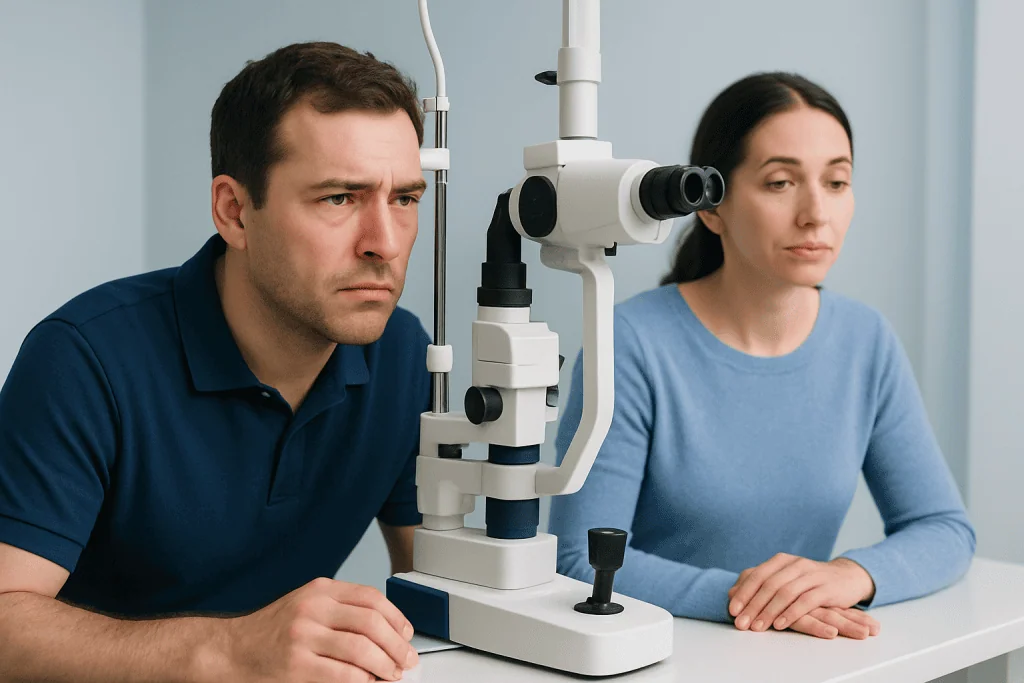
The eye examination is usually straightforward but important. A clinician looks at the pattern of redness, the type of discharge, eyelid swelling, and whether the conjunctiva has signs typical of allergy, such as swelling and a pale, boggy appearance. They also assess vision and may use a light to check the cornea and pupil response. If there is concern about deeper inflammation, corneal involvement, or injury, a more detailed ophthalmic evaluation may be needed.
Testing is not needed for most uncomplicated cases. However, tests may be considered when symptoms are severe, prolonged, recurrent, linked to contact lens use, or not improving as expected. In these situations, the clinician may look for corneal damage, take a sample of discharge in selected cases, or consider whether the redness could be related to another condition rather than simple conjunctivitis.
This careful approach matters because some eye problems can mimic pink eye at first. In a specialist setting, evaluation may overlap with broader eye disease assessment to make sure more serious causes of red eye are not missed.
What Causes Each Condition
Allergic conjunctivitis happens when the immune system reacts to allergens that contact the eye surface. Common triggers include pollen, dust mites, mold, pet dander, and sometimes cosmetics or skin-care products around the eyes. Symptoms may come and go depending on the season or environment, and they often improve when the trigger is removed.
Infectious pink eye is most often viral and can occur alongside a cold or other upper respiratory infection. Viral pink eye tends to spread easily through hand-to-eye contact, shared towels, or contaminated surfaces. Bacterial conjunctivitis is less common in many adults but can still occur, especially when there is thicker discharge.
Irritant conjunctivitis is another possibility. Chlorine, smoke, air pollution, and chemical splashes can inflame the conjunctiva without infection or allergy. Contact lenses can also contribute to redness and irritation, and they deserve special attention because contact lens wear increases the risk of corneal infection.
In some people, red eyes are part of a broader allergic tendency that may include nasal symptoms or skin irritation. In others, recurring redness may need evaluation to rule out conditions such as dry eye or inflammatory eye disorders. A doctor may also consider nearby causes of facial or sinus symptoms, especially if complaints overlap with sinusitis.
What to Do for Allergies and What to Do for Pink Eye
The best next step depends on the cause. For eye allergies, avoiding triggers is the foundation of care. Practical steps include keeping windows closed during high pollen days, washing hands after touching pets, showering after outdoor exposure, and using cool compresses. Artificial tears may help rinse allergens from the eye surface and improve comfort.
When allergy symptoms are persistent, doctors may recommend allergy eye drops or oral allergy medicines, depending on the person and their symptoms. People should avoid rubbing their eyes, as rubbing can worsen inflammation. If symptoms are frequent or difficult to control, a clinician may suggest formal allergy treatment as part of a wider management plan.
For infectious pink eye, hygiene helps prevent spread. Hands should be washed often, eye makeup should not be shared, and contact lenses should not be worn until a doctor says it is safe to restart them. Viral pink eye usually improves with supportive care such as lubricating drops and cool compresses. Bacterial pink eye may require prescription treatment after a clinical assessment.
Not every red eye should be treated the same way. Using leftover antibiotic drops without guidance is not ideal, because antibiotics do not treat allergies or most viral infections. If symptoms are severe, unusual, or not improving, an eye specialist may recommend a closer evaluation and, in selected cases, targeted eye care treatment if another eye condition is identified.
Prevention and Self-Care
For allergies, prevention focuses on limiting exposure and protecting the eye surface. Sunglasses outdoors can reduce direct exposure to pollen and wind. Regular cleaning of bedding, reducing dust indoors, and using air filtration may help some people. Preservative-free lubricating drops can also reduce irritation by flushing the eyes.
For infectious pink eye, the simplest preventive measures are often the most effective. Good hand hygiene, avoiding touching the eyes, and not sharing towels, pillows, eye drops, or cosmetics help reduce spread. Disposable tissues can be useful for wiping watery eyes, followed by hand washing.
Contact lens users should be especially careful. Lenses should never be worn in a red, painful, or discharging eye, and lens cases should be cleaned or replaced as recommended. If redness develops while wearing lenses, it is safer to remove them and seek medical advice before using them again.
General self-care should remain gentle. Harsh rinses, home remedies not meant for the eyes, or prolonged use of redness-relief drops may worsen irritation. A doctor or pharmacist can advise which over-the-counter options are suitable based on whether the likely cause is allergy, dryness, or another issue.
When to Seek Medical Care
Many mild cases of eye allergy or uncomplicated viral conjunctivitis improve with simple care, but some symptoms need prompt medical review. A person should seek care if there is moderate to severe eye pain, reduced or blurred vision, marked sensitivity to light, significant swelling, or symptoms after an eye injury or chemical exposure.
Medical assessment is also important if the person wears contact lenses, has a weakened immune system, has a newborn with eye discharge, or notices symptoms that are getting worse rather than better. Thick discharge, fever, or redness that does not improve over several days may also justify evaluation.
If symptoms keep returning, the diagnosis may need to be revisited. Recurrent red eyes can reflect allergy, dry eye, eyelid inflammation, or other ophthalmic conditions. A specialist can help distinguish among these possibilities and guide treatment more precisely.
For people seeking coordinated evaluation, Acibadem International’s multidisciplinary specialists and JCI-accredited hospitals diagnose and treat eye and allergy-related conditions for international patients. Depending on the findings, clinicians may coordinate care through services such as ophthalmology evaluation when a more detailed eye assessment is needed.
Frequently asked questions
Is pink eye or allergies more likely if both eyes are red?
When both eyes become red at the same time, allergies are often more likely, especially if itching is the main symptom. However, viral pink eye can also spread from one eye to the other, so both eyes being involved does not rule infection out.
What symptom most strongly suggests allergies rather than pink eye?
Intense itching is one of the strongest clues that eye allergies are involved. Many people with allergies also have sneezing, a runny nose, or symptoms that flare during pollen season or after exposure to pets or dust.
Can allergic eyes have discharge too?
Yes. Allergies often cause watery discharge and tearing. What is less typical is thick yellow or green discharge with crusting, which is more suggestive of bacterial pink eye.
Are antibiotics helpful for pink eye vs allergies?
Antibiotics do not help with allergies and do not treat viral pink eye. They may be considered for some cases of bacterial conjunctivitis, but the decision should be made by a clinician after an exam.
Should contact lenses be worn if the eye is red?
No. Contact lenses should be removed if an eye is red, painful, or producing discharge. Contact lens-related redness can sometimes signal a corneal problem that needs prompt medical evaluation.
How long do eye allergies and pink eye usually last?
Eye allergies can last as long as exposure to the trigger continues, although symptoms often improve with avoidance and treatment. Viral pink eye commonly improves over days to a couple of weeks, while bacterial cases may improve sooner with appropriate care.
References
- American Academy of Ophthalmology
- American College of Allergy, Asthma & Immunology
- Centers for Disease Control and Prevention
- National Eye Institute
- American Optometric Association
This article is for general information only and is not a substitute for professional medical advice. Please consult a qualified doctor about your individual situation.
Explore treatments in Turkey — costs, top hospitals & a free quote
JCI-accredited · board-certified surgeons · reply within 24h

More from the Health Library



Related Specialists

Assoc. Prof. Dr. Keramettin Yanık
Clinical Laboratory
Asst. Prof. Dr. Hülya Kuşoğlu
Infectious Diseases & Clinical Microbiology
Dt. Yasemin Çakmakçı
Oral & Dental Health
Prof. Dr. İnan Anaforoğlu
Endocrinology