Depth Perception: A Complete Medical Overview

Depth perception helps a person estimate distance and move safely in three-dimensional space. It depends on both eyes working together, healthy eye muscles, and normal brain processing of visual signals.
Key Takeaways
- Depth perception helps a person estimate distance and move safely in three-dimensional space.
- It depends on both eyes working together, healthy eye muscles, and normal brain processing of visual signals.
- Poor depth perception may cause clumsiness, trouble catching objects, difficulty with stairs, or problems while driving.
- Causes range from refractive errors and strabismus to cataracts, lazy eye, nerve disorders, and some neurological conditions.
- An eye examination can often identify the cause, and treatment depends on the underlying problem.
- Sudden vision changes, double vision, eye pain, or new neurological symptoms need prompt medical evaluation.
Depth perception is the visual ability to judge how far away objects are and where they are in relation to each other. When depth perception is reduced, it can affect reading, driving, sports, balance, and everyday tasks, and the cause may involve the eyes, the nerves that connect them to the brain, or how the brain processes visual information.
What Depth Perception Means
Depth perception is the ability to judge distance and understand the relative position of objects in three-dimensional space. It allows a person to tell whether a step is near or far, pour water into a glass, reach for a door handle, or catch a moving ball. In daily life, this skill works so automatically that many people only notice it when something changes.
Depth perception is not produced by the eyes alone. It depends on clear vision in each eye, accurate eye alignment, healthy eye movements, and the brain’s ability to combine visual information into a single image. This process is called binocular vision because both eyes work together to create a sense of depth.
A person can still estimate distance using clues such as size, shadows, motion, and perspective with one eye. However, true stereoscopic depth perception is strongest when both eyes are functioning well and sending similar images to the brain. When one part of this system is affected, judging distance may become less accurate or more tiring.
How Depth Perception Problems May Feel in Everyday Life
Problems with depth perception do not always feel like blurred vision. Some people describe them as clumsiness, misjudging steps, bumping into objects, or struggling to park a car. Others notice difficulty threading a needle, pouring liquids, using escalators, or playing sports that require accurate timing and distance judgment.
Children may not explain the problem clearly. Instead, they may avoid ball games, seem unusually cautious on stairs, hold reading material very close, or tilt the head to use one eye more than the other. Adults may develop symptoms more suddenly if the cause is new, such as double vision or a recent change in vision in one eye.
Common signs and symptoms can include:
- Difficulty judging how far away objects are
- Frequent tripping, dropping, or bumping into things
- Trouble going down stairs or stepping off curbs
- Problems catching or hitting a moving object
- Double vision
- Eye strain, headaches, or fatigue during visually demanding tasks
- Closing or covering one eye to see better
These symptoms do not always mean there is a serious disease, but they are worth discussing with an eye care professional, especially if they are new, worsening, or affecting safety.
Why Depth Perception Can Be Reduced

Depth perception can be reduced when the eyes do not send equally clear, well-aligned images to the brain. A common reason is refractive error, such as nearsightedness, farsightedness, or astigmatism, especially when one eye sees much more clearly than the other. If vision is blurred in one eye, the brain may rely more heavily on the better-seeing eye, weakening binocular depth cues.
Eye alignment problems are another major cause. In strabismus, the eyes do not point in exactly the same direction, so the brain receives mismatched images. In childhood this may lead to suppression of one eye and later reduced depth perception; in adults it may cause double vision. Strabismus and amblyopia are two well-known conditions linked to poor stereoscopic vision.
Other eye conditions can also interfere. Cataracts, corneal disease, retinal disorders, optic nerve disease, or unequal vision after injury may all reduce the quality of visual input. Cataracts are a common example because clouding of the lens can make one or both eyes see less clearly.
Less commonly, the cause involves the brain or nervous system rather than the eye itself. Stroke, multiple sclerosis, head injury, migraine with visual symptoms, or disorders affecting eye movement control may disturb the brain’s ability to fuse images. Because there are many possible causes, a proper evaluation focuses on the full visual pathway, not only on eyesight alone.
Who Is More Likely to Have Depth Perception Difficulties
Depth perception problems can occur at any age, but some groups are more likely to be affected. Children with a family history of strabismus or amblyopia, babies born prematurely, and children who do not receive routine eye checks may be at higher risk of developing binocular vision problems without obvious early symptoms.
Adults may be more vulnerable if they have a significant difference in prescription between the two eyes, untreated cataracts, diabetes-related eye disease, glaucoma, prior eye surgery, or a history of eye injury. Conditions that affect the nerves and muscles controlling eye movements can also increase the chance of double vision and poor depth judgment.
Aging can contribute as well. As vision changes over time, the quality of input from each eye may become less equal. Reduced contrast sensitivity, slower visual processing, and age-related eye disorders may make it harder to judge steps, curbs, and distances in low light.
Risk increases further when more than one factor is present, such as an older adult with cataracts who also wears an outdated glasses prescription. In these situations, correcting even one problem can sometimes improve function meaningfully.
How Doctors Test Depth Perception
Assessment usually begins with a detailed history. The clinician asks when the problem started, whether it is constant or intermittent, whether there is double vision, and whether one eye seems weaker than the other. Questions about headaches, falls, eye injury, past surgery, and neurological symptoms help narrow the cause.
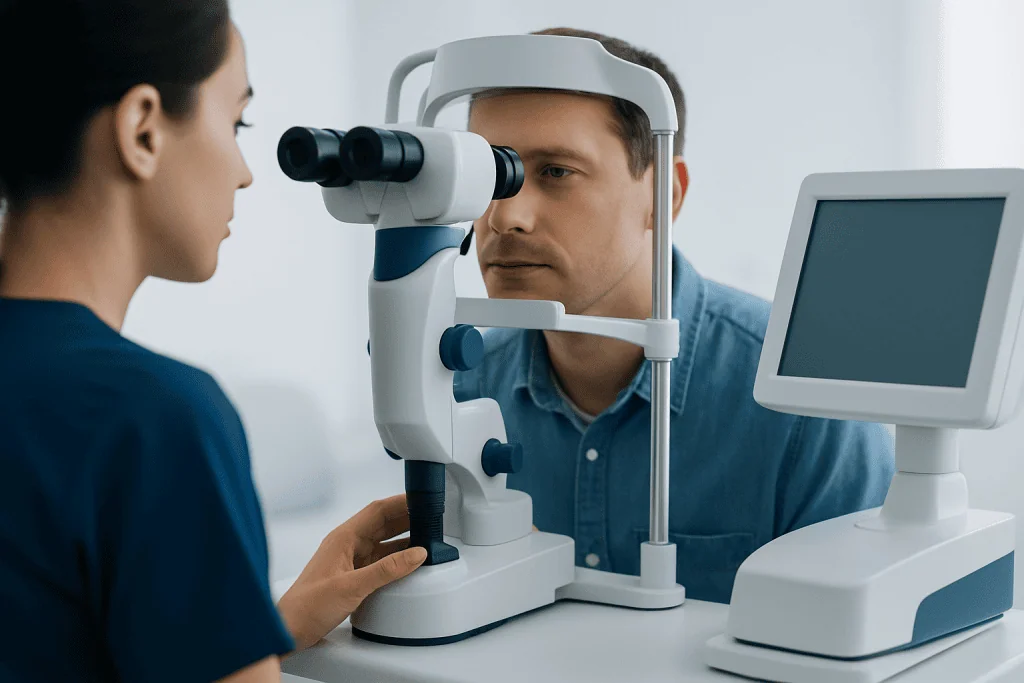
A comprehensive eye examination often includes visual acuity testing, refraction to check for glasses prescription, pupil examination, eye movement testing, and a slit-lamp and retinal exam. Eye alignment is particularly important because even a small misalignment can interfere with binocular vision. If needed, the doctor may also assess whether one eye is being suppressed by the brain.
Specific depth perception tests may be used in the clinic. These can include stereopsis tests that ask the patient to identify shapes or patterns seen in three dimensions when wearing special glasses. The aim is not just to confirm poor depth perception, but to understand why it is happening and whether it is linked to a treatable visual disorder.
If the pattern suggests a neurological cause, additional testing may be recommended. This could involve neuro-ophthalmic assessment, visual field testing, or imaging studies. When symptoms are sudden or associated with weakness, speech changes, facial drooping, or severe headache, urgent evaluation is important.
Treatment Options and What Improvement Depends On
Treatment for reduced depth perception depends on the underlying cause. In some people, the solution is as simple as updating glasses or contact lenses so both eyes see as clearly as possible. If there is a large difference in prescription between the eyes, careful optical correction may improve visual comfort and binocular function.
When eye alignment is the issue, treatment may include prisms in glasses, vision therapy in selected cases, or surgery to better align the eyes. Strabismus surgery may help restore alignment and improve binocular vision for suitable patients, although the degree of depth perception recovery varies depending on age and how long the problem has been present.
For children with amblyopia, patching or blurring the stronger eye and correcting the underlying refractive error can support development of the weaker eye. Early treatment is especially important because the visual system is still developing. In adults, improving the clarity of each eye and treating misalignment or other ocular disease can still make daily activities easier, even if perfect stereopsis is not fully restored.
If cataracts are limiting vision, cataract surgery may improve image quality and support better binocular function. When the cause is neurological, treatment focuses on the specific condition and may involve several specialists. Near the end of the care pathway, rehabilitation strategies and practical adaptations can also be helpful. Acibadem International’s multidisciplinary specialists and JCI-accredited hospitals diagnose and treat visual and neurological conditions for international patients when more advanced assessment is needed.
Practical Self-care and Safety Tips
Self-care does not replace diagnosis, but it can help reduce frustration and improve safety while a person is being assessed or treated. Good lighting is especially helpful, as shadows and low contrast can make depth judgments harder. Keeping stairways and walkways clear may reduce the risk of trips and falls.
Simple daily strategies may include using handrails on stairs, moving more slowly in unfamiliar environments, and allowing extra time for tasks such as parking or pouring liquids. If one eye has become significantly blurrier than the other, avoiding visually demanding activities until the cause is evaluated may be sensible.
Helpful habits can include:
- Keeping glasses prescriptions up to date
- Attending routine eye examinations
- Using protective eyewear during sports or hazardous work
- Managing long-term conditions such as diabetes
- Seeking early assessment for children with wandering eyes or visual complaints
- Improving home lighting and reducing fall hazards
If depth perception problems interfere with driving, work, or school, the person should discuss this openly with a clinician. Advice can then be tailored to visual function, diagnosis, and local safety requirements.
When to Seek Medical Care
Medical assessment is advisable whenever depth perception problems are persistent, worsening, or affecting daily activities. This is especially true if a child seems to favor one eye, has an eye that turns inward or outward, or avoids tasks that need accurate distance judgment.
Prompt care is important if poor depth perception starts suddenly, if it comes with double vision, new headaches, eye pain, or a noticeable drop in vision in one eye. Urgent medical attention is also needed for visual changes after head injury or when symptoms occur along with weakness, numbness, trouble speaking, or facial drooping.
In many cases, early treatment can improve comfort, safety, and visual performance. An ophthalmologist, optometrist, pediatric eye specialist, or neuro-ophthalmology team may be involved depending on the suspected cause. The key step is not to ignore a change that seems minor but repeatedly affects function.
Frequently asked questions
Can a person have poor depth perception even if vision seems clear?
Yes. A person may see letters clearly on an eye chart but still have trouble judging distance if the eyes are not working together properly. Eye alignment problems, unequal vision between the eyes, or difficulties in brain processing can affect depth perception without causing obvious blur.
Is poor depth perception always related to the eyes?
No. Eye problems are common causes, but the nerves and brain are also part of the visual system. Some neurological conditions can affect how images are fused or how eye movements are controlled, leading to depth perception problems.
Can children outgrow depth perception problems?
Some children may adapt to mild visual differences, but true depth perception problems should not simply be waited out. Early assessment is important because conditions such as strabismus and amblyopia are often more responsive to treatment during childhood.
How is depth perception tested?
Depth perception is usually tested during a comprehensive eye exam. The clinician may use stereopsis tests, eye alignment checks, and vision testing in each eye to understand whether binocular vision is working properly and what may be reducing depth judgment.
Can treatment restore normal depth perception?
Sometimes it can improve significantly, but the outcome depends on the cause and how long the problem has been present. Correcting blurred vision, treating cataracts, or aligning the eyes may help, while long-standing binocular vision problems may improve only partially.
When is poor depth perception an emergency?
Sudden onset should be evaluated promptly, especially if it occurs with double vision, severe headache, weakness, numbness, speech difficulty, or after head injury. These symptoms can signal a neurological problem or an urgent eye condition that needs immediate care.
References
- American Academy of Ophthalmology
- National Eye Institute
- American Association for Pediatric Ophthalmology and Strabismus
- Mayo Clinic
- National Institute of Neurological Disorders and Stroke
This article is for general information only and is not a substitute for professional medical advice. Please consult a qualified doctor about your individual situation.
Explore treatments in Turkey — costs, top hospitals & a free quote
JCI-accredited · board-certified surgeons · reply within 24h