Pressure Points for Anxiety: What Patients Need to Know

Pressure points for anxiety are a form of acupressure that some people find soothing in the moment. The evidence is mixed, but acupressure is generally low risk when used gently on healthy skin.
Key Takeaways
- Pressure points for anxiety are a form of acupressure that some people find soothing in the moment.
- The evidence is mixed, but acupressure is generally low risk when used gently on healthy skin.
- Pressure points work best as part of a broader plan that may include sleep, exercise, therapy, and medical care.
- Persistent panic, chest pain, fainting, or thoughts of self-harm need prompt medical attention.
- A doctor can help determine whether symptoms are due to anxiety, another medical condition, or both.
Pressure points for anxiety may offer brief, gentle relief for some people, especially when combined with slow breathing and other calming techniques. They are best viewed as a supportive self-care method rather than a substitute for professional evaluation or treatment when anxiety is frequent, severe, or disruptive.
Overview: Can Pressure Points Help Anxiety?
Pressure points for anxiety refer to areas of the body that are pressed or massaged as part of acupressure, a practice rooted in traditional East Asian medicine. Some people report that gentle pressure on certain points, especially when paired with slow breathing, helps them feel calmer or more grounded during moments of stress. This effect may come from the relaxing ritual itself, from focused breathing, from muscle release, or from a combination of these factors.
It is important to set realistic expectations. Acupressure is not a cure for anxiety disorders, panic disorder, depression, trauma-related conditions, or other mental health concerns. However, it can be a practical self-care tool for short-term comfort, much like breathing exercises, stretching, or mindfulness. For patients with frequent worry, panic episodes, sleep problems, or physical symptoms such as palpitations, a medical review is still important because symptoms may overlap with anxiety disorder or other health conditions.
A helpful way to think about acupressure is as a supportive technique rather than a stand-alone treatment. It may be used alongside healthy routines and, when needed, evidence-based care such as counseling, psychological therapy, or medication. If anxiety is interfering with daily life, work, study, relationships, or sleep, a healthcare professional can recommend the most appropriate next steps.
Common Pressure Points Patients Often Try
There is no single pressure point that works for everyone. People may respond differently, and some may notice no effect at all. The most commonly used points for anxiety are chosen because they are easy to reach and simple to use during stressful moments.
One widely used point is the inner wrist point, often called P6 or Neiguan. It is located on the inner forearm, about three finger-widths below the wrist crease, between two tendons. Patients may apply steady, comfortable pressure with a thumb for about 30 to 60 seconds while breathing slowly, then repeat on the other side.
Another commonly tried area is the point between the eyebrows, sometimes called Yintang. Gentle circular pressure here may feel relaxing for some people, particularly if anxiety is accompanied by tension headaches or a sense of mental overload. A third popular point is the fleshy area between the thumb and index finger, known as LI4. This point is often used for stress and tension, although it should be avoided during pregnancy unless a clinician advises otherwise.
Some people also use points on the ear or the center of the chest. These can be more sensitive, so pressure should always be gentle, never painful. If pressing a point causes bruising, dizziness, numbness, or worsening discomfort, it is best to stop and discuss symptoms with a qualified professional.
How to Use Pressure Points Safely and Effectively
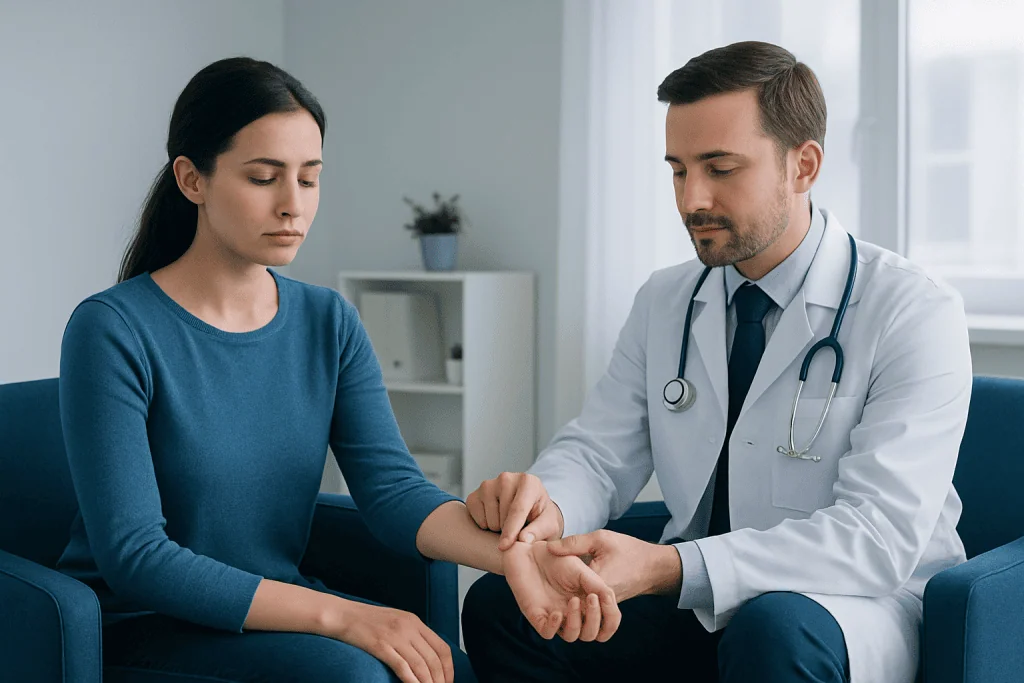
For most people, acupressure is simple and low risk when done gently. Hands should be clean, and pressure should be firm enough to feel noticeable but not painful. Many patients find it easiest to sit down, relax the shoulders, and combine pressure with slow exhalation. A calm routine often matters as much as the point itself.
A practical method is to choose one or two points and use them for one to three minutes total. Press or massage the point in small circles, then pause and notice whether breathing, heart rate, or muscle tension begins to settle. It can help to inhale through the nose and exhale slightly longer than the inhale. The goal is not to force relaxation, but to create a brief pause in the stress response.
Acupressure should not break the skin and should not be applied over cuts, rashes, burns, infections, or swollen areas. Patients with bleeding disorders, severe frailty, nerve injury, or painful hand or wrist conditions should be cautious. Anyone who is pregnant, has a pacemaker, has unexplained chest pain, or has symptoms that seem out of proportion to anxiety should seek medical advice rather than relying on self-care alone.
Pressure points may feel more useful when included in a wider symptom-management plan. Other options that can complement self-care include relaxation training, sleep support, and professional psychotherapy when anxiety is persistent or distressing.
What the Evidence Shows
Research on acupressure for anxiety is promising in some settings but not definitive. Some studies suggest that acupressure may reduce short-term feelings of anxiety before medical procedures, during hospital care, or in stressful situations. However, study quality varies, techniques differ, and results are not consistent across all patient groups.
One reason the evidence is mixed is that anxiety is complex. Symptoms may involve thoughts, emotions, body sensations, sleep patterns, trauma history, life stress, and other medical conditions. A method that helps with immediate tension may not address the underlying cause of chronic anxiety. That is why clinicians usually recommend using acupressure as an adjunct rather than a primary treatment.
Patients should also know that a calming response does not prove that symptoms are harmless. Palpitations, tremor, sweating, shortness of breath, dizziness, and chest tightness can occur with anxiety, but they can also be linked to thyroid problems, heart rhythm issues, medication effects, low blood sugar, or other conditions. If symptoms are new, severe, or unusual, proper medical assessment remains important.
When Anxiety May Need Medical Assessment
Occasional nervousness is a normal part of life, but repeated or intense anxiety can affect health and quality of life. A medical assessment may be helpful if worry feels hard to control, panic symptoms are recurring, sleep is disrupted, concentration is poor, or social, family, school, or work life is being affected. A clinician can help determine whether symptoms fit an anxiety condition, another diagnosis, or a combination of both.
Doctors may ask about symptom patterns, triggers, sleep, caffeine use, medications, alcohol or substance use, and personal stressors. Depending on the situation, they may also check for medical causes such as thyroid disease, anemia, hormonal changes, cardiac issues, or side effects from stimulants and other medicines. This broader view is valuable because treatment depends on the cause.
In patients with significant symptoms, evidence-based care may include lifestyle changes, counseling, cognitive behavioral approaches, and sometimes medication. Depending on needs, a doctor may discuss options such as psychiatric evaluation and treatment or referral for structured mental health support. If mood symptoms occur alongside anxiety, evaluation for related conditions such as depression may also be appropriate.
Other Ways to Calm Anxiety Alongside Acupressure
Because anxiety has many possible triggers, many patients benefit from a combined approach. Pressure points may be more effective when they are part of a larger routine aimed at calming the nervous system. This can reduce the sense of depending on a single technique during stressful moments.
Useful supportive strategies may include:
- Slow breathing, especially with a longer exhale
- Regular physical activity suited to the person’s health status
- Consistent sleep habits and limiting late-night screen use
- Reducing excess caffeine, nicotine, and alcohol
- Mindfulness, relaxation exercises, or guided imagery
- Talking with a trusted clinician, counselor, or support network
For some patients, treatment beyond self-care is the turning point. Structured therapy can help people understand triggers, challenge unhelpful thinking patterns, and build coping skills that last longer than temporary symptom relief. If anxiety has become frequent or overwhelming, it is reasonable to ask a healthcare professional about individualized treatment options, including psychological counseling.
When to Seek Medical Care
Pressure points for anxiety are not appropriate as the only response to severe, sudden, or unexplained symptoms. Urgent medical care is important for chest pain, fainting, severe shortness of breath, new confusion, weakness, seizures, or symptoms that suggest a possible heart, neurological, or metabolic problem. Patients should also seek help if panic symptoms are so intense that they feel unable to stay safe.
Prompt medical attention is also needed for thoughts of self-harm, hopelessness, severe agitation, or major changes in behavior. Even when symptoms seem related to stress, professional support can be an important safety step. Anxiety is treatable, and early care can help prevent symptoms from becoming more disruptive.
For patients seeking coordinated evaluation, Acibadem International’s multidisciplinary specialists and JCI-accredited hospitals provide diagnosis and treatment support for international patients with anxiety-related symptoms and overlapping medical concerns.
Frequently asked questions
Do pressure points for anxiety really work?
They may help some people feel calmer for a short time, especially when used with slow breathing and rest. However, results vary from person to person, and acupressure should not replace professional care for persistent or severe anxiety.
How long should a person press a pressure point for anxiety?
A common approach is gentle, steady pressure for about 30 to 60 seconds, sometimes up to a few minutes in total. The pressure should feel comfortable, not painful, and it can be repeated on both sides of the body when relevant.
Are pressure points safe for everyone?
They are generally safe when used gently on healthy skin, but not everyone should use them without caution. People who are pregnant, have bleeding problems, skin injury, nerve pain, or unexplained severe symptoms should speak with a doctor first.
Can pressure points stop a panic attack?
They may help some people feel more grounded during a panic episode, but they do not reliably stop panic attacks. If panic attacks are recurring, intense, or affecting daily life, medical assessment is recommended.
Which pressure point is most commonly used for anxiety?
Many people try the inner wrist point known as P6, the point between the eyebrows, or the area between the thumb and index finger. No single point has been proven to work best for everyone, so individual response varies.
When should someone see a doctor instead of using self-care?
A doctor should be consulted if anxiety is frequent, severe, or interfering with sleep, work, school, or relationships. Immediate care is needed for chest pain, fainting, severe shortness of breath, confusion, or thoughts of self-harm.
References
- National Center for Complementary and Integrative Health
- National Institute of Mental Health
- World Health Organization
- American Psychiatric Association
- Mayo Clinic
This article is for general information only and is not a substitute for professional medical advice. Please consult a qualified doctor about your individual situation.
Explore treatments in Turkey — costs, top hospitals & a free quote
JCI-accredited · board-certified surgeons · reply within 24h
Check your numbers in seconds
BMI, calories, due date, blood pressure and 30+ more clinical calculators — free, instant, doctor-reviewed ranges.