Chemical Stress Test: A Complete Medical Overview
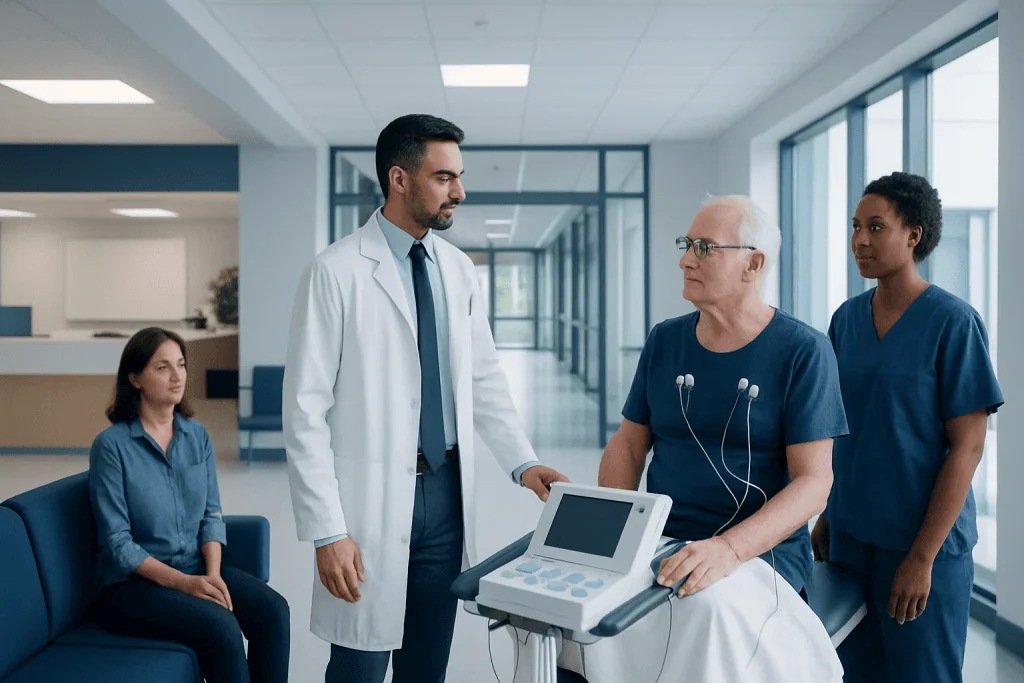
A chemical stress test uses medication rather than treadmill exercise to stress the heart. It is commonly used when a person cannot exercise enough for a standard stress test.
Key Takeaways
- A chemical stress test uses medication rather than treadmill exercise to stress the heart.
- It is commonly used when a person cannot exercise enough for a standard stress test.
- The test can help diagnose reduced blood flow, coronary artery disease, and some rhythm or heart function concerns.
- Most side effects are temporary and closely monitored by trained medical staff.
- Preparation often includes avoiding caffeine and asking about medication instructions before the test.
A chemical stress test is a heart test that uses medication to make the heart respond as if a person were exercising. It helps doctors assess blood flow to the heart, look for blocked or narrowed arteries, and evaluate symptoms when exercise testing is not practical or safe.
Overview: what a chemical stress test shows
A chemical stress test is a medical test that evaluates how well the heart works when it is under stress, but without requiring treadmill or bicycle exercise. Instead, a medication is given through a vein to increase blood flow in the coronary arteries or to make the heart beat harder and faster, depending on the type of test being performed. This allows doctors to assess whether the heart muscle is receiving enough blood and oxygen.
The test is often used when a person cannot exercise adequately because of joint pain, weakness, lung disease, mobility limitations, or other medical reasons. It may be combined with heart imaging, such as nuclear imaging or echocardiography, to provide a clearer picture of blood flow and heart muscle function. In many cases, the goal is to identify areas of the heart that may not be getting enough blood during stress.
A chemical stress test does not automatically mean that a serious heart problem is present. It is a diagnostic tool that helps guide next steps. Doctors may recommend it for chest discomfort, shortness of breath, unexplained fatigue, or to evaluate known or suspected coronary artery disease.
How the test works and why it is used
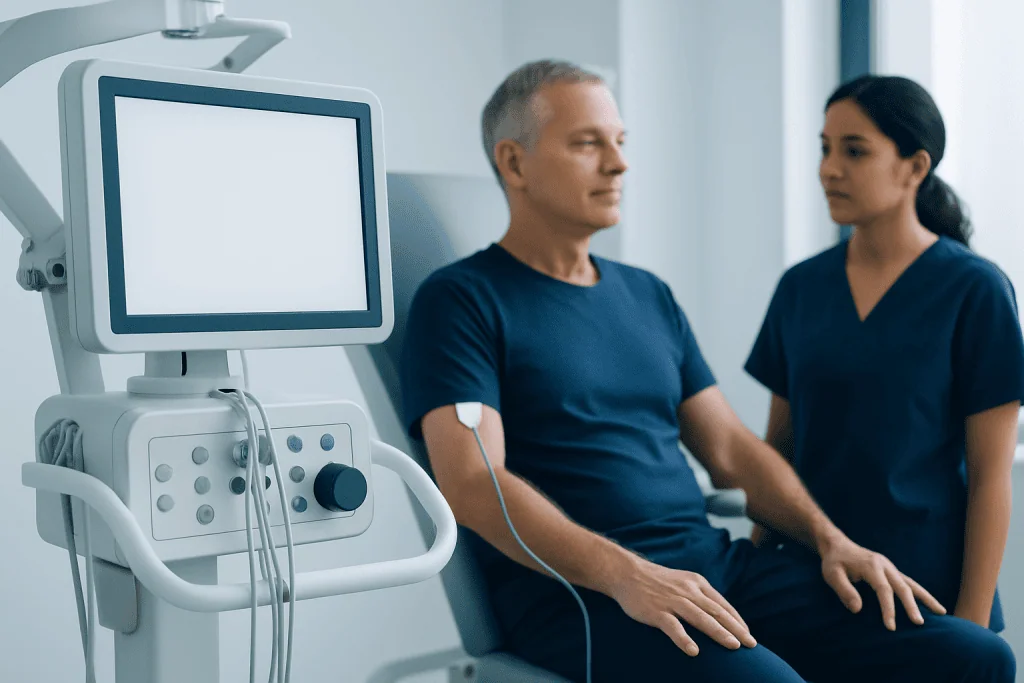
During physical exercise, the heart needs more oxygen and blood flow. A stress test recreates this increased demand so doctors can see how the heart responds. In a chemical stress test, medication creates a similar effect. Some drugs widen the coronary arteries so blood flow differences become more visible on imaging, while others increase heart rate and the strength of heart contractions.
Doctors use this test for several reasons. It can help detect narrowed coronary arteries, assess the significance of symptoms, evaluate heart function after certain cardiac events, and estimate whether the heart is likely to tolerate a planned procedure or surgery. It may also be useful when an exercise ECG alone would not provide enough information.
The test is commonly paired with imaging. A cardiac imaging assessment or a nuclear medicine study may be used in selected cases, and stress echocardiography is another common approach. The exact method depends on the question the doctor is trying to answer, the person’s medical history, and what test is most appropriate and available.
Who may need a chemical stress test

A doctor may suggest a chemical stress test if a person has symptoms that could be related to reduced blood flow to the heart. These may include chest pressure, shortness of breath with activity, unexplained fatigue, or discomfort in the jaw, shoulder, back, or arm that raises concern for a heart-related cause. The test may also be considered when previous heart tests have been inconclusive.
It is especially helpful for people who cannot safely or effectively perform an exercise stress test. This includes some older adults, people with arthritis or walking limitations, those recovering from illness or surgery, and people with certain neurologic or lung conditions. In these situations, medication-based stress testing can provide important information without requiring strenuous exercise.
Doctors may also use a chemical stress test in people with known heart disease to monitor change over time or to guide treatment decisions. In some cases, it helps determine whether more advanced evaluation is needed, such as coronary angiography or other heart imaging studies.
What to expect before, during, and after the test
Preparation instructions vary, so patients should follow the advice given by their healthcare team. In general, they may be asked to avoid caffeine for a certain period before the test because it can interfere with some stress medications. Food, smoking, and certain medicines may also need to be limited or adjusted before the appointment. It is important not to stop prescription medicines unless a doctor specifically advises it.
At the testing center, a clinician usually places ECG leads on the chest to monitor heart rhythm. A blood pressure cuff is used, and an intravenous line is inserted for the medication and, if needed, imaging tracer. The stress medication is then given while the team closely watches symptoms, blood pressure, heart rate, and ECG changes. If imaging is part of the test, pictures are taken before and/or after the medication is administered.
Some people feel flushed, short of breath, lightheaded, warm, or notice chest discomfort, headache, or a pounding heartbeat during the test. These sensations are often brief and expected, and the team can treat symptoms if needed. After the test, patients are usually observed for a short time until they feel back to normal and vital signs are stable.
Risks, side effects, and test limitations
Chemical stress tests are widely used and are generally considered safe when performed under medical supervision. Like any medical test, however, they carry some risks. The medications can occasionally trigger abnormal heart rhythms, a drop or rise in blood pressure, chest pain, or breathing symptoms, particularly in people with certain heart or lung conditions. For this reason, the test is performed in a setting equipped to monitor and respond quickly.
Most side effects are short-lived and improve soon after the medication stops or after a reversal medicine is given. Before scheduling the test, the medical team reviews conditions such as asthma, chronic obstructive pulmonary disease, recent heart problems, pregnancy, or medication use that could influence which stress agent is safest and most suitable.
The results are helpful, but no test is perfect. A chemical stress test may suggest reduced blood flow without pinpointing the exact anatomy of a blockage, and occasionally a result may be normal despite disease or abnormal when no major blockage is present. When findings are unclear, doctors may recommend further evaluation such as electrocardiographic assessment, echocardiography, CT-based imaging, or invasive testing depending on the clinical picture.
Understanding the results and possible next steps
Results are interpreted in the context of symptoms, examination findings, medical history, and other test results. A normal result generally suggests that blood flow to the heart is adequate during stress and that significant blockage in the major coronary arteries is less likely. An abnormal result may indicate reduced blood flow to part of the heart muscle, prior heart muscle damage, or another issue affecting heart performance.
Depending on the findings, the next step may be simple reassurance and routine follow-up, especially if symptoms are mild and the overall risk appears low. In other cases, doctors may recommend lifestyle changes, medications to improve heart health, or more detailed testing. If there is strong concern for important coronary narrowing, additional assessment may be needed.
Management is individualized. Some people may be evaluated for specialized cardiac treatment if the broader workup suggests a structural heart problem rather than a blood flow problem, while others may need focused care for arrhythmia or ischemic heart disease. The test is one part of a larger clinical decision-making process rather than a standalone answer.
Preparation tips and self-care after the appointment
Practical preparation can make the test day smoother. Patients are often advised to wear comfortable clothing, bring a list of current medicines, and inform the team about allergies, asthma, pregnancy, or previous reactions to stress-test medications. If fasting or medication changes are required, the test center typically provides these instructions in advance.
After the appointment, most people can return to normal activities unless their doctor advises otherwise. Drinking fluids may be recommended after some imaging tests. If a person received medication that briefly caused symptoms such as headache or flushing, these usually settle quickly. Any ongoing chest pain, severe breathlessness, fainting, or unusual symptoms after leaving the facility should be reported promptly.
Longer-term self-care depends on why the test was ordered. Heart-healthy habits remain important whether the result is normal or abnormal. These include not smoking, staying physically active within medical guidance, controlling blood pressure, managing cholesterol and diabetes, eating a balanced diet, sleeping well, and taking prescribed medicines as directed.
When to seek medical care
Medical advice should be sought promptly for symptoms such as new or worsening chest pain, shortness of breath, fainting, marked palpitations, or symptoms that occur with activity and improve with rest. Urgent evaluation is especially important if symptoms are severe, sudden, or accompanied by sweating, nausea, or pain spreading to the arm, shoulder, back, or jaw.
A person should also contact their doctor if they have questions about preparing for a chemical stress test, including whether to stop caffeine or take usual medicines. Sharing a full medical history helps the care team choose the safest test approach and interpret the results accurately.
For patients who need further evaluation, multidisciplinary cardiology teams can coordinate imaging, medical treatment, and interventional care. Acibadem International’s JCI-accredited hospitals support international patients with diagnosis and treatment planning for heart-related conditions when specialized assessment is needed.
Frequently asked questions
What is the difference between a chemical stress test and an exercise stress test?
An exercise stress test raises the heart’s workload by having the person walk on a treadmill or pedal a bicycle. A chemical stress test uses medication to create a similar heart response when exercise is not possible or would not provide reliable results. Both tests help doctors evaluate heart function under stress.
Is a chemical stress test painful?
The test is not usually described as painful, though it can feel uncomfortable for a short time. Some people notice flushing, chest tightness, headache, dizziness, or a racing heartbeat while the medication is working. These sensations are generally temporary and closely monitored.
How long does a chemical stress test take?
The timing depends on whether imaging is included and which method is used. Some appointments take under an hour, while others, especially nuclear-based studies, may take several hours because images are taken in stages. The healthcare team can explain the expected schedule before the test.
Can a person eat or drink before a chemical stress test?
Instructions vary by test type and medication, so patients should follow the directions from their doctor or testing center. Many people are asked to avoid caffeine for a period beforehand, and some may need to limit food or certain medicines. It is best to clarify these details in advance.
Are there reasons someone should not have a chemical stress test?
Yes. Certain medications, severe uncontrolled heart conditions, some rhythm problems, very recent cardiac events, or active breathing issues may affect whether the test is appropriate or which stress drug can be used. Doctors review medical history carefully to choose the safest option.
What happens if the chemical stress test is abnormal?
An abnormal result does not always mean a person needs an invasive procedure, but it does mean the findings need medical interpretation. Depending on the result and symptoms, the doctor may recommend medications, lifestyle measures, repeat imaging, or further testing to look more closely at the coronary arteries or heart function.
References
- American Heart Association
- National Heart, Lung, and Blood Institute
- American College of Cardiology
- European Society of Cardiology
This article is for general information only and is not a substitute for professional medical advice. Please consult a qualified doctor about your individual situation.
Explore treatments in Turkey — costs, top hospitals & a free quote
JCI-accredited · board-certified surgeons · reply within 24h
Check your numbers in seconds
BMI, calories, due date, blood pressure and 30+ more clinical calculators — free, instant, doctor-reviewed ranges.