Chronic Obstructive Pulmonary Disease
Chronic Obstructive Pulmonary Disease causes long-term airflow blockage, cough and breathlessness. Learn symptoms, diagnosis and treatment.
Quick answer
Chronic obstructive pulmonary disease is a long-term lung condition that narrows the airways and damages breathing, usually causing cough, mucus production, and shortness of breath. At Acibadem in Turkey, COPD is evaluated with pulmonary tests and imaging, and managed with a personalized plan that may include inhaled medicines, oxygen support, pulmonary rehabilitation, and treatment of flare-ups and related conditions.
What is chronic obstructive pulmonary disease?
Chronic obstructive pulmonary disease, often shortened to COPD, is a long-term lung condition in which the airways (the tubes that carry air in and out of the lungs) become narrowed and the small air sacs of the lungs become damaged. This makes it harder to move air out of the lungs, which is why people with the condition often feel short of breath, especially during physical activity. The word “chronic” means the condition is long lasting, “obstructive” refers to the blocked or narrowed airflow, and “pulmonary” means it affects the lungs.
Chronic obstructive pulmonary disease is not a single disease but an umbrella term that usually covers two overlapping conditions. The first is chronic bronchitis, which is long-term inflammation of the airways that leads to a persistent cough with mucus. The second is emphysema, in which the tiny air sacs at the end of the airways (called alveoli) are gradually destroyed, reducing the surface area available for oxygen to pass into the blood. Many people with chronic obstructive pulmonary disease have features of both.
The condition most often affects adults over the age of 40, and it is strongly linked to smoking, although non-smokers can also develop it. It tends to develop slowly over many years, and many people do not notice the early signs or mistake them for normal aging or a “smoker’s cough.” Chronic obstructive pulmonary disease is a common cause of illness and reduced quality of life worldwide, and it is one of the leading causes of death globally. Although the lung damage cannot be fully reversed, treatment can relieve symptoms, slow the progression of the disease, and help people stay active.
Symptoms of chronic obstructive pulmonary disease
Chronic obstructive pulmonary disease symptoms usually develop gradually and worsen over time if the condition is not managed. In the early stages, many people have few or no noticeable symptoms, or they attribute mild breathlessness and coughing to being out of shape or getting older. As the disease progresses, symptoms become more persistent and start to interfere with daily activities.
Common chronic obstructive pulmonary disease symptoms include:
- Shortness of breath, especially during physical activity such as climbing stairs or walking uphill, and in later stages even at rest
- A chronic cough that lasts for months, often producing mucus (also called sputum or phlegm)
- Wheezing, a whistling or squeaky sound when breathing
- Chest tightness or a feeling of heaviness in the chest
- Frequent respiratory infections, such as colds that “go to the chest” or repeated bouts of bronchitis
- Fatigue and low energy, partly because breathing takes more effort
- Unintended weight loss in more advanced disease
- Swelling in the ankles, feet, or legs in later stages, which can signal strain on the heart
Symptoms can vary depending on which type of lung damage is dominant. People with mainly chronic bronchitis tend to have a productive cough with mucus as their main complaint, while people with mainly emphysema often notice breathlessness as the most prominent symptom. In practice, most people have a mixture of both.
Symptoms also vary by stage. In mild disease, breathlessness may only appear with strenuous effort. In moderate disease, everyday tasks such as carrying groceries or walking with others may become difficult. In severe disease, breathlessness can occur with minimal activity or even at rest, and flare-ups become more frequent and serious.
Many people with chronic obstructive pulmonary disease experience episodes called exacerbations, or flare-ups. During an exacerbation, symptoms suddenly become worse than usual: breathlessness increases, coughing intensifies, and mucus may change color or amount. Exacerbations are often triggered by respiratory infections or air pollution, and they may require a change in medication or, in some cases, hospital care. Repeated exacerbations can speed up the decline in lung function, which is why preventing them is an important goal of treatment.
Causes and risk factors
Understanding chronic obstructive pulmonary disease causes helps explain why prevention and early action matter. The condition develops when the lungs are exposed to irritating gases or particles over a long period, leading to inflammation, narrowing of the airways, and destruction of lung tissue.
The most important causes and risk factors include:
- Tobacco smoking: Cigarette smoking is by far the leading cause of chronic obstructive pulmonary disease in most countries. Pipe, cigar, and other forms of smoked tobacco also raise the risk. The longer and heavier the smoking history, the greater the risk, although not every smoker develops the disease.
- Secondhand smoke: Long-term exposure to other people’s tobacco smoke can also contribute to lung damage.
- Occupational exposures: Long-term exposure to dusts, chemical fumes, and vapors in workplaces such as mines, construction sites, and certain factories can cause or worsen the condition.
- Indoor air pollution: In many parts of the world, burning wood, coal, crop waste, or other biomass fuels for cooking and heating in poorly ventilated homes is an important cause, particularly among people who have never smoked.
- Outdoor air pollution: Long-term exposure to polluted air may contribute to the development and worsening of the disease.
- Genetic factors: A rare inherited condition called alpha-1 antitrypsin deficiency reduces the level of a protective protein in the blood and can lead to emphysema at a younger age, even in people who have never smoked. Doctors may test for this in people diagnosed at a young age or with a strong family history.
- Childhood factors: Severe respiratory infections in childhood, premature birth, and impaired lung growth may make the lungs more vulnerable in adulthood.
- Asthma: Long-standing, poorly controlled asthma may increase the risk of developing fixed airway narrowing over time.
In many people, several of these factors act together. Importantly, stopping smoking at any stage of the disease slows further lung damage and is the single most effective step a person can take to protect their lungs.
Diagnosis
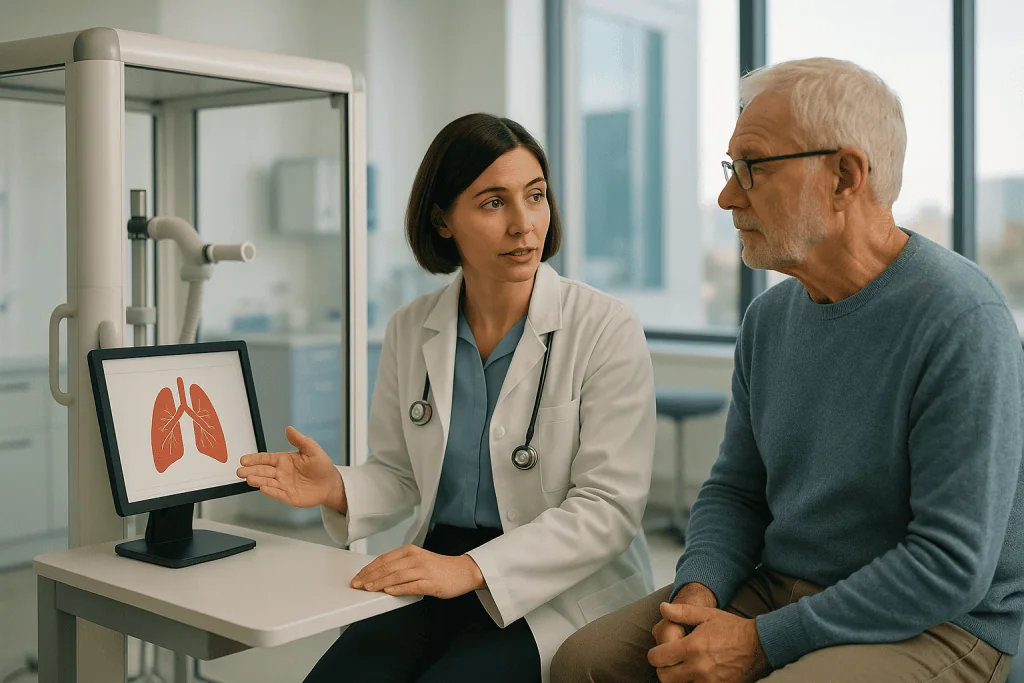
Chronic obstructive pulmonary disease diagnosis begins with a detailed conversation about your symptoms, smoking history, workplace exposures, and family history, followed by a physical examination. Because the symptoms overlap with other conditions such as asthma and heart disease, doctors use specific tests to confirm the diagnosis and rule out other causes.
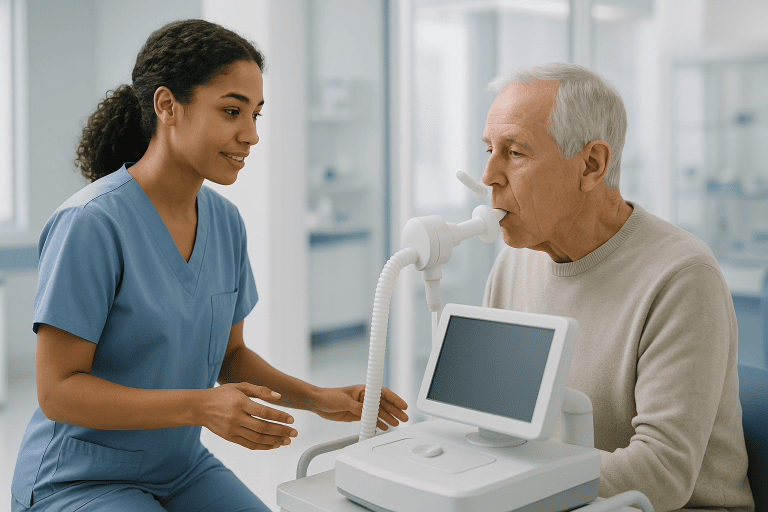
The key test is spirometry, a simple breathing test performed in a clinic. You take a deep breath and blow out as hard and as fast as you can into a mouthpiece connected to a machine. Spirometry measures how much air you can exhale and how quickly. In chronic obstructive pulmonary disease, the amount of air you can force out in the first second (a measurement called FEV1) is reduced relative to the total amount you can exhale (called FVC). The test is often repeated after inhaling a bronchodilator (a medication that opens the airways) to see how much the airflow limitation improves; in this condition, the obstruction is not fully reversible. Spirometry also helps grade the severity of the disease.
Other tests your doctor may use include:
- Chest X-ray: This can show signs of emphysema or over-inflated lungs and helps exclude other conditions such as pneumonia or lung tumors.
- CT scan of the chest: A more detailed imaging test that can show the pattern and extent of emphysema and detect other lung problems. It may be used when the diagnosis is uncertain or when procedures or surgery are being considered.
- Pulse oximetry: A small clip on the finger that measures the oxygen level in the blood without a needle.
- Arterial blood gas analysis: A blood test, usually taken from an artery in the wrist, that measures oxygen and carbon dioxide levels. It is used in more advanced disease or during severe flare-ups.
- Blood tests: These may include a test for alpha-1 antitrypsin deficiency, particularly in younger patients or those with a family history of early lung disease.
- Exercise tests: A walking test, such as a six-minute walk test, may be used to assess how the condition affects your ability to be active.
Doctors also assess how often you have flare-ups and how much your symptoms affect daily life, often using short standardized questionnaires. This overall picture, not just the breathing test result, guides the choice of treatment.
Treatment options for chronic obstructive pulmonary disease
There is currently no cure that reverses the lung damage caused by chronic obstructive pulmonary disease, but effective treatment can reduce symptoms, prevent flare-ups, slow disease progression, and improve quality of life. Chronic obstructive pulmonary disease treatment is usually tailored to the severity of the disease and how it affects each individual person, and it is typically coordinated by a lung specialist. In hospital settings such as Acibadem, this condition is managed by the pulmonology department, which specializes in diseases of the lungs and airways.
Lifestyle measures and self-care
The foundation of treatment is stopping smoking. Quitting is beneficial at any age and at any stage of the disease, and it is the only intervention proven to slow the decline in lung function caused by smoking. Doctors can offer support such as counseling and, where appropriate, medications that reduce cravings. Avoiding secondhand smoke, dusty environments, and heavy air pollution also helps. Staying up to date with recommended vaccinations, such as influenza and pneumococcal vaccines, is important because respiratory infections are a common trigger for dangerous flare-ups. Regular physical activity, within your limits, and a balanced diet support overall health and breathing capacity.
Medications
Most medications for this condition are inhaled, meaning they are breathed in directly to the lungs through an inhaler or nebulizer device. Common groups include:
- Bronchodilators: These medications relax the muscles around the airways, opening them up and making breathing easier. Short-acting types are used for quick relief, while long-acting types are taken regularly to keep the airways open throughout the day. They form the core of drug treatment for most patients.
- Inhaled corticosteroids: These reduce inflammation in the airways and may be added for people who continue to have frequent flare-ups despite bronchodilators. They are usually used in combination with long-acting bronchodilators rather than alone.
- Combination inhalers: Many modern inhalers combine two or three medications in one device to simplify treatment.
- Oral medications: In selected cases, doctors may prescribe tablets such as certain anti-inflammatory agents or, during flare-ups, short courses of oral corticosteroids and antibiotics.
Using the inhaler correctly matters as much as the medication itself. Your healthcare team should check your inhaler technique regularly, because a poorly used inhaler delivers little medication to the lungs.
Pulmonary rehabilitation
Pulmonary rehabilitation is a structured program that combines supervised exercise training, breathing techniques, education about the disease, and nutritional and psychological support. It is one of the most effective non-drug treatments and often improves breathlessness, exercise capacity, and overall wellbeing, even in people with advanced disease.
Oxygen therapy and breathing support
When the disease becomes advanced and oxygen levels in the blood are persistently low, doctors may prescribe long-term oxygen therapy, delivered through a small tube under the nose from a portable or home device. Used for enough hours each day, oxygen therapy can improve survival and quality of life in appropriately selected patients. Some people with high carbon dioxide levels may benefit from non-invasive ventilation, a mask-based breathing support system used at home, usually at night, or during severe flare-ups in the hospital.
Procedures and surgery
For carefully selected patients with severe emphysema, more invasive options may be considered:
- Bronchoscopic lung volume reduction: Small one-way valves or other devices are placed into the airways through a flexible camera tube (bronchoscope) to deflate the most damaged parts of the lung, allowing healthier areas to work better.
- Lung volume reduction surgery: An operation that removes the most damaged portions of the lung for the same purpose.
- Bullectomy: Removal of large air-filled spaces (bullae) that compress healthy lung tissue.
- Lung transplantation: In very advanced disease, transplantation may be an option for a small number of patients who meet strict criteria.
These procedures carry risks and are only suitable for a minority of patients, so decisions are made by specialist teams after detailed testing.
Living with chronic obstructive pulmonary disease and outlook
Chronic obstructive pulmonary disease is a lifelong condition, but its course varies widely from person to person. Some people remain stable for many years with mild symptoms, while others experience a faster decline, particularly if they continue to smoke or have frequent flare-ups. Honest conversations with your care team about what to expect can help you plan and stay in control.
Day to day, many people find that pacing activities, using breathing techniques such as pursed-lip breathing (exhaling slowly through slightly closed lips), and keeping physically active within their limits make a real difference. Taking medications as prescribed, attending regular check-ups, and having a written action plan for flare-ups help catch problems early. Because breathlessness and long-term illness can lead to anxiety and low mood, it is worth telling your doctor if you are struggling emotionally; support is available and mental wellbeing affects physical outcomes too.
The condition also increases the risk of other health problems, including heart disease, osteoporosis (weakened bones), and lung infections, so doctors usually monitor overall health, not just the lungs. While no one can promise a specific outcome, many people with this condition live active, meaningful lives for many years, especially when the disease is detected early, smoking is stopped, and treatment is followed consistently.
Frequently asked questions
What is chronic obstructive pulmonary disease in simple terms?
It is a long-term lung disease in which the airways become narrowed and the air sacs of the lungs are damaged, making it hard to breathe air out. It usually includes chronic bronchitis (inflamed airways with a mucus-producing cough) and emphysema (damaged air sacs), and it most often develops after years of smoking or exposure to lung irritants.
Can chronic obstructive pulmonary disease be cured or reversed?
No, the lung damage that has already occurred cannot be fully reversed, and there is currently no cure. However, treatment can relieve symptoms, reduce flare-ups, and slow further decline. Stopping smoking is the most effective way to protect the remaining lung function, and many people improve how they feel and function with proper treatment.
How serious is chronic obstructive pulmonary disease?
Seriousness varies widely. Mild disease may cause only occasional breathlessness, while severe disease can limit daily activities and lead to life-threatening flare-ups. It is a leading cause of death worldwide, but the outlook for an individual depends on the stage at diagnosis, whether smoking is stopped, how well treatment is followed, and other health conditions. Your doctor can give you a more personal assessment.
What are the early symptoms of chronic obstructive pulmonary disease?
Early chronic obstructive pulmonary disease symptoms often include a persistent cough (sometimes dismissed as a “smoker’s cough”), producing mucus most mornings, becoming breathless more easily than before during activity, and getting chest infections more often. Because these signs develop slowly, they are easy to overlook, so anyone with a smoking history and ongoing cough or breathlessness may benefit from a breathing test.
How is chronic obstructive pulmonary disease diagnosed?
The diagnosis is confirmed with spirometry, a breathing test that measures how much air you can blow out and how fast. Doctors also take a detailed history, examine you, and may order a chest X-ray or CT scan, oxygen measurements, and blood tests to assess severity and rule out other conditions such as asthma or heart problems.
What is the best treatment for chronic obstructive pulmonary disease?
There is no single best treatment; care is tailored to each person. The most important step is stopping smoking. Beyond that, treatment usually combines inhaled bronchodilators (and sometimes inhaled corticosteroids), vaccinations, pulmonary rehabilitation, and, in advanced cases, oxygen therapy or procedures such as lung volume reduction. Your doctor may adjust treatment over time based on your symptoms and flare-ups.
Can you live a normal life with chronic obstructive pulmonary disease?
Many people with mild to moderate disease continue working, traveling, and staying active, especially when they stop smoking and follow their treatment plan. More advanced disease may require adjustments, such as pacing activities or using oxygen. While the condition cannot be cured, good management often allows people to maintain a satisfying quality of life for many years.
When to see a doctor
Consider making an appointment with a doctor if you have a cough that lasts more than a few weeks, bring up mucus most days, feel more breathless than people your age during ordinary activities, or have a history of smoking or workplace dust and fume exposure. Early diagnosis allows earlier treatment and better protection of your lung function.
Seek urgent medical care if you experience any of the following red-flag warning signs:
- Sudden or severe shortness of breath that does not improve with rest or your usual inhaler
- Difficulty speaking in full sentences because of breathlessness
- Blue or gray discoloration of the lips, face, or fingernails, which can signal dangerously low oxygen
- Chest pain or pressure, especially if it is new or severe
- Coughing up blood
- High fever with worsening cough and colored or increased mucus
- Confusion, unusual drowsiness, or fainting
- Rapidly worsening swelling in the legs or ankles
- A flare-up that is not improving despite following your action plan
These signs can indicate a severe exacerbation, a lung infection, or a heart or lung emergency that needs prompt assessment. If you have already been diagnosed with chronic obstructive pulmonary disease, keep your action plan and medication list accessible, and do not hesitate to seek emergency care when symptoms escalate quickly.
Pack-Year Calculator
Check your own numbers in seconds, free, instant and doctor-reviewed ranges.
Medically reviewed by the Acıbadem International Medical Board September 3, 2026
See our medical review board →
Update history
- PublishedJune 8, 2026
- Medical review approvedSeptember 3, 2026
- Last content updateSeptember 2, 2026