Emphysema
Learn what emphysema is, its common symptoms and causes, how doctors diagnose it, and the treatment options that may help manage this lung condition.

Quick answer
Emphysema is a chronic lung disease in which the tiny air sacs (alveoli) are gradually destroyed, causing air trapping and progressive shortness of breath. It is a form of COPD, most often caused by long-term smoking. Diagnosis relies on spirometry and CT imaging; treatment focuses on quitting smoking, inhaled medicines, rehabilitation and, in selected cases, oxygen or procedures.
What is emphysema?
Emphysema is a long-term lung disease in which the tiny air sacs at the ends of the airways, called alveoli, are gradually damaged. Healthy alveoli are small, elastic and very numerous, which gives the lungs a large surface for moving oxygen into the blood and carbon dioxide out of it. In emphysema, the walls between these sacs break down, so many small sacs merge into fewer, larger, floppy spaces. The lungs lose elasticity, air becomes trapped, and less surface area is available for gas exchange. The result is shortness of breath that tends to worsen slowly over years.
Emphysema is one of the two main conditions grouped under chronic obstructive pulmonary disease (COPD). The other is chronic bronchitis, which is long-standing inflammation of the airways with cough and mucus. Many people have features of both, and doctors often use the broader term COPD when discussing emphysema. Understanding what emphysema is helps explain why treatment focuses on easing breathing and preventing further damage rather than on reversing the changes that have already occurred.
Emphysema most often affects adults in middle age and older who have a long history of smoking, although it can also develop in people who have never smoked. It is more common in men in many populations, though rates among women have risen where smoking became widespread. A rare inherited form linked to a deficiency of a protective protein can cause emphysema at a younger age. In hospital settings, the condition is usually managed by a specialist in lung diseases, known as a pulmonologist; at Acibadem this falls under the pulmonology department.
Emphysema symptoms
Emphysema symptoms usually develop gradually, and many people do not notice them until a significant amount of lung tissue has been affected. Early on, breathlessness may appear only with exertion, such as climbing stairs or walking uphill, and it is easy to attribute it to aging or being out of shape. Over time the breathlessness occurs with lighter activity and eventually may be present even at rest.
- Shortness of breath (dyspnea), first with activity and later at rest
- Wheezing, a whistling sound when breathing out
- Chronic cough, which may be dry or produce mucus, especially if chronic bronchitis is also present
- Chest tightness or a feeling of not being able to take a full breath
- Reduced exercise tolerance and tiring easily
- Frequent chest infections that take longer than usual to clear
- Unintended weight loss and muscle wasting in advanced disease
- Bluish lips or fingernails (cyanosis) when blood oxygen is low
How symptoms feel can vary with the pattern of damage. In centrilobular emphysema, the most common form in smokers, damage begins in the center of the lung units and tends to affect the upper lungs first. In panlobular emphysema, which is typical of the inherited protein deficiency described below, the whole lung unit is affected more evenly and the lower lungs are often involved. Some people mainly notice breathlessness with little cough, while others have a daily productive cough. As the disease advances, the chest may take on a rounded, barrel-like shape, and some people find they breathe more comfortably through pursed lips or when leaning forward with their arms supported.
People with emphysema may also experience flare-ups, called exacerbations, in which breathlessness, cough and mucus become noticeably worse over a few days, often triggered by a viral or bacterial infection or by air pollution. Exacerbations are an important part of the illness because each severe one can lead to a lasting drop in lung function.
Causes and risk factors
The main emphysema causes involve long-term exposure of the lungs to irritating substances that trigger inflammation and release enzymes capable of breaking down the delicate alveolar walls. Over many years, this ongoing injury outpaces the lungs’ ability to repair themselves.
- Tobacco smoking is by far the most important cause. Cigarette smoke is most strongly linked, but pipe, cigar and, in some studies, other inhaled products are also associated with lung damage. The risk rises with the number of years and the amount smoked.
- Secondhand smoke exposure over long periods, for example living or working with smokers, contributes to risk.
- Occupational dusts and fumes, such as those encountered in mining, construction, farming, textile work and some chemical industries.
- Indoor and outdoor air pollution, including smoke from burning wood, coal or other biomass fuels for cooking and heating in poorly ventilated homes.
- Alpha-1 antitrypsin deficiency, an inherited condition in which the body lacks enough of a protein that normally protects lung tissue from enzymes released during inflammation. People with this deficiency can develop emphysema in their thirties or forties, particularly if they smoke.
Several factors increase the likelihood that exposure will lead to disease. Age matters, because the damage accumulates over decades. A history of severe respiratory infections in childhood or asthma may make the lungs more vulnerable. Genetics beyond alpha-1 antitrypsin deficiency are thought to play a role, since not everyone who smokes heavily develops emphysema. Lower socioeconomic status is associated with higher risk, likely through combined exposures to smoke, pollution and occupational hazards. Rarely, emphysema-like changes occur in people who inject certain drugs or who have other connective tissue disorders, though these are uncommon causes.
Emphysema diagnosis
Emphysema diagnosis begins with a medical history and physical examination. Your doctor will ask about breathlessness, cough, smoking history, workplace exposures and family history of lung disease. During the examination they may listen for reduced breath sounds or wheezing, tap on the chest to check for excess air, and look for signs such as a barrel chest, pursed-lip breathing or bluish discoloration.
Because symptoms overlap with asthma, heart failure and other conditions, tests are needed to confirm the diagnosis and assess severity. Commonly used investigations include:
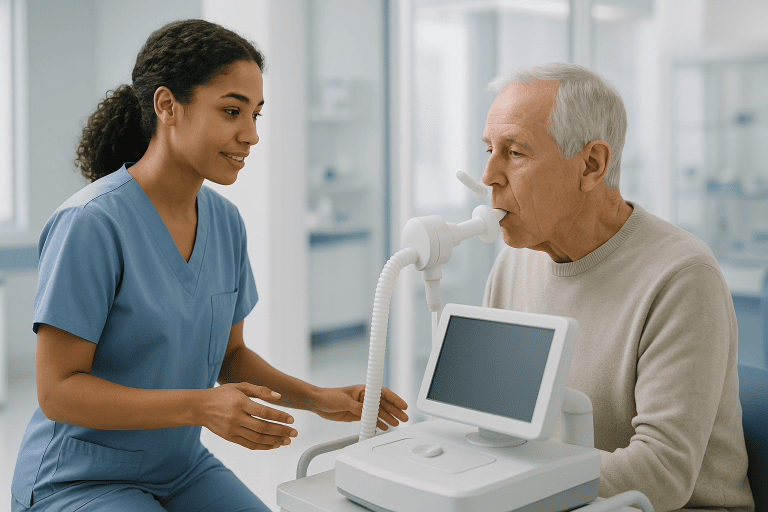
- Spirometry: the key test for COPD. You breathe forcefully into a device that measures how much air you can blow out and how quickly. A reduced ratio of the volume blown out in the first second to the total volume, which does not fully improve after an inhaled bronchodilator medicine, indicates airflow obstruction. Doctors use standardized thresholds to define obstruction and grade its severity.
- Additional lung function tests: measurements of total lung capacity and residual volume can show air trapping and over-inflation, while the diffusing capacity test (often abbreviated DLCO) assesses how well gas passes from the lungs into the blood. A low diffusing capacity is characteristic of emphysema and helps distinguish it from other causes of obstruction.
- Chest X-ray: may show over-inflated lungs, a flattened diaphragm and a narrow heart shadow, though early emphysema is often not visible on plain X-ray.
- Computed tomography (CT) scan: a detailed cross-sectional imaging study that can directly show the areas of destroyed lung tissue, their distribution and the presence of large air pockets called bullae. High-resolution CT is the most sensitive imaging method for emphysema and is also used when planning certain procedures.
- Arterial blood gas or pulse oximetry: measures oxygen and carbon dioxide levels in the blood to assess how well the lungs are exchanging gases, particularly in more advanced disease.
- Alpha-1 antitrypsin blood test: recommended by many guidelines for people diagnosed with COPD, especially those who are younger, have little smoking history or have a family history of lung or liver disease.
- Exercise testing, such as a six-minute walk test, to gauge functional capacity and oxygen needs during activity.
Doctors combine these findings with your symptoms and history of exacerbations to classify how severe the disease is. This staging guides decisions about medications, oxygen and referral for pulmonary rehabilitation or procedures.
Emphysema treatment options
The damage to alveoli in emphysema is generally considered permanent, so the goals of treatment are to relieve symptoms, slow further loss of lung function, prevent and treat exacerbations, and maintain the best possible quality of life. Emphysema treatment options are usually combined and adjusted over time according to how the disease is progressing.
Stopping smoking and avoiding irritants
Quitting smoking is the single most effective step for anyone with emphysema who still smokes, because it is the only intervention consistently shown to slow the rate of decline in lung function. Support can include counseling, nicotine replacement products and prescription medicines that reduce cravings. Reducing exposure to secondhand smoke, dust, fumes and polluted air is also advised.
Medications
- Bronchodilators are inhaled medicines that relax the muscles around the airways, making it easier to breathe. Short-acting types are used for quick relief; long-acting types, taken once or twice daily, are the mainstay of regular treatment. There are two main classes, beta-agonists and anticholinergics, which are often combined.
- Inhaled corticosteroids reduce airway inflammation and are usually added for people who have frequent exacerbations, often in a combination inhaler with long-acting bronchodilators.
- Oral medicines such as certain anti-inflammatory tablets or long-term low-dose antibiotics may be considered in selected people with repeated flare-ups.
- Antibiotics and short courses of oral steroids are commonly used to treat exacerbations.
- Vaccinations against influenza, pneumococcal pneumonia, COVID-19 and other respiratory infections are widely recommended to reduce the risk of exacerbations.
- Alpha-1 antitrypsin augmentation therapy, an infusion of the missing protein, may be offered to some people with the inherited deficiency.
Oxygen therapy
When blood oxygen levels are persistently low, supplemental oxygen delivered through a nasal tube or mask may be prescribed. In people with severe resting low oxygen, long-term oxygen used for many hours each day has been shown to improve survival. Oxygen does not help breathlessness in people whose oxygen levels are normal, so it is prescribed based on measurements rather than symptoms alone.
Pulmonary rehabilitation
Pulmonary rehabilitation is a structured program that combines supervised exercise training, education about the disease, breathing techniques, nutritional advice and psychological support. It does not repair lung tissue, but it often improves exercise capacity, reduces breathlessness and lowers the chance of hospital readmission after an exacerbation. Most guidelines recommend it for anyone with persistent symptoms despite medication.
Procedures and surgery
A minority of people with advanced emphysema may be considered for interventions that reduce the volume of the most damaged lung so that healthier areas and the breathing muscles can work more efficiently.
- Bronchoscopic lung volume reduction uses a flexible tube passed through the mouth to place small one-way valves or other devices in the airways leading to the most diseased parts of the lung, allowing trapped air to escape and that region to collapse. Careful CT and physiological assessment is needed to identify suitable candidates.
- Lung volume reduction surgery removes the most damaged portions of lung, usually in the upper lobes. It can improve breathing and exercise capacity in carefully selected people but carries meaningful surgical risk.
- Bullectomy is the removal of a very large air pocket (bulla) that is compressing healthier lung tissue.
- Lung transplantation may be an option for some people with very severe disease who meet strict criteria, after weighing the risks of major surgery and lifelong immune-suppressing medication.
Supportive care
Breathing exercises such as pursed-lip and diaphragmatic breathing, good nutrition to prevent muscle loss, treatment of other health conditions such as heart disease and osteoporosis, and attention to anxiety and depression are all part of comprehensive care. In advanced disease, palliative approaches to relieve breathlessness are an important component and can be provided alongside active treatment.
Living with emphysema and outlook
Emphysema is a chronic, progressive condition, which means it does not go away and tends to worsen over time. However, the speed of progression varies widely between individuals, and it is strongly influenced by whether a person continues to smoke, how well exacerbations are prevented and treated, and how consistently medications and rehabilitation are used. Many people live for years or decades with the condition while remaining active, especially when it is recognized relatively early.
Practical steps that often help include taking inhalers correctly, keeping a written action plan for what to do when symptoms flare, staying physically active within personal limits, maintaining a healthy weight, keeping up with vaccinations and avoiding people with colds or flu where possible. Learning to pace activities, using energy-saving techniques at home and checking air quality forecasts can make daily life more manageable. Emotional support matters too, since living with breathlessness can be frightening and isolating.
Doctors use measures such as lung function results, degree of breathlessness, exercise capacity, body weight and the number of exacerbations to estimate prognosis, but these are group-level tools and cannot predict exactly how any one person will do. Honest conversations about goals of care, including what treatments a person would or would not want if the disease becomes very severe, are encouraged as part of long-term planning.
Frequently asked questions
What is emphysema and how is it different from COPD?
Emphysema is a specific type of lung damage in which the air sacs are destroyed and enlarged. COPD is an umbrella term that includes emphysema and chronic bronchitis, and many people have features of both. Doctors often diagnose and treat the two together, which is why you may hear either term used to describe the same condition.
What are the first emphysema symptoms people notice?
The earliest sign is usually breathlessness during physical effort that seems out of proportion to a person’s age or fitness. Some people first notice a persistent cough, wheezing or repeated chest infections. Because these changes develop slowly, they are frequently overlooked for years, which is one reason smokers with any of these symptoms are encouraged to have their lung function tested.
What causes emphysema in non-smokers?
Emphysema causes in people who have never smoked include long-term exposure to secondhand smoke, indoor smoke from cooking or heating fuels, occupational dusts and chemical fumes, outdoor air pollution and the inherited alpha-1 antitrypsin deficiency. In some cases no clear cause is found, and genetic susceptibility is thought to contribute.
How is emphysema diagnosis confirmed?
Emphysema diagnosis relies mainly on spirometry, a breathing test that shows persistent airflow obstruction, supported by other lung function measurements and imaging. A CT scan can directly show the destroyed lung tissue. Your doctor may also check blood oxygen levels and, in many cases, test for alpha-1 antitrypsin deficiency.
Can emphysema be cured or reversed?
There is currently no cure, and lung tissue that has been destroyed does not regrow. Treatment can, however, relieve symptoms, reduce flare-ups and slow the decline in lung function, especially when smoking stops. Some people with advanced disease benefit from procedures that reduce lung volume, but these improve function rather than restore normal lungs.
What are the main emphysema treatment options?
The main emphysema treatment options are quitting smoking, inhaled bronchodilators with or without inhaled steroids, vaccinations, pulmonary rehabilitation and, when oxygen levels are low, long-term oxygen therapy. Selected people with severe disease may be evaluated for bronchoscopic valve placement, lung volume reduction surgery or lung transplantation.
Does everyone with emphysema need oxygen?
No. Oxygen is prescribed only when measurements show that blood oxygen levels are consistently low, because it does not relieve breathlessness in people with normal oxygen levels. Many people with emphysema never require it, while others may need it only during exertion, sleep or exacerbations.
When to see a doctor
Anyone with ongoing breathlessness, a cough that lasts more than a few weeks, wheezing or repeated chest infections should have their symptoms assessed, particularly if they smoke or have smoked in the past, work around dusts or fumes, or have a family history of lung disease. Early evaluation allows lung function to be measured and treatment to begin before further damage occurs.
If you have already been diagnosed with emphysema, seek medical care promptly if your usual treatment is not controlling a flare-up or if you notice a steady worsening of symptoms. The following are red-flag warning signs that need urgent, same-day or emergency attention:
- Severe shortness of breath that makes it hard to speak in full sentences or to walk a few steps
- Blue or gray lips, fingernails or face
- Confusion, extreme drowsiness or difficulty staying awake, which may indicate dangerously low oxygen or high carbon dioxide
- Rapid or irregular heartbeat along with breathlessness
- Chest pain, especially if sudden and sharp, which could signal a collapsed lung (pneumothorax) or a heart problem
- Coughing up blood
- High fever with worsening cough and colored mucus that does not respond to treatment
- Swelling of the ankles or legs combined with increasing breathlessness
- Reliever inhaler no longer providing relief or needed far more often than usual
Emergency services should be contacted immediately for sudden severe breathlessness, blue discoloration or confusion, as these situations can become life-threatening within minutes.
Medically reviewed by the Acıbadem International Medical Board September 9, 2026
See our medical review board →
Update history
- PublishedSeptember 9, 2026
- Medical review approvedSeptember 9, 2026
- Last content updateSeptember 9, 2026