Vertebroplasty: Candidacy, Procedure Steps, and Recovery Timeline

Vertebroplasty is designed to stabilize selected vertebral compression fractures and may reduce pain. The procedure is usually considered for persistent, localized pain linked to a recent fracture confirmed on imaging.
Key Takeaways
- Vertebroplasty is designed to stabilize selected vertebral compression fractures and may reduce pain.
- The procedure is usually considered for persistent, localized pain linked to a recent fracture confirmed on imaging.
- Recovery is often quicker than with open surgery, but follow-up and osteoporosis care remain important.
- Not every spinal fracture is suitable for vertebroplasty; careful imaging and specialist assessment guide candidacy.
- Benefits and risks should be weighed individually, especially in older adults and people with multiple health conditions.
Vertebroplasty is a minimally invasive procedure used to stabilize certain painful vertebral compression fractures by injecting medical bone cement into the affected spinal bone. It is most often considered when pain from a recent fracture remains significant despite rest, pain relief, bracing, and other conservative treatments.
Overview: what vertebroplasty is and who it may help
Vertebroplasty is a minimally invasive procedure that treats certain painful compression fractures of the spine. In this procedure, a specialist places a needle into the fractured vertebra and injects a special bone cement. The cement hardens quickly and helps stabilize the bone, which may reduce pain related to movement at the fracture site.
It is most commonly used for vertebral compression fractures caused by osteoporosis, although it may sometimes be considered for fractures related to cancer or other conditions that weaken bone. The main goal is pain control and improved function rather than correcting all spinal shape changes.
Vertebroplasty is not the first treatment for every spinal fracture. Many compression fractures improve with time, pain medicine, activity adjustment, physical support such as a brace, and treatment of the underlying bone disease. When pain remains severe or prevents basic daily activities, a doctor may discuss vertebroplasty as one possible next step.
How vertebroplasty works
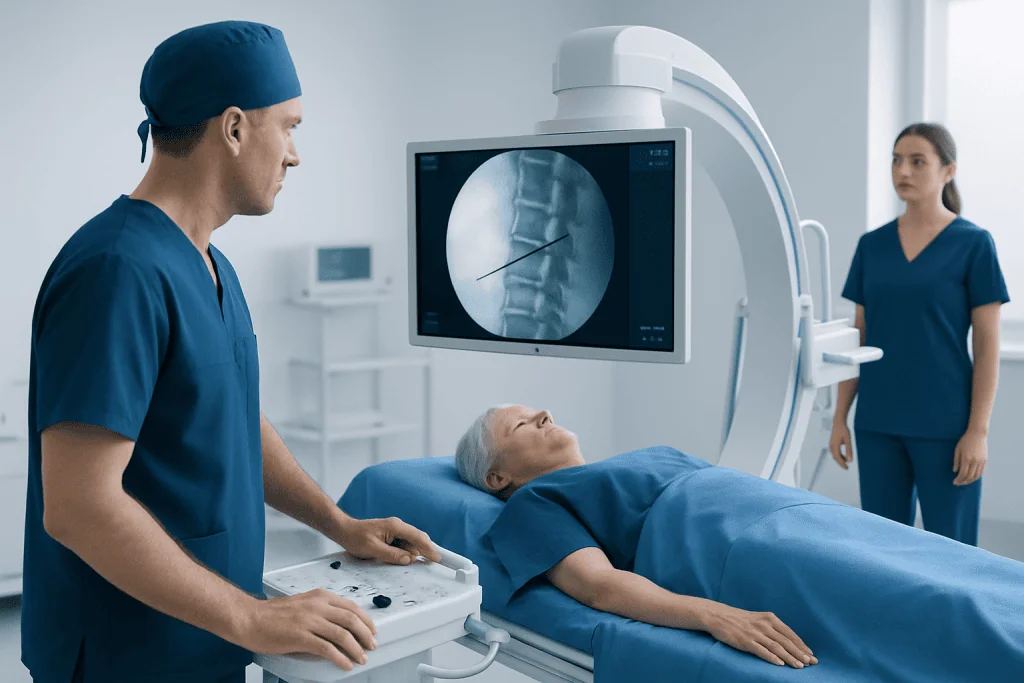
A vertebral compression fracture can create tiny movements within the weakened bone. These movements may trigger ongoing pain, especially when standing, walking, or changing position. Vertebroplasty works by filling part of the broken vertebra with medical-grade cement, which stabilizes the area internally.
The procedure does not reverse osteoporosis or heal every cause of back pain. Instead, it targets pain that matches a specific fractured vertebra seen on imaging. This is why careful selection is important: if the discomfort is due to muscle strain, nerve compression, arthritis, or older healed fractures, vertebroplasty is less likely to help.
Doctors may compare vertebroplasty with other approaches, including continued conservative care or kyphoplasty. In some situations, a person being evaluated for a painful spinal fracture may also need assessment for related conditions such as osteoporosis or, less commonly, scoliosis if spinal alignment is contributing to symptoms.
Candidacy: when vertebroplasty may be considered

Good candidacy for vertebroplasty usually depends on a combination of symptoms, imaging findings, and the response to non-surgical treatment. A person may be considered when there is a recent vertebral compression fracture, pain is clearly localized to that level, and standard treatments have not provided enough relief after an appropriate trial.
Imaging often includes X-rays and may also include MRI or CT scans. MRI can be especially helpful because it can show whether a fracture is recent and active, which increases the chance that the painful area truly matches the abnormality seen on scans.
Vertebroplasty may be less suitable or not advised in some situations. These can include fractures causing major spinal canal compromise, active infection, uncorrected bleeding problems, allergy to procedural materials, or pain that does not appear to come from the fractured vertebra. Candidacy also depends on overall health, mobility goals, and whether the expected benefits outweigh the risks.
- Recent painful osteoporotic compression fracture
- Pain severe enough to limit walking, sleep, or self-care
- Symptoms persisting despite medicines, rest, or bracing
- Imaging confirmation that the painful fracture is the treatment target
Procedure steps: what happens before, during, and right after
Before vertebroplasty, the medical team reviews imaging, medicines, allergies, and any history of bleeding or infection. Blood-thinning medicines may need special instructions, and the person is typically advised when to stop eating or drinking before the procedure. Consent includes a discussion of expected benefits, limits, and possible complications.
During the procedure, the patient usually lies face down on a special table. The skin is cleaned, and local anesthetic is used to numb the area; some people also receive sedation. Using live imaging guidance, the specialist advances a needle into the affected vertebra and slowly injects bone cement while monitoring its spread carefully.
The cement hardens within a short time. Afterward, the patient is monitored for a few hours, with attention to pain control, blood pressure, comfort, and ability to move safely. Many people go home the same day, although some stay longer depending on age, symptoms, or other medical conditions. In selected cases, the broader plan may also include spine surgery if there are other structural problems that vertebroplasty alone cannot address.
Recovery timeline, expected results, and follow-up care
Recovery after vertebroplasty is often relatively quick. Some people notice pain relief within hours to a few days, while others improve more gradually over one to two weeks. Mild soreness at the needle site can occur temporarily and usually settles with simple measures recommended by the care team.
Many patients can stand, walk, and return to light daily activities soon after the procedure, but heavy lifting and strenuous movement are usually limited at first. The doctor may recommend a gradual increase in activity based on age, fracture severity, balance, and overall physical condition.
Follow-up care is an important part of recovery because vertebroplasty treats the fracture, not the underlying cause of weak bones. This may include bone density assessment, falls prevention, nutrition review, physical therapy, and treatment to strengthen bone health. If pain continues or new symptoms develop, the medical team may reassess for another fracture, nerve-related pain, or a different spinal condition.
- Same day: observation, walking assessment, discharge instructions
- First few days: monitor pain relief and needle-site soreness
- First 1-2 weeks: gradual return to routine activities
- Longer term: osteoporosis treatment, exercise guidance, and fracture prevention
Benefits, risks, and limitations
The potential benefit of vertebroplasty is meaningful pain relief in carefully selected patients, often with faster mobilization than would be expected from prolonged bed rest alone. Better movement can help reduce deconditioning, support self-care, and improve confidence in daily activities, especially in older adults recovering from an osteoporotic fracture.
Like all procedures, vertebroplasty has risks. These may include bleeding, infection, allergic reaction, temporary increase in pain, and leakage of bone cement outside the vertebra. In rare cases, leaked cement may irritate nearby tissues or travel into blood vessels. Because of these possibilities, the procedure should be performed by an experienced team using imaging guidance and careful technique.
It is also important to understand the limits of treatment. Vertebroplasty does not cure all back pain, restore all lost vertebral height, or prevent future fractures on its own. People with persistent pain may still need rehabilitation, ongoing pain management, or evaluation for related conditions such as nerve compression, unstable fractures, or advanced degenerative spinal disease.
When to seek medical care
Medical evaluation is important for sudden back pain after a fall, minor strain, or even routine movement in someone at risk of osteoporosis. A new compression fracture can sometimes happen after seemingly small stress, particularly in older adults. Early assessment helps confirm the diagnosis and guide the safest treatment plan.
Urgent medical attention is needed if back pain occurs with leg weakness, numbness, loss of bladder or bowel control, fever, or severe pain after significant trauma. These symptoms may suggest a more serious spinal problem that requires prompt evaluation and may not be appropriate for vertebroplasty.
Persistent pain that limits walking, sleep, or basic activities despite rest and medication also deserves specialist review. Near the end of the care pathway, a center with multidisciplinary spine, radiology, and bone-health expertise can be helpful; Acibadem International’s specialists in JCI-accredited hospitals diagnose and treat vertebral compression fractures for international patients, including minimally invasive options when suitable.
Frequently asked questions
Is vertebroplasty the same as kyphoplasty?
No. Both procedures aim to treat certain painful vertebral compression fractures, but they are performed differently. Kyphoplasty typically uses a balloon-like device to create space before cement is placed, while vertebroplasty injects cement directly into the vertebra.
How long does vertebroplasty take?
The procedure itself is often completed within about an hour, although total time at the hospital can be longer. Preparation, imaging review, recovery monitoring, and discharge instructions all add to the visit.
How soon can someone walk after vertebroplasty?
Many people are able to stand and walk on the same day after the procedure, once the medical team confirms it is safe. Activity is usually increased gradually, and the exact timeline depends on pain level, age, balance, and other health issues.
Does vertebroplasty cure osteoporosis?
No. Vertebroplasty stabilizes a specific fracture, but it does not treat the underlying bone thinning. Ongoing osteoporosis care is still important to reduce the risk of future fractures.
Will all back pain improve after vertebroplasty?
Not necessarily. Vertebroplasty is most likely to help when pain clearly comes from a recent vertebral compression fracture confirmed on imaging. Back pain from arthritis, muscles, nerves, or older healed fractures may require different treatment.
Is vertebroplasty a major surgery?
It is generally considered a minimally invasive procedure rather than major open surgery. It is usually done with local anesthetic and imaging guidance, and many patients go home the same day.
References
- National Institute of Arthritis and Musculoskeletal and Skin Diseases
- Radiological Society of North America
- American Academy of Orthopaedic Surgeons
- North American Spine Society
- International Osteoporosis Foundation
This article is for general information only and is not a substitute for professional medical advice. Please consult a qualified doctor about your individual situation.
Joint and spine care in Turkey — expert assessment & treatment
JCI-accredited · board-certified surgeons · reply within 24h

More from the Health Library



Related Specialists

Assoc. Prof. Dr. Alpay Medetalibeyoğlu
Internal Medicine
Dr. Tahir Ateş
Gynecology & Obstetrics
Dr. Cem Ortacbayram
Neurology
Dr. Hakan Kutlu
Infectious Diseases & Clinical Microbiology