Low Impact Exercises: An Evidence-Based Guide for Patients

Low impact exercises can improve heart health, strength, balance, flexibility, and mood while being gentler on joints. Walking, cycling, swimming, water exercise, yoga, Pilates, and strength training can all be low impact.
Key Takeaways
- Low impact exercises can improve heart health, strength, balance, flexibility, and mood while being gentler on joints.
- Walking, cycling, swimming, water exercise, yoga, Pilates, and strength training can all be low impact.
- Low impact does not always mean low intensity; workouts can be adapted for different fitness levels and goals.
- Good technique, gradual progression, and proper footwear help reduce discomfort and lower injury risk.
- People with pain, chronic conditions, or recent surgery should ask a qualified clinician for individualized advice before starting a new program.
Low impact exercises are physical activities that raise the heart rate, build strength, and support mobility while placing less stress on the joints than high-impact movement. They can be a practical option for beginners, older adults, people returning after injury, and anyone looking for a sustainable exercise routine.
Overview: what low impact exercises are
Low impact exercises are activities designed to move the body with less jarring force through the joints, especially the knees, hips, ankles, and spine. In practical terms, this usually means at least one foot stays in contact with the ground, or the activity is supported by water, a bike, or a machine. These exercises can still improve cardiovascular fitness, muscle strength, flexibility, and balance.
For many people, low impact exercises are a useful way to stay active when high-impact movements such as running, jumping, or certain sports feel uncomfortable or are not recommended. They may suit older adults, people with excess body weight, those recovering from illness or injury, and anyone easing into regular physical activity. They are also helpful for people who want variety in their routine or need active recovery days.
Importantly, low impact does not mean ineffective. A brisk walk, a challenging cycling session, or a well-planned strength workout can still raise the heart rate and build fitness. The main difference is that these activities place less repetitive loading on the joints than higher-impact exercise.
Benefits for fitness, joints, and overall health
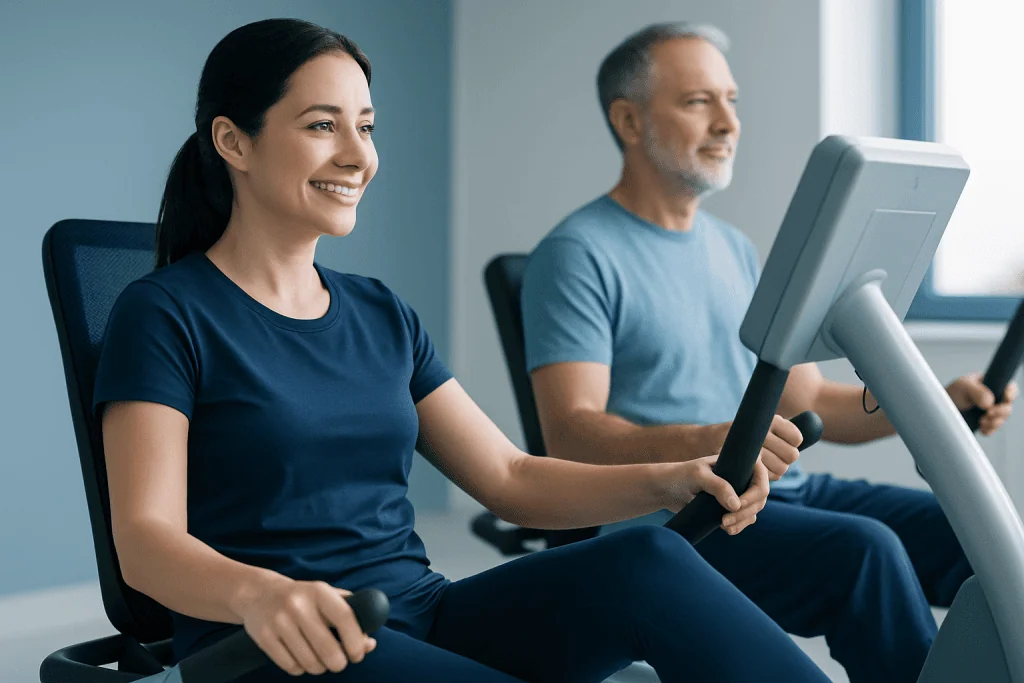
Regular low impact exercises can support many aspects of health. Aerobic activities such as walking, swimming, or cycling help the heart and lungs work more efficiently. Strength-based low impact routines help preserve muscle mass, support metabolism, and improve day-to-day function such as climbing stairs, carrying groceries, or getting up from a chair.
Because these activities are often easier to tolerate, they may be more sustainable over time. Consistency is one of the most important parts of any exercise plan. When movement feels manageable, people are often more likely to continue, which can help with long-term weight management, blood sugar control, sleep quality, and emotional well-being.
Low impact movement may also be helpful for people with joint symptoms or mobility limitations. It can reduce stiffness, support range of motion, and improve confidence with movement. For some people with persistent knee, hip, or back symptoms, a clinician may recommend an individualized program and, when appropriate, evaluation for related conditions such as knee pain or osteoarthritis.
- Supports cardiovascular health
- Builds or maintains muscle strength
- Improves flexibility, balance, and coordination
- May reduce joint strain compared with high-impact activity
- Can be adapted for many ages and fitness levels
Types of low impact exercises

Many forms of movement can be low impact. Walking is one of the most accessible options and can be adjusted by changing pace, hills, or duration. Stationary cycling and elliptical training provide cardiovascular exercise with less pounding than running. Swimming and water aerobics are especially joint-friendly because the water helps support body weight.
Mind-body exercise can also be useful. Yoga and Pilates may improve flexibility, core strength, posture, breathing control, and balance. Depending on the style and the person’s medical history, some positions may need modification. Gentle classes or beginner programs are often the best place to start.
Strength training can be low impact as well. Bodyweight exercises, resistance bands, and light free weights can improve muscle support around the joints. Helpful examples include seated or supported squats, wall push-ups, step-ups, glute bridges, and rowing movements. Some people benefit from supervised physical therapy and rehabilitation to learn safe technique and build confidence, especially after injury or surgery.
A balanced routine often combines more than one type of exercise:
- Aerobic: walking, cycling, swimming, water exercise, rowing machine
- Strength: resistance bands, bodyweight exercises, light weights, machines
- Mobility and flexibility: stretching, gentle yoga, range-of-motion exercises
- Balance: tai chi, single-leg support drills, heel-to-toe walking
Who may benefit most and how to choose the right activity
Low impact exercises can benefit almost anyone, but they are especially useful for people starting exercise for the first time, returning after a break, managing joint discomfort, living with obesity, or recovering from some medical conditions. They may also be a good fit during pregnancy or older age, although exercise choices should match the person’s health status and clinician’s advice.
The best activity is usually the one a person can do safely, regularly, and with reasonable comfort. Choice depends on symptoms, goals, access to equipment, and personal preference. Someone seeking better cardiovascular fitness may enjoy brisk walking or cycling. A person focused on flexibility and balance may prefer yoga or tai chi. Someone with joint pain may find water-based exercise easier to tolerate.
Medical history matters. People with known heart disease, lung disease, diabetes, significant arthritis, nerve problems, or recent orthopedic injury may need professional guidance before increasing activity. If pain is persistent or severe, a specialist may suggest assessment and treatment options related to orthopedics and traumatology or an individualized rehabilitation program.
How to start safely and build a sustainable routine
Starting slowly is one of the safest approaches. Many people do well by beginning with short sessions, such as 10 to 15 minutes, and gradually increasing time, frequency, or intensity. A gentle warm-up before exercise and a short cool-down afterward can help the body adjust and may reduce stiffness.
It is often helpful to use the “talk test” for aerobic exercise. During moderate-intensity activity, a person should be able to talk but not sing comfortably. This offers a practical way to judge effort without needing special equipment. Pain is another guide: mild muscle effort is expected, but sharp, worsening, or lingering joint pain should not be ignored.
Good footwear, proper form, and suitable surfaces can make movement more comfortable. Supportive shoes may improve walking tolerance, while correctly adjusted bike settings can reduce knee or back strain. Structured exercise plans are not always necessary, but some people benefit from guided instruction, particularly if they have balance concerns, weakness, or prior injury.
- Begin with realistic goals
- Increase one variable at a time: duration, intensity, or frequency
- Schedule rest and recovery days
- Track progress with a simple journal or app
- Stop and seek advice if symptoms significantly worsen
Common concerns: joint pain, weight loss, and chronic conditions
People often ask whether low impact exercises are enough for weight loss or meaningful fitness gains. In many cases, yes. Weight management depends on overall energy balance, eating patterns, sleep, stress, and consistency over time. Low impact cardio and strength training can both support these goals, especially when done regularly and paired with a realistic nutrition plan.
Another common concern is whether exercise might worsen arthritis or back pain. For many people, appropriate movement actually helps reduce stiffness and improve function. However, the type, amount, and technique matter. Exercises may need modification during painful flare-ups, and certain medical conditions require more specific guidance. Persistent back symptoms may sometimes overlap with problems such as herniated disc.
People with chronic diseases should not assume exercise is off limits. In fact, carefully chosen physical activity is often part of treatment for conditions such as type 2 diabetes, hypertension, and osteoarthritis. The safest plan is individualized, especially for those with balance problems, neuropathy, osteoporosis, recent surgery, or cardiovascular disease. In selected cases, specialist-led sports medicine care can help adapt exercise to pain, performance, and recovery needs.
When to seek medical care
Most people can begin gentle low impact exercises safely, but medical review is sensible in some situations. A person should speak with a qualified clinician before starting a new routine if they have chest pain with exertion, unexplained shortness of breath, fainting, severe joint swelling, major mobility limitations, or a recent injury or surgery. Guidance is also important for those with complex medical conditions or substantial changes in health.
Medical advice should also be sought if exercise repeatedly causes sharp pain, visible swelling, numbness, weakness, or symptoms that continue beyond normal post-exercise soreness. New back pain, joint locking, instability, or pain that disrupts sleep can suggest a need for assessment. The goal is not to avoid movement, but to identify the safest way to stay active.
For international patients who need evaluation and rehabilitation planning, Acibadem International’s multidisciplinary specialists and JCI-accredited hospitals diagnose and treat musculoskeletal and mobility-related concerns with individualized care.
Frequently asked questions
Are low impact exercises good for beginners?
Yes. Low impact exercises are often a practical starting point because they are usually easier on the joints and can be adjusted to different fitness levels. Beginners can start with short sessions and increase gradually as comfort, strength, and stamina improve.
Can low impact exercises help with weight loss?
They can support weight loss when combined with consistent habits over time, including nutrition, sleep, and regular activity. Walking, cycling, swimming, and strength training can all contribute to calorie use and improved body composition.
Is walking considered a low impact exercise?
Yes, walking is one of the most common low impact exercises. It can be made easier or more challenging by changing the pace, distance, incline, or terrain.
What is the difference between low impact and low intensity?
Low impact refers to the amount of stress or force placed on the joints during movement. Low intensity refers to how hard the body is working. An exercise can be low impact but still moderately or vigorously intense, such as fast cycling or swimming laps.
Are low impact exercises safe for people with arthritis?
They are often recommended because they can improve mobility, strength, and function with less joint stress than high-impact activities. However, the best program depends on the person's symptoms, joints involved, and overall health, so medical guidance may be helpful.
How often should someone do low impact exercises?
This depends on age, medical history, and goals, but many adults aim to be active on most days of the week. A balanced routine may include aerobic activity, strength training, flexibility work, and recovery time, adjusted to the individual's needs.
References
- World Health Organization
- American College of Sports Medicine
- Centers for Disease Control and Prevention
- National Institute on Aging
- National Institute of Arthritis and Musculoskeletal and Skin Diseases
This article is for general information only and is not a substitute for professional medical advice. Please consult a qualified doctor about your individual situation.
Joint and spine care in Turkey — expert assessment & treatment
JCI-accredited · board-certified surgeons · reply within 24h
Add us as a Preferred Source to see more of our trusted health content across Google Search, AI Overviews and Discover.
Check your numbers in seconds
BMI, calories, due date, blood pressure and 30+ more clinical calculators — free, instant, doctor-reviewed ranges.

More from the Health Library


Related Specialists

Prof. Dr. Pınar Yalınay Dikmen
Neurology
Dr. Tülay Tekin
Acibadem Life Clinical Service
Assoc. Prof. Dr. Sebahat Nacar Doğan
Radiology
Büşra Zeybek
Physical Medicine & Rehabilitation