Bug Bite Is Bruising: An Evidence-Based Guide for Patients

A bruised-looking bug bite is not always dangerous, but it should be watched for changes. Scratching, pressure, and inflammation can make a bite turn purple, blue, or dark red.
Key Takeaways
- A bruised-looking bug bite is not always dangerous, but it should be watched for changes.
- Scratching, pressure, and inflammation can make a bite turn purple, blue, or dark red.
- Warning signs include spreading redness, warmth, severe pain, fever, or trouble breathing.
- Most mild bites improve with cool compresses, gentle skin care, and avoiding scratching.
- A doctor should assess bites that worsen, do not heal, or are linked to systemic symptoms.
A bug bite that looks bruised is often caused by local bleeding under the skin, scratching, or a stronger inflammatory reaction. In some cases, however, bruising around a bite can point to infection, an allergic reaction, or another condition that needs medical attention.
What it means when a bug bite is bruising
If a bug bite is bruising, the most common explanation is small blood vessels under the skin have been irritated or damaged. This can happen from the bite itself, from rubbing or scratching, or from a stronger-than-usual inflammatory response. The area may look blue, purple, red-brown, or dark pink instead of the more typical raised red bump.
In many cases, this kind of discoloration is temporary and improves as the skin heals. However, a bruised bug bite is not something to ignore if it is getting larger, more painful, or is accompanied by warmth, pus, fever, or other symptoms. Those changes can suggest infection or another medical issue rather than simple irritation.
The appearance also depends on the type of insect, the person’s skin tone, age, medications, and overall health. Some people bruise more easily, especially if they take blood thinners or have fragile skin. Because of this, two people can react very differently to similar bites.
Why a bite may look purple, blue, or dark red
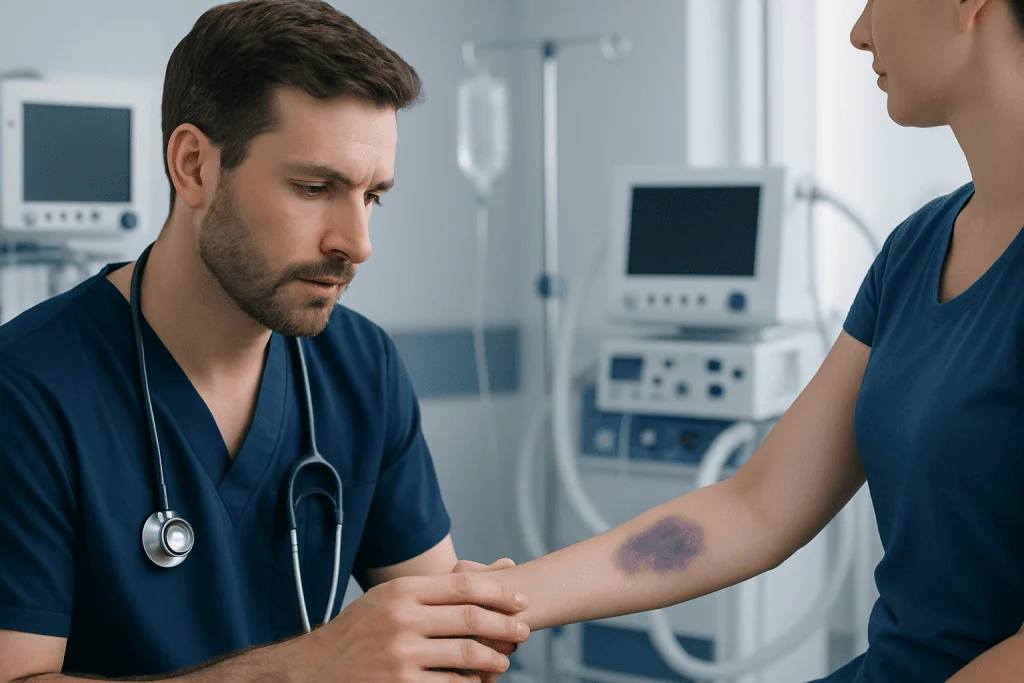
A bruise forms when tiny blood vessels called capillaries break and a small amount of blood leaks into surrounding tissue. With bug bites, this can happen because the insect’s mouthparts injure the skin, or because scratching and rubbing create extra trauma. As the body reabsorbs the blood, the color may shift from red to purple, then yellow-brown before fading.
Inflammation can also make a bite appear darker than expected. The body’s immune response brings more blood flow and immune cells to the area, which may cause swelling, tenderness, and changes in color. In some people, especially those with sensitive skin or a history of allergic skin reactions, the discoloration can be more dramatic.
Not every dark or purple spot after a bite is a bruise. Sometimes what looks like bruising may actually be a rash, a blister with blood inside, or post-inflammatory skin discoloration. A clinician may consider other skin conditions if the mark does not behave like a typical healing bite, including eczema or contact irritation from creams, adhesives, or plant exposure near the bite.
Common causes and risk factors

Several factors can make bruising after an insect bite more likely. Bites from mosquitoes, fleas, bedbugs, horseflies, and some spiders may trigger more noticeable local skin reactions. Repeated bites in the same area can also lead to greater irritation and discoloration.
Individual risk factors matter as well. Bruising may be more common in older adults, people with delicate skin, and those who take medications that affect clotting such as anticoagulants, antiplatelet medicines, or frequent anti-inflammatory drugs. Certain medical conditions that influence blood vessels, platelets, or immune responses can also change how a bite looks and heals.
Local infection is another important cause of worsening color change. If bacteria enter the skin through scratching, the area may become increasingly red, warm, swollen, and painful. In some cases, a bite can act as the starting point for cellulite, which needs medical evaluation and treatment.
- Scratching or squeezing the bite
- Fragile skin or easy bruising
- Blood-thinning medication
- Multiple bites close together
- Stronger allergic or inflammatory skin reactions
- Skin infection after the bite
Symptoms to watch and how to tell what is not typical
A mild bite that bruises usually stays small and gradually improves over several days. It may itch, feel slightly sore, and show a limited area of discoloration around the center. The skin should not keep swelling significantly or become progressively more painful.
Features that are less typical include rapidly spreading redness, marked warmth, firm swelling, severe tenderness, blisters, drainage, or a dark center that looks like tissue damage. These findings do not always mean a serious problem, but they do deserve attention. If the area is expanding instead of fading, it should not be assumed to be a simple bruise.
Whole-body symptoms are especially important. Fever, chills, nausea, dizziness, widespread hives, facial swelling, wheezing, or trouble breathing may signal an allergic reaction or infection and need urgent medical care. A doctor may also need to assess bites that occur near the eye, inside the mouth, or over joints if movement becomes painful.
How doctors evaluate a bruised bug bite
Diagnosis usually begins with a history and skin examination. A doctor may ask when the bite occurred, whether the insect was seen, how the color has changed, and whether there is itching, pain, fever, or drainage. Photos taken over time can be useful because they show whether the area is getting larger or healing.
The examination focuses on the skin’s color, temperature, size of the affected area, and signs of infection or allergic reaction. In most uncomplicated cases, tests are not needed. If the bruise is unusually large, frequent unexplained bruising is present elsewhere, or healing is delayed, the clinician may consider blood tests or evaluation for other causes.
Sometimes a bruised bite overlaps with other skin problems, including hives, dermatitis, or infection. If there is concern about a deeper skin infection, doctors may recommend prompt treatment rather than waiting. Depending on findings, care may involve a dermatologist, primary care physician, or an assessment by a dermatology specialist.
Treatment and home care
Most bruised insect bites improve with simple supportive care. A cool compress can reduce swelling and discomfort, and gentle washing with soap and water helps protect the skin. It is best to avoid scratching, picking, or applying harsh products that can increase irritation.
If itching is the main problem, a doctor or pharmacist may suggest an appropriate anti-itch treatment. When pain or swelling is more noticeable, general symptom relief may help, but any medication choice should follow medical advice, especially for children, pregnant individuals, or people taking blood thinners. If infection is suspected, medical treatment may be needed rather than home remedies alone.
Medical treatment depends on the cause. A stronger allergic-type skin reaction may be managed differently from a bacterial infection. If the bite has led to a concerning skin infection, treatment may include evaluation through infectious diseases care or other specialist support. For persistent or unclear rashes, skin-focused follow-up can help distinguish a healing bruise from another condition.
- Use a cold pack wrapped in cloth for short periods
- Keep the area clean and dry
- Avoid scratching and tight clothing over the bite
- Monitor the size, color, and symptoms each day
- Seek medical advice if redness, pain, or warmth increases
Prevention and when to seek medical care
Preventing insect bites is the best way to avoid bruising and other reactions. Using insect repellent as directed, wearing long sleeves in high-exposure areas, keeping window screens in good condition, and checking bedding or pets when relevant can all reduce risk. Promptly washing bites and trimming nails can also help prevent infection from scratching.
Medical care should be sought promptly if a bruised bite is getting larger, feels hot, becomes very painful, drains pus, or is associated with fever. Urgent care is also needed for difficulty breathing, swelling of the lips or tongue, faintness, or widespread hives. People with diabetes, immune suppression, bleeding disorders, or a history of severe allergic reactions should be especially cautious.
If a bite is not improving after several days, keeps recurring, or leaves significant skin changes, a professional assessment is sensible. Acibadem International’s multidisciplinary specialists in JCI-accredited hospitals diagnose and treat skin and infection-related concerns for international patients, including evaluation through allergy care when reactions may be involved.
Frequently asked questions
Is it normal for a bug bite to bruise?
A bug bite can bruise, and this is often due to minor bleeding under the skin, inflammation, or scratching. It may still be normal if the area stays limited and gradually improves. If it becomes more painful, swollen, warm, or spreads, medical advice is recommended.
Why is my bug bite turning purple?
A purple color often means there is some blood under the skin or a stronger local reaction around the bite. Rubbing, pressure, and easy bruising can make this more noticeable. It should slowly fade rather than continue to darken or enlarge.
How can someone tell if a bruised bug bite is infected?
Infection is more likely if the skin becomes increasingly red, warm, tender, and swollen, or if pus develops. Fever or feeling unwell can also be warning signs. A simple bruise usually fades, while infection often worsens over time.
Should a bruised bug bite be treated at home or by a doctor?
Small, improving bites can often be managed at home with cool compresses, gentle skin care, and avoiding scratching. A doctor should assess the bite if symptoms are worsening, the discoloration is spreading, or there are signs of infection or allergy. People with underlying medical conditions may need earlier evaluation.
Can scratching make a bug bite bruise?
Yes. Scratching can break tiny blood vessels under the skin and make the area look darker or bruised. It can also increase the risk of skin infection, which is why it is best to keep the area clean and avoid picking at it.
When is a bug bite an emergency?
Emergency care is needed if there is trouble breathing, swelling of the face or throat, faintness, or widespread hives after a bite. These symptoms may signal a serious allergic reaction. Rapidly worsening pain, fever, or extensive skin changes also need urgent medical attention.
References
- American Academy of Dermatology
- Centers for Disease Control and Prevention
- National Health Service
- Mayo Clinic
- World Health Organization
This article is for general information only and is not a substitute for professional medical advice. Please consult a qualified doctor about your individual situation.
Explore treatments in Turkey — costs, top hospitals & a free quote
JCI-accredited · board-certified surgeons · reply within 24h
Add us as a Preferred Source to see more of our trusted health content across Google Search, AI Overviews and Discover.