Plantar Fasciitis Treatment Shockwave Therapy: Diagnosis, Outlook, and Modern Treatment Approaches
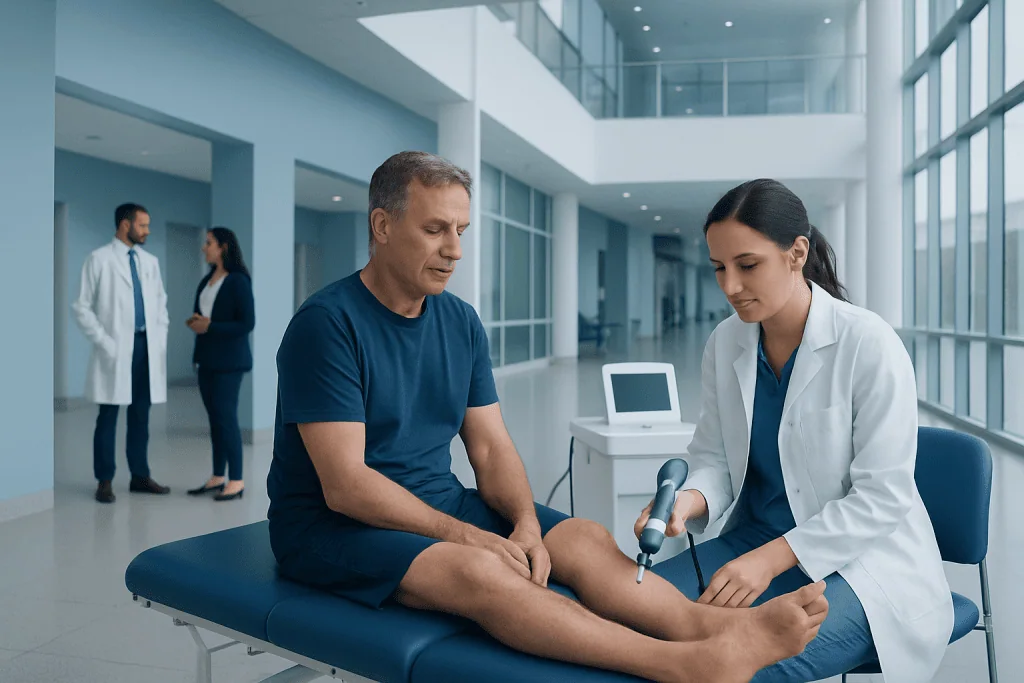
Plantar fasciitis usually causes pain under the heel that is often most noticeable with the first steps after rest. Most people improve with non-surgical measures such as stretching, activity modification, supportive footwear, and targeted rehabilitation.
Key Takeaways
- Plantar fasciitis usually causes pain under the heel that is often most noticeable with the first steps after rest.
- Most people improve with non-surgical measures such as stretching, activity modification, supportive footwear, and targeted rehabilitation.
- Shockwave therapy delivers acoustic energy to the painful area and may help selected people with persistent plantar fasciitis.
- Imaging is not always required, but it can be useful when symptoms are atypical, severe, or not improving.
- Sudden inability to bear weight, marked swelling, fever, numbness, or pain after injury should be assessed promptly.
Plantar fasciitis treatment shockwave therapy is a non-surgical option that may be considered for ongoing heel pain after a well-guided course of conservative care. A clinical assessment is important because several foot and nerve conditions can cause similar symptoms, and treatment should be tailored to the person’s activity, health, and recovery goals.
Overview: Where Shockwave Therapy Fits
Plantar fasciitis treatment shockwave therapy is a non-surgical treatment option for some people with persistent heel pain caused by plantar fasciitis. It is generally considered after an appropriate period of conservative care, such as stretching, supportive footwear, activity adjustment, and rehabilitation, has not provided sufficient relief. It is not usually the first treatment needed for new heel pain.
The plantar fascia is a strong band of connective tissue that runs from the heel bone to the toes and supports the arch of the foot. Repeated loading can irritate this tissue and nearby structures, leading to pain that is commonly felt on the underside of the heel. Although the name suggests inflammation, longer-lasting cases may involve tissue thickening and degeneration as well as inflammation.
Extracorporeal shockwave therapy, often called ESWT, uses sound-wave energy delivered through the skin to the area of pain. The aim is to influence pain signaling and stimulate the body’s repair processes. Outcomes vary, but evidence supports its use for selected adults with chronic plantar heel pain, particularly when structured conservative treatment has been unsuccessful.
Recognizing Plantar Fasciitis Symptoms
The typical symptom is sharp, stabbing, or aching pain at the bottom of the heel, often close to the inner edge. Pain is frequently strongest with the first steps in the morning or after sitting for a long time. It may ease as the person moves around, then return after prolonged standing, walking, running, or other weight-bearing activity.
Some people notice stiffness through the sole of the foot or tightness in the calf and Achilles tendon. Symptoms may develop gradually rather than beginning with a single injury. Both feet can be affected, although one side is often more painful.
Not all heel pain is plantar fasciitis. Pain at the back of the heel may be related to the Achilles tendon or a bursa. Burning, tingling, or numbness can suggest nerve irritation. A clinician can help distinguish plantar fasciitis from conditions such as heel spurs, stress injury, arthritis, or nerve compression, which may require different management.
Why It Develops and Who May Be Affected
Plantar fasciitis often develops when the plantar fascia is repeatedly loaded beyond what it can comfortably tolerate. A sudden increase in running, walking, standing at work, hill training, or a change in exercise surface can contribute. It can also occur without an obvious trigger.
Factors that may increase risk include tight calf muscles, limited ankle movement, reduced foot and hip strength, high-impact activity, prolonged standing, and shoes that do not provide adequate comfort or support for the individual. Foot shape and mechanics may play a role, but no single foot type explains all cases.
Body weight, age-related changes in tissue resilience, and certain occupations can increase strain on the feet. However, plantar fasciitis can affect active people of many ages and body types. Identifying contributing factors is useful because the plan should address both pain and the loading pattern that may be sustaining it.
- A recent increase in activity or time spent standing
- Calf tightness or reduced ankle flexibility
- Unsupportive, worn, or poorly fitting footwear
- High-impact sport, especially with inadequate recovery
- Long-standing foot pain that has altered walking patterns
Diagnosis and the Role of Imaging
Diagnosis is usually clinical. A doctor, physiotherapist, or foot specialist will ask where the pain is located, when it occurs, how long it has been present, and what activities affect it. They will examine the foot, ankle, calf, walking pattern, and range of motion. Tenderness near the inner underside of the heel and pain triggered by stretching the plantar fascia are common findings.
Routine imaging is often unnecessary when symptoms are typical. If the pain is unusual, follows a significant injury, persists despite appropriate care, or raises concern for another cause, the clinician may recommend imaging. X-rays can help evaluate bone injury or arthritis, while ultrasound or magnetic resonance imaging may assess the plantar fascia and surrounding soft tissues.
A heel spur seen on an X-ray does not automatically explain heel pain. Many people have heel spurs without symptoms, and many people with plantar fasciitis do not have a spur. The diagnosis and treatment plan should therefore be based on the person’s symptoms and examination rather than an imaging finding alone.
Conservative Care Before and Alongside Shockwave Therapy
Most cases improve without surgery. Early management commonly combines relative activity modification with a gradual return to tolerated activity. Complete rest is not always necessary or helpful, but temporarily reducing activities that clearly aggravate pain may allow symptoms to settle.
Targeted rehabilitation is a central part of recovery. This may include calf and plantar fascia stretching, strengthening exercises for the foot and lower leg, and gradual loading exercises designed by a qualified clinician. Supportive shoes, cushioning insoles, heel cups, or custom orthoses may help some people, especially when they make daily walking more comfortable.
Other options may include ice after aggravating activity, short-term pain relief medication when medically appropriate, taping, or a night splint for selected patients. A clinician can advise on safety, particularly for people with stomach, kidney, heart, bleeding, or medication-related risks. Physical therapy and rehabilitation can help build a practical plan that supports healing while maintaining safe movement.
Improvement is often gradual. Following the program consistently and progressing activity carefully are usually more important than any single device or treatment. If symptoms remain limiting after several months of well-performed conservative care, reassessment can identify whether shockwave therapy or another approach is appropriate.
How Shockwave Therapy Is Performed and What to Expect
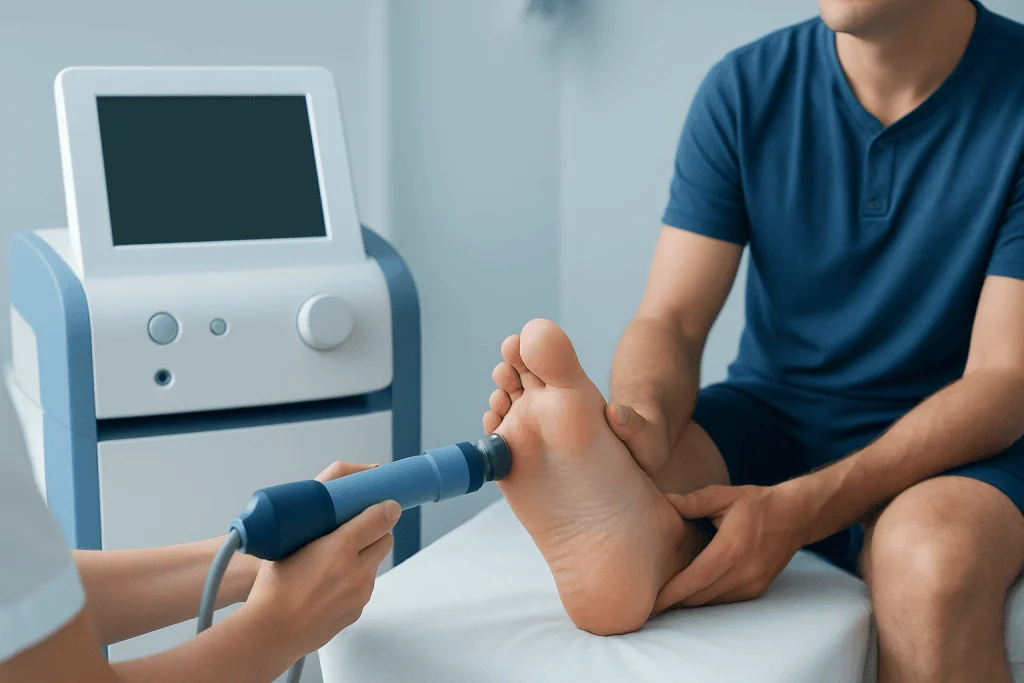
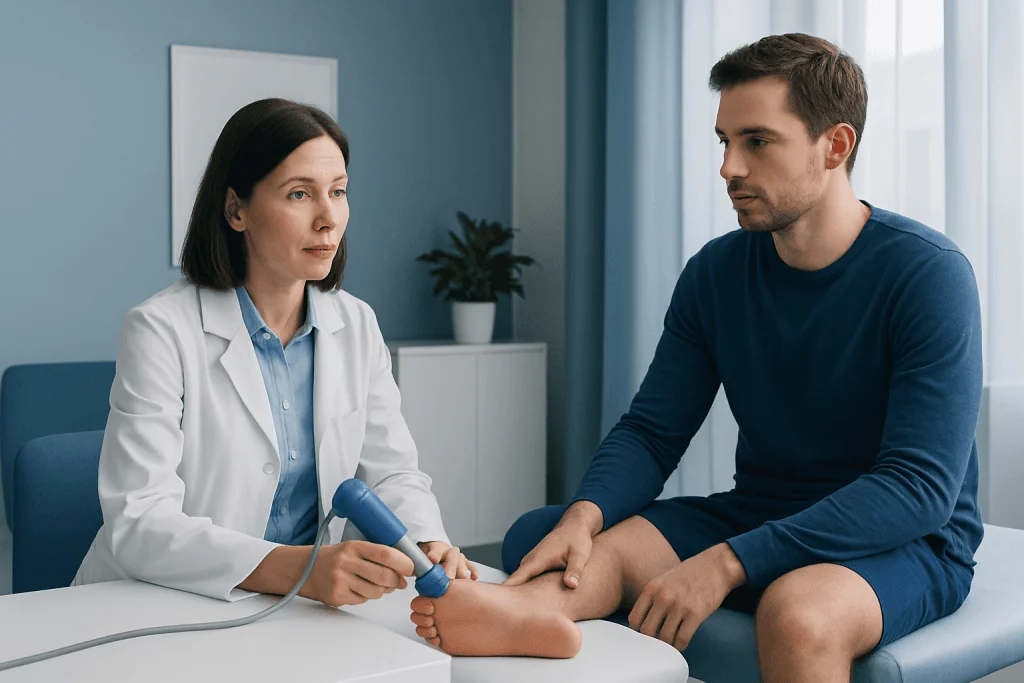
During shockwave therapy, a clinician applies gel to the heel and uses a handheld device to deliver acoustic pulses through the skin. Treatment is performed in an outpatient setting and does not require an incision. Different devices generate focused or radial waves, and the number and spacing of sessions depend on the device, local protocol, and clinical assessment.
People may feel pressure, tapping, or brief discomfort during treatment. The intensity can often be adjusted. Some soreness, redness, mild bruising, or temporary symptom flare may occur afterward, but these effects are usually short-lived. The clinician may recommend avoiding high-impact activity for a short period while maintaining an individualized rehabilitation program.
Shockwave therapy does not provide immediate relief for everyone. When it is effective, improvement may develop gradually over weeks to months as the tissue adapts and pain settles. It is best viewed as one component of a broader plan that includes load management, mobility, strength, and suitable footwear.
ESWT may not be suitable for everyone. The treating clinician will review factors such as pregnancy, bleeding disorders, use of anticoagulant medication, infection near the treatment area, reduced sensation, certain implanted devices, and suspected fracture. A full assessment helps ensure that the potential benefits and limitations are understood before treatment begins.
Outlook, Prevention, and Self-care
The outlook for plantar fasciitis is generally positive, although recovery can take time. Symptoms often improve with consistent conservative management, and treatment plans can be adjusted when progress slows. Persistent pain does not necessarily mean that permanent damage has occurred, but it does warrant reassessment to confirm the diagnosis and optimize care.
To reduce the likelihood of recurrence, people can increase walking, running, or training volumes gradually and include recovery days. Regular calf flexibility work and strengthening for the feet, calves, and hips can improve tolerance to everyday and sporting demands. Replacing worn footwear and choosing shoes suitable for the planned activity may also be helpful.
It is sensible to respond early to returning heel discomfort. Reducing the aggravating activity temporarily, restarting exercises, and seeking professional advice if pain is persistent can prevent a short-term flare from becoming more limiting. Surgery is rarely needed and is generally reserved for carefully selected cases after extensive non-surgical management.
For international patients who need assessment for persistent heel pain, Acibadem International’s multidisciplinary specialists and JCI-accredited hospitals diagnose and treat foot and musculoskeletal conditions using individualized, evidence-based care.
When to Seek Medical Care
A medical assessment is appropriate when heel pain persists for more than a few weeks, repeatedly limits work, exercise, or daily walking, or does not improve with sensible self-care. A clinician can confirm whether plantar fasciitis is the likely cause and advise whether rehabilitation, footwear changes, shockwave therapy, or another option may be useful.
Prompt assessment is especially important after an injury with severe pain or inability to bear weight. Medical care should also be sought for substantial swelling, redness or warmth, fever, an open wound, new numbness or weakness, pain that occurs at night without activity, or symptoms in a person with diabetes, poor circulation, or reduced foot sensation.
A planned review is also valuable when pain changes in character, spreads, or worsens despite treatment. This helps identify alternative diagnoses and avoids continuing a treatment approach that is not addressing the source of the problem.
Frequently asked questions
Is shockwave therapy effective for plantar fasciitis?
Shockwave therapy may help some people with chronic plantar fasciitis that has not improved sufficiently with conservative care. Research supports its use in selected patients, but results vary and improvement may be gradual. It is usually combined with exercise-based rehabilitation and activity management rather than used alone.
When is shockwave therapy considered for plantar fasciitis?
It is commonly considered when heel pain remains significant after several months of appropriately guided non-surgical treatment. Before recommending it, a clinician should confirm the likely diagnosis and review whether stretching, strengthening, footwear, and load management have been adequately addressed. The timing differs according to symptoms and individual clinical factors.
Does shockwave therapy hurt?
The treatment can cause temporary discomfort while acoustic pulses are delivered to the heel. Most people tolerate it without anesthesia, and the clinician can often adjust the intensity. Mild soreness or redness afterward is possible and generally settles within a short time.
How long does plantar fasciitis take to heal?
Recovery varies considerably. Many people improve over weeks to months with consistent conservative care, while persistent cases can take longer. Regular rehabilitation, gradual activity progression, and follow-up when progress is limited can support recovery.
Can a heel spur cause plantar fasciitis pain?
A heel spur can be present with plantar fasciitis, but it is not always the cause of symptoms. Many people have a spur without heel pain, and treatment decisions are based mainly on the symptoms and physical examination. Removing a spur is rarely the first approach to plantar heel pain.
Can someone walk after shockwave therapy for plantar fasciitis?
Most people can walk after treatment, although the heel may feel temporarily sore. The clinician may advise avoiding running, jumping, or other high-impact activity for a short time. Activity recommendations should follow the individual treatment plan and symptom response.
References
- American Academy of Orthopaedic Surgeons
- American Orthopaedic Foot & Ankle Society
- National Institute for Health and Care Excellence
- Mayo Clinic
- American Physical Therapy Association
This article is for general information only and is not a substitute for professional medical advice. Please consult a qualified doctor about your individual situation.
Explore treatments in Turkey — costs, top hospitals & a free quote
JCI-accredited · board-certified surgeons · reply within 24h

More from the Health Library



Related Specialists

Assoc. Prof. Dr. Diğdem Özer Etik
Gastroenterology
Dt. Kevser Danişti
Dentistry
Dr. Elif Dinçer
Radiology
Dr. Ömercan Yağız Öksüz
Aesthetic Plastic & Reconstructive Surgery