Zirconia crowns vs Porcelain crowns: Which Is Right for You?

Zirconia crowns are highly durable and are commonly considered for back teeth or people with heavy bite forces. Porcelain crowns can closely resemble natural enamel, particularly when carefully shade matched for front teeth.
Key Takeaways
- Zirconia crowns are highly durable and are commonly considered for back teeth or people with heavy bite forces.
- Porcelain crowns can closely resemble natural enamel, particularly when carefully shade matched for front teeth.
- Many modern crowns combine materials, such as porcelain layered over zirconia, to balance strength and appearance.
- Both types require some tooth preparation, impressions or digital scanning, and a secure dental cement or adhesive.
- A crown does not prevent future decay or gum disease, so daily oral hygiene and regular dental reviews remain important.
Zirconia crowns and porcelain crowns can both restore a damaged or weakened tooth effectively. Zirconia is often preferred where high strength is needed, while porcelain may be chosen for its lifelike light transmission, especially in visible front teeth; the best option depends on the tooth, bite, remaining tooth structure and individual goals.
Overview: zirconia crowns vs porcelain crowns
In the comparison of zirconia crowns vs porcelain crowns, neither material is automatically right for every person. Zirconia crowns are valued for their strength and resistance to fracture, whereas porcelain crowns can provide very natural color, texture and translucency. A dentist considers where the tooth is located, how much force it receives during chewing, the health of the gums, the amount of remaining tooth and the person’s cosmetic priorities.
A dental crown is a custom-made restoration that covers the visible portion of a tooth above the gumline. It may be recommended when a tooth has extensive decay, a large filling, a crack, severe wear, discoloration that cannot be managed conservatively, or has been treated with root canal therapy. A crown can restore shape, support and chewing function while protecting weakened tooth structure.
Although people often use “porcelain crown” as a broad term, dental crowns are available in several forms. These include monolithic zirconia, layered zirconia with porcelain on its surface, all-ceramic porcelain-based crowns and porcelain fused to metal. The laboratory, dentist and patient work together to select a material that offers an appropriate balance of durability, fit and appearance.
How the materials differ
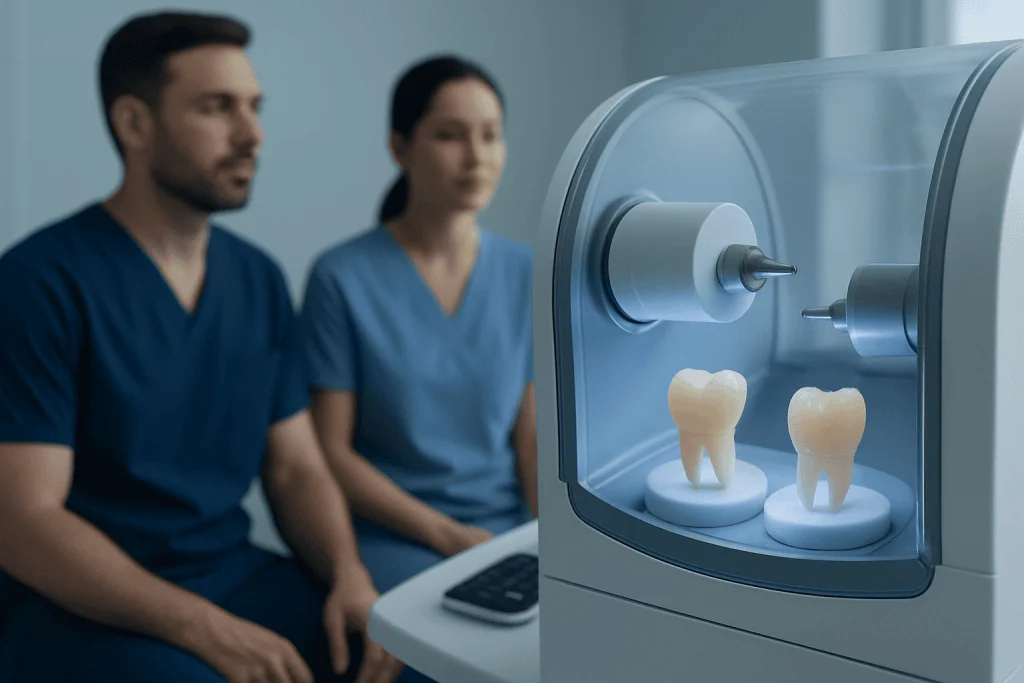
Zirconia is a ceramic material known for high strength. A monolithic zirconia crown is milled from a single block, which limits the risk of a surface layer chipping away. It is often useful for molars, bridges in selected cases and patients who clench or grind their teeth. Newer multilayer zirconia options can offer improved shade gradients and translucency compared with earlier versions.
Porcelain is a tooth-colored ceramic that can be customized with fine variations in shade and surface character. Its ability to transmit and reflect light can make it particularly appealing for front teeth, where matching adjacent natural enamel is important. However, porcelain can be more vulnerable to chipping or fracture than high-strength zirconia in areas exposed to substantial bite pressure.
Layered zirconia crowns use a strong zirconia framework covered with aesthetic porcelain. They may offer an appealing compromise where both strength and detailed appearance are important, although the porcelain layer may chip in some circumstances. A dentist can explain whether a single-material or layered design is most suitable for the individual tooth.
- Zirconia: high fracture resistance, often suitable for posterior teeth and strong bites.
- Porcelain: excellent esthetic customization, frequently considered for prominent front teeth.
- Layered zirconia: combines a zirconia core with a porcelain exterior, with material-specific benefits and limitations.
Who may be a candidate for each option
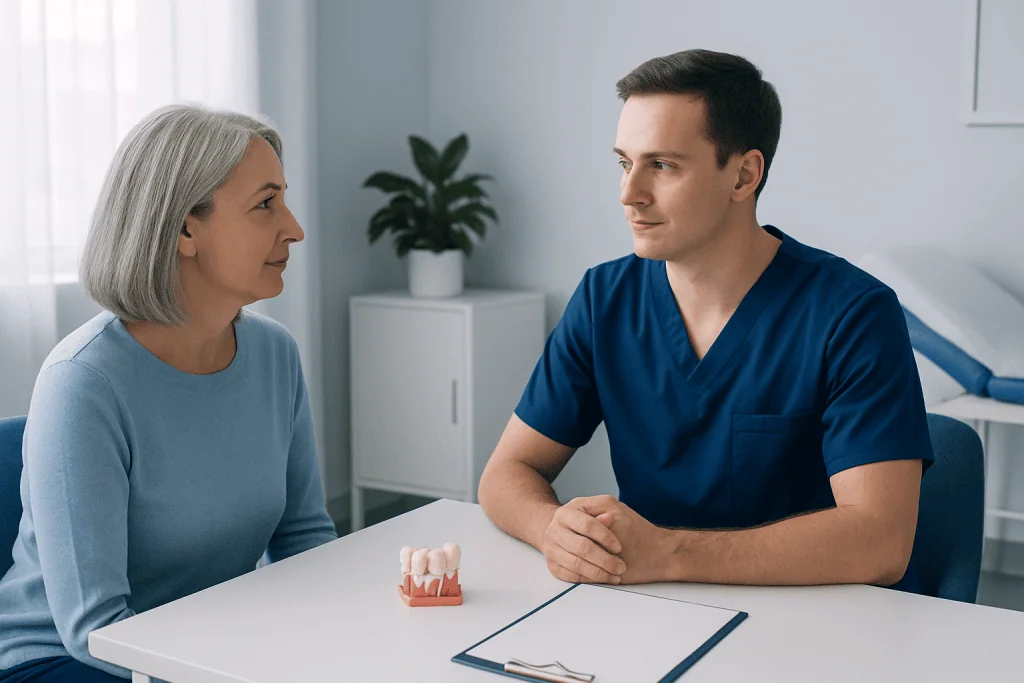
Both zirconia and porcelain crowns may be suitable when a tooth is restorable and there is adequate healthy structure to support the crown. Before recommending one, the dentist checks for active decay, gum inflammation, cracks, signs of infection and the relationship between the upper and lower teeth. Problems such as untreated gum disease or an infection around the tooth root may need attention before a permanent crown is placed.
Zirconia may be considered when the tooth is a molar or premolar, when there is a history of broken restorations, or when a person has substantial bite forces from clenching or grinding. A night guard may still be recommended for bruxism, because no crown material is completely immune to the effects of sustained grinding.
Porcelain may be particularly appropriate for a front tooth where subtle shade matching and natural translucency are priorities. However, the most suitable material is not determined by tooth position alone. The dentist also considers the available space for the crown, enamel color, gumline visibility, neighboring teeth and whether a person has sensitivities to particular materials.
For a fuller explanation of materials, planning and expected results, patients can review zirconia crown treatment. A consultation is important because photographs or online comparisons cannot assess a person’s bite, oral health or tooth structure.
What happens during the crown procedure
The process usually begins with an examination and dental X-rays when clinically appropriate. The dentist discusses symptoms, medical history, oral hygiene, bite habits and the desired appearance. Digital scans or impressions may be taken to plan the crown and help the dental laboratory create a restoration that fits the tooth and bite accurately.
At the preparation visit, local anesthetic is commonly used to keep the area comfortable. The dentist removes decay or damaged restoration material and reshapes a small amount of the outer tooth surface to create room for the crown. If the tooth lacks sufficient structure, a bonded build-up may be needed. In some cases, root canal treatment is necessary before crowning a tooth with significant pulp damage or infection.
A temporary crown may be placed while the final crown is manufactured. At the fitting appointment, the dentist checks the crown’s margins, contact with neighboring teeth, color and bite. If the fit is satisfactory, the crown is cemented or bonded in place. Adjustments may be made so that chewing feels comfortable and balanced.
People considering alternatives can also discuss porcelain crown treatment with their dentist. The decision should be based on clinical needs rather than material names alone.
Benefits, limits and possible risks
The main benefit of either type of crown is restoration of a tooth that might otherwise remain painful, weak or difficult to use. A well-designed crown can improve comfort while chewing, protect a vulnerable tooth and improve its visible shape or color. Both zirconia and porcelain are tooth-colored materials and can be designed to blend with the smile.
Zirconia’s principal advantage is its strength, but highly opaque zirconia may not always reproduce the translucent appearance of natural front teeth as closely as some porcelain options. Porcelain may provide outstanding aesthetics, but it can be more prone to chipping under high forces. Material choice, crown thickness, laboratory workmanship and bite adjustment all influence the final result.
Possible risks of crown treatment include temporary sensitivity after preparation, gum irritation, loosening of the temporary crown, discomfort if the bite is too high, or the need for later adjustment. Crowns can also chip, fracture, loosen or develop leakage at the edge over time. Decay can still occur at the margin where crown and tooth meet, especially if plaque is not removed effectively.
Rarely, a tooth may develop pulp inflammation after preparation and later require root canal treatment. People should contact their dentist if they have persistent pain, swelling, a loose crown or a noticeable change in how the teeth meet.
Recovery, care and long-term outlook
Most people return to normal daily activities soon after a crown appointment. Numbness from local anesthetic generally wears off within several hours, and mild sensitivity to temperature or pressure can occur for a short period. It is sensible to avoid chewing until numbness has resolved to prevent accidental biting of the cheek, tongue or lip.
While wearing a temporary crown, patients should follow their dentist’s instructions. Sticky foods and very hard foods may dislodge or damage a temporary restoration. If it comes off, it should be kept safely and the dental office should be contacted promptly; it should not be ignored, as the prepared tooth may shift or become sensitive.
After the permanent crown is fitted, brushing twice daily with fluoride toothpaste and cleaning between teeth every day are essential. A soft toothbrush and careful cleaning along the gumline help protect the natural tooth around the crown. Regular dental check-ups allow the dentist to monitor gum health, bite changes and the crown margins.
Long-term success depends on the restoration, the health of the underlying tooth and consistent oral care. Avoiding habits such as biting ice, opening packaging with teeth or chewing hard non-food items can reduce the chance of damage. For people who grind their teeth, a professionally made protective night guard may help protect crowns and natural teeth.
When to seek medical care
A person should arrange a dental appointment if a tooth is cracked, persistently painful, very sensitive, difficult to chew on, visibly worn or has a large broken filling. Early assessment may allow the dentist to preserve more natural tooth structure and determine whether a crown, filling, root canal treatment or another approach is appropriate.
Urgent dental advice is appropriate for facial swelling, fever with dental pain, pus or drainage from the gums, significant trauma, uncontrolled bleeding, or severe pain that is not settling. These symptoms can indicate infection or injury that needs prompt evaluation. Emergency services may be needed for difficulty breathing or swallowing, rapidly spreading swelling, or swelling affecting the eye or neck.
People who are travelling for treatment should ideally plan enough time for examinations, crown fabrication, fitting and follow-up guidance. Acibadem International’s multidisciplinary specialists and JCI-accredited hospitals diagnose and treat dental conditions for international patients, with care plans based on individual clinical assessment.
Frequently asked questions
Are zirconia crowns better than porcelain crowns?
Zirconia crowns are not universally better; they are usually chosen when high strength is a priority. Porcelain may be favored when a highly natural-looking finish is especially important. The best material depends on the tooth location, bite forces, dental health and aesthetic goals.
Which crown looks most like a natural tooth?
Porcelain can mimic the translucency and subtle color variation of natural enamel very effectively. Some modern zirconia materials also provide improved aesthetics, particularly in layered or more translucent designs. A dentist can use shade matching and photographs to help select a suitable option.
Can zirconia crowns be used for front teeth?
Yes, zirconia crowns can be used for front teeth, particularly newer translucent zirconia varieties. Whether they are the best option depends on how visible the tooth is, the required shade match and the person’s bite. Layered zirconia or porcelain-based ceramic may be considered when detailed aesthetics are needed.
Do porcelain crowns chip easily?
Porcelain crowns are durable, but they can chip or fracture, especially under heavy biting or grinding forces. Correct crown design, bite adjustment and avoiding hard-object chewing can reduce this risk. A dentist may recommend a night guard for people who grind their teeth.
How long does sensitivity last after a crown procedure?
Mild temperature or pressure sensitivity can occur after tooth preparation and may settle as the tooth and surrounding tissues recover. Persistent, worsening or spontaneous pain should be assessed by a dentist. It can sometimes indicate that the bite needs adjustment or that the tooth nerve requires further evaluation.
Can a crowned tooth still get decay?
Yes. The crown itself cannot decay, but the natural tooth at the crown edge can develop decay if plaque accumulates. Daily brushing with fluoride toothpaste, cleaning between teeth and regular dental visits are important for prevention.
References
- American Dental Association
- FDI World Dental Federation
- National Institute of Dental and Craniofacial Research
- Mayo Clinic
This article is for general information only and is not a substitute for professional medical advice. Please consult a qualified doctor about your individual situation.
Porcelain Crowns in Turkey — costs, top hospitals & a free quote
JCI-accredited · board-certified surgeons · reply within 24h