Revision Surgery: Procedure, Recovery and Results

Revision surgery is individualized and may be considered for functional, medical, or appearance-related concerns after an earlier operation. A careful assessment is important because scar tissue, altered anatomy, and the cause of the original concern can make revision more complex.
Key Takeaways
- Revision surgery is individualized and may be considered for functional, medical, or appearance-related concerns after an earlier operation.
- A careful assessment is important because scar tissue, altered anatomy, and the cause of the original concern can make revision more complex.
- Revision surgery recovery time varies widely, from days to weeks for minor procedures and several months for more extensive operations.
- Pain is usually manageable with a tailored pain-control plan, but discomfort may be greater than after an initial operation in some cases.
- A surgeon should promptly assess worsening pain, fever, drainage, sudden swelling, breathing difficulty, or other concerning symptoms after surgery.
Revision surgery is an operation performed after a previous procedure to address persistent symptoms, healing problems, functional concerns, or an unsatisfactory result. The approach, recovery, and expected outcome depend on the original surgery, the reason for revision, and the person’s overall health.
Overview: What Is Revision Surgery?
Revision surgery is a further operation performed after an earlier procedure. Its purpose may be to improve function, relieve symptoms, correct a complication, address changes that occurred during healing, replace or repair an implant, or refine an appearance-related result. It is not a single type of operation; revision procedures can involve many specialties, including plastic surgery, orthopedics, spine surgery, bariatric surgery, and ear, nose and throat surgery.
A revision procedure may be planned soon after the original operation, or years later. In many situations, surgeons recommend allowing enough time for swelling to settle and tissues to heal before deciding whether another procedure is needed. The right timing depends on the original operation, the concern being treated, and whether there is an urgent issue such as infection, implant failure, or impaired function.
Revision surgery does not necessarily mean that the first operation was performed incorrectly. Healing responses vary, medical conditions can develop over time, injuries can occur, and no procedure can guarantee a particular long-term result. A detailed assessment helps clarify whether surgery, non-surgical care, or watchful follow-up is most appropriate.
Why Revision Surgery May Be Considered
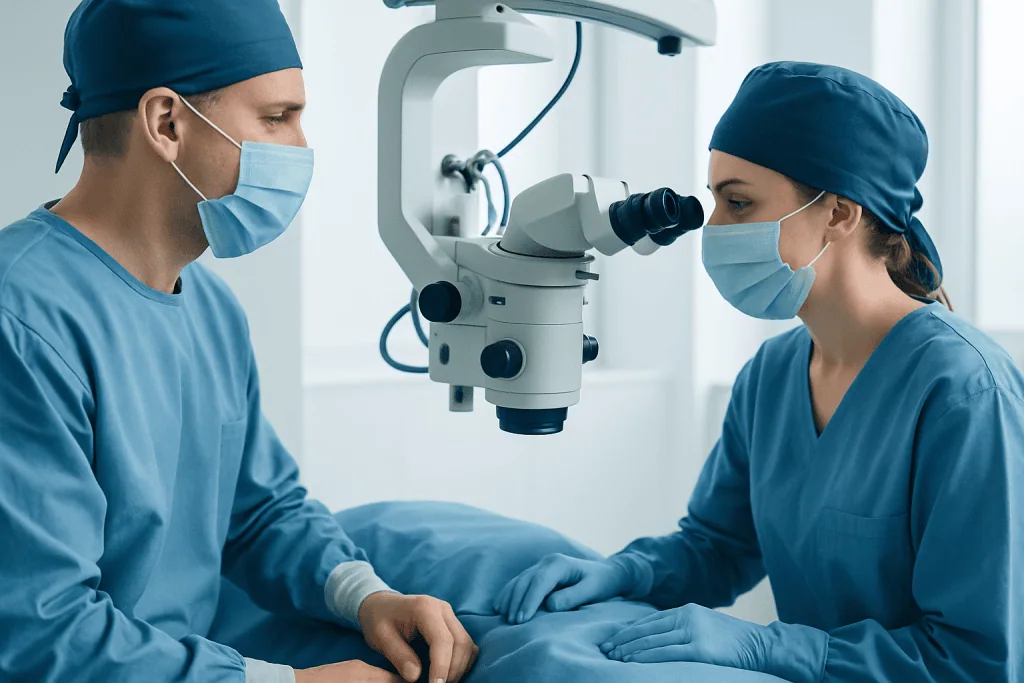
The reasons for revision surgery differ substantially between individuals. Some people have ongoing pain, limited movement, obstruction, weakness, instability, or another functional concern. Others may have a complication such as infection, poor wound healing, excess scar tissue, fluid collection, tissue tightening, implant-related problems, or recurrence of the condition that first required surgery.
In reconstructive or aesthetic settings, a person may seek revision because of asymmetry, contour changes, visible scarring, changes in skin or soft tissue, or a result that no longer matches their goals. Scar revision can be considered when a scar is raised, widened, contracted, itchy, painful, or restricts movement. However, surgery cannot erase a scar completely; its goal is usually to make the scar less noticeable, more comfortable, or less restrictive.
Before recommending another operation, the clinical team considers whether non-surgical options could help. Depending on the concern, these may include medications, wound care, physical therapy, injections, compression, scar treatments, counseling, or observation. Revision surgery is generally most useful when the expected benefit outweighs the additional risks of operating on previously treated tissue.
Candidacy and Preoperative Assessment

Suitable candidates for revision surgery are people with a clearly defined concern that can reasonably be improved with another procedure. The surgeon reviews the original diagnosis, operative records when available, prior imaging, pathology results, implants or devices used, and the course of recovery. Photographs, physical examination, laboratory testing, and imaging may also be needed depending on the area being treated.
Health factors can influence safety and healing. These include smoking or nicotine use, diabetes, poor nutrition, blood-clotting conditions, immune suppression, certain medications, active infection, and uncontrolled chronic illness. A surgeon may recommend optimizing these issues before surgery. Stopping nicotine products well in advance is particularly important because nicotine can reduce blood flow and increase wound-healing complications.
Realistic expectations are central to good decision-making. Revision surgery can often improve a specific problem, but it may not restore the body to its pre-surgery state or achieve perfection. Patients should understand the likely benefits, alternatives, limitations, expected revision recovery, possible need for additional treatment, and the practical support they may need at home.
How the Revision Procedure Works
The exact steps of a revision procedure depend on the body area and the reason for surgery. After reviewing the treatment plan and confirming consent, the surgical team uses local anesthesia with sedation, regional anesthesia, or general anesthesia as appropriate. The surgeon may use an existing incision when possible, although a new or adjusted incision may sometimes be necessary to gain safe access.
During surgery, the surgeon carefully evaluates the tissue, scar formation, prior repairs, implants, or hardware. The operation may involve releasing scar tissue, removing or replacing a device, repairing a structure, reshaping tissue, revising an incision, restoring alignment, treating an infection, or using grafts or other reconstructive techniques. In some cases, the surgeon may send tissue or fluid samples for laboratory analysis.
Revision procedures can take longer than first-time operations because prior surgery can change normal anatomy and create scar tissue. Some minor scar revisions are outpatient procedures, while larger operations may require a hospital stay and coordinated care from several specialists. The care plan includes instructions for wound care, activity, pain management, follow-up appointments, and rehabilitation where needed.
- Before surgery: assessment, tests, medication review, and preparation for anesthesia.
- During surgery: careful access to the treated area, correction of the identified issue, and repair or reconstruction as required.
- After surgery: monitoring, a personalized recovery plan, and follow-up to assess healing and function.
How Long Does It Take to Recover From Revision Surgery?
Revision surgery recovery time depends on the type and extent of the procedure. A small outpatient scar revision may allow a return to light daily activities within several days, while a more extensive revision involving deeper tissues, implants, joints, or the abdomen may require weeks of restricted activity and months of gradual healing. The surgeon’s specific instructions should guide return to work, exercise, driving, travel, and lifting.
Early recovery commonly includes swelling, bruising, tenderness, fatigue, and temporary limits in movement. These symptoms often improve over the first few weeks, but swelling and tissue settling can continue for several months. The final result may not be clear until healing is more mature, particularly after procedures that involve significant scar tissue or reshaping.
Recovery can be slower than after an initial operation because the surgical field may have reduced blood supply or more complex scarring. Attending follow-up appointments, protecting incisions, taking prescribed medicines as directed, maintaining adequate nutrition and hydration, and avoiding smoking all support safer healing. Physical therapy or other rehabilitation may be recommended after certain revisions.
How Painful Is Revision Surgery?
Revision surgery can cause discomfort, but pain varies with the location, size, and complexity of the operation as well as each person’s pain sensitivity and health history. Some people find the recovery similar to their first operation, while others have more soreness because scar tissue and deeper structures may need to be treated. Pain should be discussed openly before surgery so the care team can create an appropriate plan.
Clinicians may use a combination of methods to manage pain, such as local anesthetic techniques, non-opioid medicines when suitable, short-term prescription pain medicine when needed, ice or elevation for certain procedures, and activity modification. Following the instructions closely is important, including advice about medicines that may increase bleeding risk or interact with other treatments.
Pain that steadily improves is generally expected during recovery. However, severe pain, rapidly worsening pain, pain with marked swelling or redness, or pain accompanied by fever, drainage, numbness, weakness, shortness of breath, or chest pain needs timely medical assessment. Patients should contact their surgeon rather than trying to manage concerning symptoms alone.
How Common Is Revision Surgery?
How common revision surgery is varies greatly by specialty, procedure, medical condition, surgical technique, and length of follow-up. There is no single percentage that applies to all revision operations. Some procedures have a higher likelihood of later adjustment, replacement, or additional surgery because of device wear, disease progression, changes in the body over time, or the complexity of the original condition.
For example, a revision may be required after orthopedic hardware problems, recurrent hernias, joint replacement wear, implant-related concerns, previous weight-loss surgery, or scar-related restriction. In other cases, revision is elective and aims to improve a healed result rather than treat an urgent health problem. A surgeon can explain the likelihood of future procedures in relation to the individual operation being considered.
When comparing options, patients can ask why a revision is recommended now, what would happen without surgery, whether non-surgical alternatives are reasonable, and what outcomes are realistically expected. These questions help support informed choices and can reduce uncertainty about the role of further treatment.
How Long Do Scar Revisions Take to Heal?
Scar revisions usually involve an initial wound-healing phase followed by gradual scar maturation. The incision commonly closes within the early weeks, but the scar may remain pink, firm, raised, or sensitive for months as collagen remodels. A scar often continues to soften and fade over a longer period, and the final appearance can take up to a year or more to develop.
The healing timeline depends on the scar’s location, size, depth, tension on the skin, the technique used, skin type, sun exposure, infection risk, and health factors such as diabetes or nicotine use. The surgeon may recommend silicone-based products, taping, massage after the incision has healed, sun protection, compression, or other treatments to support scar management. These should only be used as directed for the particular wound.
Scar revision aims to improve the quality or function of a scar, not eliminate it. It may be especially helpful for scars that pull on nearby structures, limit movement, remain painful, or heal with an unfavorable contour. If a scar changes rapidly, breaks down, becomes increasingly red or painful, or develops drainage, medical review is important.
Risks, Benefits and When to Seek Medical Care
The potential benefits of revision surgery include improved function, reduced discomfort, correction of a complication, better structural support, or improvement in the appearance and comfort of a healed area. The expected benefit should be specific and discussed in advance. Outcomes can be influenced by the original condition, tissue quality, prior operations, general health, and adherence to aftercare instructions.
Possible risks include bleeding, infection, delayed healing, fluid collection, scarring, changes in sensation, anesthesia-related complications, blood clots, asymmetry, persistent symptoms, and a need for further treatment. Depending on the procedure, there may also be risks to nearby nerves, blood vessels, organs, joints, or implanted devices. The surgeon explains the risks that are most relevant to the planned operation.
Medical care should be sought promptly after surgery for fever, increasing redness or warmth around an incision, pus-like drainage, wound opening, uncontrolled pain, sudden swelling, persistent vomiting, shortness of breath, chest pain, or new weakness. For non-urgent concerns about an old surgical result, an appointment with an appropriately trained surgeon can help determine whether a revision is appropriate.
Acibadem International’s multidisciplinary specialists and JCI-accredited hospitals support international patients who need assessment and treatment for complex surgical concerns. A consultation can help establish the cause of the problem, review available options, and plan follow-up care safely.
Frequently asked questions
What is revision surgery?
Revision surgery is an operation done after a prior procedure to address a medical complication, persistent symptoms, functional problem, implant or device issue, scar concern, or unsatisfactory result. The details vary widely depending on the original surgery and the reason for further treatment. A specialist assessment is needed to determine whether surgery is the best option.
Is revision surgery more difficult than the first surgery?
It can be more complex because previous surgery may leave scar tissue, alter anatomy, or affect blood supply to the area. This does not mean a good outcome is not possible, but it makes careful planning especially important. The surgeon may need additional records, imaging, or specialist input before recommending treatment.
How long should a person wait before having revision surgery?
The appropriate timing depends on the reason for revision. If there is an urgent problem such as infection, significant wound breakdown, or impaired function, earlier treatment may be needed. For many non-urgent concerns, surgeons prefer to wait until swelling has resolved and tissues have matured, which may take months.
Can revision surgery be done under local anesthesia?
Some smaller procedures, including selected scar revisions, may be performed with local anesthesia, sometimes with sedation. More extensive operations usually require regional or general anesthesia. The anesthesia approach is chosen according to the procedure, medical history, and patient comfort.
Will revision surgery leave another scar?
Any operation that involves an incision creates a scar. Surgeons often try to use or improve an existing scar when this is safe and practical, but the final scar depends on healing, skin tension, location, genetics, and aftercare. Scar treatments may be recommended after the wound has healed.
Can a person have more than one revision surgery?
In some circumstances, further procedures may be needed, particularly when an underlying condition progresses or a complex reconstruction requires staged treatment. However, each additional operation has potential risks and may affect tissue quality. The decision should be based on a clear expected benefit and a detailed discussion with the surgeon.
References
- American Society of Plastic Surgeons
- American College of Surgeons
- National Institute of Arthritis and Musculoskeletal and Skin Diseases
- MedlinePlus
- World Health Organization
This article is for general information only and is not a substitute for professional medical advice. Please consult a qualified doctor about your individual situation.
Medical weight-loss options in Turkey — costs & eligibility
JCI-accredited · board-certified surgeons · reply within 24h

More from the Health Library



Related Specialists

Prof. Dr. Halim Ulugöl
Anesthesiology
Dyt. Begüm Biber
Nutrition & Diet
Dr. Ömür Albayrak
Vitro Fertilization and Reproductive Medicine Center
Prof. Dr. Neslihan Kurtulmuş
Endocrinology