Nursemaid Elbow Xray: Preparation, Procedure and Results
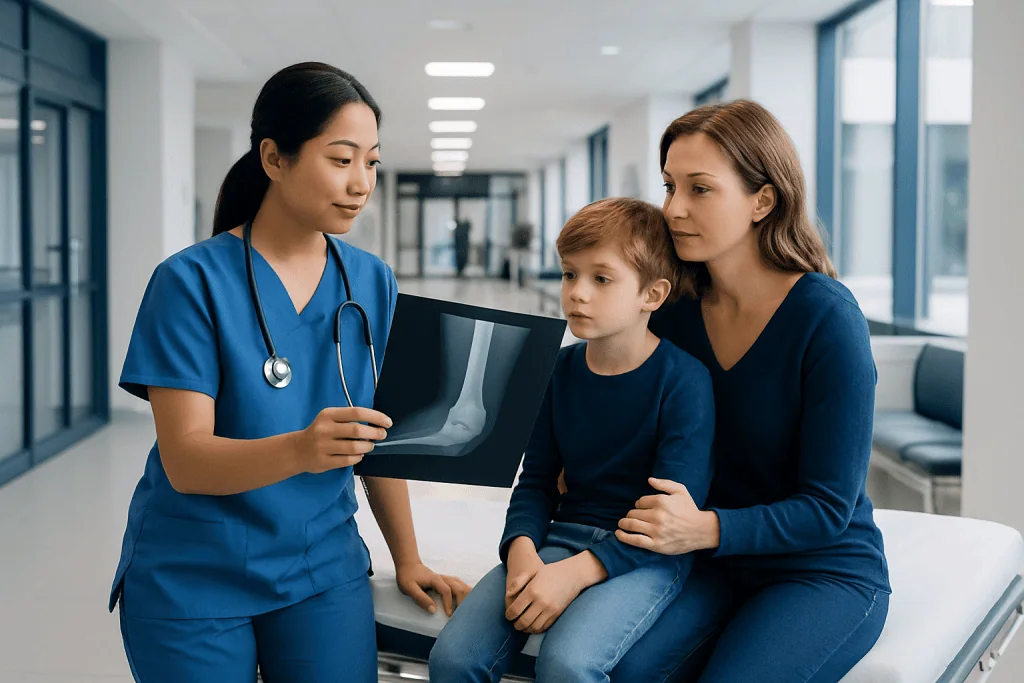
Most children with a typical nursemaid’s elbow do not need an Xray before treatment. An Xray does not usually show the slipped ligament itself; it is mainly used to check for a fracture, dislocation, or another cause of pain.
Key Takeaways
- Most children with a typical nursemaid’s elbow do not need an Xray before treatment.
- An Xray does not usually show the slipped ligament itself; it is mainly used to check for a fracture, dislocation, or another cause of pain.
- Reduction is a brief clinician-performed movement that often restores arm use within minutes, though some children take longer.
- Parents and caregivers should not attempt to put the elbow back themselves because a fracture may be mistaken for nursemaid’s elbow.
- Swelling, bruising, significant tenderness, deformity, fever, or persistent refusal to use the arm needs prompt medical assessment.
A nursemaid elbow Xray may be used when a child has elbow pain after a fall, has swelling or bruising, or does not regain normal arm use after treatment. In many typical cases, clinicians can diagnose nursemaid’s elbow from the child’s history and examination and may safely treat it without imaging.
Nursemaid Elbow Xray: What It Shows and When It Is Needed
A nursemaid elbow Xray is an imaging test of a child’s elbow and sometimes the forearm. Nursemaid’s elbow, also called radial head subluxation, occurs when a ligament around the top of the radius bone is briefly displaced. It is common in young children, often after a sudden pull on the hand or arm.
In a classic presentation, an Xray is often unnecessary. A clinician can usually identify the problem from the child’s age, the event leading up to the pain, and the way the child holds the arm. The child may keep the elbow slightly bent and the palm turned inward, while avoiding use of that arm.
Plain Xrays generally do not directly show nursemaid’s elbow because ligaments and subtle joint alignment changes may not be visible. Instead, imaging is helpful for excluding a broken bone, a more significant elbow dislocation, or another injury when the history or examination is not typical.
Prompt assessment is reassuring and important. Once the condition is confirmed, a trained clinician can usually perform a gentle reduction maneuver during the same visit. Information about nursemaid's elbow can help families understand the condition and its usual outlook.
How to Assess for Nursemaid's Elbow?
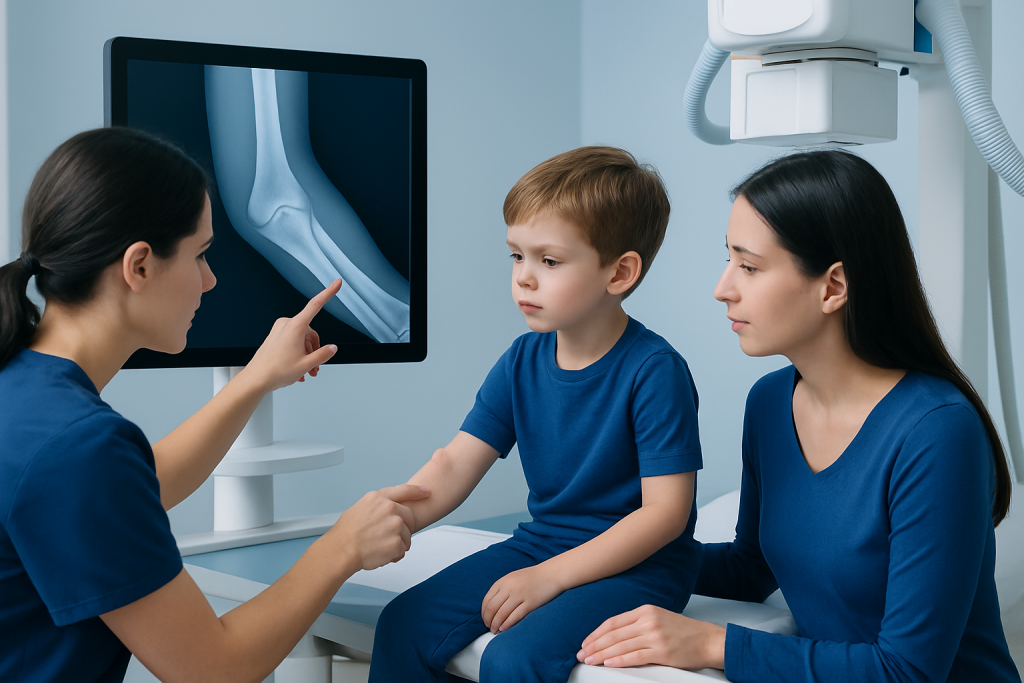
Clinicians assess for nursemaid’s elbow by asking what happened, when the child stopped using the arm, and whether there was a fall or direct blow. A sudden pull, swing, or tug on the hand is a common history, but caregivers may not always see the event. Children between about 1 and 4 years old are most often affected, although it can occur outside this age range.
During the examination, the clinician gently observes the child’s arm position and checks the shoulder, elbow, wrist, and hand. A child with nursemaid’s elbow commonly has little or no visible swelling, bruising, or deformity. Pain is often greatest when the forearm is turned outward or when the elbow is moved.
Features that make an Xray more likely include a fall from height, a direct impact, marked swelling, bruising, focal bone tenderness, an unusual arm position, or concern for a non-accidental injury. Imaging may also be appropriate when a child does not begin using the arm after a reduction attempt.
Assessment also includes checking circulation and nerve function in the hand. Pale or blue fingers, marked hand swelling, numbness, or inability to move the fingers are not typical of nursemaid’s elbow and require urgent evaluation.
Nursemaid Elbow Xray Procedure: Preparation and Step-by-Step
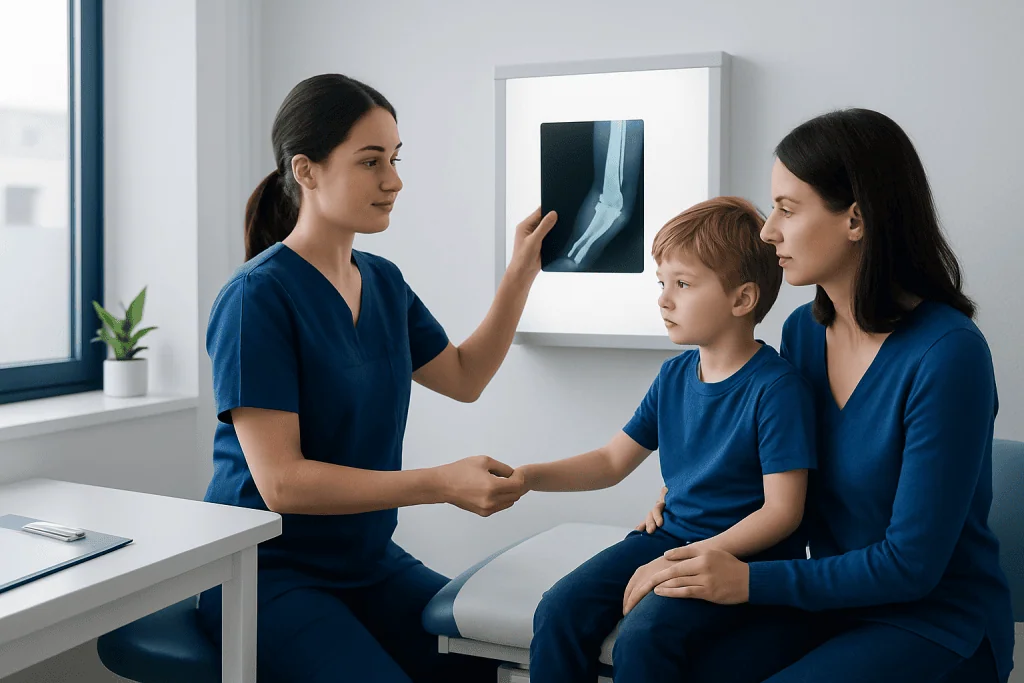
A nursemaid elbow Xray is quick, noninvasive, and does not require injections, anesthesia, or special preparation. A parent or caregiver is usually able to stay with the child, provided this is safe in the imaging room. The team may ask for jewelry, watches, or clothing with metal near the arm to be removed.
The radiographer positions the child’s arm to obtain images from different angles, commonly front and side views. Positioning can be uncomfortable because the child may be protecting the painful arm, but the exposure itself does not hurt. The team uses the lowest practical radiation dose and may use shielding according to local protocols.
The image-taking part commonly takes only a few minutes, although the overall visit may take longer because of registration, positioning, and interpretation. Parents can help by calmly reassuring the child and bringing a comfort item when possible. It is best not to force the elbow straight or repeatedly test the painful arm at home before the evaluation.
A radiologist or treating clinician reviews the images for signs of fracture, abnormal joint alignment, or other bone changes. If the images are normal and the clinical findings support nursemaid’s elbow, the clinician may proceed with reduction. If a fracture is found or cannot be excluded, the child may need a splint, follow-up, or orthopedic care.
Benefits and Limits of a Nursemaid Elbow Xray
The main benefit of a nursemaid elbow Xray is that it can identify injuries requiring a different approach. In particular, it can help detect fractures around the elbow, forearm, wrist, or upper arm, which can sometimes resemble nursemaid’s elbow in a young child who refuses to use an arm.
The test also has limits. A normal Xray does not necessarily prove nursemaid’s elbow, and an Xray may not show the ligament displacement itself. For this reason, results are interpreted alongside the child’s symptoms, physical examination, and response to reduction.
Radiation exposure from standard elbow Xrays is low, and imaging teams aim to keep it as low as reasonably achievable. However, avoiding unnecessary imaging is also beneficial, especially for children. This is why a typical nursemaid’s elbow can often be treated based on clinical assessment alone.
After a successful reduction, repeat Xrays are generally not required if the child returns to normal arm use and there are no concerning findings. Persistent pain or non-use of the arm should be reassessed rather than assumed to be a simple recurrence.
Results, Reduction and Recovery Timeline
If Xray results show no fracture and the clinician suspects nursemaid’s elbow, reduction is usually the next step. This is a short, controlled maneuver that guides the radial head and surrounding ligament back into their normal relationship. It should be performed only by an appropriately trained healthcare professional.
Children may briefly cry during the maneuver, largely because the elbow is moved while sore. Many start using the arm within 5 to 15 minutes. Some children, particularly those who have been avoiding movement for several hours, may take up to a few hours to feel comfortable using it normally again.
How long does it take to recover from nursemaid’s elbow? Most children recover quickly after a successful reduction and have no lasting limitation. If the arm is still not being used after a short observation period, the clinician may repeat the examination, consider further imaging, or arrange follow-up to look for another cause.
In a straightforward case, a cast or sling is usually not needed. Caregivers should follow the individual instructions given after the visit, including any guidance about comfort measures and activity. Pediatric orthopedic evaluation may be recommended if diagnosis or recovery is uncertain.
What Happens if Nursemaid's Elbow Goes Untreated?
What happens if Nursemaid’s elbow goes untreated? A child will usually continue to avoid using the affected arm because movement is uncomfortable. While nursemaid’s elbow may occasionally resolve when the arm moves in a particular way, waiting for this is not recommended because an untreated fracture or other injury could be missed.
Timely clinical assessment relieves discomfort and helps confirm that the injury is not something more serious. Delays can make the child more fearful of moving the arm and may make recovery seem slower, even after successful treatment.
Untreated arm pain should not be attributed to nursemaid’s elbow without an examination. A child with swelling, bruising, deformity, fever, severe pain, or pain after a substantial fall needs prompt medical care to identify the cause safely.
After a confirmed episode, recurrence can occur because the supporting ligament remains relatively loose in early childhood. Gentle handling, rather than lifting or swinging a child by the hands or wrists, can reduce the chance of another episode.
Can You Fix Nursemaid's Elbow Yourself?
Can you fix nursemaid’s elbow yourself? No. Parents, caregivers, and non-clinicians should not try to reduce nursemaid’s elbow at home. A fracture can look similar to nursemaid’s elbow, and manipulating an injured arm without a proper examination may worsen pain or delay the right treatment.
It is safer to support the child’s arm in the most comfortable position and seek medical assessment. Avoid pulling, twisting, or repeatedly moving the arm to test whether it has improved. Do not force the elbow straight or apply a tight bandage.
Prevention focuses on avoiding traction on a child’s arms. Adults should lift young children from under the armpits rather than by the hands or wrists, and should avoid swinging games that place a sudden pull on the arms. These measures are especially useful for children who have had nursemaid’s elbow before.
For children with recurrent symptoms or an injury pattern that is difficult to interpret, a pediatrician or orthopedic clinician can provide individualized guidance. Care may include assessment by specialists in pediatric orthopedics when needed.
When to Seek Medical Care
Medical care should be sought promptly when a child suddenly will not use an arm, particularly after a pull, fall, or unknown injury. Same-day assessment is appropriate even when there is no obvious swelling, because young children may be unable to describe where or how much it hurts.
Urgent assessment is particularly important if there is visible deformity, substantial swelling or bruising, severe or increasing pain, a cold or discolored hand, numbness, weakness, open skin injury, fever, or concern that the child may have been injured in a way that was not witnessed. These findings are not typical of a simple nursemaid’s elbow.
Following a reduction, families should contact the treating team or seek reassessment if the child does not return to using the arm as advised, develops worsening symptoms, or experiences a new injury. Acibadem International’s multidisciplinary specialists and JCI-accredited hospitals diagnose and treat pediatric bone and joint conditions for international patients when appropriate.
For related childhood musculoskeletal concerns, clinicians may also evaluate childhood fractures or provide guidance through orthopedic treatment based on the child’s individual findings.
Frequently asked questions
Does nursemaid's elbow always need an Xray?
No. When a child has a typical history and examination findings, a clinician can often diagnose nursemaid’s elbow without imaging. An Xray is more likely when there was a fall, swelling, bruising, unusual tenderness, deformity, or failure to use the arm after reduction.
What does a nursemaid elbow Xray look for?
The Xray mainly looks for a fracture, significant dislocation, or another bone injury. It may appear normal in nursemaid’s elbow because the condition involves a ligament around the radial head rather than a clearly visible bone break.
How long does it take to recover from nursemaid's elbow?
Many children begin using the arm within 5 to 15 minutes after a successful clinician-performed reduction. Some take a few hours, especially if the arm has been painful or unused for longer. Ongoing non-use should be reassessed.
What happens if Nursemaid's elbow goes untreated?
The child may continue to avoid moving the arm because it is uncomfortable. Although it can sometimes resolve spontaneously, waiting is not advisable because another injury, such as a fracture, may be present and needs different treatment.
How do doctors assess for nursemaid's elbow?
Doctors consider the child’s age, the injury history, the arm position, and findings on a gentle physical examination. They also check the entire arm, including the wrist and shoulder, and assess hand circulation and nerve function. Imaging is used when the presentation is not typical.
Can you fix nursemaid's elbow yourself?
No. Home reduction should not be attempted because it is difficult to rule out a fracture without a clinical assessment. Supporting the arm comfortably and seeking timely medical care is the safest approach.
References
- American Academy of Pediatrics
- American Academy of Orthopaedic Surgeons
- Royal Children's Hospital Melbourne
- National Institute for Health and Care Excellence
- Merck Manual Professional Edition
This article is for general information only and is not a substitute for professional medical advice. Please consult a qualified doctor about your individual situation.
Joint and spine care in Turkey — expert assessment & treatment
JCI-accredited · board-certified surgeons · reply within 24h

More from the Health Library



Related Specialists

Assoc. Prof. Dr. Abdülhak Hamit Karayağız
General Surgery
Dt. Zeynep Ezgi Akan
Oral & Dental Health
Dt. Alara Güler
Oral and Dental Health
Dr. Ezgi Darıcı
Gynecology & Obstetrics