Basal-Cell Carcinoma Medical Procedure: An Evidence-Based Patient Guide

Surgical removal is the main treatment for most basal cell carcinomas and has high cure rates when appropriately selected. Mohs surgery is especially useful for high-risk, recurrent, or cosmetically and functionally sensitive areas such as the face.
Key Takeaways
- Surgical removal is the main treatment for most basal cell carcinomas and has high cure rates when appropriately selected.
- Mohs surgery is especially useful for high-risk, recurrent, or cosmetically and functionally sensitive areas such as the face.
- A biopsy confirms the diagnosis and helps clinicians plan the most suitable procedure.
- Recovery varies by procedure and wound closure, but careful wound care and follow-up skin checks are important.
- Sun protection and regular self-examination help lower the chance of future skin cancers.
A basal-cell carcinoma medical procedure is usually designed to remove the cancer completely while preserving as much healthy skin and function as possible. Surgery is commonly recommended, but the best approach depends on the lesion’s location, size, pathology findings, prior treatment, and the person’s overall health.
Overview: what does a basal-cell carcinoma medical procedure involve?
A basal-cell carcinoma medical procedure removes or destroys a basal cell carcinoma (BCC), the most common type of skin cancer. In most cases, treatment is local, meaning it targets the skin lesion and a small margin of surrounding tissue. The aim is to clear the cancer while achieving the best possible functional and cosmetic result.
The procedure is selected after a clinician examines the lesion and confirms the diagnosis with a biopsy. Standard surgical excision and Mohs micrographic surgery are common options. Other approaches, including curettage and electrodesiccation, cryotherapy, topical medicines, radiation therapy, or systemic treatment, may be appropriate in selected circumstances.
BCC usually grows slowly and rarely spreads to distant organs, but it can enlarge and damage nearby skin, cartilage, nerves, or bone if left untreated. Early assessment generally allows for simpler treatment. People can learn more about the condition through basal cell carcinoma information.
How clinicians choose the right procedure
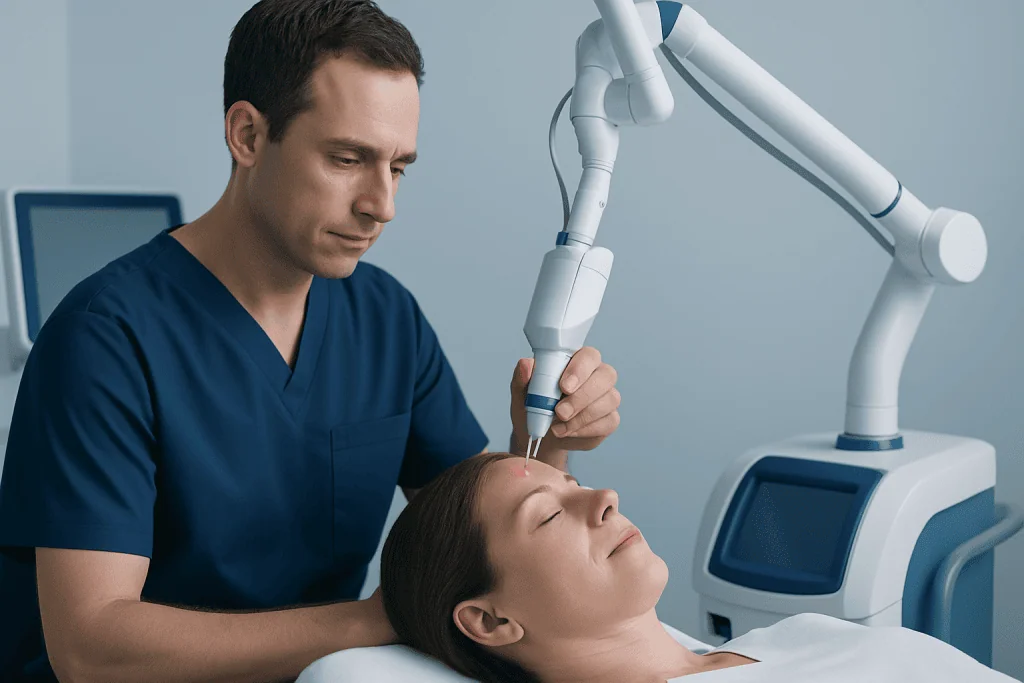
There is no single procedure that suits every basal cell carcinoma. Clinicians consider the body site, lesion size, borders, growth pattern seen under the microscope, whether it has returned after earlier treatment, and whether the person has a weakened immune system. A lesion on the trunk may be treated differently from one near the eyelid, nose, lip, ear, fingers, or genital area.
Low-risk BCCs are often small, well-defined, and located on the trunk or limbs. High-risk tumors may be larger, have poorly defined edges, be recurrent, show an aggressive microscopic subtype, or occur in areas where it is particularly important to conserve healthy tissue. The pathology report from the biopsy is an important part of this assessment.
Personal factors also matter. These include anticoagulant use, allergies, healing capacity, medical conditions, previous radiation to the site, and the person’s preferences about wound repair. A dermatologist, dermatologic surgeon, plastic surgeon, radiation oncologist, or medical oncologist may contribute to care when the case is complex.
What is the most successful treatment for basal cell carcinoma?
For many basal cell carcinomas, surgery offers the highest chance of complete removal. Mohs micrographic surgery has the greatest tissue-sparing precision and very high cure rates for appropriately selected tumors, particularly those that are recurrent, high risk, or located in sensitive areas of the face. It is not automatically necessary for every BCC.
Standard excision is also highly effective and is commonly used for suitable low-risk lesions. During excision, the clinician removes the visible tumor along with a planned margin of normal-looking skin, then sends the specimen to a laboratory to assess whether cancer is present at the edges.
The most successful treatment is therefore the one matched to the individual tumor and patient. If cancer cells remain at the margins, additional treatment may be advised. Ongoing surveillance is important because people who have had one BCC have a higher likelihood of developing another skin cancer later.
What is the gold standard treatment for basal cell carcinoma?
Surgical removal with histologic confirmation of clearance is generally regarded as the standard treatment for most BCCs. Mohs surgery is often considered the gold-standard technique for high-risk BCCs or lesions in anatomically important sites because the surgeon examines margins during the procedure and removes only additional tissue where cancer remains.
For a small, low-risk tumor in a low-risk location, standard excision may be equally appropriate, effective, and more practical. The term “gold standard” should not be interpreted as meaning that Mohs surgery is best for every person; treatment planning should follow the cancer’s risk features and clinical circumstances.
Mohs surgery and standard excision: how the procedures work
Mohs surgery is usually performed under local anesthetic in an outpatient setting. The surgeon removes the visible cancer with a thin layer of surrounding tissue. That tissue is mapped, processed, and examined under a microscope while the patient waits. If cancer is found at a particular edge, the surgeon removes another small layer only from that area and repeats the process until the margins are clear.
Standard surgical excision also typically uses local anesthetic. The clinician removes the tumor and a predetermined margin of surrounding skin in one procedure. The wound may be closed with stitches, allowed to heal naturally, or repaired with a flap or skin graft. Laboratory analysis is completed after the procedure, often over the following days.
Both methods can leave a scar, but repair planning aims to support healing, comfort, movement, and appearance. Where reconstruction is needed in a complex facial area, collaboration with reconstructive specialists may be helpful. Mohs surgery is a specialized option that may be considered after assessment of the lesion and pathology findings.
What I wish I knew before Mohs surgery?
Before Mohs surgery, it is helpful to know that the total duration can be unpredictable. The removal itself is brief, but waiting for tissue processing and microscopic examination may make the visit last several hours. More than one stage may be needed if cancer cells are found at the edge of a removed layer.
Patients should also expect a wound after the cancer is cleared; its final size can be larger than the visible spot because treatment includes a margin and any microscopic extension. Repair may occur the same day, and options can include stitches, a flap, a graft, or natural healing. The care team should explain medication instructions, transport needs if sedation is planned, wound care, activity restrictions, and when to contact the clinic.
Benefits, risks, and alternatives
The main benefit of a basal-cell carcinoma medical procedure is removal of the cancer before it can grow into surrounding structures. Surgery provides tissue for microscopic examination, which helps confirm the diagnosis and evaluate whether the cancer has been fully removed. Mohs surgery can preserve more healthy tissue than wider excision in selected locations.
Possible risks include bleeding, bruising, swelling, discomfort, infection, delayed healing, changes in skin sensation, scar formation, wound separation, and an unsatisfactory cosmetic or functional result. Certain sites and larger repairs may carry additional risks. Although treatment is very effective, BCC can recur, and a new BCC can develop elsewhere on the skin.
When surgery is not suitable, clinicians may discuss alternatives. These may include radiation therapy, topical treatments for selected superficial BCCs, or other local destructive techniques. Advanced BCC that cannot be treated effectively with surgery or radiation may require specialist-led systemic therapy. These options have different benefits, limitations, and follow-up needs.
Recovery timeline and self-care after treatment
After a local-anesthetic procedure, most people go home the same day. Mild tenderness, swelling, or bruising is common during the first several days. The care team will provide individual instructions about keeping the wound clean, changing dressings, using pain relief safely, showering, and protecting the area from friction or injury.
If stitches are used, they are usually removed at a follow-up visit, with timing based on the body site and type of repair. A wound that heals naturally may require regular dressing changes for longer. Scars typically mature gradually over months, and sun protection can help reduce color changes in healing skin.
People should avoid strenuous activity, heavy lifting, or stretching that may pull on the wound until their clinician says it is safe. They should contact their care team promptly for persistent or increasing bleeding, worsening pain, spreading redness, pus-like drainage, fever, an opening wound, or any concern about healing. Acibadem International’s multidisciplinary specialists and JCI-accredited hospitals diagnose and treat skin cancers for international patients.
What aggravates basal cell carcinoma?
Ultraviolet (UV) exposure is the most important avoidable factor associated with BCC. Sunlight and tanning beds can contribute to DNA damage in skin cells. Continued UV exposure may increase the chance of additional skin cancers and can make it harder to notice new or changing lesions among areas of sun-damaged skin.
Other factors associated with increased risk include fair skin that burns easily, a history of significant sun exposure or blistering sunburns, older age, previous skin cancer, family history, immune suppression, and prior radiation exposure. These factors do not mean a person will develop BCC, and BCC can occur in people of all skin tones.
Helpful prevention measures include using broad-spectrum sunscreen, seeking shade when UV levels are high, wearing protective clothing and a brimmed hat, avoiding tanning beds, and checking the skin regularly. Sunscreen should be part of a broader sun-safety plan rather than the only protective measure.
When to seek medical care
Medical assessment is appropriate for a sore, scab, bump, or patch that does not heal; bleeds easily; repeatedly crusts; grows slowly; or changes in color, shape, or texture. BCC may appear as a pearly or skin-colored bump, a persistent pink or red patch, a shiny scar-like area, or a sore that seems to heal and return. Appearance can vary considerably.
People who have previously had BCC should attend recommended follow-up examinations and report any new or changing spot between visits. A clinician can decide whether dermoscopy, photography, or a biopsy is needed. Early review is particularly important for lesions near the eye, nose, ear, lip, or areas where a growth affects movement or sensation.
Prompt evaluation is also sensible if a treated site develops a persistent new lump, ulcer, bleeding, or changing scar. These signs do not always indicate recurrence, but they should be checked rather than monitored indefinitely at home.
Frequently asked questions
Is basal cell carcinoma removal painful?
Most surgical procedures are performed with local anesthetic, so the area should be numb during cancer removal. People may feel pressure, pulling, or movement, and mild discomfort is common after the anesthetic wears off. The care team can advise on safe pain management and wound care.
How long does it take to recover from basal cell carcinoma surgery?
Initial healing often takes days to a few weeks, depending on the procedure, body location, wound size, and repair method. Bruising and swelling commonly improve over the first week or two, while scars continue to settle for several months. Follow the clinician’s advice about activity and dressing changes.
Can basal cell carcinoma be treated without surgery?
Yes, selected superficial or low-risk tumors may be treated with topical medicine, cryotherapy, curettage and electrodesiccation, or radiation therapy. These methods are not suitable for every BCC and may not provide the same margin assessment as surgery. A biopsy and risk assessment guide the decision.
Does Mohs surgery mean the cancer is advanced?
No. Mohs surgery is often chosen because of where a cancer is located or because tissue conservation is important, not only because the cancer is advanced. It may also be recommended for recurrent tumors, poorly defined lesions, or certain aggressive subtypes.
Can basal cell carcinoma come back after removal?
A treated BCC can recur, although appropriate treatment is highly effective. A person can also develop a new BCC in another area of skin. Regular follow-up, self-checks, and consistent UV protection support early detection.
Should a person stop blood-thinning medicine before skin cancer surgery?
A person should not stop prescribed blood-thinning medication without instructions from the clinician who manages it. The skin surgery team should be told about all medicines, supplements, and relevant health conditions before the procedure. They can coordinate a safe plan when changes are necessary.
References
- American Academy of Dermatology
- National Cancer Institute
- National Comprehensive Cancer Network
- American Cancer Society
- British Association of Dermatologists
This article is for general information only and is not a substitute for professional medical advice. Please consult a qualified doctor about your individual situation.
Oncology care in Turkey — second opinion and treatment plan
JCI-accredited · board-certified surgeons · reply within 24h
Add us as a Preferred Source to see more of our trusted health content across Google Search, AI Overviews and Discover.