

Ptk Eye Surgery: Procedure, Recovery and Results
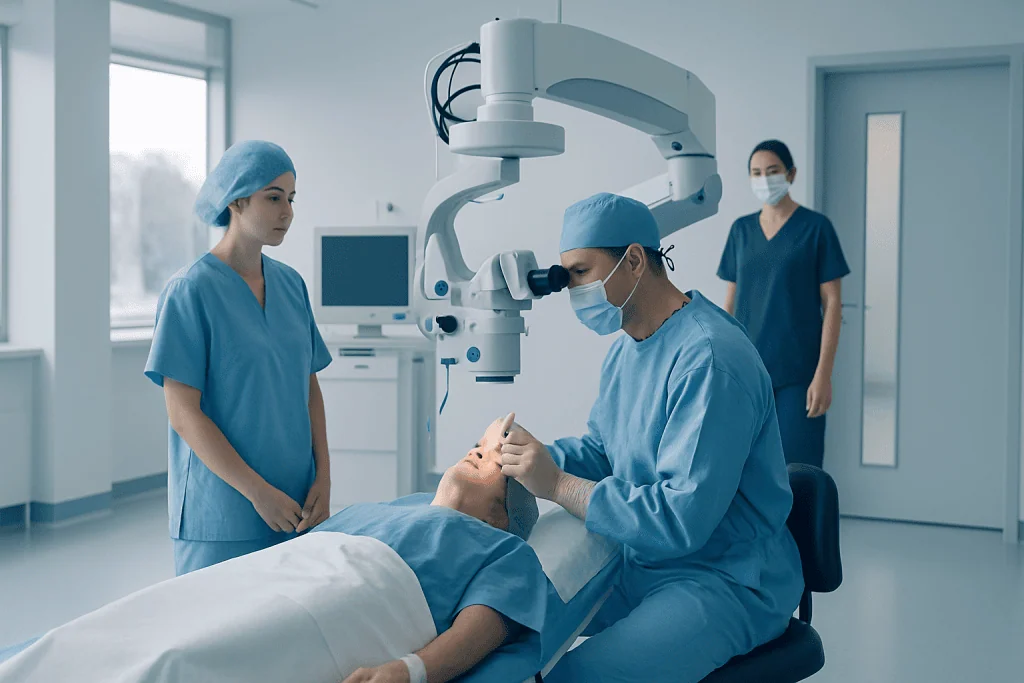
PTK uses an excimer laser to reshape or remove superficial diseased tissue from the cornea. It is most often considered for recurrent corneal erosion, corneal scars, corneal dystrophies, and irregular corneal surface tissue.
Key Takeaways
- PTK uses an excimer laser to reshape or remove superficial diseased tissue from the cornea.
- It is most often considered for recurrent corneal erosion, corneal scars, corneal dystrophies, and irregular corneal surface tissue.
- The eye is usually uncomfortable rather than severely painful after treatment, especially during the first few days.
- Surface healing commonly occurs within several days, while vision may fluctuate for weeks or longer.
- PTK can reduce symptoms and improve corneal clarity, but it may not eliminate the underlying condition or prevent recurrence.
- A detailed corneal assessment is essential to determine whether PTK, another procedure, or nonsurgical treatment is most appropriate.
PTK eye surgery, or phototherapeutic keratectomy, is a laser procedure that removes a very thin layer of damaged corneal tissue. It may improve discomfort, recurrent erosions, and vision affected by selected corneal surface conditions, although recovery is gradual and results depend on the underlying diagnosis.
PTK eye surgery: an overview
PTK eye surgery stands for phototherapeutic keratectomy. It is an outpatient laser procedure that treats problems on the outer layers of the cornea, the clear front window of the eye. An excimer laser precisely removes microscopic amounts of abnormal or uneven corneal tissue, helping create a smoother surface.
Unlike laser vision correction procedures that are primarily designed to reduce dependence on glasses, PTK is usually performed to treat a corneal disease or injury. It may be used for recurrent corneal erosions, superficial scars, certain corneal dystrophies, band keratopathy, or persistent irregularities after previous corneal injury or surgery.
PTK may improve pain, repeated episodes of morning eye discomfort, glare, blurred vision, or reduced corneal transparency. The likely benefit varies with the depth and location of the corneal problem. Changes deeper in the cornea may require another approach, such as corneal transplantation or other specialist care.
How PTK works and who may be a candidate

The cornea has several layers. PTK works at or near its surface, including the epithelium and the layer immediately beneath it. First, the surgeon removes the epithelium, which is the thin protective surface layer. The excimer laser then applies controlled pulses of ultraviolet light to remove abnormal tissue and smooth uneven areas.
A person may be considered for PTK when symptoms or visual disturbance are linked to a superficial corneal condition that has not improved sufficiently with conservative treatment. Examples include repeated epithelial erosions, superficial corneal scarring, Salzmann nodular degeneration, some forms of anterior corneal dystrophy, and calcium deposits on the cornea.
Suitability depends on corneal thickness, the depth of the affected tissue, tear-film health, eye pressure, lens status, general eye health, and visual goals. PTK is not appropriate for every scar or dystrophy. An ophthalmologist may use slit-lamp examination, corneal topography or tomography, pachymetry to measure corneal thickness, and sometimes anterior segment imaging to plan treatment.
People with active eye infection, uncontrolled inflammation, severely dry eyes, poor corneal healing, or a corneal problem extending too deeply may need treatment of those issues first or may be advised to consider a different procedure.
What happens during PTK eye surgery
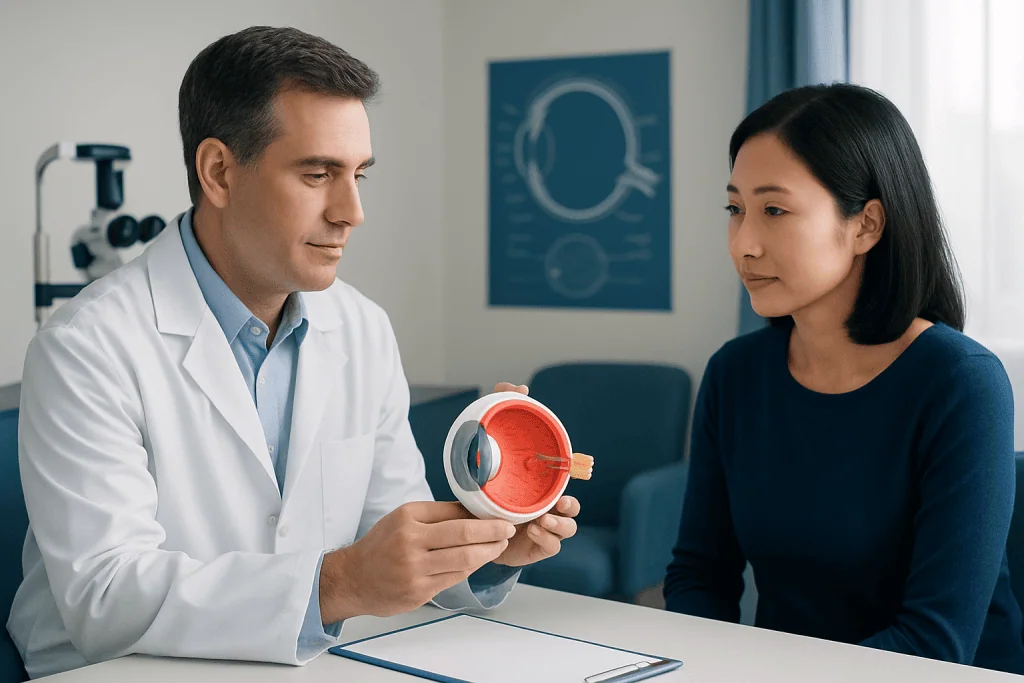
PTK is generally performed as a day procedure under topical anesthetic eye drops. The patient remains awake, and the eyelids are held open with a small instrument. The laser portion is brief, although preparation, positioning, and post-procedure instructions mean the visit takes longer than the laser treatment itself.
After the corneal surface is prepared, the surgeon applies the laser according to an individualized treatment plan. In some cases, a solution may be used to help remove calcium deposits before laser treatment. The aim is to remove only the amount of tissue needed to address the surface abnormality while preserving corneal strength.
At the end of the procedure, a soft bandage contact lens is usually placed to protect the healing cornea and improve comfort. Antibiotic drops are commonly prescribed for the early healing period, and anti-inflammatory or lubricating drops may also be used according to the surgeon’s plan.
The patient should arrange for someone else to take them home. Rubbing the eye, swimming, using eye makeup, and exposing the eye to dusty or smoky environments should be avoided until the ophthalmologist confirms that healing is progressing safely.
How long does it take to recover from PTK laser surgery?
PTK eye surgery recovery time has two parts: surface healing and visual recovery. The corneal epithelium commonly grows back over several days, often while a bandage contact lens is in place. The lens is removed only after the surgeon confirms that the surface has healed adequately.
Vision is often blurry, hazy, or variable during the early days and may continue to fluctuate for several weeks. Many people notice gradual improvement over the first month, but the full ptk surgery recovery time can be longer when a larger or deeper area was treated, when the original condition affects corneal clarity, or when dry eye is present.
Follow-up visits are an important part of ptk eye surgery recovery. They allow the ophthalmologist to check epithelial healing, look for infection or inflammation, adjust drops, and monitor refractive changes. PTK can alter the shape of the cornea slightly, so glasses or contact lens prescriptions may need reassessment after vision stabilizes.
Recovery expectations should be personalized. A person treated for painful recurrent erosions may experience symptom relief before vision becomes fully stable, while someone treated for a central scar may need more time to determine the final visual effect.
How painful is PTK surgery?
PTK surgery itself is usually not painful because numbing drops are used. Patients may feel pressure, awareness of the eyelid holder, bright lights, or the need to focus on a target, but sharp pain during the laser treatment is not expected. If discomfort occurs during the procedure, the surgeon can provide additional anesthetic drops.
After the numbing medicine wears off, the eye may feel scratchy, burning, watery, light-sensitive, or as though there is a grain of sand in it. These symptoms are caused by the temporary removal of the corneal epithelium and are most noticeable in the first few days.
The treatment team may recommend oral pain relief, lubricating drops, and other measures suited to the individual. Drops should be used exactly as prescribed. Patients should not use leftover anesthetic eye drops at home because repeated use can delay healing and damage the cornea.
How painful is recovery from superficial keratectomy?
Recovery from superficial keratectomy, including PTK when it is used as a laser form of superficial corneal treatment, is commonly described as uncomfortable rather than unbearable. Sensitivity differs from person to person, and symptoms are usually most intense before the corneal surface closes, often during the first 24 to 72 hours.
A bandage contact lens, prescribed medication, rest, and minimizing bright-light exposure can make this period more manageable. Tearing, eyelid swelling, blurred vision, and light sensitivity can occur temporarily. It is important not to remove or adjust the bandage lens without professional advice.
Contact the eye clinic promptly if pain becomes severe or increases after initially improving, or if there is worsening redness, discharge, sudden vision loss, or marked swelling. These symptoms may indicate a complication that needs timely assessment.
Benefits, limitations and possible risks
The main potential benefits of PTK are a smoother corneal surface, fewer painful erosion episodes, improved comfort, reduced glare, and better vision when superficial clouding or irregularity is the cause of visual symptoms. For some corneal dystrophies, PTK can remove deposits or irregular tissue that interfere with the cornea’s clarity.
However, PTK does not treat every cause of blurred vision. It cannot correct problems arising from the retina, optic nerve, cataract, or deep corneal scars. Some inherited or degenerative corneal conditions can recur over time because the procedure removes affected tissue but may not change the underlying biological tendency.
Possible risks include delayed epithelial healing, infection, inflammation, corneal haze, glare or halos, dry-eye symptoms, refractive change, under-correction, over-correction, recurrence of the original condition, and reduced best-corrected vision in uncommon cases. Careful follow-up and adherence to aftercare instructions help reduce avoidable risks.
For patients considering corneal surface laser treatment, an ophthalmologist can explain whether PTK is intended mainly to improve comfort, visual quality, or both. Acibadem International’s multidisciplinary specialists and JCI-accredited hospitals assess and treat corneal conditions for international patients.
Is PTK surgery worth it?
Whether PTK surgery is worth it depends on the problem being treated and what matters most to the individual. It may be a worthwhile option when a superficial corneal condition causes repeated pain, disrupts daily activities, or creates meaningful visual disturbance despite appropriate medical treatment.
The decision should balance possible improvement against recovery time, the chance of refractive change, and the possibility that the condition may recur. A person with mild symptoms that respond well to lubricants or other nonsurgical care may reasonably choose observation, while someone with frequent painful erosions may place greater value on reducing recurrences.
It is helpful to ask the ophthalmologist what symptom or visual limitation PTK is expected to address, how much improvement is realistic, whether glasses may be needed afterward, and which alternatives are available. A shared decision based on examination findings is more useful than comparing outcomes with another person’s experience.
When to seek medical care
Anyone with repeated eye pain on waking, persistent foreign-body sensation, increasing light sensitivity, new corneal clouding, or blurred vision should arrange an eye examination. These symptoms can have several causes, and early assessment helps identify whether the cornea is involved.
Urgent medical care is needed for sudden loss of vision, severe eye pain, marked redness, pus-like discharge, injury involving a chemical or foreign object, or pain associated with contact lens wear. These symptoms may require prompt treatment to protect vision.
After PTK, patients should follow their planned review schedule and contact their treating team without delay if pain worsens, vision declines suddenly, redness increases, or discharge develops. They should continue prescribed drops and avoid self-treating with non-prescribed eye medications.
Frequently asked questions
What is the difference between PTK and LASIK?
PTK is mainly used to treat disease, scarring, deposits, or irregularity on the corneal surface. LASIK is mainly a refractive procedure intended to reduce glasses or contact lens dependence by changing the cornea's focusing power. Both may use an excimer laser, but their goals and techniques differ.
Will vision be blurry after PTK eye surgery?
Yes, blurred or fluctuating vision is expected during the early healing period. Vision often improves gradually as the corneal surface heals, but stabilization can take several weeks or longer. The duration depends on the treated area and the underlying corneal condition.
Does PTK surgery permanently cure corneal dystrophy?
PTK may improve symptoms and clarity by removing superficial abnormal tissue, but it does not always permanently prevent recurrence. Some corneal dystrophies are inherited or progressive, so deposits or irregularity can return over time. The ophthalmologist can discuss the expected recurrence risk for the specific diagnosis.
How soon can someone return to work after PTK?
The timing depends on discomfort, light sensitivity, job demands, and how quickly vision clears. Some people need several days away from screen-based, driving, or visually demanding work, while others require longer. The treating ophthalmologist should give individualized guidance.
Can PTK change a glasses prescription?
Yes. Removing corneal tissue can produce a refractive change, which may alter nearsightedness, farsightedness, or astigmatism. A new prescription is usually considered only after the eye has healed and vision has become stable.
What should be avoided during PTK surgery recovery?
Patients should avoid rubbing the eye, swimming, eye makeup, dusty environments, and activities that could expose the eye to injury until advised otherwise. They should also avoid driving until vision meets legal and practical safety requirements. Medication and follow-up instructions should be followed closely.
References
- American Academy of Ophthalmology
- National Eye Institute
- Mayo Clinic
- Royal College of Ophthalmologists
This article is for general information only and is not a substitute for professional medical advice. Please consult a qualified doctor about your individual situation.
Eye Surgery in Turkey — costs, top hospitals & a free quote
JCI-accredited · board-certified surgeons · reply within 24h
Add us as a Preferred Source to see more of our trusted health content across Google Search, AI Overviews and Discover.

Ophthalmology
Comprehensive eye care from laser vision correction to retina, cornea and cataract surgery.
75 specialists in this unitMore from the Health Library



Related Specialists

Assoc. Prof. Dr. Sinan Kırım
Endocrinology
Assoc. Prof. Dr. Diğdem Özer Etik
Gastroenterology
Dr. Emrah Turunç
Internal Medicine
Assoc. Prof. Dr. Ferhat Demir
Pediatrics