Oral Scc Treatment: How It Works, Results and What to Expect

Oral squamous cell carcinoma is the most common type of cancer arising in the mouth. Surgery is often the main treatment for localized oral SCC, sometimes followed by radiation or chemoradiation.
Key Takeaways
- Oral squamous cell carcinoma is the most common type of cancer arising in the mouth.
- Surgery is often the main treatment for localized oral SCC, sometimes followed by radiation or chemoradiation.
- Treatment planning considers tumor stage, lymph nodes, functional needs and a person’s general health.
- Many early oral SCCs can be cured, while advanced disease may require combined treatment and close follow-up.
- A persistent mouth ulcer, lump, red or white patch, or unexplained swallowing difficulty should be assessed promptly.
Oral SCC treatment is tailored to the cancer’s location, stage and biological features, and may include surgery, radiation therapy, systemic treatment or a combination of these approaches. Early assessment by a multidisciplinary head and neck cancer team helps protect swallowing, speech and quality of life while aiming for effective cancer control.
Oral SCC Treatment: How It Works
Oral SCC treatment refers to care for oral squamous cell carcinoma, the most common cancer type affecting the mouth. It develops from squamous cells that line areas such as the tongue, floor of the mouth, gums, inner cheeks, hard palate and lips. Treatment aims to remove or destroy cancer cells, reduce the chance of recurrence and preserve important functions including speaking, swallowing, breathing and appearance.
For many people with localized disease, surgery is the central treatment. Radiation therapy may be used after surgery when there is a higher risk that cancer cells remain, such as when lymph nodes are involved or the tumor has certain high-risk features. Chemotherapy given with radiation, targeted medicines or immunotherapy may be considered for selected locally advanced, recurrent or metastatic cancers.
The best plan is individualized rather than based on one treatment alone. Head and neck surgeons, medical oncologists, radiation oncologists, radiologists, pathologists, dentists, speech and swallowing therapists, dietitians and specialist nurses may all contribute to care. This coordinated approach also supports recovery and long-term monitoring.
Symptoms, Diagnosis and Treatment Planning
Possible oral SCC symptoms include a mouth sore that does not heal, a persistent red or white patch, a lump in the mouth or neck, pain or numbness, bleeding without a clear cause, loose teeth, voice changes, difficulty chewing or swallowing, or persistent ear pain. These symptoms often have non-cancer causes, but a change lasting more than two weeks deserves assessment by a dentist, physician or ear, nose and throat specialist.
Diagnosis usually starts with a detailed examination of the mouth and neck. A biopsy, in which a small sample of tissue is examined by a pathologist, confirms whether cancer is present. Imaging such as CT, MRI or PET/CT may help show the tumor’s size, its relationship to nearby structures and whether lymph nodes or distant organs are involved.
Before treatment begins, the team assesses nutrition, dental health, speech and swallowing, and general fitness for surgery or other therapies. This baseline planning is important because oral cancer treatment can affect eating, speech and oral comfort. People may also be advised to stop tobacco use and limit alcohol, as these steps support healing and reduce the risk of future cancers.
Some lesions are identified before invasive cancer develops. Evaluation of suspicious changes and timely management may help prevent progression; related mouth conditions are discussed in oral cancer information.
Who May Be a Candidate for Each Treatment?

Candidacy for oral SCC treatment depends on where the tumor began, how deeply it has grown, whether nearby lymph nodes are affected, and whether the cancer has spread elsewhere. The person’s age alone does not determine treatment. General health, nutrition, lung and heart function, other medical conditions, previous radiation treatment and personal goals are all considered.
Surgery may be suitable when the tumor can be removed with an appropriate margin of healthy tissue while maintaining safe function. If lymph node spread is suspected or the risk is significant, surgery may also include removal of selected lymph nodes in the neck. Depending on the size and location of the surgical area, reconstructive techniques may be used to restore the tongue, jaw, mouth lining or other structures.
Radiation may be used alone in carefully selected cases, but it is more commonly recommended after surgery for oral cavity cancer with higher-risk findings. Combined chemotherapy and radiation may be advised when pathology shows features associated with a greater recurrence risk. For cancer that cannot be removed surgically, has returned, or has spread, systemic therapy can help control disease and symptoms.
- Early, small tumors may be treated with surgery alone.
- Larger tumors or involved neck nodes often need combined treatment.
- Recurrent or metastatic cancer may be evaluated for immunotherapy, chemotherapy, targeted treatment, clinical trials or supportive care.
Step by Step: Surgery, Radiation and Systemic Treatment
When surgery is recommended, the first step is careful mapping of the tumor with examination, imaging and biopsy results. During the operation, the surgeon removes the tumor and a margin of surrounding tissue. A neck dissection may be performed to examine or remove lymph nodes. Reconstructive surgery may occur during the same procedure when needed to support speech, swallowing, jaw movement or appearance.
The removed tissue is studied in the laboratory. The pathology report describes the tumor type, margins, depth of invasion, lymph node findings and other features that guide the next stage of care. Depending on these results, the team may recommend observation with close follow-up, radiation therapy, or chemoradiation after healing.
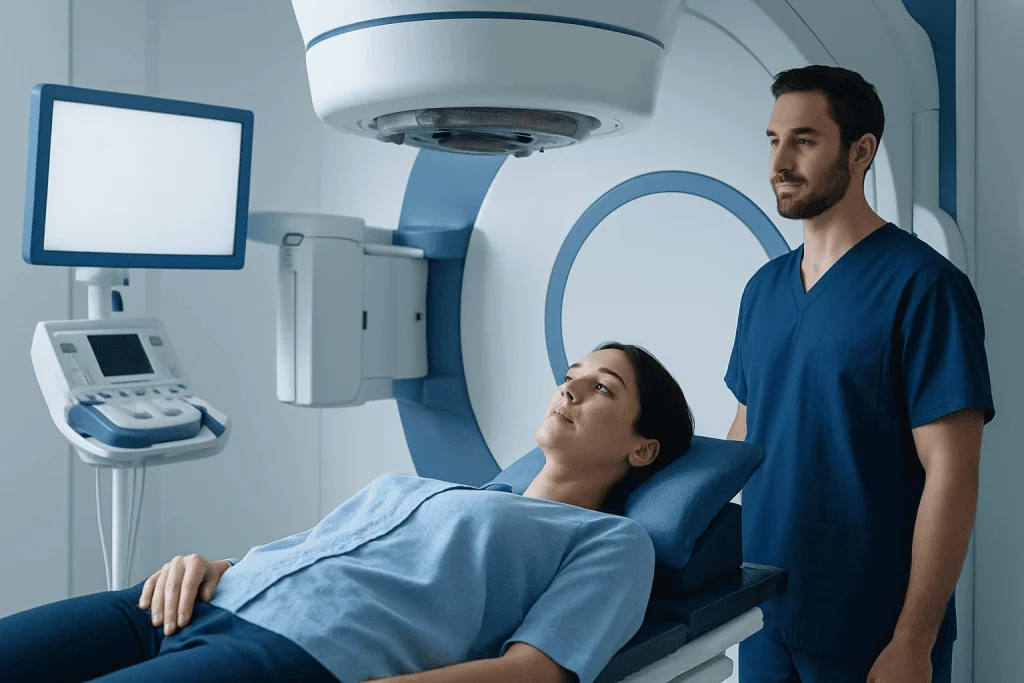
Radiation therapy uses carefully planned high-energy beams to damage cancer cells while limiting exposure to healthy tissue. It is generally delivered in daily sessions over several weeks. Chemotherapy can make cancer cells more sensitive to radiation in some situations, but it can also increase side effects, so clinicians weigh the likely benefit and the person’s ability to tolerate treatment.
For advanced disease, medicines delivered into a vein or taken by mouth may be used. Immunotherapy helps the immune system recognize cancer cells in some eligible patients. The choice is based on prior treatment, cancer characteristics, symptoms and overall health, with regular review of response and side effects.
Benefits, Risks and Recovery Timeline
The potential benefit of oral SCC treatment is cancer control and, in many early-stage cases, cure. Treatment can also relieve symptoms such as pain, bleeding, difficulty eating or airway discomfort. The likely result depends on stage, tumor location, lymph node involvement, pathology findings, response to treatment and whether the cancer returns after initial care.
Recovery after surgery varies widely. A small operation may allow a person to return home quickly, while major surgery with reconstruction can require a longer hospital stay and rehabilitation. Swelling, discomfort, altered speech, changes in taste, temporary feeding support and difficulty swallowing can occur. Speech and swallowing therapy, dietetic guidance and careful oral care are often key parts of recovery.
Radiation and chemoradiation may cause mouth soreness, dry mouth, taste changes, fatigue, skin irritation, swallowing difficulty and dental problems. These effects can begin during treatment and may continue for weeks afterward; dry mouth or swallowing changes can be longer lasting for some people. Dental assessment before radiation and regular preventive dental care are important.
Follow-up appointments commonly include mouth and neck examinations, symptom review and imaging when indicated. People should tell their care team about new pain, a new lump, bleeding, weight loss or changes in swallowing. Support for nutrition, smoking cessation, mental wellbeing and rehabilitation can make recovery more manageable.
How Fast Does Oral Squamous Cell Carcinoma Spread?
Oral squamous cell carcinoma does not spread at the same rate in every person. Some tumors remain localized for a period, while others grow more quickly or spread early to lymph nodes in the neck. Growth behavior can be influenced by the tumor’s location, depth of invasion, grade, molecular features and the person’s immune and general health.
Because it is not possible to predict an individual tumor’s pace from symptoms alone, a confirmed or strongly suspected oral SCC should be assessed without delay. Imaging and pathology help clinicians identify whether lymph nodes are involved and whether there is evidence of spread beyond the mouth and neck.
Prompt evaluation does not mean every mouth sore is cancer. However, a lesion that persists, enlarges, bleeds, becomes painful or interferes with eating or swallowing should not be watched indefinitely. Earlier diagnosis generally provides more treatment options and may improve the chance of successful control.
How Serious Is Oral Squamous Cell Carcinoma? What Are the Stages?
Oral squamous cell carcinoma is a serious condition because it can grow into nearby tissues, affect speech and swallowing, spread to neck lymph nodes and, in some cases, travel to distant organs. Its seriousness varies substantially. Small cancers found before lymph node involvement often have a more favorable outlook than larger cancers or those that have spread.
Oral SCC is staged using the TNM system. T describes the size and local extent of the primary tumor, including depth of invasion in oral cavity cancers. N describes whether regional lymph nodes contain cancer, and M describes whether there is distant metastasis. These categories are combined into stages I through IV.
In broad terms, stages I and II are generally smaller tumors without spread to lymph nodes or distant sites. Stage III commonly reflects a larger tumor or limited regional lymph node involvement. Stage IV includes more extensive local disease, more significant lymph node involvement or distant spread, though stage IV has several subgroups and is not a single uniform situation.
Stage helps guide treatment, but it is not the only factor in oral SCC prognosis. Pathology findings, complete tumor removal, response to therapy, overall health and access to rehabilitation also matter. A cancer team can explain what a specific stage means for an individual person.
Can Oral Squamous Cell Carcinoma Be Cured? When to Seek Medical Care
Yes, oral squamous cell carcinoma can often be cured, particularly when it is diagnosed at an early stage and treated completely. Even when disease is more advanced, combined treatments can provide meaningful control and may still be given with curative intent in selected circumstances. Oral SCC survival rate estimates are based on large groups of people and cannot predict an individual outcome; the treating team is best placed to discuss prognosis using the full clinical picture.
Medical care should be sought promptly for a mouth ulcer that lasts longer than two weeks, a new or growing lump in the mouth or neck, unexplained oral bleeding, a persistent red or white patch, ongoing numbness, or difficulty chewing, swallowing or speaking. Urgent assessment is also appropriate for breathing difficulty, inability to swallow liquids, substantial bleeding or rapidly worsening swelling.
After treatment, regular surveillance is essential because recurrence or a new head and neck cancer can occur. Avoiding tobacco in all forms, limiting alcohol, maintaining dental visits, protecting the lips from excessive sun exposure and attending follow-up appointments are practical ways to support long-term health.
Acibadem International’s multidisciplinary specialists and JCI-accredited hospitals assess and treat oral SCC for international patients, with care planning that may include surgery, radiation oncology, medical oncology and rehabilitation.
Frequently asked questions
What does oral SCC mean?
Oral SCC means oral squamous cell carcinoma. It is a cancer that starts in the thin, flat squamous cells lining the mouth, including the tongue, gums, inner cheeks, floor of the mouth and palate. It is the most common form of oral cavity cancer.
What is usually the first treatment for oral SCC?
Surgery is commonly the first treatment for oral SCC that is localized and can be safely removed. The operation may include removal of lymph nodes in the neck, depending on the tumor’s features and risk of spread. Radiation therapy or chemoradiation may be recommended afterward when pathology shows higher-risk findings.
What are common oral SCC symptoms?
Common oral SCC symptoms include a sore that does not heal, a red or white patch, a lump, unexplained bleeding, persistent pain, numbness, loose teeth and difficulty chewing or swallowing. Symptoms can have many causes, but any ongoing mouth change should be examined by a healthcare professional. A lesion persisting longer than two weeks warrants timely assessment.
How long does recovery take after oral SCC surgery?
Recovery depends on the size and location of the tumor, whether neck surgery or reconstruction is needed, and a person’s overall health. Minor procedures may have a relatively short recovery, while larger operations can require weeks to months of healing and rehabilitation. Speech, swallowing and nutrition support may be needed during recovery.
Will oral SCC treatment affect speech or swallowing?
It can, particularly when treatment involves the tongue, floor of the mouth, jaw or throat-related structures. Surgery, radiation and chemoradiation can each affect swallowing, taste, saliva production and speech to varying degrees. Rehabilitation with speech and swallowing therapists can help people adapt and regain function.
Can oral SCC come back after treatment?
Yes, oral SCC can recur locally, in neck lymph nodes or elsewhere after treatment, which is why structured follow-up is important. The likelihood varies according to stage, pathology findings, treatment response and ongoing tobacco or alcohol exposure. New symptoms between appointments should be reported to the care team promptly.
References
- World Health Organization
- National Cancer Institute
- American Cancer Society
- National Comprehensive Cancer Network
- European Society for Medical Oncology
This article is for general information only and is not a substitute for professional medical advice. Please consult a qualified doctor about your individual situation.
Oncology care in Turkey — second opinion and treatment plan
JCI-accredited · board-certified surgeons · reply within 24h
Add us as a Preferred Source to see more of our trusted health content across Google Search, AI Overviews and Discover.