Vertebral Fusion Surgery Video: Procedure, Recovery and Results

Spinal fusion permanently joins two or more vertebrae to reduce painful or unstable movement. The procedure may be recommended for instability, deformity, fractures, selected degenerative conditions or nerve compression treated with decompression.
Key Takeaways
- Spinal fusion permanently joins two or more vertebrae to reduce painful or unstable movement.
- The procedure may be recommended for instability, deformity, fractures, selected degenerative conditions or nerve compression treated with decompression.
- Recovery usually starts with early supported walking, followed by gradual activity progression and rehabilitation when advised.
- Pain and fatigue are common in the early weeks, but pain control plans and paced movement can support recovery.
- Fusion healing takes months, and smoking or nicotine exposure can reduce the chance of successful bone healing.
- Urgent assessment is needed for new weakness, loss of bladder or bowel control, fever with wound concerns, or severe worsening pain.
A vertebral fusion surgery video can help patients understand the main stages of spinal fusion: preparing the spine, placing bone graft material, and using implants when needed to support healing. Videos are educational, but an individual’s operation, recovery pace and outcome depend on the spinal condition, number of levels treated and overall health.
Overview: What a Vertebral Fusion Surgery Video Shows
A vertebral fusion surgery video usually shows how a surgeon joins two or more spinal bones, called vertebrae, so they heal into one stable unit. The aim is to limit painful or unsafe movement at a specific part of the spine while preserving as much function as possible. Depending on the diagnosis, fusion may be performed in the neck, middle back or lower back.
Educational videos commonly show the position of the patient, imaging guidance, removal of pressure from nerves when needed, placement of bone graft, and use of screws, rods, plates or cages. Some details may look different from one patient to another because the approach can be from the back, front, side, or through smaller incisions. A surgical video cannot predict an individual result, but it can make the discussion with a spine specialist more informed.
Fusion is not automatically the first treatment for back or neck pain. It is usually considered when symptoms and imaging findings point to a structural problem that is unlikely to improve adequately with non-surgical care, or when there is instability or important nerve involvement. The relevant procedure is described in more detail in spinal fusion surgery.
How Spinal Fusion Works and Who May Be a Candidate
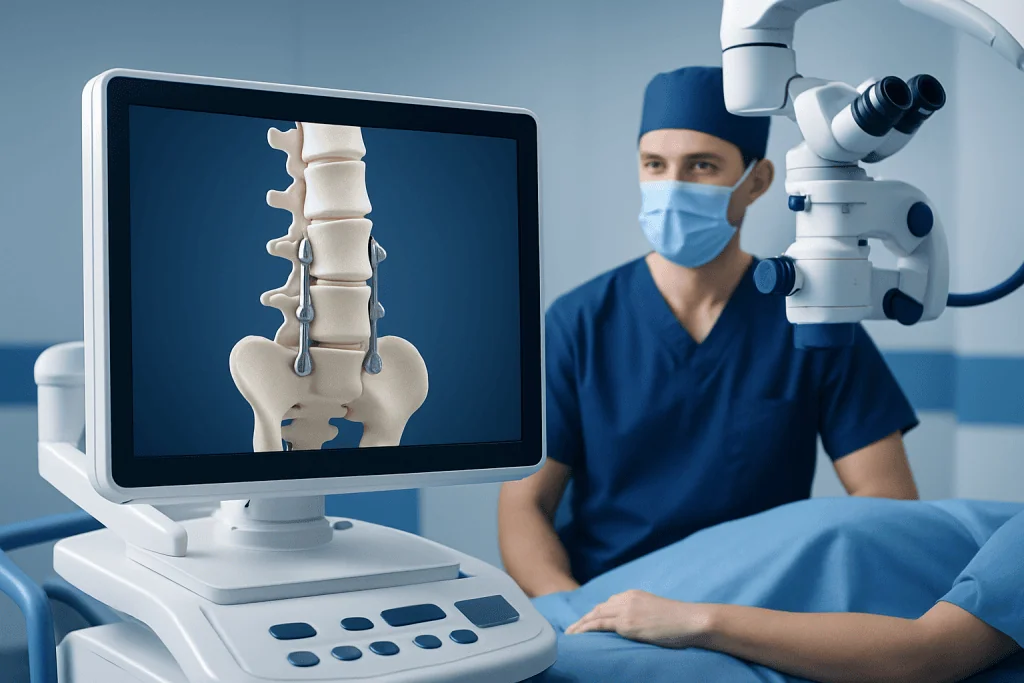
During fusion, the surgeon prepares the surfaces of the affected vertebrae and places bone graft material between or alongside them. Over time, the body forms new bone across the area, creating a solid connection. Metal implants may provide immediate stability while the bone heals; they do not themselves create the fusion.
A person may be considered for fusion when there is a clear structural reason for symptoms, such as vertebral slippage, spinal deformity, an unstable fracture, infection or a tumor requiring reconstruction. Fusion may also be combined with decompression surgery when removing bone or tissue to relieve a nerve would otherwise make the spine unstable. Conditions such as spondylolisthesis can sometimes cause instability that requires this type of assessment.
Before recommending surgery, the clinical team considers symptoms, neurological examination findings, X-rays and often MRI or CT imaging. They also review bone health, smoking or nicotine use, diabetes, medications, nutrition, previous operations and expectations. Many people first try targeted exercise, physical therapy, activity adjustments, medicines or injections where appropriate, unless urgent neurological or structural concerns are present.
Step by Step: What Happens During the Procedure

On the day of surgery, the patient receives general anesthesia and is positioned carefully to protect pressure points. The surgical team confirms the planned spinal level using imaging. The approach depends on the area being fused and the reason for surgery; it may be posterior, anterior, lateral, or a combination of approaches.
If nerves are compressed, the surgeon may first perform a decompression, such as removing part of a bone, disc or thickened ligament. Damaged disc material may be removed and a spacer or cage may be placed to restore support between vertebrae. Bone graft can come from the patient, a donor source, or a processed graft material selected by the surgeon.
Screws, rods, plates or other fixation devices may then be used to hold the spine in the intended position. The wound is closed, and the patient is monitored as anesthesia wears off. The length of surgery and hospital stay vary substantially according to the spinal region, number of levels, approach, whether decompression is needed and the person’s health.
Minimally invasive techniques may reduce disruption to surrounding tissue in selected cases, but they are not suitable for every diagnosis. The most appropriate approach is one that safely addresses the underlying problem rather than simply the one with the smallest incision.
Benefits, Limitations and Possible Risks
The expected benefit of fusion is greater stability at a painful or unstable spinal segment. When nerve compression is also treated, surgery may help reduce pain radiating into an arm or leg, numbness, or weakness caused by pressure on a nerve. For some people, improved stability can make walking, sleeping and daily activities more manageable.
However, fusion does not guarantee complete pain relief and does not reverse all nerve damage. Recovery can be slower when symptoms have been present for a long time or when there are several sources of pain. Because the fused level no longer moves, nearby spinal levels may take on more stress over time; some people later develop symptoms at adjacent levels, although this does not occur in everyone.
Possible complications include bleeding, infection, blood clots, reactions to anesthesia, injury to nerves or nearby structures, leakage of spinal fluid, persistent symptoms, implant problems and failure of the bones to fuse fully. A nonunion, also called pseudarthrosis, may cause ongoing pain and sometimes requires further treatment. Nicotine exposure is a major modifiable factor that can interfere with bone healing.
A surgeon can explain the likely benefits and risks for the individual procedure, including alternatives to surgery. Shared decision-making should include the patient’s goals, the nature of the spinal condition, the expected recovery demands and the consequences of delaying or avoiding surgery.
Recovery Timeline and Daily Rehabilitation
Immediately after surgery, pain relief is managed with a personalized plan that may include several types of medicines. Early, supervised movement is commonly encouraged to support circulation, lung function and confidence. Some patients walk on the same day or the day after surgery, while others need more time depending on the operation and their baseline mobility.
During the first few weeks, it is normal to tire easily and to need help with tasks such as dressing, shopping or household work. The care team gives specific advice about wound care, showering, sitting, driving, lifting, bending and twisting. Short, frequent walks are often preferable to long periods of bed rest, but activity restrictions must follow the operating surgeon’s instructions.
By roughly 6 to 12 weeks, many people are gradually increasing walking and light daily activity, although this varies widely. Follow-up visits and imaging may be used to review healing and implant position. Bone fusion itself develops over months, and return to demanding work, impact exercise or heavy lifting may take longer.
Physical therapy may be recommended when the surgeon considers it appropriate. It often focuses on walking tolerance, posture, safe movement, core and hip strength, and a gradual return to function. Maintaining good nutrition, controlling chronic conditions and avoiding smoking, vaping and other nicotine products can support recovery.
Common Recovery Questions
Is spinal fusion the hardest surgery to recover from? Spinal fusion can be a demanding operation to recover from, particularly when several levels are treated or when surgery is combined with extensive decompression or deformity correction. It is not possible to rank one operation as universally the hardest because recovery is influenced by surgical extent, health conditions, pain sensitivity, emotional wellbeing, home support and rehabilitation. Clear instructions and gradual progress are more useful measures than comparisons with others.
How painful is spinal fusion surgery recovery? Pain and stiffness are expected after spinal fusion, especially in the first days and weeks, but pain intensity differs greatly between individuals. Modern care usually uses a multimodal pain plan and encourages safe movement rather than untreated pain or prolonged bed rest. Pain that is suddenly worsening, different in character, or accompanied by fever, wound drainage, weakness or other concerning symptoms should be reported promptly.
How long does it take to walk normally after spinal fusion surgery? Many patients begin walking with support soon after surgery, but a comfortable, more natural walking pattern may take several weeks or longer. People recovering from a single-level procedure may progress differently from those having multilevel surgery, nerve weakness, severe preoperative pain or other medical conditions. The surgeon and physiotherapist can set safe, personalized walking goals.
What are the worst days after back surgery? For many patients, the first several days can be the most difficult because surgical soreness, limited mobility, constipation, disrupted sleep and fatigue are common. Some people notice another challenging period as they reduce pain medicine or increase activity during the first few weeks. Symptoms should gradually become more manageable overall; a marked decline rather than gradual improvement deserves medical advice.
When to Seek Medical Care
Before surgery, medical assessment is important for back or neck pain that does not improve as expected, pain spreading into an arm or leg, progressive numbness, weakness, balance problems, or reduced ability to walk. Sudden loss of bladder or bowel control, numbness around the groin or inner thighs, or rapidly progressing weakness requires urgent emergency evaluation.
After fusion surgery, patients should contact their surgical team about increasing redness, swelling, drainage or opening at the incision; fever or chills; uncontrolled pain; new numbness or weakness; calf swelling or pain; chest pain; shortness of breath; or changes in bladder or bowel control. Emergency services should be used for severe symptoms, particularly breathing difficulty, chest pain or new major neurological changes.
Follow-up care is an important part of fusion treatment, even when recovery seems to be going well. Acibadem International’s multidisciplinary specialists and JCI-accredited hospitals diagnose and treat spinal conditions for international patients, with care plans coordinated around surgical assessment, rehabilitation and follow-up needs.
Frequently asked questions
What is the difference between vertebral fusion and spinal fusion?
The terms are generally used to describe the same operation. Spinal fusion joins two or more vertebrae so they can heal together as one stable section of the spine. The exact technique depends on the spinal level and condition being treated.
Will a person have metal implants after spinal fusion?
Many fusion procedures use screws, rods, plates or cages to stabilize the vertebrae while bone healing occurs. Whether implants are needed depends on the surgical approach and diagnosis. In most cases, implants remain in place unless they cause a problem or revision surgery is required.
Does spinal fusion limit movement permanently?
Movement is permanently reduced at the fused segment because that is the purpose of the operation. The overall effect on daily movement may be small after a short fusion, especially when other spinal levels remain healthy. Longer fusions can have a greater effect on flexibility.
Can a person travel after spinal fusion surgery?
Travel timing depends on the procedure, recovery progress and destination. Sitting for long periods can be uncomfortable early on and may raise clot-prevention considerations, so patients should discuss travel plans with their surgical team. Regular movement breaks and following individualized advice are important.
Why is nicotine avoided after spinal fusion?
Nicotine can impair blood flow and interfere with bone healing, increasing the risk that the fusion will not heal as intended. This concern applies to cigarettes, vaping products and other nicotine-containing products. A clinician can help create a cessation plan before surgery.
How is success checked after spinal fusion?
Success is assessed through symptoms, function, examination findings and follow-up imaging when needed. Imaging can show alignment, implant position and signs that bone is healing across the intended area. Because bone healing takes time, final assessment may continue for months after surgery.
References
- American Academy of Orthopaedic Surgeons
- American Association of Neurological Surgeons
- National Institute of Arthritis and Musculoskeletal and Skin Diseases
- National Health Service
- Mayo Clinic
This article is for general information only and is not a substitute for professional medical advice. Please consult a qualified doctor about your individual situation.
Joint and spine care in Turkey — expert assessment & treatment
JCI-accredited · board-certified surgeons · reply within 24h
Add us as a Preferred Source to see more of our trusted health content across Google Search, AI Overviews and Discover.

More from the Health Library



Related Specialists

Assoc. Prof. Dr. Mustafa Aytek Şimşek
Cardiology
Assoc. Prof. Dr. Alpay Medetalibeyoğlu
Internal Medicine
Assoc. Prof. Dr. Hakan Hasdemir
Cardiology
Assoc. Prof. Dr. Sevgi Topal
Pediatric Intensive Care Unit