Laser Cancer Cure: How It Works, Results and What to Expect
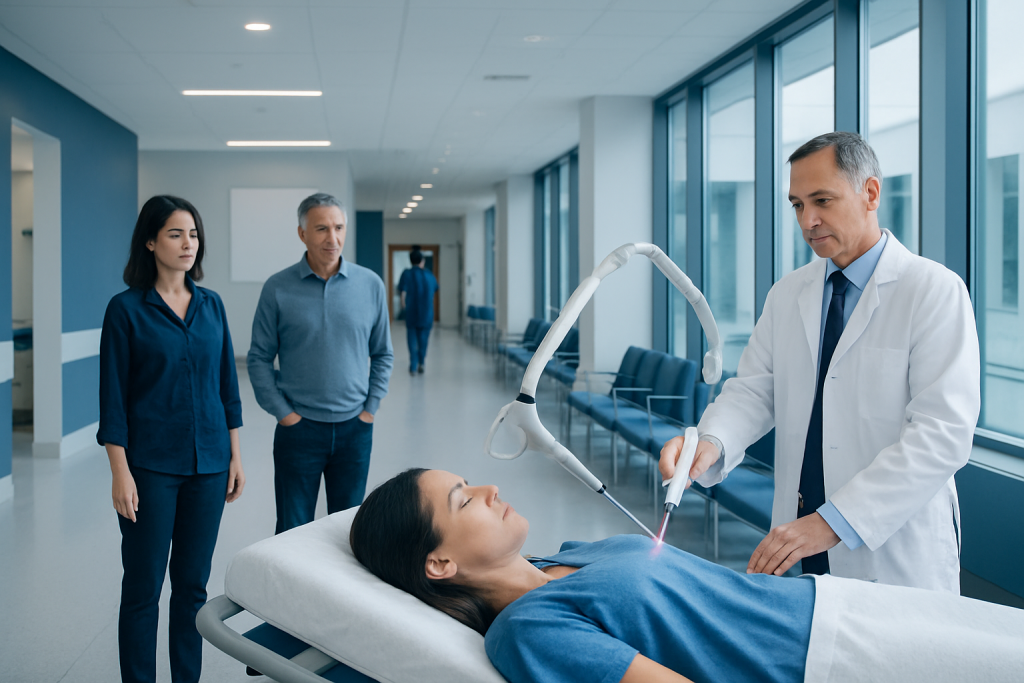
Laser therapy can be useful for certain surface, early-stage, or hard-to-reach tumors, but it is not appropriate for every cancer type or stage. The goal may be complete removal of a small lesion, control of local tumor growth, or relief of symptoms such as blockage or bleeding.
Key Takeaways
- Laser therapy can be useful for certain surface, early-stage, or hard-to-reach tumors, but it is not appropriate for every cancer type or stage.
- The goal may be complete removal of a small lesion, control of local tumor growth, or relief of symptoms such as blockage or bleeding.
- Treatment planning depends on the cancer type, location, size, spread, previous treatments, and a person’s overall health.
- Recovery is often shorter than with open surgery, but side effects and follow-up needs vary by treatment site.
- The cost of laser treatment for cancer varies widely because it depends on the diagnosis, procedure setting, testing, anesthesia, hospital stay, and additional treatments needed.
A laser cancer cure is not a single treatment that works for every cancer. Laser cancer treatment uses focused light energy to cut, vaporize, or destroy targeted abnormal tissue, and may be used alone for selected early lesions or alongside surgery, radiation therapy, medicines, or other cancer care.
Overview: Can Laser Treatment Cure Cancer?
A so-called laser cancer cure is not a universal cure for cancer. In selected situations, laser cancer treatment can destroy or remove a small, localized cancer completely; in other situations, it is used to reduce a tumor, open a narrowed passage, control bleeding, or improve symptoms. Whether it can be curative depends primarily on the cancer’s type, stage, location, and whether it has spread.
Lasers produce an intense, concentrated beam of light. Clinicians can direct this energy precisely to cut tissue, vaporize abnormal cells, or heat and destroy tumor tissue. Because laser energy can be highly focused, it may limit damage to nearby tissue in some procedures. However, it does not replace standard cancer treatments when surgery, radiation therapy, systemic treatment, or a combination is more likely to provide the best outcome.
Laser cancer therapy is most commonly considered within specialist areas such as skin, gynecologic, lung, digestive, head and neck, and urologic cancer care. A multidisciplinary team reviews imaging, biopsy findings, pathology, and personal health factors before recommending a treatment approach.
How Laser Cancer Treatment Works
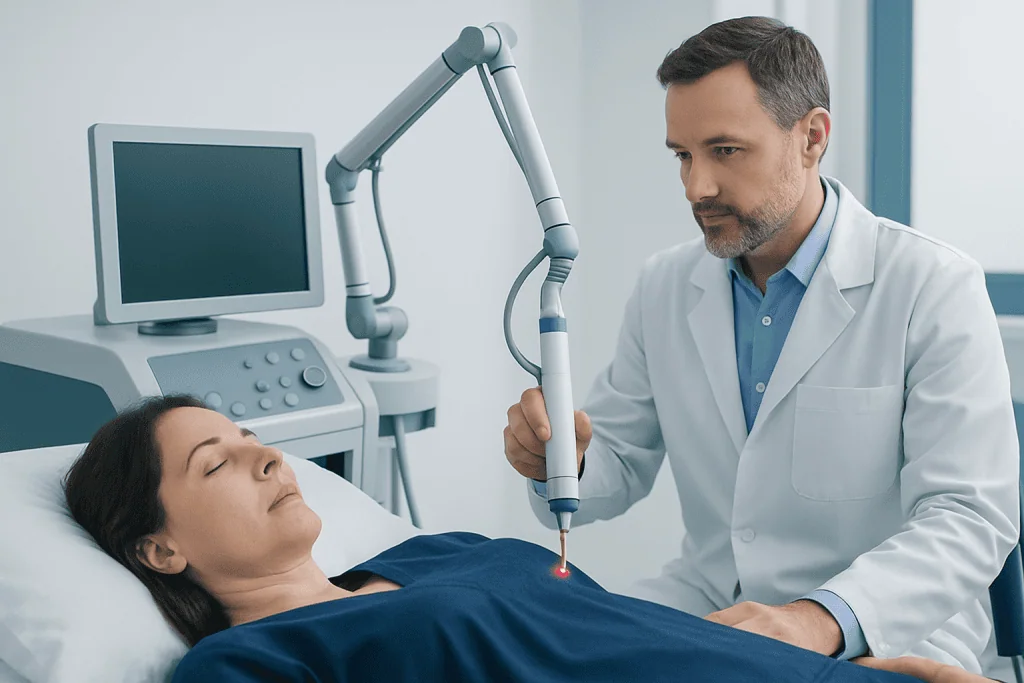
Different lasers deliver different wavelengths and amounts of energy. The treating specialist selects the technology according to the tissue being treated and the intended effect. Some lasers cut with precision while helping seal small blood vessels; others vaporize superficial tissue or create heat that damages cancer cells.
The laser may be used directly on an accessible lesion, such as one on the skin or cervix. For tumors inside the body, it may be delivered through an endoscope, bronchoscope, or another narrow instrument passed through a natural opening or a small incision. Imaging and camera guidance can help the clinician position the laser accurately.
In some cases, laser treatment is paired with photodynamic therapy. This approach uses a light-sensitive medicine that accumulates more in certain abnormal cells, followed by light activation to damage those cells. Photodynamic therapy and laser ablation are related but distinct techniques, and suitability depends on the diagnosis.
- Curative local treatment: possible for selected early, small, localized lesions.
- Symptom relief: may help reduce obstruction, bleeding, pain, or breathing difficulties caused by a tumor.
- Combined care: may be used before, after, or alongside other cancer treatments when clinically appropriate.
Who Is the Ideal Patient for Laser Therapy for Cancer?

The ideal patient for laser therapy for cancer has a tumor that can be reached safely and treated accurately with laser energy. This may include a small, superficial, or early-stage lesion; a tumor located within an airway or digestive passage; or a localized growth causing symptoms that need prompt relief. The treatment goal is equally important: complete local removal and symptom control require different planning.
Doctors assess biopsy results, tumor dimensions, depth of invasion, nearby organs and blood vessels, lymph node involvement, and evidence of distant spread. They also consider previous surgery, radiation therapy, chemotherapy, immunotherapy, medications that affect bleeding, lung or heart health, and a person’s ability to undergo anesthesia or sedation.
Laser treatment is generally less suitable when cancer is widespread, deeply invasive, or cannot be safely accessed. It may also be inappropriate when a procedure would leave cancer behind without providing meaningful benefit. In these circumstances, other local or systemic treatments may be recommended instead.
A cancer diagnosis should be assessed by an oncology team rather than by treatment type alone. For example, the needs of someone with lung cancer differ substantially from those of a person with a superficial skin lesion or a cervical abnormality.
What Happens During a Laser Cancer Procedure?
Before the procedure, the care team confirms the diagnosis and treatment target. This may involve a physical examination, imaging, endoscopy, blood tests, and review of pathology. Patients are given individualized instructions about eating and drinking, regular medicines, blood-thinning medicines, smoking, transport home, and expected recovery.
On the day of treatment, the procedure may be performed using local anesthesia, sedation, or general anesthesia, depending on the area treated and the complexity of the procedure. The specialist positions the laser through a handpiece, scope, or catheter-like device and applies energy in a controlled pattern to cut, remove, vaporize, or coagulate the targeted tissue.
Removed tissue may be sent to a laboratory to confirm the diagnosis and assess treatment margins where relevant. Some procedures are completed as day treatment, while others require observation or a short hospital stay. The exact duration varies from a brief outpatient procedure to a longer intervention when endoscopy, anesthesia, or additional surgical work is needed.
Follow-up is an essential part of care. It may include wound checks, repeat endoscopy, imaging, pathology review, or additional therapy. The procedure itself treats a local area; follow-up helps confirm healing, detect recurrence, and address any wider cancer-treatment needs.
Benefits, Risks and What to Expect During Recovery
A potential benefit of laser treatment is precision. It may remove or destroy a focused area of abnormal tissue while preserving more surrounding tissue than a wider operation in selected cases. Lasers can also seal some small blood vessels and may reduce bleeding during certain procedures. Depending on the treatment site, recovery may be quicker than after open surgery.
Risks vary by body area and technique. They can include pain, swelling, bleeding, infection, scarring, delayed healing, changes in function of the treated organ, and injury to nearby tissue. For internal procedures, there may be risks related to anesthesia, perforation, airway swelling, narrowing or blockage, or the need for further treatment. Laser therapy does not guarantee complete tumor removal or prevent cancer from returning.
Recovery can range from a few days for minor surface procedures to several weeks for deeper or internal treatments. Mild soreness, fatigue, local swelling, or temporary changes in eating, swallowing, breathing, urination, bowel function, or voice may occur depending on the treatment area. The treating team provides site-specific instructions and advises when normal activity can resume.
Contact the clinical team promptly if there is heavy or persistent bleeding, fever, worsening pain, trouble breathing, chest pain, inability to swallow fluids, persistent vomiting, confusion, or a new symptom that feels urgent. These symptoms do not always indicate a serious complication, but they require timely medical assessment.
What Are Two Drawbacks of Laser Therapy?
Two important drawbacks of laser therapy are that it has limited reach and that it may not provide complete cancer control on its own. A laser treats the area it can access and target. It cannot treat cancer cells that have spread to lymph nodes, blood, bone, or distant organs, so systemic therapy or other approaches may still be needed.
A second drawback is that treatment depth can be difficult to judge for some cancers. If a tumor extends deeper than expected or has microscopic spread beyond the visible area, laser treatment alone may leave residual disease. This is why biopsy results, imaging, careful patient selection, and follow-up examinations are so important.
Other limitations include the availability of specialized equipment and expertise, possible scarring or narrowing in delicate structures, and the fact that not every tumor can be reached safely. The best treatment is the one that addresses the individual cancer most effectively while protecting function and quality of life.
How Long Does It Take for Laser Therapy to Work?
The physical effect of laser treatment is immediate: targeted tissue is cut, sealed, vaporized, or heated during the procedure. However, it can take days or weeks for treated tissue to heal and for swelling or irritation to settle. The timeframe for symptom improvement depends on the site treated and the reason for treatment.
For a lesion removed with curative intent, the team may need pathology results and follow-up examinations before confirming whether the treatment appears complete. For treatments intended to relieve an obstruction or bleeding, improvement may be noticed soon after the procedure, although some symptoms can temporarily worsen because of swelling or tissue healing.
Long-term effectiveness is assessed over time. Follow-up testing may include an examination, imaging, endoscopy, or repeat biopsy. If cancer remains, returns, or is found elsewhere, the oncology team may recommend additional local treatment, surgery, radiation therapy, or medicines.
How Much Is Laser Treatment for Cancer?
The cost of laser treatment for cancer cannot be estimated accurately without a confirmed diagnosis and treatment plan. Costs vary according to the cancer type and location, the laser technique used, specialist and anesthesia needs, imaging and laboratory tests, facility charges, length of stay, pathology services, and whether other treatments are required.
People seeking care internationally should also consider travel, accommodation, translation support, insurance requirements, and arrangements for follow-up at home. A written treatment plan and itemized estimate from the hospital can help patients understand what is included and prepare questions for their insurer or payer.
Cost should not be used as the main measure of whether laser cancer therapy is appropriate. It is safer to first ask whether the procedure is medically suitable, what its goal is, what alternatives are available, and what follow-up will be necessary. Acibadem International’s multidisciplinary specialists and JCI-accredited hospitals assess and treat cancer for international patients, with care plans tailored to the diagnosis and clinical needs.
When to Seek Medical Care
Anyone with a suspected cancer, a new or changing lump, unexplained bleeding, a persistent sore, difficulty swallowing, ongoing hoarseness, unexplained weight loss, or a cough that does not improve should arrange a medical assessment. These symptoms can have many causes, but a clinician can determine whether tests or referral are needed.
People who have already been diagnosed with cancer should contact their oncology team when new symptoms develop, existing symptoms worsen, or treatment side effects are difficult to manage. Urgent medical care is needed for severe breathing difficulty, major bleeding, severe chest pain, fainting, sudden weakness, or other emergency symptoms.
Before choosing a laser procedure, patients can ask about the goal of treatment, expected benefits, possible complications, alternatives, chances of needing further therapy, and the schedule for follow-up. Shared decision-making with an experienced cancer team helps ensure that treatment aligns with the disease characteristics and the person’s priorities.
Frequently asked questions
Is laser cancer treatment a cure?
Laser cancer treatment can be curative for certain small, localized, and appropriately selected cancers or precancerous lesions. It is not a universal cancer cure, and it cannot treat cancer that has spread beyond the area reached by the laser. The care team determines whether the goal is cure, local control, or symptom relief.
Is laser therapy painful?
Comfort during laser therapy depends on the body area and procedure. Local anesthesia, sedation, or general anesthesia may be used so that patients do not feel pain during treatment. Some soreness or irritation afterward is possible and is managed with individualized aftercare advice.
Can laser therapy replace surgery for cancer?
For selected superficial or early lesions, laser treatment may avoid or reduce the need for a larger operation. For many cancers, surgery remains the preferred option because it can remove a tumor more extensively and provide tissue for detailed pathology. The choice depends on the cancer and treatment goal.
What cancers can be treated with lasers?
Lasers may be used for selected cancers or abnormal lesions affecting the skin, cervix, airways, digestive tract, urinary tract, and head and neck areas. They are often used through scopes for tumors causing obstruction or bleeding. Use varies widely by cancer type, stage, and local expertise.
Will cancer come back after laser treatment?
Cancer can recur after laser treatment, just as it can after other local treatments. Recurrence risk depends on the biology, stage, depth, and location of the cancer, as well as whether all abnormal tissue was treated. Scheduled follow-up is important for finding recurrence early.
What should a patient ask before laser cancer therapy?
Patients can ask why laser therapy is recommended, whether the aim is cure or symptom control, and what alternatives are available. It is also helpful to ask about anesthesia, recovery, possible complications, follow-up tests, and whether additional cancer treatment may be needed. A clear discussion supports informed decisions.
References
- National Cancer Institute
- American Cancer Society
- National Health Service
- American Society of Clinical Oncology
- World Health Organization
This article is for general information only and is not a substitute for professional medical advice. Please consult a qualified doctor about your individual situation.
Oncology care in Turkey — second opinion and treatment plan
JCI-accredited · board-certified surgeons · reply within 24h
Add us as a Preferred Source to see more of our trusted health content across Google Search, AI Overviews and Discover.