

Hair Transplant Recovery Timeline: Day by Day and Month by Month

Hair transplant recovery timeline: expect scabs for 7–14 days, shedding in weeks 2–8, early growth by month 3–4 and fuller results over 12 months.
A hair transplant usually looks most noticeable during the first 7–14 days, then transplanted hairs commonly shed before new growth begins around months 3–4. Your own surgeon’s instructions always take priority, particularly if you have swelling, bleeding, unusual pain or concerns while recovering away from home.
At a glance
- Initial healing: Usually 7–14 days for scabs and visible redness to settle
- Shedding phase: Often starts 2–8 weeks after treatment
- Early new growth: Commonly begins around months 3–4
- More visible change: Often develops between months 6–9
- Maturation: May continue for 12 months or longer
- Travel planning: Confirm your surgeon’s flight, washing and follow-up guidance before leaving Turkey
Hair transplant recovery timeline: the short answer
Hair transplant recovery is gradual. In the first 7–14 days, tiny scabs form around the transplanted grafts and the recipient area may look red, swollen or dotted; during the following weeks, many transplanted hairs shed as part of a normal cycle. Early new hairs often appear around months 3–4, with density and texture continuing to improve through months 6–12 and sometimes beyond.
Your individual timeline depends on the technique used, the number of grafts, your scalp and skin characteristics, any existing hair thinning, and how closely you can follow aftercare instructions. The schedule below is a general guide, not a substitute for your surgeon’s plan. Contact your treating team promptly if you have worsening pain, spreading redness, pus-like discharge, fever, persistent bleeding or any concern about the graft area.
For international patients treated in Turkey, it is especially helpful to leave with written wash instructions, medication details and direct contact information for the clinic. Acibadem International patient services can help coordinate practical follow-up communication, interpreter support and travel-related questions, while your surgeon remains the right person to advise on your medical recovery.
Hair transplant recovery day by day and week by week
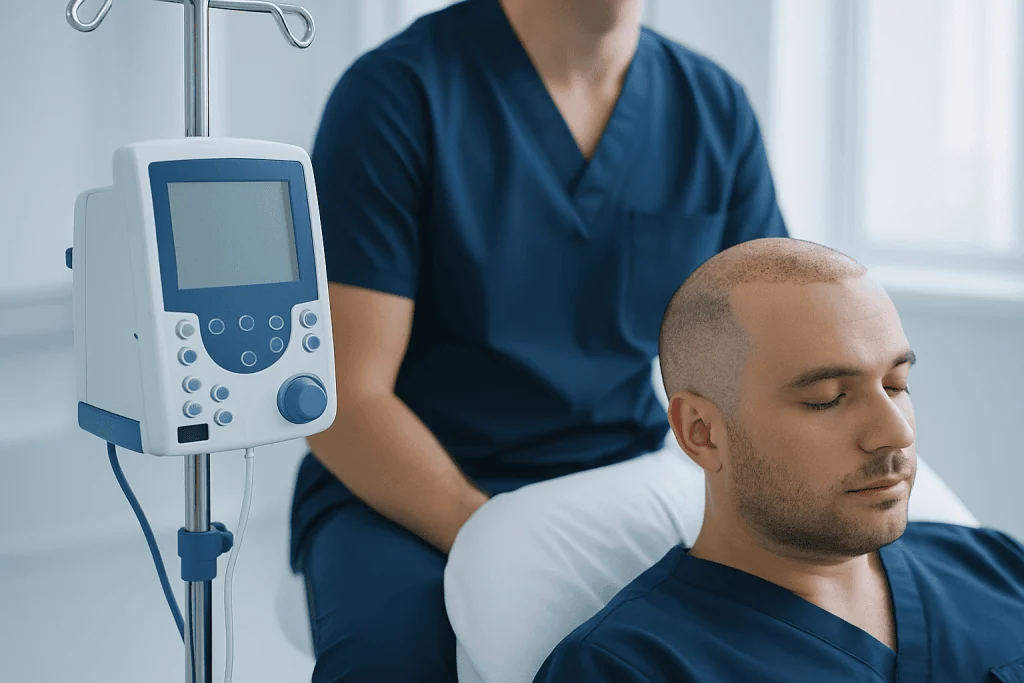
The first two weeks are the most practical part of recovery because you need to protect the grafts while the scalp heals. Timelines vary, so do not compare your day-to-day appearance too closely with another person’s photos or experience. Use this as a planning framework and follow the instructions you were given after your procedure.
| Time after treatment | What you may notice | What usually helps |
|---|---|---|
| Day 0–1 | Small crusts, mild bleeding or oozing, tenderness and possible forehead swelling. | Rest, keep your head elevated if advised, take prescribed medicines and avoid touching grafts. |
| Days 2–3 | Swelling can peak and may move toward the forehead or around the eyes. Redness remains expected. | Use only surgeon-approved measures; avoid exercise, alcohol, smoking and direct sun exposure. |
| Days 4–5 | Scabs are visible, and the recipient area may still look red or uneven. Mild itch can begin. | Start or continue the clinic’s instructed washing routine; do not scratch, rub or pick crusts. |
| Days 6–10 | Scabs begin loosening with gentle washing. Donor-area discomfort usually continues to ease. | Wash gently as directed and protect the scalp from friction, tight headwear and sun. |
| Days 10–14 | Most scabs should be lifting or gone if your team has approved normal cleansing. | Ask before returning to swimming, intense exercise, helmets or tightly fitted hats. |
| Weeks 2–8 | Transplanted hairs may shed. The scalp can look similar to, or temporarily thinner than, before. | Be patient, continue prescribed treatment and attend remote or in-person follow-up if arranged. |
| Months 3–4 | Fine new hairs may emerge, often unevenly at first. | Continue your long-term hair-loss plan if prescribed; take consistent photos in the same lighting. |
| Months 6–9 | Coverage and hair calibre often become more noticeable. | Review progress with your surgeon, especially if growth seems delayed or patchy. |
| Months 10–12+ | Hair generally matures in texture, direction and density, though crown areas may take longer. | Discuss final assessment and ongoing management of non-transplanted hair with your clinician. |
Avoid assumptions about when you can resume every activity. Restrictions for washing, work, gym sessions, sexual activity, swimming, haircuts, dyes and headwear can differ by surgical approach and by your clinician’s preference.
What are the most crucial days after a hair transplant?
The most crucial period is generally the first 7–10 days, when grafts are settling and scabs are present. During this time, avoid rubbing, scratching, picking, pressure from tight hats or helmets, and activities that could lead to sweating, impact or accidental contact with the recipient area. Your surgeon may also ask you to sleep in a particular position for several nights and to follow a specific spray or wash schedule.
Days 1–3 deserve particular care because swelling and minor oozing can occur. Days 4–10 are equally important because itching and crusting can tempt you to touch the scalp. Gentle cleansing as instructed is important: leaving scabs undisturbed until they loosen naturally helps avoid unnecessary trauma to the healing area.
If you are returning home from Istanbul or another city in Turkey soon after treatment, plan the journey to reduce crowding, rushing and friction against your scalp. Ask your care team about flight timing, carrying medicines in hand luggage, hydration, sun protection and whom to contact after you land. Acibadem International can help international patients understand the practical arrangements around departure and follow-up, but urgent symptoms should always be assessed by a qualified clinician.
How long do 3,000 hair grafts take?
A session involving approximately 3,000 grafts often takes much of a day, but the exact duration can vary substantially. It depends on the extraction and implantation method, the size and characteristics of the donor area, hair type, the planned hairline and coverage pattern, the clinical team’s workflow, and whether the plan is completed in one session or divided over more than one day.
Time spent in the clinic is not the same as recovery time. Even after a longer session, the broad healing pattern is usually similar: visible scabbing in the first one to two weeks, temporary shedding in the following weeks, and gradual new growth from around month 3 onward. A larger number of grafts can mean a larger treated area, which may make early redness, swelling or crusting more noticeable.
When discussing a 3,000-graft plan, ask your surgeon how many grafts are appropriate for your donor supply and long-term hair-loss pattern rather than focusing only on a number. A responsible treatment plan considers both the appearance you want now and the need to preserve donor hair for the future.
How should a hair transplant look after 5 days?
After 5 days, it is common for the recipient area to have many small, dry scabs or crusts around the implanted hairs. The scalp may still look pink or red, particularly in fairer skin, while darker skin may show changes in tone or small dark crusts instead. The donor area may appear closely trimmed, dotted or mildly tender, depending on the technique used.
Mild swelling may still be present or may be improving by this point. Some people notice itching as healing progresses. You should not judge the final appearance at day 5: the early look is temporary, and the implanted hairs are not a preview of the eventual density, direction or texture.
Follow your surgeon’s washing instructions exactly. Do not pick scabs, massage the recipient area, use unapproved products or try to hide the area with tight headwear unless your team says this is safe. Seek advice promptly if redness is spreading, pain is increasing rather than improving, there is foul-smelling or pus-like drainage, or you develop fever or significant bleeding.
Can you show me some pictures 2 months after a hair transplant?
At two months, photographs often show a scalp that looks largely healed on the surface but has limited visible new growth. Many people are in, or just emerging from, the shedding phase, sometimes called shock shedding, when transplanted hairs have fallen out before the follicles begin a new growth cycle. This can make the area look sparse, uneven or temporarily similar to the pre-treatment state.
Because healing, hair colour, curl pattern, lighting, styling and the extent of pre-existing thinning all influence photographs, online images are not a reliable way to predict your own result. A photo from two months is also not a final-result image. If you would like to track your progress, take images from the front, top and both sides at regular intervals using the same room, distance, hairstyle and lighting.
Your clinic may be able to explain what is expected for your own case during a planned review. If you are an international patient, ask before travel how photographs can be shared securely and when the clinical team wants to review them. Acibadem International teams can assist with care coordination and language support where needed.
Month by month: what happens after the first two weeks?
From weeks 2–8, temporary shedding is often the emotionally difficult part of recovery. Seeing implanted hairs fall out does not automatically mean the follicles have failed; in many cases, the hair shaft sheds while the follicle remains under the skin and enters a resting phase. Still, you should raise any concerns with your surgeon rather than relying on reassurance from online forums.
At months 3–4, new growth may begin as fine, soft or uneven hairs. By months 5–6, many people notice a clearer change, although the pattern can develop unevenly and the crown may appear slower than the frontal hairline. Between months 6–9, density and hair calibre often improve. Final maturation commonly takes around 12 months, and some areas can continue improving longer.
Remember that a transplant does not stop future thinning in non-transplanted hair. Your surgeon may discuss medical treatment or long-term monitoring where appropriate. Only use medicines, supplements, topical products or cosmetic treatments that have been approved for you, especially during early healing or if you have other health conditions.
Step by step
- Before you leave the clinic, confirm your personal aftercare plan. Ask for written instructions covering washing, sleeping, medicines, activity, headwear and warning signs. If you are travelling internationally, save the clinic’s contact details and clarify how follow-up photographs or questions should be sent.
- Protect the graft area during the first days. Avoid touching, rubbing or scratching the recipient area, even if it feels itchy. Keep away from crowded situations, impact risk, excessive sweating and direct sunlight as advised by your surgeon.
- Wash only as and when instructed. Your clinic may give you a spray, foam, lotion or a particular gentle cleansing routine. Do not substitute products or remove scabs manually unless your surgeon has specifically told you to do so.
- Plan a low-key first week. Arrange work, local transport and accommodation so you can rest without rushing. If you had treatment in Turkey, allow enough flexibility before your return journey in case your team recommends a check before you travel.
- Expect a shedding phase without panicking. Hairs commonly shed within the first several weeks, and this can look discouraging. Continue your plan and contact your surgeon if you are uncertain whether what you are seeing is expected.
- Track growth consistently from month 3 onward. Take monthly photos from the same angles and in the same light rather than checking your scalp every day. Consistent images give your surgeon a more useful basis for reviewing progress.
- Protect your long-term result. Discuss ongoing hair-loss management and care for native hair at follow-up. Avoid starting or stopping medicines without medical advice, especially if you have other health conditions or take regular prescriptions.
Your checklist
- Written post-treatment instructions and emergency contact details
- Surgeon-approved shampoo, spray, lotion or cleansing supplies
- All prescribed medicines, with dosage instructions and enough supply for travel
- A loose, clinic-approved head covering if recommended
- Extra pillow or travel neck support if your sleep-position guidance requires it
- Sun-protection plan that does not touch or irritate the grafts
- Flexible travel schedule and hand-luggage space for medicines and documents
- Secure method for sending follow-up photographs to your treating team
Key takeaways
- The first 7–10 days are the key graft-protection period; follow your surgeon’s washing and activity instructions closely.
- At day 5, scabs and redness are usually expected and are not a sign of the final result.
- Temporary shedding commonly occurs in weeks 2–8; early new growth often starts around months 3–4.
- A 3,000-graft session may take most of a day, but treatment duration does not determine the exact recovery timeline.
- More visible growth commonly develops from months 6–9, while maturation can continue for 12 months or longer.
- International patients should arrange clear remote follow-up before leaving Turkey.
Frequently asked questions
When can I sleep normally after a hair transplant?
Many surgeons recommend sleeping with your head elevated and avoiding pressure on the recipient area for the first several nights. The exact duration varies, so use the position and timeline given by your treating surgeon. If you move in your sleep or are worried that you touched the area, contact the clinic for advice rather than assuming damage has occurred.
When can I return to work after a hair transplant?
Some people return to desk-based work within a few days, while others prefer one to two weeks until visible scabs and redness improve. The right timing depends on your work environment, commute, risk of physical contact and how comfortable you feel with the early appearance. Jobs involving heat, dust, helmets, strenuous activity or impact may require more time away.
Can I wear a hat after a hair transplant?
Only wear headwear if and when your surgeon says it is safe. A loose, clean covering may sometimes be permitted after a specified time, but a tight hat, helmet or cap can create friction or pressure during early healing. Ask specifically about the style of headwear you plan to use for travel or work.
When can I exercise after a hair transplant?
Light movement may be allowed sooner than strenuous exercise, but the timeline varies by procedure and your recovery. Sweating, increased blood pressure, rubbing from clothing and accidental knocks can be concerns in the early period. Get individual clearance before restarting gym workouts, running, contact sports, swimming or sauna use.
Is shock shedding after a hair transplant normal?
Temporary shedding of transplanted hairs in the first weeks is common and can be part of the normal hair-growth cycle. Existing, non-transplanted hair can also sometimes shed after the procedure, particularly in areas affected by ongoing thinning. Your surgeon should assess unexpected or persistent changes and advise you on the best long-term plan.
Can I fly home after a hair transplant in Turkey?
Many international patients do fly home after treatment, but the appropriate timing should be confirmed with the treating surgeon. Plan for a calm journey, avoid pressure or friction on the graft area, keep medicines in your hand luggage and know how to contact the clinical team. Acibadem International can help with practical coordination, but your individual medical clearance comes from your surgeon.
When will my hair transplant look natural?
Natural-looking growth develops gradually rather than appearing at once. Fine early hairs may emerge around months 3–4, with clearer coverage often developing from months 6–9 and continued maturation through around 12 months or longer. Hair growth is individual, and the crown can take longer than the frontal area.
Add us as a Preferred Source to see more of our trusted health content across Google Search, AI Overviews and Discover.

More Patient Guides

How to Prepare for Hospital Discharge in Turkey if You Are Recovering Alone
Hospital discharge in Turkey if recovering alone is safer with a written plan, transport, medicines, follow-up and daily support arranged before you…
10 min read
When to Book Extra Recovery Days in Turkey Before Flying Home
Extra recovery days in Turkey can make flying home safer and easier after treatment. Plan them based on your procedure, mobility and…
9 min read
When to Stay Near the Hospital After Treatment in Turkey
Stay near the hospital after treatment in Turkey if you need early check-ups, help with symptoms, or safer travel timing after discharge.
9 min read