

When to Stay Near the Hospital After Treatment in Turkey

You should stay near the hospital after treatment in Turkey whenever early follow-up is scheduled, wounds or drains need checks, or your team has not yet confirmed you are fit to travel. There is no universal number of nights: some patients stay one or two, others considerably longer. The decision belongs to your treating team, based on your procedure, your recovery, and your travel plans.
You have a discharge date, a flight in the back of your mind, and one question nobody has answered clearly: how soon can you actually leave the area? It is one of the most common questions international patients ask, and the honest answer is that it is rarely the same for two people.
Staying close to the hospital for a short period after treatment can make early recovery calmer and easier to manage. The right timing depends on your procedure, your follow-up plan, your mobility, and how confident you feel being further from your care team. This guide explains how that decision is usually made, so you can plan accommodation and travel around your recovery rather than the other way round.
At a glance
- Best for: Patients with early follow-up checks, dressing changes, drain reviews, or an unconfirmed fit-to-travel date
- Typical timing: Often a few nights after discharge; longer when reviews, tests, or slow mobility make travel unwise
- Main benefit: Quicker access to your care team if questions or symptoms come up in the first days
- Good to arrange: Accommodation, transfers, interpreter support, medication supply, and your follow-up dates
- Do not decide alone: Your surgeon’s or treating team’s discharge and travel advice comes first, always
Why you may need to stay near the hospital after treatment in Turkey
Discharge from hospital is not the same as being ready to travel. The first days after treatment are often when practical support matters most: wound care, pain management, hydration, rest, and simple reassurance about what is normal and what is not. If you stay near the hospital after treatment in Turkey, help is easier to reach when a question comes up, and a same-day review does not require a long transfer across an unfamiliar city.
This buffer matters most when you are not yet ready for the physical demands of moving on. Airports, luggage, traffic, stairs, and long periods of sitting all ask more of your body than a quiet hotel room does. A short nearby stay lets you recover at a steadier pace before you take those on. Many patients find that two or three unhurried days near the hospital make the entire journey home feel more manageable than an early departure would have.
At Acibadem, international patient services can coordinate discharge planning, communication with your care team, transfers, and interpreter support. That coordination does not replace medical advice, but it does make the period between hospital discharge and your return home more organised.
When a nearby stay is more likely to be advised
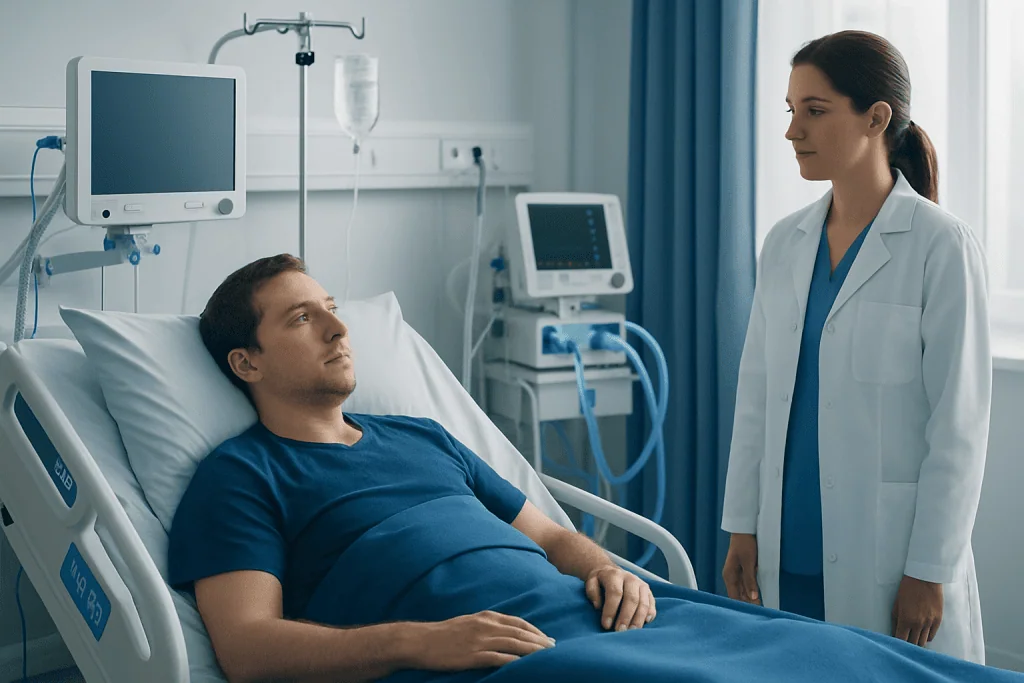
Some treatment plans build a nearby stay in from the start. If your procedure requires early follow-up appointments, dressing changes, laboratory checks, imaging, or a formal review before you are cleared to travel, remaining close to the hospital is usually the practical default. This is common after operations where swelling, bleeding risk, pain control, or drain management need observation during the first days after discharge: the same period covered in our guide to wound care and dressings after discharge.
Your own condition matters as much as the procedure. If you tire quickly, need help walking, or are still feeling the after-effects of anaesthesia or sedation, a long transfer is harder than it sounds. Getting in and out of a car, managing a hotel lobby, or standing in a queue can be genuinely difficult in the first days, and staying local removes most of those demands.
Practical circumstances tip the balance too. Travelling alone, a companion who does not know the city, a strict medication schedule, or a need for interpreter support are all reasons to keep the logistics simple for a few extra days. Common triggers for a nearby stay include:
- A follow-up visit scheduled within a few days of discharge
- Wound checks, injections, or dressing changes still to come
- Reduced mobility, or difficulty sitting comfortably for long periods
- Symptoms under observation, such as swelling, fatigue, or nausea
- No confirmed answer yet on when flying is appropriate
How long should you stay near the hospital?
There is no single rule. Some patients need one or two nights close by; others are advised to remain in the city until their first review is complete and they are medically fit to travel. The duration depends on the type of treatment, how your recovery is progressing, and whether hands-on aftercare is still needed. Certain procedures come with their own established timelines: the stay after bariatric surgery, for example, follows a different logic, which we cover in how long to stay in Turkey after gastric sleeve surgery.
Before advising you to move on, your team will usually weigh several things: whether pain is under control, whether you are moving, eating, and drinking normally, how the wound looks, how you are tolerating your medicines, and whether travel itself carries risks for you. If flying is part of your journey, cabin pressure, prolonged sitting, swelling, and clot risk all enter that assessment: our guide on when it is safe to fly home after surgery explains how teams think about it.
The most useful question to ask before discharge is not only “when can I leave the hospital?” but “how long should I stay near the hospital after treatment before travelling further?” Those are two different dates, and knowing both lets you book accommodation once instead of scrambling to extend it. If your plan changes after discharge, a review is added, a test result needs repeating, our guide on when you may need a longer stay in Turkey covers how those extensions typically work.
Choosing accommodation for recovery, not tourism
The best place to recover is rarely the most central or the most luxurious. What matters is comfort and ease: a reliable lift if stairs are difficult, a private bathroom, a decent bed, quiet surroundings, and simple food options. If you will need to rest during the day, ask about noise and about flexible check-in and check-out: a strict noon checkout is unhelpful when your review finishes at four.
Distance matters, but so does the route. A hotel that is a short, predictable drive from the hospital can be a better choice than one that looks closer on the map but sits on the wrong side of heavy traffic. It is worth asking whether the property can provide extra pillows, light meals, laundry, wheelchair access, or appropriate storage for medicines that need to stay cool.
If you are recovering in Istanbul and do not speak Turkish, staying somewhere used to international guests removes daily friction. Acibadem’s international patient services can offer guidance on accommodation logistics, hospital transfers, and interpreter coordination, so the recovery period is spent resting rather than problem-solving. For a fuller set of criteria, room layout, bathroom access, food, and what to ask before booking, see our guide on choosing the right hotel for recovery near the hospital.
When teams usually advise against moving further away
Even patients keen to change hotels, sightsee, or fly home are sometimes advised to stay put a little longer. Teams generally want recovery to be moving in a clear, steady direction before a patient travels further from the hospital. Symptoms that are worsening rather than settling, pain that needs escalating doses, increasing swelling, fever, bleeding, repeated vomiting, dizziness, or difficulty walking, are the sorts of findings that typically lead a team to keep a patient nearby for review rather than clear them for onward travel.
Readiness is not only physical. Teams also look at whether you can manage your medicines confidently, whether you understand your aftercare instructions, and whether you can move safely without help. Travelling while uncertain about any of these tends to create problems that an extra day near the hospital would have prevented. Your discharge summary sets out what is expected for your specific recovery and what should prompt review; it is the reference that overrides anything general written here.
Wherever you are staying, keep your discharge summary, medication list, and the contact details your treating team gave you together in one place. If plans do change, a test is added, an observation night is recommended, having those documents to hand makes the extension far easier to manage.
Costs and insurance: what the questions really mean
International patients researching this topic often ask whether medical care in Turkey is free for tourists. It is not. Turkey’s public health insurance covers people enrolled in its social security system; visitors are expected to pay for care themselves or claim through insurance. Emergency departments will assess and treat urgent cases, but as a visitor you should still expect to be billed. Standard travel insurance often excludes planned treatment abroad, and, importantly, complications arising from it, so read your policy carefully before you travel rather than after.
As for what a hospital visit costs: there is no single answer, because the figure depends on the type of facility, the specialists involved, the tests ordered, and whether an overnight stay is needed. Reputable hospitals provide a written quote after reviewing your records, and you should expect an itemised explanation of what it covers and what it does not. The same structural logic applies to extending your stay near the hospital: extra nights mean accommodation, meals, and possibly rebooked flights, none of which are medical costs but all of which belong in your plan. Our guide on budgeting for extra nights in Turkey after treatment walks through how to build that margin in from the start.
Building a financial buffer for a longer stay is not pessimism. It is what allows you to follow medical advice without pressure when your team recommends one more review before you go.
Planning the move from hospital to hotel to home
Recovery goes more smoothly when the journey is planned in stages: discharge from hospital, a short stay nearby, then the trip home or onward. Before leaving the hospital, confirm the practical details, who to reach out of hours, when your next review is due, whether you will need help with bathing or walking, and what your team expects your recovery to look like day by day.
Keep the hotel period simple. Rest, eat small balanced meals if that is what you have been advised, drink enough fluids unless told otherwise, and avoid carrying bags or doing too much too soon. If your team has prescribed walking, compression, breathing exercises, or a wound care routine, build your day around those rather than fitting recovery around tourism. The sights will still be there on a future trip; this one has a different purpose.
Before departure, gather the paperwork: fit-to-fly guidance if relevant, prescriptions, medical reports, imaging or test results if needed, and a clear follow-up plan for your doctors at home. Acibadem’s international patient services often support these steps, including transport coordination and communication for international follow-up, which helps when you are recovering far from your usual healthcare system.
Step by step
- Ask about the recovery window before discharge. Ask your doctor or nurse how long you should stay nearby and why. Request advice that matches your real travel plans: flights, hotel moves, walking distances, and whether you will have a companion.
- Confirm your early follow-up needs. Check whether dressing changes, blood tests, scans, drain checks, or a surgeon review are due in the coming days. If any are scheduled, staying near the hospital is almost always the more practical choice.
- Choose accommodation for recovery, not sightseeing. Prioritise an easy route to the hospital, a lift, straightforward bathroom access, quiet, and flexible check-out over location prestige.
- Arrange transport before you need it. Do not leave the hospital-to-hotel journey to discharge day. Pre-arranged transfers are far easier when you are sore, tired, or moving slowly.
- Keep your medical information together. Carry your discharge summary, prescriptions, medication schedule, and the contact details your team gave you in one place, so anyone helping you has what they need.
- Track how each day compares with the last. Recovery should trend gradually better. Your discharge instructions explain what is expected and what needs review, use them as your reference rather than guesswork.
- Get clear travel approval before leaving the area. Before moving further away or flying, confirm your team is comfortable with the plan. Ask about sitting time, moving during travel, fluids, and any restrictions that still apply.
Your checklist
- Your doctor’s advice on how many nights to stay near the hospital
- Date and time of your next follow-up appointment
- Discharge summary and copies of prescriptions
- Out-of-hours contact details from your treating team
- Pre-arranged transfers between hospital, hotel, and airport
- Accommodation with lift access and easy bathroom access if needed
- Enough medication for your stay plus the journey home
- Interpreter or coordinator contact if you need language support
- A financial buffer in case extra nights are recommended
Key takeaways
- Discharge and readiness to travel are two different dates; ask about both before leaving the hospital.
- Staying near the hospital after treatment in Turkey makes early follow-up, wound checks, and same-day review far simpler.
- The right length of stay depends on your procedure, your progress, and your travel plans, not on a fixed number.
- Choose accommodation for comfort, access, and an easy route to the hospital rather than for location alone.
- Build extra nights into your budget so a recommended extension never forces a rushed decision.
Frequently asked questions
Do I always need to stay near the hospital after treatment in Turkey?
No. Some patients are cleared for onward travel soon after discharge, while others are advised to remain nearby for follow-up or observation. The right choice depends on your treatment, your recovery, and your treating team’s travel advice, so ask for a specific recommendation before you book anything.
Is medical care free in Turkey for tourists?
No. Turkey’s public health coverage applies to people enrolled in its social security system, not to visitors. Tourists are expected to pay for care or claim through insurance. Emergency departments will treat urgent cases, but billing still applies, and standard travel policies often exclude planned treatment abroad and its complications.
How much does a hospital visit cost in Turkey?
There is no fixed figure. The cost depends on the type of facility, the specialists involved, the tests and imaging ordered, and whether an overnight stay is needed. Reputable hospitals issue a written quote after reviewing your records, and it is reasonable to ask for an itemised breakdown of what the quote includes and excludes.
Does Turkey have good medical care?
Turkey has a large hospital sector, including many private hospitals that routinely treat international patients and provide interpreter and coordination services. As anywhere, quality varies between facilities, so it is sensible to research the specific hospital, its facilities for international patients, and how follow-up care will be handled before you commit.
Is it safe to go to Turkey for medical procedures?
Any medical procedure carries risks wherever it takes place, and travelling adds logistics that need planning. Safety depends heavily on choosing a reputable facility, allowing realistic recovery time before flying, and having a clear follow-up plan for when you get home. Government travel guidance and impartial medical tourism resources are worth reading before you decide.
Is it better to recover near the hospital or in a resort area?
If your follow-up care is at the hospital, staying nearby until your team clears you to travel further is usually the more practical option. A resort may sound restful, but long transfers are tiring in early recovery, and being hours away makes any needed review much harder to arrange.
When is it safe to fly home after treatment in Turkey?
There is no universal timeline. Fitness to fly depends on the type of treatment, how your recovery is progressing, and factors such as swelling, wound healing, and clot risk during long periods of sitting. Your treating team gives the specific guidance, so confirm it with them before booking or changing a flight.
Should my companion stay with me after I leave the hospital?
If possible, yes, especially in the first days if you have reduced mobility, a complex medication schedule, or language concerns. A companion can help with meals, walking, transport, and simply noticing whether you are improving day by day, which is harder to judge on your own.
Add us as a Preferred Source to see more of our trusted health content across Google Search, AI Overviews and Discover.

Update history
- PublishedAugust 6, 2026
- Medical review approvedSeptember 1, 2026
- Last content updateSeptember 1, 2026
References3
- Medical Tourism: Travel to Another Country for Medical Care: CDC Travelers' Health wwwnc.cdc.gov
- Foreign travel advice: Turkey: GOV.UK gov.uk
- After Surgery: MedlinePlus medlineplus.gov
More Patient Guides

Septoplasty Recovery: Week by Week
Learn what to expect after deviated septum surgery: a week-by-week septoplasty recovery timeline, when it is usually safe to fly home, and…

Gallbladder Surgery Recovery: Week by Week
Learn what to expect after gallbladder surgery: a week-by-week recovery timeline, pain, diet, wound care, when it is safe to fly home…
Robotic Hysterectomy Recovery: Week by Week
Recovery from robotic hysterectomy week by week: pain, lifting, wounds, driving, flying home safely, warning signs and questions to ask before you…
Breast Reconstruction Recovery: Week by Week
DIEP flap recovery week by week: hospital stay, drains, pain, walking, showering, driving, when it is usually safe to fly home, and…