Cyanosis Treatment: How It Works, Results and What to Expect

Cyanosis is a sign that blood may not be carrying or delivering enough oxygen, although it can also result from reduced circulation in cold conditions. Treatment depends on the cause and may include oxygen, medicines, breathing support, treatment of infection, or heart and circulation care.
Key Takeaways
- Cyanosis is a sign that blood may not be carrying or delivering enough oxygen, although it can also result from reduced circulation in cold conditions.
- Treatment depends on the cause and may include oxygen, medicines, breathing support, treatment of infection, or heart and circulation care.
- Blue or gray lips, tongue, face, or skin with shortness of breath, chest pain, confusion, or reduced alertness is an emergency.
- Cyanosis can look different across skin tones; the lips, tongue, gums, nail beds, and inside of the eyelids may provide useful clues.
- Many causes are treatable, but lasting improvement depends on prompt diagnosis and management of the underlying condition.
Cyanosis treatment is not one single procedure: it involves promptly identifying why the skin, lips, tongue, or nails appear blue or gray and correcting the underlying problem. Some causes improve with warming and observation, while sudden cyanosis or cyanosis with breathing difficulty requires urgent medical assessment.
Overview: How cyanosis treatment works
Cyanosis treatment works by addressing the reason blood or tissues are not receiving enough oxygen. Cyanosis is a blue, slate-gray, purple, or unusually dark discoloration that may affect the lips, tongue, gums, face, fingers, toes, or nail beds. It is a clinical sign rather than a diagnosis, so the appropriate care depends on what is causing it.
Clinicians first assess whether the person has an immediate problem with breathing, circulation, or consciousness. If oxygen levels are low or the person is unwell, care may include supplemental oxygen, support for breathing, and urgent treatment of the underlying illness. In other cases, such as temporary color change in cold hands or feet, warming and restoring circulation may be enough.
Cyanosis treatment in adults can involve respiratory, heart, blood, vascular, emergency, and primary-care specialists. The goal is not simply to change skin color; it is to improve oxygen delivery safely and determine whether a lung condition, heart condition, infection, blood abnormality, medication effect, or circulation problem is involved.
What does a person with cyanosis look like?
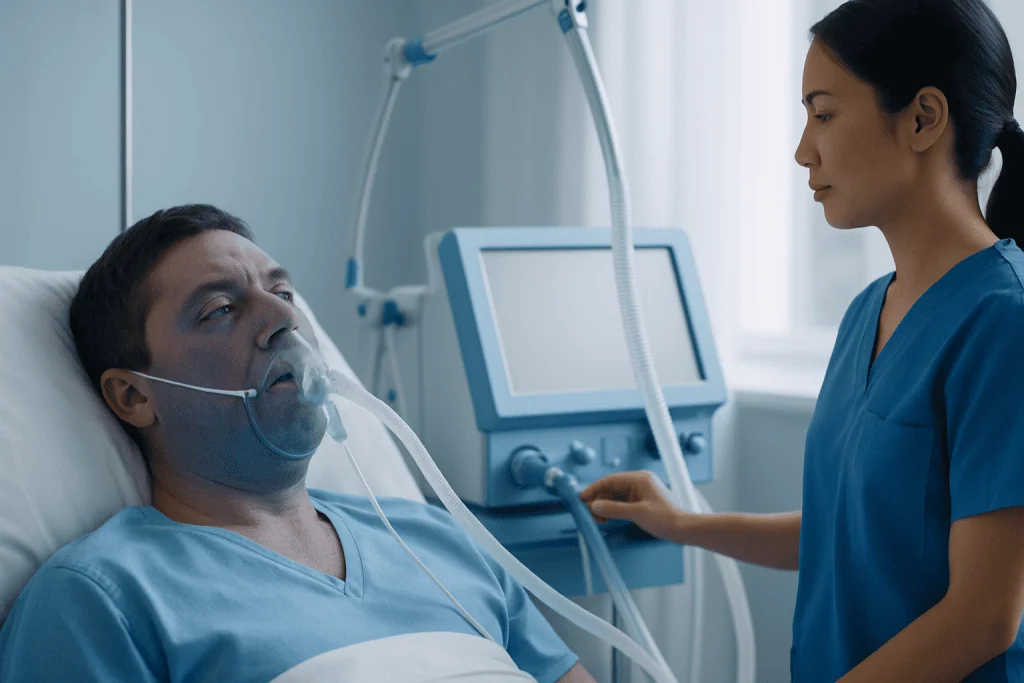
A person with cyanosis may have lips, tongue, gums, nail beds, fingertips, toes, or skin that look blue, gray, purplish, or darker than usual. The appearance varies with natural skin tone, lighting, blood flow, and the severity of the problem. On darker skin, changes may be easier to notice on the tongue, inside the mouth, gums, lips, nail beds, and the whites of the eyes than on the outer skin.
Central cyanosis affects areas such as the tongue and lips and can suggest reduced oxygen levels in the blood. Peripheral cyanosis tends to affect the hands, feet, fingers, or toes and can occur when blood flow to these areas slows, including during cold exposure. A clinician considers the location and timing of the color change alongside symptoms such as breathlessness, wheezing, fever, chest discomfort, swelling, dizziness, or fatigue.
Color alone cannot confirm how serious the situation is. Some people with reduced oxygen have little visible color change, while other skin or blood-related conditions can resemble cyanosis. A pulse oximeter and clinical examination are more reliable ways to assess oxygenation when used and interpreted appropriately.
Is cyanosis a serious condition?

Cyanosis can be serious because it may indicate low blood oxygen or impaired circulation. It is especially urgent when it starts suddenly, affects the lips or tongue, or occurs with difficulty breathing, chest pain, fainting, confusion, severe drowsiness, a fast or slow heartbeat, or a change in mental alertness.
However, not every episode has the same significance. Hands and feet can briefly become bluish or pale in cold weather because small blood vessels narrow. This often improves with gradual warming. Persistent, recurrent, or unexplained cyanosis still deserves medical review, particularly in adults with known heart or lung disease and in infants or children.
It is important not to assume that blue or gray discoloration is harmless or to rely on home remedies if the person appears unwell. If symptoms are severe or sudden, emergency services should be contacted rather than waiting to see whether the color improves.
Causes, candidacy and assessment for treatment
People are candidates for cyanosis treatment when a clinician identifies visible cyanosis or suspects reduced oxygen delivery based on symptoms and examination. Common causes include asthma or chronic lung disease flare-ups, pneumonia, pulmonary embolism, fluid in the lungs, severe allergic reactions, heart rhythm or heart failure problems, congenital heart conditions, poor circulation, and exposure to cold. Certain uncommon blood disorders and some medicines or chemicals can also interfere with oxygen transport.
Assessment begins with a focused history and physical examination. The healthcare team may ask when the color change began, whether it affects the lips or tongue, what makes it better or worse, whether there is cough or fever, and whether the person has existing heart, lung, or vascular conditions. Oxygen saturation is commonly measured with pulse oximetry, although readings may be less accurate in some circumstances and must be considered with the full clinical picture.
Depending on the situation, tests can include an arterial blood gas, blood tests, chest X-ray or CT scan, electrocardiogram, echocardiogram, and tests for infection or blood clots. These steps guide cyanosis treatment options and avoid treating a symptom without identifying its cause.
- Central cyanosis: often prompts assessment of the lungs, heart, and blood oxygen level.
- Peripheral cyanosis: may prompt assessment of circulation, temperature exposure, medications, and vascular health.
- Sudden cyanosis: requires rapid evaluation for potentially time-sensitive causes.
Cyanosis treatment options: what happens step by step
There is no standard procedure that treats all cyanosis. In an urgent setting, the first steps are to check airway, breathing, circulation, vital signs, and oxygen level. The person may receive supplemental oxygen, be positioned to make breathing easier, and have monitoring while the medical team investigates the cause. If breathing is severely impaired, more advanced respiratory support may be needed in hospital.
Once the cause is clearer, treatment becomes targeted. For example, a respiratory infection may require appropriate antimicrobial treatment and respiratory support; an asthma or chronic lung disease exacerbation may require inhaled medicines and other prescribed therapy; and a circulation or heart problem may need medicines, procedures, or specialist treatment. Suspected blood clots, serious allergic reactions, and certain toxin or medication exposures each require condition-specific urgent care.
For cold-related peripheral cyanosis, gradual warming, dry clothing, and avoiding further cold exposure may restore normal color. Direct high heat should be avoided on numb skin because it can cause burns. People with recurrent cold-related symptoms, pain, numbness, sores, or one-sided color changes should be assessed for vascular or other underlying conditions.
Effective care often involves several specialties. Respiratory specialists, cardiologists, emergency physicians, vascular specialists, and laboratory teams may work together to clarify the cause. At Acibadem International, multidisciplinary specialists in JCI-accredited hospitals assess and treat conditions associated with cyanosis for international patients.
Benefits, risks and recovery timeline
The main benefit of timely treatment is improved oxygen delivery and management of the condition causing cyanosis. When the cause is reversible, the visible discoloration may improve as oxygenation or circulation improves. The timing varies widely: cold-related peripheral cyanosis can improve after gradual warming, while recovery from a chest infection, heart condition, or chronic lung problem may take days, weeks, or longer.
Recovery is guided by the diagnosis rather than the color change alone. A person treated in an emergency department or hospital may need repeat oxygen checks, imaging, blood tests, or follow-up with a respiratory or heart specialist. Those with chronic conditions may receive a longer-term plan that includes medicines, monitoring, vaccinations where appropriate, pulmonary rehabilitation, or lifestyle support.
Potential risks are related primarily to the underlying illness and its treatment. Oxygen and other therapies should be given under clinical guidance, as some people with chronic respiratory disease require individualized oxygen targets. Delaying assessment can increase the risk of complications when cyanosis is caused by a serious heart, lung, circulation, or blood condition.
At home, people should follow the care plan provided by their clinician, take prescribed medicines as directed, avoid smoking and secondhand smoke, and attend follow-up appointments. They should not start oxygen therapy, antibiotics, or other treatment without professional advice.
Is cyanosis curable?
Cyanosis is often treatable because it is a sign of an underlying problem rather than a disease itself. Whether it can be fully resolved depends on the cause. Cyanosis related to cold exposure, a short-term respiratory infection, or a medication effect may disappear when the trigger is corrected, while cyanosis related to chronic heart or lung disease may require ongoing management.
For people wondering how to treat cyanosis, the safest answer is to treat the cause after a clinical assessment. Oxygen may be important in some situations, but it is not appropriate as a universal home treatment and does not replace diagnosis. Treating only the appearance without addressing low oxygen, poor blood flow, or an underlying illness can be unsafe.
A specialist can explain the expected outlook after test results are available. Even when a chronic condition cannot be cured, appropriate treatment can often reduce symptoms, support daily functioning, and lower the likelihood of acute episodes.
At what oxygen level does cyanosis occur?
There is no single pulse oximeter number at which cyanosis reliably appears. Visible cyanosis depends on the amount of deoxygenated hemoglobin in the blood, skin tone, lighting, circulation, temperature, anemia, and other individual factors. For this reason, a person can have clinically important low oxygen without obvious blue or gray discoloration, and visible color changes should always be assessed in context.
Pulse oximetry is useful for screening and monitoring, but it has limitations. Nail polish, cold fingers, reduced circulation, movement, certain skin-pigmentation-related performance differences, and device quality can affect readings. A clinician may use an arterial blood gas or repeat measurements when results do not match the person’s symptoms or examination.
Anyone with a low oxygen reading together with breathlessness, chest pain, confusion, or cyanosis should seek urgent medical care. People who have been given individualized oxygen targets for a chronic respiratory condition should follow their clinician’s specific plan rather than relying on general thresholds.
When to seek medical care
Emergency medical care is needed for sudden blue, gray, or purple lips, tongue, face, or skin, especially when accompanied by trouble breathing, severe wheezing, chest pain, fainting, confusion, marked sleepiness, seizures, or inability to speak in full sentences. The person should not drive themselves if they are severely unwell; emergency services should be contacted.
Prompt same-day medical advice is appropriate for new, persistent, recurrent, or worsening cyanosis even if symptoms seem mild. This is particularly important for people with heart or lung disease, recent surgery or prolonged immobility, fever or cough, leg swelling or pain, or a recent change in medication.
Until help is available, the person should be kept comfortably upright if breathing is difficult, kept warm if cold exposure is suspected, and observed closely. Food, drink, or unprescribed medicines should not be given to someone who is drowsy, confused, or struggling to breathe.
Frequently asked questions
How is cyanosis treated?
Cyanosis is treated by identifying and correcting its cause. Depending on the diagnosis, care may include oxygen, breathing support, medicines for lung or heart conditions, treatment for infection, or measures to improve circulation. Sudden cyanosis with breathing difficulty or chest pain needs urgent medical assessment.
Can cyanosis go away on its own?
It can resolve when caused by temporary cold exposure and normal circulation returns after gradual warming. It may also improve as a short-term illness is treated. Persistent, recurrent, or unexplained cyanosis should be evaluated because it can signal a heart, lung, circulation, or blood-related problem.
Is cyanosis always caused by low oxygen?
Not always. Central cyanosis often suggests reduced oxygen in the blood, but peripheral cyanosis can occur when blood flow slows in the hands and feet, such as in cold temperatures. A healthcare professional may use oxygen measurements and other tests to determine the cause.
Can a pulse oximeter diagnose cyanosis?
A pulse oximeter measures estimated oxygen saturation, but it does not diagnose the reason for cyanosis. Readings can be affected by poor circulation, cold skin, motion, nail products, and other factors. Symptoms and examination remain important, particularly if the reading does not match how the person looks or feels.
What should someone do if their lips turn blue or gray?
Blue or gray lips, particularly with shortness of breath, chest pain, confusion, fainting, or severe weakness, should be treated as an emergency. Emergency services should be contacted promptly. If the person is conscious and breathing, keeping them upright and calm while waiting for help may be useful.
Can adults develop cyanosis for the first time?
Yes. New cyanosis in adults can occur with respiratory infections, asthma or chronic lung disease exacerbations, heart or circulation problems, blood clots, medication effects, and other conditions. Because some causes need timely treatment, new or worsening cyanosis should not be ignored.
References
- World Health Organization
- American Lung Association
- American Heart Association
- National Heart, Lung, and Blood Institute
- Merck Manual Consumer Version
This article is for general information only and is not a substitute for professional medical advice. Please consult a qualified doctor about your individual situation.
Explore treatments in Turkey — costs, top hospitals & a free quote
JCI-accredited · board-certified surgeons · reply within 24h
Add us as a Preferred Source to see more of our trusted health content across Google Search, AI Overviews and Discover.