Childhood Asthma: Wheezing, Triggers, and Long-Term Control

Childhood asthma symptoms often include wheezing, coughing at night or with exercise, chest tightness and breathlessness. Common triggers include viral infections, allergens, smoke, air pollution, cold air, exercise and strong odors.
Key Takeaways
- Childhood asthma symptoms often include wheezing, coughing at night or with exercise, chest tightness and breathlessness.
- Common triggers include viral infections, allergens, smoke, air pollution, cold air, exercise and strong odors.
- Diagnosis is based on the symptom pattern, examination and, when age appropriate, lung function tests.
- Long-term control usually combines trigger reduction, correct inhaler technique, controller medication when needed and regular follow-up.
- A written asthma action plan helps families know what to do during well-controlled days, worsening symptoms and urgent situations.
- Parents should seek prompt medical care if breathing becomes difficult, reliever medicine is not helping or the child cannot speak, feed or play normally.
Childhood asthma is a common long-term airway condition that can cause wheezing, coughing, chest tightness and shortness of breath. With the right diagnosis, trigger management, medicines and a written action plan, most children can stay active, sleep well and grow confidently.
Overview
Childhood asthma is a chronic condition in which the airways in the lungs become sensitive and inflamed. When a child meets a trigger, the airway lining can swell, mucus can increase and the muscles around the airways can tighten. This makes it harder for air to move in and out, leading to symptoms such as wheezing, coughing, chest tightness and shortness of breath.
Asthma can look different from one child to another. Some children have symptoms mainly with colds, while others notice coughing during running, laughing, crying or at night. Symptoms may come and go, and a child can appear completely well between episodes. This changing pattern is one reason asthma is sometimes missed or confused with repeated bronchitis, allergies or lingering viral cough.
The goal of childhood asthma care is long-term control, not simply treating attacks when they happen. Good control means the child can sleep through the night, take part in school and play, use reliever medicine infrequently and have fewer flare-ups. With a clear plan and regular review by a qualified pediatrician or pediatric pulmonologist, most children with asthma can lead full, active lives.
Symptoms of Childhood Asthma
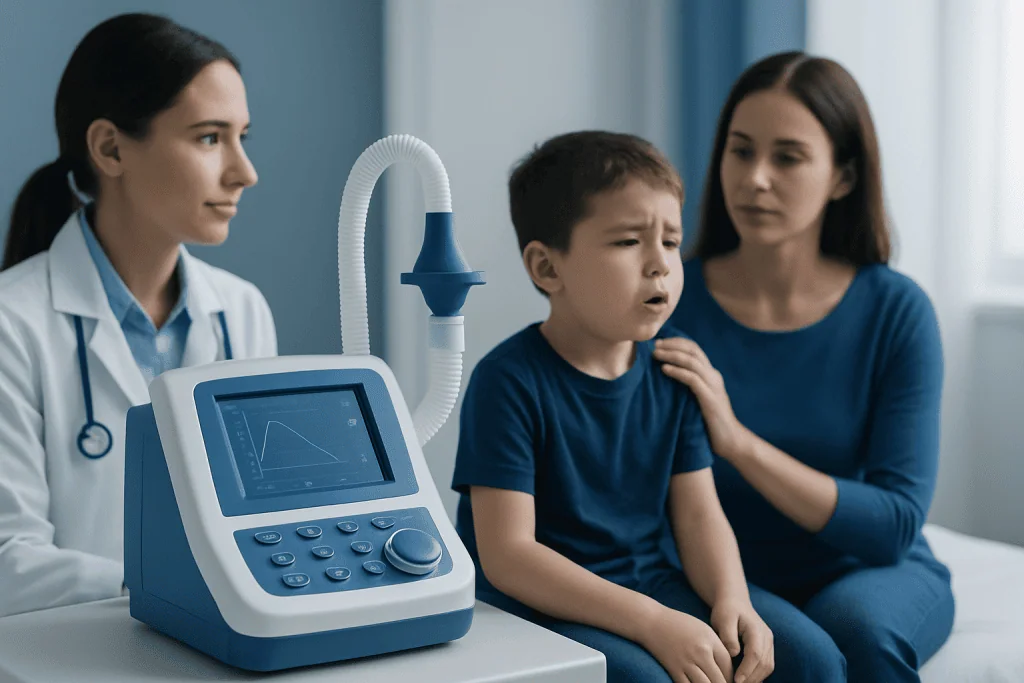
The most recognized asthma symptom is wheezing, a high-pitched whistling sound that may be heard when the child breathes out. However, not every child with asthma wheezes. Some children mainly have a persistent cough, especially at night, early in the morning, after exercise or after laughing. Others describe chest tightness, tiredness during play or a feeling that they cannot get enough air.
Parents may notice that a child avoids running, stops more often than peers, coughs after active games or wakes with coughing. In younger children, symptoms can be subtle. A toddler may breathe faster, become unusually quiet, have trouble feeding during a flare-up or show pulling in of the skin around the ribs and neck when breathing is harder.
Symptoms that support the possibility of asthma include:
- Repeated episodes of wheezing or noisy breathing.
- Coughing that is worse at night or with exercise.
- Breathing symptoms triggered by colds, pollen, pets, dust, smoke or cold air.
- Symptoms that improve with prescribed asthma medicines.
- A personal or family history of eczema, allergic rhinitis or asthma.
Because wheezing and cough can also occur with infections, airway abnormalities, reflux or inhaled foreign bodies, medical assessment is important. A doctor will consider the whole picture rather than relying on one symptom alone.
Causes and Risk Factors

Asthma develops when the airways are more reactive than usual and become inflamed in response to triggers. The exact reason a child develops asthma is usually a combination of genetics, immune system patterns and environmental exposures. A family history of asthma, eczema or allergic rhinitis increases the likelihood, but children without these family patterns can also develop asthma.
Allergic sensitivity is a common risk factor. Some children react to house dust mites, pollens, molds, animal dander or cockroach particles. Others have symptoms mainly after viral respiratory infections, which are among the most frequent causes of wheezing in young children. Air pollution, tobacco smoke exposure and strong indoor irritants can worsen airway inflammation and make asthma harder to control.
Common asthma triggers in children include:
- Colds, flu and other respiratory viruses.
- House dust mites, pollen, mold and pet dander.
- Tobacco smoke, vaping aerosols, air pollution and wood smoke.
- Exercise, especially in cold or dry air.
- Strong smells, cleaning sprays, perfumes and chemical fumes.
- Weather changes, cold air or sudden temperature shifts.
- Emotional stress, laughing or crying in some children.
Triggers are individual. A useful approach is to observe patterns over time, rather than restrict a child unnecessarily. For example, exercise is healthy and should not be avoided; if exercise triggers symptoms, a doctor can adjust treatment so the child can participate safely.
Diagnosis
There is no single test that diagnoses all cases of childhood asthma, especially in preschool children. Diagnosis starts with a careful history: when symptoms occur, how often they happen, what triggers them, whether they disturb sleep or activity and whether they improve with asthma medicines. The doctor will also ask about allergies, eczema, family history, smoke exposure, home environment and previous respiratory infections.
During the examination, the doctor listens to the lungs and checks breathing effort, growth, nasal symptoms and signs of allergic disease. A child may have a normal examination when symptoms are not active, which does not rule out asthma. This is why the pattern over time is very important.
In older children, lung function tests such as spirometry may be used. Spirometry measures how much air the child can blow out and how quickly. Testing may be repeated after a bronchodilator medicine to see whether airflow improves. In selected cases, doctors may consider allergy testing, tests for airway inflammation or imaging if symptoms are unusual or another diagnosis is suspected.
For younger children who cannot perform reliable lung tests, the diagnosis may be based on repeated symptom patterns and response to a monitored treatment trial. Follow-up is essential. If symptoms do not respond as expected, the doctor may reassess the diagnosis, inhaler technique, adherence, trigger exposure or other health conditions.
Treatment Options and Long-Term Control
Childhood asthma treatment is individualized according to symptom frequency, severity, triggers, age and the child’s ability to use inhaler devices. The main treatment goals are to reduce airway inflammation, relieve symptoms quickly when they occur and prevent flare-ups. Families should not change or stop prescribed medicines without medical guidance, even when the child seems well.
Asthma medicines generally fall into two broad groups. Reliever medicines act quickly to relax tight airway muscles during symptoms. Controller medicines, often inhaled anti-inflammatory treatments, are used regularly when a child has persistent symptoms or a higher risk of flare-ups. Some children need treatment only during certain periods, while others require daily controller therapy. The doctor will choose the safest effective plan and adjust it over time.
Correct inhaler technique is as important as the medicine itself. Many children use a metered-dose inhaler with a spacer, and younger children may need a mask attached to the spacer. Families should ask their healthcare team to demonstrate the device and watch the child use it. A child who appears not to be improving may simply not be receiving enough medicine into the lungs because of technique problems.
A written asthma action plan is a key part of long-term control. It explains daily medicines, how to recognize worsening symptoms, when to use reliever treatment and when to seek medical help. Regular check-ups allow the doctor to review symptoms, school absences, nighttime cough, activity tolerance, inhaler technique and side effects, then step treatment up or down as appropriate.
Prevention, Trigger Management and Self-Care
Asthma cannot always be prevented, but flare-ups can often be reduced by understanding and managing triggers. A practical first step is to keep the child’s environment smoke-free. Tobacco smoke and vaping aerosols can irritate the airways even when smoking occurs outside, because particles can remain on clothing and surfaces. Families should also consider indoor air quality, ventilation and careful use of strong cleaning products or fragrances.
For children with allergic triggers, reducing exposure can help. Measures may include washing bedding regularly, using dust-mite covers when recommended, controlling indoor humidity to reduce mold, keeping pets out of the bedroom if pet allergy is confirmed and cleaning visible mold safely. Allergy testing can help identify which measures are likely to matter, because unnecessary restrictions can add stress without improving asthma control.
Healthy routines support respiratory wellbeing. Children with asthma should be encouraged to stay physically active, warm up before exercise and follow the doctor’s advice about pre-exercise medication if prescribed. Annual influenza vaccination and routine childhood immunizations are commonly recommended to reduce the risk of respiratory infections. Good sleep, balanced nutrition and management of allergic rhinitis can also improve asthma control.
Families can help by teaching children, in age-appropriate language, how to recognize early symptoms and ask for help. Schools, caregivers and sports coaches should know where the child’s reliever medicine is kept and how to follow the asthma action plan. This shared approach helps children feel supported rather than limited by their diagnosis.
When to See a Doctor
A child should be assessed by a doctor if wheezing, persistent cough, nighttime symptoms, shortness of breath or reduced activity occurs repeatedly. Medical review is also important if a child often needs reliever medicine, misses school or sports because of breathing symptoms, or has symptoms that return soon after finishing treatment for a respiratory infection. Regular follow-up helps confirm the diagnosis and keep treatment matched to the child’s current needs.
Parents should seek urgent medical care if the child is working hard to breathe, breathing very fast, has difficulty speaking or feeding, looks unusually drowsy, has bluish lips, or does not improve after using the prescribed reliever medicine as directed in the action plan. These signs need prompt assessment. Families should follow local emergency instructions and not delay care when breathing is difficult.
It is also wise to review asthma control after any emergency visit, hospital admission or course of oral steroid medicine. The doctor may check inhaler technique, update the action plan and consider whether controller treatment needs adjustment. If symptoms are frequent, severe, hard to diagnose or linked with complex allergies, referral to a pediatric pulmonologist or allergist may be recommended.
For families traveling for care, Acibadem International’s multidisciplinary specialists and JCI-accredited hospitals can evaluate and treat childhood asthma for international patients. Wherever care is received, the most important steps are accurate diagnosis, a personalized plan and ongoing communication between the family and healthcare team.
Frequently asked questions
Can a child outgrow asthma?
Some children have fewer symptoms as their airways grow and their immune system matures, especially if wheezing was mainly linked to viral infections in early childhood. Others continue to have asthma into adolescence or adulthood. Even if symptoms improve, families should keep follow-up appointments and ask the doctor before stopping prescribed medicines.
Is wheezing always asthma?
No. Wheezing can occur with viral infections, bronchiolitis, allergies, reflux, airway irritation or, rarely, an inhaled object or structural airway problem. Asthma is more likely when wheezing is recurrent, triggered by typical exposures and improves with asthma treatment. A healthcare professional can assess the pattern and decide whether tests or follow-up are needed.
Can children with asthma exercise and play sports?
Yes, most children with asthma can and should be physically active. Exercise supports fitness, confidence and lung health. If exercise causes coughing, wheezing or chest tightness, the doctor may adjust the asthma plan, check inhaler technique or recommend specific steps before activity.
Are inhaled asthma medicines safe for children?
Asthma medicines used in children are prescribed because their benefits and safety are well studied when used correctly. Inhaled treatments usually deliver medicine directly to the lungs, which can reduce whole-body exposure compared with many oral medicines. The doctor will use the lowest effective treatment level and monitor growth, symptoms and possible side effects.
How can parents tell if asthma is well controlled?
Asthma is generally better controlled when the child sleeps well, plays normally, has minimal daytime symptoms and rarely needs reliever medicine. Frequent nighttime cough, repeated activity limitation or regular reliever use may mean control is not optimal. Parents should bring these details to follow-up visits so the plan can be adjusted.
What should be included in an asthma action plan?
An asthma action plan should list daily medicines, reliever instructions, early warning signs, steps for worsening symptoms and when to seek urgent care. It should include the child’s name, emergency contacts and the doctor’s instructions for school or caregivers. The plan should be reviewed regularly and updated when treatment changes.
References
- Global Initiative for Asthma
- World Health Organization
- American Academy of Pediatrics
- Centers for Disease Control and Prevention
- National Heart, Lung, and Blood Institute
This article is for general information only and is not a substitute for professional medical advice. Please consult a qualified doctor about your individual situation.
Asthma in Turkey — costs, top hospitals & a free quote
JCI-accredited · board-certified surgeons · reply within 24h