Showering After Surgery: When It Is Safe and How to Protect Incisions

Patients should follow the surgeon's discharge instructions, because safe shower timing varies by procedure and wound type. Many closed incisions can get briefly wet after 24 to 48 hours, but bathing, swimming, and soaking are usually avoided until the wound is well healed.
Key Takeaways
- Patients should follow the surgeon's discharge instructions, because safe shower timing varies by procedure and wound type.
- Many closed incisions can get briefly wet after 24 to 48 hours, but bathing, swimming, and soaking are usually avoided until the wound is well healed.
- Incisions should be washed gently with clean running water, not scrubbed, and dried by patting with a clean towel.
- Waterproof dressings, drains, casts, skin grafts, and wound vacuum devices require specific care instructions.
- Increasing redness, swelling, drainage, fever, wound opening, or worsening pain should prompt medical advice.
Showering after surgery is often possible once the surgical team confirms the incision is protected and stable. The safest approach depends on the operation, dressing type, stitches or staples, drains, and personal healing factors.
Overview
Showering after surgery is a common concern because patients want to feel clean without disturbing a healing incision. In many cases, a brief shower is safer than soaking in a bath because running water does not keep the wound wet for a long time. However, the right timing depends on the type of surgery, the way the incision was closed, the dressing used, and whether drains or special devices are present.
Modern surgical wounds are often closed with sutures, staples, adhesive strips, or surgical glue. Some are covered with waterproof dressings, while others need dry gauze changes. A patient who has had a small laparoscopic procedure may receive different instructions from someone who has had open surgery, reconstructive surgery, a skin graft, orthopedic fixation, or an operation involving drains.
The most important rule is to follow the discharge instructions given by the surgeon or nursing team. If the written instructions are unclear, the patient should contact the clinic before showering rather than guessing. Clear guidance helps protect the incision while supporting comfort and independence during recovery.
When Is It Usually Safe to Shower?
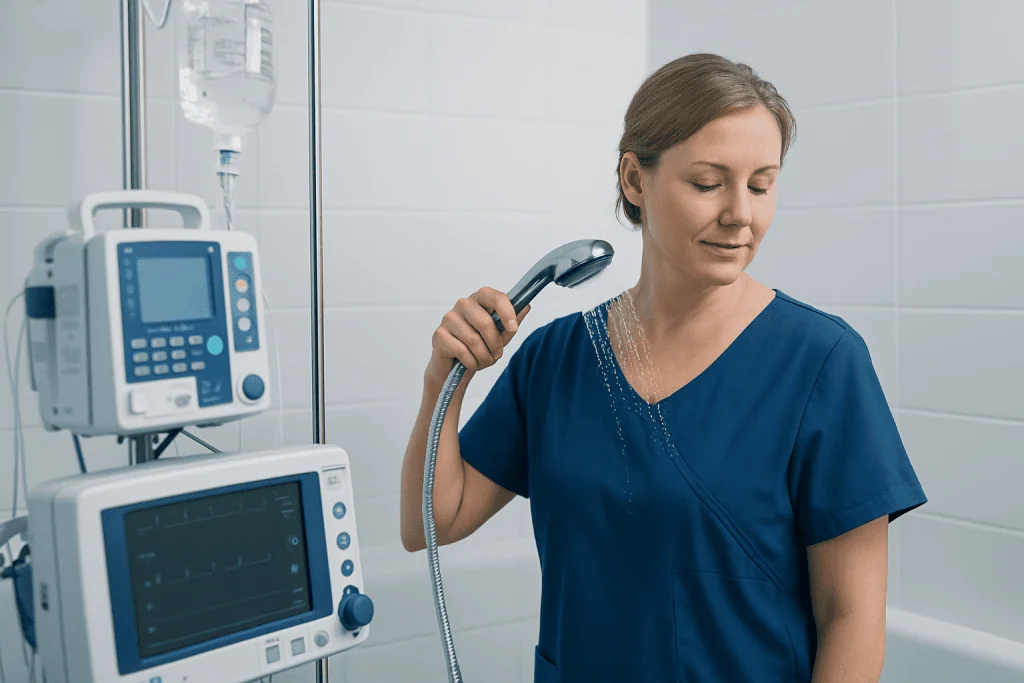
For many uncomplicated operations with a closed incision, showering may be allowed after 24 to 48 hours. This is a general guideline, not a rule for every patient. Some surgeons prefer a longer waiting period, especially if the incision is under tension, there has been drainage, or the patient has medical conditions that can slow healing.
Patients with waterproof dressings may be allowed to shower sooner, provided the dressing remains sealed at the edges. If the dressing lifts, leaks, becomes soaked, or traps moisture against the skin, the surgical team should be contacted for advice. A dressing that is only water-resistant, not waterproof, may need to be protected or changed according to instructions.
Baths, hot tubs, pools, lakes, and the sea are usually avoided until the surgeon confirms the incision is healed enough. Soaking can soften the skin, loosen closure materials, and expose the wound to microorganisms. Even when showering is allowed, the incision should not be held directly under strong water pressure for a long time.
Some situations require individualized instructions, including skin grafts, flap surgery, open wounds, wound vacuum therapy, external fixation devices, casts, drains, and certain transplant or cancer surgeries. In these cases, the shower plan may include covering devices, sponge bathing, or waiting until a follow-up visit.
How to Shower Safely With an Incision

A safe shower begins with preparation. The bathroom should be warm, well lit, and free of slip hazards. Patients who feel weak, dizzy, or unsteady after anesthesia or pain medicine may need someone nearby for assistance, while still maintaining privacy and dignity. A non-slip mat and a shower chair can be helpful during early recovery.
Before showering, patients should check whether the dressing should stay on, be removed, or be replaced afterward. Hands should be washed before touching the dressing or incision area. If the surgeon has advised keeping the wound covered, the patient can use the recommended waterproof covering and avoid wrapping it so tightly that circulation is affected.
During the shower, lukewarm water is preferred. The patient should let water run gently over the incision rather than scrubbing it. A mild, fragrance-free soap may be used around the area if permitted, but soap should not be forced into an open wound. Washcloths, loofahs, exfoliating gloves, and body scrubs should be avoided near the incision because they can irritate healing tissue.
After showering, the incision should be patted dry with a clean towel or sterile gauze, not rubbed. If a new dressing is required, it should be applied only after the surrounding skin is dry. Unless prescribed, creams, powders, alcohol, hydrogen peroxide, iodine, or antibiotic ointments should not be applied to the incision because they may irritate tissue or interfere with the healing plan.
Protecting Different Types of Dressings and Closure Materials
Surgical glue usually forms a protective film over the incision and gradually flakes away as the skin heals. Patients should not pick at it or try to remove it. If showering is allowed, water can often run gently over the glued area, but soaking and rubbing should be avoided until the surgeon confirms it is safe.
Adhesive strips, sometimes called skin closure strips, help support the incision. They may loosen over time. Patients should not pull them off unless instructed; instead, they can trim curled edges with clean scissors if the care team says this is acceptable. If the strips fall off early or the incision edges separate, medical advice is needed.
Sutures and staples are stronger closure methods, but they still require gentle care. A shower may be allowed while they are in place, depending on the procedure and dressing. The patient should avoid catching them on towels or clothing and should attend the scheduled appointment for removal if removal is needed.
Drains and tubes require special attention. The insertion site must often be kept clean and supported so the tube is not pulled. Patients should follow instructions on whether the drain can get wet, how to secure it in the shower, and how to record drainage. Any sudden change in drainage amount, color, odor, or tube position should be reported.
Common Mistakes to Avoid
One of the most common mistakes is taking a bath or swimming because the incision looks dry on the surface. Skin heals in layers, and the deeper tissues may still be vulnerable even when the outside looks neat. The surgeon’s clearance is important before any activity that submerges the wound.
Another mistake is over-cleaning. Patients sometimes scrub the incision, use strong antiseptics, or apply several products in an effort to prevent infection. In most routine cases, gentle cleansing and keeping the area dry afterward are enough. Too much irritation can slow healing and cause redness that is difficult to distinguish from early infection.
Patients should also avoid aiming high-pressure water directly at the incision, shaving over the wound, using scented lotions nearby, or wearing tight clothing that rubs the area. If a dressing becomes wet when it was supposed to stay dry, it should be managed according to the discharge plan or by contacting the care team.
It is also important not to ignore general safety. Hot showers can cause lightheadedness after surgery, especially when a person is dehydrated, taking pain medicine, or recovering from anesthesia. A shorter, lukewarm shower is usually more comfortable during the first days of recovery.
Factors That Can Change Showering Instructions
Different procedures have different risks and healing needs. Abdominal, chest, orthopedic, plastic, vascular, and neurosurgical procedures may each involve different dressing plans. Minimally invasive incisions are often small, but they still need appropriate care. Large incisions, wounds under tension, and incisions in areas that bend or sweat may require extra protection.
Personal health also matters. Diabetes, reduced circulation, immune-suppressing medicines, smoking, poor nutrition, and previous wound-healing problems can increase the need for careful monitoring. Older adults and patients with limited mobility may need additional help to shower safely and keep the wound dry afterward.
The presence of medical devices can change the plan. Casts, splints, external fixators, central lines, catheters, wound drains, and negative-pressure wound therapy devices should be protected exactly as instructed. Patients should never disconnect or modify a device for showering unless the surgical team has shown them how.
Follow-up visits are a good time to ask practical questions, such as when to shower normally, when to remove dressings, when to use soap directly over the incision, and when bathing or swimming can resume. Written instructions are helpful, especially for international patients or families caring for someone after discharge.
When to Contact a Doctor
Patients should contact their surgeon or healthcare team if they notice signs that the incision may not be healing as expected. These include increasing redness, warmth, swelling, worsening pain, pus-like drainage, a bad odor, fever, chills, or red streaks spreading from the wound. A small amount of mild bruising or light drainage may be expected after some surgeries, but changes that are increasing or concerning should be checked.
Medical advice is also needed if the incision opens, stitches or staples come loose early, a dressing becomes repeatedly soaked, or a drain is pulled, blocked, or suddenly changes output. If showering causes bleeding, significant pain, dizziness, or shortness of breath, the patient should stop and seek guidance promptly.
Patients should not hesitate to ask for clarification if they are unsure whether showering is allowed. A simple phone call can prevent unnecessary worry and help the patient follow the recovery plan correctly. Acibadem International’s multidisciplinary specialists and JCI-accredited hospitals provide diagnosis, surgical care, and postoperative follow-up for international patients, including guidance on safe incision care after discharge.
Frequently asked questions
Can a patient shower 24 hours after surgery?
Some patients can shower 24 hours after surgery, but only if the surgeon's instructions allow it. The decision depends on the procedure, incision closure, dressing type, and whether there are drains or special devices. If instructions are unclear, the patient should contact the care team before showering.
Is it okay for an incision to get wet in the shower?
Many closed incisions can get briefly wet with clean running water once showering is approved. The incision should not be scrubbed, soaked, or exposed to strong water pressure. Afterward, it should be gently patted dry and covered again if a dressing is required.
When can a patient take a bath after surgery?
Bathing is usually delayed until the incision is well healed and the surgeon gives permission. Soaking can soften healing skin and may increase the chance of irritation or infection. This often takes longer than the time needed to resume brief showers.
What should be done if a surgical dressing gets wet?
If a dressing that should stay dry becomes wet, the patient should follow the discharge instructions for changing it or call the surgical team. A wet dressing can trap moisture against the skin. Waterproof dressings should also be checked to make sure the edges remain sealed.
Can soap be used on a surgical incision?
If the surgeon allows showering, a mild, fragrance-free soap may often be used gently around the incision. Patients should avoid scrubbing and should not force soap into an open wound. Harsh antiseptics or ointments should only be used if prescribed.
What are warning signs after showering with an incision?
Warning signs include increasing redness, swelling, warmth, worsening pain, pus-like drainage, unpleasant odor, fever, or the incision opening. Bleeding that does not stop with gentle pressure or a drain that changes position also needs medical advice. Patients should contact their surgeon if any of these occur.
References
- American College of Surgeons
- Centers for Disease Control and Prevention
- National Health Service
- World Health Organization
- Association of periOperative Registered Nurses
This article is for general information only and is not a substitute for professional medical advice. Please consult a qualified doctor about your individual situation.
Explore treatments in Turkey — costs, top hospitals & a free quote
JCI-accredited · board-certified surgeons · reply within 24h