Gamma Knife Radiosurgery: Treating Brain Lesions Without an Incision

Gamma Knife radiosurgery is not open surgery; it treats targeted areas in the brain without a surgical incision. It may be used for selected benign and malignant brain tumors, arteriovenous malformations and trigeminal neuralgia.
Key Takeaways
- Gamma Knife radiosurgery is not open surgery; it treats targeted areas in the brain without a surgical incision.
- It may be used for selected benign and malignant brain tumors, arteriovenous malformations and trigeminal neuralgia.
- Treatment is highly individualized and depends on the size, type and location of the lesion, as well as the patient’s overall health.
- Most patients go home the same day, although follow-up imaging is needed because the treatment effect develops over time.
- Possible side effects are usually manageable, but any new or worsening neurological symptoms should be discussed promptly with a doctor.
Gamma Knife radiosurgery is an advanced, incision-free treatment that uses highly focused radiation beams to treat selected brain tumors, vascular malformations and nerve-related conditions. It is planned with detailed imaging and delivered with millimeter-level precision to help protect surrounding healthy brain tissue.
Overview
Gamma Knife radiosurgery is a form of stereotactic radiosurgery used to treat carefully selected conditions inside the brain. Despite the word radiosurgery, it does not involve an incision, removal of bone or direct entry into the brain. Instead, many narrow beams of radiation are directed from different angles so they meet precisely at the target area.
Each individual beam carries a low dose as it passes through healthy tissue, while the combined dose at the target is strong enough to damage abnormal cells or blood vessels. This approach allows doctors to treat small or well-defined lesions with high accuracy. It is most often performed by a multidisciplinary team that may include a neurosurgeon, radiation oncologist, medical physicist, neuroradiologist and specialized nurses.
Gamma Knife radiosurgery is usually a one-day procedure. Some conditions are treated in a single session, while others may require a staged or fractionated approach depending on size, location and safety considerations. The goal may be to stop growth, shrink a lesion over time, close an abnormal blood vessel connection or reduce nerve-related pain.
What Gamma Knife Radiosurgery Can Treat
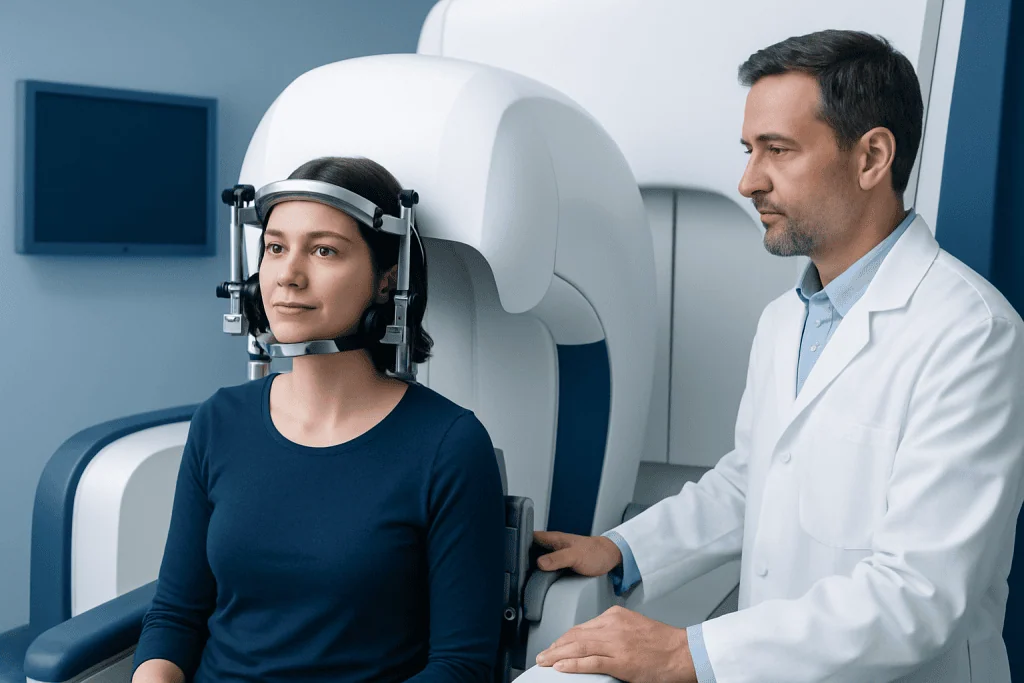
Gamma Knife radiosurgery is most often considered for brain conditions that are small, clearly visible on imaging and located in areas where precision is important. It may be used as a primary treatment, an alternative when open surgery is not ideal, or an additional treatment after surgery, chemotherapy or conventional radiotherapy. The decision depends on the diagnosis and the expected balance of benefits and risks.
Common indications include certain benign tumors such as meningiomas, vestibular schwannomas and pituitary adenomas. It may also be used for selected brain metastases, which are tumors that have spread to the brain from cancers elsewhere in the body. In vascular conditions, Gamma Knife can treat some arteriovenous malformations, known as AVMs, by gradually causing the abnormal vessels to close.
Gamma Knife radiosurgery is also used for some functional disorders, most notably trigeminal neuralgia, a condition that causes severe facial pain. In this setting, the radiation is aimed at a very specific part of the trigeminal nerve to reduce pain signals. It is not appropriate for every brain lesion, and a specialist review of imaging and symptoms is essential before recommending treatment.
How the Procedure Works

The process begins with careful preparation and imaging. Depending on the system and treatment plan, the patient may have a lightweight stereotactic frame placed on the head or a custom mask used for positioning. A frame can feel unfamiliar, but local anesthetic is used where it is attached, and the care team monitors comfort throughout the day.
After positioning, detailed imaging is performed, usually with MRI and sometimes CT or angiography. These scans help the team define the exact size, shape and location of the lesion, as well as nearby sensitive structures such as the optic nerves, brainstem or hearing pathways. The treatment team then creates a personalized plan using specialized software.
During treatment, the patient lies on a treatment couch while the machine delivers focused radiation to the planned target. The patient does not feel the radiation itself. Communication with the team is maintained, and treatment time varies according to the complexity of the plan. After the session, the frame or mask is removed, instructions are reviewed and many patients are able to return home the same day.
Benefits and Limitations
The main advantage of Gamma Knife radiosurgery is precision. It can treat lesions deep in the brain or close to delicate structures without the need for an incision. This may reduce some risks associated with open surgery, such as bleeding, infection at a surgical wound or a longer hospital stay. Recovery is often shorter than with open neurosurgery, though each patient’s situation is different.
Another benefit is that Gamma Knife can be integrated into broader treatment plans. For example, a patient with cancer may receive systemic therapy for the body and radiosurgery for selected brain metastases. A patient with a benign tumor may be monitored after treatment with periodic MRI scans to confirm that growth has stopped or slowed.
However, Gamma Knife is not the right choice for every condition. Very large lesions, widespread disease, severe swelling, uncertain diagnosis or urgent pressure on the brain may require other approaches. The effect is also not always immediate; tumors often respond gradually, AVMs may take months to years to close, and nerve pain may improve over weeks to months. Patients should discuss realistic goals with their treatment team.
Risks and Possible Side Effects
Gamma Knife radiosurgery is generally well tolerated, but like all medical treatments it has potential risks. Short-term effects may include headache, nausea, tiredness or mild swelling at frame pin sites if a frame is used. Some patients may receive medication to reduce swelling or discomfort, depending on the condition being treated and the doctor’s assessment.
Delayed effects can occur because radiation changes develop over time. These may include swelling around the treated area, temporary worsening of symptoms or, less commonly, changes in nearby brain tissue. The risk depends on the size and location of the target, the radiation dose, previous treatments and individual health factors.
Patients should be advised about symptoms that need medical attention, such as worsening headache, new weakness, seizures, vision changes, confusion, balance problems or persistent vomiting. Most side effects can be assessed and managed when reported early. Follow-up appointments and imaging are important because they help the team evaluate both response and safety over time.
Preparation, Recovery and Follow-Up
Before Gamma Knife radiosurgery, the patient usually meets with specialists who review the diagnosis, imaging, medical history and current medications. The team may ask about implanted devices, allergies, kidney function for contrast imaging, pregnancy status when relevant and previous radiation therapy. Patients should follow instructions about eating, drinking and medications on the day of treatment.
On treatment day, patients should wear comfortable clothing and plan for several hours at the treatment center. A companion may be helpful, especially if medication is given for relaxation or if the patient is traveling from another city or country. After treatment, the care team provides guidance about activity, medications, wound care for frame sites if applicable and warning signs to watch for.
Recovery is usually brief, and many people return to light daily activities within a short time, depending on their condition and how they feel. Follow-up imaging is essential because the treated lesion may change slowly. MRI scans are commonly scheduled at intervals determined by the doctor, and additional treatment may be considered if the lesion grows, symptoms change or new findings appear.
When to See a Doctor
A person should consult a qualified doctor if they have been diagnosed with a brain lesion and want to understand whether Gamma Knife radiosurgery is suitable. A specialist can review imaging, confirm the diagnosis when possible and explain alternatives such as observation, medication, open surgery, endovascular treatment, whole-brain radiotherapy or other forms of focused radiation.
Medical advice is also important when symptoms suggest a neurological problem, such as persistent headaches, seizures, unexplained facial pain, hearing changes, vision changes, weakness, numbness or balance difficulties. These symptoms do not always mean a serious condition, but they should be evaluated so that the right tests and treatment plan can be arranged.
For international patients, coordinated care can be especially helpful because diagnosis, treatment planning and follow-up may involve several specialties. Acibadem International’s multidisciplinary specialists and JCI-accredited hospitals diagnose and treat conditions that may be considered for Gamma Knife radiosurgery, with care plans tailored to each patient’s medical needs. Patients should always discuss individual risks, benefits and follow-up requirements with their own treating physician.
Frequently asked questions
Is Gamma Knife radiosurgery the same as brain surgery?
No. Gamma Knife radiosurgery is called radiosurgery because it treats a precise target, but it does not involve an incision or removal of skull bone. It uses focused radiation beams planned from detailed imaging.
Does Gamma Knife treatment hurt?
The radiation itself is not felt during treatment. If a head frame is used, local anesthetic helps reduce discomfort at the attachment points. Some patients may have a headache or feel tired afterward, which should be discussed with the care team.
How quickly does Gamma Knife radiosurgery work?
The effect depends on the condition being treated. Some nerve pain conditions may improve over weeks to months, while tumors may shrink or stop growing gradually. AVMs can take a longer time to close, so follow-up imaging is important.
Can Gamma Knife radiosurgery treat all brain tumors?
No. Suitability depends on tumor type, size, number, location, symptoms and previous treatments. Some patients may need open surgery, medication, chemotherapy, conventional radiotherapy or careful observation instead.
Will the patient need to stay in the hospital?
Many Gamma Knife treatments are completed as a same-day procedure. However, hospital stay or observation may be recommended for some patients depending on their general health, symptoms, travel situation or the complexity of treatment.
What follow-up is needed after treatment?
Follow-up usually includes clinical visits and repeat MRI scans at intervals chosen by the doctor. These checks help confirm whether the lesion is responding and whether there are any delayed side effects that need treatment.
References
- International Stereotactic Radiosurgery Society
- American Society for Radiation Oncology
- National Cancer Institute
- American Association of Neurological Surgeons
- European Association of Neurosurgical Societies
This article is for general information only and is not a substitute for professional medical advice. Please consult a qualified doctor about your individual situation.
Gamma Knife in Turkey — costs, top hospitals & a free quote
JCI-accredited · board-certified surgeons · reply within 24h