

Home Remedies for a Cold: What Shortens It, What Just Soothes
Key Takeaways
- Zinc lozenges started within 24 hours of first symptoms may shorten a cold by about a day — the only home remedy with meaningful evidence for that claim.
- Vitamin C taken after symptoms begin doesn't shorten colds; only regular, year-round use shows a modest benefit of roughly 8% shorter duration in adults.
- Honey has trial evidence for calming nighttime cough — sometimes rivaling over-the-counter options — but must never be given to babies under 12 months.
- Saline nasal rinses physically flush out mucus and virus particles, but only with distilled, sterile, or boiled-and-cooled water — never straight tap water.
- People sleeping under six or seven hours a night were roughly three times more likely to catch a cold after virus exposure than those sleeping eight or more in a landmark study.
- Mucus turning yellow or green midway through a cold is a normal immune response, not a sign you need antibiotics — which don't work on cold viruses at all.
Quick Answer
Most home remedies for a cold soothe symptoms rather than shorten the illness. The best evidence for actually trimming a cold involves zinc lozenges started within 24 hours of symptoms, which may cut its length by about a day. Honey calms cough, and rest, fluids, saline rinses, and humidified air ease congestion while the immune system clears the virus, usually within 7 to 10 days.
It usually starts small. A scratch at the back of the throat during a Tuesday meeting, a sneeze you blame on dust. By bedtime you know the truth, and by morning you’re standing in your kitchen surrounded by advice: your grandmother’s soup recipe, a coworker’s swear-by lozenge, a group chat insisting you “sweat it out.”
Here’s the honest problem with cold advice: almost everything makes you feel a little better, so almost everything gets credit for the recovery that was coming anyway. A cold resolves on its own in about a week to ten days, which means the tea you drank on day six will always look like a miracle.
So this article draws a line most cold guides blur. On one side: the very short list of things with evidence they may shorten a cold. On the other: the much longer, genuinely valuable list of things that ease the misery while you wait. Both matter. Only one deserves the word “works.”
Why a cold has to run its course
A cold is not one illness but a family of them. More than 200 viruses can cause it, with rhinoviruses behind the largest share, according to the CDC. Because so many culprits exist and they mutate readily, there’s no cure and no shot that prevents the common cold itself.
What you feel during a cold is only partly the virus. The stuffy nose, the sore throat, the fatigue that makes the stairs feel longer than usual — much of that is your immune response at work. Inflammation swells nasal passages, mucus production ramps up to trap and flush viral particles, and your body diverts energy toward the fight. That’s why “stopping symptoms” and “stopping the cold” are two different projects.
The timeline is remarkably consistent. Symptoms typically peak around days two to three and fade over 7 to 10 days, per Mayo Clinic and the NHS, though a lingering cough or mild congestion can hang on for two weeks or more without meaning anything is wrong. Adults average two to three colds a year; young children can rack up eight or more.
Understanding this arc is the key to evaluating every remedy that follows. If something claims to shorten a cold, the fair question is: shorter than what? Shorter than the 7 to 10 days the cold was going to take anyway? For most remedies, the honest answer is no. For a couple, the answer is a cautious, evidence-hedged maybe.
Zinc: the one remedy with real (if messy) evidence for shortening a cold
If any home remedy earns the word “shortens,” it’s zinc — with caveats worth reading twice.
The theory is plausible: in laboratory studies, zinc appears to interfere with rhinovirus replication and may hinder the virus from attaching to cells in the nose and throat. Several analyses of clinical trials have found that zinc lozenges, when started within 24 hours of the first symptoms, shortened colds by roughly a day on average. Mayo Clinic and the NIH Office of Dietary Supplements both describe this evidence as suggestive but inconsistent — studies used different forms, different amounts, and different schedules, and plenty of trials showed no benefit at all.
Three honest footnotes belong here:
- Timing is everything. Starting zinc on day three or four, when symptoms peak, hasn’t shown the same effect. The window appears to be the first day.
- The lozenge form matters. The proposed mechanism is local — zinc bathing the throat tissue — which is why lozenges, not zinc-rich meals, are what trials tested.
- Side effects are real. Nausea and a lingering metallic taste are common. And zinc products sprayed or swabbed into the nose have been linked to permanent loss of smell — a risk serious enough that Mayo Clinic warns against intranasal zinc outright.
The takeaway is measured: a day shaved off a miserable week is meaningful, but zinc is a modest tool, not a cure. Anyone considering it, especially people taking other supplements or medications, should check with a pharmacist or clinician first, since zinc can interact with some treatments.
Vitamin C: great reputation, underwhelming report card
No cold remedy has better branding than vitamin C, and few have a bigger gap between reputation and results.
The research record is long — trials date back more than 60 years — and the pattern is consistent. According to the NIH Office of Dietary Supplements, taking vitamin C after symptoms start does not appear to shorten a cold or meaningfully blunt it. That’s the scenario most people care about, and it’s the one where the evidence is weakest.
Taken regularly, before you ever get sick, the picture improves slightly. Daily vitamin C doesn’t prevent colds in the general population, but pooled trial data suggest it modestly trims their duration — on the order of about 8% in adults and 14% in children. Translated to real life, that’s roughly a day off over the course of a year’s colds, not a rescue on day one.
One group is the exception: people under extreme physical stress. Trials in marathon runners, skiers, and soldiers in subarctic conditions found regular vitamin C cut their cold risk substantially. If your winter doesn’t involve arctic marches, that finding probably doesn’t apply to you.
None of this makes vitamin C-rich foods a bad idea — citrus, peppers, kiwi, and berries belong in any week, sick or well. It just means the honest label for vitamin C during a cold is “reasonable nutrition,” not “treatment.” Spending that energy on sleep and fluids is a better trade.
Honey: quietly one of the best performers, especially for cough
Here’s a small irony of the remedy world: while flashier supplements struggle in trials, the jar in your pantry keeps posting respectable numbers.
For cough — often the most sleep-wrecking cold symptom — honey has genuinely encouraging evidence. Studies in children have found that a bit of honey before bed reduced nighttime coughing and improved sleep, in some trials performing as well as or better than common over-the-counter approaches. Mayo Clinic and the NHS both list honey among the remedies worth trying, and reviews of the broader evidence suggest it may help adults with cough frequency and severity too.
The mechanism is likely simple and twofold. Honey’s thick texture coats the throat, calming the irritated nerve endings that trigger the cough reflex. It also has mild antimicrobial and soothing properties, though the coating effect probably does most of the work. Stirred into warm water with lemon, it does double duty: the warm liquid loosens mucus while the honey soothes.
One rule is non-negotiable: never give honey to a baby under 12 months. Honey can contain spores that cause infant botulism, a rare but serious illness. For everyone older, it’s one of the safest, cheapest tools in the cold-season kit.
Does honey shorten the cold itself? No evidence says so. But if the goal is getting through the night without coughing yourself awake — which is when the body does its best immune work — honey earns its place.
Is ginger good for a cold?
Ginger tea is probably the most-prescribed remedy in the world that no doctor prescribes, so the question deserves a straight answer.
What the evidence supports: ginger contains compounds (gingerols and shogaols) with anti-inflammatory properties in laboratory studies, and it has reasonably solid clinical evidence for one thing — easing nausea. If a cold has your stomach unsettled, ginger is a sensible choice.
What the evidence doesn’t support: any claim that ginger shortens a cold or fights the virus in your body. No well-designed human trial shows ginger reducing the duration or severity of the common cold. The warmth, the steam rising off the mug, the throat-soothing liquid — those are doing real comfort work, but the same could be said of most hot drinks.
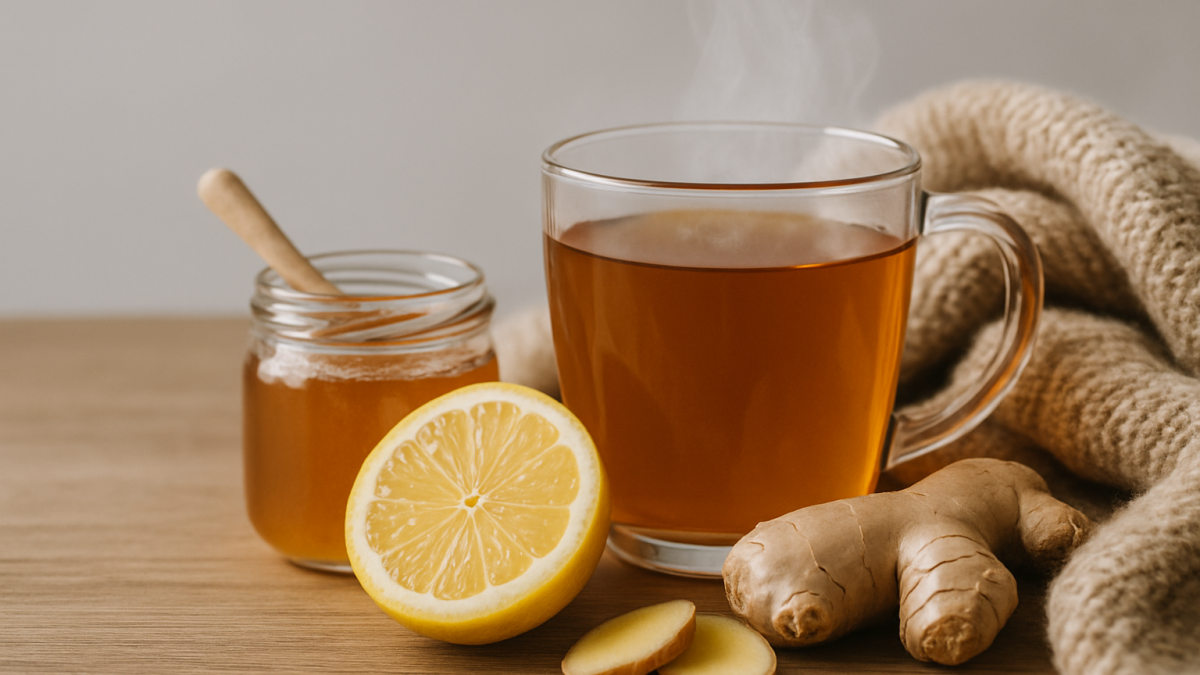
That’s not a dismissal. There’s a useful category of remedies best described as “plausible comfort”: low risk, genuinely soothing, mechanistically reasonable, just unproven against the virus itself. Fresh ginger steeped in hot water, perhaps with honey and lemon, sits squarely in that category. It hydrates, it warms, it may take the edge off a scratchy throat, and it makes being sick slightly less bleak — which is not nothing on day three.
Two practical notes: ginger can cause mild heartburn in some people, and anyone on blood-thinning treatment should mention regular, large amounts of ginger to their clinician, since it may have mild effects on clotting. A few cups of tea during a cold is well within normal use for most people.
Fluids and rest: boring advice, real mechanisms
Every cold guide says “rest and drink fluids,” usually in a tone that suggests the writer’s mind was elsewhere. That’s a shame, because these two have better mechanistic logic than most of the supplement aisle.
Start with fluids. Mucus is mostly water. When you’re well hydrated, nasal secretions stay thinner and easier to clear; when you’re not, they thicken into the concrete-like congestion that makes a cold feel twice as bad. Warm liquids — tea, broth, warm water with honey and lemon — add a bonus: research and clinical observation suggest warm drinks temporarily relieve congestion and soothe throat irritation better than cold ones, likely through warmth, steam, and stimulated salivation. Skip or limit alcohol and go easy on heavy caffeine, both of which can work against hydration, per Mayo Clinic.
Now sleep, the most underrated remedy in this entire article. Your immune system is not a background app; it runs resource-intensive processes during sleep, including the release of infection-fighting proteins called cytokines. The prevention data is striking: in one well-known study, people sleeping fewer than six or seven hours a night were significantly more likely to develop a cold after controlled virus exposure than those sleeping eight or more. Once you’re sick, short sleep means asking your immune system to fight with one hand tied.
Neither fluids nor rest has a trial proving they shorten a cold by X days — that study would be nearly impossible to run ethically or practically. But they’re the foundation everything else sits on.
Saltwater, two ways: gargles and nasal rinses
Salt water is the rare remedy that’s ancient, nearly free, and endorsed by mainstream medicine on both sides of the Atlantic.
The gargle. For a sore throat, gargling warm salt water several times a day can reduce discomfort. The mechanism is osmosis in miniature: the salty solution draws excess fluid out of inflamed throat tissue, easing swelling, while the rinse helps clear irritants and loosen mucus. Mayo Clinic and the NHS both recommend it for adults and children old enough to gargle safely — typically around age six and up, since younger children tend to swallow.
The rinse. Saline nasal irrigation — using a squeeze bottle, neti pot, or saline spray to flush the nasal passages — physically washes out mucus, virus particles, and allergens while moisturizing irritated tissue. For congestion, it’s among the most directly effective things you can do at home, and it’s safe for frequent use in a way that some decongestant products are not.
One safety rule matters enough to state plainly: never rinse your nose with untreated tap water. Use distilled or sterile water, or tap water that has been boiled and cooled. Tap water can rarely contain organisms that are harmless to swallow but dangerous in nasal passages. Wash and air-dry the device between uses.
Neither saltwater method shortens the cold, though some early research on saline rinses and drops hints at possible modest effects on duration in children — intriguing, not yet settled. As soothers, both are first-tier.
Steam, showers, and humidifiers: what moisture actually does
Cold viruses thrive in the same conditions that dry out your airways: winter air, indoor heating, low humidity. Adding moisture back doesn’t kill the virus, but it addresses one of a cold’s most persistent discomforts.
Dry air thickens mucus and irritates the already-inflamed lining of the nose and throat. Humidified air does the opposite — it keeps secretions loose enough to drain and clear. A cool-mist humidifier in the bedroom is the standard recommendation from Mayo Clinic, with one important maintenance clause: change the water daily and clean the unit as directed, because a neglected humidifier becomes an aerosolizer for mold and bacteria, trading one respiratory irritant for another.
A hot shower delivers the same relief in concentrated form. Ten steamy minutes can noticeably loosen congestion, and for parents of congested small children, sitting together in a steamy bathroom (not in the shower itself) is a time-honored, clinician-approved move.
What about bowls of boiling water with a towel over your head? The steam may feel good, but formal trials of heated, humidified air for colds have shown inconsistent benefit — and burn injuries from spilled bowls are a documented, avoidable harm, especially in children. The shower and the humidifier deliver the same moisture without the scald risk.
File all of this under soothing, not shortening. Comfortable breathing, better sleep, less throat irritation — moisture earns its keep on those terms alone.
Does chicken soup actually do anything?
Chicken soup is the one cold remedy that has been studied in a laboratory because grandmothers were so insistent — and the science treats it more kindly than you might expect.
A frequently cited laboratory study found that chicken soup mildly inhibited the movement of neutrophils, immune cells whose activity contributes to the inflammation behind congestion and mucus production. Separate older research found that hot chicken soup increased the flow of nasal mucus more effectively than hot water alone, suggesting something beyond temperature — aroma, flavor compounds, or both — was at work.
Stack up what a bowl of soup delivers and it reads like a checklist of everything else in this article:
- Fluids and electrolytes, replacing what fever and mouth-breathing drain away
- Warmth and steam, temporarily opening congested nasal passages
- Easy calories and protein, when appetite is low but the immune system still needs fuel
- A soft, warm texture that goes down gently on a raw throat
Does it shorten the cold? No study makes that claim, and this article won’t either. But “soothes through several plausible mechanisms at once, costs little, and carries zero risk” is about the best résumé a comfort remedy can have. Vegetable and other broths likely offer much of the same benefit; the magic is less about the chicken than the hot, salty, sippable package.
Grandmothers, in this instance, were directionally correct.
What do people around the world do for colds?
Every food culture has a cold ritual, and the overlap among them is more interesting than the differences.
In many Chinese households, the classic response to a cold involves warmth in every form: rice congee (a soft rice porridge that’s easy on the throat and hydrating), tea made from fresh ginger and scallion whites, staying bundled up, and pointedly avoiding iced drinks. Traditional Chinese medicine frames some colds as “wind-cold” invasions to be countered with warming foods — a framework mainstream medicine doesn’t use, but notice what the practices actually deliver: warm fluids, easy nutrition, rest, and steam.
Elsewhere the ingredients change while the theme holds. Korean tradition leans on citron tea and juk (a congee cousin). In parts of India, turmeric warmed in milk and ginger-pepper decoctions are standard. Eastern European households reach for garlic, broth, and honey; Latin American ones for caldo de pollo and cinnamon or herbal teas. Hot toddies aside — alcohol works against hydration and sleep quality, so mainstream sources advise skipping it while sick — nearly every tradition converges on the same core: warm liquids, gentle food, rest, and someone taking care of you.
That last item may not be decoration. Being cared for encourages the rest and fluid intake that actually help, and reduces the stress that works against immunity. The evidence doesn’t validate any culture’s theory of why their remedy works. It quietly validates what most of them do.
Can a cold clear up in 2 days?
Sometimes, yes — but probably not for the reason you think.
The typical cold runs 7 to 10 days, with symptoms peaking around days two to three. When someone feels scratchy on Monday and fine by Wednesday, a few explanations are more likely than “my remedy crushed it”:
- It was a very mild infection. Cold severity varies enormously depending on the specific virus, the dose of exposure, and your immune history. Some infections barely register.
- Partial immunity did the work. If you’ve previously encountered a closely related virus strain, your immune system may clear it quickly.
- It wasn’t a cold at all. A day or two of sneezing and congestion that vanishes cleanly is often allergies or simple irritation from dry air, dust, or smoke — no virus required.
This is exactly how remedy myths are born. Whatever you took during a two-day “cold” — the tea, the tablets, the special soup — gets the credit for an outcome that was baked in from the start. Researchers run controlled trials precisely because this after-this-therefore-because-of-this reasoning fools everyone, including scientists.
The realistic goal isn’t compressing a true cold into 48 hours; nothing on Earth reliably does that. It’s the modest version: possibly trimming a day with early zinc lozenges, and — far more within your control — making days two through six dramatically more bearable with sleep, fluids, saline, honey, and steam. A comfortable week beats a miserable one, even if both end on the same day.
The honest scoreboard: what shortens, what soothes, what to skip
If you remember one thing from this article, make it this table. It’s the entire evidence base in a glance, sorted by the question that actually matters: what does each remedy realistically deliver?
| Remedy | May shorten the cold? | Soothes symptoms? | Evidence notes |
|---|---|---|---|
| Zinc lozenges (started within 24 hrs) | Possibly, ~1 day | Somewhat | Mixed trials; metallic taste and nausea common; never use nasal zinc |
| Honey | No | Yes — cough, sore throat | Good trial data for nighttime cough; never for babies under 12 months |
| Saline gargle / nasal rinse | No (early hints only) | Yes — throat, congestion | Widely recommended; use sterile or boiled-and-cooled water for rinses |
| Fluids, warm drinks, soup | No | Yes — congestion, throat, energy | Strong mechanistic logic; hot liquids beat cold for symptom relief |
| Rest and sleep | Plausibly supportive | Yes — overall | Short sleep clearly raises cold risk; sleep supports immune function |
| Humidified air / steamy shower | No | Yes — congestion, dry throat | Clean humidifiers daily; skip boiling-water bowls (burn risk) |
| Ginger | No | Mildly — nausea, throat comfort | Good evidence for nausea; none for cold duration |
| Vitamin C (after symptoms start) | No | No clear effect | Only regular pre-illness use shows modest duration benefit |
| Echinacea | Unproven | Unproven | Trials conflict; any effect appears small at best |
Notice the pattern: the “shortens” column is nearly empty, while the “soothes” column is full. That’s not a disappointing result — it’s a clarifying one. It tells you where to spend your energy when you’re sick.
Cold myths worth retiring
Some cold beliefs survive on pure repetition. A few deserve a respectful burial.
“Feed a cold, starve a fever.” This proverb has been traced back centuries, and there’s no clinical basis for withholding food during any routine illness. The sensible version: eat what appetite allows, keep it gentle, and prioritize fluids either way. Your immune system runs on calories.
“You can sweat it out.” Bundling up or exercising hard to “burn out” a cold doesn’t shorten it, and intense exertion while sick diverts resources your immune system needs. The general clinical rule of thumb: symptoms above the neck (runny nose, mild sore throat) may allow light activity if you feel up to it; symptoms below the neck — chest congestion, body aches, fever — mean rest.
“Going out with wet hair causes colds.” Viruses cause colds; wet hair causes cold ears. Chilling may play a minor role in susceptibility — the research is genuinely mixed — but exposure to a virus is the non-negotiable ingredient.
“Green mucus means you need antibiotics.” Mucus commonly turns yellow or green partway through a normal viral cold as immune cells do their work. Color alone doesn’t indicate a bacterial infection, and antibiotics do nothing against cold viruses. Taking them unnecessarily contributes to antibiotic resistance, a problem the CDC and WHO rank among the most serious in medicine.
“Echinacea is proven to work.” Decades of trials have produced conflicting results; if there’s an effect, it appears small. Not dangerous for most people — just not the sure thing the label implies.
When to see a doctor
Most colds need nothing but time and comfort. But a few patterns mean it’s time to stop self-treating and get checked — because what looks like a stubborn cold can occasionally be something else, such as flu, strep throat, a sinus infection, pneumonia, or COVID-19.
For adults, Mayo Clinic and the NHS advise seeking medical care if you have:
- Fever above 101.3°F (38.5°C) lasting more than three days, or fever that returns after going away
- Symptoms that last beyond about 10 days without improving, or that improve and then sharply worsen
- Shortness of breath, wheezing, or chest pain
- Severe sore throat, severe headache, or significant sinus or facial pain
- A weakened immune system or a chronic condition such as asthma, diabetes, or heart disease and worsening symptoms
For children, the threshold is lower. Call a clinician for any fever in a baby under 3 months (this one is urgent), fever lasting more than two days at any age, trouble breathing or unusually fast breathing, ear pain, refusal to drink or signs of dehydration, unusual drowsiness or irritability, or symptoms that worsen instead of easing.
Seek emergency care for severe difficulty breathing, bluish lips or face, confusion, inability to wake fully, or signs of serious dehydration.
A useful mental model: colds get gradually better after the first few days. Anything that gets worse after initially improving — new fever, escalating pain, sudden fatigue — has broken the cold’s script and deserves a professional look. When in doubt, a call to your clinician or a nurse line costs nothing.
Frequently asked questions
What are 5 home remedies for a cold?
Five with the best evidence behind them: honey for cough and sore throat (never for babies under 12 months), saline nasal rinses or saltwater gargles for congestion and throat pain, warm fluids like broth and tea to thin mucus, extra sleep to support immune function, and humidified air or a steamy shower to ease dry, congested airways. Zinc lozenges started within 24 hours of symptoms are the only addition that may actually shorten the cold.
What do Chinese people do for colds?
Common traditional practices include rice congee (a soft, hydrating rice porridge), tea made from fresh ginger and scallion, staying warm, resting, and avoiding cold or iced drinks. Traditional Chinese medicine frames colds differently than Western medicine, but the actual behaviors — warm fluids, gentle food, rest, and steam — align closely with what mainstream sources recommend for symptom relief. There’s no evidence any of these shorten a cold, but they’re safe and soothing.
Is ginger good for a cold?
Ginger is good for comfort, not for cure. It has solid clinical evidence for easing nausea, and hot ginger tea soothes a sore throat and delivers fluids and steam. But no well-designed human study shows ginger shortening a cold or fighting the virus. It’s a safe, pleasant remedy for most people; those on blood-thinning treatment should mention heavy regular use to their clinician.
Can a cold clear up in 2 days?
Occasionally, yes — usually because the infection was very mild, your immune system had partial protection from a similar past virus, or the symptoms were actually allergies or dry-air irritation rather than a cold. A typical cold runs 7 to 10 days, peaking around days two to three. No remedy reliably compresses a true cold into 48 hours, which is why two-day recoveries often create false credit for whatever remedy was taken.
Does vitamin C help once you already have a cold?
The evidence says no. Trials reviewed by the NIH Office of Dietary Supplements found that starting vitamin C after symptoms appear doesn’t meaningfully shorten a cold or reduce its severity. Regular daily use before illness shows a modest benefit — roughly 8% shorter colds in adults — and a clearer preventive effect only in people under extreme physical stress, like marathon runners. Eating vitamin C-rich foods is always sensible; expecting rescue from it isn’t.
Does chicken soup really help a cold?
It genuinely soothes, though it doesn’t shorten the illness. Laboratory research found chicken soup mildly dampened the activity of inflammation-driving immune cells, and hot soup increases nasal mucus flow better than hot water alone. Practically, a bowl delivers fluids, electrolytes, warmth, steam, and easy calories in one package — hitting several comfort mechanisms at once with zero risk. Vegetable broths likely offer similar benefits.
Can you sweat out a cold?
No. Bundling up, saunas, or hard exercise won’t drive the virus out faster, and intense exertion while sick diverts energy your immune system needs. A common clinical rule of thumb: with symptoms above the neck only, like a runny nose, light activity is usually fine if you feel up to it; with fever, chest congestion, or body aches, rest is the better choice. Sweating heavily without replacing fluids can also worsen dehydration.
Is honey safe for children with a cold?
For children over 12 months, yes — and it’s one of the better-studied remedies for their nighttime cough, with trials showing reduced coughing and better sleep. For babies under 12 months, honey is strictly off-limits because it can contain spores that cause infant botulism, a rare but serious illness. For congested infants, safer options include saline nose drops, gentle suction, a cool-mist humidifier, and plenty of fluids, with a clinician’s guidance.
Should I exercise with a cold?
Light exercise is usually acceptable if your symptoms are all above the neck — a runny nose, sneezing, mild sore throat — and you genuinely feel up to it. Skip workouts entirely if you have fever, chest congestion, a deep cough, or body aches; pushing through those can prolong recovery and, rarely, cause complications. Either way, reduce intensity, hydrate well, and stay away from shared gym spaces while you’re contagious.
How long is a cold contagious?
You’re typically most contagious in the first two to three days, when symptoms peak, but you can spread the virus from a day before symptoms appear until roughly the full week or two they last. Cold viruses travel by droplets from coughs and sneezes and by hands and surfaces. Frequent handwashing, coughing into your elbow, and staying home during the worst days protect the people around you more than any remedy protects you.
References
This article is for general information only and is not a substitute for professional medical advice. Please consult a qualified doctor about your individual situation.