

Lymphatic Drainage: The Massage Trend vs the Physiology
Key Takeaways
- Your lymphatic system returns roughly three liters of fluid to your bloodstream every day, filtering it through about 600 lymph nodes along the way.
- Lymph has no central pump — it moves when your muscles contract and when you breathe deeply, so a brisk walk drives lymph flow at depths no massage can reach.
- Genuine manual lymphatic drainage uses pressure light enough to only stretch the skin; deep kneading actually compresses superficial lymph vessels shut.
- The strongest evidence for MLD is in lymphedema care, where it works as one part of a four-part therapy alongside compression, exercise, and skin care.
- The flatter, 'debloated' look after a lymphatic massage is a temporary fluid shift that typically reverses within hours to a day.
- People with heart failure, kidney disease, active infection, or a suspected blood clot should not receive lymphatic massage without a clinician's clearance.
Lymphatic drainage refers both to the body's normal process of returning excess tissue fluid to the bloodstream and to a gentle massage technique meant to encourage that flow. The massage has a proven role in managing lymphedema, but current evidence does not support popular claims that it detoxifies the body, removes fat, or boosts immunity in healthy people. Regular movement and adequate hydration support lymph flow best.
The video has twelve million views. A therapist glides feather-light hands down a client’s abdomen, the caption promises a “snatched waist in 45 minutes,” and the comments are full of people asking where to book. Somewhere between that clip and your local spa menu, lymphatic drainage went from a niche hospital therapy to a beauty ritual.
Here’s the strange part: the technique in those videos is real. It was developed in the 1930s, it’s taught in accredited therapy programs, and hospital rehabilitation teams use a version of it every day for a condition called lymphedema. The physiology behind it is genuinely fascinating — a second circulatory system most of us never think about until it fails.
What’s less real are the promises stacked on top of it. So let’s separate the plumbing from the marketing, and figure out what your lymphatic system actually needs from you. Spoiler: it’s cheaper than a spa package.
What does your lymphatic system actually do all day?
Every minute of your life, your blood capillaries leak. That’s by design — plasma fluid seeps into your tissues to deliver oxygen and nutrients, and most of it gets reabsorbed. But not all of it. Roughly three liters of fluid per day, about a large soda bottle and a half, gets left behind in the spaces between your cells. The lymphatic system is the return line that collects it, filters it, and pours it back into your bloodstream near your collarbones.
Along the way, that fluid — now called lymph — passes through somewhere around 600 lymph nodes scattered from your jaw to your groin. Each node works like a security checkpoint staffed by white blood cells, screening the fluid for bacteria, viruses, and abnormal cells. This is why nodes swell when you’re fighting an infection: the checkpoint is busy.
The system has a third job people rarely mention. Specialized lymphatic vessels in your small intestine, called lacteals, absorb dietary fat and fat-soluble vitamins and ferry them into circulation. After a rich meal, the lymph in those vessels turns visibly milky.
So the lymphatic system is simultaneously a drainage network, an immune surveillance grid, and a fat-transport highway. That’s a lot of jobs for a system with no pump of its own — which brings us to the mechanical problem at the heart of this whole story.
Why is a lymph story sitting in the heart and metabolism section?
Because lymph is circulation — just the half nobody photographs. Your cardiovascular system is usually drawn as a closed loop, heart to arteries to veins and back. In reality, it’s a loop with a slow leak, and the lymphatic system is what keeps the leak from becoming a flood. When lymphatic vessels are damaged or overwhelmed, protein-rich fluid pools in tissue and the affected area swells. Clinicians call this lymphedema, and it can become chronic.
The metabolic connection is just as direct. Those intestinal lacteals mean that a meaningful share of the fat you eat enters your body through lymph before it ever touches your bloodstream. Researchers are also increasingly interested in how lymphatic function relates to fluid balance in heart conditions, since a failing heart raises pressure in the veins and forces more fluid out into tissues — more work for the lymphatic return line.
This overlap matters practically, not just academically. Swelling in the legs can come from the lymphatic system, from the veins, from the heart, or from the kidneys, and the treatments differ completely. It’s one reason the mainstream medical advice is consistent: unexplained, persistent swelling deserves a diagnosis before it gets a massage. A therapist’s hands can’t tell you which system is struggling. An exam and a few tests can.
How does lymph move without a pump?
Your heart beats about 100,000 times a day to push blood around. Lymph gets no such engine. Instead, it relies on a clever patchwork of borrowed forces.
The biggest contributor is your own movement. Lymphatic vessels thread between your muscles, and every contraction squeezes them like a hand wringing a sponge. One-way valves inside the vessels — the same design your veins use — make sure each squeeze sends fluid forward, never backward. Larger lymphatic vessels also have their own faint muscular pulse: segments called lymphangions contract rhythmically a few times per minute, nudging lymph along.
Breathing helps more than you’d guess. Each deep breath drops the pressure inside your chest, which gently suctions lymph upward through the large central duct that runs alongside your spine. Even the pulsing of nearby arteries gives adjacent lymph vessels a small rhythmic push.
Notice what’s on that list — muscle contraction, valves, breathing — and what isn’t: external hands. The system evolved to be driven from the inside. This is the physiological truth underneath every honest conversation about lymphatic drainage: a 30-minute walk recruits thousands of muscle contractions along your entire lymphatic network, while a massage can only influence the superficial vessels under the therapist’s hands. Movement isn’t the budget alternative to lymphatic drainage. Movement is lymphatic drainage.
What is lymphatic drainage massage, really?
The technique behind the trend is called manual lymphatic drainage, or MLD, and it’s older than most people assume. Danish therapist Emil Vodder developed it in the 1930s, and versions of his method are still taught in certified lymphedema therapy programs today.
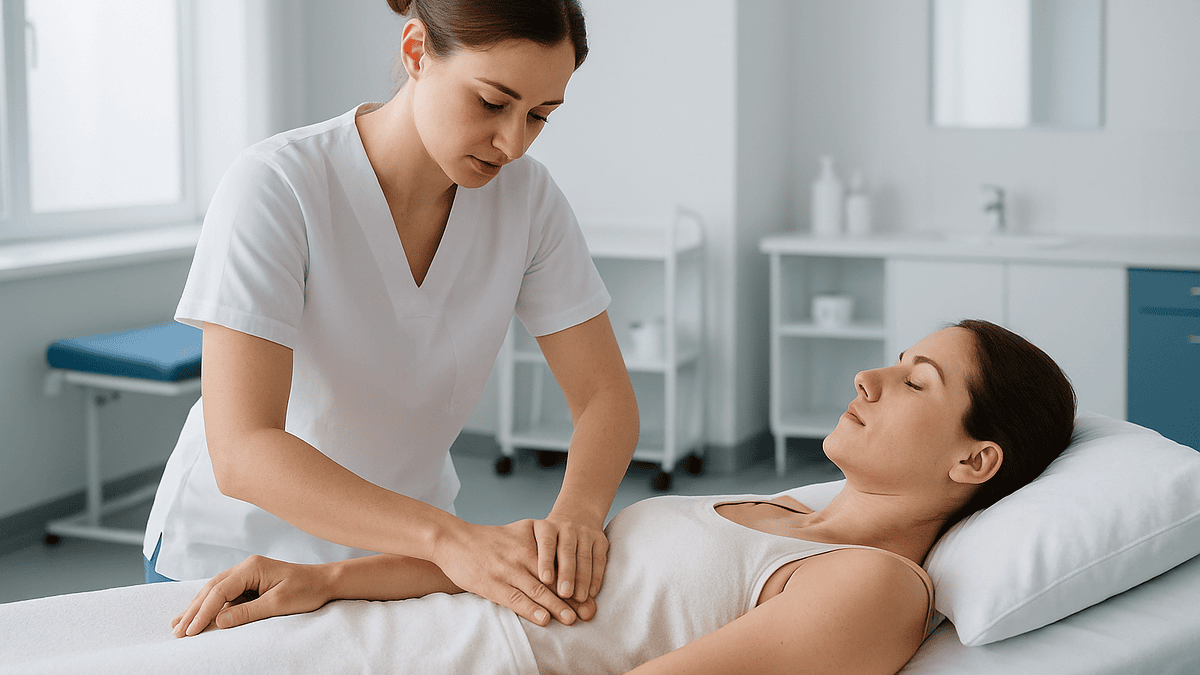
Watch a trained practitioner and the first surprise is how little pressure they use. The most superficial lymphatic capillaries sit just beneath the skin and are thin-walled, almost delicate. MLD uses slow, rhythmic strokes that stretch the skin gently — roughly the pressure you’d use to smooth a sticker onto glass — because that light stretch is what encourages the tiny initial lymph vessels to open and accept fluid. Press hard and you can compress those vessels shut, which is why a deep-tissue massage, whatever its other merits, is not lymphatic drainage.
Direction matters too. A trained therapist works in a specific sequence, clearing the lymph node regions closest to the heart first — think of unclogging the drain before you push more water toward it — then moving outward to guide fluid from swollen areas toward pathways that are open.
In hospital settings, MLD is rarely used alone. It’s one component of complete decongestive therapy for lymphedema, alongside compression garments, targeted exercise, and meticulous skin care. That context is worth holding onto, because it’s exactly what gets stripped away when the technique travels from the rehabilitation clinic to the spa menu.
What does lymphatic drainage do for your body — according to the evidence?
Start with the strongest case. For people with lymphedema — often triggered by cancer surgery or radiation that removes or damages lymph nodes — manual lymphatic drainage is an established part of care. Roughly one in five women treated for breast cancer develops some degree of arm lymphedema, and for them, decongestive therapy can meaningfully reduce swelling, heaviness, and discomfort. Even here, honesty is warranted: studies suggest the compression and exercise components do much of the heavy lifting, with MLD adding modest benefit for some patients rather than dramatic benefit for all.
There’s reasonable evidence for a few adjacent uses. Some surgical teams recommend gentle lymphatic techniques to help temporary post-operative swelling resolve, and small studies have explored MLD for conditions like fibromyalgia, with mixed but not dismissive results. Many people simply find the slow, rhythmic strokes deeply relaxing — a real benefit, if a modest claim.
Now the weaker territory. In healthy people with normal lymphatic function, there’s no solid evidence that lymphatic massage improves immunity, accelerates metabolism, reduces cellulite in any lasting way, or removes fat. Fat leaves the body by being metabolized for energy, not by being pushed through lymph vessels. And the sluggish-lymph-needs-flushing premise doesn’t hold up: a healthy lymphatic system already drains itself around the clock, every day, without an appointment.
The trend's biggest claims vs. what the evidence shows
Marketing moves faster than research, so here’s a plain-language reconciliation of the two. Each row reflects mainstream medical sources, not the caption on a viral video.
| The claim | What the evidence shows |
|---|---|
| “Flushes toxins from the body” | No supporting evidence; the liver and kidneys handle detoxification, and lymph carries fluid, protein, and immune cells — not stored toxins |
| “Reduces swelling from lymphedema” | Supported, as one part of complete decongestive therapy delivered by trained therapists |
| “Sculpts the waist / melts fat” | Not supported; any slimmer appearance is a temporary fluid shift, typically gone within hours to a day |
| “Boosts the immune system” | Not demonstrated in healthy people; lymph nodes don’t work harder because fluid moves past them faster |
| “Cures cellulite” | Not supported for lasting change; cellulite reflects fat and connective-tissue structure, not trapped lymph |
| “Relieves post-surgical puffiness” | Plausible and sometimes recommended, with a surgeon’s guidance on timing and technique |
| “Deeply relaxing” | Fair claim — slow rhythmic touch reliably calms many people, which has genuine value |
The pattern is easy to spot. Where the lymphatic system is actually impaired, skilled hands can help. Where it’s working normally, massage is pleasant but doesn’t upgrade a system that isn’t broken. That distinction — impaired versus intact — is the single most useful lens for evaluating anything sold under the lymphatic label.
Does lymphatic massage detox your body?
This is the claim that deserves the firmest correction, because it misdescribes what lymph is.
Lymph isn’t a reservoir of accumulated waste waiting for someone to squeeze it out. It’s mostly water, plus proteins, immune cells, cellular debris, and — after meals — absorbed fat. Genuine detoxification happens elsewhere: your liver chemically transforms substances so they can be excreted, and your kidneys filter your entire blood volume dozens of times a day. These organs don’t fall behind in healthy people, and no massage speeds them up.
What about the things people report after a session? Some are real and explainable. Feeling lighter or less puffy usually reflects a genuine, temporary shift of fluid out of tissue and back into circulation — which is also why some people urinate more afterward. That’s fluid relocation, not toxin removal. Feeling calm and loose is the well-documented effect of slow touch on the nervous system. Neither requires a detox story, and both are undermined by one, because the detox framing sets people up to expect health changes that fluid shifts can’t deliver.
There’s also a subtle cost to the myth. When wellness marketing teaches people that swelling is “toxins” to be massaged away, some will rub at swelling that’s actually a blood clot, an infection, or heart-related fluid retention — three situations where massage ranges from useless to genuinely risky. Accurate physiology isn’t pedantry here. It’s safety.
How to tell if you need lymphatic drainage
Here’s the honest answer the spa brochure won’t give you: if your lymphatic system is healthy, you don’t need lymphatic drainage. It’s already draining. There’s no maintenance schedule, no tune-up interval, no evidence that healthy lymph flow benefits from outside assistance.
The people who genuinely benefit are those whose lymphatic systems are damaged or overloaded, and that usually shows up in recognizable ways:
- Persistent swelling in an arm or leg — often on one side — that doesn’t fully resolve overnight
- A feeling of heaviness, tightness, or aching in a limb, or rings and watchbands that no longer fit
- Skin that thickens, hardens, or holds a dent when pressed
- Swelling that begins after cancer treatment, lymph node removal, radiation, or major surgery
- Recurrent skin infections in the same swollen area
Notice what’s not on the list: general bloating, feeling sluggish, water retention around your period, or puffiness after a salty dinner. Those are common, usually harmless, and typically resolve on their own — they’re not signs of lymphatic failure.
If items on the first list sound familiar, the right next step is a medical evaluation, not a booking app. Swelling has many possible causes, and a clinician can determine whether yours is lymphatic at all. If it is, you’d be referred to a certified lymphedema therapist, whose training goes well beyond a weekend massage course — and whose treatment plan will include much more than hands.
What is the best way to drain your lymphatic system?
If you asked a lymphatic physiologist to design the ideal drainage protocol, it would look suspiciously like ordinary healthy living — because the system’s pumps are your own muscles and lungs.
Movement tops the list, and not by a small margin. Walking, swimming, cycling, strength training — anything that contracts muscles rhythmically compresses lymphatic vessels thousands of times per session, along your entire body, at depths no hand can reach. Swimming earns a special mention: water pressure adds gentle, uniform compression while you move, which is one reason it’s often suggested for people managing lymphedema.
Deep breathing is the underrated second entry. Slow diaphragmatic breaths change chest pressure enough to draw lymph up through the central thoracic duct. A few minutes of deliberate deep breathing costs nothing and works the one region exercise reaches least directly.
The rest of the list is unglamorous but evidence-aligned:
- Maintain a weight that’s healthy for you — excess adipose tissue increases lymphatic load and is a known risk factor for lymphedema
- Break up long stretches of sitting or standing; even ankle pumps and calf raises count
- Care for your skin to prevent the cuts and infections that can inflame lymphatic vessels
- Wear compression garments if a clinician has prescribed them — for impaired systems, compression is the workhorse
None of this photographs well. All of it outperforms anything you can buy in a 45-minute session.
What is the best drink for lymphatic drainage?
Water. Genuinely, unceremoniously, water.
The logic is straightforward: lymph is over 90 percent water, and your fluid balance affects how easily it flows. When you’re meaningfully dehydrated, your body conserves fluid and lymph volume drops. Staying adequately hydrated keeps the whole fluid-exchange system — blood, tissue fluid, lymph — operating as designed. That’s the entire evidence-supported story.
The wellness world has decorated this simple fact with elaborate upgrades: lemon water to “alkalize lymph,” specific teas to “flush the nodes,” celery juice, chlorophyll drops. None of these has clinical evidence for lymphatic function beyond the water they contain. If lemon in your water makes you drink more of it, that’s a perfectly good reason to add lemon — just know the citrus is doing flavor work, not lymph work.
Two dietary notes carry more weight than any special beverage. A consistently high-sodium diet encourages fluid retention, which can worsen swelling in people prone to it; most health authorities suggest keeping sodium moderate for cardiovascular reasons anyway, and your tissues share the benefit. And alcohol acts as a mild diuretic while promoting inflammation, so heavy drinking works against fluid balance from two directions.
How much water is enough? Needs vary with body size, climate, and activity, but pale-yellow urine is a reasonable everyday gauge. No tracking app, no gallon jug challenge — just don’t let thirst run the show all day.
The 'debloating' before-and-after: what's actually happening
Those side-by-side photos aren’t necessarily fake. They’re just temporary, and the mechanism is less magical than the caption implies.
Gentle massage strokes can shift some interstitial fluid — the water sitting between cells — into lymphatic and blood vessels, where it rejoins circulation and eventually exits through the kidneys. If your abdomen was holding a bit of extra fluid, moving some of it can genuinely flatten the silhouette for a few hours. Skin also looks smoother and less puffy immediately after almost any massage, thanks to changes in local blood flow.
Then physiology reasserts itself. Capillaries keep leaking, as they must, and fluid redistributes back to its usual equilibrium — typically within hours, a day at most. Nothing structural has changed: no fat has moved, no measurements have durably shrunk, no metabolic switch has flipped. It’s the body-contouring equivalent of sucking in for a photo, outsourced to someone else’s hands.
Is that worthless? Not necessarily. Feeling less puffy before an event has real, if fleeting, value to some people, and the relaxation is its own reward. The problem is pricing and framing. When temporary fluid shifts are sold as “sculpting,” “fat mobilization,” or a metabolic reset — sometimes in packages costing hundreds of dollars — the gap between what’s promised and what’s physiologically possible becomes the story. Enjoy the massage if you enjoy it. Just buy the hour of calm, not the transformation.
What a legitimate MLD session looks like
Knowing what proper manual lymphatic drainage involves is the fastest way to spot both good practitioners and inflated ones.
A clinical session — the kind used for lymphedema — usually runs 30 to 60 minutes and starts in a counterintuitive place: the therapist works the healthy lymph node regions near your neck and trunk first, before ever touching the swollen limb. The reasoning is pure plumbing. You clear the downstream drain before pushing fluid toward it. Only then do the strokes progress outward, always guiding fluid toward open pathways.
The touch itself is the tell. Real MLD feels almost disappointingly light — slow, rhythmic skin stretches, no oil-slicked gliding, no kneading, nothing that hurts. If a session marketed as lymphatic drainage involves deep pressure, vigorous scraping, or leaves you sore, whatever you received wasn’t MLD, because firm pressure collapses the very vessels the technique targets.
In hospital-based care, the massage is one leg of a four-legged stool called complete decongestive therapy: MLD, compression bandaging or garments, tailored exercise, and skin care to prevent infection. Therapists in this setting typically hold specific lymphedema certification requiring dozens of hours of training beyond a massage license.
Afterward, needing to urinate more than usual is common and expected — mobilized fluid has to exit somewhere. Feeling thirsty or pleasantly tired is also typical. Dramatic same-day body changes are not, and any practitioner promising them is telling you something about their marketing, not their hands.
Who should skip lymphatic massage — and why it's not a formality
Because lymphatic massage deliberately moves fluid around the body, there are situations where that’s the last thing you want to do. These contraindications appear on every reputable clinical list, and they’re worth taking literally.
- Congestive heart failure. A struggling heart is already managing more fluid than it can comfortably pump. Pushing additional fluid from tissues into circulation adds load precisely where the system is weakest.
- Blood clots or suspected clots. Massaging near a deep vein clot risks dislodging it, and a traveling clot can lodge in the lungs. New one-sided leg swelling with pain or warmth needs urgent medical assessment, never massage.
- Active infection, including cellulitis. Encouraging fluid flow through infected tissue can help bacteria spread. Skin that’s red, hot, and tender is a see-a-clinician-today situation.
- Significant kidney or liver disease. Both organs regulate fluid balance; when they’re impaired, mobilizing extra fluid can overwhelm them.
- Active, untreated cancer. This one is nuanced — MLD is routinely and safely used for cancer-related lymphedema under medical supervision — but people in active treatment should involve their oncology team rather than a spa booking system.
The uncomfortable reality is that few wellness-setting intake forms screen rigorously for these conditions. That’s not a reason for alarm; it’s a reason for self-advocacy. If any item above describes you, the conversation starts with your clinician, not the front desk.
When to see a doctor about swelling or lymph nodes
Most puffiness is innocent — a salty meal, a long flight, a hot day, a hormonal week. But some swelling is your body filing a report, and the difference is worth knowing cold.
Make a routine appointment if you notice:
- Swelling in an arm or leg that persists for more than a few days or keeps returning, especially on one side only
- A lymph node that stays enlarged for more than two to four weeks, or one that feels hard, rubbery, or fixed in place rather than movable
- Swelling accompanied by unexplained weight loss, drenching night sweats, or persistent fatigue
- Any new swelling after cancer treatment or lymph node surgery, even years later — early lymphedema responds better to treatment than established lymphedema
Seek care urgently — same day — for:
- Sudden swelling in one leg with pain, warmth, or skin discoloration, which can signal a blood clot
- Rapidly spreading redness, heat, and tenderness on the skin, with or without fever, which can signal cellulitis — a particular risk for anyone with lymphedema
- Swelling with shortness of breath or chest discomfort, which needs emergency evaluation
None of this is meant to make you fear every puffy ankle. It’s the opposite: knowing the short list of genuine warning signs lets you stop worrying about the rest — and ensures that if your lymphatic system ever does need help, it gets the medical kind first.
Frequently asked questions
What is the best way to drain your lymphatic system?
Regular movement is the most effective way, because lymph relies on muscle contractions to flow. Walking, swimming, cycling, and strength training rhythmically squeeze lymphatic vessels throughout the entire body, while one-way valves keep fluid moving forward. Deep diaphragmatic breathing adds a gentle suction effect in the chest. Staying hydrated, maintaining a healthy weight, and avoiding long periods of immobility round out what the evidence actually supports — no product or drink required.
How can you tell if you need lymphatic drainage?
If your lymphatic system is healthy, you don’t need it — the system drains itself continuously. Genuine warning signs of lymphatic impairment include persistent swelling in one arm or leg, a feeling of heaviness or tightness, skin that holds a dent when pressed, or swelling that begins after cancer treatment or lymph node surgery. Those signs warrant a medical evaluation first, since swelling can also stem from the heart, veins, or kidneys.
What does lymphatic drainage do for your body?
As physiology, lymphatic drainage returns about three liters of leaked tissue fluid to your bloodstream daily while screening it for pathogens. As massage, gentle techniques can temporarily shift excess fluid out of tissue, which reduces puffiness for a few hours and helps manage lymphedema when combined with compression and exercise. Evidence does not show it detoxifies the body, removes fat, or strengthens immunity in healthy people.
What is the best drink for lymphatic drainage?
Plain water is the best-supported choice, since lymph is over 90 percent water and adequate hydration keeps fluid exchange working normally. No special beverage — lemon water, detox teas, or juices — has clinical evidence for improving lymphatic function beyond hydration itself. Limiting alcohol and keeping sodium moderate helps too, because both can worsen fluid retention. Pale-yellow urine is a practical everyday sign your hydration is on track.
Does lymphatic drainage massage help you lose weight?
No. Fat leaves the body by being metabolized for energy, not by being pushed through lymph vessels, and no massage technique removes or relocates fat tissue. Any slimmer appearance after a session reflects a temporary shift of retained fluid, which typically returns within hours to a day. Sustainable weight change comes from the balance of energy intake and expenditure, which lymphatic massage does not alter.
Is lymphatic drainage massage safe for everyone?
No. Because the technique deliberately moves fluid into circulation, it should be avoided by people with congestive heart failure, significant kidney or liver disease, active infections such as cellulitis, or known or suspected blood clots. People in active cancer treatment should involve their oncology team first, though MLD is safely used for cancer-related lymphedema under medical supervision. When in doubt, ask your clinician before booking.
How is lymphatic massage different from regular massage?
The pressure and purpose differ completely. Manual lymphatic drainage uses very light, slow, rhythmic strokes that stretch the skin just enough to open superficial lymph vessels, working in a specific sequence toward lymph node regions. A standard therapeutic massage uses much firmer pressure aimed at muscles — pressure that can actually compress superficial lymph vessels shut. If a session marketed as lymphatic drainage involves deep kneading or leaves you sore, it wasn’t MLD.
Can you do lymphatic drainage on yourself at home?
Yes, with instruction. Self-MLD is routinely taught to people with lymphedema by certified therapists, who show them the correct light pressure, direction, and sequence for their specific situation. For healthy people, simple self-massage is harmless but offers no proven benefit beyond relaxation — regular exercise and deep breathing move far more lymph. If you have swelling from a medical condition, learn the technique from a trained clinician rather than a video.
Does dry brushing stimulate the lymphatic system?
There’s no solid clinical evidence that dry brushing improves lymphatic function. The practice exfoliates skin and temporarily boosts surface blood flow, which can create a pleasant tingling and a healthy-looking flush, but studies haven’t shown meaningful effects on lymph flow or swelling. It’s generally harmless for intact skin, though people with lymphedema should be cautious, since scratches and skin damage raise their infection risk.
How long do the results of lymphatic drainage massage last?
For cosmetic purposes, hours to about a day — the shifted fluid gradually redistributes as capillaries continue their normal leakage, so any debloated appearance is temporary. For lymphedema management, effects are also short-lived on their own, which is exactly why clinical protocols pair MLD with compression garments, exercise, and skin care to maintain the reduction between sessions. No form of lymphatic massage produces permanent structural change.
References
- Cleveland Clinic — Lymphatic Drainage Massage
- Cleveland Clinic — Lymphatic System
- NHS — Lymphoedema
- MedlinePlus — Lymphatic Diseases
This article is for general information only and is not a substitute for professional medical advice. Please consult a qualified doctor about your individual situation.

More from the Blog

Stable vs Unstable Angina: What the Difference Means for Your Treatment Plan
Stable angina is chest discomfort that follows a predictable pattern, arrives with exertion or stress, and eases within minutes of rest; it is usually…

How to Read an ECG and Work Out the Heart Rate from It
To read an ECG, first check the paper speed (usually 25 mm per second), then identify the P wave, QRS complex, and T wave,…

Alcohol and Type 2 Diabetes: What Is Safe, What to Avoid and How Drinks Affect Blood Sugar
Most adults with type 2 diabetes can drink alcohol in moderation, if their blood sugar is well managed and their care team agrees. The…

Is AF Hereditary, How Serious Is Paroxysmal AF, and Can You Fly with It?
Atrial fibrillation (AF) is partly hereditary: having a parent or sibling with AF raises your own risk, and a small subset of families carry…

Heart Rate Zones: Training by Effort, Explained Simply
Heart rate zones divide exercise effort into bands based on a percentage of your estimated maximum heart rate, often figured as 220 minus your…

Parasite Cleanse: The Viral Claim vs Actual Parasitology
A parasite cleanse — an herbal supplement regimen marketed to expel intestinal parasites — is unnecessary for most people and unsupported by clinical evidence.…