

Endometriosis and Weight Gain: What Is Actually Going on
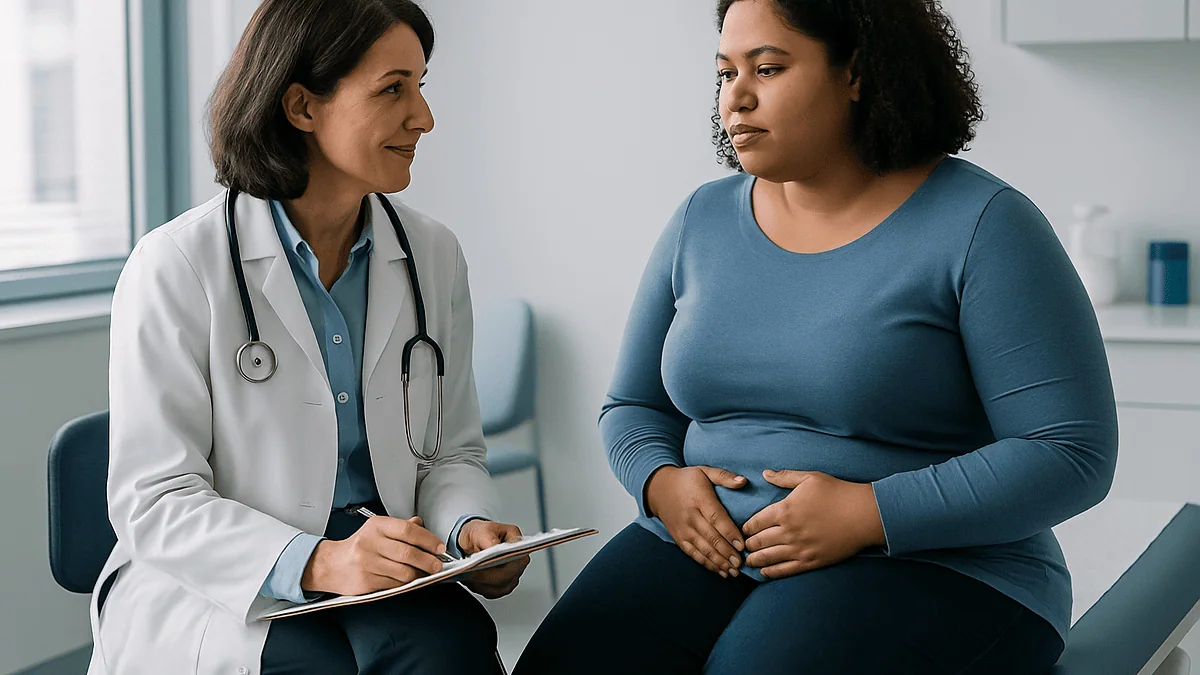
Key Takeaways
- Endometriosis lesions do not signal the body to store fat; the condition is not a metabolic disorder, and large studies associate it with lower average body mass, not higher.
- Abdominal bloating is a recognized symptom of endometriosis, and a waistline that changes within a single day reflects gas, fluid and inflammation rather than adipose tissue.
- Hormonal treatments work by lowering or steadying estrogen signaling; fluid retention and appetite change are commonly reported, while evidence for large average fat gain from them is weak.
- Pain and fatigue reduce daily movement for a substantial share of each month, and that cumulative drop in activity is one of the most plausible routes to gradual weight gain.
- Broken sleep raises hunger signals and cortisol, which favors fat storage around the midsection, so improving pain control at night can matter more than changing what you eat.
- Surgery removes lesions and can relieve pain but is not a weight-loss procedure; any weight change afterward comes indirectly through better sleep, more movement and less bloating.
Endometriosis does not directly cause the body to store fat, but it can make you look and feel heavier. Painful bloating (often called endo belly), fluid retention from some hormonal treatments, reduced activity because of pain and fatigue, and disrupted sleep can all change your weight or waistline over time. Large studies actually link endometriosis with lower, not higher, body mass on average.
Two photos, taken twelve hours apart. In the morning one, a flat stomach and jeans that button without a thought. In the evening one, the same person looks several months pregnant, the waistband has been abandoned, and the caption reads: “Same day. Same me.” Anyone who has spent time in an endometriosis support group has seen a version of this pair of pictures, usually followed by a long thread of people saying, quietly, me too.
The scale rarely tells the whole story. Some people with endometriosis do gain weight over the years and can’t work out why. Others weigh exactly what they always did but feel swollen, tender and unrecognizable from lunchtime onward. Both experiences are real, and both get lumped under the same anxious search: is this disease making me bigger?
The honest answer has several parts, and separating them matters, because the fix for water and gas is not the fix for fat, and neither is a matter of willpower.
Does endometriosis cause weight gain? The short, honest answer
Endometriosis is a condition in which tissue similar to the lining of the uterus grows where it should not: on the ovaries, the outer surface of the uterus, the bowel, the bladder and the thin membrane lining the pelvis. Each month that tissue responds to hormonal signals, thickens and bleeds, but the blood has nowhere to go. The result is inflammation, scar tissue and, for many, pain that can be severe.
Nothing in that mechanism instructs the body to lay down fat. Endometriosis lesions do not secrete a “gain weight” signal, and the condition is not classed as a metabolic disorder. So the direct answer to the search query is: no, endometriosis itself does not cause true weight gain.
That is not the end of the conversation, though, and pretending it is would be dishonest. Living with endometriosis changes several things that do influence weight and body shape: how much your abdomen swells during the day, which treatments you take and how your body responds to them, how much you move when pain flares, how well you sleep, and what and when you feel like eating. Some of those effects add centimeters without adding kilograms. Others slowly shift the number on the scale.
Roughly 10 percent of women and girls of reproductive age worldwide live with this condition, according to the World Health Organization. That is a lot of people staring at the same two photos wondering what changed. The rest of this article works through the likely contributors one by one, and is frank about where the evidence is strong and where it is still thin.
What is endo belly, and why it is not the same as gaining fat
The swollen, drum-tight abdomen many people describe has a nickname that has migrated from forums into clinics: endo belly. Abdominal bloating is listed among the recognized symptoms of endometriosis by the World Health Organization, alongside nausea and fatigue, so this is not a phenomenon anyone has to prove exists.
What makes it confusing is its speed. Fat accumulates over weeks and months. Endo belly can appear over a few hours, often peaking in the evening or in the days before and during a period, then easing. If your waist measures noticeably differently at 8 a.m. and 8 p.m., you are almost certainly looking at gas, fluid and inflammation rather than adipose tissue.
Three things tend to drive it. Inflammation around lesions irritates nearby tissue and can slow the movement of the bowel, so gas builds up. Adhesions, the bands of scar tissue that can form when the pelvis repeatedly heals from micro-bleeding, may tether loops of bowel and change how contents pass through. And hormonal shifts across the menstrual cycle influence fluid retention in everyone, but with an already irritated pelvis the effect can feel dramatic.
None of this shows up as a change in body fat on a scan. It does, however, show up in a mirror, in clothing, and in comments from people who ask whether you are expecting. The distress is legitimate. The response, though, is very different from a weight-loss plan. Chasing a calorie deficit to shrink a belly that is full of gas and fluid tends to leave people hungrier, more tired and no less swollen.
Why does endometriosis cause bloating and digestive symptoms?
Ask a room of people with endometriosis about their bowels and you will not get a short answer. Constipation one week, urgency the next, cramping after meals, pain when passing a stool during a period. The NHS lists nausea, constipation, diarrhea and blood in the urine or stool during menstruation among the symptoms to watch for, which tells you how often the gut is caught in the crossfire.
The anatomy explains a lot. The bowel sits directly against the uterus, ovaries and the back wall of the pelvis, exactly where lesions most often grow. Tissue on or near the bowel wall becomes inflamed on a cycle, so the gut has an irritable, tender neighbor for part of every month. Some lesions grow into the bowel wall itself, which can cause more pronounced symptoms around menstruation.
Then there is the overlap with irritable bowel syndrome. Both conditions are common, both are more frequent in women, and many people carry a diagnosis of one while the other goes unrecognized. The symptoms are so similar that endometriosis is sometimes mislabeled as a purely digestive problem for years, one reason diagnosis is often delayed.
Why does this matter for weight? Because a distended abdomen is the single most common reason people conclude they have gained weight when they have not. Because bowel symptoms often push people toward restrictive eating patterns that can backfire. And because bloating that lands on a predictable cycle, rather than randomly, is a clue worth writing down and bringing to an appointment. A simple diary linking swelling, pain and period days can shorten a lot of guesswork.
Do endometriosis hormone treatments make you gain weight?
This is where the story gets more tangled, and where most of the online frustration lives. Many people notice their weight shift after starting treatment, not after diagnosis, and it is fair to ask why.
Hormonal treatments for endometriosis work on a shared principle: lower or steady the estrogen signal that drives lesions to grow and bleed each month. The main families, as described by the NHS and Mayo Clinic, are combined hormonal contraception, progestogen-based options, and medicines that dampen the signal from the brain to the ovaries, which push the body into a temporary, reversible low-estrogen state. Each family has its own profile of possible side effects, and weight change appears on the list for several of them.
Here is what the evidence actually shows. Fluid retention and increased appetite are commonly reported, especially in the early months. Whether these treatments cause meaningful, lasting fat gain over and above what people would have gained anyway is much less clear; controlled studies of hormonal contraception have generally struggled to show large average differences, while individual experience varies widely. A modest average can still hide people who gain noticeably and people who gain nothing.
Treatments that lower estrogen sharply can also change how the body handles fluid and, over longer courses, bone density, which is why they are typically time-limited and monitored. Decisions about which treatment to use, for how long, and whether to switch belong with the prescribing clinician, who can weigh symptom relief against side effects for your circumstances. What you can bring to that conversation is a record: your weight and waist before starting, and any changes since. Data beats a hunch on both sides of the desk.
How pain and fatigue quietly change your energy balance
A woman I once interviewed for a different story described her month as “ten good days, ten cautious days, and ten days I cancel everything.” She had not thought of that pattern as relevant to her weight until she counted. Ten days a month of little movement is a third of the year.
Pain changes behavior in ways that are easy to miss because each choice is small and sensible. You skip the walk because the pelvis aches. You take the elevator. You stay home instead of meeting a friend for the gym class you both used to love. Fatigue, which the World Health Organization lists as a symptom in its own right, layers on top: even on lower-pain days, energy for exercise may simply not be there.
Over months, the cumulative reduction in daily movement, what researchers call non-exercise activity, can be substantial, and it is not offset by appetite falling in step. If anything, the reverse happens. Pain and tiredness push many people toward quick, energy-dense comfort food, and toward eating at irregular times because meals get fitted around symptoms.
None of this is a character flaw, and framing it as one helps no one. It is a predictable consequence of a chronic, painful condition, and it is also one of the parts of the picture that responds to gentle, realistic adjustment. Movement that fits a flare (a slow walk, stretching, swimming when the water feels supportive) counts. So does planning easy, nourishing meals for the cancel-everything days before they arrive.
Sleep, stress hormones and appetite: the loop nobody mentions
Endometriosis pain does not clock off at night. Cramping, bowel discomfort and needing to get up to urinate all fragment sleep, and fragmented sleep does measurable things to the body’s appetite system.
Short or broken sleep shifts the balance of the hormones that regulate hunger and fullness, making people feel hungrier the following day and more drawn to high-calorie foods. It also raises levels of cortisol, the body’s main stress hormone, which in the long run encourages fat storage around the midsection and nudges blood sugar upward. Living with a chronic pain condition, uncertainty about flares, and years spent waiting for a diagnosis is itself a sustained stressor, so cortisol is often already running warm.
The loop closes when tiredness reduces activity and increases cravings, weight edges up, and body image worries add another layer of stress. The World Health Organization notes that endometriosis is associated with depression and anxiety, which can themselves affect appetite and energy in either direction. Some people lose interest in food during low periods; others eat more.
Breaking into this cycle rarely starts with food. It usually starts with pain control good enough to sleep, which is a conversation for your clinical team, and with protecting sleep where you can: a consistent wind-down, a cool dark room, and treating rest as a legitimate part of managing the condition rather than an indulgence. The appetite changes tend to follow once sleep improves, not the other way around.
Is it harder to lose weight with endometriosis?
Many people feel it is, and the feeling deserves a straight answer rather than a shrug.
There is no good evidence that endometriosis lowers metabolic rate or changes how efficiently the body burns calories. If a person with endometriosis and a person without it ate and moved identically, current knowledge gives no reason to expect different results on the scale.
But they rarely can move identically. Every barrier described so far, pain that interrupts training, fatigue that flattens motivation, sleep that drives hunger, medication that increases appetite or fluid retention, and digestive symptoms that make certain healthy foods feel like an ambush, stacks the deck. The effort required to sustain the same routine is higher, and the visible payoff is smaller when bloating masks progress. That combination is exhausting, and it is why so many people report that their usual approach “stopped working” after diagnosis or treatment.
Two practical shifts help. First, measure differently. A bathroom scale is a poor instrument when several liters of water and gas move in and out of your abdomen across a cycle. Weighing at the same point in each cycle, or tracking energy and fitness rather than kilograms, gives a truer picture. Second, plan for flares rather than treating them as failures. A routine designed for your worst ten days, not your best ten, is one you can actually keep.
What does not help is aggressive restriction. Undereating worsens fatigue, disrupts sleep further and can intensify bowel symptoms, all of which feed the loop this article has been describing.
Does body size affect the risk of endometriosis? What research actually shows
Here is the part that surprises almost everyone who searches this topic. When researchers look across large populations, endometriosis is more common in people with lower body weight, not higher.
The Mayo Clinic lists low body mass index among the recognized risk factors for the condition, alongside factors like starting periods at a young age, short menstrual cycles and a family history. Long-running cohort studies that followed women over many years have found that those who were lean in early adulthood were more likely to go on to receive a diagnosis than those who were heavier. The direction of that relationship has been consistent enough to appear in mainstream summaries of risk factors.
What it means is less certain, and this is where honesty matters. Several explanations are plausible and none is proven. Fat tissue produces estrogen, so one might expect higher body weight to increase risk, yet the data point the other way; that suggests something more complex is going on, perhaps involving how different body types handle ovulation, inflammation or immune surveillance in the pelvis. It is also possible that endometriosis is diagnosed more readily in leaner people, or that shared genetic factors influence both body size and disease risk.
What the finding does not mean is that being lean causes endometriosis, or that gaining weight would protect against it. It is a population-level association, not personal advice. But it does put a firm dent in the idea that this is a disease that makes people heavy. Whatever is happening on your bathroom scale, the condition’s underlying biology is not tilted toward weight gain.
Can removing endometriosis help you lose weight?
Surgery, usually keyhole laparoscopy, is the way endometriosis is definitively diagnosed and one of the ways it is treated. A surgeon can cut out or destroy lesions and release adhesions, which for many people brings meaningful relief from pain, according to the NHS. Understandably, people wonder whether it will also reverse the weight changes that came with the disease.
Surgery is not a weight-loss procedure and does not remove any significant mass of tissue; lesions are typically small even when they cause a great deal of pain. Nobody should expect to weigh noticeably less because endometriosis has been excised.
Indirect effects are another matter. If surgery reduces pain, people often move more, sleep better and eat more regularly, and over time that can shift weight downward. If bowel-related lesions or adhesions were contributing to bloating, that swelling may ease, which changes how the abdomen looks even if the scale does not budge. Some people are also able to stop or change hormonal treatment after surgery, which may alter fluid retention and appetite.
The caveats are real. Endometriosis can return after surgery, and the NHS and World Health Organization both note that no current treatment offers a cure. Any operation carries risks, including bleeding, infection and injury to nearby organs, and the recovery period itself involves weeks of reduced activity. Whether surgery is appropriate, and what it can realistically achieve, is a judgment for your treating team based on symptoms, imaging, fertility goals and how you have responded to other approaches, not on hopes for the scale.
Weight gain or swelling? How to tell the contributors apart
Because several different processes can make a person feel bigger, it helps to sort them by how they behave. The pattern of a change often reveals its cause more reliably than the change itself.
| Likely contributor | How it typically behaves | What the evidence shows |
|---|---|---|
| Endo belly (gas, fluid, inflammation) | Appears over hours, worse in the evening or around periods, eases in between | Bloating is a recognized symptom (WHO); not fat and not reflected in body composition |
| Fluid retention from hormonal treatment | Starts within weeks of a new medicine, fairly steady through the day, often felt in hands and face too | Commonly reported side effect; usually modest and may settle |
| Appetite change from treatment | Gradual, over months; hunger noticeably higher than before | Reported by many; controlled studies show small average differences with wide individual variation |
| Reduced movement due to pain and fatigue | Slow drift over months to years, tracks with flare frequency | Plausible and well described; magnitude depends on the individual |
| Sleep loss and stress hormones | Weight settles around the midsection, cravings for energy-dense food | Mechanism well established in sleep research; specific data in endometriosis limited |
| A separate condition | Rapid or unexplained gain, other new symptoms | Worth clinical assessment rather than assumption |
Two lines in that table deserve emphasis. If your abdomen changes size within a single day, the answer is almost never fat. And if weight rises quickly, over weeks rather than months, especially with new symptoms such as hair changes, feeling cold, or missed periods, that pattern deserves a proper check rather than being filed under endometriosis by default.
Writing down waist measurement, weight, pain level and cycle day for two or three months turns a vague sense of “getting bigger” into something a clinician can actually interpret.
Could something else be driving the weight change?
Once a person has a diagnosis, every new symptom tends to get attributed to it. That instinct is understandable and sometimes wrong. Several other conditions share space with endometriosis and are far more directly connected with weight.
Polycystic ovary syndrome is the obvious one. It is common, it affects the menstrual cycle, and unlike endometriosis it is closely linked with insulin resistance and weight gain. The two conditions can coexist, and symptoms such as irregular periods, acne or increased facial hair alongside weight change should prompt a conversation.
An underactive thyroid slows metabolism, causes fatigue, constipation and weight gain, and is more common in women. Because fatigue and constipation already feature in endometriosis, thyroid problems can hide in plain sight; a simple blood test resolves the question.
Perimenopause, the transition years before periods stop, brings its own shifts in fat distribution toward the middle, and can begin in the early forties, overlapping with the years many people are still managing endometriosis. Some mood-related medicines and certain other treatments also list weight gain as a side effect, and it is worth reviewing the whole list of what you take, not only the endometriosis-specific ones.
The point is not to hand you another diagnosis to worry about. It is that unexplained weight gain has a standard clinical workup, and having endometriosis does not exempt you from it. Bringing the pattern of change, a medication list and a brief symptom diary to an appointment makes that assessment quicker and more accurate.
What actually helps with endometriosis and weight, according to the evidence
There is no endometriosis diet, and anyone selling one has moved ahead of the science. Studies of specific eating patterns in this condition are small and mixed. What the evidence does support is less glamorous and more useful.
Start with pain. Every downstream problem in this article, lost sleep, reduced movement, comfort eating, cancelled plans, is easier when pain is better controlled, so the most effective weight-related step may be a frank review of symptom management with your clinical team.
For the belly itself, a food and symptom diary often reveals individual triggers. Some people find that large meals, carbonated drinks or particular fermentable carbohydrates worsen bloating around their period; others notice no dietary pattern at all. Eating smaller amounts more often during flare weeks and drinking enough water (which, counterintuitively, reduces fluid retention rather than adding to it) are low-risk experiments.
For movement, consistency beats intensity. Regular physical activity is associated with lower systemic inflammation and better sleep, and guidance from bodies such as the American Heart Association favors accumulating moderate activity across the week rather than heroic single sessions. Design a routine for your difficult days and let the good days be a bonus.
For eating, a broadly Mediterranean-style pattern rich in vegetables, whole grains, legumes, fish and olive oil has the strongest overall evidence base for long-term health and is not restrictive in a way that fights fatigue. Whether it changes endometriosis pain specifically is unproven; whether it supports a stable weight and steadier energy is much better established.
Finally, set expectations by the calendar, not the week. Weight that drifted up over years will not reverse in a month, and progress hidden by cyclical bloating is still progress.
What are the biggest signs of endometriosis?
Weight and bloating are rarely the reason someone first suspects endometriosis. Pain is, and the character of that pain is what distinguishes the condition from ordinary period discomfort.
The NHS and Mayo Clinic describe a consistent cluster. Period pain severe enough to stop normal activities, not simply uncomfortable but disabling, is the hallmark. Pain in the lower abdomen or back that begins before a period and lingers after it. Pain during or after sex, which people often go years without mentioning to anyone. Pain when urinating or passing a stool, particularly during menstruation. Heavy bleeding, sometimes with nausea, constipation or diarrhea in the days around a period. Difficulty becoming pregnant, which is how some people are diagnosed after otherwise attributing their symptoms to bad luck.
Two features matter as much as any single symptom. The first is cyclicity: symptoms that wax and wane with the menstrual cycle point toward a hormone-responsive process. The second is severity out of proportion to what friends or family describe as normal. Many people with endometriosis grew up being told painful periods were simply part of being female, and calibrated their expectations accordingly.
Not everyone with endometriosis has severe pain, and the extent of visible disease does not always match how bad someone feels. That mismatch is one reason the condition is so often missed. If the description above sounds like your month, the World Health Organization’s guidance is clear that early recognition and management matter, and that a conversation with a healthcare professional is the appropriate next step.
When to see a doctor about endometriosis and weight changes
Weight that shifts gradually alongside known endometriosis symptoms is worth raising at a routine appointment, particularly if it began after a change in treatment. Bring a record of what changed and when. Ask directly whether your current hormonal approach could be contributing, what alternatives exist and what a trial of a different option would involve. The decision remains with your prescribing clinician, but the question is a fair one.
Certain patterns need attention sooner. Seek care promptly if you notice rapid, unexplained weight gain over a few weeks; swelling of the abdomen that does not ease between periods or is accompanied by feeling full after very little food; new or worsening pain that does not fit your usual cycle; heavy bleeding that soaks through protection every hour or leaves you dizzy; fever alongside pelvic pain; pain or difficulty passing urine or stool that is severe or persistent; or blood in the urine or stool outside your period.
Sudden severe abdominal pain, fainting, or pain with vomiting should be treated as an emergency, because conditions such as a ruptured ovarian cyst or torsion can present this way and need urgent assessment.
If you have not yet been diagnosed but recognize the pattern of symptoms described in this article, do not wait for weight to be the deciding factor. Endometriosis is diagnosed by combining your history, an examination, imaging where appropriate and, when needed, laparoscopy. The earlier that process begins, the sooner the cycle of pain, poor sleep and lost activity described here can be interrupted, whatever the scale eventually says.
Frequently asked questions
Does endometriosis cause weight gain?
Not directly. Endometriosis does not change how the body stores fat, and population studies actually associate it with lower average body weight. What it can do is make you feel and look heavier through cyclical bloating, fluid retention from some hormonal treatments, and reduced activity when pain and fatigue flare. Those indirect effects can lead to gradual weight change over time, but the disease itself is not a cause of fat gain.
Is it harder to lose weight with endometriosis?
For many people, yes in practice, though not because metabolism is slower. Pain interrupts exercise, fatigue drains motivation, poor sleep increases appetite, and some treatments cause fluid retention that hides progress on the scale. The same effort simply has more obstacles in its way. Measuring at the same point in each cycle, designing routines around flare days, and prioritizing pain control and sleep tend to help more than stricter dieting.
Can endometriosis make your tummy big?
Yes. Abdominal bloating is a recognized symptom, and the swelling many people call endo belly can make the abdomen look several sizes larger over a few hours, especially in the evening or around a period. It is caused by inflammation, trapped gas and fluid rather than fat, which is why it comes and goes. A tape measure at morning and night will usually show the difference clearly.
Can removing endometriosis help you lose weight?
Surgery is not a weight-loss procedure and removes only small amounts of tissue. It can, however, relieve pain for many people, and less pain often means better sleep, more movement and more regular eating, all of which can help weight settle over time. Bloating may also ease if bowel-related lesions or adhesions were contributing. Endometriosis can recur after surgery, so any benefit is indirect and not guaranteed.
Why do I gain weight after starting endometriosis treatment?
Hormonal treatments alter estrogen signaling, and fluid retention and increased appetite are commonly reported side effects, particularly in the first months. Controlled studies generally find small average weight differences, but individual responses vary widely, so a noticeable change for you is real even if the average is modest. Record your weight before and after starting and discuss the pattern with your prescribing clinician, who can consider alternatives.
What is the difference between endo belly and fat gain?
Timing is the giveaway. Endo belly develops over hours, is worse later in the day or around periods, and eases in between, because it is made of gas, fluid and inflammation. Fat accumulates gradually over weeks and months and does not fluctuate within a day. If your clothes fit in the morning but not by evening, the change is swelling, and dieting will not shrink it.
What are the biggest signs of endometriosis?
The most characteristic sign is period pain severe enough to stop normal activities. Others include pelvic or lower back pain that starts before a period and lingers, pain during or after sex, pain when urinating or passing a stool during menstruation, heavy bleeding, bloating, fatigue, and difficulty becoming pregnant. Symptoms that rise and fall with the menstrual cycle and feel far worse than what others describe as normal are strong clues.
Does endometriosis slow your metabolism?
There is no good evidence that it does. Endometriosis is an inflammatory gynecological condition, not a metabolic one, and it does not appear to change how many calories the body burns at rest. The sense that metabolism has slowed usually reflects reduced activity due to pain and fatigue, appetite changes from treatment or poor sleep, and bloating that masks progress, rather than a change in the body’s engine.
Can endometriosis cause weight loss instead?
It can, indirectly. Severe pain, nausea and bowel symptoms around periods reduce appetite in some people, and the anxiety or low mood associated with the condition can do the same. Long-term restrictive eating adopted to control bloating is another route. Unintentional weight loss, like unexplained gain, is worth raising with a clinician so that other causes can be considered and nutrition can be protected.
Should I see a doctor about weight gain with endometriosis?
Yes, particularly if the change is rapid, began after a new treatment, or comes with other new symptoms such as feeling cold, hair changes or irregular periods. Unexplained weight gain has a standard assessment that includes checking the thyroid and considering conditions like polycystic ovary syndrome, and having endometriosis does not rule those out. Bring a brief diary of weight, waist size, pain and cycle days to make the visit more useful.
References
- World Health Organization – Endometriosis fact sheet
- NHS – Endometriosis
- Cleveland Clinic – Endometriosis
- MedlinePlus – Endometriosis
This article is for general information only and is not a substitute for professional medical advice. Please consult a qualified doctor about your individual situation.

More from the Blog

Can You Prevent Gestational Diabetes, and Does It Go Away?
You cannot guarantee prevention, but you can meaningfully lower your risk of gestational diabetes by entering pregnancy near a healthy weight, staying physically active…
The Placenta: When It Forms, When It Takes Over and What It Does
The placenta starts forming at implantation, roughly a week after fertilization, and gradually takes over the pregnancy-sustaining hormone work of the corpus luteum by…

Does Endometriosis Go Away? What Happens Over Time, After Menopause and with Treatment
Endometriosis rarely goes away on its own. It is a long-term condition driven largely by estrogen, so symptoms often settle after menopause, when estrogen…

Why Mammogram Results Can Take Two Weeks: What Happens Between the Scan and the Letter
Mammogram results often take up to two weeks because screening images are interpreted after your visit by a radiologist — sometimes two, working independently…

Fibroids, Weight Gain and Bloating: Why It Happens and What Treatment Can Change
Fibroids can add weight directly, but usually only when they are large. Most fibroids are small and add very little, while a very large…
Can You Choose the Baby’s Sex with IVF? The Law in the UK, EU and Turkey
Technically, yes: embryo testing during IVF can reveal whether an embryo carries XX or XY chromosomes. Legally, in the UK, across the EU and…