

Pulmonary Edema
Learn what pulmonary edema is, its symptoms, causes and risk factors, how doctors diagnose it, treatment options, and warning signs that need urgent care.
Quick answer
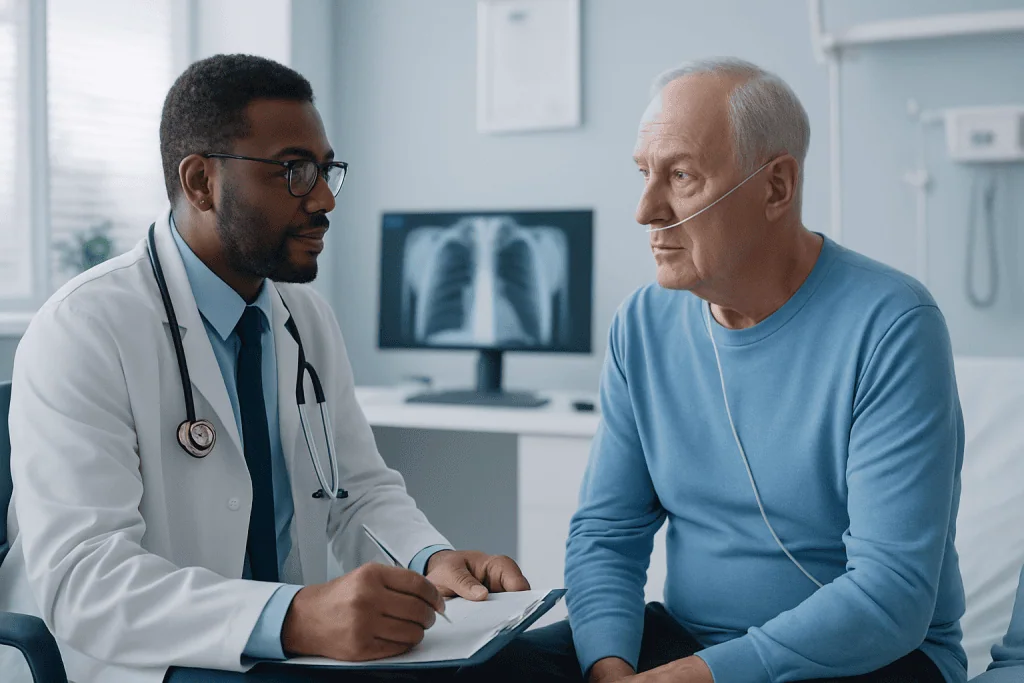
Pulmonary edema is a buildup of excess fluid in the lungs' air sacs that makes breathing difficult and lowers blood oxygen. It is most often caused by heart problems such as heart failure, but lung injury, kidney failure, and high altitude can also cause it. Sudden pulmonary edema is a medical emergency requiring urgent treatment.
What is pulmonary edema?
Pulmonary edema is a condition in which excess fluid builds up in the lungs. The word “pulmonary” refers to the lungs, and “edema” means swelling caused by fluid. Normally, air moves in and out of millions of tiny air sacs called alveoli, and oxygen passes from these sacs into the blood. In pulmonary edema, fluid leaks into the alveoli and the surrounding lung tissue. This makes it harder for oxygen to reach the bloodstream, which is why breathing becomes difficult.
Pulmonary edema is not a disease on its own. In most cases it is a sign that something else is wrong, most often with the heart. Doctors generally divide it into two broad groups. Cardiogenic pulmonary edema is caused by a heart problem that raises pressure in the blood vessels of the lungs. Non-cardiogenic pulmonary edema happens when the lung tissue itself becomes leaky because of injury, infection, high altitude, or other causes, even when the heart is working normally.
The condition can develop suddenly (acute pulmonary edema), which is a medical emergency, or it can build up slowly over weeks (chronic pulmonary edema), often in people with long-standing heart failure. It can affect people of any age, but it is more common in older adults and in people with heart disease, high blood pressure, or kidney disease. Because the heart is so often involved, patients with this condition are frequently cared for by cardiologists, such as those in the Cardiology Department at Acibadem, working together with lung and intensive-care specialists.
Pulmonary edema symptoms
Pulmonary edema symptoms depend on how quickly the fluid builds up and how much of the lung is affected. When it develops suddenly, symptoms can be severe and frightening. When it develops slowly, symptoms may be milder at first and easy to mistake for aging, weight gain, or being out of shape.
Common symptoms of acute (sudden) pulmonary edema include:
- Severe shortness of breath that comes on quickly, often at rest
- A feeling of suffocating or drowning, which may be worse when lying flat
- Wheezing, gasping, or noisy, bubbly breathing
- Coughing, sometimes bringing up frothy sputum (mucus) that may be tinged pink or streaked with blood
- Rapid, irregular, or pounding heartbeat
- Cold, clammy, pale, or bluish skin, especially around the lips and fingertips
- Anxiety, restlessness, or a sense of dread
- Confusion or drowsiness if oxygen levels fall very low
Symptoms of chronic (slowly developing) pulmonary edema often overlap with those of heart failure and may include:
- Breathlessness that gets worse with activity and gradually appears with less effort
- Needing to sleep propped up on several pillows because lying flat makes breathing harder (doctors call this orthopnea)
- Waking up at night gasping for breath (paroxysmal nocturnal dyspnea)
- Swelling of the ankles, feet, or legs
- Rapid weight gain over a few days from fluid retention
- Ongoing fatigue and reduced ability to exercise
- A persistent cough or wheeze
High-altitude pulmonary edema, which can occur in people who climb or travel quickly to altitudes above roughly 2,500 meters (about 8,000 feet), often begins with breathlessness during exertion, a dry cough, and headache, and can progress to breathlessness at rest and a cough with frothy sputum.
Any sudden, severe difficulty breathing should be treated as an emergency, regardless of the suspected cause.
Causes and risk factors
Pulmonary edema causes fall into two main categories, depending on whether the heart is the source of the problem.
Heart-related (cardiogenic) causes
The left side of the heart receives oxygen-rich blood from the lungs and pumps it to the body. If the left side cannot pump effectively or cannot fill properly, blood backs up into the veins of the lungs. The rising pressure pushes fluid out of the blood vessels and into the air sacs. Common heart problems that lead to this include:
- Coronary artery disease and heart attack, which damage or weaken the heart muscle
- Heart failure of any cause, in which the heart cannot keep up with the body’s needs
- Cardiomyopathy, a disease of the heart muscle itself
- Heart valve disease, such as a narrowed or leaking mitral or aortic valve
- Severe or poorly controlled high blood pressure
- Abnormal heart rhythms (arrhythmias), such as atrial fibrillation with a very fast heart rate
Non-heart-related (non-cardiogenic) causes
In these situations, the blood vessels in the lungs become leaky or the lung tissue is directly injured, allowing fluid to escape even when heart pressures are normal. Examples include:
- Acute respiratory distress syndrome (ARDS), a severe lung injury that can follow sepsis, severe pneumonia, major trauma, or inhalation of toxic fumes
- Kidney failure, which can cause the body to hold on to too much fluid
- Inhalation of smoke, chlorine, ammonia, or other harmful chemicals
- Near-drowning
- High altitude, particularly rapid ascent without time to adjust
- Certain drug overdoses, including some opioids and aspirin in very large amounts
- Severe brain injury, stroke, or seizures (neurogenic pulmonary edema)
- Rapid re-expansion of a collapsed lung or too much intravenous fluid given too quickly
- Blood clots in the lungs (pulmonary embolism) and, less commonly, complications of blood transfusion
Risk factors
A number of factors make pulmonary edema more likely. Many of them are the same factors that raise the risk of heart disease:
- Existing heart failure, previous heart attack, or known valve disease
- High blood pressure, especially if not well controlled
- Diabetes and high cholesterol
- Chronic kidney disease
- Smoking, including exposure to secondhand smoke
- Older age
- Obesity and a sedentary lifestyle
- Excess salt or fluid intake in people with heart or kidney problems
- Rapid travel to high altitude, particularly in people who have had altitude sickness before
Pulmonary edema diagnosis
Pulmonary edema diagnosis usually begins with a rapid assessment, because breathing problems can worsen quickly. The doctor will ask about the speed of onset, past heart or lung disease, recent illnesses, medications, and any exposure to toxins or high altitude. During the physical examination, the doctor listens to the lungs with a stethoscope for crackling sounds (called crackles or rales) caused by fluid in the air sacs, checks for swelling in the legs, listens for abnormal heart sounds, and measures blood pressure, heart rate, breathing rate, and oxygen level.
Tests that are commonly used to confirm the condition and find its cause include:
- Pulse oximetry: a small clip placed on the finger that estimates how much oxygen is in the blood.
- Chest X-ray: usually the first imaging test. Fluid in the lungs often appears as hazy or cloudy areas, and the heart may look enlarged when a heart cause is present.
- Blood tests: these may include a natriuretic peptide test (BNP or NT-proBNP), a marker that tends to rise when the heart is under strain; troponin, which rises when heart muscle is damaged; kidney function tests; electrolytes; and a complete blood count.
- Arterial blood gas: a blood sample, usually from the wrist, that measures oxygen and carbon dioxide levels and the acidity of the blood.
- Electrocardiogram (ECG or EKG): a recording of the heart’s electrical activity that can show a heart attack, an abnormal rhythm, or signs of strain on the heart.
- Echocardiogram: an ultrasound scan of the heart that shows how well the heart is pumping and whether the valves are working properly. This is one of the most important tests for separating heart-related from non-heart-related pulmonary edema.
- Lung ultrasound: increasingly used at the bedside to detect fluid in the lungs quickly.
- CT scan of the chest: may be used when the picture is unclear or when another problem, such as a blood clot or pneumonia, is suspected.
- Cardiac catheterization: in some cases, a thin tube is guided into the heart’s blood vessels to look for blockages or to measure pressures directly, particularly if a heart attack or severe valve disease is suspected.
There is no single test that confirms pulmonary edema on its own. Doctors combine the history, examination findings, imaging, and blood results to reach a diagnosis and, just as importantly, to identify the underlying cause, because treatment depends heavily on it.
Pulmonary edema treatment options
Pulmonary edema treatment options depend on how severe the condition is and what is causing it. Acute pulmonary edema is treated as an emergency, usually in a hospital. The first goals are to improve oxygen levels, ease the work of breathing, and remove excess fluid. Once the person is stable, attention turns to treating the underlying cause and preventing a recurrence.
Oxygen and breathing support
Almost everyone with significant pulmonary edema is given oxygen, either through a face mask or nasal prongs. If breathing remains very difficult, doctors may use non-invasive ventilation, a tight-fitting mask connected to a machine that pushes air into the lungs under gentle pressure (often called CPAP or BiPAP). This helps push fluid out of the air sacs and reduces the effort of breathing. In severe cases, a breathing tube and mechanical ventilator may be needed in an intensive care unit until the lungs recover.
Medications
- Diuretics (“water pills”): medicines such as furosemide are usually given by vein to help the kidneys remove excess fluid and salt through the urine, which lowers pressure in the lungs.
- Vasodilators: medicines such as nitroglycerin relax and widen blood vessels, lowering the pressure the heart must pump against and reducing fluid backup into the lungs. These are used mainly when blood pressure is high or normal.
- Medicines to support the heart: if the heart is pumping very weakly and blood pressure is low, drugs called inotropes may be used for a short time to strengthen the heartbeat.
- Blood pressure medicines: in people with very high blood pressure, controlled lowering of blood pressure is an important part of treatment.
- Morphine: was used in the past to ease anxiety and breathlessness, but it is now used less often because of concerns about side effects.
Treating the underlying cause
Because pulmonary edema is usually a consequence of another problem, lasting improvement depends on treating that problem. Depending on the cause, this may involve:
- Opening a blocked coronary artery with a stent or bypass surgery after a heart attack
- Repairing or replacing a damaged heart valve
- Controlling an abnormal heart rhythm with medication, a procedure, or a pacemaker
- Long-term heart failure medicines, such as ACE inhibitors, ARBs, beta-blockers, mineralocorticoid receptor antagonists, and other agents your doctor may recommend
- Antibiotics for severe pneumonia or sepsis
- Dialysis when kidney failure is the cause and fluid cannot be removed any other way
- Descent to lower altitude, oxygen, and in some cases medicines such as nifedipine for high-altitude pulmonary edema
- Stopping or adjusting any medication or exposure that contributed to the problem
Rehabilitation and follow-up
After recovery from an acute episode, many people benefit from cardiac rehabilitation, a supervised program of exercise, education, and support that helps rebuild strength and lower the chance of future problems. Regular follow-up with a cardiologist or lung specialist is generally recommended to adjust medications and monitor heart and kidney function.
Living with pulmonary edema and outlook
The outlook after pulmonary edema varies widely and depends mainly on the cause and how quickly it was treated. Acute pulmonary edema is serious and can be life-threatening, particularly when it follows a large heart attack or occurs alongside sepsis or ARDS. However, when it is recognized early and the underlying cause can be treated, many people recover well from the episode itself. Pulmonary edema caused by high altitude usually improves once the person descends and receives oxygen.
For people whose pulmonary edema is linked to chronic heart failure, the condition tends to be a long-term one that requires ongoing management rather than a single cure. Episodes may recur if fluid balance is disturbed, for example by missed medication, excess salt or fluid, an infection, or worsening heart function. Careful day-to-day management can reduce the frequency and severity of these episodes, though it cannot eliminate the risk entirely.
Practical steps that doctors often recommend for people at risk include:
- Taking prescribed medications exactly as directed and not stopping them without medical advice
- Weighing yourself each morning and reporting rapid weight gain, which can signal fluid retention
- Following any salt and fluid limits your care team sets
- Keeping blood pressure, blood sugar, and cholesterol within target ranges
- Not smoking and limiting alcohol
- Staying as active as your doctor advises
- Getting recommended vaccinations, since respiratory infections can trigger episodes
- Ascending gradually and allowing time to acclimatize when traveling to high altitude, and discussing preventive options with a doctor beforehand if you have had altitude sickness before
Living with a condition that affects breathing can also be emotionally difficult. Anxiety and low mood are common after a frightening episode, and it is reasonable to raise these concerns with your care team.
Frequently asked questions
What is pulmonary edema in simple terms?
In simple terms, pulmonary edema means there is too much fluid in the lungs. The fluid collects in the tiny air sacs where oxygen normally passes into the blood, so less oxygen gets through and breathing becomes hard. It is most often caused by a heart problem, but lung injury, kidney failure, high altitude, and other conditions can also cause it.
Is pulmonary edema the same as heart failure?
No, although the two are closely linked. Heart failure is a condition in which the heart cannot pump well enough to meet the body’s needs. Pulmonary edema is one possible result of heart failure, when pressure backs up into the lungs and fluid leaks out. Pulmonary edema can also occur without heart failure, for example after inhaling toxic fumes or at high altitude.
What are the first signs of pulmonary edema symptoms?
Early pulmonary edema symptoms often include breathlessness that seems out of proportion to the activity, a cough, and difficulty breathing when lying flat. Some people notice they need extra pillows at night or wake up gasping. Swollen ankles and rapid weight gain may appear when fluid is building up throughout the body. Sudden, severe breathlessness with frothy or pink sputum is a sign of an acute episode and needs emergency care.
How is pulmonary edema diagnosed?
Pulmonary edema diagnosis relies on a combination of a physical examination, a chest X-ray showing fluid in the lungs, oxygen measurements, and blood tests such as BNP, which rises when the heart is under strain. An electrocardiogram and echocardiogram help doctors decide whether the heart is the cause. Additional tests, such as CT scanning or cardiac catheterization, may be used depending on the situation.
Can pulmonary edema be cured?
Whether pulmonary edema can be cured depends on its cause. When the cause is temporary and reversible, such as high altitude or a treatable infection, the fluid often clears completely. When it is caused by long-term heart or kidney disease, the underlying condition usually cannot be cured, but it can often be controlled with medication and lifestyle measures so that episodes become less frequent and less severe.
What are the main pulmonary edema treatment options?
The main pulmonary edema treatment options are oxygen, breathing support with a pressurized mask or ventilator when needed, diuretic medicines to remove excess fluid, and medicines that relax blood vessels or support the heart. Beyond the emergency phase, treatment focuses on the underlying cause, which may involve heart procedures, valve surgery, long-term heart failure medicines, dialysis, or removing a triggering exposure.
Can pulmonary edema come back after treatment?
Yes, it can, especially in people with chronic heart or kidney disease. Recurrence is more likely when medications are missed, when salt or fluid intake is high, or when a new problem such as an infection or abnormal heart rhythm develops. Regular follow-up, daily weight checks, and prompt reporting of new breathlessness or swelling can help catch fluid buildup early, before it becomes an emergency.
When to see a doctor
Pulmonary edema can become life-threatening within minutes to hours, so it is important not to wait if serious symptoms appear. Emergency medical help should be sought immediately if you or someone near you has any of the following red-flag signs:
- Sudden, severe shortness of breath, especially at rest or when lying down
- A feeling of suffocating, drowning, or being unable to get enough air
- Coughing up frothy sputum that is pink or streaked with blood
- Bubbly, gurgling, or gasping breathing
- Blue or gray color of the lips, face, or fingertips
- Chest pain or pressure, particularly with breathlessness or sweating
- Very fast, very slow, or irregular heartbeat with dizziness or fainting
- Confusion, extreme drowsiness, or difficulty staying awake
- Rapidly worsening breathlessness after arriving at high altitude
You should also arrange a non-emergency appointment with a doctor if you notice gradual changes such as breathlessness with less activity than before, needing more pillows to sleep comfortably, new or worsening ankle swelling, a persistent cough or wheeze, or unexplained weight gain of several pounds over a few days. These can be early signs of fluid building up and are easier to manage when found early. People who already have heart failure, kidney disease, or valve disease should follow the monitoring plan set by their care team and report any change in symptoms promptly.
Medically reviewed by the Acıbadem International Medical Board — September 9, 2026
See our medical review board →
Update history
- PublishedSeptember 9, 2026
- Medical review approvedSeptember 9, 2026
- Last content updateSeptember 9, 2026
References2
Treatments for This Condition
Care at Acibadem
Doctors Who Treat This Condition

Prof. Ahmet Akyol, MD
Cardiology
Prof. Ahmet Karabulut, MD
Cardiology
Prof. Ahmet Kaya Bilge, MD
Cardiology
Prof. Ahmet Oytun Baykan, MD
Cardiology
Prof. Aleks Değirmencioğlu, MD
Cardiology
Prof. Ali Aydınlar, MD
Cardiology
Prof. Alper Özkan, MD
Cardiology
Prof. Barış Kılıçaslan, MD
Cardiology
Prof. Bekir Sıtkı Cebeci, MD
Cardiology
Prof. Burak Pamukçu, MD
Cardiology
Prof. Cahide Soydaş Çınar, MD
Cardiology