

BPC-157: What the Evidence Actually Shows — and Why Regulators Are Cautious

Key Takeaways
- BPC-157 is a synthetic 15-amino-acid peptide derived from a fragment of a human gastric protein, and the vial version does not occur naturally in the body.
- More than a hundred animal studies report faster healing of tendons, muscle, and gut lining in rats, but no randomized human trial has ever been published.
- The FDA barred the peptide from pharmacy compounding in September 2023, citing no human safety data, unknown immune effects, and no approved reference product.
- WADA lists BPC-157 by name under section S0, so athletes are strictly liable for a positive test regardless of how the product was labeled or obtained.
- Because the peptide appears to promote new blood-vessel growth, the theoretical question of whether it could accelerate an undiagnosed tumor remains unanswered in humans.
- Products sold as research chemicals have no verified purity or sterility, and independent testing of grey-market peptides has repeatedly found mislabeled contents and contamination.
BPC-157 is a synthetic 15-amino-acid peptide modeled on a fragment of a protein found in human stomach juice. In rats, it has sped healing of tendons, muscle, and gut lining in dozens of laboratory studies, but no published randomized human trial supports those effects. It is not approved by any medical regulator, is banned in sport, and products sold as "research chemicals" are not intended or legal for human self-use.
A physical therapist I know keeps a running tally on a sticky note by her desk. It counts the number of patients in a week who ask, usually with a phone screen already lit, whether they should be injecting a peptide called bpc 157 into a sore Achilles tendon. In January she needed a second sticky note.
The surge has a recognizable shape. Podcast hosts describe it as a “Wolverine” healing compound. Fitness accounts post vials on kitchen counters. News outlets have covered the compounding restrictions in the United States and the anti-doping warnings that followed, which only widened the audience. Search interest has climbed accordingly, and as of March 2026 it shows no sign of settling.
What has not changed is the evidence base underneath the excitement. It is deep in one direction and almost empty in another, and that asymmetry is the whole story. This piece lays out what the studies actually tested, in whom, and what cautious regulators saw when they looked at the same data.
Why is BPC-157 suddenly everywhere?
Peptides have become the wellness world’s favorite noun. A peptide is simply a short chain of amino acids, the building blocks of proteins, and the category covers everything from approved diabetes medicines to compounds that have never been given to a single human being in a supervised trial. BPC-157 sits in that second group, yet it borrows credibility from the first.
Three forces pushed it into the mainstream at once. Long-form podcasts gave athletes and biohackers hours to describe personal recoveries, and stories about torn tendons knitting in weeks travel faster than any study. Social platforms then compressed those stories into 30-second clips. Finally, regulators stepped in: the United States Food and Drug Administration barred the compound from pharmacy compounding in 2023, and the World Anti-Doping Agency had already listed it by name on its prohibited list. Each restriction generated headlines, and each headline generated more curiosity.
The result is a familiar pattern in health communication. Demand for an answer has outrun the supply of evidence, and the gap gets filled by sellers, testimonials, and confident summaries of rat experiments presented as if they were human trials. Readers arrive at a clinician’s office with a conclusion already formed and want confirmation rather than a conversation.
That is worth pausing on, because the underlying hope is entirely reasonable. Tendon injuries heal slowly. Gut problems are miserable. A compound that promised to shorten either would deserve attention. The question this article tries to answer honestly is not whether people want BPC-157 to work, but whether anyone has actually shown that it does in humans, how safe it is, and why agencies whose job is weighing that evidence keep saying no.
What is BPC-157, exactly?
The name stands for Body Protection Compound 157. It is a synthetic pentadecapeptide, meaning a chain of exactly 15 amino acids, and its sequence was derived from a fragment of a larger protein that researchers reported finding in human gastric juice. The compound itself does not occur in the body in this form; it is manufactured in a laboratory.
Most of the primary research comes from a single academic group in Croatia, which began publishing on the peptide in the early 1990s and has continued for more than three decades. That matters for two reasons. One is consistency: the group’s methods are well described and their models are reproducible within their own hands. The other is independence: much of the literature has not been replicated by unrelated laboratories, which is a standard concern when weighing any body of evidence.
One property that drew early interest is stability. Many peptides fall apart quickly in the acidic environment of the stomach. BPC-157 is described in the research literature as “stable” in gastric juice, which is why animal studies have given it both by injection and by mouth, sometimes dissolved in drinking water.
It is not a hormone, not a steroid, and not a growth factor in the strict sense, although it appears to influence growth-factor pathways. It is also not a dietary supplement. Under United States law, a substance marketed for injection or promoted to treat injury and disease is regulated as a drug, and no BPC-157 product has been submitted to, let alone cleared by, that process. Anyone describing it as a supplement is using the word loosely, and the distinction is not academic: supplements have a legal pathway to market, however imperfect, while BPC-157 currently has none for human use.
What does BPC-157 do for the body? The animal findings
Ask the rats, and the answer is remarkably broad. In laboratory models, the peptide has been reported to accelerate healing in tissue after tissue. That breadth is both what makes it interesting and what makes seasoned researchers skeptical, since compounds that appear to fix everything in animals rarely fix anything specific in people.
The best-known experiments involve tendons and ligaments. Researchers surgically cut the Achilles tendon or the medial collateral ligament of rats, then compared healing in treated and untreated animals. Treated tendons showed faster restoration of strength on mechanical testing, more organized collagen, and better function on walking assessments. Similar designs have been used for crushed muscle, severed nerves, and bone defects.
The gut was the original target, and there the literature is largest. Rat models of stomach ulcers, including those triggered by alcohol or by nonsteroidal anti-inflammatory drugs, showed smaller lesions and faster repair with the peptide. Other studies reported protective effects in models of inflammatory bowel disease, in surgically created fistulas, and in colitis chemically induced in the animals.
A third cluster involves blood vessels. The compound has been reported to preserve or restore blood flow after vessels were tied off or damaged, and to counteract some cardiovascular disturbances in rats given toxic doses of other drugs. There are additional studies on brain injury, on eye lesions, and on behavior in rodents.
Two caveats frame all of this. First, the effects were measured in animals with injuries created for the experiment, which do not always resemble the slow degenerative tendon changes that trouble a 45-year-old runner. Second, positive animal findings translate into approved human treatments far less often than people assume; across all of medicine, most compounds that look promising in rodents fail in human trials. That is not a criticism of the rat work. It is simply what the rat work can and cannot tell us.
How is BPC-157 thought to work?
The honest answer is that no single mechanism has been pinned down, and the research group behind most of the studies has proposed several that may overlap. Understanding them helps explain both the enthusiasm and the safety questions.

The most cited pathway involves nitric oxide, a gas the body produces in tiny amounts that relaxes blood vessels and helps regulate blood flow. The peptide appears to interact with the nitric oxide system in a way that the researchers describe as modulating: it seems to blunt both excess and deficiency in animal models. Better local blood flow to an injured tendon would plausibly support healing, since tendons are notoriously poorly supplied with blood in the first place.
A second proposed mechanism is angiogenesis, the growth of new small blood vessels. Studies in rats and in cultured cells report increased expression of a receptor for vascular endothelial growth factor, a signaling protein that tells the body to build vessels. New vessels bring oxygen and repair cells to damaged tissue.
Third, cell-culture experiments using tendon fibroblasts, the cells that manufacture tendon collagen, have shown that the peptide increases expression of the growth hormone receptor on those cells and encourages them to migrate and multiply. Related work points to a signaling route involving proteins called focal adhesion kinase and paxillin, which govern how cells attach and move.
Each of these makes biological sense as a healing story. Each also raises an unresolved question, and the angiogenesis pathway raises the largest one. Encouraging blood-vessel growth is exactly what a tumor needs to expand, which is why several approved cancer treatments work by blocking that same growth-factor signaling. No study has shown that BPC-157 promotes cancer; no study has ruled it out either, because the long-term human studies that would answer the question have never been done. A mechanism, in other words, is a hypothesis about how something might help. It is not evidence that it does.
What changed recently
The science has moved slowly; the regulatory and cultural landscape has not. A short timeline explains why the compound feels newer than it is.
In 2022, the World Anti-Doping Agency named BPC-157 explicitly on its Prohibited List under section S0, the category for substances with no current approval by any governmental health authority for human therapeutic use. The category existed before, but naming the peptide specifically removed any ambiguity for athletes, coaches, and testing laboratories. National anti-doping bodies followed with athlete warnings.
In September 2023, the United States Food and Drug Administration placed the peptide in Category 2 of its evaluation of bulk drug substances that pharmacies had asked to compound. That designation means the agency identified significant safety risks and insufficient data, and it means licensed compounding pharmacies may not lawfully prepare it. The reasoning cited a lack of human safety data, uncertainty about whether the peptide could trigger immune reactions, and the absence of any approved product to anchor quality standards.
In 2025, a narrative review with the pointed title “Regeneration or Risk?” was indexed in PubMed, the National Library of Medicine’s research database. It pulled together the animal literature and reached a conclusion consistent with earlier reviews: strong preclinical signals, negligible clinical evidence, and a need for properly controlled human trials before any therapeutic claim can be made. Orthopedic and sports medicine journals published similar assessments aimed at surgeons fielding patient questions.
What has not appeared during this period is the thing that would actually change the picture: a peer-reviewed, randomized, placebo-controlled human trial with published results. A small early-phase safety study for inflammatory bowel disease was described in review articles years ago, but its full data were never published in a form that other scientists could examine. A single small case series of knee injections in people had no control group and cannot establish benefit. As of March 2026, the human evidence column remains, for practical purposes, blank.
What the evidence actually says, graded honestly
Medicine ranks evidence by how well a study design protects against wishful thinking. At the top sit randomized controlled trials, in which people are assigned by chance to a treatment or a placebo so that neither hope nor selection skews the result. Below them come observational studies of real patients, then animal and laboratory work, then expert opinion and testimonials. Applying that ladder to BPC-157 is sobering.
Animal evidence: substantial in volume, moderate in quality, limited in independence. There are well over a hundred rodent publications, many with clear methods and measurable outcomes such as tendon tensile strength. Most originate from one research group, and independent replication is sparse. Several laboratory-scale review articles rate the findings as promising but preliminary.
Human observational evidence: minimal. The knee-injection case series mentioned earlier involved a small number of patients, no placebo, no blinding, and subjective pain scores. That design cannot distinguish the peptide from the natural course of the condition, from the injection procedure itself, or from the expectation of relief, which is a powerful effect in pain research.
Human randomized evidence: none published. This is the single most important fact in the entire debate. Whatever anyone believes about the compound, no one has tested it against a placebo in people and shared the results.
Safety evidence in humans: none published. Rat studies describe few adverse effects, but rodents given a compound for weeks tell us little about immune reactions, tumor promotion, or organ effects in humans over years.
Expert opinion: cautious across the board. Sports-medicine reviews, anti-doping agencies, and the FDA’s compounding assessment converge on the same position. That consensus is not proof the peptide fails; it is a shared judgment that the burden of proof has not been met.
Put plainly, the strength of evidence for BPC-157 in humans is at the level where most experimental drugs sit before their first real trial. That is not nothing, but it is not a basis for treatment.
BPC-157 claims versus evidence: a summary table
Viral posts tend to list benefits as a flat menu. The table below sorts the most common claims by what has actually been studied and in whom, so a reader can see at a glance where the enthusiasm outruns the data.
| Claimed benefit | Animal or lab evidence | Human evidence | Where that leaves the claim |
|---|---|---|---|
| Faster tendon and ligament healing | Multiple rat studies with surgically cut tendons showing improved strength and collagen organization; cell-culture work on tendon fibroblasts | No randomized trials; one small uncontrolled case series of knee injections | Biologically plausible; unproven in people |
| Muscle recovery after injury | Rat crush-injury models showing quicker functional recovery | None published | Preclinical only |
| Healing of stomach ulcers and gut lining | The largest body of rodent work, including drug- and alcohol-induced ulcer models | An early safety study for inflammatory bowel disease described in reviews but never fully published | Most-studied area; still no usable human data |
| Protecting the liver | Rat models of toxin exposure reporting reduced liver damage | None published | Unknown in humans in either direction |
| Nerve and brain repair | Rodent models of nerve transection and brain injury | None published | Speculative |
| Improved mood or anxiety | Behavioral tests in rats | None published | Speculative |
| Reduced joint pain | Indirect, via tendon and inflammation models | Small case series, no control group | Cannot be separated from placebo effect |
Two patterns stand out. Every row has something in the animal column, which is why sellers can always point to “studies.” Not a single row has a randomized human trial, which is why regulators can always point to the absence of proof. Both statements are true at the same time, and a reader who holds them together understands the situation better than most of the internet.
BPC-157 side effects: what are the negative effects?
The most accurate answer is uncomfortable: nobody knows, because the systematic human safety studies that would identify side effects have not been done. What follows is a map of the known unknowns, which is a different thing from a clean bill of health.
Rodent studies generally report few adverse effects at the amounts tested. That is reassuring in a limited way. Rats live about two years, studies last weeks, and animals cannot report headaches, nausea, mood changes, or the subtle symptoms that account for most side effects people actually experience with medicines.
The theoretical concerns cluster around mechanism. Because the peptide appears to promote new blood-vessel growth, there is an unresolved question about whether it could accelerate an existing, undiagnosed tumor. No study shows this happens. No study shows it does not, and that question can only be answered by long-term human data.
Immunogenicity is the second concern and the one the FDA highlighted. Any peptide introduced into the body can potentially be recognized as foreign and trigger antibody production, which could cause allergic reactions or, in principle, cross-react with the body’s own proteins. Whether BPC-157 does this in humans is untested.
Then there are the practical risks that have nothing to do with the molecule itself. Products sold outside the regulated supply chain have no verified purity, sterility, or even identity. Independent analyses of grey-market peptides marketed as research chemicals have repeatedly found mislabeled contents, incorrect quantities, and bacterial contamination. Self-injection with a non-sterile product carries a real risk of skin infection, abscess, or worse. People combining the peptide with other unregulated compounds, a practice promoted online as “stacking,” multiply every one of these uncertainties.
Anecdotal reports on forums mention fatigue, dizziness, injection-site pain, nausea, and altered mood. None of these can be attributed to the peptide with confidence, because there is no comparison group and no way to know what was really in the vial.
Does BPC-157 damage the liver?
This question appears so often in search that it deserves its own answer, and the answer is genuinely unknown rather than reassuring or alarming.
Start with what exists. Several rat studies from the primary research group report that the peptide reduced liver injury in models where the animals were exposed to toxins such as alcohol, acetaminophen, or other drugs. On that basis, the compound is often described online as “hepatoprotective,” a technical word meaning it shields the liver from harm. The claim is a fair summary of the rodent data and an unsupported leap when applied to people.
Now consider what does not exist. There are no published human studies measuring liver enzymes, the blood markers doctors use to detect liver stress, in people taking the peptide. There are no long-term toxicology studies in humans. Drug-induced liver injury is one of the most common reasons approved medicines are withdrawn from the market, and it frequently escapes detection in animals and even in early human trials, only surfacing once thousands of people are exposed. A compound with zero controlled human exposure cannot be declared safe for the liver by any reasonable standard.
The grey-market problem applies here with particular force. Unknown contaminants, solvents, or incorrectly identified compounds in an unregulated vial are exactly the kind of exposure that can cause liver injury, regardless of what the intended active ingredient does. Reports of liver problems after using unregulated performance products more often trace to adulterants than to the labeled substance.
Warning signs of liver trouble are the same regardless of cause: yellowing of the skin or the whites of the eyes, dark urine, pale stools, persistent nausea, pain under the right ribs, unusual itching, or profound fatigue. Anyone who has used an unregulated peptide and notices these should stop and seek medical assessment promptly rather than searching for reassurance online. A simple blood panel can tell a clinician far more than any forum thread.
Can you buy BPC-157 over the counter? The regulatory reality
No. BPC-157 is not an over-the-counter medicine, not a prescription medicine, and not a legally marketed dietary supplement in the United States, the United Kingdom, the European Union, or any jurisdiction with a comparable regulator. It has never been approved for any human use anywhere.
What people encounter online is a workaround. Vials are sold with labels reading “for research use only” or “not for human consumption.” That phrasing is a legal shield for the seller, not a safety designation for the buyer. It signals that the product has not been manufactured, tested, or labeled to the standards required for anything a person puts into their body, and that the seller disclaims responsibility for what happens if someone does. These products are not for sale for human use and are not appropriate for self-treatment.
The compounding route closed in 2023. Before then, some clinics obtained the peptide from compounding pharmacies, which are licensed to prepare customized medicines under a physician’s order. The FDA’s Category 2 designation made clear that the peptide does not meet the criteria for that practice because of unresolved safety and quality concerns. A clinic still offering it is operating outside that framework.
Regulatory status also shapes quality. Approved medicines are made under rules that verify identity, strength, purity, and sterility for every batch. Nothing verifies any of that for a peptide sold as a research chemical. A buyer cannot know whether the vial contains the labeled compound, a different peptide, a fraction of the stated amount, or bacteria.
Elsewhere the picture is similar. The UK’s medicines regulator has not authorized it. The European Medicines Agency has no marketing authorization on file. Sports bodies worldwide prohibit it. This global consistency reflects a shared assessment: the compound is an investigational substance whose place, for now, is in properly designed trials. Wanting access to something promising is understandable; the mechanism for that access is a clinical trial, and no active trial is currently recruiting for it in major registries.
BPC-157 and athletes: why anti-doping agencies prohibit it
Athletes hear about this peptide earlier and more insistently than anyone else, because the promise of shortening a tendon recovery is worth an entire season to them. The anti-doping response has been unusually direct.
The World Anti-Doping Agency prohibits it at all times, in and out of competition, under section S0 of its list. That section captures any pharmacological substance that no governmental health authority has approved for human therapeutic use, including drugs still in development, discontinued drugs, and designer substances. Anti-doping agencies did not need a positive-effect study to act; the S0 rule exists precisely so that unproven compounds cannot be used in sport before their safety is understood.
The logic runs on two tracks. One is fairness: if the peptide did enhance recovery, athletes using it would gain an advantage unavailable to those following the rules. The other is athlete health: agencies view the untested-substance category as a protection against experimentation on competitors’ bodies by coaches, trainers, or sellers.
The practical consequence is strict liability. An athlete who tests positive is responsible regardless of intent, and “I thought it was a supplement” is not a defense. Testing laboratories have developed methods to detect the peptide and its breakdown products, and national agencies have published warnings that specifically name it. Because grey-market products may also contain other prohibited substances, an athlete can incur a violation for something they never knowingly took.
Collegiate and professional leagues generally follow the WADA list or maintain their own lists that include unapproved substances. Team physicians are increasingly asked about the peptide by injured players and have responded with position statements that echo the broader medical consensus: promising in rats, unproven in humans, prohibited in competition, and carrying quality risks that the athlete cannot assess.
For a competitive athlete, the calculation is therefore not just medical. A career can be paused or ended by a substance that has never demonstrated that it heals anything in a human being.
Common myths about BPC-157, corrected
Viral health claims survive because each contains a sliver of something real. Separating the sliver from the exaggeration is more useful than dismissing the whole.
“It is a natural compound your body already makes.” The sequence was derived from a fragment of a protein reported in gastric juice, but the 15-amino-acid peptide sold in vials is synthetic and does not circulate in the body in that form. Natural origin also says nothing about safety; digitalis and botulinum toxin are natural too.
“There are hundreds of studies proving it works.” There are many studies, and they are overwhelmingly in rats and cell cultures. Proof of a treatment’s effect requires randomized human trials, of which there are none published. Volume of animal literature is not the same as strength of clinical evidence.
“It has no side effects.” No side effects have been systematically documented in humans because no systematic human safety study has been done. Absence of data is not the same as absence of harm, and the mechanisms involved raise legitimate questions that remain open.
“Doctors prescribe it all the time.” Some clinics offered compounded versions before 2023. The FDA’s compounding decision closed that route. A prescription cannot lawfully be filled for a substance that no pharmacy is permitted to prepare and no manufacturer is approved to sell.
“The oral form is safer because it just works in the gut.” The peptide’s reported stability in stomach acid is a laboratory observation from animal work. There is no human data on oral absorption, distribution, or safety. Grey-market capsules face the same purity problem as grey-market vials.
“Regulators are only cautious because it is cheap and can’t be patented.” The regulatory record cites specific, documented gaps: no human safety data, unknown immune effects, no approved reference product for quality control. Those are the same criteria applied to every substance considered for compounding, patented or not.
“If it worked in rats, it will work in people.” Across medicine, the majority of compounds that succeed in rodents fail in human trials. Rat tendons, rat immune systems, and rat lifespans differ from ours in ways that routinely break the translation.
What actually helps tendons and gut lining heal, according to evidence
People searching for this peptide are usually not chasing novelty. They have a stubborn injury or a stubborn gut and want it to end. The unglamorous truth is that the approaches with real human trial support are well known, slow, and effective.
For tendon problems, the strongest evidence supports progressive loading exercise: structured, gradually increasing resistance work that stimulates tendon cells to remodel collagen. Multiple randomized trials in Achilles and patellar tendinopathy show meaningful improvements in pain and function over roughly 12 weeks, and guidelines from national health services list this as first-line care. Load management, meaning temporarily reducing the activities that provoke pain without stopping entirely, sits alongside it. Complete rest tends to weaken tendons further.
Timing matters. Tendon healing runs in months, not weeks, because tendon tissue has a slow metabolic rate and poor blood supply. An intervention that claims to compress that into a fortnight is claiming to override basic biology, which should prompt skepticism rather than hope.
Other measures with reasonable human evidence include adequate protein intake, sleep, and addressing contributing factors such as training errors, footwear, or biomechanics that a physical therapist can assess. Some injection therapies used in clinics have mixed trial results, and any decision about them belongs to a clinician who knows the specific tendon and the specific patient.
For the gut, the picture depends entirely on diagnosis. Ulcers, inflammatory bowel disease, irritable bowel syndrome, and reflux are different conditions with different evidence-based treatments, several of which are highly effective. Self-treating an undiagnosed gut symptom with an unregulated peptide risks masking a condition that has an established, tested remedy or that needs urgent attention.
None of this is exciting to post about. It is, however, what the human evidence supports, and it is where a clinician’s time and a patient’s effort will most reliably pay off while the peptide remains in the laboratory.
Is BPC-157 safe? Questions worth bringing to your clinician
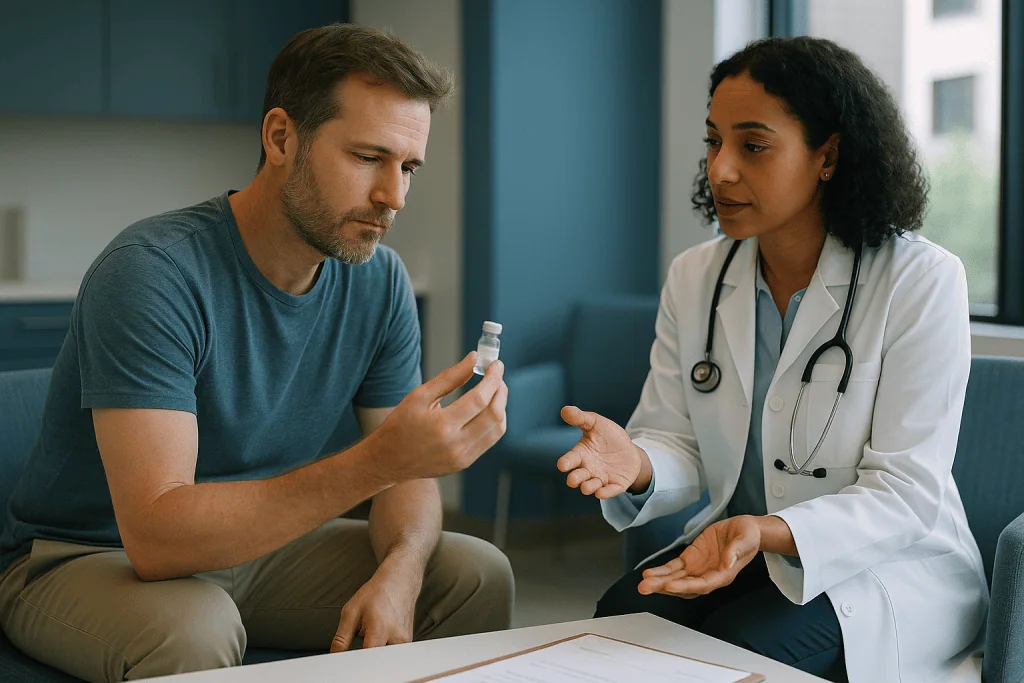
A good clinical conversation about an unproven compound is not a lecture and not a rubber stamp. It works best when the patient arrives with specific questions and the clinician answers with specific evidence. Here are the questions that tend to produce the most useful discussion.
What is my actual diagnosis, and what is the expected healing timeline for it? Many people reach for experimental options because they were never told that a tendon can take six months to settle. Knowing the normal course changes the calculus.
What evidence-based options have I not yet fully tried? Progressive loading programs are often abandoned early because they are boring or because pain flares in the first weeks. A clinician can judge whether the standard approach was given a fair chance.
Given my history, are there reasons this compound could be particularly risky for me? Anyone with a personal or family history of cancer, an autoimmune condition, a bleeding disorder, or who is pregnant, breastfeeding, or planning pregnancy has specific reasons to hear the mechanism concerns spelled out.
Would using this interfere with a medicine I already take? No interaction studies exist, so the answer will be uncertainty rather than reassurance, and that uncertainty is itself information.
Am I subject to any testing, in sport, employment, or otherwise, where a prohibited substance would matter?
If I have already used a grey-market product, what should be checked? A clinician may reasonably suggest a physical examination, blood work including liver and kidney markers, and a look at any injection sites. Honesty here is protective, not embarrassing; clinicians hear about supplement and peptide use daily.
Is there a clinical trial I could join? Trials are the legitimate path to access for experimental compounds and come with monitoring that grey-market use never will.
The final decision about any treatment belongs to the treating clinician working with the patient. What a patient can bring is honesty about what they have read, what they have taken, and what outcome they are actually hoping for, because that last item often reveals a problem the standard toolkit can already solve.
When to see a doctor
Two situations call for medical attention: the injury or gut problem that sent someone searching in the first place, and any symptom that appears after using an unregulated peptide product.
For the underlying complaint, see a clinician if a tendon or joint problem has not improved after two to three weeks of sensible rest and activity modification, if there was a sudden pop or snap followed by weakness, if the area is visibly deformed, or if you cannot bear weight or move the joint normally. Gut symptoms that warrant prompt assessment include blood in stool or vomit, black or tarry stools, unintended weight loss, persistent pain, difficulty swallowing, or symptoms that wake you at night. These signs need a diagnosis, not an experiment.
For anyone who has used a grey-market peptide, seek same-day care for signs of a serious allergic reaction: swelling of the face, lips, or throat, difficulty breathing, widespread hives, or lightheadedness. Also seek urgent care for an injection site that becomes hot, red, increasingly painful, swollen, or begins draining, or for fever and chills after an injection, since these suggest infection. Signs of liver stress, including yellowing skin or eyes, dark urine, pale stools, or pain under the right ribs, need prompt evaluation. Chest pain, palpitations, sudden severe headache, confusion, or new vision changes should always be treated as emergencies regardless of suspected cause.
Less dramatic changes matter too. New fatigue, unexplained bruising, unusual mood changes, or a lump that is growing are reasons to book an appointment and mention exactly what was used, when, and from where. Bring the vial or packaging if you have it; it helps the clinician far more than a product name recalled from memory.
Finally, if you are already prescribed medicines for a chronic condition, do not stop or adjust them on the basis of anything read online about peptides. Any change to a prescribed treatment plan is a decision for the prescribing clinician, who can weigh the full picture. Emergency services exist for emergencies; for everything else, an honest conversation with a regular clinician is the safest next step.
What would actually change the verdict on BPC-157
Caution is not the same as closed-mindedness, and it is worth being explicit about what evidence would move the peptide from “interesting” to “usable.” The list is short and entirely conventional.
First, a formal safety trial in humans, with published results. That means a small group of healthy volunteers monitored for immune responses, organ function, and adverse events, with data available for other scientists to scrutinize. This is the standard first step for any experimental drug and it has never been publicly completed for this compound.
Second, at least one randomized, placebo-controlled trial in a defined condition. The most obvious candidate, given the animal work, would be a common tendinopathy, with objective outcomes such as imaging findings and strength testing alongside patient-reported pain. A trial of that design would settle within a year whether the rat findings translate, and if positive, would be the most important sports-medicine result in a decade.
Third, independent replication. Confidence in any finding grows when a laboratory with no stake in the result reproduces it. Much of the current literature would benefit from that kind of confirmation.
Fourth, a regulated manufacturing pathway. Even a proven peptide is unusable if patients cannot obtain a product of verified identity and sterility. Approval and quality control travel together.
Until those steps happen, the reasonable position is the one regulators, anti-doping bodies, and mainstream reviews already hold: the compound belongs in trials, not in kitchen-counter vials. That is not a dismissal of the science or of the people who hope it works. It is the same standard that gave us every treatment we now trust, applied consistently to a compound that has not yet earned an exemption.
For readers nursing a slow-healing injury, the practical message is quieter than the viral one. The interventions with human evidence are available now, they work for most people given enough time, and they carry none of the uncertainty that still surrounds this peptide. Curiosity about the frontier is healthy. Treating yourself at the frontier, without a map, is not.
Frequently asked questions
What does BPC-157 do for the body?
In laboratory animals, BPC-157 has been reported to speed healing of cut tendons and ligaments, crushed muscle, damaged gut lining, and injured blood vessels, possibly by influencing nitric oxide signaling and blood-vessel growth. In humans, no controlled study has demonstrated any of these effects. The animal findings are a reason to run human trials, not evidence that the peptide does the same things in people.
What are the negative effects of BPC-157?
No human safety study has been published, so its side effects are unknown rather than absent. Theoretical concerns include immune reactions to a foreign peptide and, because it promotes new blood-vessel growth, a possible effect on undiagnosed tumors. Practical risks come from unregulated products: contamination, mislabeling, injection-site infection, and unknown interactions with medicines. Online reports of fatigue, nausea, or dizziness cannot be verified.
Does BPC-157 damage the liver?
Nobody knows. Rat studies report the peptide reduced liver damage from toxins, but no human study has measured liver function in people using it. Liver injury from any substance often goes undetected until many people are exposed, and grey-market vials may contain adulterants that harm the liver regardless of the labeled ingredient. Yellowing skin or eyes, dark urine, or pain under the right ribs after use warrants prompt medical assessment.
Can you buy BPC-157 over the counter?
No. BPC-157 is not approved as a medicine or lawfully marketed as a supplement in the United States, United Kingdom, or European Union. Products sold online as research chemicals with labels such as not for human consumption are exactly that: not manufactured, tested, or intended for human use, and not appropriate for self-treatment. Licensed compounding pharmacies in the US have been barred from preparing it since 2023.
Is BPC-157 safe?
Its safety in humans has not been established. Rodent studies describe few adverse effects, but animals given a compound for weeks cannot reveal immune reactions, long-term organ effects, or tumor-related risks in people over years. Regulators specifically cited the lack of human safety data when restricting it. Until a formal human safety trial is published, any claim that it is safe is an assumption rather than a finding.
What is the FDA status of BPC-157?
BPC-157 has never been approved by the FDA for any use. In September 2023 the agency placed it in Category 2 of its list of bulk substances nominated for compounding, meaning it identified significant safety risks and insufficient data. Licensed compounding pharmacies may not prepare it, and no manufacturer holds approval to sell it. It remains an investigational substance without an active approved pathway to patients.
Why is BPC-157 banned in sport?
The World Anti-Doping Agency prohibits it at all times under section S0, which covers substances not approved by any health authority for human use. The rule protects fairness and athlete health by keeping untested compounds out of competition before their effects and risks are understood. Athletes are strictly liable for a positive test, and grey-market products may also contain other prohibited substances the buyer never intended to take.
Are there any human clinical trials of BPC-157?
No randomized, placebo-controlled human trial has been published. An early safety study for inflammatory bowel disease was mentioned in review articles years ago but its full results never appeared in the peer-reviewed literature. A small case series of knee injections had no control group and cannot show benefit. As of March 2026, no trial is actively recruiting in major registries, so the human evidence remains essentially blank.
What are the claimed BPC-157 peptide benefits, and are any proven?
Claimed benefits include faster tendon, ligament, and muscle healing, repair of stomach ulcers and gut lining, liver protection, nerve recovery, and reduced joint pain. Every one of these rests on rat or cell-culture studies. None has been confirmed in a controlled human trial. Biological plausibility is real, and so is the gap between plausibility and proof; regulators and sports-medicine reviews agree the compound is promising but unproven.
What should I do instead for a slow-healing tendon?
See a clinician for an accurate diagnosis, then follow an evidence-based program. Randomized trials support progressive loading exercise, in which resistance is gradually increased under a physical therapist’s guidance, typically over about 12 weeks, along with managing rather than eliminating provoking activity. Tendons heal over months because of their slow metabolism and poor blood supply. Any additional injection or medicine decision belongs to the treating clinician.
References
- BPC 157 — search results in PubMed, National Library of Medicine
- Drug-induced liver injury — MedlinePlus Medical Encyclopedia
- Tendonitis — NHS
- Sprains and Strains — MedlinePlus
This article is for general information only and is not a substitute for professional medical advice. Please consult a qualified doctor about your individual situation.

More from the Blog

NAD+ Supplements and Infusions: What Rises in the Blood and What the Evidence Shows
An NAD supplement (usually nicotinamide riboside or nicotinamide mononucleotide) reliably raises NAD+ levels in blood cells by roughly 40 to 100 percent in small…

Sermorelin: What the Growth-Hormone Secretagogue Is, What It Is Not — and What Clinics Rarely Say
Sermorelin is a synthetic fragment of growth-hormone-releasing hormone that prompts the pituitary gland to release the body's own growth hormone. It was FDA-approved in…