

Eating Too Fast After Gastric Sleeve: Symptoms, Risks, and Habit Changes

After gastric sleeve surgery, the stomach holds much less food, so eating quickly can cause pressure, nausea, vomiting, reflux, or abdominal discomfort. Fast eating may also lead to poor chewing, overeating before fullness is noticed, and difficulty meeting protein and fluid goals.
Key Takeaways
- After gastric sleeve surgery, the stomach holds much less food, so eating quickly can cause pressure, nausea, vomiting, reflux, or abdominal discomfort.
- Fast eating may also lead to poor chewing, overeating before fullness is noticed, and difficulty meeting protein and fluid goals.
- Most patients benefit from small bites, thorough chewing, pauses between bites, and meals that last about 20 to 30 minutes unless their care team advises otherwise.
- Persistent vomiting, inability to keep fluids down, worsening pain, fever, black stools, or signs of dehydration require prompt medical advice.
- Long-term success after gastric sleeve depends on both the operation and daily habits, including meal structure, food choices, hydration, and follow-up care.
Eating too fast after gastric sleeve surgery is common, especially while a person is adjusting to a much smaller stomach. Slower eating, smaller bites, and mindful meal routines can reduce discomfort and help support safe nutrition during recovery and long-term weight management.
Overview: Why Eating Speed Matters After Gastric Sleeve
Eating too fast after gastric sleeve surgery can be uncomfortable because the stomach has been reshaped into a narrow sleeve with much smaller capacity. Food enters this smaller space quickly, and the body may not have enough time to signal fullness before pressure builds. This is why a meal that feels normal in speed before surgery may feel too fast after surgery.
After gastric sleeve surgery, patients usually progress through stages such as liquids, purees, soft foods, and then regular-textured foods under medical guidance. Each stage is designed to protect healing tissues and help the patient learn new eating patterns. Eating slowly is one of the most important skills during this transition.
It is helpful to view slower eating not as a restriction, but as a practical tool. It allows food to be chewed well, reduces pressure in the sleeve, and gives the brain time to recognize fullness. With practice, most people find a comfortable rhythm that becomes easier and more natural over time.
Common Symptoms of Eating Too Fast
Symptoms may appear during the meal or within minutes afterward. The most common signs include a tight or heavy feeling in the upper abdomen, nausea, burping, hiccups, bloating, or the need to stop eating suddenly. Some people describe a sensation that food is "stuck," especially if they swallowed large bites or did not chew thoroughly.
Vomiting or regurgitation can happen when the sleeve becomes overfilled or when food has not been broken down well enough. This is the body’s way of relieving pressure, but repeated vomiting is not expected and should be discussed with the bariatric team. Reflux, burning in the chest, sour taste, or throat irritation can also occur, particularly if meals are large, rushed, spicy, fatty, or followed by lying down.
Some patients may notice sweating, weakness, dizziness, cramping, or diarrhea after rapidly eating foods high in sugar or refined carbohydrates. These symptoms are often discussed in relation to dumping syndrome, which is more commonly associated with gastric bypass but can occur in some people after sleeve procedures. Any recurrent or severe symptoms should be reviewed by a qualified clinician rather than managed by trial and error.
Why Fast Eating Causes Problems
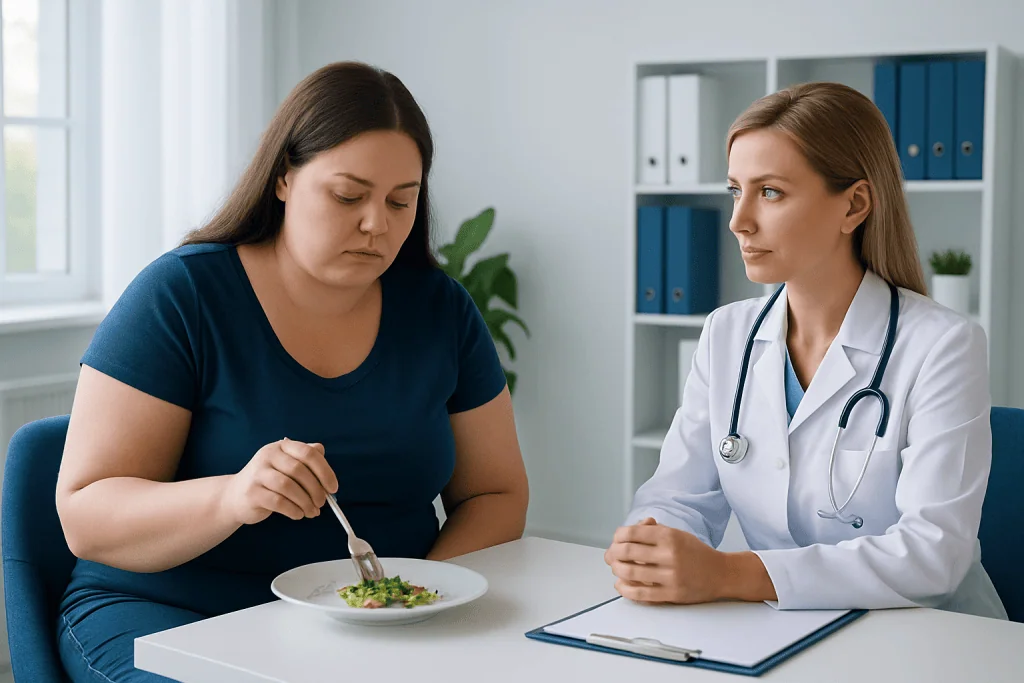
The sleeve stomach does not stretch in the same way as a larger, unoperated stomach during the early recovery period. When food arrives quickly, pressure can build before fullness is perceived. Fullness signals are not instant; they involve nerves and hormones that take time to communicate between the stomach, intestines, and brain.
Fast eating also makes it easier to swallow air, take bites that are too large, or drink during meals. These habits can increase bloating and pressure. Drinking with meals may push food through too quickly or make the sleeve feel overfilled, so many bariatric programs recommend separating fluids from meals according to an individualized schedule.
Chewing is another key factor. The stomach sleeve has less room and less churning capacity than before, so food should arrive in a soft, well-chewed form. Dense proteins, dry meats, bread, rice, pasta, and fibrous foods may be harder to tolerate if eaten quickly or swallowed in large pieces. Tolerance varies, so patients should follow the texture progression and portion guidance provided by their surgical and dietetic team.
Possible Risks if the Habit Continues
Occasionally eating too fast and feeling discomfort does not usually mean something is seriously wrong, but repeated episodes can interfere with recovery and nutrition. Vomiting may irritate the esophagus, worsen reflux, and make it harder to keep down protein, fluids, and prescribed supplements. In the early weeks after surgery, maintaining hydration is especially important.
Fast eating can also make portion control more difficult. Because the brain may register fullness after the stomach is already uncomfortable, a person may unintentionally eat more than the sleeve can comfortably hold. Over time, frequent grazing, rushed meals, high-calorie soft foods, and drinking calorie-containing beverages may reduce the effectiveness of bariatric surgery for weight management.
Another risk is developing avoidance patterns. A patient who feels unwell after meals may begin skipping protein foods, relying on very soft high-calorie foods, or drinking less because they fear discomfort. Support from a bariatric dietitian can help identify whether the issue is speed, texture, portion size, food choice, reflux, or another medical factor.
Habit Changes That Help Slow Eating
Most patients do best with a simple, repeatable meal routine. A common approach is to take very small bites, chew until the food has a soft consistency, put utensils down between bites, and pause before taking the next bite. Meals should be calm and seated, not eaten while walking, driving, working, or watching a distracting screen.
Practical strategies may include using a small plate or bowl, a baby spoon or small fork, a timer, or a mindful-eating app. Some people find it useful to divide a planned portion into small sections and wait between sections. If fullness, pressure, hiccups, or nausea begins, it is usually a sign to stop rather than take a few more bites.
- Plan small meals instead of large portions.
- Chew each bite thoroughly before swallowing.
- Pause between bites and notice early fullness cues.
- Avoid drinking during meals unless the care team gives different instructions.
- Stop eating at comfortable fullness, not when the plate is empty.
It can take time to relearn the pace of eating after sleeve gastrectomy. Patients should not feel discouraged by occasional mistakes. The goal is consistent improvement, supported by follow-up appointments, nutrition education, and honest discussion with the care team.
Food Choices, Texture, and Meal Structure
Food texture matters as much as speed. During recovery, the surgical team usually provides a staged diet plan to reduce irritation and help the sleeve heal. Advancing textures too quickly, eating dry or tough foods, or combining large amounts of food and fluid can increase discomfort even when the meal is not especially large.
Protein is typically prioritized because it supports healing and helps preserve lean body mass during weight loss. Depending on the stage of recovery, this may include protein drinks, yogurt, eggs, fish, poultry, legumes, or other options recommended by the dietitian. Foods that are very sugary, fried, carbonated, or highly processed may worsen symptoms or make nutritional goals harder to meet.
Hydration should be spread throughout the day in small sips. Many patients are advised to stop drinking before meals and wait after meals before resuming fluids, but exact timing can vary by program and medical needs. Patients taking vitamin and mineral supplements should follow their prescribed schedule, because deficiencies can occur after bariatric procedures if intake and supplementation are inadequate.
When to Contact a Doctor or Bariatric Team
A person should contact the bariatric team if eating too fast leads to frequent vomiting, persistent reflux, worsening abdominal pain, difficulty swallowing, or inability to meet fluid goals. Medical advice is also important if there are signs of dehydration, such as very dark urine, dizziness, dry mouth, or reduced urination. Early support can often correct the problem before it affects recovery.
Urgent medical care is needed for severe or worsening abdominal pain, chest pain, shortness of breath, repeated vomiting that prevents fluids from staying down, fever, fainting, blood in vomit, or black stools. These symptoms can have causes unrelated to eating speed and should be assessed promptly by a healthcare professional.
Follow-up care is part of safe long-term recovery. Multidisciplinary bariatric teams can assess eating technique, nutrition, reflux, medication needs, and emotional factors that affect eating speed. Acibadem International’s multidisciplinary specialists and JCI-accredited hospitals diagnose and treat bariatric conditions for international patients, including follow-up needs after weight-loss procedures such as gastric laparoscopic surgery.
Frequently asked questions
What happens if a person eats too fast after gastric sleeve?
Eating too fast can cause pressure, nausea, hiccups, burping, reflux, vomiting, or a feeling that food is stuck. This happens because the stomach sleeve has limited capacity and needs time to signal fullness. If symptoms happen often, the patient should discuss meal pace, texture, and portion size with the bariatric team.
How slowly should someone eat after gastric sleeve surgery?
Many bariatric programs encourage meals to last around 20 to 30 minutes, but individual advice may vary. The important principles are small bites, thorough chewing, and pauses between bites. A patient should follow the timing and diet plan given by their own surgical or dietetic team.
Can eating too fast stretch the gastric sleeve?
A single rushed meal is unlikely to permanently stretch the sleeve, but repeated overeating and ignoring fullness cues can make portion control more difficult over time. The sleeve can adapt somewhat, and habits play an important role in long-term results. Patients who feel they are losing control of portions should seek support early.
Why does vomiting happen after eating after gastric sleeve?
Vomiting may occur if food is eaten too quickly, bites are too large, food is not chewed well, or the portion is more than the sleeve can comfortably hold. It can also be related to reflux, food intolerance, narrowing, or other medical issues. Repeated vomiting should always be reported to a healthcare professional.
Is it okay to drink water with meals after gastric sleeve?
Many bariatric teams recommend separating fluids from meals because drinking during meals can increase fullness, pressure, or discomfort. Exact timing varies, so patients should follow their program's instructions. Hydration is still essential and should be maintained with small sips throughout the day.
What foods are hardest to eat if someone eats too fast?
Dry meats, bread, rice, pasta, fibrous vegetables, and dense or sticky foods may be harder to tolerate when eaten quickly or not chewed well. Sugary or fatty foods can also trigger discomfort in some patients. Food tolerance changes over time, so reintroductions should follow the bariatric diet plan.
When should a patient seek medical help for symptoms after eating?
Medical advice is recommended if symptoms are frequent, worsening, or prevent the patient from drinking enough fluids or meeting nutrition goals. Urgent care is needed for severe pain, chest pain, shortness of breath, fever, fainting, blood in vomit, black stools, or persistent vomiting. It is safer to ask the care team than to wait with concerning symptoms.
References
- American Society for Metabolic and Bariatric Surgery
- National Institute of Diabetes and Digestive and Kidney Diseases
- Mayo Clinic
- British Obesity and Metabolic Surgery Society
- Cleveland Clinic
This article is for general information only and is not a substitute for professional medical advice. Please consult a qualified doctor about your individual situation.
Medical weight-loss options in Turkey — costs & eligibility
JCI-accredited · board-certified surgeons · reply within 24h
Check your numbers in seconds
BMI, calories, due date, blood pressure and 30+ more clinical calculators — free, instant, doctor-reviewed ranges.

Related Treatments
Related Conditions
More from the Health Library


Related Specialists
Prof. Dr. Tayfun Karahasanoğlu
General Surgery
Prof. Dr. Güralp Onur Ceyhan
General Surgery
Prof. Dr. Volkan Özben
General Surgery
Assoc. Prof. Dr. Halil Kara
General Surgery