

After Colon Cancer Surgery: How Bowel Function Returns and What the First Weeks Feel Like
Key Takeaways
- Passing gas is the milestone surgical teams watch for after colectomy, because it shows the whole length of bowel has restarted after the temporary shutdown called ileus.
- The right colon does most of the water absorption, so removing it typically causes looser, more frequent stool that thickens over weeks to months as the remaining bowel adapts.
- A typical hospital stay after large bowel resection is about 3–7 days, with heavy lifting usually held back for around six weeks while the abdominal wall heals.
- Removing part of the rectum can cause low anterior resection syndrome, a named cluster of urgency, clustering and leakage that often improves over the first year and has recognized management pathways.
- A low fiber diet after colon surgery is a temporary bridge across early healing, not a permanent rule; the timing of the return to normal fiber is set by your own team.
- Fever, a hard or increasingly painful abdomen, repeated vomiting, steady bleeding or a stoma that stops producing output are red flags that need same-day contact with the surgical team.
After colon cancer surgery, the bowel usually pauses for a day or two, then gas and loose, frequent stools return over the following days. Most people leave hospital within about a week and settle into a new, often looser and more frequent rhythm over several weeks to months. How much changes depends on how much colon or rectum was removed, and your surgical team should guide diet, activity and follow-up.
The first question many people ask when they wake up from a colectomy is not about the tumor. It is quieter and more practical: when will I go to the bathroom again, and what will that be like? Nurses on surgical wards hear it every day, usually whispered, often with a hint of embarrassment.
There is nothing to be embarrassed about. Colon cancer surgery recovery and bowel function are tangled together by design. The operation removes a length of the tube that stores stool and reabsorbs water, then joins the ends back together or brings one end to the skin. The plumbing has been rebuilt, and the body needs time to relearn its routines.
This explainer walks through what actually happens to the bowel after surgery, what the first days and weeks typically feel like, what counts as normal, what tends to improve on its own, and which signs mean you should pick up the phone. The details of your own case belong with your treating team; this is the map they may not have had time to draw.
What actually happens to the bowel during colon cancer surgery
Colon cancer surgery, formally a colectomy, removes the segment of large bowel containing the tumor along with a margin of healthy tissue on either side and the nearby lymph nodes that drain it. A lymph node is a small filter in the immune system where cancer cells can lodge; removing and examining them tells the pathologist how far the disease has traveled.
Once the segment is out, the surgeon usually rejoins the two cut ends. That join is called an anastomosis: a stitched or stapled connection that has to heal watertight while stool continues to pass through it. In some operations, especially those low in the rectum or in an emergency, the surgeon instead brings a loop or end of bowel out through the abdominal wall as a stoma, an opening that diverts stool into a bag while the deeper join heals or permanently if a join is not possible.
The operation can be done through one long incision (open surgery) or through several small ones with a camera (laparoscopic or robotic surgery). The bowel work inside is the same; what differs is the size of the wound in the abdominal wall, which influences pain and how quickly people move about afterward. Both approaches are standard and the choice rests on the tumor’s position, previous operations and the surgeon’s judgment.
Two facts about the colon explain most of what follows in colon cancer surgery recovery. First, the right side of the colon absorbs most of the water that arrives from the small intestine; losing it means wetter stool. Second, the rectum is a reservoir with its own nerve supply that signals fullness; operating on or removing it changes how urgently and how completely you empty. Everything about the coming weeks flows from which part was taken.
Why the bowel goes quiet after surgery: ileus explained
Handling the intestine, the anesthetic, the fluid shifts of a major operation and the opioids used for pain all tell the gut to stop moving for a while. This temporary shutdown is called postoperative ileus: the bowel is intact, but its coordinated squeezing has paused. Nothing is blocked; the muscle simply is not contracting in rhythm.
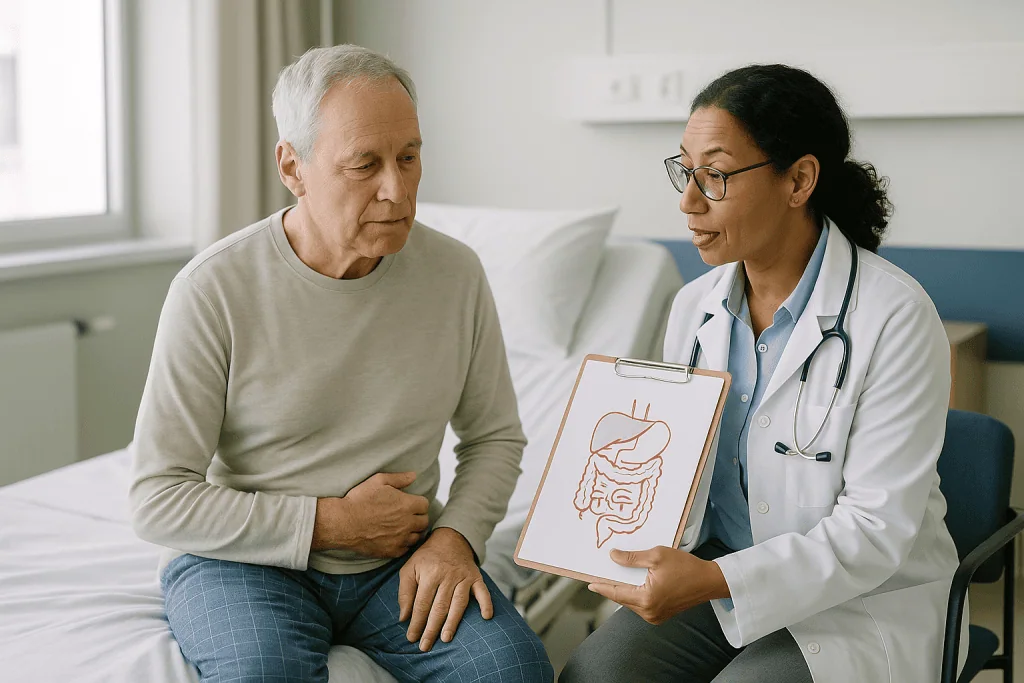
In practice this feels like a swollen, tight abdomen, a lack of appetite and no wind. Many people describe it as being inflated like a balloon. The small intestine usually wakes first, often within a day; the colon lags behind. Passing gas is the milestone teams watch for, because it shows the whole length of bowel is moving again. According to the MedlinePlus overview of large bowel resection, this early phase, together with wound checks and getting back to eating, is why a hospital stay of roughly 3–7 days is typical.
Several things nudge the gut back into gear, and none of them is exotic. Walking within hours of surgery stimulates motility. Chewing gum or sipping clear fluids early gives the gut a reason to start. Limiting opioid pain medicine, where the team judges it safe, helps because opioids act directly on receptors in the intestinal wall and slow contractions. These elements form the backbone of enhanced recovery protocols that most colorectal units now use.
When ileus drags on beyond a few days, with vomiting or a belly that will not soften, the team will look for another explanation, such as an infection near the join or an early blockage, and may use a scan to check. Prolonged ileus is a nuisance rather than a catastrophe in most cases, but it is a reason to stay in hospital longer, not a reason to be discharged with a plan to wait it out at home.
What are normal bowel movements after colorectal surgery?
Normal, in the first week or two, is a wide target. Expect the first stool to be loose, possibly watery, and to arrive with little warning. Several movements a day is common. Some people swing the other way and feel constipated, particularly if they are eating little, drinking little and taking opioid pain relief. Both patterns are within the ordinary range described in the MedlinePlus discharge guidance for large bowel resection.
Stool that is greenish or dark for a few days, mucus, and a sensation of incomplete emptying are all frequently reported. A small streak of blood on the paper in the first days can come from the join or from the anal area after surgery; a steady flow of blood is a different matter and appears in the red-flag section below.
The shape of your day may change. Many people notice that eating triggers a bowel movement within half an hour, a reflex that is normal but exaggerated after surgery. Mornings can be busy, with two or three trips close together. Nights are usually quieter, though not always in the first fortnight.
Over the following weeks, frequency generally falls and consistency thickens as the remaining colon adapts and as you return to a fuller diet. There is no fixed number that defines success. A useful yardstick is your own pattern before the illness, not a textbook figure, and most surgical teams will ask about frequency, urgency and control at each follow-up visit precisely because the range of normal is so broad. If a pattern is stopping you from leaving the house, that is worth reporting even if nothing on a checklist looks alarming.
Right colon, left colon or rectum: why the location changes everything
Two people can have colon cancer surgery in the same week and have entirely different bathroom stories a month later. The difference is anatomy. The table below summarizes what each type of operation tends to mean for bowel function, drawing on the descriptions of colectomy types in the Mayo Clinic and NHS treatment overviews. These are typical tendencies, not predictions for any one person.
| Operation | What is removed | Typical early bowel pattern | What usually improves |
|---|---|---|---|
| Right hemicolectomy | Cecum, ascending colon, part of transverse colon | Loose, frequent stool because the water-absorbing segment is gone | Stool thickens over weeks to months as the remaining colon adapts |
| Left hemicolectomy or sigmoid colectomy | Descending and/or sigmoid colon | Frequency and some urgency; consistency often closer to normal | Frequency settles; storage function largely preserved |
| Anterior resection (rectum) | Part or most of the rectum, join near the anus | Urgency, clustering, incomplete emptying, occasional leakage | Gradual improvement, often over a year; some changes may persist |
| Total colectomy | Entire colon, small bowel joined to rectum | Watery, frequent stool | Partial adaptation; frequency commonly remains higher than before |
| Operation with stoma | Varies; stool diverted to a bag | Output through the stoma rather than the anus | Output thickens over days to weeks; reversal, if planned, comes months later |
The pattern is clear. The more rectum removed and the lower the join, the more the changes concern control and urgency. The more right colon removed, the more they concern water and consistency. Knowing which operation you had makes the rest of this article far easier to apply to yourself, and it is a fair first question for your surgeon if the answer is not already in your discharge paperwork.
Colon cancer surgery recovery bowel function: what the first weeks feel like
Day one to three is about waking the gut. You will be encouraged to sit out of bed and walk the corridor with a drip stand for company, sip fluids, and move on to light food as soon as your stomach tolerates it. Gas is the headline event. The abdomen is sore and swollen; coughing and standing straight are an effort.
Around day three to seven, for most people, the first stool arrives, loose and urgent. Appetite creeps back. The MedlinePlus overview places typical discharge within this window, once you are eating, passing stool or gas, walking and managing pain with tablets rather than a drip.
Week two at home tends to be the most confusing period for colon cancer surgery recovery and bowel function. You are eating more variety, so stool changes with every new food. Tiredness is profound and can feel out of proportion to how little you are doing; the body is spending its energy on healing a large internal wound. Several bowel movements a day, some mild cramping and a wound that pulls when you twist are all expected.
By weeks three to six, frequency usually falls and a pattern begins to emerge. Many people find a rhythm of one to three movements, often in the morning. Energy returns in steps rather than a smooth line. The Mayo Clinic colectomy guidance notes that full recovery typically takes several weeks, and it is realistic to still be adjusting your diet and routine at the six-week review.
Beyond that, improvement continues quietly. People who had rectal surgery often notice their best gains between three months and a year. The point is not to hit a milestone on a given day but to see the trend heading the right way, and to raise it with the team when it is not.
How long does it take to recover from colon resection surgery?
Honest answer: it depends on what you mean by recovered. Walking unaided, eating normally and managing at home usually come within the first two weeks. Returning to a desk job, driving and light housework is commonly possible within a few weeks, provided pain is controlled without strong medicines. Heavy lifting and strenuous exercise are typically held back for about six weeks to protect the abdominal wall while it knits, according to the MedlinePlus discharge instructions for large bowel resection.
Bowel recovery runs on a longer clock than wound recovery. The remaining colon adapts by absorbing more water and slowing transit, a process that takes weeks to months. For rectal operations, the healing of the nerve supply and the stretching of the new reservoir continue for up to a year or more.
Several factors lengthen the timeline. Open surgery with a long incision generally means more pain and a slower return to activity than keyhole surgery, although the internal healing is similar. Age, frailty, diabetes, smoking and low protein reserves all slow tissue repair. Complications such as an infection at the join or a wound infection can add weeks. Chemotherapy after surgery, if recommended, brings its own fatigue and bowel effects, which can blur where surgical recovery ends.
Recovery time for colon resection surgery is therefore best thought of in layers: days for the gut to wake, a week or so for hospital, weeks for the wound and energy, months for the bowel to find its new normal. Anyone who promises a single figure is guessing. Your surgeon, who knows the operation and your health, is the only person who can narrow the range sensibly, and even then it remains a range.
How long do you stay on a low fiber diet after colon surgery?
A low fiber, or low residue, diet limits foods that leave bulky undigested material in the bowel: whole grains, nuts, seeds, raw vegetables, fruit skins and legumes. The idea after colon surgery is to reduce the volume and roughness of what passes across a freshly healed join while the swelling settles, and to keep stool from being either explosively loose or hard.
Most teams suggest a soft, low-fiber pattern for the first few weeks after discharge, then a gradual return to a normal diet as tolerated. The MedlinePlus discharge guidance describes eating small, frequent meals and reintroducing foods gradually rather than a fixed calendar, and this is the honest picture: there is no universal cutoff, and the timeline should come from your own surgeon or dietitian.
Reintroduction works best one food at a time. Add a cooked vegetable, wait a day, see what happens. If a food causes cramping or a run of loose stools, park it and try again in a fortnight. Common early culprits include raw salad, corn, popcorn, spicy dishes and large amounts of fruit. Fizzy drinks add gas to an already gassy system.
People with a stoma are often asked to keep to a low-fiber pattern a little longer and to chew thoroughly, because fibrous foods can cause a blockage at the point where the bowel passes through the abdominal wall. Their stoma nurse will give specific advice.
Fluids matter as much as fiber. Loose stool means water loss, and dehydration shows up as headache, dizziness and dark urine. The low fiber diet after colon surgery is a bridge, not a destination; long-term, a varied, fiber-containing diet is what mainstream guidance recommends for bowel health once the join has healed and the team says it is time.
Who goes home quickly, and who is usually asked to wait
Most colorectal units use an enhanced recovery pathway: a bundle of measures including early feeding, early walking, limited drips and drains, and pain relief that spares opioids. People on this pathway who had keyhole surgery for a colon tumor, with no stoma and no complications, form the group that goes home fastest, often at the shorter end of the 3–7 day range described by MedlinePlus.
Others are asked to stay longer, and the reasons are sensible rather than arbitrary. Anyone with a new stoma needs to demonstrate they can empty and change the bag confidently, and their output needs to settle into a manageable volume. Anyone whose bowel has not yet woken, who is vomiting or cannot keep food down, stays until it does. A rising temperature, a fast pulse or a tender abdomen in the first days can be the earliest sign of a leak at the join, and the team will keep the patient in for observation and possibly a scan before letting them go.
Frailty and living alone also weigh on the decision. Someone who is medically ready but cannot safely climb the stairs at home, or who has no one to call if something goes wrong overnight, may stay an extra day or be discharged with rehabilitation support arranged.
Emergency operations, for a tumor that caused a blockage or a perforation, sit in a different category altogether. The bowel was already sick before surgery, a stoma is more likely, and recovery is measured in weeks rather than days. None of this is failure. Discharge is a judgment about safety, and the decision belongs with the team looking after you, not with a target length of stay.
Living with a temporary stoma while the join heals
A stoma is a surgically created opening where the bowel is brought through the abdominal wall and stool collects in an adhesive bag. An ileostomy uses the small intestine and produces liquid or porridge-like output; a colostomy uses the colon and produces thicker stool. After rectal cancer surgery a temporary ileostomy is often made to divert stool away from a low join while it heals, with reversal planned months later once scans and a contrast test confirm the join is sound, as the NHS bowel cancer treatment pages describe.
The early weeks with a stoma bring their own learning curve. Output is high and watery at first and thickens over days to weeks. The stoma itself is swollen after surgery and shrinks, so bag sizes are adjusted. Skin around the opening can become sore if the seal leaks. A stoma nurse teaches the practicalities before discharge and remains a point of contact afterward.
Dehydration is the main medical risk of a new ileostomy because the water-absorbing colon is bypassed. Feeling faint, passing little urine or seeing very high output are reasons to call. Blockage, usually from fibrous food, presents as cramping, a swollen belly and reduced or absent output, and also warrants a call.
Reversal restores the normal route, but it does not press a reset button on bowel function. The rectum and colon have been resting for months and need time to relearn their job, so the urgency and frequency described in the next section often appear at that point rather than after the first operation. Knowing this in advance saves a great deal of worry. Whether and when to reverse a stoma is a decision for the surgical team, based on healing, ongoing treatment and the person’s overall health.
Urgency, clustering and leakage after rectal surgery: low anterior resection syndrome
When part or most of the rectum is removed and the colon is joined close to the anus, the body loses its main stool reservoir and some of the nerves that signal fullness. The resulting cluster of symptoms is called low anterior resection syndrome, usually shortened to LARS: urgency, going several times in quick succession, a feeling of incomplete emptying, difficulty telling gas from stool, and sometimes leakage.
LARS is common after low rectal joins and is widely recognized in colorectal guidance, including the NHS bowel cancer treatment information, which notes that bowel function may take time to settle after rectal surgery and can remain altered. Symptoms tend to be worst in the first months, improve over the first year as the new reservoir stretches and nerves recover, and may plateau at a level that is better than the early weeks but different from before. Radiotherapy before surgery and a very low join make persistent symptoms more likely.
Several approaches help, and they should all be discussed with the treating team rather than started alone. Adjusting fiber to thicken stool and reduce clustering. Pelvic floor exercises, ideally taught by a specialist physiotherapist, to strengthen control. Timed emptying and small, regular meals to make the pattern predictable. Medicines that slow transit are sometimes used under supervision. For persistent symptoms, specialist services offer techniques such as irrigation, where the bowel is flushed on a schedule to gain predictable control, or nerve stimulation. These are options to explore with your team, not a menu to self-select from.
The most useful thing to know is that this is a recognized condition with a name, a standardized questionnaire and a pathway. Telling your surgeon or nurse that you are counting trips to the bathroom before every outing is not complaining. It is the information they need.
Pain relief and other medicines that change how the bowel behaves
The medicines used around colon surgery are chosen to control pain and support healing, but several of them act on the gut, which is why your bowel pattern can shift as your prescriptions change. Understanding the mechanisms helps you make sense of what you notice; any change to what you take is a decision for the prescribing clinician.
Opioid painkillers bind to receptors in the intestinal wall as well as the brain, slowing contractions and tightening sphincters. The result is constipation and, in the early days, a longer ileus. Teams increasingly rely on regional techniques, such as local anesthetic infused near the wound or spinal nerves, plus non-opioid painkillers, to keep opioid exposure low. As opioids are stepped down after discharge, many people notice their stool loosens, which can be mistaken for a new problem when it is simply the brake being released.
Laxatives or stool softeners are sometimes prescribed alongside opioids to counter this effect; if you had them in hospital and the opioid has stopped, that pairing may no longer make sense, which is a question to raise with the team rather than to resolve alone.
Antibiotics given around the operation alter the gut bacteria, and loose stool for a few days afterward is common. Persistent watery diarrhea with fever or cramping after antibiotics can signal an infection of the bowel lining and should be reported. Anti-diarrheal medicines that slow transit are sometimes used later, particularly after rectal surgery or with a high-output stoma, but only under guidance, because slowing a bowel that is recovering from surgery has to be balanced against the risk of blockage. Iron supplements, often needed for anemia after cancer surgery, darken stool and can constipate; that black color alone, in someone on iron, is expected rather than alarming.
What are the long-term side effects of colon resection surgery?
Most people who have a segment of colon removed for cancer settle into a bowel pattern they can live with, and many report it as close to their old normal within months. Some changes, though, can persist, and it is fairer to name them than to gloss over them. The Mayo Clinic colectomy guidance and the NHS treatment pages both describe altered bowel habit as a recognized longer-term effect.
Looser, more frequent stool is the most common lasting change after right-sided or extensive colectomy, because less colon is available to reabsorb water. After removal of the end of the small intestine along with the right colon, bile acids that would normally be recycled reach the colon and irritate it, causing a specific type of watery diarrhea that specialist teams can test for and manage; if this is suspected, your team will guide the assessment.
LARS, covered above, is the main persistent issue after rectal surgery. Adhesions, bands of internal scar tissue that form after any abdominal operation, can occasionally kink the bowel years later and cause an obstruction with cramping, vomiting and a swollen abdomen; this is uncommon but is why any such episode needs prompt assessment.
An incisional hernia, a bulge where the abdominal wall has weakened along the scar or at a former stoma site, can develop over months to years and is more likely with larger incisions, heavier body weight, smoking and chronic cough. Sexual and urinary changes can follow pelvic surgery because the relevant nerves run close to the rectum; these deserve a direct conversation with the team, who see them routinely. Long term side effects of colon resection are, in short, real, usually manageable and worth monitoring at follow-up, which is one reason those appointments matter beyond checking for the cancer itself.
What people often get wrong about bowel recovery after colon surgery
Myth: loose stool a week after surgery means something has gone wrong with the join. In reality, loose and frequent stool is the expected pattern while the colon adapts and the diet widens. A leak at the join announces itself with fever, a racing pulse and a rigid, painful abdomen, not with soft stool alone.
Myth: you should rest in bed until the pain settles. Walking is one of the most effective ways to wake the bowel and to protect against blood clots in the legs and lungs, which are a recognized risk after major abdominal surgery. Rest between walks, not instead of them.
Myth: fiber is off the menu for good. Low fiber is a temporary bridge across the early healing period. Mainstream guidance, including the NHS pages on bowel cancer, supports a varied, fiber-containing diet in the longer term. The timing of the return is individual and belongs with your team.
Myth: a stoma reversal returns everything to how it was. The rested bowel needs weeks to months to relearn its job, and urgency after reversal is common. Expecting it makes it far less frightening.
Myth: a good surgeon guarantees a good bowel result. The single biggest determinant of function is how much rectum had to be removed, which is set by the tumor’s position, not by anyone’s skill.
Myth: if the bathroom is running your life at three months, that is simply the price of treatment. It is not. LARS and other persistent problems have assessment tools and management pathways. Raising them is the route to help, and silence is the barrier. The people most likely to be helped are the ones who describe exactly what a bad day looks like, with numbers, to a team that asks.
Questions to ask your care team before and after colon cancer surgery
Surgical consultations move fast, and the bowel questions tend to be the ones people forget or feel awkward raising. Writing a short list in advance changes that. These are the ones experienced colorectal nurses say they wish more people asked.
- Which part of my colon or rectum is being removed, and how will that specifically affect stool consistency and control afterward?
- Is a stoma likely, and if so, is it planned as temporary or permanent? What would change the plan during the operation?
- What does your unit consider a normal hospital stay for this operation, and what would make mine longer?
- What bowel pattern should I expect in the first two weeks at home, and at what point should I contact you about frequency, urgency or leakage?
- How long would you like me to follow a low fiber diet, and who can I speak to about reintroducing foods?
- Which pain medicines will I go home with, how do they affect the bowel, and when do you expect me to stop them?
- What activity is safe in the first six weeks, and when can I lift, drive and return to work?
- If I develop urgency or leakage after rectal surgery, what support does your service offer, and is there a specialist physiotherapist or nurse I can see?
- Who do I call out of hours, and which symptoms mean I should go straight to the emergency department?
- Will I need chemotherapy or radiotherapy afterward, and how might that overlap with bowel recovery?
Take a companion to the appointment if you can, or ask whether you may record the conversation. Answers about anatomy and expected function are easy to forget under stress and hard to look up later. The aim is not to challenge the team but to leave knowing exactly what your own operation means for your own bathroom, because generic advice, including this article, can only take you so far.
When to call your doctor: red-flag signs after colon cancer surgery
Most of what the bowel does in the first weeks is noisy but harmless. A small number of signs point to a complication that needs same-day assessment, and knowing them clearly beats lying awake wondering. The MedlinePlus discharge guidance for large bowel resection and the Mayo Clinic colectomy pages list the following as reasons to contact your surgical team or seek emergency care without waiting for the next appointment.
Call urgently if you have a temperature that rises or persists, a fast heartbeat, shaking chills, or abdominal pain that is worsening rather than easing, especially if the belly becomes hard or tender to touch. These can signal a leak at the join or an abscess, which are treatable but time-sensitive.
Seek care if you are vomiting repeatedly, cannot keep fluids down, have a swollen abdomen with no gas or stool for more than a day or two after having passed some, or have a stoma that has stopped producing output while you feel crampy and bloated. These patterns suggest a blockage.
Steady bleeding from the back passage or stoma, stool that is black and tarry when you are not taking iron, or large amounts of blood in the bag need urgent review. So does any wound that becomes red, hot, swollen, opens up or leaks pus or cloudy fluid.
Watch for dehydration: dizziness on standing, very little dark urine, a dry mouth and confusion, particularly with a new ileostomy or persistent watery diarrhea. Sudden calf pain and swelling, or breathlessness and chest pain, can indicate a blood clot and are emergencies.
Finally, call if something simply feels wrong and you cannot say why. Surgical teams would rather hear from you and find nothing than learn later that you waited. The decision about what to do next is theirs; the decision to pick up the phone is yours, and it should be an easy one.
Frequently asked questions
What are the normal bowel movements after colorectal surgery?
Loose, frequent stools with little warning are the most common early pattern, though some people are briefly constipated, especially on opioid painkillers. Several movements a day, mucus, mild cramping and a rush to the bathroom after meals are all within the expected range in the first weeks. Frequency usually falls and consistency thickens over the following weeks to months as the bowel adapts.
How long does it take to recover from colon resection surgery?
Recovery happens in layers. The bowel usually wakes within a few days, hospital stays are typically about 3–7 days, most people manage at home within two weeks, and strenuous activity is generally restricted for around six weeks. Bowel function keeps improving for months, and after rectal surgery for up to a year. Your surgeon can narrow the range for your specific operation and health.
How long do you have to stay on a low fiber diet after colon surgery?
There is no universal cutoff. Most teams suggest a soft, low fiber pattern for the first few weeks after discharge, then a gradual, one-food-at-a-time return to normal eating as the join heals and stool settles. People with a stoma are often asked to go more slowly. Follow the timeline your own surgeon or dietitian gives you rather than a general rule.
What are the long term side effects of colon resection?
The most common lasting change is looser, more frequent stool after right-sided or extensive colectomy. After rectal surgery, urgency and leakage from low anterior resection syndrome can persist to some degree. Less common issues include adhesions that occasionally cause blockage, an incisional hernia along the scar, and sexual or urinary changes after pelvic surgery. All of these are recognized and worth raising at follow-up.
Why do I have diarrhea after colon cancer surgery?
The colon’s main job is to absorb water from stool, so removing part of it, particularly the right side, leaves stool wetter. Antibiotics given around the operation, a widening diet, and stepping down opioid painkillers can all loosen stool further. Most of this settles as the remaining bowel adapts, but persistent watery diarrhea with fever, dizziness or very little urine should be reported promptly.
Is it normal to feel like I cannot empty my bowels completely after surgery?
Yes, particularly after rectal surgery. The rectum acts as a reservoir with nerves that signal fullness, and operating on it changes those signals, producing a sensation of incomplete emptying and repeat trips in quick succession. This is a feature of low anterior resection syndrome and often improves over the first year. Tell your team; pelvic floor physiotherapy and other approaches can help.
When will my bowel function return after a stoma reversal?
The rested bowel starts working again within days of reversal, but urgency, frequency and some leakage are common at first because the rectum and colon have been out of use for months. Improvement is gradual over weeks to months. Expecting this pattern in advance makes it much less alarming, and your surgical team can advise on diet and exercises to support control.
What is the recovery time for colon resection surgery done laparoscopically versus open?
Keyhole surgery involves smaller wounds, so pain is usually less and people tend to walk, eat and go home sooner than after an open incision. The bowel work inside is the same, however, so the time for bowel function to settle is similar. Wound-related restrictions such as avoiding heavy lifting are commonly advised for around six weeks with either approach.
Can I speed up the return of bowel function after colectomy?
Walking early and often, sipping fluids and eating small amounts as soon as your team allows, and chewing gum are the measures with the best evidence for nudging the gut back into motion. Minimizing opioid painkillers, where your clinicians judge it safe, also helps because opioids slow the bowel. None of these are shortcuts; they are the standard components of enhanced recovery care.
What signs after colon surgery mean I should go to the emergency department?
Fever with a fast pulse, an abdomen that is hard or increasingly painful, repeated vomiting, no gas or stool with a swollen belly, steady bleeding, a stoma that stops producing output with cramping, signs of dehydration such as dizziness and very little urine, or calf pain, breathlessness or chest pain. These can indicate a leak, blockage, infection or blood clot and need urgent assessment.
References
- MedlinePlus: Large bowel resection
- MedlinePlus: Large bowel resection – discharge
- NHS: Bowel cancer treatment
This article is for general information only and is not a substitute for professional medical advice. Please consult a qualified doctor about your individual situation.

More from the Blog

When Targeted Therapy Stops Working: Resistance, Repeat Biopsies and the Next Options
When targeted therapy stops working, it usually means the cancer has found a way around the drug, a process called acquired resistance. The care…
Why Cystoscopy Surveillance Continues for Years After Bladder Cancer Treatment
Cystoscopy surveillance after bladder cancer continues for years because the disease has one of the highest recurrence rates of any solid tumor, and new…

Radiation Precautions After Radioiodine Treatment: Distance, Sleeping Alone and Hygiene
Radiation precautions after radioactive iodine usually mean keeping extra distance from other people, sleeping alone, and taking care with urine, saliva and sweat for…

How Acute Lymphocytic Leukemia Treatment Runs in Phases, From Induction to Maintenance
Acute lymphoblastic leukemia is treated in sequential phases rather than one course. Induction, usually about four weeks, aims to clear leukemia cells from the…

What Sarcoma Follow-Up Involves: Scheduled Imaging, Wound Review and Function Checks
Sarcoma follow-up combines scheduled imaging, wound checks and function assessments. Guideline consensus suggests chest imaging by CT or X-ray, plus MRI or ultrasound of…

Flying Home After Radioiodine Treatment: Airport Detectors, Timing and What to Carry
Flying after radioactive iodine treatment is usually possible once your treating team confirms your radiation level has fallen enough for close contact with other…