

Baby Poop Colors and Textures: What Is Normal
Key Takeaways
- Healthy newborns pass their first tar-like meconium stool within 48 hours of birth, and it should shift to yellow or tan by day four or five.
- Green baby poop almost always reflects fast gut transit, iron-fortified formula or food pigments, not allergy, unless blood, mucus or other symptoms accompany it.
- Only three colors warrant a same-day call on their own: chalky white or pale, tarry black after the first week, and red not explained by food.
- Breastfed babies older than six weeks can go a week between soft stools without being constipated; hard pellets and pain define constipation, not frequency.
- Pale stool with jaundice beyond two weeks is the earliest visible sign of biliary atresia, and surgical outcomes are best when diagnosed before 60 days of age.
- After the first week, six or more wet diapers a day is the most reliable home sign that a baby is well hydrated, whatever the stool pattern.
Normal baby poop varies widely: sticky greenish-black meconium in the first days, then mustard-yellow and seedy stools in breastfed babies or tan, pasty stools in formula-fed babies, with green, brown and orange all common. Three colors warrant a prompt call to the baby's clinician: chalky white or pale stools, tarry black stools after the first week, and red stools not explained by food.
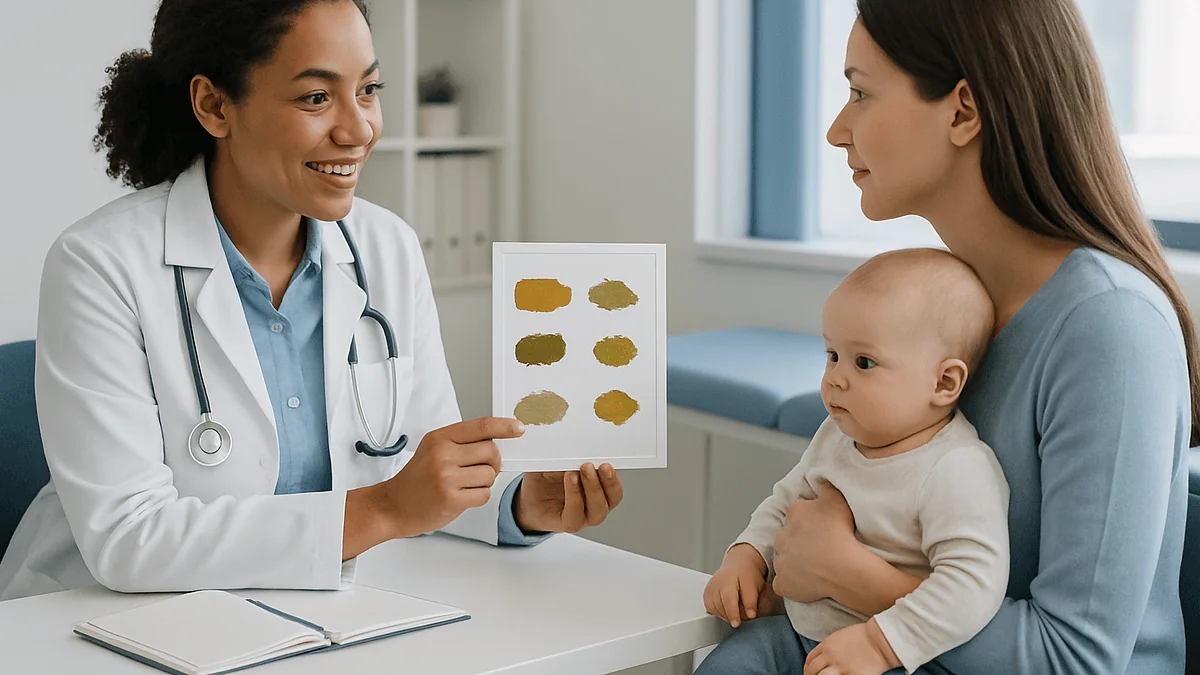
The diaper comes off at 3 a.m., the phone light goes on, and a tired parent squints at something the color of pesto. Then the search begins. As of September 2026, “baby poop” is climbing the search charts again, pushed by a wave of viral color-chart graphics on parenting feeds that promise to decode every shade, and by hospital newborn units handing out stool color cards designed to catch one rare but serious liver condition early.
Some of those viral charts are helpful. Others turn ordinary green into an allergy scare and treat every quiet day without a bowel movement as constipation. The gap between what circulates online and what pediatric evidence shows is wide enough to deserve a careful walk-through.
This guide covers what the colors and textures of baby poop mean at each stage, which handful of signs genuinely need a same-day call, and how strong the evidence behind each claim actually is.
What color is normal baby poop?
The honest answer is that normal covers most of a paint chart. Yellow, mustard, gold, orange, tan, brown and nearly every shade of green appear in healthy diapers, often within the same week. Color depends on three things: what the baby ate, how fast the stool moved through the gut, and how much bile pigment it picked up on the way.
Bile is the greenish fluid the liver makes to help digest fat. Bile pigments start out green and turn yellow, then brown, as gut bacteria chemically alter them. A stool that moves quickly through the intestine keeps its green tint; a stool that lingers has time to turn yellow or brown. That single mechanism explains most of the color changes parents notice.
Texture tells its own story. Breast milk stool is typically loose, almost runny, with small seed-like curds of milk fat. Formula stool is thicker, closer to peanut butter or hummus. Neither one should look like hard pellets, and neither should be pure liquid soaking into the diaper with no solid material at all.
Smell is a weak signal. Breastfed stool tends to smell mild or faintly sweet; formula stool is more pungent; solids make everything stronger. A sudden change in smell on its own, without other symptoms, rarely means anything.
Two numbers anchor the picture. The first stool, meconium, should arrive within the first 24–48 hours of life. By day four or five, a well-fed newborn is usually passing several yellow stools a day. Pediatric sources from Mayo Clinic to the NHS agree on those milestones; everything after that varies far more than most parents expect.
Meconium: why the first baby poop is black and sticky
Meconium is the first stool a newborn passes, made of material swallowed in the womb: amniotic fluid, skin cells, mucus and bile. It is dark green to black, odorless and as sticky as roofing tar. Parents who have not been warned sometimes panic at the color; nurses see it a dozen times a shift.

Timing matters here more than appearance. Roughly 99 percent of healthy full-term babies pass meconium within 48 hours of birth, and most do so in the first 24. A delay beyond 48 hours is one of the reasons the newborn team checks the diaper log, because it can point to a blockage or to conditions such as Hirschsprung disease, where nerve cells are missing from part of the bowel. This is a hospital-level assessment, not something to work out at home.
Over days two to four, meconium gives way to transitional stool: looser, greenish-brown, then yellow-green, often with curds. The shift tracks the arrival of a larger milk supply. By day four or five, breastfed babies usually produce the classic mustard-yellow stool; formula-fed babies settle into a tan or yellow-brown pattern a little later.
One practical note: meconium bonds to skin. A thin layer of petroleum-based barrier ointment at the first diaper changes, if the hospital team suggests it, makes cleanup easier. That is a comfort measure, not a medical treatment.
If the baby is home and meconium is still appearing after day five, or if the stool never transitions to yellow despite frequent feeds, that is worth mentioning at the first newborn visit. Persistent dark stool can simply mean the baby is not yet taking in enough milk, which is fixable with feeding support.
Breastfed vs formula-fed baby poop: what is different
The feeding method shapes the diaper more than almost anything else in the first six months, and knowing the typical pattern for each prevents a lot of unnecessary worry.
Breast milk is digested very efficiently, and the stool it produces reflects that. Expect a loose, sometimes watery consistency, a mustard or golden color, and small white curds that look like seeds. The seeds are undigested milk fat, not food. Frequency is high in the early weeks, often after every feed, and the stool can be explosive enough to defeat a diaper. Once a breastfed baby passes about six weeks of age, the pattern often slows dramatically, and several days between stools can be normal as long as the stool stays soft and the baby is feeding and growing well.
Formula produces a firmer, pastier stool, usually tan, yellow-brown or light brown, with a stronger odor. Frequency is typically lower and more regular, perhaps one to four times a day in early infancy. Iron-fortified formula, which is the standard in the United States, can push the color toward dark green. That is a well-recognized, harmless effect.
Extensively hydrolyzed or amino-acid formulas, which are sometimes prescribed for babies with cow’s milk protein allergy, often produce looser, greener stool. Parents switching under a clinician’s guidance should expect that change rather than read it as a problem.
Mixed feeding gives mixed results: color and texture will drift depending on which milk dominated the last few feeds. The key comparison is never breast against formula but today’s diaper against the baby’s own usual pattern, alongside how the baby is feeding, growing and behaving.
Green baby poop: foremilk, iron and fast transit
Green is the color that drives the most searches and the fewest real problems. The reason is simple: bile starts out green, and anything that speeds stool through the gut leaves less time for it to turn yellow. A green diaper is mostly a report on transit time.

Common, benign causes line up neatly:
- Iron-fortified formula, which darkens stool toward olive or forest green.
- A mild stomach bug or teething-related drool swallowing, both of which speed transit.
- Green vegetables or green food dyes once solids begin.
- A baby who takes in a lot of lactose-rich early milk at each feed. Lactose that is not fully absorbed draws water into the bowel and speeds things along, giving a frothy, bright-green stool. This is often labeled a “foremilk/hindmilk imbalance” online, but the evidence for strict feed-timing fixes is weak; a lactation consultant can assess the whole feeding picture.
- Phototherapy for newborn jaundice, which breaks bilirubin down into products that tint stool green.
- The transition from meconium during days two to four.
Green becomes a signal worth reporting when it travels with company: watery stools many times a day, blood or heavy mucus, fever, vomiting, poor feeding, or a baby who seems unusually sleepy or irritable. In that setting the color is a bystander; the other symptoms are what the clinician will ask about.
Green on its own, in a baby who is feeding well and gaining weight, is not an allergy marker. Cow’s milk protein allergy more typically shows up as mucus and streaks of blood alongside other signs, not as a shade change. Cleveland Clinic and Mayo Clinic both place isolated green firmly in the normal column, and that is where the evidence leaves it.
Newborn poop color chart: colors and textures at a glance
Charts circulating online often cram ten shades into a rainbow and assign a diagnosis to each. The medically useful version is shorter, because only a few colors carry weight on their own. The table below groups what parents actually see into three tiers: routine, context-dependent, and call the clinician.
| Color or texture | What it usually means | Action |
|---|---|---|
| Greenish-black, tarry (days 1–3) | Meconium, swallowed in the womb | Normal; should clear by day 4–5 |
| Mustard yellow, seedy, loose | Typical breast milk stool | Normal |
| Tan to brown, pasty | Typical formula stool | Normal |
| Green, any shade | Fast transit, iron formula, foods, mild illness | Normal unless paired with other symptoms |
| Orange | Pigments from milk or carrot and squash purees | Normal |
| Brown with food chunks | Solids started; fibrous foods pass through | Normal |
| Frothy, bright green | Lactose overload, speedy feeds | Mention at next visit if persistent |
| Mucus streaks | Drool, teething, infection, or allergy | Call if persistent or with blood |
| Chalky white, pale gray or clay | Possible lack of bile reaching the gut | Call the same day |
| Black and tarry after the first week | Possible digested blood from higher in the gut | Call the same day |
| Red streaks or red throughout | Fissure, allergy, swallowed blood, or red foods | Call promptly unless clearly dietary |
| Hard pellets | Constipation | Discuss at a visit; sooner if distress |
| Watery, many times a day | Diarrhea, often viral | Call if dehydration signs or under 3 months |
The pattern to notice: color alone rarely moves a baby into the bottom tier. The three exceptions, pale, black and red, earn their place because each can reflect a problem with the liver, the gut lining or a bleeding source. Everything else is read in context.
Pale, black or red baby poop: three colors that need a call
These three deserve their own section because they are the only colors where the diaper itself is the clue, even in a baby who looks fine.
Chalky white, pale gray or clay-colored. Stool gets its yellow and brown tones from bile. A pale stool, sometimes called acholic (meaning without bile), suggests bile is not reaching the intestine. The condition clinicians most want to rule out is biliary atresia, a rare disorder in which the bile ducts outside the liver are blocked or missing. It affects roughly 1 in 12,000 babies in the United States, and outcomes after surgery are better when the diagnosis is made within the first two months of life. Pale stool often appears alongside jaundice lasting beyond two weeks and dark, tea-colored urine. A single pale diaper in a baby on a new formula is worth a photograph and a call; repeated pale stools warrant a same-day appointment.
Black and tarry after the first week. Once meconium has cleared, black stool can mean blood that was digested on its way down from the stomach or upper intestine. Iron supplements prescribed by a clinician can also darken stool, so mention any medicines the baby takes. The clinician will decide whether a stool test is needed.
Red. Bright red streaks on the surface of a formed stool often come from a tiny tear at the anus, called a fissure, after a hard stool. Blood mixed with mucus in a fussy baby raises the question of cow’s milk protein allergy, which affects an estimated 2 to 3 percent of infants. Breastfed newborns can swallow blood from a cracked nipple, producing dark red flecks. Beets, strawberries and red dyes mimic blood once solids start. Unless the dietary explanation is obvious, red stool should be reported the same day, and a diaper brought along if possible.
Baby poop frequency: how often is normal by age
Parents count diapers for good reason in the first week: output is the easiest home measure of whether a newborn is taking in enough milk. After that, frequency becomes one of the least reliable signs of health, and the range of normal widens to the point where two healthy babies the same age can differ by a factor of twenty.
A rough progression, drawn from NHS and Mayo Clinic guidance:
- Days 1–2: one or more meconium stools a day.
- Days 3–5: transitional stools, increasing to three or more a day as milk supply rises.
- Weeks 1–6: breastfed babies commonly pass three to eight stools a day, sometimes after every feed; formula-fed babies more often one to four.
- After 6 weeks: many breastfed babies slow down sharply, going three, five, even ten days between soft stools. Formula-fed babies usually stay closer to daily.
- After solids: frequency often settles at one or two a day, and consistency firms up.
The number that pediatricians watch most closely in the first week is not stools but wet diapers: by day five, roughly six or more a day, with pale urine. Fewer than that, or urine with reddish-orange crystals after day four, suggests the baby needs feeding support, and the same-week newborn visit exists partly to catch this.
Later, the useful question shifts from “how often” to “how soft.” A breastfed baby who goes a week between stools and then produces a large, soft, yellow one is not constipated. A baby who passes a stool daily but strains and bleeds while producing hard pellets is. Texture and comfort outrank the calendar at every age beyond the first week.
Is my baby constipated? Hard stools versus straining
Few things alarm new parents like a red-faced baby grunting and pulling up the legs. Most of the time, that performance is not constipation. Pediatric gastroenterologists have a name for it: infant dyschezia, defined as at least ten minutes of straining and crying before passing a soft stool in an otherwise healthy baby under nine months. The baby is learning to tighten the abdominal muscles while relaxing the pelvic floor, two actions that take practice to coordinate. The stool that eventually arrives is soft, and that is the giveaway.
True constipation looks different. The signs that matter are hard, dry stools, often small pellets or one large formed mass; visible pain or blood streaks from a fissure; a firm, bloated belly; and reduced feeding. Frequency alone is not a criterion, which is why a breastfed baby who goes five days without a stool and then passes a soft one is not treated as constipated.
Common triggers include the switch from breast milk to formula, the introduction of solids around six months, and dehydration during hot weather or illness. In older infants, low-fiber diets and large volumes of cow’s milk after the first birthday are frequent contributors.
What parents can safely do at home is limited and worth stating plainly. Gentle tummy massage and bicycling the legs are harmless. Anything added to the diet, including water, juice, specific fruit purees or over-the-counter products, should be discussed with the baby’s clinician first, because recommendations differ sharply by age and feeding method. Suppositories, enemas and laxatives of any kind are prescription-level decisions in infants and should never be improvised from online advice.
Constipation that begins in the first month, or that comes with vomiting, poor weight gain or a swollen abdomen, needs a prompt evaluation rather than home measures.
Baby diarrhea: what watery stools mean and when dehydration starts
Because breastfed stool is already loose, diarrhea in a young baby is defined by change rather than by any single diaper: stools that are suddenly more frequent, more watery and larger in volume than the baby’s usual pattern, often soaking straight into the diaper with little solid material.
Viral infections lead the list of causes. Rotavirus was once the dominant one in the United States; since routine infant vaccination began in 2006, rotavirus hospitalizations in young children have fallen dramatically according to CDC surveillance. The vaccine is given by mouth, with the series starting by 15 weeks of age and finishing by 8 months, as CDC guidance specifies. Norovirus, adenovirus and bacterial infections fill in the remainder, along with antibiotics, formula changes and, less often, food intolerance.
Babies dehydrate faster than adults because they have a high surface area relative to body weight and limited fluid reserves. The signs clinicians ask about, drawn from MedlinePlus and NHS guidance, include:
- Fewer wet diapers, typically fewer than six in 24 hours past the first week, or no wet diaper for six hours or more.
- Dry mouth and lips, and crying without tears.
- A sunken soft spot (fontanelle) on the top of the head.
- Unusual sleepiness, limpness or irritability that does not settle.
- Cool, mottled hands and feet.
Feeding should continue through a bout of diarrhea; breast milk and formula both help replace fluid. Oral rehydration solutions have strong trial evidence for reducing dehydration in children with gastroenteritis, but the decision to use one in an infant, and how much, belongs to the clinician. Plain water, juice and sports drinks are not appropriate substitutes for babies.
A baby under three months with diarrhea and a fever, or any baby with blood in watery stool, diarrhea lasting more than a few days, or any dehydration sign above, needs same-day medical contact.
How baby poop changes when solids start
Around six months, the diaper changes almost overnight. Solids introduce fiber, new pigments and a different bacterial population to the gut, and the stool responds by becoming firmer, browner, smellier and, for a while, more unpredictable.
Three changes surprise parents most. The first is whole food reappearing: corn kernels, blueberry skins, raisins, carrot flecks and pea husks pass through intact because an infant gut does not break down cellulose, the structural fiber in plants. This is not a sign of malabsorption; adults pass corn skins too. The second is vivid color. Carrots and sweet potatoes turn stool orange, beets turn it red or pink, spinach and peas push it green, and blueberries can produce an alarming blue-black. Color that matches a meal eaten in the last day or two needs no further investigation. The third is a temporary swing toward either constipation or looser stool as the gut adjusts.
Textures also evolve. Expect a progression from paste to formed, soft logs by the first birthday, with occasional returns to looseness during teething, colds and new foods.
Two caveats keep this phase safe. Red or black stool that cannot be matched to a specific food within the last 48 hours should still be reported, because dietary color and blood can look alike. Persistent diarrhea, mucus or blood that begins within days of a new food, especially cow’s milk, egg, wheat or soy, is worth describing to the clinician, who may ask about a short food diary. Allergies are diagnosed by clinical assessment, not by diaper inspection alone, and foods should not be eliminated on suspicion without that guidance.
Iron-rich solids such as fortified cereals and meats can darken stool toward green or near-black, which, like iron-fortified formula, is expected.
What changed recently
Nothing about infant stool itself has changed; what has shifted is how seriously health systems treat one specific color, and how parents encounter the information.
The most consequential development is the spread of stool color cards. Taiwan introduced a nationwide program in 2004, giving every parent a card with photographs of normal and pale stools to check at the one-month visit. Published follow-up data from that program showed earlier referral for biliary atresia and a higher share of babies reaching surgery before 60 days of age. Several countries and a growing number of US health systems have adopted similar cards or app-based photo checks over the past decade. The underlying rationale is laid out on the NIH’s National Institute of Diabetes and Digestive and Kidney Diseases biliary atresia page: the Kasai procedure, which reroutes bile flow, works best when performed early, and pale stool is the earliest sign parents can see.
In 2022, the American Academy of Pediatrics revised its newborn jaundice guideline for babies at 35 weeks’ gestation or more. Among its points, it reinforces that jaundice persisting at three to four weeks needs a direct bilirubin measurement to check for cholestasis, the medical term for reduced bile flow. That reinforces the pale-stool message from the laboratory side.
Consumer health pages have followed. Mayo Clinic’s “Baby poop: What’s normal?” answer and Cleveland Clinic’s color guide both now foreground pale stool as the color to act on, rather than the green that dominates social media worry.
Vaccination data have continued to accumulate too. CDC surveillance shows that since routine rotavirus vaccination began in 2006, severe rotavirus diarrhea in US infants has become far less common, which has quietly changed the mix of causes behind a watery diaper.
What the evidence actually says
Advice about baby poop comes in three grades of evidence, and it helps to know which grade supports which claim.
Strong: randomized trials and large population programs. Oral rehydration therapy for childhood gastroenteritis is backed by decades of randomized trials and WHO endorsement. Rotavirus vaccination rests on large randomized efficacy trials and post-licensure surveillance across many countries. Stool color card screening for biliary atresia lacks randomized trials but has nationwide before-and-after data from Taiwan and consistent findings elsewhere; the WHO-style evidence grade would be moderate, with a clear mechanism and a large effect on timing of surgery.
Moderate: observational cohorts and clinical consensus. The normal ranges for stool frequency and color by feeding method come from observational studies of healthy infants and from clinical experience codified in sources such as the NHS and Mayo Clinic. The definition of infant dyschezia and functional constipation comes from expert consensus criteria rather than trials. The link between iron-fortified formula and green stool is well documented in feeding studies; older randomized comparisons found no meaningful increase in constipation with iron fortification, which undercuts a common parental fear.
Weak: mechanism and expert opinion. The idea that green, frothy stool reflects a “foremilk/hindmilk imbalance” fixable by timing feeds is plausible biologically but rests mostly on small observations and opinion. Claims that stool color reflects gut microbiome health, or that specific shades predict allergy, have no supporting trial evidence.
The practical upshot: the strongest evidence points to the three action colors and to hydration, and the weakest evidence underlies the color-by-color decoding that goes viral. Readers can calibrate worry accordingly. Any individual decision about feeding changes, supplements or testing belongs with the baby’s clinician, who can weigh the whole picture rather than one diaper.
Common myths about baby poop
Viral charts and well-meaning relatives generate a predictable set of misunderstandings. Each one below is paired with what mainstream pediatric sources actually say.
Myth: Green poop means a food allergy. Green reflects transit speed, iron, or pigments. Cow’s milk protein allergy more often shows mucus and blood streaks, eczema, vomiting or poor growth; the color alone does not make the diagnosis, and no feeding change should follow from green on its own.
Myth: A baby who skips a day is constipated. Constipation is defined by hard, painful stools, not by the calendar. Breastfed babies past six weeks can comfortably go a week between soft stools.
Myth: Iron-fortified formula causes constipation. It darkens stool, which is often mistaken for a problem. Randomized comparisons of iron-fortified and low-iron formulas have not shown a meaningful difference in constipation, and iron fortification protects against anemia.
Myth: Undigested food in the diaper means poor absorption. Fibrous skins and husks pass through every human gut. Growth and energy, not food fragments, are the measures of absorption.
Myth: Grunting and straining means the baby needs help passing stool. In a baby who then passes a soft stool, this is dyschezia, a coordination phase that resolves on its own. Rectal stimulation with thermometers or swabs is discouraged by pediatric guidance unless a clinician specifically advises it.
Myth: Any red is blood. Beets, berries, tomato and red dyes all mimic it. The reverse caution also applies: red that cannot be explained by food should still be checked.
Myth: Pale stool is just a formula quirk. This is the one myth that can cost time. Repeated chalky or clay-colored stool, especially with lingering jaundice, needs same-day assessment, because early referral matters for biliary atresia.
When to see a doctor
Most of what lands in a diaper needs no medical attention at all. The short list below is the exception, and it reflects the signs that pediatric sources consistently flag. When in doubt, a photograph of the diaper and a call to the baby’s clinician or nurse line is always reasonable; nobody in pediatrics minds a poop question.
Call the same day, or seek urgent care, for:
- Chalky white, pale gray or clay-colored stool, particularly with jaundice lasting beyond two weeks or dark urine.
- Black, tarry stool after the first week of life, unless the baby has just started a clinician-prescribed iron supplement.
- Red blood in or on the stool that cannot be matched to a red food.
- No meconium within 48 hours of birth, or no stool at all in a newborn for more than a day or two with vomiting or a swollen belly.
- Diarrhea with any sign of dehydration: fewer than six wet diapers a day after the first week, a dry mouth, no tears, a sunken soft spot, or unusual drowsiness.
- Diarrhea or vomiting in a baby under three months, especially with a fever of 100.4°F (38°C) or higher.
- Green, forceful vomiting (bile-stained) alongside any stool change.
- Stool that looks like red jelly with mucus, with episodes of severe crying and leg-drawing, which can signal intussusception, a condition where one part of the bowel slides into another.
Mention at the next routine visit: persistent frothy green stool, hard pellets or straining with discomfort, mucus that keeps appearing, or any stool pattern that has changed for more than a week without an obvious cause.
Every decision about testing, formula changes, supplements, medicines or elimination diets belongs to the clinician who knows the baby. Online charts, including this one, are meant to help parents describe what they see accurately, not to replace that conversation.
Frequently asked questions
What does green baby poop mean?
Green baby poop usually means stool moved through the gut quickly, before bile pigments turned yellow. Iron-fortified formula, teething drool, mild bugs, phototherapy and green foods all cause it. On its own, in a baby who feeds well and gains weight, green is normal. Report it if it comes with watery stools, blood, mucus, fever or poor feeding.
Is a newborn poop color chart reliable?
Charts help parents describe what they see, but only a few colors carry meaning on their own. Pale or white, black after the first week, and unexplained red are the ones that matter. Yellow, tan, brown, orange and every green are normal in context. Stool color cards used by hospitals for pale-stool screening have the strongest supporting evidence.
What is normal baby poop frequency?
Frequency varies enormously. In the first six weeks, breastfed babies often pass three to eight stools a day and formula-fed babies one to four. After six weeks, many breastfed babies slow to one every few days or even weekly, which is normal if the stool stays soft. Wet diapers, around six or more daily after the first week, are a better hydration check.
Why is there mucus in baby poop?
Small amounts of mucus are common and often come from swallowed drool during teething or a cold. Persistent mucus, especially with blood streaks, fussiness or looser stools, can point to an infection or cow’s milk protein allergy and should be described to the baby’s clinician. Mucus alone, without other symptoms, rarely needs treatment.
What does pale or white baby poop mean?
Pale, chalky, gray or clay-colored stool suggests bile is not reaching the intestine. The condition clinicians most want to rule out is biliary atresia, a rare blockage of the bile ducts that is treated far more successfully when found in the first two months. Pale stool with jaundice beyond two weeks or dark urine needs a same-day call.
Is red in baby poop always blood?
No. Beets, strawberries, tomato and red dyes can all tint stool red once solids begin. Real blood most often comes from a small anal tear after a hard stool, from cow’s milk protein allergy, or from a breastfeeding parent’s cracked nipple. Unless a red food in the last day or two explains it, red stool should be reported promptly.
Does iron-fortified formula cause constipation?
The evidence says no. Iron-fortified formula darkens stool toward green or near-black, which parents sometimes misread as a problem, but randomized comparisons with low-iron formulas have not shown more constipation. Iron fortification protects infants from anemia. Any formula change should be discussed with the baby’s clinician rather than made in response to color.
Why does my baby strain and cry but pass soft poop?
This pattern, called infant dyschezia, is a normal coordination phase in babies under nine months. The baby is learning to push with the abdominal muscles while relaxing the pelvic floor. Because the stool that arrives is soft, it is not constipation and does not need laxatives or rectal stimulation. Hard, painful stools are the sign to report.
What are signs of dehydration from baby diarrhea?
Watch for fewer than six wet diapers in 24 hours after the first week, no wet diaper for six hours, a dry mouth, crying without tears, a sunken soft spot, cool mottled hands and feet, or unusual drowsiness. Any of these, or diarrhea in a baby under three months with fever, warrants same-day medical contact. Keep feeding breast milk or formula meanwhile.
Why does baby poop have undigested food in it?
Once solids start, fibrous skins and husks from corn, peas, blueberries and raisins pass through intact because the gut cannot break down cellulose. Adults pass these too. It is not a sign of poor absorption; steady growth and energy are the real measures. Chopping or cooking fibrous foods well simply makes them easier to manage.
References
This article is for general information only and is not a substitute for professional medical advice. Please consult a qualified doctor about your individual situation.

More from the Blog

Bronchiolitis Warning Signs: Fast Breathing, Blue Lips and Feeding Drops Needing Urgent Care
Take a child with bronchiolitis to hospital, or call emergency services, if breathing becomes fast or labored with the chest sucking in, there are…

What Does Growing Up With Pediatric Chronic Kidney Disease Involve? Nutrition, School and Play
Growing up with pediatric chronic kidney disease usually involves regular clinic visits, close tracking of growth and blood pressure, a dietitian-guided eating plan that…

Pediatric Chronic Kidney Disease Stage by Stage: How Care Changes as Kidney Function Falls
Pediatric chronic kidney disease stages describe how much filtering ability a child's kidneys still have, measured as estimated glomerular filtration rate (eGFR). Stages 1…

After ROP Treatment: Eye Redness, Swelling and the Follow-Up Retinal Examinations Ahead
After ROP treatment, most premature babies have puffy eyelids, red or bloodshot eyes and light sensitivity for a short period while the surface heals;…

What to Do During a Febrile Seizure: Side Position, Timing and When to Call Emergency Services
During a febrile seizure, stay calm, note the time it starts, and move your child onto their side on a soft, flat surface away…

Building Early Intervention Therapy Into Daily Routines: Tummy Time, Bath Time and Feeding
Early intervention activities fit best inside the routines a baby already has. Tummy time, bathing, diaper changes and meals each repeat several times a…