

Before Mole Removal: Why Bleeding History and Past Scars Matter to Your Dermatologist
Key Takeaways
- Prolonged bleeding after dental extractions, frequent nosebleeds or heavy periods can point to an undiagnosed mild bleeding disorder such as von Willebrand disease and should be mentioned before any skin procedure.
- Anticoagulants and antiplatelet medicines should never be stopped before mole removal without the prescriber's advice, because the clot they protect against is usually far more dangerous than bleeding from a small skin wound.
- A keloid is a scar that grows beyond the original wound edges, can take months to a year or longer to form, and is more common on the chest, shoulders, jawline and earlobes and in darker skin tones.
- Fish oil, vitamin E, ginkgo and garlic supplements have mild antiplatelet effects and belong on the medicine list you bring to the consultation.
- Most removed moles, including cosmetic ones, are sent to a pathologist because appearance alone cannot rule out an abnormal lesion.
- Scars continue to flatten and fade for up to two years, so the pink line seen at six weeks is not the final result.
Before mole removal, tell your doctor about any bleeding tendency, past heavy bleeding after cuts or dental work, every blood thinner, antiplatelet medicine or supplement you take, previous keloid or raised scars, allergies to numbing medicines or adhesives, diabetes, immune-suppressing conditions, pregnancy and any mole that has recently changed. Each detail shapes the technique, closure and aftercare your dermatologist plans, and no prescribed medicine should be stopped without the prescriber's advice.
The appointment is for a small brown spot on the jawline, the one that catches the razor every few weeks. The patient has already decided it should go. What surprises him is that the dermatologist spends the first ten minutes asking about things that seem unrelated: a nosebleed that would not stop in college, a thick raised scar on his shoulder from a childhood bike fall, the low-dose aspirin he takes most mornings and forgot to list.
None of those questions are small talk. Knowing what to tell your doctor before mole removal is the part of the visit that quietly decides how the procedure is done, how the wound is closed and what the skin looks like a year later. A mole is removed in minutes; the planning around it is where the care actually lives.
This explainer walks through the history that matters most, why it matters, and what your care team does with the answers.
What to tell your doctor before mole removal: the short version
Dermatologists ask a surprisingly long list of questions before touching a mole, and the list has a logic. Each answer rules a technique in or out, changes how the wound is closed, or flags a reason to look at the mole more carefully before anything is cut.
The categories that come up in nearly every consultation are these:
- How the mole has behaved: whether it has grown, changed color, itched, bled or developed an irregular edge, since a changing mole is examined differently from a stable one, as the Mayo Clinic’s guidance on moles describes.
- Bleeding history: nosebleeds that were hard to stop, heavy periods, bleeding after dental extractions or surgery, easy bruising, or a relative with a known bleeding disorder.
- Every medicine and supplement: anticoagulants, antiplatelet drugs, non-steroidal anti-inflammatory drugs, fish oil, vitamin E, ginkgo, garlic capsules and anything bought over the counter.
- Past scars: any wound that healed thick, raised, wider than the original cut, or that kept growing beyond its borders.
- Allergies and reactions: to local anesthetics, latex, adhesive tapes, antibiotic ointments or iodine.
- General health: diabetes, conditions or treatments that suppress the immune system, pregnancy or breastfeeding, implanted electrical devices, and prior radiation to the area.
Patients sometimes hold back on the smaller items because they seem trivial. In practice the trivial items are the ones most often missed: the daily aspirin, the herbal tea blend, the earring hole that turned into a lump. Bring a written list, including doses only if your prescriber has given them, and let the clinician decide what is relevant. The rest of this article explains the reasoning behind each question so the conversation feels less like an interrogation and more like shared planning.
What actually happens during mole removal
A mole, or nevus, is a cluster of pigment-producing cells in the skin. Removing one is a minor procedure done under local anesthesia, meaning the area is numbed with an injection while you stay awake. According to the Mayo Clinic, dermatologists generally use one of two methods: a surgical shave, where a small blade removes the mole level with or just below the skin surface, or a surgical excision, where the mole and a thin margin of surrounding skin are cut out and the edges are closed with stitches.
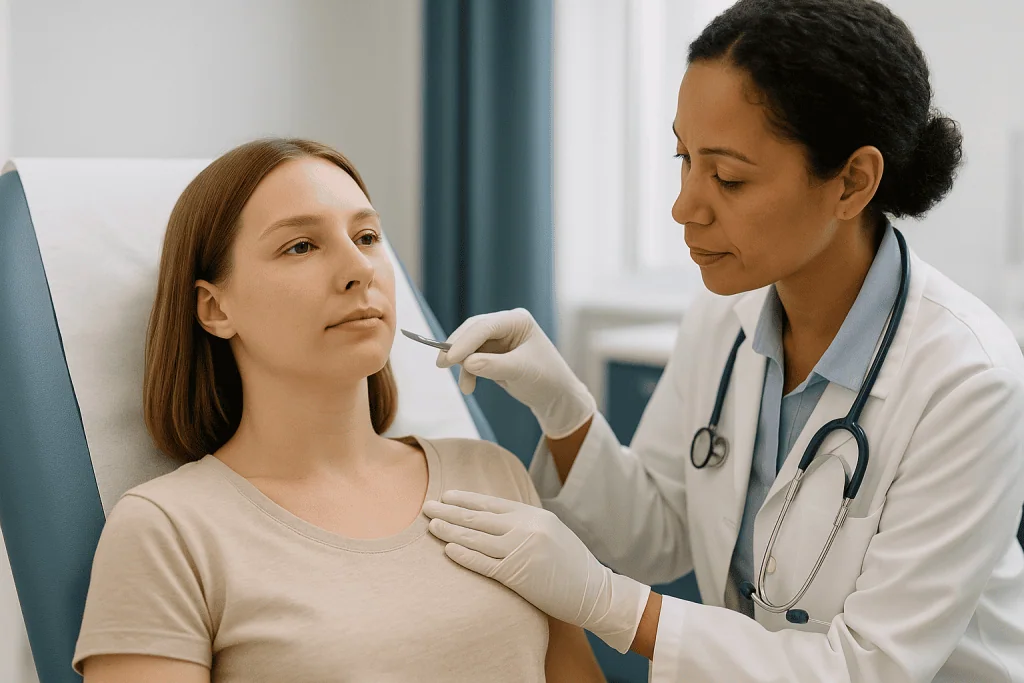
Which method is chosen depends on the mole’s depth, its location, whether there is any suspicion of abnormality, and the patient’s own history. A shave leaves a flat, shallow wound that heals from the base upward without sutures. An excision creates a deeper wound closed in a line, which tends to produce a fine linear scar rather than a round patch.
Whatever technique is used, the tissue is usually sent to a laboratory so a pathologist, a doctor who examines tissue under a microscope, can confirm the diagnosis. The Mayo Clinic notes that if a removed mole turns out to be cancerous, further surgery may be needed to make sure all abnormal cells are gone. That is one reason clinicians discourage any form of home removal, which destroys the tissue that would have been examined.
The numbing injection often includes a small amount of epinephrine, a substance that narrows blood vessels. It keeps the field clearer and reduces oozing, but it does not override a genuine bleeding tendency or a blood-thinning medicine. That is precisely why the bleeding questions come before the procedure, not after.
Why bleeding history matters to your dermatologist
A mole removal wound is small, often under a centimeter. Small wounds still bleed, and in the skin, bleeding that collects under a closed incision can lift the edges apart, delay healing and leave a wider scar. On the face, where the blood supply is rich, even modest oozing can be a nuisance for the first day.
Your personal and family bleeding history is the cheapest screening tool available. MedlinePlus explains that bleeding disorders occur when the blood does not clot properly, either because clotting proteins are low or because platelets, the small cell fragments that plug damaged vessels, do not work as they should. Von Willebrand disease, the most common inherited bleeding disorder, is often mild enough that people only notice it as frequent nosebleeds, heavy menstrual periods or prolonged bleeding after a tooth extraction. Many adults carry that history without a formal diagnosis.
So the dermatologist asks the practical questions: Did you bleed for a long time after dental work? Do you bruise from bumps you do not remember? Has a surgeon ever commented on your bleeding? Does anyone in your family have hemophilia or a similar condition?
Answers change the plan in concrete ways. The clinician may choose excision with sutures over a shave because a closed wound is easier to compress. Extra time may be spent on cautery, the controlled use of heat to seal small vessels. A pressure dressing may be applied and you may be asked to keep it on longer. If the history suggests an undiagnosed disorder, the team may arrange blood tests first or involve a hematologist, a doctor who specializes in blood conditions. None of this makes removal impossible; it makes it safer and more predictable.
Blood thinners before mole removal: what to disclose and why you should not stop them alone
The most common bleeding-related surprise in a dermatology clinic is not a rare disorder. It is a medicine the patient forgot to mention. Anticoagulants, which the NHS describes as medicines that slow clot formation to protect against stroke and dangerous clots in the legs and lungs, are prescribed for atrial fibrillation, artificial heart valves and prior clots. Antiplatelet drugs such as aspirin and clopidogrel work differently, making platelets less sticky, and are often taken after a heart attack or stent.

Both types raise bleeding at a wound site. The reflex many people have is to stop the medicine a few days before to “be safe.” The NHS guidance on anticoagulants is firm on this point: do not stop taking them without talking to the clinician who prescribed them, because the clot risk they protect against is usually far more serious than bleeding from a small skin procedure. Dermatologists routinely remove moles in people who remain on these medicines, adjusting technique and aftercare instead.
Disclosure also needs to include the less obvious items:
- Non-steroidal anti-inflammatory painkillers taken for a sore knee.
- Fish oil, vitamin E, ginkgo, garlic or ginger supplements, which can have mild antiplatelet effects.
- Alcohol intake, which affects both platelet function and the liver’s production of clotting factors.
What the clinician does with this information is a decision for the treating team, sometimes in consultation with your cardiologist or general practitioner. For some people nothing changes except a firmer dressing. For others the timing of the procedure is coordinated with the prescriber. The only wrong move is the silent one, where a medicine is stopped or continued without anyone in the room knowing.
Why your past scars matter: keloids and hypertrophic scars
Every scar on your body is a record of how your skin responds to injury, and dermatologists read that record closely before creating a new wound. Two patterns matter most.
A hypertrophic scar is a thick, raised scar that stays within the boundaries of the original wound and often flattens over time. A keloid is a scar that grows beyond the original wound edges, can keep enlarging, and rarely shrinks on its own. The NHS scars guidance notes that keloids are more common in people with darker skin tones, and the Mayo Clinic adds that they can take months, sometimes a year or longer, to form after an injury, so a recent wound that looks fine today has not finished telling its story.
Keloids favor certain areas: the chest, shoulders, upper back, jawline and earlobes. A pierced ear that turned into a firm lump is one of the most useful things you can mention, because it is a direct demonstration of keloid tendency in exactly the kind of small wound a mole removal creates.
How does this change the plan? For a mole that is clearly benign and the only reason for removal is appearance, a keloid history may lead the team to recommend leaving it alone, since a raised scar may be more noticeable than the mole. Where removal is medically needed, the clinician may choose the technique that produces the least tension on the wound, close it in a direction that follows natural skin lines, and build in early follow-up so any thickening is caught while it is still soft. Some teams discuss preventive measures such as silicone sheeting or pressure; the specifics are theirs to tailor.
Bring photographs of old scars if they are in places you cannot easily show. The dermatologist is not judging them; they are forecasting with them.
Who is usually a candidate for mole removal, and who is usually asked to wait
Most moles are harmless and never need removal, a point the NHS makes plainly in its guidance. The decision to remove one usually rests on one of three reasons: the mole has changed or looks suspicious and needs examination under the microscope; it sits where it is repeatedly irritated by clothing, shaving or glasses; or the person simply prefers not to have it. Each reason carries a different urgency.
People who are usually straightforward candidates have a stable mole, no significant bleeding history, no keloid tendency in the area, and good general health. The procedure fits inside a routine clinic visit.
People who may be asked to wait, or to take an extra step first, include:
- Those on anticoagulant or antiplatelet therapy whose prescriber wants to coordinate timing, particularly soon after a stent or a clot.
- Those with a suspected but undiagnosed bleeding disorder, who may need blood tests or a hematology opinion.
- Those with an active skin infection, eczema flare or open wound near the mole, since healing is less predictable in inflamed skin.
- Those with poorly controlled diabetes, where high blood sugar slows wound repair and raises infection risk.
- Those who are pregnant and want a purely cosmetic removal; moles can change in pregnancy, and many clinicians prefer to reassess afterward unless there is a medical concern.
- Those with a keloid history asking for removal from a keloid-prone site for cosmetic reasons alone.
Waiting is not the same as refusal. A suspicious mole in someone on blood thinners is still removed; the team simply plans around the medicine. The treating clinician weighs the reason for removal against the healing risks for that specific person, and that judgment cannot be made from a checklist alone.
Mole removal consultation questions: what you tell the doctor and what it changes
It helps to see the consultation as a two-column exercise. On one side is what you disclose; on the other is the concrete decision it informs. The table below summarizes the links clinicians draw most often.
| What you tell the doctor | What it typically changes |
|---|---|
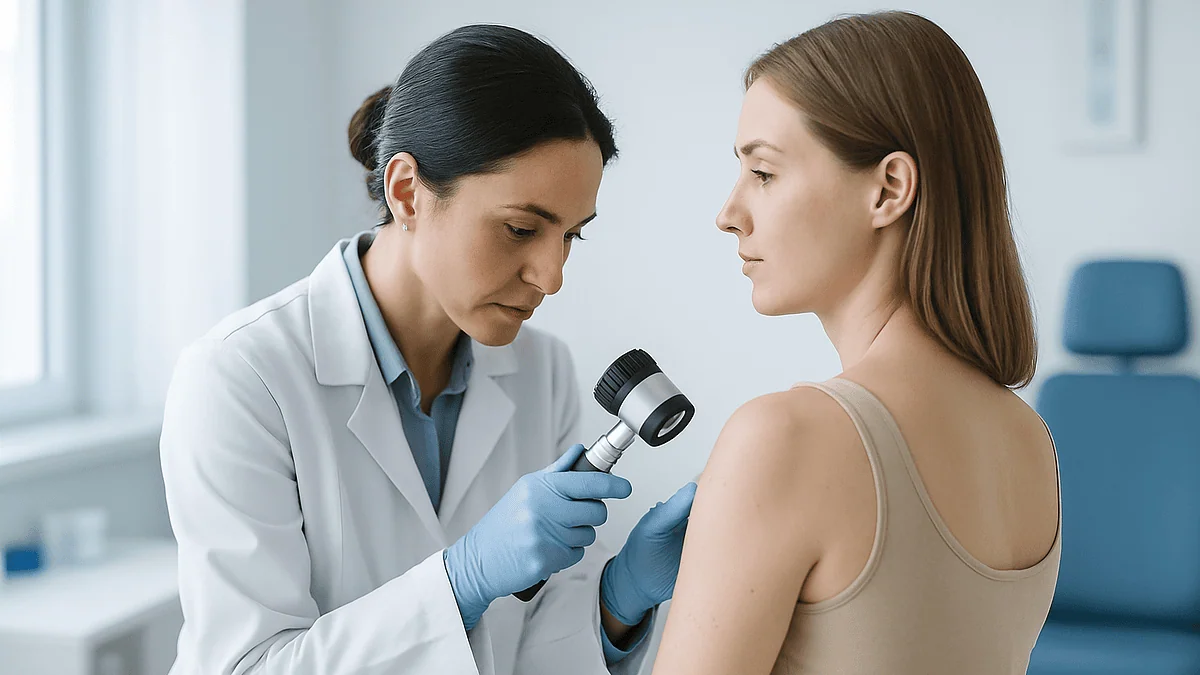
| The mole has grown, changed color or bled | Closer examination, often with a dermatoscope (a handheld magnifier with light); excision rather than shave so the whole lesion reaches the pathologist |
| Prolonged bleeding after dental work, surgery or cuts | Possible blood tests; preference for sutured closure; longer pressure dressing; more cautery time |
| Anticoagulant or antiplatelet medicine | Coordination with the prescriber; no self-stopping; technique and dressing adjusted |
| Supplements such as fish oil, vitamin E, ginkgo | Discussion of timing with the care team; counted toward overall bleeding risk |
| Keloid or thick raised scar in the past | Reconsideration of cosmetic removal; low-tension closure along skin lines; early follow-up and scar-care plan |
| Allergy to local anesthetic, latex, adhesive or antibiotic ointment | Alternative anesthetic agent or products; different dressing materials |
| Diabetes or immune-suppressing condition or medicine | Attention to glucose control; closer wound monitoring; lower threshold to treat infection |
| Pregnancy or breastfeeding | Possible deferral of cosmetic removal; choice of anesthetic reviewed by the team |
| Implanted pacemaker or defibrillator | Choice of cautery method that is safe with the device |
Two things stand out. First, almost nothing on the left side stops a medically needed removal; it modifies how the removal is done. Second, the right side is the clinician’s territory. Your job is accuracy and completeness on the left; the planning belongs to the team that will hold the blade and see you at follow-up.
Other history worth mentioning: allergies, diabetes, immune suppression and devices
Bleeding and scarring get the headlines, but a handful of other details change the procedure just as much, and they are easier to forget because they feel unrelated to skin.
Allergies come first. True allergy to local anesthetics is uncommon, but reactions to the preservatives in some anesthetic preparations, to latex gloves, to adhesive tapes and to topical antibiotic ointments are not. A patient who develops an itchy rash under every bandage is describing contact dermatitis, an inflammatory skin reaction to a substance touching it, and that information lets the team choose dressings that will not sabotage the wound.
Diabetes matters because sustained high blood sugar impairs the small blood vessels and immune cells that wounds depend on. The dermatologist may ask how well controlled it is and may coordinate with your usual doctor before a larger excision.
Immune suppression covers a wide group: people on long-term corticosteroids, on treatments for autoimmune disease, after organ transplant, or receiving chemotherapy. Wounds in these patients can heal more slowly and infections can be quieter at first, so the threshold for a follow-up check is lower.
Implanted electrical devices such as pacemakers deserve a mention because some forms of electrocautery, the use of electrical current to seal vessels, can interfere with them. Clinicians have safe alternatives but need to know in advance.
Finally, mention prior radiation therapy to the area, a history of skin cancer, a family history of melanoma, and whether you tend to get cold sores if the mole is near the mouth, since a procedure can occasionally trigger a flare. None of these is a reason to keep quiet. Each is a reason the plan will be slightly different from the person seen before you.
Can you remove a mole for cosmetic reasons, and does the history still matter?
Yes, moles are removed for appearance alone, and that is often the situation for facial moles that have never caused medical concern. What changes when the reason is cosmetic is the balance of the conversation, not the depth of the questions.
With a medically needed removal, the history determines how the procedure is done. With a cosmetic removal, the history also determines whether it is a good idea at all. A keloid-prone patient asking to have a small flat mole removed from the jawline is trading a known, stable spot for an uncertain scar. The NHS scars guidance observes that most scars keep improving for up to two years, but keloids may not, and a dermatologist is obliged to say so clearly before anyone consents.
Bleeding history carries similar weight. A person who remains on an anticoagulant for a mechanical heart valve can still have a cosmetic mole removed, but the team may suggest timing it when other health issues are quiet, and the prescriber will have a say.
A point that surprises many patients: even cosmetic removals are usually sent to pathology. The Mayo Clinic’s guidance is consistent on this, since a small proportion of moles that look harmless turn out otherwise, and the examination costs nothing in terms of risk to the patient. If you would prefer the tissue not be examined, say so, and expect your dermatologist to explain why they still recommend it.
Cosmetic removal is a choice, which means the decision is yours to make with full information. The dermatologist’s role is to supply that information honestly, including the uncomfortable parts about scar risk, and then respect what you decide.
What the following days and weeks usually look like
Recovery from mole removal is short but has a rhythm worth knowing, and the history you shared shapes how closely the team watches each stage.
The first day is about pressure and rest. A small dressing covers the wound; patients with a bleeding history or on blood thinners are often asked to leave it undisturbed longer and to avoid bending, heavy lifting or alcohol, all of which raise blood flow to the head and can restart oozing. Mild tenderness is normal once the numbing wears off. Simple pain relief is a question for the team, especially if you already take something that affects bleeding.
Over the first week a shave wound forms a scab and slowly fills from the base. A sutured excision stays closed by the stitches, and the team will tell you when they are to be removed; timing differs between the face and the body because skin tension varies. Keeping the wound clean and lightly covered, as instructed, matters more than any product.
Weeks two to six bring a pink, slightly raised line or patch. This is immature scar tissue, and its color and texture are not a verdict. The NHS notes that scars continue to change, flatten and fade for up to two years. During this window the dermatologist may ask keloid-prone patients to return early, because thickening caught while it is soft is easier to manage than a mature keloid.
Sun protection on the new scar, by cover or sunscreen as your team advises, reduces the risk of it darkening. The pathology result usually arrives within this period; your team will explain whether anything further is needed. If nothing is, the only follow-up may be the one you request to check how the scar is settling.
Does mole removal leave a scar, and what makes it bigger or smaller?
Every mole removal leaves a scar, because any wound that reaches into the dermis, the deeper layer of skin, heals by laying down new collagen rather than regrowing the original tissue. The honest question is not whether there will be a scar but how visible it is likely to be, and the answer rests on factors you can influence and factors you cannot.
Factors you cannot control include the mole’s size and depth, its location, your age and your genetic tendency toward raised scarring. Skin over the chest, shoulders and jaw is under more tension and is more keloid-prone, which is why a mole in those spots is weighed more carefully than one on a forearm. The type of removal matters too: a shave leaves a flat, round, often lighter patch, while an excision leaves a fine line that can sit within a natural skin crease.
Factors you can influence are the ones the consultation uncovers:
- Disclosing bleeding risk, because a blood collection under the wound stretches the scar.
- Disclosing keloid history, so closure is planned with the least tension and follow-up is early.
- Managing blood sugar and nutrition in the weeks around the procedure.
- Not smoking, which narrows skin blood vessels and slows repair.
- Following wound-care and sun-protection instructions through the months the scar is still maturing.
Expectations deserve a sentence of their own. A good outcome is a scar that is flat, pale and easy to overlook, not an invisible one. If a clinician promises no scar at all, that promise is not supported by how skin heals. If a scar does thicken, there are recognized options, from silicone products to injections given by the dermatologist, and the choice among them belongs to the treating team.
What people often get wrong about preparing for mole removal
Several beliefs circulate widely enough to deserve a direct correction.
“I should stop my blood thinner a few days before so I don’t bleed.” This is the most dangerous misconception on the list. The NHS guidance on anticoagulants is explicit that stopping without the prescriber’s advice can lead to stroke or clots. Dermatologists routinely remove moles in people on these medicines. Tell the team; let the prescriber decide.
“Supplements are natural, so they don’t count.” Fish oil, vitamin E, ginkgo and garlic capsules can all affect platelet function. They are not dangerous in themselves, but they belong on the list so the clinician can see the whole picture.
“A shave is scar-free.” A shave usually leaves a flatter scar than an excision, not no scar. It may also leave a pale or slightly darker patch, and some pigment can regrow because the deeper cells remain.
“My old scar was years ago, it doesn’t matter now.” Keloid tendency does not expire. An earlobe lump from a teenage piercing is still relevant information at fifty.
“If the mole is only cosmetic, they won’t send it to the lab.” Most teams send all removed tissue for examination, as the Mayo Clinic describes, because appearance alone cannot rule out abnormality.
“Home removal creams and freezing kits are a shortcut.” They destroy the tissue that would have been examined, often leave worse scars, and can mask a melanoma. Both the NHS and the Mayo Clinic advise against them.
“Bleeding during the procedure means something went wrong.” Some bleeding is expected; the skin is full of small vessels. What the team wants to avoid is unexpected bleeding, which is exactly what the pre-procedure questions are designed to prevent.
Questions to ask your care team before mole removal
The consultation runs in both directions. Once you have given your history, the following questions tend to draw out the information patients later wish they had asked for.
- Which method are you recommending for this mole, shave or excision, and what in my history led you to that choice?
- Will the tissue be sent to a pathologist, and how will I receive the result?
- Given my bleeding history or the medicines I take, what will you do differently, and who will coordinate with my prescriber?
- I have a thick or keloid scar elsewhere. How does that change your advice, and would you still recommend removal if the reason is only cosmetic?
- Where exactly will the scar sit, which direction will the line run, and what is a realistic appearance at three months and at a year?
- What should I avoid in the days before and after, such as alcohol, exercise or certain painkillers, and for how long?
- If stitches are used, when are they removed, and what happens if one comes out early?
- What signs of bleeding or infection should prompt a call, and who do I call outside clinic hours?
- If the scar starts to thicken, when should I come back and what options would you consider?
- Is there any reason to delay, such as an upcoming trip, a planned pregnancy or another procedure?
Write the answers down or ask for them in writing. The goal is a plan both you and the team can describe in the same words, so that the person changing the dressing at home and the person reviewing the wound in clinic are working from the same understanding. Every decision about technique, timing and aftercare remains with the treating clinician; your questions simply make that decision better informed.
When to call your doctor after mole removal
Most wounds settle quietly. A small number do not, and the history you gave before the procedure tells the team who is most likely to need an early call. Contact your care team promptly if you notice any of the following.
- Bleeding that soaks through the dressing or does not stop after firm, continuous pressure for the length of time your team specified.
- A rapidly growing, tense or painful swelling under the wound, which may indicate blood collecting beneath the skin.
- Spreading redness, warmth, increasing pain after the first day or two, or pus, which can signal infection.
- Fever or feeling generally unwell in the days after the procedure.
- Wound edges that have opened, or stitches that have come out before the planned removal.
- A scar that is becoming thick, raised, itchy or extending beyond the original wound in the weeks or months afterward, particularly if you have a keloid history.
- Pigment reappearing at the site, or any new change in the area, which the Mayo Clinic notes can occasionally happen and should be checked.
- Any reaction such as hives, swelling of the lips or face, or difficulty breathing after the anesthetic or dressing, which needs emergency care immediately.
Call sooner rather than later if you take an anticoagulant, have a known or suspected bleeding disorder, have diabetes, or are on medicines that suppress the immune system. These are the situations in which problems can escalate faster and in which early review changes the outcome most.
Finally, if the pathology result is not communicated within the timeframe your team gave, call to ask. A removed mole is unfinished business until the report has been read and explained to you, and the clinicians who removed it are the right people to close that loop.
Frequently asked questions
What are the most important things to tell my doctor before mole removal?
Tell your doctor about any history of unusual bleeding, every medicine and supplement you take, any thick or keloid scars, allergies to numbing agents or adhesives, diabetes, immune-suppressing conditions, pregnancy and whether the mole has changed. These details decide the technique, the closure and the follow-up plan. Bring a written list rather than relying on memory on the day.
Should I stop blood thinners before mole removal?
No, not on your own. Anticoagulants protect against stroke and dangerous clots, and stopping them without advice can be far riskier than bleeding from a small skin wound. Tell the dermatologist what you take; they will coordinate with the prescribing clinician and adjust technique, cautery and dressings instead. Any change in your medicine is a decision for the prescriber.
Does mole removal leave a scar?
Yes, every mole removal leaves some scar because the wound reaches the deeper layer of skin. A shave usually leaves a flat, pale patch; an excision leaves a fine line. Size, location, age, genetics and your history of raised scarring all influence the result, and scars keep improving for up to two years according to the NHS.
Can you remove a mole for cosmetic reasons?
Yes, moles are commonly removed for appearance alone. The same history still matters, and sometimes matters more, because a keloid tendency or bleeding risk may make the scar a worse trade than the mole. Even cosmetic removals are usually sent to pathology. The decision rests with you and your treating team after a frank discussion of scar risk.
Why does my dermatologist care about a scar on my shoulder from years ago?
Old scars show how your skin heals. A thick, raised scar that spread beyond the original injury suggests keloid tendency, which does not fade with time. That information helps the dermatologist decide whether removal is wise for a cosmetic mole, how to close the wound with the least tension, and how soon to see you again afterward.
What mole removal consultation questions should I ask?
Ask which technique is planned and why, whether the tissue goes to a pathologist, what changes because of your bleeding history or medicines, where the scar will sit and how it is likely to look at a year, when stitches come out, what to avoid afterward, and which signs should prompt a call. Request the answers in writing if possible.
Do supplements like fish oil matter before mole removal?
They can. Fish oil, vitamin E, ginkgo, garlic and ginger supplements have mild effects on platelets, the blood components that plug small wounds. On their own they rarely cause trouble, but combined with aspirin or an anticoagulant they add to overall bleeding risk. List them so your clinician can factor them into the plan.
Will the removed mole be tested even if it looked harmless?
In most practices, yes. The Mayo Clinic describes sending removed moles for examination by a pathologist, because some lesions that look benign turn out otherwise and further treatment may be needed. The test adds no risk to you. If you would prefer otherwise, raise it, and expect your dermatologist to explain why they still recommend it.
How long after mole removal can I exercise or drink alcohol?
Your care team will give a specific timeframe based on the wound type and your history. Both exercise and alcohol increase blood flow and can restart bleeding in the first days, and alcohol also affects clotting, so people with bleeding risk are often asked to wait longer. Follow the instructions you were given rather than a general figure.
What are the warning signs after mole removal?
Call your doctor for bleeding that does not stop with firm pressure, a tense or painful swelling under the wound, spreading redness, pus, fever, opened wound edges, a scar that thickens or grows beyond the wound, or pigment returning at the site. Swelling of the lips or face or difficulty breathing after the procedure needs emergency care immediately.
References
This article is for general information only and is not a substitute for professional medical advice. Please consult a qualified doctor about your individual situation.

More from the Blog

What to Avoid Before Dermal Fillers: Alcohol, Blood Thinners and Supplements That Bruise
Before dermal fillers, most injectors ask you to avoid alcohol for about a day, to swap aspirin or ibuprofen taken for minor aches for…
Tissue Expansion Timeline: Weekly Fills, the Stretching Phase and Second-Stage Reconstruction
A tissue expander timeline usually runs in three phases. The expander is placed in a first operation; once the incision has healed over the…

How Long Do Mesotherapy Results Last and Why Sessions Are Spaced Weeks Apart
Mesotherapy results are temporary. Small studies and practice protocols generally describe visible skin changes lasting a few weeks to a few months after a…

What Buccal Fat Removal Is: The Procedure, Who It Suits and What to Expect
Buccal fat removal is a cosmetic surgery that takes out part of the buccal fat pad, a pocket of deep fat in the lower…

Cryoablation Recovery: Monitoring on Day One, Light Activity and When Exercise Resumes
Cryoablation recovery time is usually short compared with open surgery. Most people go home the same day or after one night of monitoring, feel…
What a Healed Skin Graft Looks Like: Color, Texture and How the Area Changes Over Years
A healed skin graft usually settles into a patch that stays slightly different from the surrounding skin: often paler or darker, smoother or thinner,…