

Bone Marrow Transplant for Aplastic Anemia: Donor Matching, Conditioning and Recovery
Key Takeaways
- Aplastic anemia is a bone marrow failure disorder, not a cancer, so conditioning before transplant is typically reduced-intensity and aims to suppress immunity rather than eradicate disease.
- Full siblings have roughly a one-in-four chance of being a complete HLA match, while blood type does not need to match at all and eventually converts to the donor's.
- Graft rejection is a more prominent risk in aplastic anemia than in leukemia transplants, which is why teams limit transfusions and use filtered, irradiated blood products before a planned transplant.
- Graft-versus-host disease offers no compensating benefit in a non-malignant disease, so many programs prefer marrow-derived grafts and T-cell-depleting antibodies to reduce it.
- Engraftment usually appears two to four weeks after infusion, but full immune recovery and revaccination extend across a year or more, according to the NHS and Mayo Clinic.
- Immunosuppressive therapy with antithymocyte globulin and cyclosporine is a guideline-supported first-line alternative for many adults, particularly those without a matched sibling donor.
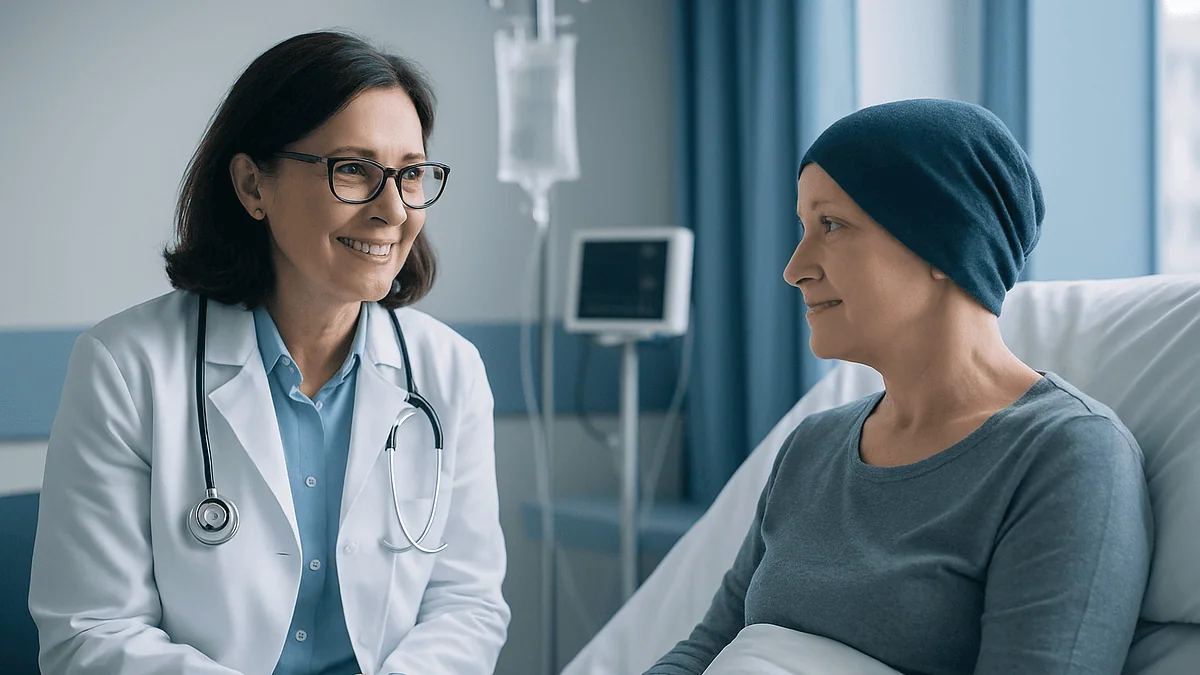
A bone marrow transplant for aplastic anemia replaces a failing marrow with healthy blood-forming stem cells from a donor, usually an HLA-matched sibling or an unrelated volunteer. The process involves donor matching, a relatively gentle conditioning regimen that suppresses the immune system, an infusion that feels like a transfusion, several weeks in hospital awaiting engraftment, and months of guarded recovery. Suitability is decided individually by a transplant team.
The phone call about the sibling’s blood test comes on an ordinary Tuesday. A brother in another state had a cheek swab mailed to him three weeks earlier, and now a nurse coordinator is saying the words the family has been holding its breath for: he is a full match. Relief, then a fresh wave of questions, because nobody in the room quite understands what happens next.
That is the moment most families meet the bone marrow transplant aplastic anemia process for the first time: not in a textbook, but in a small consulting room, with transfusion bags still hanging in the memory and a stack of consent forms on the table.
This explainer walks through what actually happens, in the order it happens. It covers how donors are matched, why the preparation chemotherapy is gentler than the kind used for leukemia, what the weeks in hospital usually look like, and what honest evidence says about the months and years after. Every decision along the way belongs to you and your treating team.
How does a bone marrow transplant for aplastic anemia actually work?
Picture the bone marrow as a factory that runs three production lines at once: red cells to carry oxygen, white cells to fight infection, and platelets to stop bleeding. In aplastic anemia, the factory floor goes quiet. The stem cells that normally staff all three lines are destroyed, most often by the person’s own immune system attacking them by mistake, and blood counts fall across the board.
A transplant does not repair the old factory. It replaces the workforce. Healthy hematopoietic stem cells, the immature cells that can grow into every kind of blood cell, are collected from a donor and given to the patient through a vein. They travel through the bloodstream, find their way into the spaces inside the bones, settle in, and begin dividing. The point at which the new cells start producing measurable numbers of white cells and platelets is called engraftment.
Two things have to happen for that to succeed. First, the patient’s remaining immune cells must be held back so they do not reject the incoming graft, which is the job of the conditioning treatment given beforehand. Second, the donor’s immune cells, which arrive with the stem cells, must be kept from attacking the patient, which is the job of the anti-rejection medicines given afterward. The National Heart, Lung, and Blood Institute describes this as the only treatment that restores a working marrow rather than coaxing the damaged one back into service.
Because the underlying disease is immune-driven rather than cancerous, the whole approach is tuned differently from a transplant for leukemia. There is no malignant clone to eradicate. The goal is to swap immune systems as safely as possible while doing the least collateral damage to a body that has often been living on transfusions for months.
Why does aplastic anemia call for a transplant when it is not a cancer?
Aplastic anemia sits in an unusual category. It is a bone marrow failure disorder, not a blood cancer, yet its most severe forms are treated with the same tool that was built for leukemia. The reason is arithmetic. Severe aplastic anemia is defined by how empty the marrow is and how low the counts have fallen, and at that level the risks of infection and bleeding are immediate rather than theoretical.
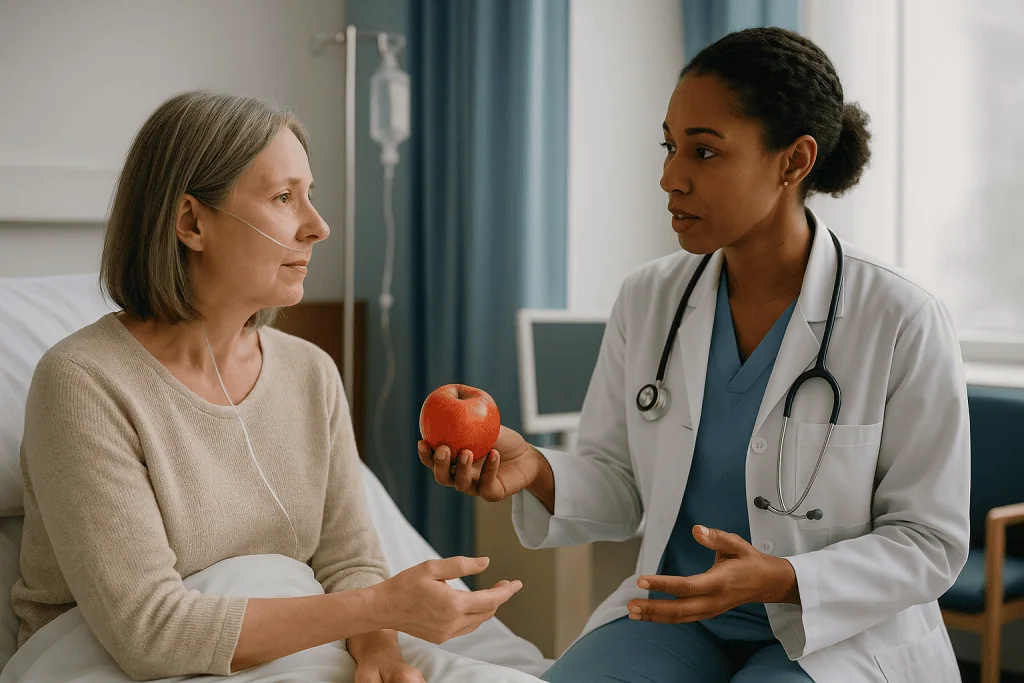
Transfusions buy time. Red cells relieve breathlessness and fatigue; platelets reduce bleeding. They do nothing to restart production, and each transfusion adds iron the body cannot excrete and exposes the immune system to foreign proteins that can make a later graft harder to accept. Mayo Clinic notes that repeated transfusions before transplant may increase the chance of complications, which is one reason transplant teams prefer to move promptly once a suitable donor is found.
There is one genuine alternative for many patients, and it deserves equal billing. Immunosuppressive therapy, usually a combination of antithymocyte globulin (an antibody preparation that removes the T-cells attacking the marrow) and cyclosporine (a medicine that dampens T-cell activity), can persuade the patient’s own marrow to recover. It avoids the risks of a foreign graft entirely. Its drawbacks are that response takes months, relapse can occur, and a proportion of patients later develop a clonal marrow disorder.
Choosing between the two is therefore not a matter of one being right and the other wrong. It is a weighing of age, donor availability, how severe the counts are, other health conditions, and personal priorities, done with a hematologist who knows the individual case. A transplant offers a definitive change; immunosuppression offers a less invasive path with a different risk profile. Both are mainstream, guideline-supported options.
Who is usually offered a transplant, and who is usually asked to wait?
Age and donor status do most of the sorting. Mayo Clinic describes stem cell transplant as the treatment of choice for people who are younger and have a matched donor, most often a sibling. Younger bodies tolerate conditioning better, recover immune function faster, and have fewer of the accumulated health problems that raise transplant risk.
Severity matters just as much. Transplant is generally reserved for severe or very severe aplastic anemia, where the marrow is profoundly empty and neutrophil and platelet counts are dangerously low. People with moderate disease, whose counts are reduced but not critical, are often monitored or treated with supportive care first, because for them the risks of transplant may outweigh the risks of the disease.
Who is typically asked to wait, or steered toward immunosuppression first?
- People without a matched sibling, for whom an unrelated donor search takes time and the transplant carries somewhat higher risk of rejection and graft-versus-host disease.
- Older adults, in whom transplant-related complications climb; the exact threshold varies between programs and is judged case by case rather than by a fixed birthday.
- People with active, uncontrolled infection, who need it treated before conditioning can safely suppress the immune system further.
- People with significant heart, lung, liver or kidney disease that would make the procedure unsafe.
None of these is a permanent no. A patient who starts on immunosuppressive therapy and does not respond may be reconsidered for transplant, and a widening donor search may turn up a match months later. The framework is a sequence of options rather than a single door. What matters is that the decision is made by a transplant team with the full picture, and that the person living with the disease understands why they are being placed where they are in that sequence.
How does HLA matching for bone marrow transplant work?
Every cell in the body carries a set of surface markers called human leukocyte antigens, or HLA. Think of them as a molecular ID badge that tells the immune system which cells belong. When donor and recipient badges differ, the recipient’s immune system may reject the graft, and the donor’s immune cells may attack the recipient. Matching those badges as closely as possible is the foundation of the whole process.
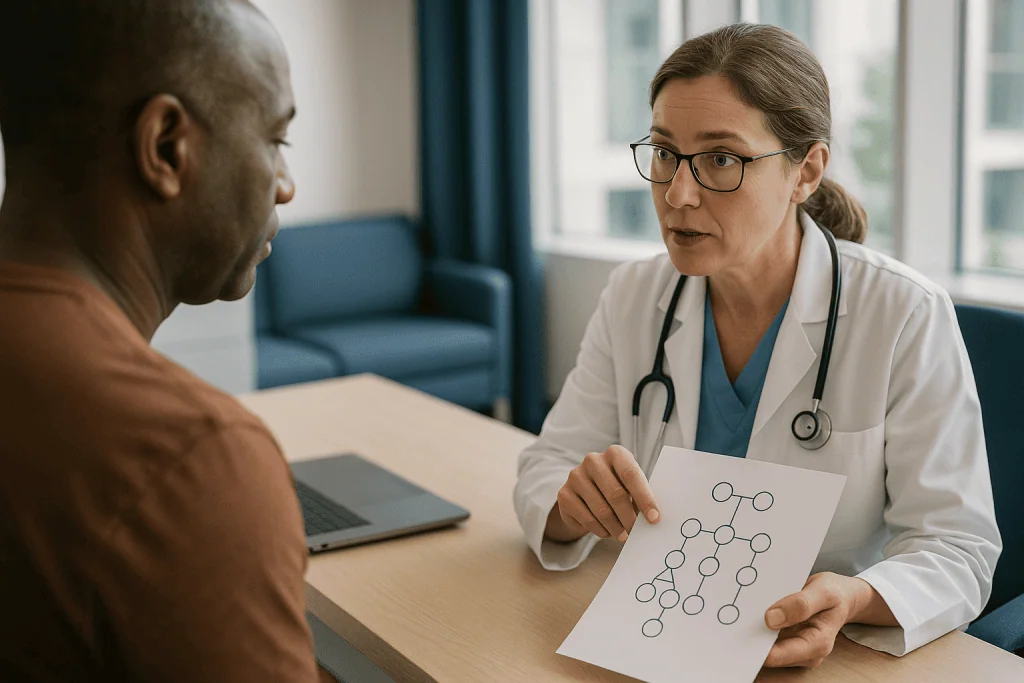
HLA genes are inherited in blocks, one set from each parent. That is why full siblings have roughly a one-in-four chance of being a complete match, while parents and children almost never are. Testing requires only a blood sample or cheek swab, and results typically come back within a few weeks. Johns Hopkins describes matched sibling donors as the preferred source because they produce the lowest rates of rejection and graft-versus-host disease.
Laboratories look at several HLA locations, most commonly A, B, C, DRB1 and DQ, and report a match as a fraction: ten out of ten, nine out of ten, and so on. A perfect match is ideal but not always achievable, and a single mismatch does not automatically rule a donor out. Transplant physicians weigh which position is mismatched, the donor’s age and sex, and the donor’s own health.
Blood type, importantly, does not need to match. A donor with type A blood can give marrow to a recipient with type O; the recipient’s blood type gradually switches to the donor’s over the months after engraftment. Families are often surprised by this, having assumed blood group compatibility was the deciding factor.
One more practical point: even a matched sibling must pass a full medical work-up. Donation is safe for healthy people, but donors with certain infections, autoimmune diseases or inherited marrow conditions may be excluded to protect both parties.
What if there is no matched sibling donor?
Around seven in ten people who need a transplant do not have a matched sibling, according to Johns Hopkins, so the unrelated search is the common path rather than the exception. Volunteer donor registries around the world hold millions of typed adults, and coordinators can query them within days. Finding a match depends heavily on ancestry, because HLA types cluster within populations; people of mixed or underrepresented heritage often face longer searches.
Several donor options now exist, each with a different balance of speed and risk:
| Donor type | How quickly available | Main considerations |
|---|---|---|
| Matched sibling | Weeks, once typed | Lowest rejection and GVHD risk; preferred first choice |
| Matched unrelated volunteer | Often two to four months | Widely used; slightly higher GVHD risk than sibling |
| Haploidentical (half-matched relative) | Weeks; parents, children, siblings usually eligible | Almost everyone has one; newer post-transplant strategies reduce GVHD |
| Umbilical cord blood | Days to weeks from a bank | Less strict matching needed; smaller cell dose, slower engraftment |
Haploidentical transplants, using a parent or child who shares exactly half the HLA badge, were once considered too risky for a non-malignant disease. Refinements in how the donor’s immune cells are controlled after infusion have changed that picture in many programs, and the option is increasingly discussed for people without a full match.
Cord blood, collected from the placenta after birth and frozen, tolerates more mismatch because its immune cells are naive. Its drawback in adults is the small number of cells per unit, which slows engraftment and prolongs the vulnerable window.
Which route is right depends on how urgently counts are falling, the patient’s size, and the program’s experience. The unrelated search usually runs in parallel with immunosuppressive treatment, so no time is lost while the registry is queried.
What is the conditioning regimen for aplastic anemia, and why is it gentler?
Conditioning is the treatment given in the days immediately before the stem cell infusion. In leukemia transplants its purpose is twofold: destroy remaining cancer cells and suppress the immune system enough to accept the graft. In aplastic anemia there is no cancer to destroy, so the first goal disappears and the regimen can be lighter.
The medicines used are chosen for their effect on lymphocytes, the immune cells that would otherwise reject the incoming marrow. Cyclophosphamide, a chemotherapy agent that damages dividing immune cells, is a long-standing backbone. Antithymocyte globulin, an antibody preparation that removes T-cells directly, is commonly added. Fludarabine, which impairs lymphocyte survival, is frequently included in unrelated-donor and older-patient protocols. Some centers add a modest amount of whole-body radiation when the donor is unrelated, to reduce the risk of rejection. The exact combination, and how it is given, is determined by the transplant team based on donor type, age and prior transfusion exposure.
Gentler is a relative term. Conditioning still causes nausea, hair thinning, mouth soreness and profound drops in blood counts, and it is delivered in hospital through a central venous catheter, a soft tube placed into a large vein in the chest that stays in for weeks. What it usually avoids is the organ-damaging intensity of full myeloablative regimens, which is why fertility, growth in children and long-term organ function are often better preserved than in cancer transplants.
A distinctive worry in aplastic anemia is graft rejection, which the NHS and Johns Hopkins both list as a recognized complication. Months of transfusions can prime the immune system against foreign cells, so conditioning in heavily transfused patients is sometimes adjusted upward. This is one reason hematologists try to limit transfusions and use filtered, irradiated blood products before a planned transplant.
The bone marrow transplant aplastic anemia process, step by step
Once a donor is confirmed, the sequence is remarkably consistent from program to program. Timings below are typical ranges described by Mayo Clinic and the NHS; individual schedules vary.
| Stage | Typical timing | What happens |
|---|---|---|
| Pre-transplant evaluation | Two to four weeks before | Heart, lung, kidney and liver tests; infection screening; dental check; counselling; central line placement |
| Conditioning | Roughly four to seven days before | Immune-suppressing chemotherapy, sometimes with antibodies or radiation, given in hospital |
| Donor collection | Day of or day before infusion | Marrow drawn from the pelvic bones under anesthesia, or stem cells filtered from the bloodstream |
| Infusion (day zero) | Single day | Cells given through the central line over one to several hours, like a transfusion |
| Waiting for engraftment | About two to four weeks | Counts at their lowest; protective isolation; transfusions and antibiotics as needed |
| Early recovery | Weeks three to twelve | Discharge when counts hold; frequent clinic visits; anti-rejection medicines continue |
| Longer recovery | Three to twelve months and beyond | Gradual return to activity; immune rebuilding; revaccination begins |
Day zero is quietly anticlimactic. Many patients expect surgery and instead find a nurse hanging a bag of pinkish fluid. The cells are not placed into the bones; they home there on their own, guided by chemical signals from the marrow spaces.
The donor’s side deserves a mention. For aplastic anemia, many teams prefer cells harvested directly from the pelvic bones rather than filtered from blood, because marrow grafts have been associated with less chronic graft-versus-host disease in this disease. The donor has a short anesthetic, goes home the same or next day, and typically feels hip soreness and tiredness for several days to a couple of weeks. Their marrow replaces itself fully.
How painful is a bone marrow transplant?
This is one of the most searched questions, and the honest answer is that the transplant itself, the infusion, is not painful. It feels like a transfusion. Some people notice a strange taste or smell from the preservative used if cells were frozen, a flushed face, or brief chills, and nurses watch closely for allergic reactions. Within an hour or two it is over.
Discomfort comes from the treatments around it. The central line is placed under local anesthetic and mild sedation; the site aches for a day or two. Conditioning chemotherapy commonly causes nausea, which is managed with anti-sickness medicines, and mouth and throat soreness, called mucositis, that peaks about a week after infusion and can make eating and swallowing difficult. Mayo Clinic lists mouth sores, nausea and diarrhea among the expected short-term effects. Pain relief, including patient-controlled options, is standard when mucositis is severe.
Bone pain sometimes appears around engraftment, when the marrow spaces refill and begin working hard. It tends to be a deep ache in the hips, spine or breastbone and usually passes within days. Fatigue is nearly universal and often outlasts every other symptom.
Emotional discomfort is real too. Weeks in a single room, with visitors limited and every temperature reading watched, wears people down. Most transplant units have psychologists or counsellors attached, and using them is a sign of good sense, not weakness.
For the donor, pain is confined to the harvest site. Mayo Clinic describes soreness in the lower back and hips after a marrow collection that generally settles within a few days, with most donors back to normal routines within a week or two. Donors who give peripheral blood stem cells instead often report bone aches for a few days from the growth-factor injections that mobilize the cells.
What do the first weeks after infusion usually look like?
The period between day zero and engraftment is the most closely monitored stretch of the entire journey. Blood counts, already low from the disease, fall further under conditioning and stay there until the new cells take hold. Mayo Clinic describes this window as lasting several weeks.
Daily life on the unit has a rhythm. Blood is drawn each morning. Temperature is checked every few hours, because fever with a neutrophil count near zero is treated as an emergency and antibiotics start within the hour, often before any test result returns. Platelet and red cell transfusions are given as counts dictate. Mouth care happens several times a day to reduce mucositis and infection.
Rooms are often positive-pressure with filtered air. Fresh flowers and certain foods are excluded, visitors are screened for colds, and handwashing becomes a ritual. It can feel excessive until one appreciates that a common cold virus can be dangerous when there are no white cells to meet it.
Engraftment announces itself on the lab printout before anyone feels different: a neutrophil count that climbs on three consecutive days, then platelets following. This typically occurs two to four weeks after infusion in marrow and peripheral blood transplants, later with cord blood. A rising count is celebrated on most units with something close to ceremony.
Discharge follows once counts are stable enough, the patient is eating and drinking, and there is no active infection. The NHS notes that most people stay in hospital for at least a few weeks. Going home is not the finish line. Clinic visits run two or three times a week at first, the central line often stays in for further transfusions and blood tests, and someone at home needs to be available around the clock during those early weeks.
Graft failure and graft-versus-host disease: the two risks that matter most
Every transplant carries a long list of possible complications, but two dominate the conversation in aplastic anemia because the disease shifts the odds in specific ways.
Graft failure, also called rejection, means the donor cells do not engraft or engraft and then are lost. The patient’s immune system, primed by prior transfusions and not fully suppressed by the gentler conditioning, drives out the newcomers. Counts stay low or fall again after an initial rise. Johns Hopkins lists graft failure among the recognized risks, and it is more common in this disease than in leukemia transplants, where conditioning is heavier. Options after failure include a second transplant, sometimes from a different donor, and the transplant team plans for this contingency from the start.
Graft-versus-host disease, or GVHD, is the mirror image: donor immune cells recognize the patient’s body as foreign and attack it. In its acute form, usually within the first three months, it targets skin (rash), gut (diarrhea, cramping) and liver (jaundice). Chronic GVHD, which can appear later, may involve dry eyes and mouth, tightened skin, stiff joints and lung changes, and can persist for years.
In cancer transplants, mild GVHD is sometimes tolerated because the same donor cells also attack residual tumor. In aplastic anemia there is no tumor, so GVHD brings risk without any compensating benefit. This shapes several decisions: the preference for marrow over peripheral blood grafts, the inclusion of T-cell-depleting antibodies in conditioning, and prolonged use of medicines like cyclosporine or tacrolimus (which suppress the donor T-cells) after infusion.
Other risks include serious infections, bleeding, organ injury from conditioning, and infertility, which is less frequent with reduced-intensity regimens but should still be discussed, along with fertility preservation, before treatment begins. A transplant team will lay these out in a formal consent discussion; ask for the conversation to be repeated if the first pass was a blur.
Life after bone marrow transplant: what months three to twelve usually bring
Discharge marks the transition from acute danger to slow rebuilding. The NHS describes recovery as taking up to a year or longer, and most people find that timeline accurate for energy and stamina, even when blood counts normalize much sooner.
The immune system is the last thing to return. Neutrophils recover within weeks, but the lymphocytes that provide lasting protection against viruses and encapsulated bacteria take months to a year or more to mature. During that time, anti-rejection medicines add further suppression. The practical result is a period of avoiding crowds, raw or undercooked foods, gardening without gloves, and sick contacts. Antiviral, antifungal and antibiotic prophylaxis, medicines taken to prevent rather than treat infection, are common through this window.
Vaccinations must be rebuilt from scratch. A transplant effectively erases prior immunity, so a full childhood-style schedule is repeated, usually starting several months after infusion once the team judges the new immune system ready. Live vaccines are delayed longest and require confirmation that immunosuppression has stopped.
Anti-rejection medicines are typically continued for many months and then tapered slowly under supervision. Stopping or adjusting them without the transplant team’s direction risks provoking GVHD or graft loss; the prescribing clinician sets every step of that taper.
The everyday picture tends to brighten in stages. Many people return to desk work or school between three and six months; physically demanding jobs take longer. Hair regrows. Appetite returns. Blood type shifts to the donor’s, and a follow-up test called chimerism confirms what proportion of blood cells now come from the donor. Long-term follow-up continues for years, watching for late effects such as thyroid changes, cataracts, iron overload from earlier transfusions, and, rarely, second malignancies. Can a person live a normal life after a bone marrow transplant? Many do, with the caveat that normal now includes an annual visit to a clinic that knows their history.
What is the survival rate for aplastic anemia patients with bone marrow transplants?
This question deserves a straight answer, and the straight answer is that no single number would serve you well. Published outcomes vary widely depending on the patient’s age, whether the donor was a matched sibling or unrelated, how long the person had been transfused before transplant, and how recently the series was reported. Results from matched sibling transplants in children and young adults are consistently the most favorable; results in older adults and with alternative donors have improved substantially over recent decades but sit lower. Any figure quoted without those qualifiers is close to meaningless for an individual.
Mainstream sources agree on the direction of travel. Mayo Clinic describes transplant as the treatment of choice for younger people with a matched donor, and the NHS describes it as a potentially lasting treatment for severe aplastic anemia. Both frame it as the option most likely to produce a durable recovery of blood counts, while acknowledging the risks of rejection, GVHD and infection that account for most of the difference between outcomes.
What shifts the odds in a patient’s favor is well established even where precise percentages are not:
- Younger age at transplant.
- A closely matched donor, ideally a sibling.
- Fewer transfusions before transplant, which lowers the risk of rejection.
- Shorter time from diagnosis to transplant.
- Absence of active infection at the time of conditioning.
- Care at a program that performs transplants for non-malignant conditions regularly.
The most useful version of this question is the one you ask your own transplant physician: given my age, my donor, my transfusion history and my other health conditions, what range of outcomes have patients like me experienced in your program, and what are the main things that go wrong? Transplant centers track their own results and can share them. A candid conversation about those numbers, and about how they compare with immunosuppressive therapy for someone in your position, is a reasonable thing to expect before signing consent.
Does aplastic anemia turn into leukemia?
Aplastic anemia is not a cancer, and most people with it never develop one. That reassurance is true and worth holding on to. It is also incomplete, because there is a real, if minority, risk that the disease evolves over years into a clonal marrow disorder, either myelodysplastic syndrome (a condition in which the marrow produces abnormal, poorly functioning cells) or acute myeloid leukemia. Cleveland Clinic and the National Heart, Lung, and Blood Institute both list this progression among the long-term complications.
The mechanism is thought to involve selection pressure. When the immune system has destroyed most of the marrow’s stem cells, the few that survive are sometimes those carrying mutations that help them evade attack. Given years to expand, those clones may acquire further changes. The risk is documented mainly in people treated with immunosuppressive therapy, whose own marrow, with its surviving clones, is doing the regenerating.
A successful transplant changes that calculation because the patient’s original stem cells are replaced by the donor’s. The risk of the original marrow evolving into leukemia essentially disappears with it. Transplant recipients carry other long-term risks, including a small increase in second cancers related to conditioning and immunosuppression, so lifelong follow-up remains standard for everyone.
There is one more layer. A proportion of people with aplastic anemia also carry a small population of cells with a condition called paroxysmal nocturnal hemoglobinuria, in which red cells lack a protective surface protein and break down more easily. This overlap is checked for at diagnosis and monitored over time, and it can influence treatment choices.
Practically, this is why people managed with immunosuppression have periodic marrow examinations for years, and why a change in counts long after treatment is investigated rather than dismissed. Vigilance, not alarm, is the appropriate posture.
What people often get wrong about transplant for aplastic anemia
Misconceptions cluster around this procedure, partly because most public information about transplants concerns cancer. A few corrections make the conversations with your team easier.
It is not surgery. The recipient has no operation. Cells arrive through an intravenous line. The donor may have a short procedure under anesthesia, but nothing is cut or implanted in the patient.
The donor does not lose their marrow. A harvest takes a small fraction of the donor’s total, and it regenerates within weeks. Donors are not left depleted, and giving does not increase their own risk of blood disease.
Blood type does not need to match. HLA typing, not ABO group, determines compatibility. The recipient’s blood group eventually converts to the donor’s.
Immunosuppressive therapy is not a consolation prize. For many adults, particularly those without a sibling match, antithymocyte globulin and cyclosporine are the guideline-recommended first-line treatment, not a fallback. It is a different set of trade-offs rather than a lesser choice.
Engraftment is not the end. Rising counts are a milestone, but the months of immune rebuilding, medication tapering and GVHD surveillance that follow are where much of the long-term outcome is decided.
The conditioning is not the same as leukemia chemotherapy. Because there is no cancer to eliminate, regimens for aplastic anemia are typically reduced-intensity. Side effects are real but generally less severe, and long-term organ and fertility effects are often milder.
Feeling well early does not mean precautions can lapse. The vulnerable window for infection extends well past discharge, and the anti-rejection medicines that make people feel almost normal are the same ones suppressing immunity. Every change to those medicines should come from the transplant team, never from how a person feels on a given day.
Questions to ask your care team before agreeing to transplant
Consent discussions are dense, and it is entirely reasonable to bring a written list and a second person to take notes. These questions tend to draw out the information families later wish they had asked for.
- How severe is my aplastic anemia by the standard criteria, and does that severity change which treatments you recommend?
- Why transplant rather than immunosuppressive therapy for me specifically, and what would make you change that advice?
- Who is my proposed donor, how closely matched, and what does that match level mean for rejection and GVHD risk?
- What conditioning regimen do you plan, why that combination, and what are its expected short- and long-term effects?
- Will the graft be marrow or peripheral blood stem cells, and why?
- What is your program’s experience with transplants for aplastic anemia in particular, and what range of outcomes have patients like me had?
- What are the signs of graft failure and GVHD, and what is the plan if either occurs?
- How long should I expect to be in hospital, and what support will I need at home afterward?
- Should fertility preservation be arranged before conditioning, and how quickly?
- How many transfusions have I had, and should anything change about them while we wait?
- Which medicines will I take after transplant, for roughly how long, and who manages changes to them?
- When will vaccinations restart, and what infection precautions apply at each stage?
- What long-term follow-up will I need, and for how many years?
- Who do I call, day or night, if something worries me?
Answers should be specific to you. A team that welcomes these questions and returns to them across several appointments is doing exactly what good transplant medicine looks like.
When to call your doctor
Before, during and for many months after a transplant for aplastic anemia, the margin for waiting is narrow. Low counts and suppressed immunity mean that ordinary symptoms can escalate quickly, and transplant programs expect to be called. Every patient should have a direct line to the unit and use it without hesitation.
Seek urgent medical attention, calling the transplant team or emergency services immediately, for any of the following:
- A temperature at or above the threshold your team has given you, or chills and shaking even without a measured fever. With low neutrophils, fever is an emergency regardless of how well you feel.
- Bleeding that does not stop, blood in urine or stool, black stools, coughing or vomiting blood, or a sudden spread of pinpoint red spots or bruises.
- Sudden severe headache, confusion, weakness on one side, difficulty speaking or vision change, which may signal bleeding inside the head when platelets are low.
- Shortness of breath, chest pain, or a new persistent cough.
- A new rash, especially on the palms, soles, face or trunk, or watery diarrhea, abdominal cramping, or yellowing of the skin or eyes, all possible signs of graft-versus-host disease.
- Redness, swelling, pain or discharge at the central line site, or a line that will not flush.
- Inability to keep down fluids or medicines, particularly anti-rejection medicines.
- Severe mouth or throat pain that prevents swallowing.
- Contact with someone who has chickenpox, shingles, measles or another contagious illness.
Call during clinic hours for milder concerns: fatigue that is worsening rather than steadily improving, low mood that persists, new joint stiffness or dry eyes, or any question about a medicine. Mayo Clinic advises that people with aplastic anemia contact their doctor promptly for symptoms of infection or bleeding at any stage, transplant or not.
Every decision about treatment, medicines and next steps sits with your treating team. This article can prepare you for the conversation; it cannot replace it.
Frequently asked questions
What is the survival rate for aplastic anemia patients with bone marrow transplants?
There is no single reliable figure, because outcomes depend heavily on age, donor match, transfusion history and time from diagnosis. Matched sibling transplants in younger patients produce the most favorable published results; older adults and alternative-donor transplants have improved markedly but sit lower. Ask your transplant team for the range of outcomes seen in patients like you in their own program, and how that compares with immunosuppressive therapy for your situation.
How painful is a bone marrow transplant for the recipient?
The infusion itself is not painful; it feels like a blood transfusion. Discomfort comes from surrounding treatment: the central line placement, nausea from conditioning, mouth and throat soreness that peaks about a week after infusion, and sometimes deep bone aching around engraftment. All of these are anticipated and managed with medicines and mouth care. Fatigue tends to outlast the pain by months.
Does aplastic anemia turn into leukemia?
Usually not, but a minority of people, mainly those treated with immunosuppressive therapy rather than transplant, develop myelodysplastic syndrome or acute myeloid leukemia over years as surviving marrow clones expand. A successful transplant replaces the original stem cells, which removes that particular risk while introducing other long-term considerations. Periodic monitoring after any treatment is standard so that count changes are investigated early.
Can a person live a normal life after a bone marrow transplant?
Many people do, with the qualification that recovery is slow and long-term follow-up continues for years. The NHS describes recovery taking up to a year or longer; energy, immunity and stamina return in stages, and many return to work or school within several months. Ongoing precautions, revaccination and monitoring for late effects become part of an otherwise ordinary routine.
What is the aplastic anemia transplant recovery time in hospital and at home?
The NHS notes that most people stay in hospital for at least a few weeks, covering conditioning, infusion and the wait for engraftment, which Mayo Clinic describes as taking several weeks. After discharge, clinic visits run several times a week initially, and the broader recovery of immune function and energy extends across roughly a year, with anti-rejection medicines tapered gradually under the team’s direction.
How does HLA matching for bone marrow transplant differ from blood type matching?
HLA matching compares immune identity markers on cell surfaces, inherited in blocks from each parent, and determines whether a graft will be accepted and whether donor cells will attack the recipient. Blood type is irrelevant to that compatibility; a donor of any ABO group can give to any recipient, and the recipient’s blood type gradually changes to match the donor’s after engraftment.
Is the conditioning regimen for aplastic anemia the same as for leukemia?
No. Because there is no cancer to eliminate, conditioning for aplastic anemia is typically reduced-intensity and focused on suppressing the recipient’s immune system so the graft is not rejected. Medicines such as cyclophosphamide, antithymocyte globulin and fludarabine are common, sometimes with a modest amount of whole-body radiation in unrelated-donor settings. The transplant team selects the combination individually; side effects are real but generally milder than full-intensity regimens.
What happens to the donor during a marrow harvest?
The donor receives a general or regional anesthetic, and marrow is drawn from the back of the pelvic bones through needles. It usually takes an hour or two, with discharge the same or following day. Mayo Clinic describes hip and lower back soreness and tiredness lasting several days, with most donors resuming normal routines within a week or two. The donated marrow regenerates fully.
Why do transplant teams try to limit transfusions before a transplant for aplastic anemia?
Each transfusion exposes the immune system to foreign proteins, which can prime it to reject a later graft, and adds iron that accumulates in organs. Mayo Clinic notes that repeated transfusions before transplant may raise the risk of complications. Transfusions are still given when counts demand, using filtered and irradiated products, but teams aim to move to transplant promptly once a donor is confirmed.
What are the first signs of graft-versus-host disease after transplant?
Acute GVHD usually appears within the first three months and shows as a rash, often starting on the palms, soles, ears or upper trunk; watery diarrhea with cramping; or yellowing of the skin and eyes from liver involvement. Chronic GVHD may develop later with dry eyes and mouth, skin tightening or joint stiffness. Any of these should be reported to the transplant team the same day.
References
- NHS: Stem cell and bone marrow transplants
- NIH National Heart, Lung, and Blood Institute: Aplastic Anemia
- Cleveland Clinic: Aplastic Anemia
This article is for general information only and is not a substitute for professional medical advice. Please consult a qualified doctor about your individual situation.

More from the Blog

How Neutrophil Counts Are Followed as Neutropenia Recovers and When Precautions Ease
As neutropenia recovers, care teams repeat a complete blood count with differential and watch the absolute neutrophil count (ANC) climb back through defined thresholds:…
How a Bone Marrow Biopsy and Immune Testing Pin Down the Cause of Bone Marrow Failure
A bone marrow biopsy shows whether the marrow is empty, scarred, crowded with abnormal cells or making faulty cells, which a blood count alone…

Transfusion Support in Myelodysplastic Syndrome: How It Is Scheduled and Iron Is Monitored
Transfusion support in myelodysplastic syndrome means giving donated red cells or platelets on a schedule set by the person's symptoms, blood counts, and how…

Living With Myelofibrosis: Fatigue, Appetite and Activity Planning Between Visits
Living with myelofibrosis fatigue usually means working with, not against, a body whose bone marrow is scarred and whose spleen may be enlarged. Between…

Everyday Precautions With Neutropenia: Food Handling, Crowds, Hygiene and Travel
Living with neutropenia means lowering your exposure to germs while your neutrophil count is low. Core precautions include thorough handwashing, cooking meat, eggs and…

Living With Hemochromatosis: Diet, Alcohol, Supplements and What Your Doctor Reviews
Diet alone does not control hemochromatosis; regular blood removal (venesection) does. Most guidance asks people to limit or avoid alcohol, because it adds strain…