

Botox Alternatives: Microcurrent, Peptides and Other Options: What the Evidence Grades

Key Takeaways
- Botulinum toxin relaxes the muscle that folds skin, while nearly every marketed alternative works on the skin itself, so they address different kinds of wrinkles rather than competing head-to-head.
- Daily sunscreen is the only intervention with a randomized trial, lasting four and a half years, showing it slows visible skin aging.
- Prescription retinoids have decades of placebo-controlled trials for fine lines and pigment, with visible change typically taking three to six months.
- Microcurrent stimulates facial muscles, the opposite of a muscle relaxant, and no sham-controlled trial has shown it reduces expression lines.
- Topical peptides such as acetyl hexapeptide-8 block nerve signaling in a test tube, but penetration studies suggest very little reaches muscle through intact skin.
- Injectable research peptides sold online are not approved medicines, carry no human efficacy data for wrinkles and are not lawful or safe for self-use.
Botox alternatives fall into three evidence tiers. Daily sunscreen and prescription retinoids have the strongest trial evidence for softening fine lines, but they work slowly and differently from Botox. Microcurrent, topical peptides and at-home devices rest on small, short or industry-funded studies and cannot relax the muscles that cause expression lines. Only a qualified clinician can advise whether any option suits your skin, health history and goals.
The video has been viewed tens of millions of times: a woman in her forties glides a two-pronged wand across her cheekbone, freezes the frame, and declares she has cancelled her injector. In the comments, someone else swears by a peptide serum they call “Botox in a bottle”. By the end of the scroll, the search bar is already filling with the words botox alternatives.
As of spring 2026, that search is climbing for a few concrete reasons. Two new botulinum toxin brands have widened the injectable market in recent years, at-home microcurrent devices with regulatory clearance have moved from salons into bathroom cabinets, and so-called research peptides are circulating on social platforms with claims that no regulator has reviewed. The result is a lot of confident advice and very little grading of how good the proof behind it actually is.
This piece does the grading. Each option is sorted by what the trials, the observational data or the expert opinion really show, so you can read the next viral clip with a clearer eye.
What changed recently to put botox alternatives in the spotlight
Three developments explain the current surge, and none of them is a single miracle study.
The first is the injectable market itself. Botox (onabotulinumtoxinA) has carried a cosmetic approval for the frown lines between the eyebrows since 2002, a date recorded on the MedlinePlus and Mayo Clinic pages in this article’s references. Since then, several other botulinum toxin products have been approved for the same purpose, with the most recent additions arriving in 2022 and 2024. Every new brand launches with advertising, and advertising sends people to search engines asking whether they need a needle at all.
The second shift is hardware. Handheld microcurrent devices, which deliver a very low electrical current through the skin, have earned regulatory clearance as low-risk cosmetic devices. Clearance is not the same as approval: it means a device is considered substantially similar to one already on the market, not that it has been proven to erase wrinkles in controlled trials. That nuance rarely survives a 30-second clip.
The third is the peptide wave. Topical peptides such as acetyl hexapeptide-8, a short chain of amino acids marketed as a muscle-relaxing serum, have been sold for two decades, but 2025 brought a new twist: injectable “research” peptides promoted online for skin repair or anti-aging. These compounds are not approved medicines in the United States, and selling them for human use outside a clinical trial is not lawful.
Put those three currents together and you get the present moment: more toxin brands, more gadgets with official-sounding paperwork, and more grey-market compounds, all competing for the same anxious glance in the mirror. The evidence has not moved nearly as fast as the marketing has.
What Botox actually does, and why most alternatives work differently
To judge a substitute fairly, you need to know what the original does. Botulinum toxin type A is a purified protein that blocks the chemical signal, acetylcholine, that tells a muscle to contract. Injected into a specific facial muscle, it temporarily weakens that muscle so the overlying skin stops folding. Mayo Clinic notes the cosmetic effect generally lasts about three to four months before nerve endings recover and the muscle moves again.
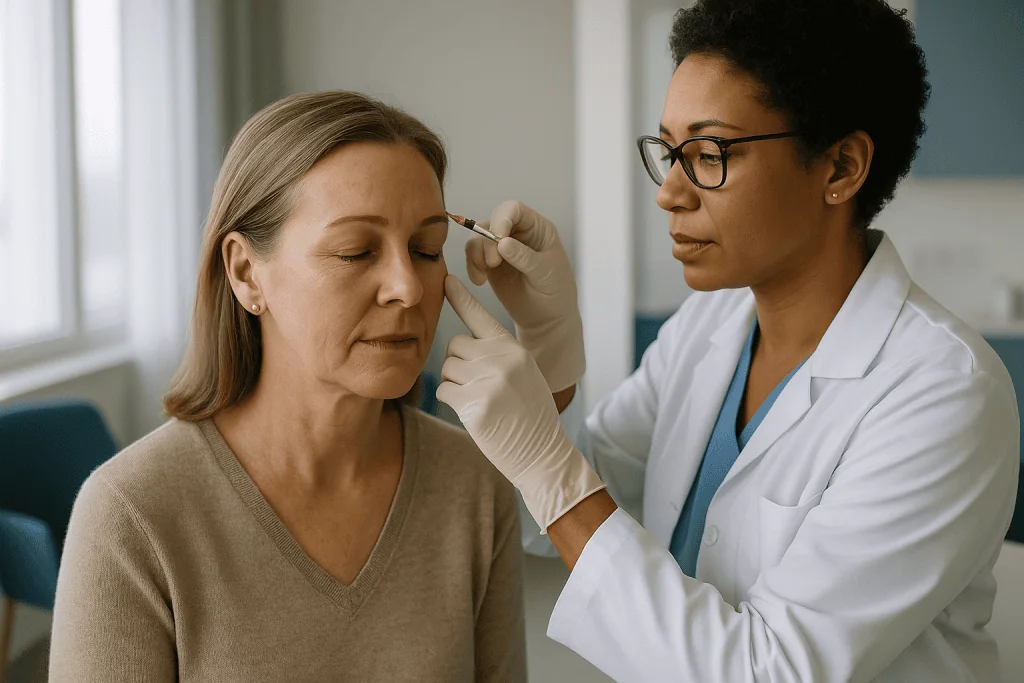
That mechanism matters because wrinkles are not one thing. Dermatologists separate dynamic lines, which appear only when you frown, squint or raise your eyebrows, from static lines, which are etched into resting skin by years of sun, smoking and collagen loss. Botulinum toxin targets the dynamic kind. It does nothing for sun damage, uneven pigment, thinning dermis or the sagging that comes from fat and bone changes deeper in the face.
Almost every product marketed as a Botox alternative works on the static side of that equation. Retinoids rebuild collagen and thicken the epidermis. Sunscreen stops further ultraviolet injury. Lasers and radiofrequency create controlled micro-injury that prompts repair. Peptide serums claim to signal collagen production or, in a few cases, to mimic the toxin’s effect on nerve signaling from the outside in.
Only that last claim is a true head-to-head comparison, and it is the weakest. The skin’s outer layer exists precisely to keep large molecules out. A peptide applied to the surface has to cross that barrier, reach the muscle several millimeters down, and block nerve transmission at a meaningful level. No topical has been shown to do that convincingly in independent trials.
So the honest framing is not “Botox versus alternatives”. It is “which tool suits which kind of line”, and for many people the answer involves more than one.
Does microcurrent work as a botox alternative?
Microcurrent is the gadget of the moment, so it deserves a careful look. The devices pass a current measured in microamps, roughly a millionth of the current in a household bulb, through hand-held electrodes placed on the face. The marketing story is that this “re-educates” facial muscles, boosts cellular energy and lifts the contours over time.
Microcurrent has a legitimate medical history. Physical therapists have used low-level electrical stimulation for decades to support muscle rehabilitation, and some studies suggest it may help wound healing. That background gives the cosmetic claim a veneer of science. The problem is the leap from “stimulates muscle” to “reduces wrinkles”, because stimulating a muscle is the opposite of what botulinum toxin does. If a device tightens the frontalis muscle, it would, if anything, deepen forehead lines rather than soften them.
What does the published evidence show? The studies that exist are small, mostly short, frequently funded or run by device makers, and often rely on photographs graded by investigators who know which side was treated. A handful report modest improvements in perceived firmness after several weeks of daily use. None has demonstrated a reduction in dynamic lines comparable to injected toxin, and none has followed users for a year or more.
In evidence-grading language, that places microcurrent at the level of low-quality observational data and manufacturer-sponsored pilot studies, with no large randomized, blinded trial against a sham device. Expert opinion from dermatology bodies is lukewarm: generally safe for most people, possibly a temporary plumping from fluid shifts, but not a substitute for a muscle relaxant.
A useful comparison is a gym session for your face. You may notice a short-lived flush and tightness afterward. Whether that translates into measurably fewer wrinkles after six months is exactly what the evidence has not yet answered.
Peptides and the "Botox in a bottle" promise
Peptides are short chains of amino acids, the building blocks of proteins. Your skin uses them as messengers; some tell fibroblasts to make collagen, others calm inflammation. Cosmetic chemists have borrowed that language, and dozens of serums now list peptides as their headline ingredient. Cleveland Clinic’s overview of peptides describes the theory clearly and is equally clear that most claims rest on laboratory or small human studies.
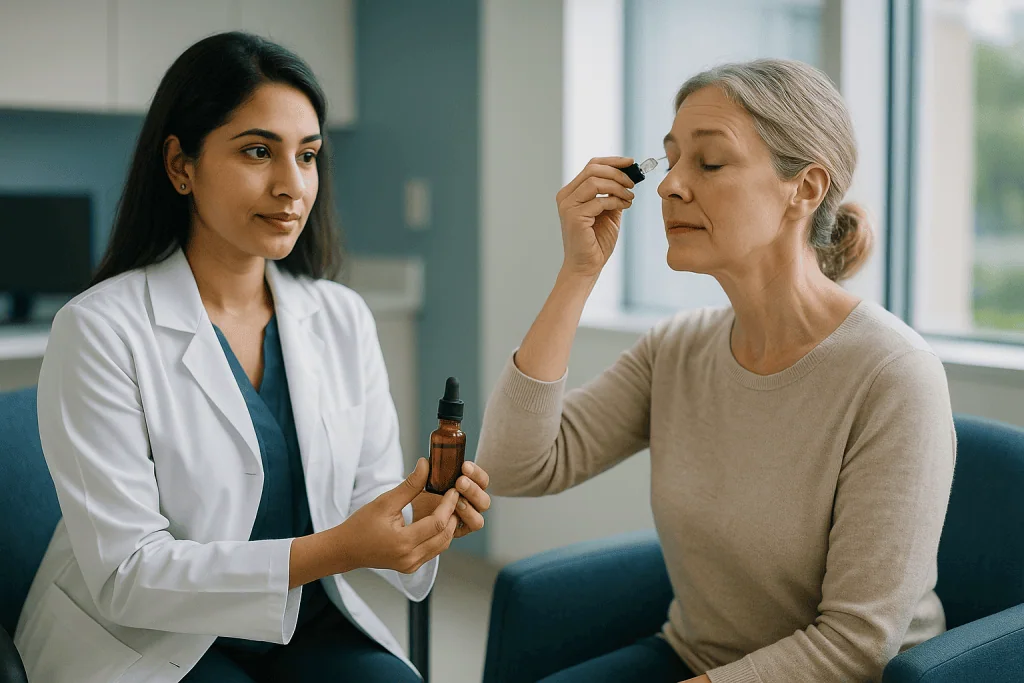
Three categories are worth separating. Signal peptides, such as palmitoyl pentapeptide-4, are meant to nudge collagen production. Carrier peptides, like copper tripeptide-1, deliver trace minerals used in repair. Neurotransmitter-inhibiting peptides, chiefly acetyl hexapeptide-8, are the ones sold with the “Botox in a bottle” tagline, because in a test tube they interfere with the same release machinery that botulinum toxin targets.
The test-tube result is real. The clinical result is far less impressive. Trials of acetyl hexapeptide-8 creams have reported reductions in wrinkle depth measured by skin-surface imaging, but the studies are small, short, often sponsored by the ingredient manufacturer, and the measured changes are a fraction of what injections achieve. There is also a basic delivery problem: the peptide has to penetrate intact skin and reach the muscle below it, and penetration studies suggest very little does.
Signal and carrier peptides fare slightly better in the sense that they aim at the skin itself rather than the muscle beneath. Even so, the evidence is a patchwork of 8–12 week studies with modest effects on hydration and texture, not large controlled trials with long follow-up.
Grade it honestly: low to moderate evidence for small improvements in skin texture; very low evidence for anything resembling muscle relaxation. A peptide serum may be a pleasant moisturizer with a plausible mechanism. It is not an injectable in a dropper.
The botox alternatives with the strongest evidence: sunscreen and retinoids
Here is where the grading flips, because the two least glamorous options carry the best data.
Daily broad-spectrum sunscreen is the only intervention with a randomized trial showing it slows visible skin aging. In a well-known Australian study, adults assigned to daily sunscreen use showed measurably less skin aging over four and a half years than those using it at their own discretion. Ultraviolet light drives most of the collagen breakdown and pigment change we read as “old”, so blocking it is prevention at the source. Mayo Clinic’s wrinkle guidance lists sun protection first for a reason.
Prescription retinoids come next. Tretinoin, a vitamin A derivative, has decades of randomized, placebo-controlled trials showing it reduces fine lines, roughness and mottled pigment by increasing collagen synthesis and normalizing cell turnover. Harvard Health’s review of retinoids summarizes the pattern: visible improvement typically takes three to six months, the effect is real but gradual, and irritation in the first weeks is common. Over-the-counter retinol works through the same pathway but is converted in the skin to the active form, so it is gentler and slower.
Neither of these touches dynamic lines directly. Sunscreen will not stop you frowning, and tretinoin will not relax a muscle. What they do is improve the canvas: thicker, more elastic skin creases less deeply and recovers faster. Many dermatologists regard them as the foundation that every other option, including injections, sits on top of.
In grading terms, sunscreen and prescription retinoids earn the highest marks on this list: multiple randomized trials, consistent direction of effect, long follow-up and a clear mechanism. If someone wants one evidence-based change rather than a cabinet of gadgets, this is where the data points, and the choice of retinoid strength and formulation belongs with a prescribing clinician.
Energy-based treatments: radiofrequency, ultrasound and lasers
Between creams and needles sits a family of office-based devices that heat or injure the skin on purpose. The principle is shared: controlled damage triggers a wound-healing response, and part of that response is new collagen.
Fractional lasers deliver light in thousands of microscopic columns, leaving surrounding skin intact so healing is faster. Ablative versions remove the surface layer and carry the strongest evidence for smoothing static lines and sun damage, at the price of a week or more of downtime and a higher risk of pigment changes in darker skin. Non-ablative versions are gentler, need repeated sessions and produce milder change.
Radiofrequency uses radio-wave energy to heat the deeper dermis while cooling the surface. Microneedling with radiofrequency combines tiny needles with that heat. Focused ultrasound aims energy deeper still, at the layer surgeons tighten in a facelift. Mayo Clinic’s treatment overview groups these as skin-resurfacing and tightening options with moderate evidence for texture and laxity.
What they are not is muscle relaxants. A patient who wants a smooth forehead at rest but still has a strong frown will keep the frown after any of these treatments. Where energy devices genuinely compete is with the sagging and crepey texture that botulinum toxin cannot help.
The evidence base is uneven. Ablative laser resurfacing has decades of comparative studies and histology showing new collagen. Radiofrequency and ultrasound have a growing but smaller body of split-face trials, many of them industry-sponsored, with outcomes measured by photographs and patient satisfaction rather than objective instruments. At-home versions of these devices deliver far lower energy than clinic machines and have correspondingly thinner evidence.
A fair summary: moderate evidence for static lines and laxity, strongest for ablative laser, with results that depend heavily on operator skill, device settings and skin type.
Fillers and biostimulators: related, but not substitutes
Search results for botox alternatives often surface hyaluronic acid fillers and biostimulators such as poly-L-lactic acid, so it is worth saying plainly what they are. Fillers are gels injected to replace lost volume or lift a fold. Biostimulators are injected particles that provoke the body to lay down its own collagen over months.
Both are regulated as medical devices and both carry a reasonable evidence base from controlled trials, mostly against no treatment or against each other, with follow-up of six to twenty-four months. Hyaluronic acid fillers have the additional advantage that an enzyme can dissolve them if the result is unwanted.
The reason they are not true alternatives is the same mechanism argument that runs through this article. A filler placed in a nasolabial fold lifts the fold; it does not stop the smile that made it. Some injectors do use a small amount of filler to soften a deep etched frown line that toxin alone cannot flatten, but that is a complement, not a replacement.
Risks differ as well. Filler complications include lumps, delayed swelling and, rarely, blockage of a blood vessel that can damage skin or, in exceptional cases, vision. Those events are uncommon in trained hands but are more serious than the temporary eyelid droop that is the best-known toxin side effect.
Why mention them at all, then? Because people searching for alternatives are often really asking which change in their face bothers them most. If the answer is hollow cheeks or a tired under-eye, volume is the relevant conversation, and no amount of muscle relaxation will address it. Matching the tool to the complaint is the single most useful thing a consultation does, and it is a judgment that belongs to a qualified clinician rather than a search ranking.
Botox alternatives compared: a one-table summary
The table below condenses the grading. “Evidence strength” reflects the design and size of the best available studies, not whether the option is popular. “Target” is the type of wrinkle each one is actually built for.
| Option | What it targets | Best evidence type | Evidence strength | Typical timeline |
|---|---|---|---|---|
| Botulinum toxin injections | Dynamic lines (frown, forehead, crow’s feet) | Multiple randomized placebo-controlled trials | High | Visible in days; lasts about 3–4 months |
| Daily sunscreen | Prevention of static lines and pigment | Randomized trial over 4.5 years | High | Prevention; benefit accrues over years |
| Prescription retinoids | Fine static lines, texture, pigment | Randomized placebo-controlled trials | High | 3–6 months for visible change |
| Ablative laser resurfacing | Static lines, sun damage | Comparative trials, histology | Moderate to high | Weeks of healing; months for full effect |
| Radiofrequency / ultrasound | Laxity, mild static lines | Split-face trials, often sponsored | Moderate | Several sessions; 3–6 months |
| Hyaluronic acid fillers | Volume loss, folds | Controlled trials vs no treatment | Moderate to high | Immediate; 6–18 months |
| Topical peptides | Texture, hydration; muscle claim unproven | Small sponsored studies | Low | 8–12 weeks for subtle change |
| Microcurrent devices | Perceived firmness | Small pilot studies, no sham-controlled trial | Low | Weeks of daily use; durability unknown |
| Injectable research peptides | Various unverified claims | Animal or lab data only | Very low; not approved | Not applicable |
Two patterns stand out. The options with high evidence are either the injection itself or the slow, unglamorous basics. And the two most viral alternatives sit at the bottom of the table, not because they are dangerous, but because nobody has done the rigorous studies that would move them up.
What the evidence actually says, graded by strength
Grading evidence is less mysterious than it sounds. At the top sit randomized controlled trials, where participants are assigned by chance to treatment or placebo and ideally neither they nor the assessor knows which. Below that come observational studies, which watch what happens to people who chose a treatment themselves and are vulnerable to bias. At the base is expert opinion, valuable for context but not proof.
Applying that ladder to this topic gives a clear picture.
- High-quality randomized evidence: botulinum toxin for glabellar and forehead lines; daily sunscreen for slowing photoaging; prescription tretinoin for fine lines and pigment. These have multiple trials, consistent results and plausible mechanisms.
- Moderate evidence: ablative laser resurfacing, hyaluronic acid fillers and, with more caveats, radiofrequency and focused ultrasound. Trials exist but are smaller, shorter or industry-funded, and outcomes often rely on photographs.
- Low evidence: topical peptides including acetyl hexapeptide-8; over-the-counter retinol at cosmetic concentrations; at-home LED and microcurrent devices. Studies are tiny, brief and rarely sham-controlled.
- Very low or no human evidence: injectable research peptides sold online, oral collagen for wrinkle reduction, facial exercise regimens marketed as toxin substitutes.
One more honesty check matters: effect size. A trial can be well designed and still show a small benefit. Tretinoin’s improvements in fine lines are statistically robust and clinically visible over months, yet they are gentler than what a toxin achieves on a deep frown line in two weeks. Conversely, a microcurrent pilot study reporting “significant” firmness may be describing a change too small to notice in a mirror.
So when a headline says “study proves”, ask three questions. Was there a control group? Did anyone independent assess the result? And how big was the change in real terms? Most claims attached to botox alternatives fail at least one of those tests, and the ones that pass all three are the boring ones.
Common myths about botox alternatives, corrected
Viral claims tend to cluster. These are the ones clinicians hear most, with what the evidence says instead.
Myth: “Microcurrent is a natural Botox.” It is close to the opposite. Botulinum toxin stops a muscle contracting; microcurrent stimulates it. Any temporary lift is likely to be fluid movement and short-lived tissue tightening, not muscle relaxation. No sham-controlled trial has shown a reduction in dynamic lines.
Myth: “Peptide serums relax muscles from the outside.” The laboratory mechanism is real; the clinical result is not comparable. Skin is built to block large molecules, and penetration studies suggest very little peptide reaches muscle. Measured improvements are small and come from short, sponsored studies.
Myth: “Natural means safer.” Botulinum toxin is itself a naturally derived protein, and some “natural” alternatives, such as unregulated injectable peptides, carry unknown risks precisely because nobody has tested them. Safety comes from regulation and evidence, not from the word on the label.
Myth: “Facial exercises prevent wrinkles.” Repetitive muscle movement is what creates dynamic lines. Small studies of facial exercise report modest fullness in the cheeks, which is a volume effect, not a wrinkle effect, and the evidence is weak.
Myth: “Botox is only for people over 40, so younger people should use alternatives.” Age is not the deciding factor; the type and depth of line is. The decision about whether and when any injectable is appropriate belongs to a clinician assessing an individual face and health history.
Myth: “If a device is FDA-cleared it has been proven to work.” Clearance means a device resembles one already sold and is considered low risk. It is not a verdict on efficacy. Approval, which applies to drugs like botulinum toxin, requires controlled trials.
None of these myths is malicious. They survive because they are simpler than the truth, and the truth is that different lines need different tools.
Safety, side effects and who should be cautious
Low evidence does not automatically mean high risk, and high evidence does not mean no risk. Each category has its own profile.
Botulinum toxin, for reference, is associated with injection-site bruising, headache and, in a small percentage of cases, temporary drooping of an eyelid or eyebrow when the protein spreads to a neighboring muscle. MedlinePlus and the NHS both list rarer events such as difficulty swallowing or breathing when spread is more extensive, which is why the medicine carries a boxed warning and should only be administered by a trained professional.
Retinoids cause dryness, peeling and redness in the first weeks, increase sun sensitivity, and are avoided in pregnancy. Sunscreen carries almost no risk beyond occasional irritation or allergy to a specific filter.
Energy devices can cause burns, blistering, prolonged redness and pigment change, with darker skin types at higher risk of hyperpigmentation after ablative laser. Fillers add the rare but serious possibility of vascular blockage.
Microcurrent devices are generally well tolerated. Manufacturers advise against use by people with pacemakers or implanted electrical devices, during pregnancy, over active acne or broken skin, and in anyone with a seizure disorder, because the safety data in those groups is absent rather than reassuring.
Topical peptides are low-risk; the main complaint is contact irritation. Injectable research peptides are a different matter: unverified sterility, unknown purity and no human safety data. Infection, allergic reaction and contamination have been reported with unregulated injectable products.
Anyone with a neuromuscular condition, a bleeding disorder, a history of keloid scarring, active skin infection, or who is pregnant or breastfeeding should raise that with a clinician before any of these treatments. The right answer varies by person, and a short conversation before a procedure prevents most of the complications that follow one.
How to choose among botox alternatives: a practical path
Strip away the branding and the decision usually comes down to four questions.
First, which lines bother you? Hold a mirror and relax your face completely. Lines that vanish at rest are dynamic, and muscle relaxation is the treatment with the strongest evidence for them. Lines that stay are static, and that is retinoid, laser and resurfacing territory. Hollows and folds point toward volume.
Second, what timeline suits you? Sunscreen and retinoids are a months-long commitment with gradual payoff. Injections and ablative procedures act within days to weeks but need repeating or carry downtime. Devices used at home demand near-daily effort for benefits that remain uncertain.
Third, how much uncertainty are you comfortable with? If you prefer treatments with randomized trial support, the list is short and clear. If you enjoy experimenting with a low-risk serum or gadget, that is a reasonable personal choice, provided you understand you are the trial.
Fourth, what does your health history rule out? Pregnancy, neuromuscular disease, implanted electrical devices and certain skin conditions change the calculus for specific options, and that conversation needs a clinician.
A sensible sequence for many people, and one most dermatologists would recognize, looks like this: establish daily sun protection and, if appropriate, a prescription retinoid as the base; then decide with a clinician whether a targeted procedure adds something the base cannot. Gadgets and serums slot in as optional extras rather than foundations.
What this path deliberately avoids is replacing one decision with a cheaper-feeling but unproven one. Choosing a microcurrent wand because you want to avoid a needle is reasonable. Choosing it because you believe it does the same job is where the evidence says you will be disappointed.
Research peptides and unapproved injectables: regulatory status, plainly
This section exists because the fastest-growing corner of the botox alternatives conversation is also the least regulated.
Online marketplaces and social accounts now promote injectable peptides with names like GHK-Cu, BPC-157 and various growth-hormone secretagogues as skin-repairing or anti-aging agents. Their legal status in the United States is not ambiguous. They are not approved medicines. Many are sold labeled “for research use only”, a phrase that means they have not been manufactured, tested or inspected for human use. Marketing them for injection into people, and compounding them for routine prescription, has been restricted by regulators.
The scientific status is equally plain. Copper peptides have laboratory data on wound healing and some small topical studies. The other compounds have animal studies, cell-culture work or, at most, tiny early-phase human trials for unrelated conditions. None has a controlled human trial showing wrinkle reduction. Products shipped from unregulated sources have no guarantee of sterility, dose accuracy or even that the vial contains what the label says.
The health rules here are simple. These products are not for sale for self-use, not for self-injection, and not something to substitute for a prescribed or approved treatment. Reported harms from unregulated injectables include abscesses, allergic reactions and systemic illness from contamination.
If someone is curious about a peptide they have read about, the correct route is a conversation with a physician, who can explain the evidence, the legal position and whether a legitimate clinical trial exists. Participation in a registered trial, with informed consent and monitoring, is how investigational compounds are meant to reach people. A tracked parcel from an overseas seller is not.
Expert opinion from dermatology and regulatory bodies is unanimous on this point, and it is one of the few places in this article where the evidence is strong enough to be blunt.
When to see a doctor
Every option discussed here, from an over-the-counter serum to a prescription injection, has a point where a clinician’s judgment is the right next step. Some of those points are routine; a few are urgent.
Make an appointment before starting if you are pregnant, breastfeeding or planning pregnancy; have a neuromuscular condition such as myasthenia gravis; take blood thinners or have a bleeding disorder; have an implanted pacemaker or defibrillator and are considering any electrical device; have a history of keloid scarring; or have active rosacea, eczema or infection on the face. A clinician can also advise on whether a prescription retinoid is appropriate and how to introduce it.
Seek prompt medical review after any treatment if you notice:
- Drooping of an eyelid or brow, double vision, or difficulty closing an eye after a botulinum toxin injection
- Trouble swallowing, speaking or breathing, or weakness spreading beyond the treated area, which can indicate toxin spread and needs urgent care
- Skin that turns white, dusky or blotchy, severe pain, or vision changes after a filler injection, which may signal a blocked blood vessel and is an emergency
- Blistering, open wounds, spreading redness, pus or fever after a laser, radiofrequency or microneedling session
- Hives, facial swelling, wheezing or dizziness after any injected product, including anything bought online
- Burning, persistent redness or rash from a topical product that does not settle within a few days of stopping it
Any change in an existing mole, a new growth, or a sore that does not heal is a reason to see a doctor regardless of cosmetic plans; resurfacing treatments should not be applied over an undiagnosed lesion.
Finally, if you are already receiving a prescribed treatment, including botulinum toxin for a medical condition, do not stop or change it on the strength of a viral alternative. Discuss the idea with the clinician who prescribes it; the decision about what to continue, add or stop is theirs to make with you.
Frequently asked questions
What are the best botox alternatives according to the evidence?
Daily broad-spectrum sunscreen and prescription retinoids have the strongest trial evidence, followed by ablative laser resurfacing for static lines. None of these relaxes muscles, so they suit sun damage and etched lines rather than frown or forehead lines that appear only with expression. A clinician can match the option to the type of wrinkle you have.
Does microcurrent work for wrinkles?
Current evidence is weak. Microcurrent devices have only small, short, often manufacturer-sponsored studies behind them, with no sham-controlled trial showing fewer dynamic lines. They stimulate muscle rather than relax it, so any lift is likely temporary fluid and tissue tightening. They are generally safe for most people but are not a substitute for a muscle relaxant.
Is there really a "Botox in a bottle" peptide?
Not in any meaningful clinical sense. Acetyl hexapeptide-8 interferes with nerve-signal release in laboratory tests, but human studies are small, sponsored and show only minor changes in wrinkle depth. The outer skin layer blocks most of the peptide from reaching muscle. It may improve hydration and texture modestly; it does not replicate an injection.
Are natural alternatives to botox safer?
Not automatically. Safety depends on regulation and evidence, not on the word natural. Botulinum toxin is itself a naturally derived protein with a well-documented safety profile when given by trained professionals. Some products marketed as natural, particularly unregulated injectable peptides, have no human safety data at all. Discuss any option with a clinician before use.
How do peptides vs botox compare for forehead lines?
Botulinum toxin has multiple randomized trials showing it smooths forehead and frown lines within days for roughly three to four months. Topical peptides have low-quality evidence of subtle texture improvement over 8–12 weeks and no proof of muscle relaxation. For dynamic forehead lines the evidence gap is wide; for skin quality, a peptide serum is a reasonable low-risk extra.
Can retinol replace Botox?
No, because it works on different lines. Prescription tretinoin thickens the skin and builds collagen, improving fine static lines and pigment over months. It does not stop muscle movement, so lines that appear only when you frown will remain. Many dermatologists view retinoids as the foundation that other treatments, including injections, build upon.
Are at-home devices as effective as clinic treatments?
Generally not. Home microcurrent, LED and radiofrequency devices deliver far lower energy than clinic machines and have thinner evidence, mostly from small pilot studies. Clinic-based ablative laser and professional radiofrequency have moderate to high evidence for static lines and laxity. Home devices are low risk for most users but should not be expected to match professional results.
What are injectable research peptides and are they legal?
They are compounds such as BPC-157 or GHK-Cu sold online, often labeled for research use only. They are not approved medicines in the United States and are not lawfully sold for human injection. Evidence for wrinkle reduction is limited to lab or animal data. They are not for self-use; anyone curious should ask a physician about legitimate clinical trials.
Do facial exercises reduce wrinkles?
The evidence is weak and the mechanism points the other way. Repeated muscle movement is what creates dynamic lines, so exercising those muscles is unlikely to soften them. One small study reported fuller cheeks after months of exercises, which is a volume effect rather than a wrinkle effect. Exercises are harmless but not a proven alternative.
When should I see a doctor about wrinkle treatments?
Before starting if you are pregnant, have a neuromuscular or bleeding disorder, use an implanted electrical device, or have active facial skin disease. Seek urgent care after any treatment for breathing or swallowing difficulty, eyelid droop, vision changes, skin turning white or dusky, spreading redness or fever. Never stop a prescribed treatment without talking to the prescriber.
References
This article is for general information only and is not a substitute for professional medical advice. Please consult a qualified doctor about your individual situation.

More from the Blog
Photoaging: How Sun Damage Ages Skin and What Can Be Reversed
Photoaging is the premature aging of skin caused by cumulative ultraviolet light, producing wrinkles, leathery texture, brown spots and broken vessels on top of…

How Long Does Shingles Last? The Rash Stages From Tingling to Blisters to Crusting
Shingles usually lasts two to four weeks from the first blisters to full crusting, according to CDC and NHS guidance. Burning, tingling or itching…
How to Grow Hair Faster: What Evidence Supports: Less Than TikTok Says
Scalp hair grows about half an inch (1.25 centimeters) per month, and no product reliably speeds that up. What evidence supports: correcting nutrient deficiencies…

How Is a Psoriasis Treatment Plan Chosen? Severity, Body Areas and Joint Symptoms Matter
A psoriasis treatment plan is chosen by weighing how much skin is involved and how thick the plaques are, which body areas are affected,…

SPF 30 vs 50 and Chemical vs Mineral: The Sunscreen Questions, Answered by Evidence
SPF 30 filters about 97 percent of UVB rays and SPF 50 about 98 percent, so the difference is real but small when either…
How Congenital Nevus Removal Is Planned: Size, Location, Anesthesia and Staged Surgery
Congenital nevus removal surgery is planned around four questions: how large the nevus will be at adult size, where it sits, what anesthesia the…