

Breast Augmentation Recovery: A Week-by-Week Guide to Healing, Sleep and Activity
Key Takeaways
- Discomfort peaks in the first 72 hours and feels more like intense pressure than sharp pain, submuscular placement typically hurts more than placement above the muscle.
- Desk workers usually return in 5–7 days, but physically demanding jobs often require 3–4 weeks, and driving waits until you can shoulder-check and brake without hesitation.
- Sleep on your back at a 30–45 degree elevation for the first one to two weeks; stomach sleeping generally waits about six weeks.
- Sloshing sounds, shooting 'zinger' sensations, and bruising that migrates downward are documented, harmless parts of early healing.
- Implants 'drop and fluff' into their final position over roughly three to six months, and one side almost always settles before the other.
- Sudden one-sided swelling, fever, or spreading redness warrants a call to your surgeon; chest pain, breathlessness, or calf swelling warrants a 911 call.
Breast augmentation recovery typically takes six to eight weeks. Discomfort peaks in the first 72 hours, most people with desk jobs return to work within about a week, and light exercise resumes around weeks two to four. Sleep on your back, slightly elevated, for the first weeks, and follow your surgeon's guidance on bras, lifting, and activity, since plans vary by technique.
The moment that surprises most women isn’t in the recovery room. It’s three days later, at home, reaching for a coffee mug on the second shelf, and discovering that the shelf has, functionally, moved to Mars. Chest tightness after breast augmentation has a way of redrawing your kitchen map.
Roughly 300,000 breast augmentations are performed in the United States each year, which means an enormous amount of recovery advice circulates online, some of it careful, much of it copied, and a fair bit of it flatly wrong. The truth is less dramatic than the horror stories and less breezy than the marketing: healing follows a fairly predictable arc, and knowing that arc in advance changes how the weeks feel.
What follows is that arc, week by week: the pain, the sleep logistics, the return to work and the gym, and the strange but harmless things (yes, implants can slosh) that nobody warns you about. Your surgeon’s specific instructions always come first; this guide explains the why behind them.
Is breast augmentation painful? An honest answer
Most women describe the sensation less as sharp pain and more as intense pressure, as if a heavy strap were cinched across the chest. That distinction matters, because expecting stabbing pain and getting tightness instead makes the first days psychologically easier.
The hardest window is the first 24 to 72 hours, once the anesthesia and any long-acting numbing wear off. Where the implant sits makes a real difference. When it’s placed under the pectoral muscle, the most common approach, that muscle has been lifted and stretched, so it protests every time you push, reach, or laugh. Placement above the muscle generally produces milder soreness. Mayo Clinic notes that soreness and swelling are expected for a few weeks either way.
Most surgical teams find that patients shift from prescribed pain relief to milder options within several days, and by the end of week two the dominant word is usually “sore” rather than “painful.” A few sensations catch people off guard: sneezing and coughing tug at the chest, and brief electric “zingers” shoot through the breast as nerves wake up. Both are normal.
One opinion worth stating plainly: don’t try to tough it out. Controlled discomfort lets you walk, breathe deeply, and sleep, three things that genuinely lower complication risk in the first week. Undertreated pain keeps you rigid and shallow-breathing, which helps nothing and no one.
Breast augmentation recovery timeline at a glance
Every recovery is individual, technique, implant placement, and your own physiology all shift the schedule, but the broad shape is remarkably consistent. Here’s the map most surgeons describe, condensed into one table you can screenshot.
| Stage | What’s typical | Common green lights |
|---|---|---|
| Days 1–3 | Peak tightness and pressure; grogginess; swelling begins | Short walks around the house; shower per surgeon’s timing |
| Days 4–7 | Swelling peaks then plateaus; bruising drifts downward | Light daily tasks; gentle arm movement below shoulder height |
| Weeks 2–3 | Soreness fades to tightness; energy returns | Desk work; walking for exercise; light lower-body activity |
| Weeks 4–6 | Most swelling resolving; implants begin settling | Cardio without bouncing; gradual return of lifting |
| Months 2–3 | Implants “drop” as muscle relaxes; softer feel | Full exercise including chest work, with clearance |
| Months 4–12 | Final shape settles; scars fade from red to pale | Underwire and bra freedom per surgeon; scar sun protection continues |
Two caveats keep this table honest. First, “green lights” are typical clearances, not entitlements: your surgeon’s version wins every time. Second, healing isn’t linear. A great day five is often followed by a puffy, achy day six, especially if the great day involved too much folding laundry. Progress over a week is the meaningful measure, not progress over a day.
Days 1–3: the hardest stretch, and why walking matters
You’ll go home the same day in most cases, wearing a surgical bra and feeling like you’ve done a thousand push-ups. Plan for an adult to stay with you for the first 24 hours, anesthesia lingers in judgment and balance long after you feel awake, which is also why driving is off the table.
The job description for these three days is deceptively simple: rest without becoming a statue. Getting up for a slow lap around the house every couple of hours keeps blood moving in your legs, and that matters because any surgery temporarily raises the risk of blood clots. Deep, deliberate breaths a few times an hour help keep the lungs fully expanded after anesthesia.
A few practical notes for this window:
- Keep essentials, water, phone charger, lip balm, snacks, at hip height so nothing requires reaching overhead.
- Front-closing tops only; pulling anything over your head is a project you don’t want.
- Most surgeons allow a brief shower within 24 to 48 hours, but confirm your specific instructions, especially if you have drains or special dressings.
Swelling usually builds through day three, so looking puffier on day three than day one is expected, not a setback. The upper poles of the breasts often look exaggerated and high: that’s the implant sitting where the still-tight muscle holds it, not your final result. It will change, and we’ll get to when.
Week 1: swelling peaks, bruising travels, and small wins add up
Somewhere between day three and day five, swelling typically hits its high-water mark and then begins a slow retreat. Bruising, meanwhile, does something that alarms people who aren’t expecting it: it migrates. Gravity pulls broken-down blood pigments downward, so bruises can appear along the lower breast or even the upper abdomen days after surgery. Color changes from purple to green to yellow are the normal chemistry of cleanup.
Movement rules this week are about protecting the healing pocket around the implant. Most surgeons ask you to keep lifting under roughly five pounds, about a half-gallon of milk, and to avoid raising your elbows above shoulder height. Gentle arm use below that line, though, is encouraged; total immobility stiffens the shoulders and makes week two harder.
Sensation does odd things now. Nipples may feel numb, hypersensitive, or both in the same afternoon. Stretched nerves recover on their own timetable, often over weeks to months, and Mayo Clinic lists altered nipple sensation among the expected temporary effects of the procedure.
By day seven, most women can handle a quiet day at home solo: making simple meals, short neighborhood walks, working a laptop from the couch. Energy remains a limited resource, healing tissue consumes calories and sleep the way a teenager does, so treat fatigue as data, not weakness. If an activity spikes your swelling or soreness, that’s your body filing a complaint worth reading.
How long should I take off work after breast augmentation?
For a desk job, five to seven days is the most common answer, and the NHS gives a similar range of one to two weeks for returning to most work after breast enlargement. That said, “back at work” and “back to normal” are different addresses. Expect the first week back to run on about 70 percent battery, with an afternoon energy cliff.
The calculus changes sharply with physical demands:
- Seated, low-stress work: often 5–7 days, sometimes with a half-day or remote-work ramp.
- Jobs on your feet (retail, teaching, healthcare without heavy lifting): commonly 10–14 days.
- Lifting-heavy roles (nursing with patient transfers, warehouse work, hands-on childcare): often 3–4 weeks, sometimes with modified duties before full clearance.
Two logistics trip people up. First, driving: you need to be off any sedating medication and able to perform an emergency stop and full shoulder-check without hesitation, which for most women means at least a week. If your commute involves driving, that becomes your real return-to-work date. Second, the honest conversation with your employer: modified duties for two weeks beat a re-injury that costs six.
An underrated strategy is scheduling surgery on a Wednesday or Thursday. You bank the worst 72 hours over a weekend with help at home, and a first “week” back at work that’s really only two or three days feels far more survivable.
What is the best way to sleep after breast augmentation?
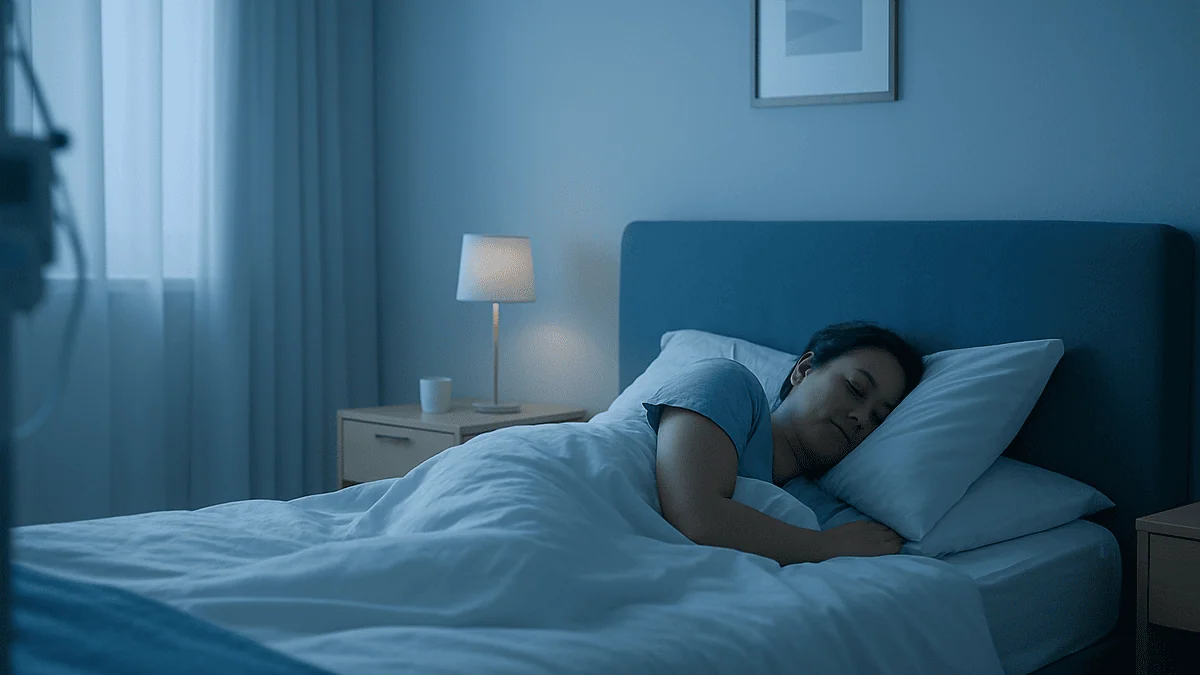
On your back, torso elevated at roughly 30 to 45 degrees, think airline seat, not flat runway, for at least the first one to two weeks. Elevation uses gravity to drain swelling away from the chest, and back-sleeping keeps pressure and torque off healing incisions and the implant pocket.
The engineering of staying on your back is the real challenge, especially for lifelong side-sleepers. What actually works:
- A wedge pillow or an adjustable bed base, which holds the angle better than a teetering pillow stack.
- A pillow under the knees, which flattens the lower back and makes back-sleeping dramatically more comfortable.
- A firm pillow tucked under each arm, or a body pillow along one side, acting as a bumper against rolling over mid-dream.
Side sleeping usually returns somewhere between two and four weeks, when incisions have sealed and soreness allows, with a pillow supporting the breasts at first. Stomach sleeping is the last frontier; most surgeons ask you to wait about six weeks, and some prefer longer while the implant pocket matures.
Expect the first few nights to be genuinely mediocre sleep, and plan around it: no caffeine after noon, the surgical bra on for support, and your pain relief timed per your team’s instructions so you’re not waking at 3 a.m. behind the curve. Poor sleep amplifies pain perception, a well-documented loop, so protecting sleep is a recovery strategy, not a luxury.
Weeks 2–3: back to life, not yet back to the gym
This is the stretch where you’ll feel deceptively good, and that’s exactly the trap. The soreness has faded to tightness, errands are manageable, and the temptation to resume everything at once is strong. The tissues, however, are still early in their repair schedule, new collagen at two weeks has only a fraction of its eventual strength.
What’s typically reasonable now: brisk walking, light housework, cooking real meals, desk work at full days, and lifting in the ten-pound range with your surgeon’s blessing. What’s typically still off-limits: running, anything that bounces, swimming, hot tubs, baths, and lifting that makes you brace your chest.
The water rule deserves its own sentence. Showering is fine, but submerging incisions, bath, pool, lake, hot tub, waits until they’re fully closed, usually three to four weeks, because soaking softens the healing seal and invites bacteria. MedlinePlus wound-care guidance is consistent on this point across surgical procedures.
Itching along the incisions often starts now. Annoying as it is, it’s usually a sign of active healing rather than a problem, scratching is out, but a clean, cool compress near (not on) the incision can take the edge off. If itching comes with spreading redness, warmth, or discharge, that’s a different story, and it belongs in the red-flag section below. Otherwise, weeks two and three reward patience more than any other stage: the women who pace themselves here tend to have the smoothest week six.
Weeks 4–6: exercise comes back in stages, chest work comes back last
Exercise returns like lights coming on in a building, floor by floor, not all at once. The sequence most surgeons follow puts the chest last, because the pectoral muscles sit directly against the implant pocket and load them too early at your peril.
- Weeks 2–4: walking upgrades to brisk; stationary cycling and light lower-body work often get cleared.
- Weeks 4–6: low-impact cardio, then jogging in a high-support sports bra; light resistance work that avoids the chest and shoulders.
- Week 6 and beyond: push-ups, chest presses, heavy lifting, swimming strokes, and high-impact sport, with explicit clearance.
The reason for the choreography is mechanical. Repetitive, forceful pectoral contraction early on can shift a submuscular implant or stress the healing pocket, and bouncing without support strains skin and incisions still gaining tensile strength. Six weeks isn’t arbitrary; it’s roughly when healing tissue reaches the majority of its working strength.
A supportive, compressive sports bra is non-negotiable for every workout in this window, and honestly, a good idea forever. When you do resume chest exercises, start at a fraction of your old load and build over several weeks. Women who lifted seriously before surgery consistently report that patience here paid off; the ones who tested a push-up at week three consistently report regretting it. Your heart rate will come back fast. Let your chest take the scenic route.
Months 2–6: the 'drop and fluff', when you finally see the real result
The phrase sounds like a laundry setting, but “drop and fluff” describes something real. Immediately after surgery, especially with submuscular placement, implants ride high and look compressed, because the pectoral muscle is tight and swelling props everything upward. Over the following weeks, the muscle relaxes, swelling drains, and skin and tissue gradually accommodate the implant. The implant settles downward into the pocket (the drop) and the lower breast rounds out and softens (the fluff).
The timing is famously uneven. Early softening often begins around weeks four to six, most settling happens by month three, and the final shape can keep refining until month six, occasionally longer for larger implants or tighter tissue. One side almost always settles before the other, frequently the non-dominant side, since your dominant arm’s muscle is stronger and holds tension longer. A lopsided month two is one of the most common, and most needless, sources of panic in recovery forums.
Practical implications of this timeline:
- Don’t judge the result, or photograph it for judgment, before month three.
- Don’t invest in expensive bras until the shape stabilizes: a fitting at three to four months makes far more sense.
- Do mention it to your surgeon if one side seems stalled well past month three; occasionally an asymmetry warrants a look rather than more waiting.
Mayo Clinic’s guidance is blunt and useful here: swelling can take weeks to resolve and final results take time. The mirror at week two is a rough draft.
When can I go braless after breast augmentation?
Short version: not for the first several weeks, occasionally after clearance, and always with support during exercise. The longer version has more nuance than most clinic blogs admit.
For the first four to six weeks, most surgeons prescribe a surgical or soft compression bra worn day and night, removed only to shower. Its jobs are concrete: limiting swelling, supporting incisions while they gain strength, and keeping the implants stable in their healing pockets. Underwire typically waits about six weeks, because a rigid wire pressing on a fresh inframammary incision is both uncomfortable and unhelpful to the scar.
After clearance, usually around the six-to-eight-week mark, going braless for an evening is generally considered fine. Here’s the honest part: high-quality evidence on whether long-term bra-wearing changes implant position or sagging over years is thin. What is well established is biology, breast tissue and skin respond to gravity over time, implants add weight, and larger implants add more. Most surgeons therefore recommend consistent support for exercise indefinitely and reasonable support day to day, framed as sensible physics rather than proven prevention.
Sleeping braless is usually the first freedom returned, often around six weeks, since gravity’s pull is minimal lying down. As with everything in this guide, technique matters: a lift combined with augmentation, or certain incision patterns, can extend the support timeline. When your surgeon’s instructions differ from the internet’s, the internet loses.
What's normal during recovery, and what isn't
Recovery produces a parade of sensations that feel alarming but are documented, expected, and temporary. Knowing them in advance saves midnight panic-searching.
Normal and usually harmless:
- Sloshing, squeaking, or gurgling sounds. Air and sterile fluid enter the pocket during surgery and the body absorbs them over one to two weeks. Genuinely strange; genuinely fine.
- Shooting “zingers.” Brief electric jolts as stretched sensory nerves recover, common for weeks and occasionally months.
- Numb or hypersensitive nipples. Altered sensation can take months to normalize; Mayo Clinic lists it among expected effects.
- Asymmetric swelling and bruising that travels downward. Gravity moving pigment, not a complication.
- Morning tightness that eases as you move, typical for weeks with submuscular placement.
Not normal, contact your surgeon:
- One breast becoming suddenly and significantly larger, firmer, or more painful than the other, which can signal bleeding into the pocket (hematoma).
- Fever, spreading redness, increasing warmth, or discharge at an incision, possible infection.
- An incision opening or edges pulling apart.
- Pain that escalates after day three instead of easing.
The pattern to internalize: symmetrical, gradually improving symptoms are almost always healing. Sudden, one-sided, or worsening symptoms deserve a phone call. Surgeons universally prefer an unnecessary call over a delayed one, triaging a worried patient takes five minutes; treating a neglected hematoma takes considerably more.
When to see a doctor: red flags that shouldn't wait
Serious complications after breast augmentation are uncommon, but the ones that matter are time-sensitive, so the thresholds are worth memorizing rather than bookmarking.
Call your surgical team promptly for:
- Fever above 101°F (38.3°C), or chills.
- Redness that spreads outward from an incision, increasing warmth, or any pus-like discharge.
- Rapid one-sided swelling, firmness, or pain: the classic hematoma pattern, most likely in the first days.
- An incision that opens, bleeds persistently, or turns dark at the edges.
- Pain that climbs after day three despite medication and rest.
Seek emergency care immediately, call 911, for:
- Chest pain, sudden shortness of breath, or coughing up blood, which can signal a blood clot traveling to the lungs.
- Swelling, warmth, or pain in one calf, the hallmark of a deep vein clot.
- Fainting, confusion, or a racing heartbeat with lightheadedness.
These clot warnings apply after any surgery, not this one specifically: CDC guidance on venous thromboembolism is emphatic that recent surgery is a major risk factor and that leg swelling with chest symptoms is an emergency, full stop.
Keep your surgeon’s after-hours number saved in your phone before surgery day, along with your procedure date and implant details. And a final word on thresholds: you don’t need to be certain something is wrong to call. “This changed suddenly and I don’t know why” is a complete and legitimate reason to pick up the phone.
Habits that genuinely speed healing (and one that sabotages it)
Start with the saboteur, because it dwarfs everything else: nicotine. It constricts blood vessels, and healing incisions live or die by blood supply, which is why smokers face measurably higher rates of wound complications after surgery. This applies to every nicotine delivery system, vaping included. Most surgeons require four to six weeks nicotine-free on both sides of surgery, and the evidence firmly backs them. If recovery motivates a permanent quit, that’s the single best health outcome of the entire process.
On the positive side of the ledger, the effective habits are unglamorous:
- Protein at every meal. Wound healing is construction work, and collagen is built from amino acids. Eggs, fish, poultry, legumes, dairy, spread through the day rather than crammed into dinner.
- Hydration. Adequate fluid supports circulation and helps the body clear the swelling it’s busy reabsorbing.
- Sleep, defended fiercely. Tissue repair concentrates during deep sleep; seven to nine hours isn’t indulgence, it’s the job.
- Movement in small doses. Short, frequent walks beat one long outing, circulation without strain.
Review every supplement you take with your surgical team before surgery, because several common ones can affect bleeding or interact with anesthesia; the NIH Office of Dietary Supplements notes that “natural” and “risk-free” are not synonyms. Alcohol deserves restraint for at least the first weeks: it dehydrates, worsens swelling, and mixes badly with pain medication. None of this is exciting advice. All of it outperforms every recovery gadget on the market.
Scars, sensation, and the one-year picture
Scars run on a longer clock than the rest of recovery. Whatever the incision site, the fold beneath the breast, the areolar border, or the armpit, the sequence is the same: red and slightly raised for the first months, fading to pink, then flattening toward a pale line. Full maturation takes 12 to 18 months, which surprises people expecting a finished scar by summer.
Two interventions have reasonable evidence behind them. Sun protection is the big one: ultraviolet light darkens immature scars, sometimes permanently, so a healing incision needs covering or diligent sunscreen for the first year, relevant even under swimwear, since fabric isn’t a complete shield. Silicone sheets or gels, used consistently for months, have modest but real support for improving scar appearance. Massage techniques vary by surgeon; follow the specific protocol you’re given rather than a generic one.
Sensation writes its own timeline too. Most altered nipple and breast sensation resolves within months, though a small percentage of women experience lasting change, something worth knowing beforehand, not discovering after.
And the genuinely long view: breast implants are not lifetime devices. Mayo Clinic notes they may eventually need replacement or removal, and ongoing monitoring, including periodic imaging recommendations for silicone implants, is part of responsible ownership. Keep your implant card, keep your follow-up appointments, and know your breasts well enough to notice change. Recovery ends around week six; stewardship doesn’t.
Frequently asked questions
How long should I take off work after breast augmentation?
Plan on five to seven days for a desk job, and the NHS suggests one to two weeks off most work after breast enlargement. Jobs on your feet typically need 10–14 days, and roles involving lifting often require three to four weeks or modified duties. Factor in your commute: if you drive to work, you need to be off sedating medication and able to brake and shoulder-check comfortably first.
Is breast augmentation painful?
It’s usually described as strong pressure and tightness rather than sharp pain, peaking in the first 24–72 hours and improving steadily afterward. Implants placed under the pectoral muscle tend to cause more soreness than those above it, especially with arm movement. Most people transition to milder pain relief within days and describe soreness rather than pain by week two. Escalating pain after day three isn’t typical, call your surgeon.
What is the best way to sleep after breast augmentation?
On your back, elevated at roughly 30–45 degrees, for at least the first one to two weeks. Elevation reduces swelling and back-sleeping protects incisions and the implant pocket. A wedge pillow holds the angle better than stacked pillows, a pillow under the knees improves comfort, and pillows at your sides prevent rolling. Side sleeping usually returns within two to four weeks; stomach sleeping typically waits about six.
When can I go braless after breast augmentation?
Generally not before six to eight weeks, and only after your surgeon clears you. Most protocols require a surgical or compression bra day and night for the first four to six weeks, with underwire deferred about six weeks. After clearance, occasional braless evenings are usually fine, though most surgeons recommend consistent support during exercise indefinitely. Evidence on bras preventing long-term sagging is limited, but supporting added implant weight is sensible physics.
When can I drive after breast augmentation?
Most women can drive about one week after surgery, once two conditions are met: you’re completely off any sedating pain medication, and you can turn the wheel sharply, shoulder-check, and perform an emergency stop without hesitation or significant pain. Submuscular placement sometimes extends this slightly because arm movement stays sore longer. Test your range of motion in a parked car before committing to traffic.
When can I exercise or run again?
Walking starts immediately, brisk walking and light lower-body work typically return by weeks two to four, and low-impact cardio follows around weeks four to six. Running and other high-impact exercise usually wait until about six weeks, in a high-support sports bra. Chest exercises, push-ups, presses, heavy lifting, come back last, generally after six weeks with explicit surgeon clearance, starting at reduced loads.
When can I lift my toddler after breast augmentation?
Most surgeons restrict lifting to under roughly five pounds for the first one to two weeks and under about ten pounds through week three or four, which puts toddler-lifting off-limits for two to four weeks in most plans. Practical workarounds help: sit down and let the child climb into your lap, use a step stool at the changing table, and arrange help for car seats and cribs, which involve the worst lifting angles.
How long does swelling last after breast augmentation?
Swelling peaks around days three to five, improves noticeably over the first two to three weeks, and the majority resolves within about two months. Subtle residual swelling can persist for three months or more, which is one reason surgeons ask you not to judge your result, or shop for expensive bras, before the three-month mark. Swelling that suddenly increases on one side, rather than gradually decreasing, warrants a call to your surgeon.
When do implants drop and fluff?
Early softening often begins around weeks four to six, most settling occurs by month three, and final shape can continue refining through month six. ‘Drop and fluff’ describes implants settling downward as the pectoral muscle relaxes and swelling resolves, with the lower breast rounding out. One side nearly always settles before the other, often the non-dominant side, so temporary asymmetry in months one and two is expected, not a complication.
When can I shower, take a bath, or swim?
Showering is usually allowed within 24 to 48 hours, depending on your surgeon’s dressing and drain instructions. Submerging the incisions, baths, pools, lakes, hot tubs, waits until they are fully closed, typically three to four weeks, because soaking softens healing tissue and raises infection risk. Swimming as exercise involves chest-driven strokes, so it often waits closer to six weeks even after the incisions themselves have sealed.
References
- NHS: Breast enlargement (implants)
- MedlinePlus: Breast augmentation
- MedlinePlus: Plastic and Cosmetic Surgery
This article is for general information only and is not a substitute for professional medical advice. Please consult a qualified doctor about your individual situation.

More from the Blog
Breast Lift Scars and Daily Life After Mastopexy: Sleeping, Sports Bras and Sun Protection
Breast lift scars are permanent, but they usually change a great deal. Most fade from raised and pink to flat, pale lines over roughly…

Healing After Nipple Reconstruction: Protective Dressings, Bras to Avoid and the First Weeks
Nipple reconstruction recovery is usually gentler than earlier breast surgery. Most people wear a protective dressing or shield for the first weeks, choose soft…
Breast Fat Transfer vs Implants: Volume, Feel, Scars and Which Goals Each Option Suits
Fat transfer moves your own fat, taken by liposuction, into the breast for a modest, soft increase with only tiny needle-entry scars, but part…
Why Ultrasound or Mammography Comes Before Accessory Breast Surgery: Confirming the Tissue
Ultrasound, and sometimes mammography, comes before accessory breast surgery because a lump in the armpit or along the chest wall is not always breast…

Is Capsulectomy Needed With Breast Prosthesis Removal? How Surgeons Decide What Comes Out
Capsulectomy is not automatically required with breast prosthesis removal. Surgeons usually remove the capsule when it is thickened, calcified, ruptured silicone is present, or…

Local or General Anesthesia for Gynecomastia Surgery? What Shapes the Choice and Recovery
Gynecomastia surgery can be done under local anesthesia with or without sedation, or under general anesthesia. The choice depends mainly on how much glandular…