

Can You Eat After a Filling, and How Long Do Fillings Last?

Key Takeaways
- Tooth-colored composite fillings are fully hardened by the curing light before you leave, so you can eat as soon as the numbness fades, typically within one to three hours.
- Silver amalgam keeps gaining strength for about 24 hours, which is why dentists suggest soft foods and chewing on the other side for the first day.
- The most common post-filling injury is a bitten cheek or lip, not a damaged filling, so wait until you can feel your mouth before chewing anything.
- Sharp pain every time you bite usually means the filling is fractionally too high, a quick chairside adjustment rather than a sign anything went wrong.
- Amalgam fillings typically last about 10 to 15 years and composite about 5 to 10, but a small filling in a well-cared-for mouth often outlives those averages.
- Fillings fail at their edges, so cleaning between teeth daily and keeping sugar to mealtimes protects the margin where recurrent decay begins.
Yes, you can usually eat after a dental filling, though timing depends on the material. Tooth-colored composite fillings harden instantly under a curing light, so eating is fine once numbness fades, typically one to three hours. Silver amalgam takes about 24 hours to fully set, so soft foods and chewing on the other side are wise until then. Most fillings last roughly five to fifteen years.
The paper bib comes off, the chair tilts upright, and you run your tongue over a tooth that suddenly feels enormous, rubbery, and not quite yours. Someone hands you your coat. And the first question most people ask on the walk to the car isn’t about brushing or flossing. It’s about lunch.
That instinct is fair. A filling is one of the most common procedures in dentistry, and yet the after-care advice people carry home is often a jumble of what a grandparent said in 1985 and what a coworker swears by. The truth is more useful and less dramatic: what you can eat, and when, comes down to two things you can actually observe, the material in the tooth and whether you can feel your lip yet.
The second question, the one that arrives a week later when the tooth still twinges on ice water, is how long the whole thing is going to hold up. Both answers follow.
Can you eat right after a dental filling?
In most cases you can, and the main thing standing between you and a sandwich is the local anesthetic, not the filling itself. A filling is a small repair: the dentist removes decayed tissue, cleans the cavity, and packs it with a material that restores the tooth’s shape. Whether that material is ready for chewing straight away depends on how it sets.
Tooth-colored composite resin hardens within seconds under a blue curing light. Once you leave the chair, that filling is as hard as it is going to get. The Cleveland Clinic notes that people with composite fillings can generally eat as soon as the numbness wears off, which usually takes one to three hours.
Silver-colored amalgam behaves differently. It is mixed as a soft paste and hardens gradually, reaching full strength over roughly 24 hours. During that window, dentists commonly suggest soft foods and chewing on the opposite side of the mouth to avoid dislodging or denting the new surface.
So the honest answer to the question splits neatly in two. White filling: wait for feeling to return, then eat normally. Silver filling: wait for feeling to return, then eat gently for a day. Your dentist may adjust that advice for a very large or deep filling, and their instructions override any general rule, including the ones in this article.
Why the filling material changes the answer
Think of the difference between quick-set epoxy and fresh concrete. One is cured by a chemical trigger and ready almost instantly; the other needs time to gain strength, and walking on it too early leaves marks. Composite resin and dental amalgam sit at similar ends of that spectrum.
Composite is a mixture of plastic resin and fine glass or ceramic particles. It is placed in thin layers, each hardened by light before the next goes on. Because curing is complete before you stand up, there is no waiting period beyond the anesthetic. Its trade-off, according to the Mayo Clinic and the Cleveland Clinic, is that composite wears a little faster than metal, particularly on back teeth that take heavy chewing forces.
Amalgam is an alloy of silver, tin, copper, and mercury bound into a stable solid. It sets chemically rather than by light, and while it is firm enough to leave the office on, the crystalline structure keeps strengthening for about a day. That is the origin of the traditional 24-hour caution.
Two other materials appear less often. Glass ionomer releases fluoride and bonds well to tooth structure but is softer, so it is favored for small fillings near the gumline or in baby teeth. Gold and ceramic inlays are made in a laboratory and cemented in at a second visit; once the cement sets, they are ready for use. If you are unsure which you have, the color is a reliable clue, and the front desk can tell you in seconds.
What happens if you eat while your mouth is still numb?
The filling will almost certainly be fine. Your cheek, tongue, and lip may not be.
Local anesthetic works by temporarily blocking the nerve signals that carry sensation from the treated area to the brain. The Cleveland Clinic gives a typical duration of one to three hours, though the exact time depends on where the injection was placed, how much was needed, and individual metabolism. While it lasts, you lose the fine feedback that normally tells your jaw exactly where the soft tissue ends and the food begins.
That is why the classic post-filling injury has nothing to do with the tooth. People bite the inside of the cheek, chew the edge of the tongue, or scald the roof of the mouth on coffee they cannot feel. A numb lip also makes drinking messy, and children in particular tend to chew a numb lip out of curiosity until it swells.
Hot drinks deserve a specific warning. Temperature perception is reduced along with touch, so a sip that would normally make you flinch may not register until the burn is done.
The practical rule is simple: wait until you can feel your lip and tongue clearly before eating anything that requires real chewing. Water, and lukewarm smooth foods eaten slowly, are reasonable in the meantime if you are hungry. Speaking to your dentist about how long to expect the numbness is worthwhile, because a deep filling on a lower molar may leave you numb for longer than a small one near the front.
What should you eat in the first 24 hours after a filling?
Once sensation returns, the goal for the rest of the day is to be kind to a tooth that has just been drilled, dried, and refilled. Even a fully cured composite filling sits in a tooth whose nerve is mildly irritated, and the gum beside it may be tender from the clamp or the injection.
Foods that tend to go down easily include:
- Yogurt, oatmeal, and smooth soups served warm rather than hot
- Scrambled eggs, mashed potatoes, and soft cooked vegetables
- Pasta, rice, and soft bread without hard crusts
- Bananas, applesauce, and other soft fruit
- Fish, tofu, or well-cooked chicken cut small
What to hold off on for a day, especially with amalgam, is anything that concentrates force on a single point or pulls at the surface. Hard candy, nuts, ice, popcorn kernels, and crusty bread can chip or dent a filling that is still gaining strength. Very sticky items such as caramel and chewing gum can tug at the margins. Extremes of temperature are best avoided because the tooth’s nerve is already sensitized.
Chewing on the opposite side of the mouth for a day is a small habit with a real payoff. It keeps pressure off the new restoration and gives the gum time to settle. By the following day, most people with an ordinary filling are back to their usual diet. If the tooth still protests when you bite normally after that, the filling may be sitting a fraction too high, which is a quick adjustment rather than a problem, and is covered below.
Is it normal for a new filling to hurt when you bite down?
A little tenderness for a few days is common. Sharp pain every time your teeth meet is a different signal and usually means the filling is a hair too tall.
Here is why that happens. The dentist shapes the filling and asks you to bite on colored paper to check the contact. But your jaw muscles are numb, your mouth has been open for a while, and you are not chewing the way you would with a sandwich. A discrepancy of a fraction of a millimeter can escape notice in the chair and become obvious at dinner.
When one tooth sits higher than its neighbors, it takes the first and heaviest contact with every bite. The ligament that suspends the tooth in its socket becomes inflamed, and the tooth feels bruised. The Cleveland Clinic lists this kind of bite discomfort among the ordinary after-effects and describes the fix as a brief return visit to smooth the high spot. No new anesthetic is usually needed, and relief often follows within a day or two once the pressure is gone.
Dull, generalized soreness is more often the tooth and gum recovering from the procedure itself. That tends to fade steadily over a few days to a couple of weeks.
Where people go wrong is in waiting. A high filling does not settle on its own, and months of overloading can leave a tooth genuinely sore or, in rare cases, cracked. If biting hurts sharply and the pattern has not improved within a few days, call the practice. Adjusting a filling is one of the shortest appointments in dentistry.
Why is my tooth sensitive to hot and cold after a filling?
Because the nerve inside it has just been through something. Preparing a cavity involves drilling close to the pulp, the living tissue at the center of the tooth, and even careful, cooled drilling produces vibration and heat. Removing decay also exposes dentin, the porous layer beneath enamel, whose tiny fluid-filled tubules transmit temperature changes straight to the nerve.
The result is a tooth that overreacts. Ice water, hot coffee, sweet foods, and even a breath of cold air can produce a brief zing. The Mayo Clinic and the Cleveland Clinic both describe post-filling sensitivity as expected and note that it typically eases over days to a few weeks as the pulp calms down and the tooth lays down a protective layer of new dentin from the inside.
Deeper fillings tend to produce more sensitivity, simply because less tooth remains between the material and the nerve. Composite fillings are also more prone to this than amalgam in the early weeks, partly because the bonding process is more technique-sensitive.
Sensitivity that gradually improves is reassuring. The pattern to watch for is the opposite one: pain that lingers for many seconds after the cold is gone, pain that wakes you at night, or a tooth that starts hurting without any trigger at all. Those can indicate the pulp is not recovering and may be becoming inflamed beyond repair. That is not a failure of anyone’s care; some cavities are simply close enough to the nerve that the tooth cannot bounce back. It does mean the dentist needs to reassess, and possibly discuss other treatment, which is a decision for you and your treating team together.
How long do fillings last?
Longer than most people fear, and less long than forever. Every filling is a repair to a living structure that bends slightly with each bite, expands and contracts with temperature, and sits in a bath of bacteria. Eventually the seal between material and tooth wears, and the filling needs attention.
The figures below are typical lifespans as published by the Cleveland Clinic. They are averages, not guarantees, and an individual filling can fall well outside them in either direction.
| Filling material | Typical lifespan | Notes |
|---|---|---|
| Amalgam (silver) | About 10 to 15 years | Very durable under chewing; visible color; requires more tooth removal to lock in place |
| Composite resin (tooth-colored) | About 5 to 10 years | Bonds to tooth; blends in; wears faster on heavy-load back teeth |
| Gold (cast inlay) | 15 years or more | Exceptionally durable; two visits; higher cost; noticeable color |
| Ceramic (porcelain) | About 15 years | Stain-resistant and natural-looking; more brittle than gold; two visits |
| Glass ionomer | About 5 years | Releases fluoride; softer; used for small or gumline cavities and children’s teeth |
Notice that the durability ranking and the appearance ranking run in opposite directions, which is why the choice is usually a conversation rather than a rule. A small composite on a front tooth may last two decades with light use, while an enormous amalgam holding together a heavily filled molar may crack in eight years. The material matters, but the size of the filling, the tooth it sits in, and the mouth around it matter at least as much.
What makes a filling wear out sooner?
Fillings rarely fail because the material dissolves. They fail at the edges, where the seal between the restoration and the tooth slowly opens, and they fail under load, when repeated force finds a weak point. Several everyday factors accelerate both.
Grinding and clenching top the list. People who grind their teeth at night can generate forces far beyond ordinary chewing, and the filling takes the same punishment as the enamel. The Mayo Clinic identifies bruxism as a common reason for cracked fillings and chipped teeth, and a night guard fitted by a dentist is a standard way to spread that load.
Size is the second factor. A filling that replaces a small pit is surrounded by solid tooth on all sides. A filling that replaces a whole corner of a molar is essentially propping up thin walls of remaining enamel, and those walls flex and eventually give.
Diet works more slowly. Frequent sugar feeds the bacteria that produce acid, and acid attacks the tooth right at the filling margin, where it is hardest to clean. The NHS emphasizes how often sugar is eaten rather than the total amount, because each exposure restarts the acid cycle. Acidic drinks and dry mouth, whether from medications or medical conditions, tilt the balance the same way.
Habits round out the picture: chewing ice, opening packets with the teeth, biting fingernails. None of these will break a filling on day one. All of them shorten the odds over the years.
How do you know a filling needs replacing?
Often you don’t, which is the strongest argument for regular check-ups. A failing filling can be entirely painless right up until decay underneath it reaches the nerve. Dentists spot the early signs with a probe, a mirror, and periodic X-rays long before you would feel anything.
That said, several changes are worth noticing at home:
- A rough, sharp, or catching edge that your tongue keeps finding
- Food that suddenly starts wedging between two teeth where it never used to
- A dark line or shadow around the margin of a white filling
- New sensitivity to sweet, hot, or cold in a tooth that had been quiet for years
- A visible crack, or a piece of filling that comes away while eating
- Pain on biting that appears months or years after the filling was placed
Any of these means the seal may have broken. Once bacteria can slip beneath a filling, they are sheltered from your toothbrush and from saliva, and decay can progress quietly. The MedlinePlus overview of tooth decay describes this recurrent decay around old restorations as one of the common routes to needing more extensive treatment later.
A missing filling is not an emergency in the sense of requiring same-day care, but the exposed tooth is vulnerable and may be sensitive. Keep the area clean, avoid chewing on that side, and arrange an appointment promptly. If the lost filling leaves a sharp edge that cuts your tongue or cheek, a small piece of sugar-free gum or dental wax from a pharmacy can cover it temporarily while you wait.
Can a filled tooth get another cavity?
Yes, and it is one of the most common things dentists treat. A filling replaces the part of the tooth that decay destroyed. It does nothing to the rest of the tooth, and it does not change the conditions in the mouth that produced the cavity in the first place.
Decay is a process rather than an event. Bacteria in plaque metabolize sugars and release acids that leach minerals from enamel; saliva and fluoride push minerals back in. When the acid side wins for long enough, a cavity forms. The National Institute of Dental and Craniofacial Research, part of the NIH, reports that about 90 percent of adults aged 20 to 64 have had decay in their permanent teeth, which tells you how ordinary this tug-of-war is.
A filled tooth actually has one extra vulnerability: the junction between material and enamel. That margin is microscopically uneven, plaque clings to it, and if the seal opens even slightly, acid reaches dentin directly. Dentists call decay at this junction recurrent or secondary caries, and it is a leading reason fillings are replaced.
The encouraging part is that the same measures that prevent first cavities prevent second ones. Fluoride toothpaste twice a day, cleaning between the teeth daily, limiting how often sugary foods and drinks appear during the day, and keeping up with check-ups so problems are caught while they are still small. The CDC’s cavity prevention guidance is built on exactly these habits, none of which require anything beyond a toothbrush, floss, and a calendar.
Why might a dentist suggest a crown instead of a filling?
Because at some point a filling stops being a repair and becomes a prop. When decay or an old restoration has hollowed out most of a tooth, what remains is a thin shell of enamel around a large plug of material. Under chewing, those thin walls flex, and enamel does not flex well. A crown addresses that by covering the entire visible tooth with a cap that holds the walls together from the outside.
The Mayo Clinic describes crowns as the usual recommendation for extensive decay or a weakened tooth, while fillings suit smaller cavities where plenty of sound tooth structure remains. The line between them is a judgment call that takes into account how much tooth is left, which tooth it is, how hard you bite, and whether the tooth has already cracked.
Crowns cost more and require removing more tooth to make room for the cap, so they are not automatically better. A large filling is still the right answer when the walls are thick enough to support it, and many dentists will offer that as a first step, with a crown held in reserve if the filling fails.
Other options exist for specific situations. An inlay or onlay is a laboratory-made restoration that fills the cavity and may cover one or more chewing cusps without wrapping the whole tooth. If the nerve has already been damaged, root canal treatment may be discussed before any restoration. Each has its own trade-offs in durability, appointments, and cost, and the right choice depends on your tooth, your priorities, and the judgment of the team treating you.
How do you make a filling last as long as possible?
Mostly by protecting the tooth around it, since that is where fillings fail. The material does its job on its own; your part is keeping the margins clean and the forces reasonable.
The daily habits are unglamorous and effective. Brushing twice a day with a fluoride toothpaste, once before bed and once at another time, is the foundation the NHS recommends for everyone. Fluoride strengthens enamel at the exact edge where recurrent decay begins. Cleaning between the teeth with floss or interdental brushes reaches the margins of fillings on the sides of teeth, where a brush simply cannot go.
Frequency of sugar matters more than quantity. Sipping a sweet drink over an afternoon keeps the mouth acidic for hours; drinking the same amount with a meal limits the damage to a single episode. Water between meals rinses the mouth and helps saliva do its repair work.
Protect against force. If you wake with a sore jaw or your dentist notices wear facets on your teeth, ask about a night guard. Skip the ice-chewing and the packet-opening.
Keep the appointments. The NHS suggests check-up intervals anywhere from three months to two years depending on individual risk, and the dentist will set yours. Those visits are where a hairline gap at a filling margin gets caught before it becomes a cavity, and where a slightly worn filling gets polished rather than replaced. A filling checked regularly can outlive the averages by years. One that is never looked at tends to announce its failure at the worst possible moment.
When should you see a dentist after a filling?
Most fillings need no follow-up beyond your next routine check-up. Some symptoms, though, deserve a call sooner, and a few warrant same-day attention.
Get in touch within a few days if:
- Biting down still causes sharp pain more than two or three days after the appointment
- Sensitivity to hot or cold is getting worse rather than better over a couple of weeks
- The filling feels rough or has a sharp edge that catches your tongue or cheek
- Floss shreds or catches at the filling, suggesting an overhang at the margin
- A piece of the filling has chipped or fallen out
Seek care promptly, the same day if possible, for these red-flag signs:
- Severe, throbbing, or spontaneous pain in the tooth, particularly pain that wakes you at night
- Pain that lingers for a long time after a hot or cold trigger is removed
- Swelling of the face, jaw, or gum near the tooth
- A small pimple-like bump on the gum, a bad taste, or discharge, which can indicate an abscess
- Fever alongside tooth pain
- Any difficulty swallowing or breathing, which requires emergency care rather than a dental appointment
These signs suggest the nerve inside the tooth may be inflamed or infected, or that infection has spread to surrounding tissue. The Mayo Clinic notes that untreated dental infections can progress and, rarely, become serious. Prompt assessment gives the dentist the widest range of options, some of which may still preserve the tooth. If your dental practice is closed, many areas have urgent dental services or advice lines, and a general emergency department is appropriate for facial swelling that affects breathing or swallowing.
Are fillings in children any different?
The mechanics are the same; the management is not. Children get numb just like adults, but they are far less likely to remember not to chew a lip they cannot feel. The most common after-filling injury in a child is a swollen, bitten lower lip, and it looks alarming out of all proportion to its seriousness. Supervising eating until sensation returns, and offering soft, cool foods rather than anything that needs real chewing, prevents most of it.
Material choices lean differently too. Glass ionomer is used more often in children’s teeth because it releases fluoride into the surrounding enamel and bonds even when a wriggling patient makes a perfectly dry field hard to achieve. It does not last as long as composite or amalgam, but a baby molar only needs to last until the permanent tooth below is ready to replace it, which for the back teeth can be around age 10 to 12.
The prevention message carries extra weight in childhood because enamel on new permanent teeth continues to mature for a few years after they appear. The CDC highlights fluoride toothpaste, limiting sugary drinks, and dental sealants on the chewing surfaces of permanent molars as the core protections. Sealants are not fillings; they are thin coatings applied to healthy grooves before decay starts, and they can spare a child the drill entirely.
Whether to fill a baby tooth at all, and with what, is a decision the dentist makes with the family based on how long the tooth is expected to remain and how the child copes with treatment. That judgment, like every clinical decision in this article, belongs to the treating team.
Frequently asked questions
How long after a filling can I eat?
With a tooth-colored composite filling, you can eat as soon as the local anesthetic wears off, usually one to three hours. With a silver amalgam filling, wait for the numbness to pass and then stick to soft foods for about 24 hours while the material reaches full hardness. Your dentist may give different instructions for a very deep or large filling, and those take priority.
Can I drink coffee after a filling?
Once the numbness has worn off, yes, though warm rather than hot is kinder to a freshly filled tooth whose nerve is sensitized. While you are still numb, hot drinks are risky because you may not feel a burn until it has happened. Composite fillings can pick up surface stain over the years, so rinsing with water after coffee is a reasonable habit for anyone with white fillings.
Why does my filling hurt when I bite down?
The most likely reason in the first week is that the filling sits slightly higher than the neighboring teeth, so it takes the first and heaviest contact with every bite and the ligament around the tooth becomes bruised. This is a common, easily corrected issue: the dentist smooths the high spot in a short visit. If sharp biting pain persists beyond a few days, call the practice rather than waiting for it to settle.
How long does sensitivity last after a filling?
Sensitivity to hot, cold, or sweet usually eases over days to a few weeks as the tooth’s nerve calms down and lays down protective dentin from the inside. Deeper fillings tend to stay sensitive longer. The pattern matters more than the duration: gradually improving sensitivity is expected, while worsening pain, pain that lingers long after the trigger, or spontaneous pain at night should be assessed by a dentist.
How long do white fillings last compared to silver ones?
According to the Cleveland Clinic, composite white fillings typically last about 5 to 10 years and silver amalgam about 10 to 15, with gold and ceramic restorations often lasting 15 years or more. Those are averages. The size of the filling, the tooth it sits in, grinding habits, diet, and how well the margins are kept clean all influence whether an individual filling falls short of or well beyond those ranges.
What should I do if my filling falls out?
Keep the area clean, avoid chewing on that side, and arrange a dental appointment promptly. The exposed tooth may be sensitive and is vulnerable to further decay, but a lost filling is rarely a same-day emergency unless there is pain or swelling. If a sharp edge is cutting your tongue or cheek, sugar-free gum or dental wax from a pharmacy can cover it temporarily until you are seen.
Can you brush your teeth after a filling?
Yes, and you should. Brushing the same evening is fine for both composite and amalgam fillings; the material is firm enough to withstand a soft toothbrush even while amalgam finishes hardening. Be gentle around the gum near the filling if it is tender from the procedure. Flossing can also resume immediately, and if floss shreds or catches at the new filling, mention it to your dentist because it may indicate a rough margin.
Do fillings need to be replaced eventually?
Most do, because the seal between the material and the tooth wears over years and the filling itself can chip or crack under chewing forces. Many fillings, however, remain sound for decades. Dentists monitor them at check-ups and replace or repair them when they detect a gap, recurrent decay, or a fracture. Replacing a filling only when it actually needs it, rather than on a schedule, preserves the most tooth structure over a lifetime.
Why did my dentist recommend a crown instead of a filling?
Usually because too little sound tooth remains to support a filling safely. When decay or an old restoration has hollowed out most of a tooth, the thin remaining walls flex under chewing and can crack. A crown covers the whole tooth and holds those walls together. Fillings suit smaller cavities with plenty of surrounding enamel. The choice depends on how much tooth is left, where it is, and how hard you bite.
Is it normal for a new filling to feel rough or strange?
Feeling strange is very normal for a day or two; your tongue is exquisitely sensitive to shape and will notice any change in a tooth’s contour. Roughness is a different matter. A well-finished filling should feel smooth once the initial novelty fades. If a sharp edge, ledge, or rough patch persists after a few days, ask your dentist to polish it, since rough margins trap plaque and can irritate the tongue or cheek.
References
- Cleveland Clinic: Dental Fillings
- MedlinePlus: Dental Cavities
- NIH National Institute of Dental and Craniofacial Research: Tooth Decay
- CDC: About Cavities (Tooth Decay)
This article is for general information only and is not a substitute for professional medical advice. Please consult a qualified doctor about your individual situation.

More from the Blog
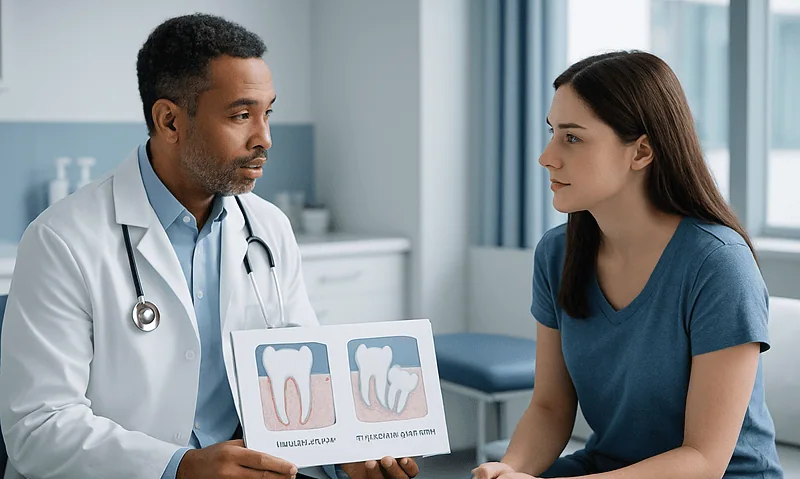
Impacted Canine vs Impacted Wisdom Tooth: Why One Is Often Saved and the Other Removed
An impacted canine is usually saved because it is a cornerstone tooth with the longest root in the mouth, guides the bite and anchors…
Do Root Canals Make You Sick? Old Myths About Treated Teeth, Corrected
No. Current evidence does not show that a properly treated root canal tooth causes cancer, heart disease, arthritis or other illnesses. The idea traces…
Do Teeth Need Straightening Before Porcelain Veneers? When Orthodontics Comes First
Not everyone needs braces before veneers, but many people benefit from straightening first. Porcelain veneers can mask mild rotations, small gaps, and uneven edges,…

Sinus Lift: Why Upper-Jaw Implants Sometimes Need It, and How It Heals
A sinus lift is a surgical procedure that adds bone between the upper jaw and the maxillary sinus so a dental implant has enough…

How 3D Imaging Changes Oral and Maxillofacial Surgery Planning Around Nerves and Sinuses
3D imaging in oral surgery planning, most often a cone beam CT scan, gives surgeons a layered view of the jaw so they can…

Oil Pulling: The Ancient Practice vs the Actual Evidence
Oil pulling, swishing edible oil in the mouth for 10 to 20 minutes, may modestly reduce plaque and mouth bacteria, according to a handful…