

Can You Get Pregnant After Menopause? Natural Odds, Perimenopause and IVF Options
Key Takeaways
- Menopause is confirmed only after 12 consecutive months without a period, and natural pregnancy is not possible once that point has genuinely passed.
- During perimenopause, which typically lasts about seven years, ovulation is irregular rather than absent, so unplanned pregnancy in the late forties still happens.
- UK guidance advises continuing contraception for two years after the last period if under 50, one year if over 50, and generally allows stopping at 55.
- Hormone therapy for menopausal symptoms is not contraception and does not restore fertility; any bleeding on it comes from the medication, not ovulation.
- CDC national data show live birth rates with donor eggs stay roughly 1 in 2 per transfer regardless of the recipient's age, while own-egg success falls below 1 in 10 after 42.
- Any bleeding a year or more after the final period is a symptom that needs medical evaluation, even when it is light and happens only once.
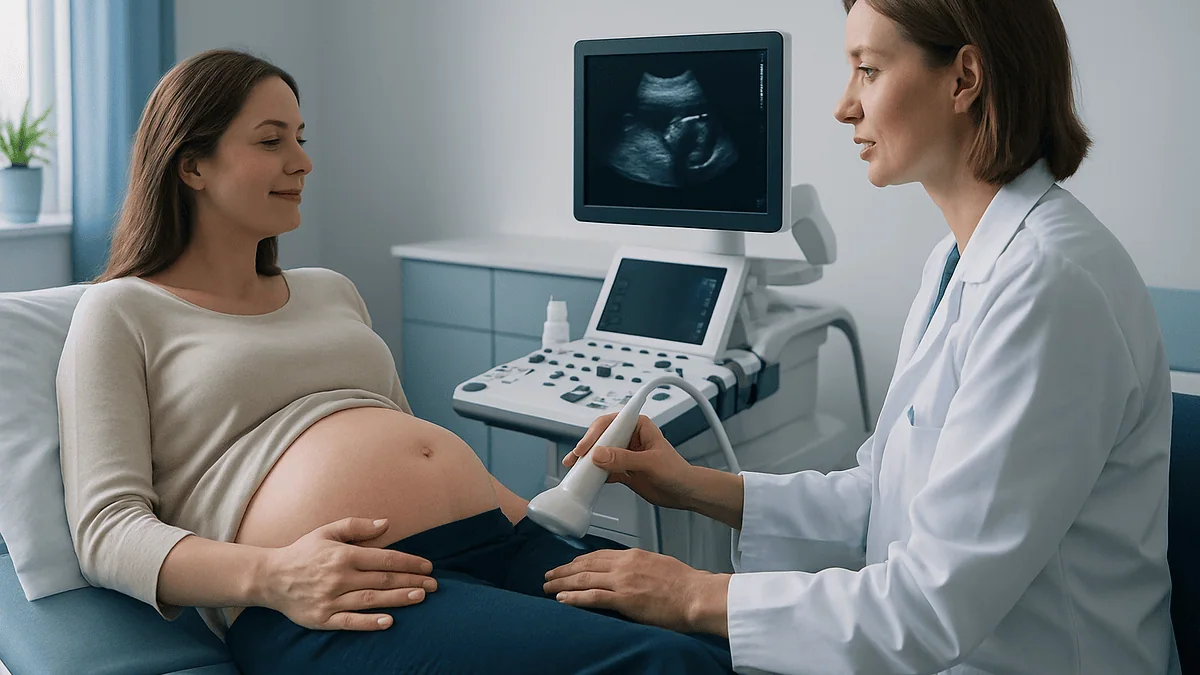
Once menopause is complete, meaning 12 consecutive months without a period, pregnancy with your own eggs is no longer realistically possible because the ovaries have stopped releasing eggs. Pregnancy can still happen during perimenopause, when ovulation is irregular but not finished. After menopause, carrying a pregnancy is possible only through IVF using donated eggs or embryos frozen earlier, with hormone preparation of the uterus.
A woman in her early fifties sits in an exam room holding a pregnancy test she bought on a whim. Her periods stopped 14 months ago. The test is negative, as she expected, but the question that sent her to the pharmacy is still unanswered: could it have been positive? She is not alone. Search engines field this question thousands of times a day, often at 2 a.m.
The answer depends entirely on one word that gets used loosely: menopause. Many people say they are “in menopause” when they mean perimenopause, the years of erratic cycles that come first. Those two states have very different fertility odds, and confusing them is how surprise pregnancies at 48 happen, and how needless worry at 56 happens too.
This article separates the biology from the folklore, looks honestly at what donor-egg IVF can and cannot offer, and explains when a late period or unexpected bleeding deserves a doctor’s attention rather than a pregnancy test.
What menopause actually means for your fertility
Menopause is a retrospective diagnosis. Clinicians confirm it only after 12 consecutive months have passed without a menstrual period, and without another explanation such as pregnancy, breastfeeding, or a hormonal contraceptive that suppresses bleeding. In the United States the average age is 51, according to the National Institute on Aging, though anywhere between 45 and 55 is typical.
Biologically, menopause marks the point at which the ovaries have essentially run out of eggs capable of maturing and being released. A woman is born with her lifetime supply. That supply falls steadily across childhood and adulthood, and the eggs that remain in the forties are both fewer and more likely to carry chromosomal errors. As the follicles dwindle, estrogen and progesterone production drops, and the brain’s follicle-stimulating hormone (FSH) rises in an attempt to coax a response that no longer comes.
Fertility, then, does not switch off on the day of the final period. It fades over the preceding decade and reaches near zero at menopause itself. What ends at menopause is ovulation. What does not end is the uterus. That single distinction is the reason donor-egg IVF works and the reason natural conception does not, and it underpins everything that follows.
The Mayo Clinic describes the transition in three phases: perimenopause, menopause, and postmenopause. Most of the confusion about pregnancy risk lives in the first of those phases, so that is where we go next.
Is it possible to get pregnant naturally after menopause?
Not in any meaningful sense, once menopause is genuinely complete. Natural conception requires an egg to be released, and the postmenopausal ovary no longer does that. Stories of women conceiving unaided at 58 or 60 tend to fall into one of three categories on closer inspection: the woman was still perimenopausal and mistook a long gap for the end; the pregnancy involved fertility treatment that was not mentioned publicly; or the account is unverified.
Cleveland Clinic puts it plainly: after menopause, natural pregnancy is not possible because ovulation has stopped. That is a strong statement in a field that usually hedges, and it reflects how consistent the biology is.
Why do so many people believe otherwise? Partly because the 12-month rule is easy to misapply. A woman who has gone nine months without a period and then bleeds once has not passed through menopause; her clock resets. Partly because irregular ovulation in the late forties can produce a pregnancy after months of nothing, and the story gets retold as “pregnant after menopause.” And partly because hormone therapy taken for symptoms can produce withdrawal bleeding that looks like a period returning, which it is not.
The honest summary: if you are in your fifties and a full year has passed with no period and no hormonal medication clouding the picture, an unplanned natural pregnancy is not a realistic worry. If you are not sure that year has truly passed, keep reading.
Perimenopause: the gray zone where pregnancies still happen
Perimenopause is the stretch of years before the final period when the ovaries sputter rather than stop. Harvard Health calls it the “rocky road to menopause,” and the description is apt. Cycles shorten, then lengthen, then vanish for two months and return. The National Institute on Aging notes the transition most often begins in the mid-forties and lasts around seven years, though for some women it stretches to 14.
Ovulation during this phase is unpredictable, not absent. A woman might skip ovulation for three cycles and then release a healthy egg in the fourth. She cannot feel the difference. Because fertility is falling rather than gone, pregnancy rates in the late forties are low, but they are not zero, and the pregnancies that do occur are often unplanned precisely because couples assumed the window had closed.
Two features of perimenopause make the odds harder to read than at any other stage of reproductive life:
- Hormone levels swing from month to month, so a single blood test can look postmenopausal one week and premenopausal the next.
- Bleeding patterns lose their meaning. A gap of five months followed by a period is common and does not signal that the ovaries have finished.
This is why the NHS advises that hormone testing is generally unnecessary to diagnose perimenopause in women over 45, and why contraception guidance is built around time since the last period rather than around lab results. Perimenopause is the only phase of this story in which “can I get pregnant?” has an honest answer of “yes, possibly.”
Can you get pregnant at 50 with no period?
It depends on how long “no period” has lasted and what else is going on. A 50-year-old whose last period was three months ago is, by definition, still perimenopausal. Ovulation may resume. A 50-year-old whose last period was 13 months ago, with no hormonal medication and no other cause for the absence, has reached menopause, and natural pregnancy is off the table.
UK guidance from the NHS and the Faculty of Sexual and Reproductive Healthcare, which many clinicians use as a practical yardstick, frames it this way: a woman over 50 can generally stop contraception after one year without periods; a woman under 50 should wait two years, because younger ovaries are more likely to surprise. The asymmetry reflects the biology. The older you are when periods stop, the more likely it is that they have stopped for good.
There are important exceptions where “no period” does not mean “no ovulation”:
- Hormonal contraception such as a progestogen-releasing intrauterine device or a hormonal implant often stops bleeding entirely while the ovaries may still be active.
- Combined hormone therapy for menopausal symptoms controls bleeding and masks whether natural periods would have continued.
- Significant weight change, thyroid problems, or very high stress can pause periods in a way unrelated to ovarian aging.
In those situations the calendar cannot answer the question, and a conversation with a clinician about whether and when to test hormones, or simply continue contraception, is the sensible route. At 50, pregnancy is uncommon. It is not, in the presence of recent bleeding, impossible.
Can a 55-year-old woman get pregnant?
Naturally, the realistic answer is no. By 55, the vast majority of women are several years past their final period. Guidance used across UK sexual health services notes that by age 55 contraception can generally be stopped even in women who have not had a clear 12-month gap, because spontaneous ovulation beyond that age is so rare that it falls below the threshold at which continuing contraception makes sense. The NHS menopause guidance reflects the same principle.
The question usually comes from one of two places. The first is a woman who has gone years without a period, notices bloating or breast tenderness, and wonders. In that situation, the symptoms almost always have another explanation, and any new bleeding at 55 should be evaluated by a doctor for reasons that have nothing to do with pregnancy, which we cover later.
The second is a woman, or a couple, hoping to have a child at 55. That is a different conversation. With donated eggs and a uterus prepared with hormones, pregnancy after 55 is technically achievable, and it has been achieved. Whether it is advisable depends on health, on the substantial medical risks of pregnancy at that age, and on the policies of the treatment center, since many programs set upper age limits for egg-recipient treatment on safety grounds.
So the two answers sit side by side: a 55-year-old will not become pregnant by accident, and she will not become pregnant with her own eggs, but she might, with donor eggs, careful screening, and a frank discussion of risk, carry a pregnancy. The Mayo Clinic’s guidance on pregnancy after 35 lists the complications that become more common with age, and they do not level off at 50.
How do you know you're really past menopause?
For most women over 45, the calendar is the test. Twelve months without a period, with no hormonal medication and no other explanation, is a diagnosis in itself. The NHS advises that blood tests are not usually needed in this age group because results fluctuate so much during perimenopause that a single number can mislead.
There are circumstances where testing earns its place. A woman under 45 with absent periods, a woman using hormonal contraception that hides her natural cycle, or a woman with symptoms that do not fit the typical pattern may be offered an FSH measurement. Persistently high FSH on more than one occasion, weeks apart, points toward ovarian failure. A single high reading does not.
Here is what the common markers can and cannot tell you:
| Clue | What it suggests | Limitation |
|---|---|---|
| 12 months with no period, age over 45 | Menopause reached | Only valid without hormonal medication or other cause |
| Hot flashes, night sweats, vaginal dryness | Falling estrogen | Common in perimenopause too; not proof ovulation has ended |
| Single high FSH result | Ovaries less responsive | Swings month to month during transition |
| Repeated high FSH, weeks apart | Likely ovarian insufficiency | Still does not rule out a rare late ovulation |
Home menopause test kits measure FSH in urine and share the same weakness: a snapshot of a moving target. They can offer reassurance but should not be used to abandon contraception. If you want certainty about where you stand, the combination of age, time since last period, and a clinician’s judgment beats any single lab value.
Early menopause and ovarian insufficiency: a different fertility story
Not every woman reaches menopause in her early fifties. The NHS notes that around 1 in 100 women experience menopause before 40, and roughly 1 in 1,000 before 30. When the ovaries stop working before 40 the term used is premature ovarian insufficiency, or POI, and the word “insufficiency” is chosen deliberately.
Unlike natural menopause at 51, POI is not always a full stop. The ovaries in POI can behave intermittently, with occasional follicles maturing and releasing an egg months or even years after periods appear to have ended. A small minority of women with POI conceive spontaneously, which is why clinicians advise those who do not want a pregnancy to continue contraception, and why those who do want one are not always told the door is fully closed.
POI also carries health considerations beyond fertility. Losing estrogen decades early raises long-term risks to bone density and cardiovascular health, and hormone replacement is generally recommended until the age of natural menopause unless there is a reason not to use it. That decision belongs with the treating clinician.
For women with POI who want to become pregnant, the options mirror those for postmenopausal women: donor eggs offer the highest success, while attempts with the woman’s own ovaries are unpredictable. Causes vary. Cancer treatment, certain genetic conditions, autoimmune disease, and ovarian surgery can all bring it on, and in many cases no cause is found. If your periods have stopped before 40 and you are not using hormonal contraception, this deserves a medical evaluation rather than a wait-and-see approach.
How IVF with donor eggs makes pregnancy possible after menopause
The uterus does not age the way the ovaries do. Given the right hormonal signals, a postmenopausal uterus can grow a lining thick and receptive enough to accept an embryo. That is the biological loophole through which pregnancy after menopause becomes possible.
The process runs in stages. First, a donor, typically a younger woman who has been medically and genetically screened, undergoes ovarian stimulation and egg retrieval. Her eggs are fertilized in the laboratory with sperm from the recipient’s partner or a donor, and the resulting embryos are cultured for several days. Meanwhile the recipient takes estrogen, in a form and schedule set by her clinician, to build the uterine lining over roughly two to three weeks. Progesterone is then added to make the lining receptive and to mimic the second half of a natural cycle. One embryo, sometimes two, is transferred through the cervix in a brief outpatient procedure.
If the embryo implants, the recipient continues hormonal support through the first trimester, until the placenta takes over hormone production on its own. Some women use embryos they froze years earlier with their own eggs, which follows the same uterine preparation but avoids the need for a donor.
What this treatment does not do is restore the recipient’s own fertility. Her ovaries stay quiet throughout. The child is genetically related to the egg donor, not to the woman who carries the pregnancy, a point that matters enormously to some families and little to others, and that counseling before treatment is designed to explore. The CDC tracks outcomes for these cycles nationally, and the numbers appear in the next section.
What the success rates actually look like
Here the evidence is unusually clear, because every fertility clinic in the United States is required to report outcomes to the CDC. The pattern in that data is stark: success with a woman’s own eggs falls steeply through the late thirties and early forties, while success with donated eggs stays roughly flat regardless of the recipient’s age.
The figures below are approximate and rounded from the CDC’s national ART summary; individual clinic results vary, and your own odds depend on health, embryo quality, and the number of embryos available.
| Egg source and age of egg provider | Approximate chance of a live birth | Why |
|---|---|---|
| Own eggs, under 35 | Around 1 in 2 per egg retrieval | Many eggs, mostly chromosomally normal |
| Own eggs, 38 to 40 | Roughly 1 in 5 | Fewer eggs, more with errors |
| Own eggs, over 42 | Well under 1 in 10 | Very few viable eggs remain |
| Donor eggs, recipient any age | Around 1 in 2 per embryo transfer | Egg quality set by the donor’s age, not the recipient’s |
Two lessons follow. The first is that the ceiling on late-life fertility is set almost entirely by egg quality, which is why a 52-year-old using donor eggs can have odds similar to a 32-year-old. The second is that “around 1 in 2” also means around 1 in 2 transfers does not result in a baby. Multiple attempts are common, each carrying emotional and financial weight.
Be wary of any source quoting a single tidy percentage without saying what it measures. Pregnancy rate per transfer, live birth per retrieval, and cumulative live birth across a full course of treatment are different numbers, and the gap between them is where marketing often lives.
What pregnancy after 50 asks of the body
Carrying a pregnancy is cardiovascular work. Blood volume rises by roughly half, the heart pumps harder, and blood pressure and glucose regulation come under strain. A body at 30 usually absorbs this without incident. A body at 50 or 55 has less reserve, and the complications that become more common with maternal age, documented in the Mayo Clinic’s guidance on later pregnancy, are largely the ones that stress those systems.
The risks that rise most consistently include:
- Gestational diabetes, which develops when the pancreas cannot keep pace with pregnancy’s insulin resistance.
- High blood pressure of pregnancy and pre-eclampsia, a condition involving blood pressure and organ function that can become dangerous quickly.
- Placental problems, including a placenta that sits low or separates early.
- Cesarean birth, partly because of these complications and partly because labor patterns change with age.
- Pre-term birth and low birth weight.
Miscarriage risk, which is dominated by egg quality, is not elevated by donor-egg treatment in the way it would be with a woman’s own eggs at 50. The uterine and cardiovascular risks, however, belong to the person carrying the pregnancy, whatever the egg’s origin.
For this reason, responsible programs require a thorough pre-treatment evaluation of heart, blood pressure, blood sugar, and general health, and many decline treatment above a certain age or with certain conditions. None of this is meant to frighten. It is the reason a fifty-something pregnancy is managed as high-risk from the first appointment, with closer monitoring than a younger pregnancy would receive, and it is information anyone considering this path deserves to have before rather than after deciding.
How long do you need to keep using contraception?
Longer than many people assume, and shorter than some fear. The framework used across the NHS is simple enough to remember:
- Under 50: continue contraception until two years have passed since your last natural period.
- Over 50: one year without periods is sufficient.
- At 55: contraception can usually be stopped regardless, because ovulation beyond this age is exceptionally rare.
These intervals apply to natural periods. If you are using a method that stops bleeding, such as a hormonal intrauterine device, an implant, or continuous progestogen, the rule cannot be applied directly because you do not know when your natural periods would have stopped. Your clinician may suggest checking FSH on two occasions six weeks apart while on certain methods, or may simply advise continuing until 55.
One myth needs retiring. Hormone therapy for menopausal symptoms is not contraception. The doses and patterns used to relieve hot flashes do not reliably suppress ovulation, so a perimenopausal woman on hormone therapy who does not want to conceive still needs a separate method. Some clinicians pair hormone therapy with a progestogen-releasing intrauterine device, which provides both the progestogen component and contraception, but that is a decision for the prescriber.
The practical upshot: a woman of 48 whose periods have been absent for eight months is not yet clear, and a woman of 52 whose periods stopped 14 months ago, without hormonal medication, is. If your situation sits somewhere in between, or hormonal medication muddies the picture, a ten-minute conversation with a doctor or sexual health nurse settles it.
Myths about late-life pregnancy, tested against the evidence
Few topics in women’s health attract as much folklore as this one. Here is how the common claims hold up.
“My aunt got pregnant naturally at 57.” Almost certainly she did not, or the story has lost a detail in retelling. Verified natural pregnancies over 55 are essentially absent from the medical literature. Documented births in the late fifties and sixties involve donor eggs.
“Periods can come back after menopause.” They cannot. Bleeding a year or more after the final period is called postmenopausal bleeding, and it is a symptom, not a resumed cycle. It has a benign cause in most cases, thinning of the vaginal or uterine lining for instance, but it always warrants evaluation because it can also signal a problem in the uterine lining.
“Hormone therapy restores fertility.” It does not. Hormone therapy replaces estrogen the ovaries no longer make. It does not create eggs. Any bleeding on cyclical hormone therapy is withdrawal bleeding from the medication, not ovulation.
“A menopause test kit can tell me I’m safe to stop contraception.” Not reliably. The kits measure FSH in urine, and FSH swings widely during perimenopause. A normal result today does not mean a normal result next month.
“Donor-egg IVF turns back the clock.” Only for the egg. The uterus, heart, and blood vessels of the recipient are exactly as old as she is, and pregnancy risks track that age.
Every one of these myths has the same root: treating menopause as a vague life stage rather than a specific biological event. Once the definition is precise, the myths tend to dissolve.
When to see a doctor
Most questions about fertility around menopause can wait for a routine appointment. A few cannot.
Seek prompt medical advice if you experience any bleeding after 12 or more months without a period, however light, and even if it happens only once. The NHS and Mayo Clinic are unambiguous on this point: postmenopausal bleeding should always be checked. The most common causes are harmless, but the evaluation is straightforward and the uncommon causes are far more treatable when found early.
Arrange an urgent assessment, the same day, if you have:
- Heavy bleeding soaking through pads hourly, or bleeding with dizziness or fainting.
- Severe or one-sided pelvic pain, especially with a possible pregnancy, because pregnancy outside the uterus can occur at any reproductive age.
- A positive pregnancy test in your late forties or fifties, so that the pregnancy’s location and viability can be confirmed and appropriate care arranged early.
Book a routine appointment if your periods have stopped before 45, if you are unsure whether you still need contraception, if hormonal medication makes your status unclear, or if you are considering trying to conceive, with your own eggs or a donor’s, and want a realistic picture of your health and options.
A clinician can also help with the quieter concerns: the sadness that sometimes arrives when fertility ends, or the tangle of feelings around pursuing pregnancy through egg donation. Those conversations are part of care, not a distraction from it.
Deciding whether to pursue pregnancy after menopause
Medicine can now tell a postmenopausal woman that pregnancy is possible. It cannot tell her whether it is right for her. That is a decision made with information, and a few questions tend to sharpen it.
How is my health, honestly? Blood pressure, blood sugar, weight, heart function, and any chronic conditions weigh more heavily on pregnancy outcomes at 50 than at 35. A thorough pre-treatment evaluation is not a formality to get through; it is the single most useful piece of information in the decision.
How do I feel about a child who is not genetically mine? Some women find this matters far less than they expected once they hold the baby. Others find it matters more. Counseling before treatment exists so that the answer is discovered beforehand.
What does the whole course of treatment look like, not just one cycle? With odds around 1 in 2 per transfer, plan emotionally and financially for the possibility of more than one attempt, and ask any program to show cumulative live birth rates alongside per-transfer figures.
What support will I have? Pregnancy at this age is monitored closely, and early parenthood at 55 has a different shape than at 30. Partners, family, and community all factor in.
None of these questions has a wrong answer. They are worth asking early, before hope and momentum make them harder to hear. The most reliable sources of guidance remain a physician who knows your medical history and the published, independently reported outcome data, rather than any program’s own promotional figures.
Frequently asked questions
Can a 55-year-old woman get pregnant?
Not naturally. By 55, almost all women are several years past their final period and the ovaries no longer release eggs, which is why contraception guidance generally allows stopping at this age. Pregnancy at 55 is possible only through IVF with donated eggs or previously frozen embryos, after hormonal preparation of the uterus, and it is managed as a high-risk pregnancy because cardiovascular and metabolic complications rise with age.
Is it possible to get pregnant naturally after menopause?
No. Once 12 consecutive months have passed without a period, with no hormonal medication or other explanation, the ovaries have stopped releasing eggs and natural conception cannot occur. Reports of natural pregnancy after menopause almost always turn out to involve a woman who was still perimenopausal, or a pregnancy achieved with fertility treatment. Perimenopause, the years of irregular cycles beforehand, is the phase in which pregnancy remains possible.
Can you get pregnant at 50 with no period?
It depends on how long the periods have been absent. A 50-year-old whose last period was a few months ago is still perimenopausal and could ovulate again. A 50-year-old with no period for a full year, and no hormonal contraception or hormone therapy masking her cycle, has reached menopause and will not conceive naturally. If a hormonal method stops your bleeding, the calendar rule cannot be applied and a clinician should advise.
Is it possible to accidentally get pregnant at 51?
Yes, if you are still having periods, even irregular ones. The average age of menopause is 51, which means about half of women that age are still perimenopausal and may ovulate unpredictably. Fertility at 51 is low but not zero. Guidance advises women over 50 to continue contraception until a full year has passed since their last natural period. After that, accidental pregnancy is no longer a realistic concern.
How long does perimenopause last?
The National Institute on Aging reports that the menopausal transition most often begins between 45 and 55 and lasts about seven years on average, though it can extend to 14 years. During this time cycles become irregular, hormone levels swing widely, and ovulation happens in some months and not others. Because the ending is only recognized in hindsight, after 12 months without a period, women often cannot tell exactly where in the transition they are.
Can I get pregnant with my own eggs after menopause?
No. After menopause the ovaries contain essentially no eggs capable of maturing, and stimulation medications cannot produce eggs that are not there. The only way to use your own genetic material after menopause is with eggs or embryos you froze earlier in life. Otherwise, pregnancy after menopause relies on donated eggs. Women with premature ovarian insufficiency before 40 are a partial exception, since their ovaries can occasionally function intermittently.
What are the success rates of IVF with donor eggs after menopause?
National CDC data show live birth rates with donor eggs of roughly 1 in 2 per embryo transfer, and this figure stays fairly stable regardless of the recipient’s age because egg quality is set by the donor. The same data show success with a woman’s own eggs falling to well under 1 in 10 after 42. Individual results vary with embryo quality and health, and more than one transfer is often needed.
Does hormone therapy for menopause make you fertile again?
No. Hormone therapy replaces the estrogen the ovaries no longer produce to relieve symptoms such as hot flashes; it does not create eggs or restart ovulation. Cyclical regimens can cause monthly withdrawal bleeding that resembles a period, but this is a response to the medication, not a returned cycle. Hormone therapy is also not a contraceptive, so perimenopausal women taking it who wish to avoid pregnancy need a separate method.
Can periods come back after menopause?
No. Once menopause is complete the ovarian cycle does not restart. Any bleeding a year or more after your final period is called postmenopausal bleeding and should always be evaluated by a doctor, even if it is light or happens once. Most causes are benign, such as thinning of the vaginal or uterine lining, but some causes involving the uterine lining are serious and far easier to address when found early.
When can I stop using contraception around menopause?
NHS guidance advises women under 50 to continue contraception for two years after their last natural period and women over 50 for one year, with contraception generally unnecessary from age 55. If you use a method that stops bleeding, such as a hormonal intrauterine device or implant, the calendar cannot be applied directly, and your clinician may suggest hormone testing on two occasions or simply continuing the method until 55.
References
This article is for general information only and is not a substitute for professional medical advice. Please consult a qualified doctor about your individual situation.

More from the Blog
Early Pregnancy Symptoms: The First Signals, Week by Week
Early pregnancy symptoms usually begin around weeks 4 to 6, counted from the first day of your last period. A missed period is the…
Who Is a Candidate for Endometriosis Surgery? Pain, Fertility Plans and Imaging Findings
Endometriosis surgery is usually considered for people whose pelvic pain has not eased with hormonal or anti-inflammatory treatment, who are trying to conceive and…
Endometriosis After Surgery: Why Lesions Can Return and How Repeat Treatment Is Planned
Endometriosis can return after surgery because the operation removes visible lesions but not the hormonal environment that drives them. Pooled studies report symptoms or…
When to Start Mammograms and How Often to Have Them
Most women at average risk can begin screening mammograms at age 40 and repeat them every one to two years, depending on the guideline…

After Robotic Hysterectomy: Redness, Discharge or Fever and When to Contact Your Surgeon
After a robotic hysterectomy, mild pinkness at the small incisions, light brown or pink vaginal discharge for up to six weeks, and low-grade warmth…
What to Expect From PCOS Treatment: How Cycles, Skin and Weight Respond Over Months
PCOS treatment results arrive on different clocks. Hormonal treatments usually make bleeding predictable within one to three cycles, while skin and unwanted hair often…