

Collagen Banking: The Trend Explained: What Stimulates Collagen and What Is Marketing

Key Takeaways
- Collagen banking is a marketing phrase, not a medical concept: skin cannot store extra collagen for later, but it can lose it more slowly.
- The only long-term randomized trial of a topical product, run in Queensland, Australia, found daily sunscreen users showed no measurable skin aging over four and a half years while discretionary users did.
- Prescription retinoids are the sole topical category with repeated randomized, biopsy-confirmed trials showing increased type I collagen in the dermis.
- Oral collagen supplements show modest hydration and elasticity gains in 8-to-12-week trials that are mostly manufacturer-funded and rarely independently replicated.
- A collagen molecule is roughly 300,000 daltons; the skin barrier blocks most molecules above about 500, so collagen creams moisturize the surface and nothing more.
- Skin collagen may fall by up to 30 percent in the five years after menopause, making the perimenopausal years the most consequential window for clinician-guided protection.
Collagen banking is a marketing term, not a medical one, for starting collagen-protecting habits early so skin stays firmer for longer. The best-supported steps are daily broad-spectrum sunscreen, not smoking, and topical retinoids, which randomized trials show increase dermal collagen. Oral collagen supplements have modest, mostly industry-funded evidence; collagen creams cannot add collagen to skin. Any prescription or procedure should be discussed with a clinician.
Scroll a skincare feed for ten minutes and you will meet the phrase at least once, usually over a slow-motion shot of a serum dropper: collagen banking. The idea is that your twenties and thirties are a deposit window, and every sunscreen application, retinol night or scoop of peptide powder is a coin dropped into an account you will draw on at sixty. As of November 2025 the term is climbing search rankings, pushed by dermatologist creators, branded “banking” serums, and a wave of listicles promising to “lift and tighten.”
It is a seductive metaphor, and about half true. Skin does have a collagen reserve, and it does decline on a fairly predictable schedule. What the metaphor hides is that you cannot make deposits the way the videos imply. You can mostly slow the withdrawals.
This piece sorts the trend into three piles: what has randomized-trial evidence behind it, what has small or industry-funded studies, and what is simply a good story told by a label.
What does collagen banking mean?
Collagen banking has no entry in any medical dictionary. It is an industry coinage that took hold on social media around 2023 and describes a strategy rather than a treatment: begin protecting and stimulating the skin’s collagen in your twenties or thirties, before visible loss, so that you enter later decades with more of it intact. The financial language is deliberate. It reframes daily sunscreen as an investment and a night cream as compound interest.
Collagen itself is a structural protein, the most abundant in the body, that forms the fibrous scaffold giving skin its firmness and bounce. In the dermis, the thick middle layer of skin, collagen makes up roughly three-quarters of the dry weight. Type I collagen accounts for the great majority of it, with type III filling in as a finer, more elastic partner. Both are produced by fibroblasts, the resident cells of the dermis that behave like a maintenance crew, laying down new fibers and breaking down damaged ones.
Where the metaphor holds up: the crew slows with age. Where it breaks down: you cannot pre-load fibroblasts with extra collagen for later. New collagen is made continuously and degraded continuously, so the realistic goal is to keep the ratio of production to breakdown favorable for as long as possible. That is a slower, less cinematic promise than “banking,” but it is the one the biology supports.
A helpful test for any collagen banking claim is to ask which side of the ledger it touches. Sunscreen and not smoking reduce breakdown. Retinoids and certain procedures nudge production. Most products that borrow the phrase do neither in any measurable way. Keeping that distinction in mind turns a confusing trend into a short, manageable list.
What changed recently: why collagen banking is trending now
Three currents converged. First, a generational shift: people in their late twenties are now the largest audience for anti-aging content, and creators have learned that “prevention” language lands better with that group than “repair.” Second, the supplement market: collagen peptides became one of the fastest-growing nutrition categories worldwide over the past several years, and brands needed a story that made a powder feel proactive rather than corrective. Third, a naming move by the beauty industry, with at least one widely distributed serum adopting “collagen banking” in its product name, which pushed the phrase from hashtag to shelf.

The medical literature did not change in step. Harvard Health’s 2023 review of collagen drinks and supplements concluded that studies show some improvement in skin hydration and elasticity but are mostly small, short and funded by manufacturers. Cleveland Clinic’s patient guidance on collagen continues to emphasize the same fundamentals it did before the trend: sun protection, no smoking, a balanced diet with adequate protein and vitamin C. No new randomized trial has upended that picture in 2024 or 2025.
What has shifted is the framing of existing evidence. Dermatologists who once said “wear sunscreen and consider a retinoid” now say the same thing under a catchier heading, and that repackaging is not a bad thing if it gets people to apply sunscreen daily. The risk is in the tail of the trend: microneedling devices for home use, so-called “collagen-stimulating” injectables offered outside medical settings, and unregulated peptide products sold online as research chemicals. None of these are for self-use, and the last category sits outside approved medicine altogether.
So the honest summary of “what changed” is this: the vocabulary is new, the evidence is not, and the fundamentals are as boring and effective as ever.
How skin makes collagen, and how it loses it
Picture the dermis as a woven mattress. Collagen fibers are the springs, elastin fibers are the stretchy webbing, and a gel of hyaluronic acid and other molecules fills the gaps and holds water. Fibroblasts sit among the springs, spinning new ones from amino acids and trimming old ones with enzymes.
Making a collagen fiber requires a few raw materials. The amino acids glycine, proline and lysine form the chain. Vitamin C is a required cofactor for the enzymes that fold and stabilize that chain; without it, the fibers are weak, which is why scurvy causes wounds to reopen and gums to bleed. Copper and zinc play smaller supporting roles. Most people eating a varied diet with adequate protein have all of this in stock.
Production begins to fall in the mid-twenties. Cleveland Clinic and other sources cite a decline of roughly 1 percent a year thereafter, a figure drawn from histological studies of skin samples rather than a single definitive trial. In women, the years around menopause bring a steeper drop as estrogen falls; observational studies suggest a loss approaching 30 percent of skin collagen in the first five years after menopause.
Breakdown, meanwhile, accelerates from the outside. Ultraviolet light, especially long-wave UVA that penetrates to the dermis, triggers fibroblasts to release matrix metalloproteinases, enzymes that chop collagen into fragments. Photoaging studies attribute the majority of visible facial aging in light-skinned populations to sun exposure rather than the calendar. Smoking adds a second enzyme surge and constricts the small vessels that feed the dermis. Chronically high blood sugar attaches glucose to collagen fibers in a process called glycation, stiffening them and making them harder to recycle.
The takeaway is that the fastest lever is on the breakdown side. Cutting UV exposure and tobacco removes the two biggest accelerants; everything else is refinement.
What the evidence actually says: grading the collagen boosters
Evidence in skin science comes in tiers, and collagen banking content rarely says which tier it is quoting. A quick key: randomized controlled trials compare an intervention to a placebo or control with participants assigned by chance, and represent the strongest grade. Observational studies follow people who happen to do something and look for associations; they can suggest but not prove. Histology studies take small skin biopsies before and after a treatment and count fibers under a microscope; they show a mechanism but not necessarily a visible result. Expert opinion sits at the base.

Applying that key:
- Daily sunscreen has randomized-trial support. A community trial in Queensland, Australia, assigned adults to daily versus discretionary sunscreen use and, after four and a half years, found measurably less skin aging on silicone casts of the back of the hand in the daily group. That is the single best-quality result in this whole field.
- Topical retinoids have multiple randomized, vehicle-controlled trials plus biopsy evidence showing increased type I collagen and reduced wrinkling over months. Grade: strong.
- In-office procedures such as fractional lasers, microneedling and radiofrequency have small trials and consistent histology showing new collagen deposition, but few large, long, well-blinded comparisons. Grade: moderate.
- Oral collagen peptides have several small randomized trials showing modest gains in hydration and elasticity over 8 to 12 weeks, most funded by manufacturers and few independently replicated. Grade: low to moderate.
- Topical collagen has no plausible mechanism for reaching the dermis and no trials showing increased dermal collagen. Grade: expert consensus against.
- “Signal” peptides in serums rest largely on laboratory and company-sponsored studies. Grade: low.
Notice the pattern. The strongest evidence belongs to the cheapest, least glamorous habits. That is worth keeping in view when a routine grows to twelve steps.
Collagen banking strategies compared: what works, how well, and how we know
The table below summarizes the main strategies people fold into collagen banking. “Effect on collagen” describes what studies have actually measured, not what labels claim. “Evidence grade” uses the tiers described above.
| Strategy | Effect on skin collagen | Evidence grade | Practical notes |
|---|---|---|---|
| Daily broad-spectrum sunscreen | Slows UV-driven breakdown; less photoaging over years | Strong (randomized trial) | Works only when applied daily and generously; pairs with shade and clothing |
| Not smoking | Removes a major enzyme and blood-flow insult | Strong (observational, consistent) | Benefit accrues at any age of quitting |
| Prescription retinoid (e.g., tretinoin) | Increases type I collagen; reduces fine wrinkles | Strong (randomized, biopsy-confirmed) | Prescription only; irritation common early; clinician guides use |
| Over-the-counter retinol | Milder version of the same pathway | Moderate | Weaker and slower than prescription forms |
| Fractional laser, microneedling, radiofrequency, focused ultrasound | Controlled injury triggers new collagen | Moderate (small trials plus histology) | Medical setting; results vary; multiple sessions typical |
| Biostimulatory injectables (poly-L-lactic acid, calcium hydroxylapatite) | Gradual collagen deposition around product | Moderate | Regulated medical devices; trained injector required |
| Oral hydrolyzed collagen | Modest hydration and elasticity gains in short trials | Low to moderate (mostly industry-funded) | Regulated as a food supplement, not a medicine |
| Topical collagen creams | Surface moisturizing only | Consensus: no dermal effect | Molecule too large to penetrate |
| Vitamin C (dietary) | Required cofactor; deficiency impairs synthesis | Strong for deficiency, weak for extra benefit | Most diets supply enough |
Two observations. First, nothing in the table adds collagen you can store; each entry either slows loss or prompts a temporary uptick in production that must be maintained. Second, the interventions with the most marketing spend sit near the bottom. A reader who does only the first three rows consistently will outperform one who does the last four religiously.
Sunscreen: the least glamorous, best-proven collagen protector
If collagen banking has a single genuine deposit, it is the one you make every morning with a sunscreen bottle. UVA radiation reaches the dermis through window glass, cloud cover and winter light, and it is the wavelength most tied to collagen breakdown. UVB burns the surface. Broad-spectrum products cover both, which is why that phrase matters more than a high number alone.
The Queensland trial is the anchor here because it did what almost no cosmetic study does: it randomized people and followed them for years. Adults assigned to daily sunscreen showed no detectable increase in skin aging over the study period, while the discretionary-use group aged measurably. The outcome was assessed on the hands, not the face, and the participants were mostly fair-skinned Australians, so some caution in generalizing is fair. Even so, it remains the strongest evidence that a topical product changes the trajectory of skin aging.
Guidance from the NHS and CDC is consistent and simple: use a broad-spectrum product with an SPF of at least 30, apply enough to cover exposed skin, reapply after swimming or sweating, and combine it with shade and clothing during peak hours. The NHS notes that most people apply too little; the practical fix is to be more generous than feels necessary on the face, ears and neck.
Two questions surface repeatedly. Does darker skin need sunscreen for collagen? Melanin offers partial UV protection and darker skin shows later visible photoaging, but UVA still reaches the dermis and still activates collagen-degrading enzymes, so the answer is yes, with the added benefit of reducing uneven pigmentation. Is mineral or chemical sunscreen better for collagen? No trial has shown a difference in collagen outcomes; the better sunscreen is the one you will actually wear daily.
Cost of entry is low, evidence is high, and the payoff compounds across decades. Everything else in this article is secondary to this section.
Retinoids: what randomized trials show about stimulating collagen
Retinoids are a family of vitamin A derivatives that bind to receptors inside skin cells and switch on genes governing cell turnover and collagen production. They are the only topical category with repeated randomized, vehicle-controlled trials demonstrating new collagen in the dermis, and Mayo Clinic lists them first among medical treatments for wrinkles for that reason.
The prescription form most studied is tretinoin, approved decades ago for acne and later for photodamaged skin. Trials lasting six to twelve months compared tretinoin cream to an identical cream without the active ingredient and found reduced fine wrinkling, smoother texture and, in biopsy sub-studies, more type I collagen in the upper dermis. Tazarotene has similar trial support. Over-the-counter retinol works on the same pathway but must be converted by the skin into the active form, which makes it weaker and slower; the evidence for retinol is moderate rather than strong, though still better than for most cosmetic ingredients.
The mechanism cuts both ways. Retinoids increase collagen synthesis and also dampen the enzymes that UV switches on, so they act on both sides of the ledger. The price is irritation: redness, flaking and dryness are common in the first weeks and are the main reason people stop. Clinicians typically manage this by adjusting how a retinoid is introduced, a decision that belongs with the prescriber rather than a comment section.
Some cautions sit outside the trial data but inside standard practice. Prescription retinoids are not used during pregnancy or while trying to conceive, and anyone with rosacea, eczema or very sensitive skin needs a tailored plan. Retinoids increase sun sensitivity, which folds neatly back into the sunscreen section: the two work as a pair.
Should you “bank” with a retinoid in your twenties? The trials enrolled adults with existing photodamage, mostly in their forties and older. Earlier use is a reasonable extrapolation from mechanism, not a demonstrated result, and a dermatologist can weigh it against your skin type and goals.
Does collagen banking with supplements really work?
This is the question most people are really asking when they search collagen banking, because the powder is the easiest deposit to make. The honest answer sits between the enthusiasm of the marketing and the dismissal of skeptics.
Oral collagen supplements are usually hydrolyzed, meaning the protein has been broken into short peptide chains. When you swallow them, digestion breaks them further into amino acids and small di- and tripeptides, which enter the bloodstream. Your body does not route “collagen” to the skin; it simply adds those building blocks to a general pool. The more interesting hypothesis is that certain small collagen fragments might act as signals that nudge fibroblasts to make more of their own collagen. Laboratory studies support the idea; human proof is thinner.
Harvard Health’s 2023 review summarized the clinical picture: a number of randomized trials, most lasting 8 to 12 weeks and enrolling a few dozen to a couple of hundred participants, reported modest improvements in skin hydration and elasticity compared with placebo. Meta-analyses pooling these trials reach similar conclusions. The caveats are heavy. Most trials were funded by supplement makers, used different products, and measured outcomes with devices whose readings do not always translate into what a person sees in a mirror. Independent replication is scarce, and long-term data are absent.
Supplements are regulated as foods, not medicines, so their labels are not reviewed for efficacy before sale. Purity varies. People with kidney disease, those on protein-restricted diets, and anyone with fish or shellfish allergies (many marine collagens) should check with a clinician before adding a protein supplement.
A fair verdict: collagen supplements are not a scam, but they are a low-grade bet with a modest expected return. If you enjoy one and tolerate it, the evidence does not argue against it. If budget or attention is limited, spend both on sunscreen first.
What food is very high in collagen, and does eating it matter?
Collagen lives in connective tissue, so the foods richest in it are the ones our grandparents cooked slowly: bone broth, chicken skin and cartilage, oxtail, pork knuckle, fish skin and whole small fish, and gelatin, which is simply cooked collagen. A bowl of proper bone broth or a serving of braised meat on the bone delivers several grams.
Here is the honest part: dietary collagen is digested the same way supplemental collagen is, into amino acids and short peptides. No study has shown that eating collagen-rich food sends collagen to your skin. What those foods do provide is a generous dose of glycine and proline, the amino acids most abundant in collagen and relatively scarce in muscle meat. Whether that matters depends on the rest of your diet. Someone eating adequate total protein from varied sources is unlikely to be short on either.
The nutrients with clearer evidence are the ones fibroblasts need to assemble collagen at all:
- Protein in general, spread across meals, supplies the amino acid pool. Mainstream guidance targets roughly 0.8 grams per kilogram of body weight daily for healthy adults, with more for older adults and those who train.
- Vitamin C, from citrus, berries, peppers, kiwi and leafy greens, is non-negotiable for collagen cross-linking. The NIH Office of Dietary Supplements notes that intakes above the recommended amount have not been shown to add further skin benefit in well-nourished people.
- Zinc and copper, from shellfish, nuts, seeds, legumes and whole grains, support the enzymes involved.
Diet also acts on the breakdown side. Observational studies link higher intake of vegetables, olive oil and fish with fewer wrinkles, and high sugar intake with more, via glycation. These are associations rather than proof, but they point in the same direction as heart-health advice, which makes them an easy recommendation.
Bone broth is a fine food. It is not a skin treatment, and no one needs to drink it to bank collagen.
Topical collagen, peptides and the rise of "collagen banking serums"
The product category that most literally wears the trend’s name is the serum. Some contain collagen itself; more contain peptides, short chains of amino acids marketed as messengers that tell skin to make collagen; many combine these with vitamin C, niacinamide or plant extracts. Reviews online are enthusiastic about texture and glow. What can the evidence support?
Start with topical collagen. A collagen molecule is roughly 300,000 daltons in size; the outer skin barrier generally blocks anything much above 500. Collagen in a cream stays on the surface, where it can bind water and make skin feel smoother for a few hours. That is a legitimate moisturizing effect and the reason people report skin “looking plumper” after use. It is not new dermal collagen, and no study has shown otherwise.
Peptides are more interesting and more oversold. Several signal peptides (palmitoyl pentapeptide-4 and copper peptides are the most studied) have laboratory data showing they increase collagen production in cultured fibroblasts, and a handful of small human trials, largely sponsored by ingredient suppliers, report reduced wrinkle depth over 8 to 12 weeks. Independent trials are rare, comparisons with retinoids are almost nonexistent, and the concentration in a finished product is often not disclosed. Grade: low, with a plausible mechanism.
Vitamin C serums have somewhat better support: small randomized trials show improvements in photodamage over several months, and vitamin C’s role as a collagen cofactor is well established. Formulation stability is the practical hurdle.
What are people saying about branded “collagen banking” serums specifically? Reviews typically praise immediate softness and radiance, which aligns with the humectant and film-forming ingredients these products contain. Claims of long-term firming rest on the ingredient-level studies above, not on trials of the finished product. A serum can be a pleasant part of a routine; expecting it to do the work of a retinoid or sunscreen is where the evidence stops.
In-office procedures: microneedling, lasers, radiofrequency and biostimulatory injectables
Procedures are where collagen banking moves from bathroom shelf to clinic chair, and where the evidence is genuinely more encouraging, if still uneven. All of these methods share a principle: create controlled, microscopic injury or heating in the dermis, and fibroblasts respond with a wound-healing surge that lays down new collagen over the following weeks and months.
Microneedling uses fine needles to create thousands of tiny channels. Small randomized trials and split-face studies show improved texture and fine lines, and biopsies confirm increased collagen and elastin. Depth matters; medical devices penetrate the dermis, while home rollers barely scratch the surface and carry infection and scarring risks. Home use is not advised.
Fractional lasers, both ablative (removing columns of tissue) and non-ablative (heating without removal), have the most consistent histological evidence of collagen remodeling, with several months of trial follow-up. Downtime and pigment risk, particularly in darker skin, are the tradeoffs a clinician weighs.
Radiofrequency and focused ultrasound heat the deeper dermis without breaking the surface. Trials are small and mostly short, with modest, gradual tightening reported. Results vary widely between individuals.
Biostimulatory injectables such as poly-L-lactic acid and calcium hydroxylapatite are regulated medical devices that trigger collagen formation around the injected material over months. Evidence is moderate, with trials showing durable volume and firmness improvements. Because they act slowly and cannot be dissolved like hyaluronic acid fillers, injector training matters enormously. Any such treatment offered outside a licensed medical setting should be declined.
Across all of these, three honest caveats apply. Most studies are small, few are blinded, and none show that new collagen created at thirty is still there at sixty without maintenance. Procedures are a reasonable option for someone who wants more than topical care, chosen in consultation with a dermatologist or plastic surgeon who can match method to skin type and history.
Menopause, hormones and skin longevity: what the evidence supports
Any honest conversation about skin longevity has to address the steepest collagen cliff most women face, which is not sun or sugar but the fall in estrogen at menopause. Estrogen receptors sit on fibroblasts, and estrogen supports collagen synthesis, skin thickness and hydration. Observational studies of skin biopsies suggest collagen content falls by as much as 30 percent in the five years after menopause, then continues to decline more slowly.
Does replacing the hormone protect skin? The evidence is suggestive rather than settled. Several observational studies and a few small randomized trials report thicker skin and higher collagen content in women using systemic menopausal hormone therapy compared with non-users. The trials are short, small, and not designed with skin as the primary outcome. Larger trials of hormone therapy focused on hot flashes, bone density and cardiovascular outcomes; skin was rarely measured.
Two consequences follow. First, menopausal hormone therapy is not prescribed for skin aging. Its indications, benefits and risks are weighed around vasomotor symptoms, bone health and individual history, and that assessment belongs entirely to the treating clinician. Skin thickness may be a side benefit for some women who use it for those reasons; it is not a reason to start. Second, topical estrogen creams marketed for facial skin are not an approved use and lack robust trial data; anyone considering hormone-based skin treatment should raise it with a doctor rather than a retailer.
For women who cannot or prefer not to use hormones, everything else in this article applies with extra force in the perimenopausal years. Sunscreen and retinoids act on the same fibroblasts estrogen does. Resistance training and adequate protein support the muscle and bone that give the face its underlying structure. The menopause transition is arguably the moment when collagen banking stops being a metaphor and becomes practical planning, and a clinician-guided plan will do more than any serum.
How to boost collagen naturally: the habits that support skin longevity
Strip away the products and a short list of daily behaviors accounts for most of the difference between skin that ages early and skin that ages late. None are exciting. All have better evidence than the average “collagen banking” purchase.
Stop smoking, or never start. Tobacco smoke increases collagen-degrading enzymes, reduces blood flow to the dermis, and generates oxidative stress. Twin studies, which compare siblings with identical genes, show visibly more wrinkling in the smoking twin after as little as five years of difference. The benefit of quitting accrues at any age.
Keep blood sugar steady. Glycation stiffens collagen and makes it resistant to normal recycling. People with poorly controlled diabetes show accelerated skin aging; the same mechanism operates more slowly in anyone with a high-sugar diet. Fiber, protein and whole foods blunt glucose spikes.
Sleep. Growth hormone, which supports tissue repair, is released mainly in deep sleep. Small observational studies link chronic short sleep with more signs of skin aging and slower recovery from UV exposure. The direction of cause is hard to prove, but seven to nine hours is a low-risk recommendation.
Exercise. Regular aerobic and resistance exercise improves circulation to the skin and, in one small trial, was associated with thicker dermis and healthier fibroblast gene activity in older adults who began training. The evidence is preliminary; the broader health case is not.
Alcohol in moderation. Heavy drinking dehydrates skin and impairs vitamin absorption. Observational data link it to more visible aging.
Manage stress where you can. Chronic cortisol elevation reduces collagen synthesis in laboratory and animal models; human evidence is indirect.
Notice that this list overlaps almost entirely with the American Heart Association’s advice for cardiovascular health. That is not a coincidence. The dermis is a vascular, metabolically active tissue, and what protects your arteries protects your fibroblasts. Skin longevity, in the end, is a visible readout of general longevity.
Common myths about collagen banking, corrected
The trend travels with a set of claims that sound plausible and are not. Each gets a short correction and the evidence behind it.
Myth: You can build up a collagen surplus to draw on later. Collagen turns over continuously. Fibroblasts do not store extra fibers for the future, and new collagen made today will be remodeled over months and years. You can slow loss and maintain production; you cannot pre-pay.
Myth: Eating or drinking collagen puts collagen in your skin. Digestion breaks it into amino acids and short peptides. Small trials suggest modest hydration and elasticity gains, likely via signaling or simply better protein intake, but no study has traced dietary collagen into dermal fibers.
Myth: Collagen creams replace lost collagen. The molecule is far too large to cross the skin barrier. Creams moisturize the surface; that is all.
Myth: If you did not start in your twenties, it is too late. The Queensland sunscreen trial enrolled adults up to age 55 and still found a difference. Retinoid trials enrolled people with established photodamage and still showed new collagen. Later starts yield smaller but real benefits.
Myth: More steps and higher strengths mean more collagen. Irritation from over-layered actives triggers inflammation, which increases collagen-degrading enzymes. Consistency with a few proven steps beats intensity with many.
Myth: Facial exercises or massage tools build collagen. One small pilot study found modest fullness after facial exercise; there is no biopsy evidence of new collagen from massage or rollers.
Myth: “Research peptides” sold online will boost collagen. Injectable peptides marketed as research chemicals are not approved medicines, are not manufactured to pharmaceutical standards, are not legally for human use, and have no clinical trial evidence in skin. They are not a shortcut; they are a risk.
Myth: Natural means safer. Plant oils and extracts can cause contact dermatitis, and inflammation is the enemy of collagen. Patch-testing new products matters regardless of origin.
When to see a doctor
Most collagen banking is low-stakes self-care, but several situations call for a clinician rather than a comment thread, and a few are urgent.
Before starting or changing any prescription. Tretinoin, tazarotene and other retinoids are prescription medicines. How they are introduced, combined and adjusted is a decision for the prescribing clinician, who will factor in skin type, pregnancy plans and other medications. Never start, stop or alter a prescribed product based on online advice, and do not use someone else’s prescription.
Before any procedure. Microneedling, lasers, radiofrequency and injectables belong in a licensed medical setting. Tell the clinician about a history of keloid or thick scarring, cold sores, autoimmune conditions, blood-thinning medicines, recent oral isotretinoin, pregnancy or breastfeeding, and any skin cancer history.
If you notice these red flags, seek prompt medical review:
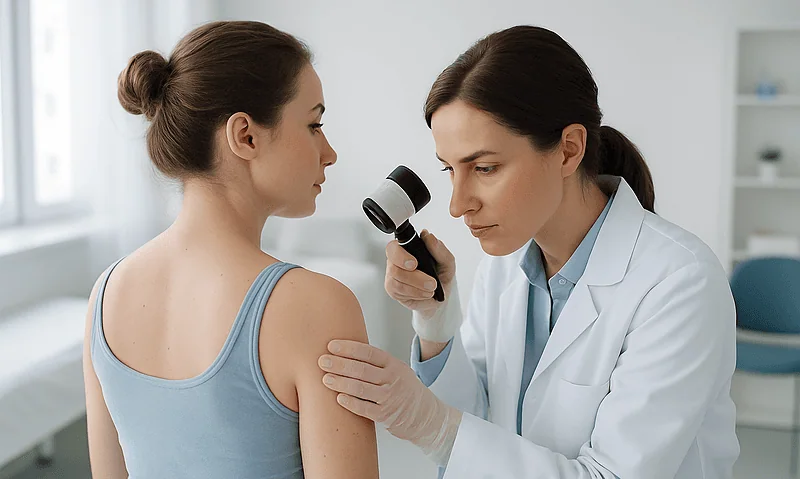
- A new mole, or an existing one that is changing in size, shape or color, has irregular borders, multiple colors, or is larger than about 6 millimeters across.
- A sore, patch or bump on sun-exposed skin that bleeds, crusts, or fails to heal within four weeks.
- A pearly or waxy nodule, or a scaly red patch that persists.
- Sudden swelling of the face, lips or tongue, hives, wheezing or difficulty breathing after using a product or supplement. This can signal a serious allergic reaction; call emergency services.
- Severe, spreading redness, blistering, pain or pus at a treatment or product-application site, which may indicate infection or a strong reaction.
- Skin changes accompanied by joint pain, fever, unexplained weight loss or fatigue, which need a broader medical assessment.
If skin concerns are affecting your mood or daily life. Preoccupation with perceived flaws that others do not see is worth discussing with a doctor; effective support exists, and no serum addresses it.
Skin cancer screening deserves a mention because the same sun exposure that erodes collagen drives most skin cancers. Anyone with a personal or family history, many moles, or fair skin that burns easily should ask their doctor about how often a skin check is appropriate. Prevention and early detection sit on the same page as collagen protection, and a clinician can hold both.
Frequently asked questions
What does collagen banking mean?
Collagen banking is an industry term for starting collagen-protecting habits early, typically in your twenties or thirties, so skin retains more firmness later. It is not a medical treatment or diagnosis. In practice it describes daily sunscreen, not smoking, a retinoid where appropriate, and sometimes supplements or procedures. The metaphor overstates things: you cannot stockpile collagen, only slow its loss and keep production steady.
Does collagen banking really work?
Parts of it do, and the parts that work best are the least glamorous. Daily broad-spectrum sunscreen has randomized-trial evidence of less skin aging over years, and topical retinoids have trials showing new dermal collagen. Supplements have modest, mostly industry-funded support. Collagen creams do not add collagen. The strategy works if it means those proven habits done consistently, not if it means buying a serum with the phrase on the label.
When should you start collagen banking?
Sun protection is appropriate from childhood, and collagen production begins its slow decline in the mid-twenties, so that decade is a natural time to make sunscreen and not smoking non-negotiable. Retinoid trials enrolled adults with existing photodamage, mostly forty and older, so earlier use is an extrapolation rather than proven. Starting later still helps; the Queensland sunscreen trial included adults up to 55 and found a benefit.
What are people saying about branded collagen banking serums?
Reviews of serums marketed under the collagen banking name generally praise immediate softness, hydration and glow, which matches the humectant and film-forming ingredients they contain. Claims of long-term firming rest on small, supplier-funded studies of individual peptides, not on trials of the finished product, and no serum has been shown to match a retinoid or sunscreen. They can be a pleasant addition; they are not the foundation.
What food is very high in collagen?
Bone broth, chicken skin and cartilage, oxtail, pork knuckle, fish skin and gelatin are the richest food sources, because collagen lives in connective tissue. Digestion breaks it into amino acids and short peptides, so eating collagen does not deliver collagen to your skin. What matters more is adequate total protein, enough vitamin C from fruit and vegetables, and the zinc and copper found in shellfish, nuts, seeds and legumes.
Do collagen supplements improve skin longevity?
Modestly, perhaps. Several randomized trials lasting 8 to 12 weeks found small improvements in skin hydration and elasticity versus placebo, and meta-analyses agree. Most were funded by manufacturers, used different products, and lacked long-term follow-up, so the evidence grade is low to moderate. Supplements are regulated as foods, not medicines. People with kidney disease or fish allergies should check with a clinician before using them.
Can a collagen cream replace lost collagen?
No. Collagen molecules are far too large to pass through the outer skin barrier, so a cream containing collagen stays on the surface, where it binds water and makes skin feel smoother for a few hours. That temporary plumping is why reviews are often positive. No study has shown topical collagen increases collagen in the dermis. Retinoids and vitamin C have better evidence for influencing collagen from the outside.
Which treatment stimulates collagen the most?
Among topical options, prescription retinoids have the strongest randomized-trial and biopsy evidence for increasing dermal collagen. Among procedures, fractional lasers have the most consistent histological data, with microneedling, radiofrequency and biostimulatory injectables showing moderate support from smaller trials. None of these outperform daily sunscreen for preventing loss. Which option suits you depends on skin type, history and goals, a judgment for a dermatologist rather than a ranking.
Is it too late to bank collagen after 40 or 50?
No. Sunscreen trials included adults into their fifties and still found less skin aging with daily use, and retinoid trials enrolled people with established photodamage and demonstrated new collagen. Gains are smaller than they would have been earlier, but they are real. Around menopause, when collagen loss accelerates, clinician-guided protection matters more, not less. The habits that help at 25 are the same ones that help at 55.
Are online peptide injections a shortcut for collagen?
No, and they carry real risk. Injectable peptides sold online as research chemicals are not approved medicines, are not manufactured to pharmaceutical standards, are not legally for human use, and have no clinical trial evidence in skin. Contamination, incorrect dosing and infection are documented hazards. If you are interested in collagen-stimulating treatments, the regulated options are administered by trained clinicians in medical settings after an individual assessment.
References
- Cleveland Clinic: Collagen: What It Is, Types, Function and Benefits
- MedlinePlus: Aging changes in skin
- NHS: Sunscreen and sun safety
This article is for general information only and is not a substitute for professional medical advice. Please consult a qualified doctor about your individual situation.

More from the Blog
How Does Phototherapy Help Atopic Dermatitis? What Sessions Involve and Who May Be Offered Them
Phototherapy for atopic dermatitis exposes affected skin to carefully measured ultraviolet light, usually narrowband UVB, in a clinic cabinet several times a week for…
A Daily Routine That Supports Atopic Dermatitis Treatment: Bathing, Moisturizing and Nail Care
A supportive atopic dermatitis daily routine rests on three anchors: a short, lukewarm bath or shower with a gentle, fragrance-free cleanser; a generous layer…
Is Coconut Oil Good for Your Hair? The One Oil That Penetrates
Coconut oil can genuinely help hair, and the reason is unusual: its main fatty acid, lauric acid, is small enough to penetrate the hair…
Peptides in Skincare: What Signal Peptides Do and What the Studies Show
Peptides in skincare are short chains of amino acids applied topically to signal skin cells, most often to encourage collagen production or soften expression…
How to Get Clear Skin: What Actually Works, According to Dermatology Trials
Dermatology trials show that clear skin comes mainly from treating acne consistently: a gentle cleanser, benzoyl peroxide, an adapalene retinoid, daily sunscreen, and patience…

Why Is Cellulitis Not Improving? Spreading Redness, Fever and When to Contact Your Care Team
Cellulitis usually begins to improve within about 48 hours of starting antibiotics, although redness can spread slightly at first. When it keeps worsening after…