

Common Reproductive System Conditions and How Care Is Planned From Diagnosis to Treatment

Key Takeaways
- The NHS estimates that around 1 in 7 couples may have difficulty conceiving, and that endometriosis and PCOS each affect roughly 1 in 10 women of reproductive age.
- PCOS is diagnosed when two of three features are present: irregular ovulation, signs of raised androgens, and polycystic ovaries on ultrasound; no single test confirms it.
- Endometriosis cannot be ruled out by a normal ultrasound, because small surface deposits are only confirmed by laparoscopy.
- The Mayo Clinic reports that a male factor contributes to over a third of infertility cases, so both partners are tested in parallel on standard pathways.
- The CDC notes that about 1 in 8 women with a history of pelvic inflammatory disease experience difficulty getting pregnant, making chlamydia screening a fertility measure.
- Because sperm take roughly three months to mature, repeat semen analysis after varicocele repair or lifestyle change is deferred until at least then.
Reproductive system conditions include endometriosis, polycystic ovary syndrome, uterine fibroids, pelvic infections, varicocele and hormone or sperm problems. Care usually follows the same path: a detailed history, an examination, targeted blood tests, imaging such as ultrasound, and sometimes keyhole surgery to confirm a diagnosis. Treatment is then planned around symptoms, fertility wishes and overall health, with the treating team guiding every step.
The appointment is at 9:40, and she has rehearsed the sentence in the car. Not the vague version she has used for years, the one about ‘bad periods’, but the specific one: pain that starts two days before bleeding, lasts a week, and has twice made her cancel work. Across town, a man in his thirties is sitting with a semen analysis result he does not know how to read, wondering whether the single low number on the page is his fault.
Both of them are about to meet the same system of care, even though their diagnoses will be different. Reproductive system conditions explained properly are less about dramatic surgery and more about sequence: who asks what, which test comes first, and why some people are offered treatment quickly while others are asked to wait.
This explainer walks through that sequence, condition by condition, using the evidence that mainstream guidelines actually rely on, rather than the stories that circulate on forums.
What 'reproductive system conditions explained' really covers
The phrase sounds like one topic. In clinical practice it is at least five. Gynecology services handle conditions of the uterus, ovaries, fallopian tubes and cervix. Urology and andrology services handle the testes, prostate, sperm production and male hormones. Fertility services sit across both, and sexual health services treat the infections that can damage any of these organs if left alone.
The conditions that bring most people to those clinics are a short list. On the female side: endometriosis, polycystic ovary syndrome (PCOS), uterine fibroids, heavy or absent periods, pelvic inflammatory disease and ovarian cysts. On the male side: varicocele, low sperm count or poor sperm movement, hormone deficiency, undescended testes diagnosed late, and infections of the testis or prostate. Infertility, defined by the NHS as not conceiving after a year of regular unprotected sex, is the problem that most often reveals one of the others.
What links all of them is how care is organized. Whether the organ in question is an ovary or a testis, the team moves through the same stages: listening, examining, testing, confirming, then choosing between watching, medicines and procedures. A person with fibroids and a person with a varicocele will sit in different waiting rooms but will recognize each other’s journey.
Two numbers set the scale. The NHS estimates that around 1 in 7 couples may have difficulty conceiving, and that PCOS and endometriosis each affect roughly 1 in 10 women of reproductive age. These are not rare diagnoses. They are common enough that the pathway for reaching them has been standardized, and understanding that pathway is the single most useful thing a patient can bring to the first appointment.
How the reproductive system works, and where things usually go wrong
Almost every condition on the list can be traced back to one of four things: a hormone signal that is too strong, too weak or badly timed; tissue growing where it should not; a blocked or damaged tube; or an infection that scarred something on its way through.
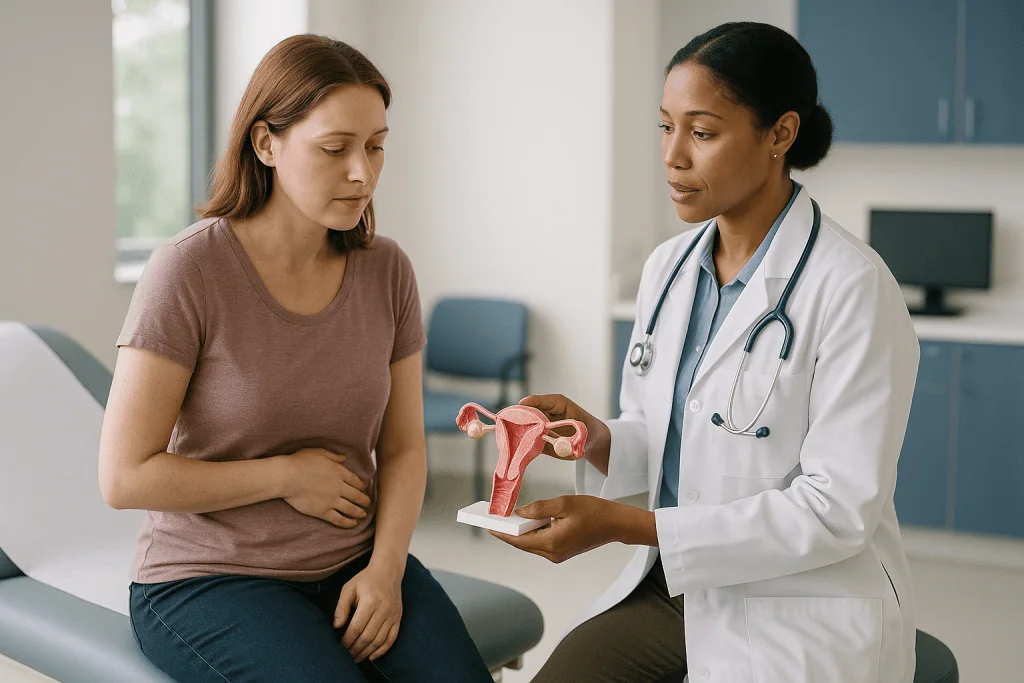
The hormone story starts in the brain. The hypothalamus releases gonadotropin-releasing hormone (GnRH), a chemical messenger that tells the pituitary gland to release two further hormones, FSH and LH. In the ovary these drive egg maturation and ovulation; in the testis they drive sperm production and testosterone. Estrogen and progesterone, or testosterone, then feed back to the brain to keep the rhythm steady. PCOS is largely a disorder of this rhythm: the Mayo Clinic and NHS describe raised androgen levels and insulin resistance that disrupt ovulation, which is why periods become irregular.
Tissue in the wrong place explains endometriosis, where cells similar to the uterine lining grow outside the uterus and bleed with each cycle, and fibroids, which are non-cancerous growths of uterine muscle. Neither is caused by anything the patient did.
Blocked or damaged structures explain a large share of infertility. The fallopian tubes can be scarred by past infection; the tiny ducts carrying sperm can be absent or obstructed; and in varicocele, enlarged veins around the testis are thought to raise local temperature and affect sperm quality, according to the Mayo Clinic.
Infection ties the other three together. Chlamydia and gonorrhea often cause no symptoms at all, which is exactly why they reach the tubes or epididymis before anyone looks. The CDC lists untreated sexually transmitted infections as the main cause of pelvic inflammatory disease. Knowing which of these four mechanisms is at work tells the team which test to order first.
Female reproductive system disorders seen most often in clinic
Ask a gynecology nurse what fills the clinic list and the answer rarely changes: pain, bleeding and fertility. Four conditions account for most of it.
Endometriosis. The NHS describes it as a long-term condition in which tissue similar to the lining of the womb grows elsewhere, commonly on the ovaries, fallopian tubes and pelvic lining. It is linked with painful periods, pain during or after sex, pain on passing urine or stool during a period, and difficulty conceiving. Severity of pain does not reliably match the amount of disease seen at surgery, which is one reason diagnosis is slow.
Polycystic ovary syndrome. Despite the name, the ovaries do not contain true cysts but many small, immature follicles. The NHS criteria require two of three features: irregular or absent ovulation, signs of raised androgens (such as excess hair growth or acne) on examination or blood test, and polycystic ovaries on ultrasound. Weight, insulin resistance and long-term cardiovascular and diabetes risk are part of the same picture.
Uterine fibroids. The Mayo Clinic notes that many women have fibroids at some point in their lives and most never need treatment. Problems arise when fibroids grow large, press on the bladder or bowel, or sit inside the uterine cavity and cause heavy bleeding or affect implantation.
Ovarian cysts and menstrual disorders. Most ovarian cysts are functional, form as part of a normal cycle and disappear on their own. Heavy menstrual bleeding, absent periods and bleeding between periods are symptoms rather than diagnoses; the team’s job is to find the cause, which can range from thyroid disease to fibroids to, less commonly, precancerous change in the uterine lining.
Each of these conditions has a distinct first test. That is the subject of the diagnosis section further on.
Endometriosis and PCOS explained: two conditions people constantly confuse
They get mixed up for an understandable reason: both are common, both affect fertility, and both have names that end in a shrug. The mechanisms could not be more different.
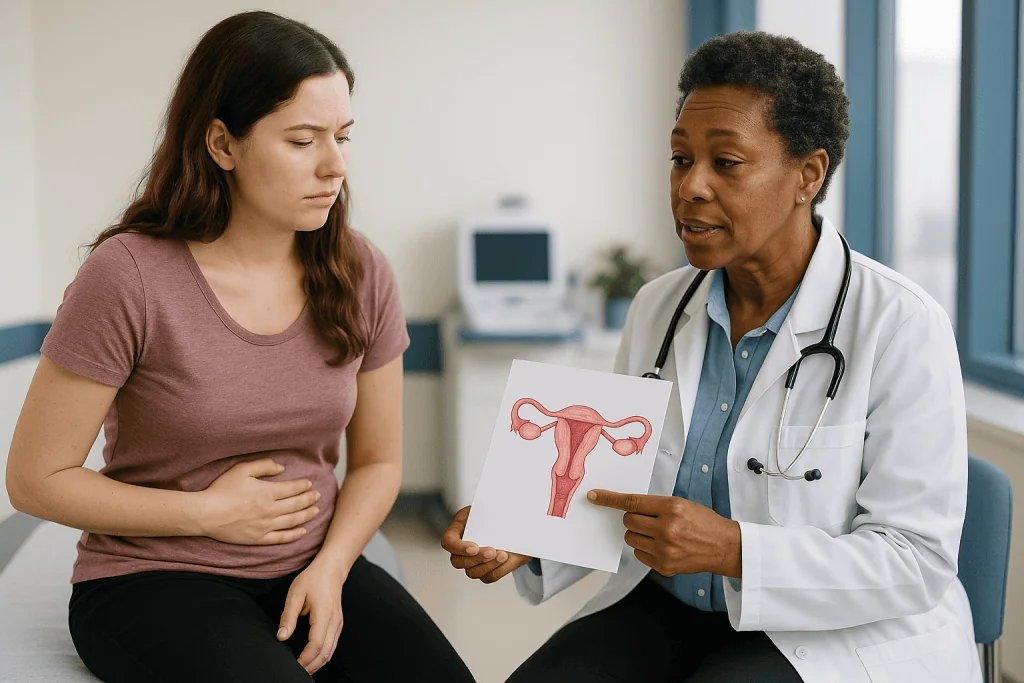
Endometriosis is an inflammatory, estrogen-driven disease of misplaced tissue. Each month the patches bleed, the body reacts, and over years adhesions (bands of scar tissue that stick organs together) can form. The NHS is candid that there is no simple test; ultrasound can pick up endometriosis cysts on the ovary, but the only way to confirm the small surface deposits is laparoscopy, a keyhole operation in which a thin camera is passed through the abdominal wall. Treatment aims to lower pain and inflammation, often by reducing estrogen exposure with hormonal medicines, or to remove deposits surgically.
PCOS is a metabolic and hormonal condition. The ovary is structurally healthy but receives mixed signals. The NHS lists its core features as irregular periods, excess androgen and polycystic ovaries, and links it with insulin resistance, type 2 diabetes and raised blood pressure in later life. Treatment does not target a lesion, because there is none; it targets ovulation, androgen effects and long-term metabolic health.
| Feature | Endometriosis | PCOS |
|---|---|---|
| Core problem | Tissue growing outside the uterus | Hormone and insulin signaling |
| Typical period pattern | Often regular but very painful | Irregular, infrequent or absent |
| Key diagnostic step | Laparoscopy to confirm | Two of three clinical criteria |
| Main treatment aims | Pain control, fertility, removing deposits | Restoring ovulation, metabolic health |
| Long-term watch | Recurrence after surgery | Diabetes, cardiovascular risk |
One person can have both. The table is a map, not a verdict, and only the treating team can say which conditions are present in any individual.
Male reproductive health problems: the conditions behind a worrying result
The man with the semen analysis in the opening scene is not unusual. The Mayo Clinic reports that a male factor contributes to over a third of cases of infertility, yet men are often the last to be tested. The conditions involved fall into three groups.
Problems with sperm production. Varicocele, an enlargement of the veins inside the scrotum, is the most common reversible cause identified at male fertility assessment. Hormone disorders, past chemotherapy, undescended testes in childhood, some genetic conditions, high scrotal temperature and certain medicines can also reduce sperm number or movement. Lifestyle factors such as smoking, heavy alcohol use and anabolic steroid use appear in the Mayo Clinic list as well.
Problems with delivery. Sperm may be produced normally but cannot get out. Blockages in the epididymis or vas deferens, prior vasectomy, retrograde ejaculation (semen entering the bladder) and erectile difficulties all sit here. Some men are born without the vas deferens on one or both sides.
Problems with hormones. Low testosterone with low FSH and LH points to the pituitary or hypothalamus rather than the testis. High FSH with a small testis points the other way. These patterns are read together, never from a single number.
Assessment usually begins with a semen analysis repeated at least once, because results vary from sample to sample, plus a physical examination and hormone blood tests. Scrotal ultrasound follows if a varicocele or structural problem is suspected. Genetic testing is reserved for very low or absent sperm counts.
The emotional weight of a male factor diagnosis is real and often unspoken. Clinics that treat couples together, with both partners tested in parallel, reflect the evidence that infertility is a shared diagnosis in a large proportion of cases, and not one person’s failing.
Pelvic infections and STIs: the preventable cause of damaged tubes
Scarred fallopian tubes do not announce themselves. By the time they are found on a dye test during fertility investigation, the infection that caused them may be years in the past and long forgotten, if it was ever noticed.
Pelvic inflammatory disease (PID) is an infection of the uterus, tubes or ovaries, usually spreading upward from the cervix. The CDC identifies untreated chlamydia and gonorrhea as the most common causes, though other bacteria can be involved. Symptoms can range from none at all to lower abdominal pain, unusual discharge, fever, pain during sex and bleeding between periods. Because the picture is so variable, the CDC advises clinicians to treat on clinical suspicion rather than wait for test confirmation, since delay increases the chance of permanent damage.
The long-term consequences explain why sexual health sits inside any honest discussion of reproductive conditions. The CDC notes that about 1 in 8 women with a history of PID experience difficulty getting pregnant, and that PID also raises the risk of ectopic pregnancy, where an embryo implants in a damaged tube, and of chronic pelvic pain.
Men are not spared. The same organisms cause epididymitis, an inflammation of the coiled tube at the back of the testis, which produces a painful, swollen scrotum and can affect sperm transport. Mumps in adulthood can inflame the testis itself.
Treatment of PID and epididymitis is with antibiotics chosen by the clinician according to current resistance patterns, and partners are treated at the same time to prevent reinfection. Screening for chlamydia in sexually active young adults, recommended by the CDC, is the single most effective way to stop the chain before the tubes are involved. In reproductive medicine, prevention here is cheaper, faster and kinder than any later repair.
How reproductive disorders are diagnosed: from first visit to confirmed answer
The first appointment is mostly conversation, and that is deliberate. The pattern of a symptom often narrows the possibilities before any test is ordered. Pain that tracks the cycle suggests endometriosis; periods that arrive months apart suggest an ovulation problem; heavy bleeding with a feeling of pelvic fullness suggests fibroids. A sexual history, past infections, previous pregnancies, surgeries and family history are all part of the same sketch.
Examination comes next. For women this may include an abdominal and pelvic examination; for men, examination of the testes, scrotum and sometimes the prostate. Teams explain what they are checking and why, and a chaperone can be requested.
Blood tests then confirm or exclude the hormonal causes. Typical panels include FSH, LH, estrogen or testosterone, prolactin, thyroid function and, for suspected PCOS, androgen levels and markers of insulin resistance. For women, a progesterone level timed to the second half of the cycle shows whether ovulation occurred.
Imaging is usually transvaginal or pelvic ultrasound, which reliably shows fibroids, ovarian cysts and the follicle pattern of PCOS, and scrotal ultrasound for men. MRI is reserved for complex fibroids or deep endometriosis. Tubal patency can be tested with a hysterosalpingogram, an X-ray taken while dye is passed through the uterus and tubes, or an ultrasound equivalent.
The final step, used only when it will change management, is a direct look. Laparoscopy confirms endometriosis and can treat it in the same session. Hysteroscopy, a camera passed through the cervix into the uterine cavity, assesses polyps and fibroids inside the womb.
Not everyone needs every step. The NHS infertility pathway, for instance, orders tests in parallel for both partners so that a male factor is not missed while the female partner is investigated in detail.
Who is usually offered testing now, and who is usually asked to wait
Waiting is the part patients find hardest to accept, so it helps to know the logic. The NHS reports that around 84% of couples conceive naturally within a year of regular unprotected sex, and around 92% within two years. On that basis, couples are generally advised to see a doctor after one year of trying, but earlier if the woman is aged 36 or over, or if either partner has a known reason for concern such as previous cancer treatment, a history of PID, absent periods or an undescended testis.
For pain and bleeding problems, waiting is not advised. Period pain that stops someone attending work or school, bleeding that soaks through protection every hour, or pain during sex is reason to be assessed now, not after a year. The NHS endometriosis guidance makes the point that early diagnosis can prevent years of untreated pain.
Some conditions are deliberately watched rather than treated. Small fibroids without symptoms, functional ovarian cysts and mild varicoceles in men who are not trying to conceive are usually monitored. The Mayo Clinic notes that many fibroids need no treatment, and that unnecessary surgery carries its own risks, including the risk of weakening the uterine wall.
Fertility treatment itself has eligibility steps. Before ovulation induction or IVF, teams usually ask for a semen analysis, confirmation of ovulation, tubal assessment and up-to-date screening for infections. Weight, smoking status and alcohol intake are discussed because the evidence links all three to lower success and higher pregnancy risk.
None of these thresholds is a rule for every person. Someone with a strong family history, a known genetic condition or a short remaining window of fertility may be fast-tracked, and the treating team makes that call.
How treatment is planned: matching the option to the goal
Treatment planning in reproductive medicine starts with a question that sounds obvious and is not: what does the patient want? Pain relief, controlled bleeding, pregnancy soon, pregnancy later, or simply reassurance lead to different plans for the same diagnosis.
A woman with endometriosis who wants to conceive this year will not be offered the hormonal medicines that suppress the cycle, because they also suppress ovulation. A man with a varicocele who has no symptoms and has completed his family may be offered nothing at all. Guidelines are written with these branches built in.
| Condition | Watchful waiting | Medicines (by class) | Procedures |
|---|---|---|---|
| Endometriosis | Mild symptoms | Hormonal suppression, pain relief | Laparoscopic removal of deposits |
| PCOS | Regular cycles, no fertility wish | Cycle regulation, ovulation induction, insulin sensitizers | Ovarian drilling in selected cases |
| Fibroids | Small, no symptoms | Hormonal medicines for bleeding | Myomectomy, embolization, hysterectomy |
| PID | Not appropriate | Antibiotics, partner treatment | Drainage if abscess forms |
| Varicocele | No symptoms, no fertility wish | Usually none | Surgical or radiological repair |
| Tubal blockage | Rarely | None | Tubal surgery or IVF |
Three principles shape the choice between columns. The least invasive effective option comes first. Fertility-preserving options come before those that remove organs, unless the patient has decided otherwise. And the plan is reviewed at set intervals, because symptoms change, tests are repeated and life circumstances move.
Patients frequently ask whether they must choose one column forever. They do not. Someone may manage endometriosis with medicines for years, have surgery when planning pregnancy, then return to medicines afterward. The plan is a living document written with the treating team, not a single verdict delivered once.
Medicines used in reproductive conditions: how they work and what teams watch
Medicines in this field act on hormones, on inflammation or on infection. Understanding the mechanism makes the prescribing clinician’s choices, and the follow-up schedule, far less mysterious. What follows describes classes only; the decision about whether any of them suits an individual rests with the prescriber.
Hormonal suppression. Combined hormonal contraceptives and progestogen-only preparations reduce the cyclical estrogen surge that drives endometriosis and heavy bleeding. GnRH analogues go further, temporarily switching off the brain’s signal to the ovary and creating a reversible menopause-like state; because this lowers bone density over time, they are used for limited periods and often with add-back hormone therapy. Teams review symptoms and side effects at a follow-up visit rather than waiting for a crisis.
Ovulation induction. Selective estrogen receptor modulators and aromatase inhibitors are oral medicines that trick the brain into releasing more FSH, prompting a follicle to mature in women who do not ovulate, most often with PCOS. Ultrasound monitoring is used because of the risk of more than one follicle developing, and therefore of multiple pregnancy. Injectable gonadotropins are a stronger version reserved for specialist settings.
Insulin sensitizers. In PCOS, improving the body’s response to insulin can lower androgen levels and, in some women, restore ovulation. The NHS notes that lifestyle change is the first-line approach and that medicines are added when needed.
Antibiotics. For PID and epididymitis the choice depends on likely organisms and local resistance. The CDC emphasizes completing the course and treating partners.
Hormone replacement in men. Testosterone replacement treats symptoms of deficiency but suppresses sperm production, so it is avoided in men who want to father a child; other hormonal strategies exist for that situation.
Every one of these has a monitoring plan attached, and that plan is the part worth asking about.
Procedures and surgery: what actually happens in the operating room
Most reproductive surgery today is keyhole. A few small incisions, a camera, a screen, and instruments thinner than a pencil. Knowing the steps takes some of the fear out of the consent form.
Laparoscopy for endometriosis. Under general anesthetic the abdomen is inflated with carbon dioxide gas to create working space. The surgeon inspects the pelvis, then either excises (cuts out) or ablates (destroys with heat) the deposits, and divides adhesions. Deep disease involving the bowel or bladder needs a multidisciplinary team and longer planning.
Myomectomy. Fibroids are removed while the uterus is kept. Depending on size and position this is done through the cervix with a hysteroscope, by keyhole, or through an open incision. Uterine artery embolization, performed by an interventional radiologist, instead blocks the blood supply so fibroids shrink; the Mayo Clinic lists it as an option for women who want to avoid surgery, with a discussion about future pregnancy.
Hysterectomy. Removal of the uterus ends periods permanently and is considered when other options have failed or when the patient has chosen it. It ends the possibility of pregnancy and is never the first step in a fertility pathway.
Varicocele repair. The enlarged veins are tied off through a small groin incision, by keyhole, or blocked from inside by a radiologist. Semen analysis is repeated months later, because sperm take around three months to develop.
Tubal surgery and IVF. Blocked tubes can sometimes be opened, but severely damaged tubes are usually bypassed altogether with IVF, in which eggs are collected and fertilized outside the body.
Each procedure carries risks that the surgeon must explain: bleeding, infection, injury to nearby organs, anesthetic complications and, specific to each operation, recurrence or effects on future pregnancy. Alternatives, including doing nothing for now, are part of that conversation by right.
What the following days and weeks usually look like
The timeline after a diagnosis depends on which column of the treatment table the person is in, and teams give individual ranges rather than fixed promises. Still, some patterns recur often enough to be worth describing.
After starting a hormonal medicine. The first weeks can bring irregular bleeding, breast tenderness or mood changes while the body adjusts. Pain relief from hormonal suppression builds over successive cycles rather than days, which is why the review appointment is usually set a few months out rather than a few weeks. Stopping early because the first cycle felt worse is a common reason treatments appear to fail, and it is worth discussing side effects with the prescriber before stopping.
After keyhole surgery. Shoulder-tip pain from the gas, bloating and tiredness are expected in the first days. Light walking is encouraged from the first day because it lowers the risk of blood clots. Driving, lifting and return to work are individually advised; open operations take substantially longer than keyhole ones to heal, and the surgical team gives the specific range.
After ovulation induction. Cycles are monitored with ultrasound and sometimes blood tests, and timed intercourse or insemination is planned around the expected ovulation. Several cycles may be needed, and the plan is reassessed if the ovaries do not respond or respond too strongly.
After antibiotic treatment for PID. The CDC advises a review within a few days to confirm symptoms are improving, with hospital treatment if they are not, and testing for reinfection later.
After male procedures. Because a sperm cell takes roughly three months to mature, repeat semen analysis is deferred until at least then, so an early sample does not reflect the effect of treatment.
Across all of these, the review appointment is not optional padding; it is where the plan gets corrected.
What people often get wrong about reproductive system conditions
Myths in this area are durable because they fill the silence around subjects that families rarely discuss. Here are the ones clinicians correct most often, with what the evidence actually shows.
‘Painful periods are normal, everyone has them.’ Some discomfort is common. Pain that interferes with daily life is not something to endure, and the NHS lists it as a reason to seek assessment for endometriosis. Years of untreated pain are a known problem, not a rite of passage.
‘PCOS means I cannot get pregnant.’ The NHS states that PCOS is one of the most common causes of infertility, and also that many women with PCOS conceive, with or without help. Ovulation problems are among the most treatable causes.
‘Fibroids turn into cancer.’ Fibroids are benign. The Mayo Clinic explains that they rarely become cancerous and are not thought to increase the risk of other uterine cancers. Rapid growth after menopause is the exception that prompts further investigation.
‘Infertility is a women’s problem.’ A male factor contributes to over a third of cases according to the Mayo Clinic, and in many couples both partners have a contributing issue.
‘Pregnancy or hysterectomy fixes endometriosis.’ Pregnancy can quieten symptoms for a time because of the hormonal pause, and hysterectomy removes the uterus but not necessarily the deposits elsewhere. Neither is a guarantee, and neither should be undertaken for that reason alone.
‘Supplements will boost sperm or restore ovulation.’ The evidence for most over-the-counter fertility supplements is weak or inconsistent. Correcting a true deficiency is reasonable; expecting a bottle to replace assessment is not.
‘A normal ultrasound rules out endometriosis.’ It does not. Small surface deposits are invisible on scans, which is why laparoscopy remains the confirmatory test.
Questions to ask your care team before agreeing to a plan
Good consultations are conversations, and the best questions are the ones that reveal the reasoning behind the plan rather than just its name. Patients who arrive with a short written list tend to leave with clearer answers, and clinicians generally welcome it.
On the diagnosis itself, it helps to ask: how certain are you of this diagnosis, and what would change your mind? Which test would confirm it, and do I actually need that test before treatment starts? Could more than one condition be present at the same time?
On the plan: what is the goal of this treatment, pain, bleeding, fertility or long-term health? What happens if I choose to wait for now? Which option preserves my fertility, and which does not? How will we know whether it is working, and when is the review?
On medicines: how does this work in my body, what side effects should I expect in the first weeks, what should make me contact you rather than wait for the review, and how does it interact with my other medicines or with trying to conceive?
On procedures: what are the specific risks for someone with my history, what are the alternatives including non-surgical ones, how experienced is the team with this operation, what will recovery look like for me, and what is the chance the problem returns?
On the bigger picture: does this condition affect my long-term health beyond fertility, as PCOS does with diabetes and cardiovascular risk? Should my partner be tested or treated at the same time? Is there a specialist nurse, counselor or support service I can contact between appointments?
Writing the answers down, or bringing someone who will, is one of the most practical pieces of advice in reproductive medicine.
When to call your doctor: red-flag signs that should not wait
Most reproductive conditions are chronic and are managed over months. A small number of situations are emergencies, and knowing them is more useful than any symptom list for self-diagnosis.
Seek urgent medical help, or emergency services, for sudden severe pelvic or abdominal pain, especially with fainting, shoulder-tip pain or a positive pregnancy test, because this can indicate an ectopic pregnancy or a twisted ovarian cyst. Sudden severe pain and swelling in one testis is treated as testicular torsion, a twisting of the blood supply, until proven otherwise; the window to save the testis is measured in hours.
Contact a doctor the same day for a high fever with pelvic pain or unusual discharge, which can signal pelvic inflammatory disease or an abscess; for bleeding that soaks a pad or tampon every hour for several hours, or that causes dizziness; for a painful, red, swollen scrotum; or for severe pain after any gynecological or urological procedure, particularly with fever, vomiting or a swollen abdomen.
After surgery, call the team for a wound that becomes increasingly red, hot or leaks pus, for calf pain or swelling in one leg, or for sudden breathlessness or chest pain, which can indicate a blood clot.
Arrange a routine appointment, rather than waiting for the next scheduled review, for any new bleeding after menopause, bleeding between periods or after sex that persists, a lump in the testis or breast tissue, periods that stop for three months without pregnancy, or a medicine side effect that is affecting daily life.
None of these signs confirms a particular diagnosis. They are signals that the treating team needs to reassess, and that decision, as with every other step described here, belongs to the clinicians who know the individual case.
Frequently asked questions
What are the most common female reproductive system disorders?
Endometriosis, polycystic ovary syndrome, uterine fibroids, functional ovarian cysts and pelvic inflammatory disease account for most gynecology referrals. Heavy, painful, irregular or absent periods are symptoms that lead to those diagnoses rather than diagnoses themselves. Each has a different first test, from blood hormone levels to ultrasound to keyhole surgery, and the treating team decides which is appropriate.
Which male reproductive health problems most often affect fertility?
Varicocele, an enlargement of veins in the scrotum, is the most common reversible cause found at assessment. Hormone disorders, blockages in the ducts that carry sperm, past infections, undescended testes in childhood and some genetic conditions also reduce sperm number or movement. The Mayo Clinic reports a male factor contributes in over a third of infertility cases.
How are reproductive disorders diagnosed?
Diagnosis follows a sequence: a detailed history, physical examination, blood tests for hormones such as FSH, LH, prolactin and thyroid function, then ultrasound of the pelvis or scrotum. Tubal patency is checked with a dye X-ray or ultrasound. Laparoscopy or hysteroscopy is used only when a direct look will change management, for example to confirm endometriosis.
What is the difference between endometriosis and PCOS explained simply?
Endometriosis is tissue similar to the womb lining growing outside the uterus and bleeding each cycle, causing pain and scarring. PCOS is a hormonal and metabolic condition in which the ovaries receive disrupted signals, so ovulation becomes irregular. One needs surgery to confirm; the other is diagnosed on clinical criteria. A person can have both conditions at the same time.
How long should a couple try before seeing a doctor about fertility?
The NHS advises seeing a doctor after one year of regular unprotected sex without conceiving, and sooner if the woman is 36 or over or either partner has a known risk factor, such as previous cancer treatment, absent periods or a history of pelvic infection. Around 84% of couples conceive within a year and 92% within two, according to NHS figures.
Can uterine fibroids turn into cancer?
Fibroids are benign growths of uterine muscle, and the Mayo Clinic states that they rarely become cancerous and are not thought to raise the risk of other uterine cancers. Many women have fibroids without ever needing treatment. Rapid growth, particularly after menopause, is the situation that prompts further investigation by the treating team.
Does pelvic inflammatory disease always cause symptoms?
No. The CDC notes that PID can cause anything from no symptoms to severe pelvic pain, fever, unusual discharge and bleeding between periods. Because chlamydia and gonorrhea often go unnoticed, damage to the fallopian tubes can occur silently. Clinicians treat on suspicion rather than waiting for test results, and partners are treated at the same time.
What does fertility-preserving treatment mean?
It refers to options that treat a condition without removing or damaging the organs needed for pregnancy. Examples include removing fibroids while keeping the uterus, excising endometriosis deposits rather than performing hysterectomy, and choosing hormonal strategies for men that do not suppress sperm production. Whether such an option suits an individual is decided with the treating team.
Why is semen analysis repeated rather than done once?
Sperm count and movement vary from sample to sample with illness, abstinence time and timing. A single low result can be misleading, so guidelines call for at least one repeat. After a varicocele repair or lifestyle change, the repeat is deferred for roughly three months, because that is how long a sperm cell takes to develop.
When should reproductive symptoms be treated as an emergency?
Sudden severe pelvic pain with fainting or a positive pregnancy test, sudden severe pain in one testis, high fever with pelvic pain, or bleeding soaking protection every hour need urgent assessment. These can indicate ectopic pregnancy, ovarian or testicular torsion, pelvic abscess or hemorrhage. After surgery, calf swelling, chest pain or breathlessness also need immediate attention.
References
- Endometriosis – NHS
- Polycystic ovary syndrome – NHS
- Infertility – NHS
- About Pelvic Inflammatory Disease (PID) – CDC
This article is for general information only and is not a substitute for professional medical advice. Please consult a qualified doctor about your individual situation.
Add us as a Preferred Source to see more of our trusted health content across Google Search, AI Overviews and Discover.

More from the Blog

What to Expect After a GIFT Cycle: The Two-Week Wait, Testing and How Results Are Discussed
After a GIFT cycle, eggs and sperm are placed into a fallopian tube and fertilization, if it happens, occurs inside the body. A blood…

When Fertilization Does Not Happen After ICSI: What the Lab Reviews and the Options Next
When no eggs fertilize after ICSI, the embryology lab usually reviews egg maturity, sperm quality, the injection itself and whether the eggs were activated…

Discharge After Ovulation: What Is Normal, What Changes in Early Pregnancy and When to Test
Discharge after ovulation normally becomes thicker, whiter or creamy and smaller in amount as progesterone rises, then dries up or turns watery again just…

Supporting a Partner Through Infertility Treatment: Appointments, Scans and the Waiting Weeks
Supporting a partner through infertility treatment means sharing the practical load and the emotional weight without taking over. Attend the appointments that matter most,…

Who May Be a Candidate for GIFT? Open Fallopian Tubes, Sperm Findings and Other Considerations
GIFT, or gamete intrafallopian transfer, is generally considered only for people who have at least one open, healthy fallopian tube, a sperm sample that…
Reproductive System Assessment as an International Patient: Sequencing Tests Into One Visit
A reproductive health check for an international patient can usually be fitted into one trip when it is sequenced around the menstrual cycle: early-cycle…