

Cortisol Testing: Blood, Saliva and Timing: Why the Hour Changes Everything
Key Takeaways
- Blood cortisol peaks between roughly 6 and 8 a.m. and falls by about 90 percent by midnight, so the collection hour shapes the result more than for almost any other lab test.
- Saliva tests measure free, unbound cortisol, which makes a late-night saliva sample one of the most sensitive first-line screens for cortisol excess.
- Estrogen-containing contraception and pregnancy raise the carrier protein that binds cortisol, inflating total blood cortisol without changing the active hormone.
- The morning blood reference range spans roughly fivefold, about 5 to 25 mcg/dL, so a single random value almost never confirms or rules out disease on its own.
- Adrenal crisis, severe vomiting, confusion, and collapsing blood pressure in someone with suspected low cortisol or on long-term steroids, is a medical emergency, not a testing question.
- "Adrenal fatigue" is not a recognized medical diagnosis, and the multi-sample cortisol panels sold to detect it have no established clinical meaning.
A cortisol test measures the stress hormone cortisol in blood, saliva, or urine, and the collection time is critical because levels normally peak in the early morning and fall by roughly 90 percent by midnight. Blood tests are usually drawn around 7 to 9 a.m., while late-night saliva samples help screen for cortisol excess. A single random reading, taken without regard to the clock, is rarely meaningful.
The lab slip says 8 a.m. sharp, and you wonder why. Fasting glucose, sure, but a hormone? Couldn’t you just swing by after work? With cortisol, the answer is a firm no, and the reason sits at the heart of how this hormone behaves. Cortisol doesn’t hold steady through the day; it surges before you’re even fully awake and then slides downhill, hour by hour, until it bottoms out around midnight.
That rhythm is exactly what your care team wants to read. A number that would be perfectly healthy at dawn can be a red flag at 11 p.m., and a value that looks alarming in isolation may be entirely normal for the hour it was drawn.
Here’s what blood, saliva, and urine tests each capture, what the numbers mean at different times, and why endocrinologists are famously choosy about when, and whether, to order this test at all.
Why does the hour change cortisol results so much?
Cortisol runs on a circadian schedule set by a cluster of neurons in the hypothalamus. In most people who sleep at night, levels start climbing in the last hours of sleep, jump sharply in the 30 to 45 minutes after waking, a spike researchers call the cortisol awakening response, and peak between roughly 6 and 8 a.m. From there it’s a long descent. By late afternoon, levels have typically fallen by half or more; by midnight, a healthy person’s cortisol is close to its floor, often around a tenth of the morning value.
That slope is diagnostic gold. Many cortisol disorders don’t just shift the average level: they flatten or erase the rhythm itself. Someone with cortisol excess may have a morning number inside the normal range but a midnight level that never drops the way it should. Test at the wrong hour and you can miss the disease entirely, or falsely flag a healthy person.
The rhythm also explains why lab reports list two or three different reference ranges for the same test. A blood cortisol of 15 micrograms per deciliter is unremarkable at 8 a.m. and distinctly odd at 10 p.m. Night-shift workers add another wrinkle: their rhythm often tracks their sleep schedule rather than the clock on the wall, which is why clinicians ask about work hours before interpreting any result. According to MedlinePlus, timing instructions are part of the test itself, not a bureaucratic afterthought.
What does cortisol actually do in the body?
Cortisol has been branded “the stress hormone,” which undersells it badly. It’s a glucocorticoid made by the adrenal glands, two walnut-sized organs perched on top of the kidneys, and nearly every tissue in the body carries receptors for it.
On an ordinary, unstressed day, cortisol helps regulate blood sugar by prompting the liver to release glucose, keeps blood pressure in a workable range, tempers inflammation, and influences how the body uses fat, protein, and carbohydrate. The morning surge is part of what gets you out of bed; some researchers describe it as the body’s internal alarm clock.
Under acute stress, a near-miss in traffic, a fever, a hard workout, the hypothalamus signals the pituitary gland, which signals the adrenals, and cortisol rises within minutes. This chain is the hypothalamic-pituitary-adrenal (HPA) axis, and it comes with a built-in thermostat: rising cortisol feeds back to the brain and dials the signal down. As Harvard Health explains, the system is designed for short bursts followed by recovery.
Problems arise at the extremes. Sustained excess, from a tumor, or from long-term steroid medication, reshapes metabolism, skin, bone, and mood. Sustained deficiency leaves the body unable to handle even minor physical stress. The cortisol test exists to catch both, and each end of the spectrum demands a different testing strategy.
How does a blood cortisol test work?
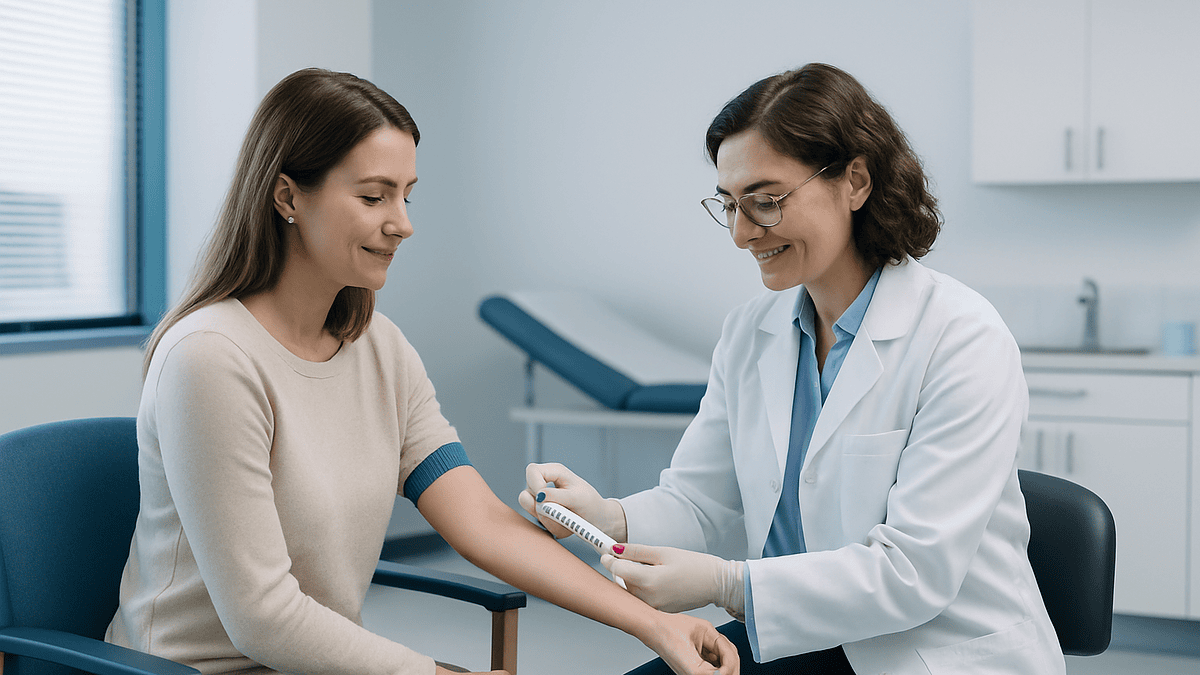
The blood version is the workhorse. A phlebotomist draws a sample from a vein in your arm, usually between 7 and 9 a.m., when cortisol should be near its peak, and the lab measures total cortisol in the serum. Some evaluations add a second draw around 4 p.m. to check whether the level has fallen the way it should.
One detail worth understanding: a blood test measures total cortisol, and most of that total, around 90 percent, is riding on carrier proteins, chiefly cortisol-binding globulin. Only the small unbound fraction is biologically active. This matters because anything that changes the amount of carrier protein changes the total without changing what your cells actually experience. Estrogen is the classic example: pregnancy and estrogen-containing contraception raise binding protein and can push total blood cortisol well above the usual range in someone who is metabolically fine.
The blood draw itself can nudge results too. Cortisol responds to stress within minutes, and for some people a needle qualifies. It’s one reason clinicians rarely hang a diagnosis on a single blood value; the number is a snapshot, and the camera itself can startle the subject. Blood testing shines when the question is low cortisol: a properly timed morning draw that comes back clearly low or clearly robust can move the evaluation forward quickly, per Cleveland Clinic.
How does a saliva cortisol test work, and why collect at midnight?
Saliva flips the script. Because carrier proteins don’t pass into saliva, a saliva sample reflects free cortisol, the active fraction, which sidesteps the binding-protein problem entirely.
The most clinically useful version is the late-night salivary cortisol test. You collect a sample at home, typically between 11 p.m. and midnight, by holding a small absorbent swab in your mouth for a minute or two, then sealing it in a tube for the lab. In a healthy rhythm, cortisol should be nearly undetectable at that hour. If it isn’t, if the midnight level sits stubbornly high, that flattened rhythm is one of the earliest and most sensitive signs of cortisol excess, which is why endocrine guidelines list it among the first-line screening tests for Cushing syndrome.
The catch is that collection discipline matters:
- No eating, drinking, smoking, or tooth-brushing for at least 30 minutes beforehand, brushing can cause tiny gum bleeds, and blood in the sample distorts the result.
- Collect at the instructed hour, on a night with your usual sleep schedule, not after a red-eye flight or an all-nighter.
- Most protocols call for samples on two separate nights, because one odd evening proves little.
Done properly, it’s painless, needle-free, and captures the one data point a morning blood draw can never see: what your cortisol does when it’s supposed to be resting.
What about the 24-hour urine test?
The third option trades precision about timing for a view of the whole day. A 24-hour urinary free cortisol test asks you to collect every drop of urine for a full day and night into a container the lab provides, usually kept chilled. The lab then measures how much free cortisol your kidneys filtered out over those 24 hours.
The appeal is integration. Cortisol pulses up and down throughout the day, and a urine collection smooths those pulses into a single daily total. If the adrenal glands are chronically overproducing, the day’s total climbs, often unmistakably. Like late-night saliva, urine measures the free, active hormone, so estrogen-related binding-protein shifts don’t muddy the water.
The weaknesses are practical and biological. Practically, complete collection is harder than it sounds, one missed void at work and the total is falsely low, which is why clinicians often request two or three separate collections. Biologically, a 24-hour total says nothing about rhythm: a person whose cortisol is moderately high all day and never drops at night can produce a total that still squeaks under the cutoff, even though the flattened pattern is the real problem. Very high fluid intake can also dilute and distort results.
In practice, urine testing usually appears alongside, not instead of, a timed blood or saliva test, each covering the other’s blind spot.
What counts as a normal cortisol level?
Reference ranges vary by laboratory and by measurement method, so the range printed on your report always outranks any number you find online. That said, the typical shape of a healthy day looks like this:
| Sample and time | Typical adult range* | What it tells you |
|---|---|---|
| Blood, 6–8 a.m. | About 5–25 mcg/dL (140–690 nmol/L) | Is the morning peak present and adequate? |
| Blood, around 4 p.m. | Roughly 3–13 mcg/dL (85–360 nmol/L) | Is cortisol falling as the day goes on? |
| Saliva, 11 p.m.–midnight | Very low; often under about 0.1 mcg/dL, lab-specific | Does cortisol drop to its overnight floor? |
| Urine, 24-hour free cortisol | Lab-specific daily total | Is overall daily output within bounds? |
*Ranges are approximate and assay-dependent; interpret only against your own lab’s reference values.
Notice how wide the morning blood range is: the top of normal is roughly five times the bottom. That breadth is honest biology: healthy people genuinely vary that much, hour to hour and person to person. It’s also why a single “borderline” result almost never settles anything. What clinicians look for is pattern: a morning value paired with an evening value, a midnight saliva level, sometimes a suppression test using a synthetic steroid taken the night before to see whether the system responds to feedback the way a healthy HPA axis should, notes MedlinePlus.
What happens when cortisol levels stay high?
Short spikes are normal and harmless: that’s the system doing its job. The concern is cortisol that stays elevated for months or years, a condition called Cushing syndrome. It’s rare, and its most common cause isn’t a tumor at all but long-term use of steroid medications prescribed for inflammatory conditions. Less often, the source is a pituitary or adrenal growth driving overproduction.
Because cortisol touches nearly every tissue, sustained excess leaves a broad signature. According to Mayo Clinic, the pattern tends to include weight gain concentrated in the trunk and face while the arms and legs stay comparatively slim; skin that thins, bruises easily, and heals slowly; and wide purplish stretch marks across the abdomen, thighs, or breasts. Muscles, especially in the thighs and shoulders, can weaken enough that standing from a low chair becomes an effort.
Under the surface, chronically high cortisol pushes blood pressure and blood sugar upward, thins bone, and suppresses parts of the immune system, raising infection risk. Mood changes, irritability, anxiety, low mood, foggy thinking, are common and often the symptom people notice first. Women may see irregular periods and new facial hair growth; men may notice reduced libido.
No single item on that list is specific to cortisol. It’s the cluster, accumulating over time, that prompts testing, which is precisely how clinicians decide whether a cortisol test is warranted in the first place.
What are 10 warning signs of high cortisol?
People search for a checklist, so here is one, with an honest frame around it. These are the features endocrinologists weigh when considering Cushing syndrome:
- Weight gain centered on the abdomen and upper back, with rounding of the face
- Wide, purple-to-pink stretch marks on the belly, thighs, or arms
- Skin that bruises from minor bumps and heals slowly
- Muscle weakness in the hips and shoulders
- New or worsening high blood pressure
- Elevated blood sugar, or new glucose problems
- Persistent fatigue paired with restless, unrefreshing sleep
- Mood shifts, anxiety, irritability, or depression that feels out of character
- Frequent or slow-clearing infections
- Irregular menstrual cycles or unexpected changes in facial and body hair
Now the frame. Every item on this list is common, and almost everyone who has two or three of them has something other than a cortisol disorder, ordinary weight change, thyroid issues, sleep problems, medication effects, or plain life stress can produce the same picture. Cushing syndrome affects only a small number of people per million each year. What raises genuine suspicion is the combination of the more specific signs, wide purple stretch marks, easy bruising, proximal muscle weakness, appearing together and progressing. If that describes you, bring the list to a clinician rather than to a home test kit; the workup that follows a positive screen matters as much as the screen itself.
What if cortisol is too low?
Low cortisol gets less attention than high, but it’s the scenario where testing can be genuinely urgent. When the adrenal glands can’t produce enough, primary adrenal insufficiency, also called Addison’s disease, or when the pituitary fails to send the signal, the body loses its main tool for handling physical stress.
The onset is often slow and easy to dismiss. The NHS describes a typical picture: deepening fatigue that rest doesn’t fix, loss of appetite and unintended weight loss, dizziness on standing from low blood pressure, nausea, muscle weakness, and, a distinctive clue in Addison’s disease, cravings for salty food and a darkening of the skin, especially in creases, scars, and gums. Low mood and irritability often ride along, which is one reason the condition can masquerade as depression or burnout for months.
Testing for low cortisol leans on the morning blood draw, since that’s when levels should be at their highest; a clearly low 8 a.m. value is informative in a way an afternoon one isn’t. Confirmation usually involves a stimulation test that measures how the adrenal glands respond to a hormone signal from above.
The emergency version, adrenal crisis, announces itself with severe vomiting, abdominal pain, confusion, and plummeting blood pressure, often triggered by infection or injury. That situation is not a wait-for-the-lab moment; it needs emergency care immediately.
Why don't doctors like to check cortisol levels?
It’s a fair question, and the honest answer isn’t reluctance: it’s statistics. A random cortisol level, drawn at whatever hour you happen to be in the clinic, is one of the least interpretable numbers in the laboratory. The normal range is wide, the hormone swings dramatically by hour, and everyday events, a rough commute, a skipped breakfast, the needle itself, can shove the value around. A healthy person and a person with early disease can produce identical random numbers.
Then there’s the false-positive problem. Cortisol disorders are rare; the symptoms people want tested, fatigue, weight gain, poor sleep, stress, are nearly universal. Screen a large group of tired people and the arithmetic guarantees that most “abnormal” results will be noise. Each one triggers a cascade: repeat tests, suppression tests, imaging that frequently uncovers harmless incidental adrenal nodules, plus weeks of worry. Endocrine guidelines therefore recommend testing when the specific clinical picture warrants it, the cluster of signs described above, rather than as a general stress checkup.
There’s also a vocabulary gap. Many people asking for cortisol testing have heard of “adrenal fatigue,” the idea that chronic stress wears the glands down into sluggishness. It’s an appealing story, but it isn’t a recognized medical diagnosis, and endocrine societies have found no consistent evidence that it exists as described. Real adrenal insufficiency is a different, testable, treatable condition. The distinction is worth insisting on, because chasing a non-diagnosis can delay finding the actual cause, thyroid disease, sleep apnea, anemia, depression, hiding behind the fatigue.
Are home saliva cortisol kits worth buying?
Mail-order kits promising a “daily cortisol curve” from four saliva samples have become a wellness-industry staple. The technology itself is legitimate, it’s the same saliva measurement labs use, so the question isn’t whether the assay works. It’s whether the result will mean anything.
Three problems recur. First, collection quality: an accurate curve depends on samples taken at precise times, on a normal day, with clean technique. A sample collected 90 minutes late, or after a coffee, quietly corrupts the data, and no one is there to catch it. Second, interpretation: most kits compare your numbers to broad population ranges without knowing your sleep schedule, medications, or health history: the exact context that determines whether a value is meaningful. Third, and most important, the action gap: a mildly “flat” curve on a home report has no established medical meaning and no evidence-backed treatment, yet it often launches buyers toward unproven supplement regimens.
Where home collection genuinely earns its keep is under clinical direction. When a physician suspects cortisol excess, the late-night saliva sample you collect in your own bed, no clinic stress, no needle, is a validated, guideline-endorsed screening tool. Same swab, same lab science; the difference is that someone qualified chose the question, set the timing, and will interpret the answer within your full clinical picture. If you’re curious about your cortisol, that conversation is the better first purchase.
What can skew a cortisol test?
Cortisol may be the most interference-prone test on the requisition form, which is why the pre-test questionnaire is long. The major culprits:
- Steroid medications. This is the big one. Glucocorticoids, in tablets, injections, inhalers, nasal sprays, even potent skin creams, can suppress your body’s own production or, with some assays, register as cortisol. Your care team needs a complete list, including anything over the counter.
- Estrogen. Pregnancy and estrogen-containing contraception raise cortisol-binding globulin, inflating total blood cortisol. Saliva and urine tests dodge this; blood tests don’t. The effect can linger for weeks after stopping.
- Acute illness and pain. Infection, injury, and surgery are supposed to raise cortisol. Testing during a flare answers the wrong question.
- Sleep schedule. Night-shift work, jet lag, or a newborn’s schedule shifts the entire rhythm; the lab’s “morning” may be your biological evening.
- Alcohol, severe depression, and poorly controlled diabetes. Each can elevate cortisol into a pattern that mimics Cushing syndrome, clinicians call it a pseudo-Cushing state, and untangling it takes time.
- Certain supplements. Biotin, common in hair-and-nail formulas, can interfere with some hormone assays; labs often ask you to pause it beforehand.
None of these makes testing impossible. They make context mandatory, one more reason the same number can be reassuring in one chart and worrying in another.
How should I prepare for a cortisol test?
Preparation is mostly about protecting the rhythm the test is trying to read. The specifics come from your care team, but the common threads are consistent.
For a morning blood draw, arrive at the scheduled hour, early morning almost always, after a normal night’s sleep. Skip strenuous exercise that morning; a hard workout raises cortisol for hours. If needles rattle you, say so and ask to sit quietly for 15 to 30 minutes before the draw; a calm collection is a cleaner one. Some protocols ask you to limit food or drink beforehand, so confirm rather than assume.
For late-night saliva, guard the half hour before collection: no food, drink, gum, tobacco, or tooth-brushing. Collect at the exact instructed time, on a night that represents your ordinary schedule, and note anything unusual, illness, a distressing event, a disrupted evening, on the requisition. If two nights are requested, don’t substitute one.
For a 24-hour urine collection, the golden rule is completeness. Start by discarding the first morning void, then collect everything, everything, for the next 24 hours, ending with the following morning’s first void. Keep the container cold as instructed.
Across all three: hand over a complete medication and supplement list in advance, flag shift work or recent travel across time zones, and mention pregnancy or hormonal contraception. Ten minutes of disclosure prevents weeks of repeat testing.
Can you fix your cortisol levels yourself?
Here’s the answer few wellness headlines give: it depends entirely on which problem you have, and most people asking don’t have a cortisol disorder at all.
If testing reveals true cortisol excess or deficiency, no lifestyle program will correct it. Those are structural problems, a tumor, gland damage, medication effects, and they need medical management. Attempting to “balance” a genuinely failing adrenal gland with supplements isn’t just ineffective; in the case of adrenal insufficiency, delay can be dangerous.
If your cortisol is normal but your stress load is heavy, the far more common scenario, the system largely regulates itself, and the evidence-backed levers are unglamorous. Consistent sleep and wake times anchor the rhythm; morning daylight exposure reinforces the healthy a.m. peak. Regular moderate exercise improves the HPA axis’s ability to spike and then recover, though very hard training late at night can push evening cortisol up. Caffeine raises cortisol modestly, most noticeably in people who don’t use it daily. Practices with reasonable evidence for lowering the stress response, slow breathing, mindfulness-based programs, time outdoors, work on the input side, reducing how often the alarm gets pulled, as Harvard Health outlines.
What the evidence does not support: any supplement marketed to “reset” or “balance” cortisol. Studies on popular botanicals are small, short, and inconsistent, and none is a recognized treatment for any cortisol condition. Spend the money on blackout curtains instead.
When should you see a doctor about cortisol symptoms?
Some situations shouldn’t wait for a wellness-panel result. Seek emergency care immediately for possible adrenal crisis: severe vomiting or diarrhea, intense abdominal or lower-back pain, confusion, extreme weakness, or fainting, especially in someone who takes long-term steroid medication or has a known adrenal or pituitary condition. This combination can become life-threatening within hours.
Book a prompt, non-emergency appointment if you notice the more specific signs of cortisol excess clustering together: wide purple stretch marks, skin that bruises and tears easily, weakness climbing stairs or rising from chairs, plus new blood pressure or blood sugar problems. Do the same for the low-cortisol pattern, relentless fatigue with weight loss, dizziness on standing, salt cravings, or unexplained darkening of skin creases and scars.
And see someone, without urgency but without endless delay, if fatigue, sleep trouble, or mood changes have persisted for more than a few weeks and are eroding your daily life, not because cortisol is the likely culprit, but because something is, and the treatable causes (thyroid disease, anemia, sleep apnea, depression, medication effects) are found by evaluation, not by guessing.
Come prepared: a list of every medication, supplement, cream, and inhaler you use; your typical sleep and work schedule; and a rough timeline of symptoms. If photos document a change, facial rounding, skin darkening, new stretch marks, bring them. That folder of context will do more for an accurate diagnosis than any single number ever could.
Frequently asked questions
What are 10 warning signs of high cortisol?
The classic cluster includes central weight gain with facial rounding, wide purple stretch marks, easy bruising, slow wound healing, weakness in the hips and shoulders, high blood pressure, elevated blood sugar, mood changes, frequent infections, and irregular periods or new facial hair. Each sign alone is common and usually caused by something else; it’s several appearing together and worsening over time that justifies a medical evaluation and properly timed testing.
How do I fix my cortisol levels?
It depends on the cause. A confirmed cortisol disorder, excess or deficiency, requires medical treatment; lifestyle changes cannot correct a tumor or failing gland. If your levels are normal but stress is high, the evidence supports consistent sleep timing, morning daylight, regular moderate exercise, sensible caffeine habits, and stress-reduction practices like slow breathing or mindfulness. No supplement has been shown to reliably “balance” cortisol, despite widespread marketing claims.
What happens when cortisol levels are high?
Brief spikes are normal and harmless. Cortisol that stays elevated for months, however, reshapes the body: fat shifts to the trunk and face, skin thins and bruises, muscles weaken, blood pressure and blood sugar climb, bones lose density, and mood and immunity suffer. This picture, called Cushing syndrome, is rare and most often linked to long-term steroid medication rather than a tumor. Diagnosis requires carefully timed testing, not a single random reading.
Why don't doctors like to check cortisol levels?
Because a random cortisol value is nearly uninterpretable. Levels swing dramatically by hour, the normal range is wide, and everyday stress, including the blood draw itself, moves the number. Since true cortisol disorders are rare while fatigue and stress are universal, indiscriminate testing produces mostly false alarms, each triggering repeat tests, imaging, and worry. Clinicians instead test when specific signs cluster together, using the right sample at the right hour.
What time of day should cortisol be tested?
It depends on the question. When low cortisol is suspected, blood is drawn early in the morning, usually 7 to 9 a.m., when levels should be at their peak. When excess is suspected, a late-night saliva sample around 11 p.m. to midnight checks whether cortisol drops to its overnight floor as it should. Some evaluations add an afternoon blood draw or a 24-hour urine collection to capture the full daily pattern.
Is saliva or blood more accurate for cortisol?
Neither is universally better; they measure different things. Blood measures total cortisol, most of which is bound to carrier proteins, and is the standard for detecting low morning levels. Saliva measures the free, active fraction and isn’t distorted by estrogen-related protein changes, making late-night saliva a preferred screen for cortisol excess. Accuracy comes from matching the sample type and collection hour to the clinical question, which is a decision for your care team.
Can stress before a blood draw raise cortisol?
Yes. Cortisol responds to acute stress within minutes, and for some people the anticipation of a needle is enough to lift the reading. Rushing to the appointment, pain, illness, and hard exercise that morning have similar effects. This is one reason clinicians interpret cortisol cautiously and often repeat borderline results. Arriving early, sitting quietly for 15 to 30 minutes before the draw, and mentioning needle anxiety to the phlebotomist all help produce a cleaner sample.
What is a normal morning cortisol level?
Most laboratories consider roughly 5 to 25 micrograms per deciliter (about 140 to 690 nmol/L) typical for a blood sample drawn between 6 and 8 a.m., though exact ranges vary by lab and measurement method. Afternoon values run about half that, and late-night saliva should be near undetectable. Always interpret your result against the reference range printed on your own report, and with your clinician: the pattern across times matters more than any single number.
Does low cortisol mean I have adrenal fatigue?
No. “Adrenal fatigue”, the idea that chronic stress wears the glands into sluggishness, is not a recognized medical diagnosis, and endocrine societies have found no consistent evidence for it. Genuinely low cortisol indicates adrenal insufficiency, a distinct, testable condition diagnosed with morning blood tests and stimulation testing, and it requires medical treatment. If fatigue is your main symptom and cortisol testing is normal, the answer usually lies elsewhere: thyroid function, sleep, anemia, or mood.
Do I need to fast before a cortisol test?
Sometimes. Requirements vary by test and laboratory: some morning blood protocols ask you to limit food or drink beforehand, while others don’t. Saliva tests have their own rules, no eating, drinking, gum, smoking, or tooth-brushing for at least 30 minutes before collection. The 24-hour urine test has no fasting requirement but demands complete collection. Follow the specific instructions that come with your order, and ask rather than assume, since deviations can force a repeat test.
References
This article is for general information only and is not a substitute for professional medical advice. Please consult a qualified doctor about your individual situation.

More from the Blog

The Female Hormone Panel: What a Full Workup Includes, Test by Test
A complete female hormone panel usually measures FSH, LH, estradiol, progesterone, total testosterone, DHEA-S, prolactin, AMH, thyroid markers (TSH, often free T4), and sometimes…

The AMH Test: What Ovarian Reserve Results Do and Do Not Mean
An AMH (anti-Müllerian hormone) blood test estimates how many eggs remain in your ovaries: your ovarian reserve. It helps predict how the ovaries may…

The D-Dimer Test: Why It Rules Things Out Rather Than Diagnosing Them
A D-dimer test measures protein fragments left behind when the body dissolves blood clots. Because many conditions besides dangerous clots raise D-dimer, infection, pregnancy,…

Does Lymphoma Show Up in a Blood Test? What Blood Work Reveals and the Tests That Confirm It
Lymphoma does not show up reliably in a standard blood test. A complete blood count or markers such as lactate dehydrogenase can look abnormal…
What Is the Rarest Blood Type? Distribution, Donation and You
Among the eight main blood types, AB-negative is the rarest, found in about 0.6 percent of the U.S. population, roughly 1 in 167 people.…

Low Platelets: The Common Causes and How Low Is Dangerous
A low platelet count (thrombocytopenia) means your blood has fewer than about 150,000 platelets per microliter, the cells that plug small leaks in blood…