

Crepey Skin and Neck Lines: The Collagen Story and the Options From Creams to Devices
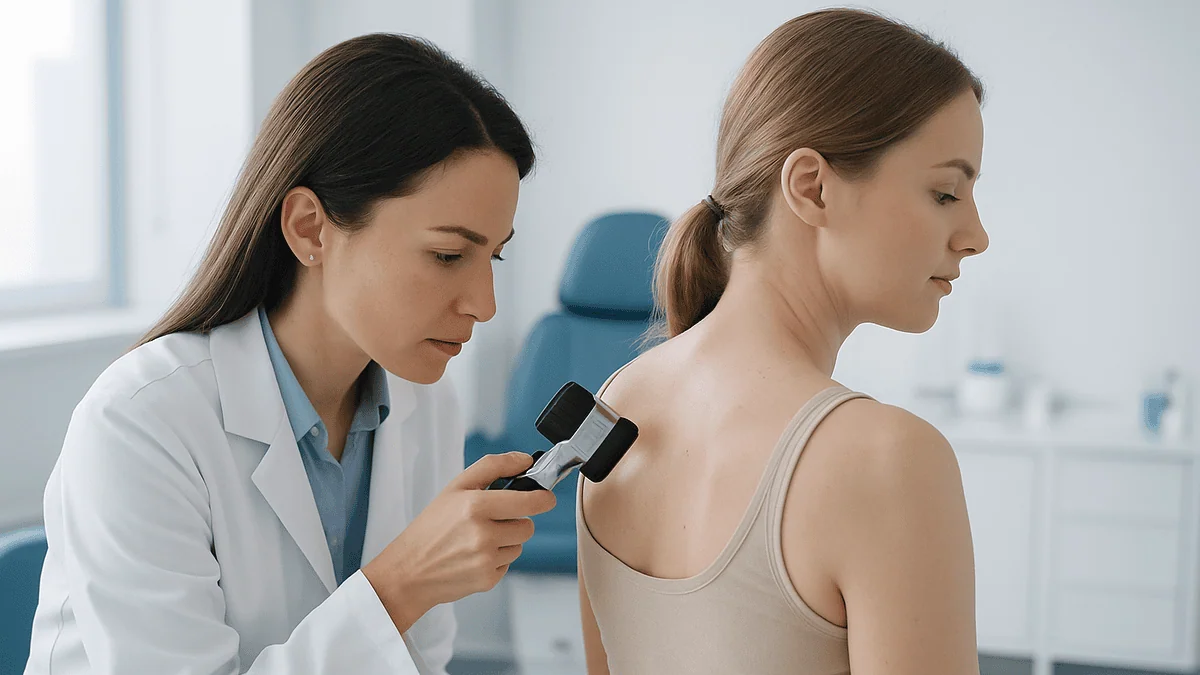
Key Takeaways
- Crepey skin is finely wrinkled, thin skin caused by loss of dermal collagen and elastin plus thinning subcutaneous fat, and it forms without muscle movement, unlike expression wrinkles.
- Collagen production declines by roughly one percent per year from the mid-twenties, and ultraviolet light accelerates that loss by activating enzymes that digest existing collagen.
- Daily broad-spectrum sunscreen is the only preventive measure with randomised trial evidence of slowing visible skin aging, and the neck, chest and hands are the areas most often missed.
- Prescription tretinoin has biopsy-confirmed evidence of new collagen in the dermis, while over-the-counter retinol and oral collagen peptides rest on smaller, weaker studies.
- Collagen in a cream cannot pass through the epidermis, so it acts as a moisturising film rather than a structural repair, and coconut oil hydrates but offers no collagen benefit or sun protection.
- Energy devices such as microneedling, radiofrequency and microfocused ultrasound produce gradual tightening in many but not all people, and their risks make them clinician-led decisions.
Crepey skin is thin, finely wrinkled skin that looks like crepe paper, caused mainly by sun damage, aging and the gradual loss of collagen and elastin in the dermis. Daily sunscreen and moisturizers help prevent and soften it; prescription retinoids have the strongest evidence among creams. Oral collagen shows modest effects in small trials, and energy-based devices can help. A dermatologist can advise on options.
The video is forty seconds long. A woman pinches the skin on the back of her hand, lets it go, and watches it settle back like tissue paper over a lampshade. Then she holds up a jar. As of October 2025, clips like this, promising a two-minute fix for crepey skin, are among the most shared skincare content online, and search interest in collagen powders, neck creams and skin-tightening devices has climbed alongside them.
The pinch test itself is fair. Loss of recoil is one of the first visible signs that the dermis is thinning. The jar is where the story usually goes wrong, because the structural changes behind crepey skin took decades to arrive and do not reverse in an afternoon.
What follows is the collagen story told straight: what actually thins, why the neck and arms show it first, and which creams, supplements and devices have real evidence behind them, graded by how strong that evidence is.
What is meant by crepey skin?
Crepey skin is skin that has become thin, loose and finely creased, so that it wrinkles in many small lines at once rather than in a few deep folds. The name comes from crepe paper, the thin, crinkled paper used for party streamers, and the comparison is accurate. Press a fingertip into the inner upper arm of someone in their sixties and you will often see dozens of tiny parallel lines fan out from the point of contact.
Dermatologists distinguish it from ordinary wrinkles by where and how it appears. Expression wrinkles follow the pull of muscles, which is why crow’s feet track the orbicularis muscle around the eye. Crepey skin does not need a muscle to form. It shows up on areas that are rarely animated, such as the inner arms, the chest below the collarbones, the backs of the hands, the front of the neck, the knees and the skin above the elbows. It also looks different: slightly glassy, sometimes with a faint sheen, and it may feel looser than it looks.
Three layers are involved. The epidermis is the outer layer that you can touch. Beneath it sits the dermis, the thicker living layer that holds collagen, elastin and blood vessels. Under that is subcutaneous fat, which gives skin its cushion. Crepiness develops when the dermis loses bulk and spring at the same time that the fat beneath it thins, so the surface has less support from below and less recoil within.
According to the Cleveland Clinic, the two dominant drivers are cumulative ultraviolet exposure and the normal reduction in collagen production that begins in a person’s twenties. Genetics, smoking, significant weight loss, certain medicines and dry skin all accelerate the process. Age alone, in other words, is not the whole explanation, which matters because some of these drivers are modifiable.
What changed recently in the crepey skin conversation
Two developments explain why this topic has moved from dermatology clinics into mainstream search traffic.

The first is the growth of collagen supplements as a wellness category. Harvard Health addressed the question directly in its article on collagen drinks and supplements, updated in 2023, noting that interest had surged while high-quality evidence remained limited and that most trials were small, short and funded by manufacturers. That assessment still stands. A 2021 systematic review and meta-analysis published in the International Journal of Dermatology, indexed on PubMed, pooled 19 randomised trials of hydrolyzed collagen and found statistically significant improvements in skin hydration and elasticity over roughly 90 days. The authors also flagged the small sample sizes and industry involvement that weaken the conclusion. In plain terms: there is a signal, it is modest, and it comes from trials that would not be considered definitive in most other areas of medicine.
The second is the rise of short-form video showing dramatic before-and-after results from creams, oils and handheld gadgets. These clips rarely control for lighting, hydration, the swelling that follows rubbing, or the fact that a freshly moisturised surface temporarily reflects light differently. They create a demand that evidence-based guidance has to answer.
Meanwhile the clinical picture has not changed much. The Mayo Clinic’s current guidance on wrinkles continues to rank sun protection and topical retinoids as the interventions with the most support, with laser, radiofrequency and ultrasound devices as options for people wanting more than a cream can deliver. No new product has displaced those recommendations. What has shifted is the volume of marketing around them, and that is the gap this piece is written to close.
The collagen story: what actually thins in the dermis
Collagen is the protein that gives skin its strength, arranged in long fibres that behave like the cables in a suspension bridge. Elastin is a second protein, less abundant but essential, that lets the skin snap back after it is stretched. Both are made by fibroblasts, the cells scattered through the dermis whose job is to build and maintain this scaffolding. A third component, hyaluronic acid, is a sugar molecule that binds water and keeps the whole structure plump.
From roughly the mid-twenties onward, fibroblasts slow down. Estimates from dermatology research put the decline in collagen at around one percent per year, a figure that sounds trivial until it compounds over four decades. Elastin fibres do not simply decrease; they also become fragmented and tangled, which is why the skin stretches but no longer returns to its original shape. Hyaluronic acid falls as well, so the dermis holds less water.
Ultraviolet light accelerates all three processes and adds a fourth. UVA radiation, which passes through window glass and clouds, penetrates to the dermis and triggers enzymes called matrix metalloproteinases. These enzymes digest existing collagen faster than fibroblasts can replace it. Repeated exposure also produces a disorganised mass of abnormal elastic tissue known as solar elastosis, which appears clinically as the yellowish, leathery texture seen on chronically sun-exposed necks and forearms.
MedlinePlus describes the result in its overview of aging changes in skin: the dermis thins, the junction between epidermis and dermis flattens, blood vessels become more fragile, and subcutaneous fat shrinks, particularly on the face, hands and shins. Hormonal change plays a role too. The drop in estrogen around menopause is associated with an accelerated loss of skin thickness in the years that follow. None of this is a defect. It is the predictable biology of a tissue that has done its job for a long time.
Why do neck lines show up before the face catches up?
Ask people where they first noticed crepey skin and the neck comes up more often than any other site. There are several concrete reasons for that.

The skin of the neck is thinner than facial skin to begin with, with fewer oil glands and a sparser fat layer beneath it. Less oil means a weaker surface barrier and more water loss, so neck skin tends to run dry. The neck also receives a heavy dose of ultraviolet light because it faces forward and upward, yet it is routinely skipped when sunscreen is applied. Many people stop at the jawline.
Movement adds a mechanical factor. Horizontal neck lines, sometimes called necklace lines, follow the creases that form when the chin tilts down. The habit of looking at a phone has been blamed for deepening these, and the nickname tech neck has stuck, though the evidence that screens specifically cause them is observational and limited. Flexion itself is not new; reading a book does the same thing. What has changed is how many hours a day the posture is held.
Vertical bands are a different structure. The platysma is a broad, thin sheet of muscle running from the chest up to the jaw. With age its edges can become visible as two cords running down the front of the neck. These bands are muscular, not crepey skin, and a cream will not change them; a clinician may discuss other approaches.
Finally, the chest and neck are often treated as a single unit by dermatologists because they age together, sharing the same sun exposure and the same thin dermis. Photoaging on the upper chest frequently shows as a V-shaped patch of mottled, finely wrinkled skin that mirrors the neckline of years of open collars.
What causes thin skin on the arms and legs?
The inner upper arm is a useful teaching site because it is rarely sun-exposed, yet it still turns crepey. That tells you how much of the process is intrinsic aging rather than photodamage. Over time the subcutaneous fat on the upper arms shifts and thins, the dermis loses collagen, and the skin that once stretched over a fuller contour has more surface than structure to cover.
The outer forearm and the shins tell the opposite story. These are among the most sun-exposed areas of the body in warm climates, and they show classic photoaging: fine wrinkling, uneven pigmentation and small scattered bruises that appear with little provocation. MedlinePlus notes that aging skin bruises more easily because the blood vessels in the dermis become fragile and lose the cushioning that once protected them. On the shins, the fat layer is naturally thin, so that effect is exaggerated.
Several non-aging causes deserve a mention because they are sometimes mistaken for ordinary crepiness. Long-term use of oral corticosteroids, medicines that calm inflammation, is a well-documented cause of thinned skin and easy bruising. Potent topical corticosteroids used for many months on the same patch can thin that area locally. Rapid or substantial weight loss, including after bariatric surgery or with weight-loss medicines, can leave skin on the arms, thighs and abdomen loose and crinkled because the fat beneath it shrank faster than the dermis could contract.
Dehydration of the surface layer makes all of this look worse. Very dry skin on the legs, common in winter and in people over 60, produces a fine mosaic pattern of cracks that can resemble crepiness and sometimes overlaps with it. That variety is the easiest to improve, because a moisturizer addresses it within days. Structural thinning does not respond so quickly, which is why distinguishing the two matters.
What the evidence actually says, graded
Not every claim about crepey skin rests on the same foundation. The grading below follows the usual hierarchy: randomised controlled trials, then observational data, then expert consensus.
Sun protection: strong. A randomised trial in Australia followed adults for over four years and found that daily sunscreen use measurably slowed skin aging compared with discretionary use. This is the single best-supported preventive measure, backed by decades of mechanistic and population data on ultraviolet damage. The CDC recommends broad-spectrum sunscreen, shade and protective clothing.
Topical retinoids: strong for fine wrinkles, moderate for crepiness. Prescription tretinoin has multiple randomised, vehicle-controlled trials showing improvement in fine lines, texture and pigmentation on photoaged skin, with histology demonstrating new collagen in the dermis. Most trials were on the face and forearms; neck-specific data are thinner, and over-the-counter retinol has fewer and weaker studies.
Oral collagen peptides: weak to moderate. The 2021 meta-analysis on PubMed pooled randomised trials and found improvements in hydration and elasticity. Trials were small, short and mostly industry-funded, and the outcomes were instrument measurements rather than visible change judged by patients. Harvard Health concludes the evidence is promising but not conclusive.
Energy devices (radiofrequency, microfocused ultrasound, fractional lasers, microneedling): moderate. Split-body and sham-controlled studies show measurable tightening and new collagen, but trials are often small, follow-up is short, and results vary widely between people.
Moisturizers: strong for appearance, none for structure. Hydration reliably softens the look of fine crinkling within hours. It does not rebuild the dermis.
Coconut oil, collagen creams, scrubs, massage gadgets: expert opinion or none. No well-designed trial supports structural improvement from any of these.
Creams for crepey skin: what works and what is marketing
Walk down a skincare aisle and the words firming, lifting and collagen-boosting appear on half the labels. A short list of ingredients has evidence; the rest mostly do not.
Retinoids are the anchor. A retinoid is any compound derived from vitamin A that signals skin cells to behave in a younger pattern: faster turnover of the epidermis, more collagen production by fibroblasts, and less activity from the enzymes that break collagen down. Tretinoin is the prescription form with the most data. Retinol, available without a prescription, must be converted by the skin into the active form and is therefore gentler and slower. Both can cause redness, peeling and sun sensitivity, especially on thin neck skin, which is why dermatologists often advise starting cautiously there. How often to use one, and whether a prescription strength is appropriate, belongs in a conversation with a prescribing clinician.
Moisturizers earn their place for a different reason. Humectants such as glycerin and hyaluronic acid pull water into the outer layer; occlusives such as petrolatum stop it escaping. Hydrated skin reflects light more evenly, so crinkling becomes less noticeable within a day. The effect is cosmetic and reversible, but it is real, and for dry, crepey skin on the legs and arms it can be the most satisfying step.
Alpha hydroxy acids such as glycolic and lactic acid, which loosen the bonds between dead surface cells, have modest trial data for texture and some evidence of increasing dermal thickness with prolonged use. Peptides and vitamin C appear in many products; the mechanistic rationale is plausible, the clinical trials are small, and the Cleveland Clinic lists them as reasonable rather than proven.
Collagen in a cream deserves a plain statement: collagen molecules are far too large to pass through the epidermis. They sit on the surface as a film, which can feel pleasant and hold moisture, but they do not reach the dermis where collagen is missing.
Collagen or retinol: which is better for crepey skin?
This is the question people type most often, and the honest answer is that the two work through completely different routes and are not really competitors.
Retinol, and more so prescription tretinoin, acts locally. Applied to a patch of crepey skin, it reaches the living cells of that patch and changes how they behave. The evidence base includes histological studies showing increased collagen in the papillary dermis after months of use, alongside randomised trials with photographic improvement in fine wrinkling. The limitation is tolerance: thin skin on the neck and chest reacts more readily than facial skin, and over-the-counter retinol is weaker than the prescription forms that most trials used.
Oral collagen works systemically, or is intended to. Hydrolyzed collagen is collagen that has been broken into short fragments called peptides so it can be absorbed from the gut. Once absorbed, those peptides are amino acids and small chains that the body may use anywhere. The proposed mechanism is that certain fragments reach the skin and signal fibroblasts to produce more collagen. Small human studies have detected these peptides in the blood after a dose, and the pooled trial data show modest gains in elasticity and hydration measured by instruments. What the evidence does not show is a reliable, visible change in crepey skin that a person or a blinded observer would notice, and it does not tell us whether any supplement is better than simply eating enough protein.
If forced to rank them, the evidence favours retinoids clearly. Harvard Health’s view on collagen supplements, that they are probably safe for most people but unproven, is a fair summary. The ideal is not to choose one, but to put sunscreen and a retinoid at the centre and treat anything oral as an optional extra, after checking with a clinician, especially for anyone with kidney disease or on a restricted-protein plan.
Is coconut oil good for crepey skin?
Coconut oil is the most-searched home remedy for crepey skin, and it is worth separating what it does from what it is claimed to do.
As an occlusive, coconut oil is genuinely effective. It forms a lipid layer on the surface that slows water loss, and small randomised trials in people with dry skin and mild eczema found it comparable to mineral oil at improving hydration and barrier function. Apply it to dry, crinkled skin on the shins and the surface will look smoother and feel softer within a day. That is a real benefit, and for some people a cheap, pleasant one.
Where the claim overreaches is in the idea that coconut oil rebuilds collagen or thickens the dermis. There is no trial evidence for that. Its fatty acids, mainly lauric acid, do not reach fibroblasts in meaningful amounts, and nothing in a plant oil instructs skin cells to produce structural protein. Any appearance of firmness is hydration and light reflection, and it fades once the oil is washed off.
Two practical cautions follow. Coconut oil is comedogenic for many people, meaning it can block pores, so it tends to cause breakouts on the face, chest and back. It also offers no ultraviolet protection despite social media claims that it acts as a natural sunscreen; laboratory testing has shown an SPF so low it is clinically irrelevant, and relying on it in the sun would accelerate the very damage it is supposed to fix.
The same logic applies to shea butter, olive oil and almond oil. They moisturise. They do not restore structure. A plain fragrance-free moisturizer containing glycerin or petrolatum does the same job with less risk of clogged pores, which is why dermatology bodies tend to suggest those first. Using any oil is a reasonable choice for comfort; expecting it to reverse thinning is not.
Prevention: the unglamorous habits that outperform any serum
If one message survives this article, it should be that preventing crepey skin is dramatically easier than treating it, and that the tools are ordinary.
Sunscreen comes first. The CDC advises a broad-spectrum product, meaning one that blocks both UVA and UVB, with an SPF of 15 or higher, applied to all exposed skin and reapplied after swimming or sweating; many dermatology organisations suggest SPF 30 or above for daily use. The neck, chest, backs of the hands and forearms are the areas most often missed and most often crepey later, which is not a coincidence. A wide-brimmed hat protects the neck in a way no cream can, and long sleeves in bright sun protect the arms. The CDC also points out that UV reaches the skin on cloudy days and through car windows.
Smoking is the second lever. Tobacco smoke narrows the small blood vessels that feed the dermis and increases the enzymes that degrade collagen. Observational studies consistently show smokers develop more wrinkling and thinner skin at a given age than non-smokers, and the effect is dose-dependent. Stopping does not restore lost collagen, but it halts an ongoing loss.
Moisturising daily keeps the barrier intact, which reduces the surface cracking that makes thinning skin look older than it is. Humid environments and shorter, cooler showers help the same way.
Diet matters more modestly. The dermis needs adequate protein and vitamin C to make collagen, and severe deficiency of either impairs it, but there is little evidence that eating beyond adequacy builds extra. Stable weight avoids the stretch-and-shrink cycle that leaves skin loose. Sleep and stress have plausible mechanisms and weak data. None of this is exciting. It is simply what the evidence supports.
Devices and in-office options, from microneedling to ultrasound
For established crepey skin, no cream will deliver the kind of change that a clinic device can. Each works by causing controlled injury that prompts fibroblasts to lay down new collagen, and each has trade-offs.
Microneedling uses a tool with fine needles to create thousands of tiny channels in the skin. The injury is shallow, downtime is short, and several randomised and split-face studies show improved texture and modest dermal thickening after a series of sessions. Combining it with radiofrequency energy delivered through the needles heats the deeper dermis and appears to add tightening, with early comparative data on the neck.
Radiofrequency alone heats the dermis without breaking the surface. Studies show measurable but usually mild tightening, and results vary considerably between individuals, which is why expectations need to be set carefully.
Microfocused ultrasound aims heat at precise depths, including the fibrous layer beneath the skin. It is cleared for lifting the neck and lower face, and controlled studies document improvement in a majority of treated people, typically assessed at three to six months. Effects are gradual and not everyone responds.
Fractional lasers create columns of thermal injury surrounded by untouched skin. Non-ablative versions, which leave the surface intact, suit the neck and chest where healing is slower and scarring risk is higher. Ablative versions remove the surface for stronger results and longer recovery; many clinicians avoid them on the neck for that reason.
The Mayo Clinic lists these alongside chemical peels and dermabrasion as options whose suitability depends on skin type, site and the degree of change wanted. All carry risks of pigmentation change, burns, scarring and, rarely, nerve injury. The choice of device, the number of sessions and whether any of them is appropriate are decisions for a qualified dermatologist or plastic surgeon after an in-person assessment.
Comparing the options at a glance
The table pulls the main choices together with the evidence grade from the earlier section and a realistic picture of what each can and cannot do. Grades reflect the quality of the published research, not how popular the option is.
| Option | How it works | Evidence strength | Realistic effect on crepey skin | Main cautions |
|---|---|---|---|---|
| Daily sunscreen and sun avoidance | Prevents UV-driven collagen breakdown | Strong (randomised trial plus decades of data) | Slows progression; does not reverse existing change | Must include neck, chest, hands |
| Prescription retinoid (tretinoin) | Stimulates fibroblasts, reduces collagen-degrading enzymes | Strong on face and forearms; moderate elsewhere | Gradual improvement in fine lines and texture over months | Irritation, sun sensitivity; prescription needed |
| Over-the-counter retinol | Converted in skin to active retinoid | Moderate to weak | Milder version of the above | Variable product quality |
| Moisturizer (glycerin, hyaluronic acid, petrolatum) | Hydrates outer layer, improves light reflection | Strong for appearance | Looks smoother within a day; no structural change | None significant |
| Oral collagen peptides | Proposed signalling to fibroblasts | Weak to moderate; small, short, industry-funded trials | Modest instrument-measured hydration and elasticity gains | Unregulated supplement; discuss with clinician |
| Coconut and plant oils | Occlusive barrier | Moderate for hydration; none for structure | Softer surface only | Pore blockage; no UV protection |
| Microneedling, with or without radiofrequency | Controlled micro-injury triggers collagen | Moderate | Texture and modest thickening after a series | Pigment change, infection if poorly performed |
| Microfocused ultrasound, radiofrequency, fractional laser | Heat-induced collagen remodelling | Moderate; varies by device | Gradual tightening in many but not all people | Burns, scarring, pigment change; clinician-led |
One reading of this table is that the cheapest row, sunscreen, has the strongest evidence, while the rows that generate the most online excitement sit at the weak end. That pattern is common in dermatology. The second reading is that creams and devices are complementary rather than rival: a retinoid maintains what a device achieves, and sun protection preserves both.
Common myths about crepey skin and neck lines
The viral claims around this topic tend to recycle a handful of ideas. Here is what the evidence says about each.
Myth: a two-minute trick can fix crepey skin. Massage, tapping, cold rollers and vigorous rubbing cause temporary swelling and increased blood flow that plump the surface for an hour or two. Video filmed in that window looks dramatic. The dermis has not changed. Rebuilding collagen takes months under any treatment with evidence.
Myth: collagen creams replace lost collagen. Collagen is a large protein that cannot pass through the epidermis. Topical collagen acts as a moisturising film. The Cleveland Clinic is explicit that it does not reach the dermis.
Myth: crepey skin means you are dehydrated and should drink more water. Drinking water corrects dehydration, which is a whole-body state. It does not thicken the dermis or add moisture to the outer skin layer in a healthy person. Topical moisturizers are what hydrate the surface.
Myth: neck lines come from phones, so a posture corrector will remove them. Looking down deepens horizontal creases, and limiting the hours spent doing so is reasonable. But the lines reflect dermal thinning and sun damage as much as flexion, and no study shows that a posture device reverses them.
Myth: it only affects older people, so there is nothing to do in your thirties. Collagen production begins declining in the twenties and photodamage accumulates silently. Prevention started early is the most effective intervention on this entire page.
Myth: natural oils are safer and work as well as retinoids. Oils hydrate and nothing more. Retinoids have randomised trial and biopsy evidence of new collagen. Safety is a matter of using any product appropriately, which is a discussion for a clinician rather than a comment thread.
Myth: crepey skin is unavoidable, so prevention is pointless. Some intrinsic thinning is inevitable. The ultraviolet contribution, which is the larger share on exposed sites, is not.
When to see a doctor
Crepey skin on its own is a cosmetic change, not a disease, and most people never need medical care for it. There are, however, situations where a visit matters, either because something else is going on or because the treatment being considered needs professional oversight.
Book an appointment with a doctor or dermatologist if any of the following apply:
- Skin thinning or easy bruising has appeared quickly, over weeks rather than years, or is far more pronounced on one area than another.
- Thin, fragile skin tears with minor knocks, or wounds on the shins or forearms are slow to heal.
- You take oral or long-term topical corticosteroids, or any medicine you suspect is affecting your skin; never stop or change a prescribed medicine on your own, but do raise it with the prescriber.
- A new mole, a changing spot, a sore that does not heal, or a rough scaly patch appears on sun-damaged skin. These need assessment rather than a cosmetic product, because chronically sun-exposed areas carry a higher risk of skin cancer.
- Loose skin follows significant weight loss and causes rashes, chafing or hygiene problems in skin folds.
- You are considering a prescription retinoid, a device treatment or any procedure. A clinician can assess skin type, rule out conditions that make treatment unsafe, and set realistic expectations.
- A product has caused persistent redness, burning, swelling or blistering that does not settle after it is stopped.
Seek urgent care for a rapidly spreading rash, skin that is hot and painful, fever with a skin change, or a wound that looks infected.
Every decision about medicines, supplements and procedures described here belongs with the treating clinician, who knows your history. This article explains the evidence; it is not a substitute for an examination.
Frequently asked questions
What is meant by crepey skin?
Crepey skin is thin, loose skin that creases into many fine lines at once, resembling crepe paper. It develops when the dermis loses collagen and elastin and the fat beneath it thins, so the surface has less support and less recoil. It most often appears on the inner arms, neck, chest, backs of the hands and knees, and is driven by aging combined with cumulative sun exposure.
What is better for crepey skin, collagen or retinol?
Retinol, and especially prescription tretinoin, has the stronger evidence, including randomised trials and biopsy studies showing new collagen in the dermis. Oral collagen peptides show modest improvements in hydration and elasticity in small, short, mostly industry-funded trials. They work through different routes and are not true rivals; most dermatologists would prioritise sun protection and a retinoid, with supplements as an optional extra discussed with a clinician.
What causes thin skin on the arms?
Thin skin on the arms results from the normal age-related decline in collagen, elastin and subcutaneous fat, accelerated on the forearms by decades of sun exposure. Long-term oral or potent topical corticosteroids can thin skin further, and rapid weight loss leaves the upper arms loose. Easy bruising accompanies the thinning because dermal blood vessels lose their cushioning. Sudden or one-sided thinning warrants a medical review.
Is coconut oil good for crepey skin?
Coconut oil is a reasonable moisturiser that reduces water loss and makes dry, crinkled skin look smoother within a day, but it does not rebuild collagen or thicken the dermis. No trial shows structural improvement. It can block pores, especially on the face and chest, and it provides no meaningful sun protection despite viral claims. A fragrance-free moisturizer with glycerin or petrolatum does the same job with fewer drawbacks.
How do you get rid of neck lines?
Horizontal neck lines can be softened but rarely erased. Daily sunscreen extended below the jawline prevents further damage, a retinoid used cautiously on the thin skin of the neck improves texture over months, and clinic options such as microneedling with radiofrequency, microfocused ultrasound and non-ablative fractional lasers offer more change for some people. Vertical cords are muscle bands, not skin, and need a different clinical conversation.
Can crepey skin be reversed?
Crepey skin can be improved, not fully reversed. Moisturizers change its appearance within a day, retinoids gradually increase dermal collagen over months, and energy devices can produce measurable tightening in many people. None restores the skin of twenty years earlier, and results vary with age, sun history and skin type. Stopping further damage through sun protection and not smoking is the part that is entirely within reach.
Does drinking more water help crepey skin?
Drinking water corrects whole-body dehydration but does not add moisture to the outer skin layer or thicken the dermis in a well-hydrated person. The crinkled look of dry skin responds to topical moisturizers, which hold water in the surface layer, rather than to extra fluid intake. Staying normally hydrated is good for health; expecting it to smooth crepey skin is not supported by evidence.
At what age does crepey skin start?
Collagen production begins to decline in the mid-twenties, but visible crepiness usually appears from the forties onward and becomes common after 60, earlier in people with heavy sun exposure, a history of smoking or significant weight change. The years around menopause are associated with faster loss of skin thickness. Because damage accumulates silently, prevention through sun protection is most effective when it starts decades before the signs show.
Do collagen supplements actually work for skin?
The evidence is modest and not conclusive. A 2021 meta-analysis of 19 randomised trials found small improvements in skin hydration and elasticity after roughly 90 days of hydrolyzed collagen, but the trials were short, small and mostly manufacturer-funded, and outcomes were instrument readings rather than visible change. Harvard Health describes supplements as probably safe for most people but unproven. Anyone with kidney disease or dietary restrictions should ask a clinician first.
Which device works best for crepey skin on the arms and legs?
No single device is proven best. Microneedling, with or without radiofrequency, has moderate evidence for texture and modest thickening on the body; radiofrequency and microfocused ultrasound show gradual tightening in many but not all people; fractional lasers improve texture but need careful settings off the face. Results depend on skin type, site and the degree of thinning, so the choice belongs with a dermatologist or plastic surgeon after an in-person assessment.
References
This article is for general information only and is not a substitute for professional medical advice. Please consult a qualified doctor about your individual situation.

More from the Blog
Under-Eye Filler and Tear Trough Filler: Who Suits It, the Risks and the Alternatives
Under eye filler, usually a hyaluronic acid gel placed in the tear trough, can soften a hollow groove between the lower eyelid and cheek…
When Does a Congenital Nevus Need Removal? How Dermatologists Weigh Monitoring Against Surgery
A congenital nevus needs removal only when a specific reason outweighs the scar and anesthesia involved: a suspicious change on examination, a lesion too…
How Narrowband UVB Phototherapy Works for Vitiligo: Sessions, Timing and Care Between Visits
Narrowband UVB phototherapy for vitiligo exposes depigmented patches to a narrow band of ultraviolet B light, usually two to three times a week in…

Living With Chronic Hives: Heat, Cold, Pressure and the Everyday Triggers Worth Tracking
Living with chronic hives means managing welts that recur for six weeks or longer, often without a single clear cause. Heat, cold, pressure, friction,…

Questions to Ask at Your Eczema Consultation: Treatment Steps, Maintenance and When to Return
At an eczema consultation, the most useful questions cover four areas: what type of eczema you have and what may be driving it, which…
Double Cleansing and Oil Cleansing: Who Benefits and Who Is Over-Washing
Double cleansing means washing the face twice in a row: first with an oil or balm that dissolves sunscreen, makeup and sebum, then with…