

Dental Implant Myths: Do Implants Feel Like Real Teeth, and Can They Get Cavities?
Key Takeaways
- A dental implant has no periodontal ligament or nerve, so it transmits pressure but not fine touch or temperature, which is why it feels solid rather than identical to a natural tooth.
- Implant crowns cannot get cavities because titanium and ceramic do not decay, but plaque can still infect the surrounding gum and bone in a condition called peri-implantitis.
- Early implant failure is usually a failure of bone to fuse to the post, while late failure is dominated by peri-implantitis; smoking and untreated gum disease raise both risks.
- Bone fusion, or osseointegration, commonly takes 3 to 6 months according to Cleveland Clinic, and a bone graft or sinus lift can add several more months to the timeline.
- Age alone does not rule out implants; the CDC reports about 1 in 6 adults aged 65 and older have lost all their teeth, and healing capacity, bone, and oral hygiene matter more than birth date.
- The titanium post can remain fused for decades, but the crown is a wearing part that may chip or loosen and can usually be repaired or replaced without disturbing the implant.
Dental implants do not feel exactly like natural teeth because they have no nerve or periodontal ligament, so most people sense pressure rather than fine touch; after healing, many describe them as solid and close to natural. Implants cannot get cavities, since titanium and ceramic do not decay, but the gum and bone around them can become infected (peri-implantitis), so daily cleaning and regular check-ups still matter.
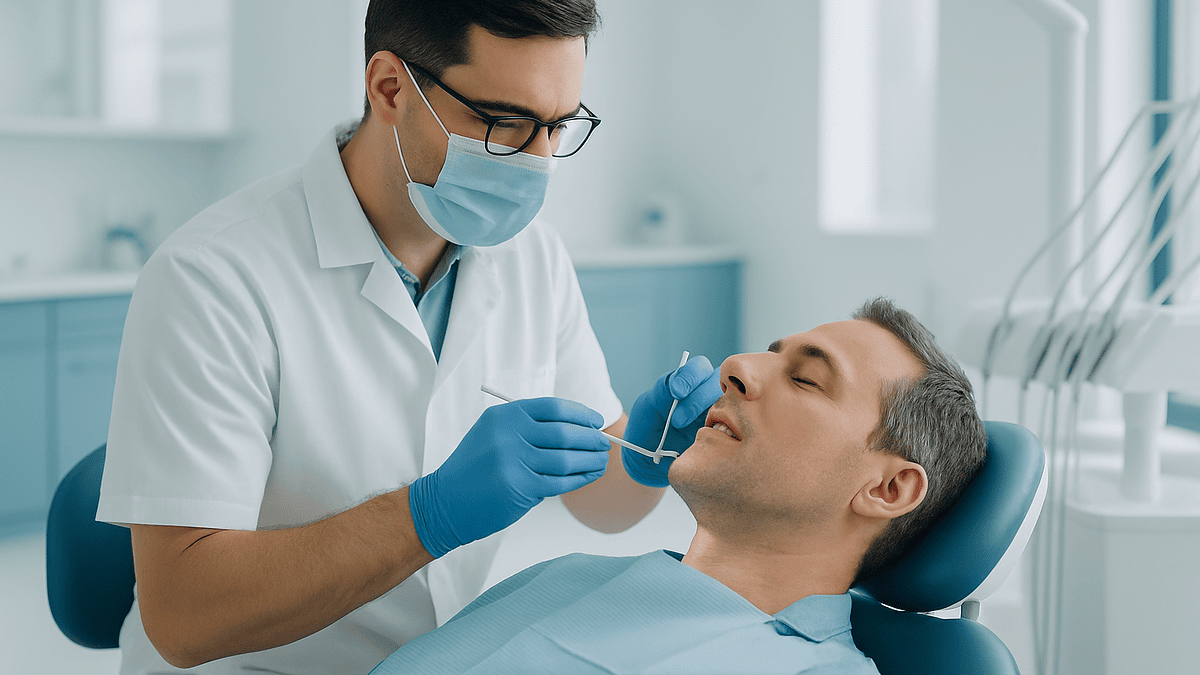
A man in his late fifties sits in a consultation chair holding a small mirror, pressing his tongue against the gap where a molar used to be. He has two questions written on his phone, and he almost apologizes before asking them: will the new tooth feel like his own, and can it rot the way the old one did? He has read a dozen pages online and come away more confused than when he started.
Those two questions sit at the center of most dental implant myths, and they deserve better than a slogan. The honest answers involve a titanium post, a missing nerve, a bacterium that does not care whether a surface is enamel or ceramic, and a healing process that runs on the bone’s timetable rather than the patient’s.
This explainer walks through what the evidence actually shows, what commonly goes wrong, and which questions are worth bringing to the person who will do the work.
Do dental implants feel natural? What a missing nerve changes
Start with anatomy, because it explains almost everything people notice. A natural tooth sits in its socket suspended by the periodontal ligament, a thin cushion of fibers that connects the root to the jawbone. That ligament is packed with sensors. It tells you how hard you are biting, warns you when a seed slips between two molars, and lets you sense a grain of sand in spinach before you crunch it.
An implant has none of this. The post fuses directly to bone, with no ligament and no nerve inside the tooth itself. Feedback still arrives, but it comes from the bone, the surrounding gum, the tongue, and the opposing teeth. The result is a sensation most people describe as solid and slightly muted rather than numb. Fine touch is reduced; pressure is preserved.
What this means in daily life is subtle. Chewing, speaking, and biting into an apple usually feel ordinary once healing is complete, and the Mayo Clinic notes that implants are designed to look, feel, and function like natural teeth. The word to watch is like. A well-made crown on an implant is not a replica of the original tooth’s nervous system; it is a stable replacement that the brain learns to use.
Two practical consequences follow. First, people with implants sometimes bite harder than they realize, which is one reason clinicians pay attention to how the new tooth meets its neighbor. Second, an implant cannot ache from a cavity or feel sensitive to cold, so soreness around one is a signal about the gum or bone, not the tooth. Both points come up again later, because they shape how implants are cared for.
How a dental implant actually works, step by step
A dental implant is three parts pretending to be one tooth. The post, usually titanium, is a small screw placed into the jawbone where the root used to be. The abutment is a connector that sits on top of the post and pokes through the gum. The crown, typically ceramic or porcelain, is the visible tooth attached to the abutment.
The biology that makes this work is osseointegration: bone cells grow onto the surface of the titanium and lock it in place, so the post becomes part of the jaw rather than a foreign object sitting in it. Titanium is used because bone tolerates it well and bonds to it reliably. This fusion is the reason an implant does not move, and also the reason the whole process cannot be rushed.
A typical sequence, described by the Mayo Clinic, looks like this:
- Assessment, including X-rays or a 3D scan, to measure bone height, width, and the position of nerves and sinuses.
- Removal of a damaged tooth if one is still present, and sometimes bone grafting if the jaw is too thin or soft.
- Placement of the post under local anesthesia, with sedation if arranged.
- A healing period while bone grows around the post; Cleveland Clinic describes this as commonly taking 3 to 6 months, sometimes longer.
- Attachment of the abutment, often a minor second procedure, followed by impressions and fitting of the crown.
The total time from first visit to finished tooth is frequently several months, and a bone graft can add more. That timeline is not a sales pitch for patience; it reflects how slowly bone remodels. An implant loaded before it has fused is one of the more preventable ways a case can go wrong.
Can dental implants get cavities? The short answer and the catch
No. A cavity is the result of acid produced by bacteria dissolving enamel and dentin, the mineral tissues of a natural tooth. Titanium, zirconia, and porcelain are not mineral tooth tissue and cannot be dissolved this way. In that narrow sense, the implant myth is easy to bust: an implant crown will never develop a cavity, and a filling will never be drilled into it.
The catch is that the bacteria do not leave. The same plaque that causes decay on natural teeth accumulates on implant crowns, along the gum margin, and around the abutment. Instead of eating the tooth, it inflames the tissue around it. The mild form is peri-implant mucositis, redness and bleeding of the gum around the implant with no bone loss yet. The serious form is peri-implantitis, an infection that destroys the bone holding the post. Cleveland Clinic describes peri-implantitis as a leading reason implants are eventually lost.
Why do implants seem especially vulnerable? Natural teeth have the periodontal ligament acting as a partial barrier and a blood supply that helps fight infection. Implants sit in bone with fewer defenses at the collar, and because there is no nerve, early inflammation is often painless. People assume that no pain means no problem, and the bone quietly recedes.
The practical upshot is that an implant demands the same daily routine as a natural tooth, and arguably a stricter one: brushing twice a day, cleaning between the implant and its neighbors, and professional cleanings and X-rays at whatever interval the dental team sets. “Cavity-proof” is true. “Maintenance-free” is the myth.
What is the number one reason dental implants fail?
People searching this question usually want a single villain, and the honest reply is that there are two, depending on timing. Early failures, in the weeks and months after placement, happen when osseointegration does not occur: the bone never grips the post firmly. Late failures, years down the line, are dominated by peri-implantitis, the infection described above. If one factor has to be named as the most common thread through both, it is inadequate control of bacteria and inflammation around the implant, worsened by smoking.
The Mayo Clinic lists the risks plainly: infection at the implant site, injury to nearby teeth or blood vessels, nerve damage causing numbness or tingling, and sinus problems when an upper implant protrudes into the sinus cavity. It also notes that smokers face a higher likelihood of complications, and that chewing hard items such as ice can crack crowns and stress the fixture.
Beyond those, the contributors seen most often in the clinical literature include:
- Untreated gum disease around remaining teeth, which seeds bacteria onto the new implant.
- Poorly controlled diabetes, which slows healing and raises infection risk.
- Bruxism, the habit of clenching or grinding teeth, which overloads an implant that cannot flex the way a ligament-cushioned tooth can.
- Insufficient bone volume or density at the time of placement.
- Loading the implant with a crown before the bone has fused.
Notice how many of these are modifiable. A smoker who quits before surgery, a person whose gum disease is treated first, and someone fitted with a night guard for grinding are each removing a known cause. That is why a thorough pre-implant assessment is not a formality but the single most useful step in preventing failure.
Dental implants vs real teeth: a side-by-side comparison
Seeing the differences laid out makes the myths easier to spot. The table below summarizes how a healed implant compares with a healthy natural tooth on the points patients ask about most.
| Feature | Natural tooth | Dental implant |
|---|---|---|
| Attachment to jaw | Suspended by periodontal ligament | Fused directly to bone (osseointegration) |
| Sensation | Fine touch, pressure, temperature, pain | Pressure mainly; no temperature or decay pain |
| Can it get cavities? | Yes | No; materials do not decay |
| Can the supporting tissue get infected? | Yes (gum disease, periodontitis) | Yes (peri-implant mucositis, peri-implantitis) |
| Slight movement under load | Yes, a fraction of a millimeter | Essentially none |
| Effect on neighboring teeth | Not applicable | Neighbors left untouched, unlike a bridge |
| Effect on jawbone | Chewing stimulates and preserves bone | Helps preserve bone where a tooth is missing |
| Routine care | Brush, clean between teeth, check-ups | Same, plus periodic X-rays of bone level |
| Can parts be replaced? | No | Crown and abutment often can; post rarely |
Two rows deserve a second look. The absence of movement is why implants feel so stable, and also why grinding habits matter more: a natural tooth absorbs some force through its ligament, an implant transmits it straight to bone and crown. The jawbone row explains a benefit that gets exaggerated in marketing yet is genuinely real. When a tooth is lost, the bone beneath it gradually shrinks because it is no longer stimulated by chewing. An implant restores some of that loading, which is one reason clinicians raise the option even when a gap is not visible when smiling.
Who is usually a candidate, and who is usually asked to wait
Most adults who have lost one or more teeth can be considered for implants, but “considered” is doing real work in that sentence. The Mayo Clinic describes the typical candidate as someone with a fully grown jawbone, enough bone to hold the post or the ability to have a graft, healthy oral tissues, and no health conditions that would interfere with bone healing. They should also be willing to commit to several months of treatment and not smoke, or be prepared to stop.
Age by itself is rarely the deciding factor, which surprises people. The CDC reports that about 1 in 6 adults aged 65 and older have lost all of their teeth, and many in that group are treated with implants successfully. What matters is bone, healing capacity, and the ability to keep the area clean.
Situations where a dental team commonly asks a patient to wait, treat something first, or consider a different option include:
- Adolescents whose jaws are still growing, because an implant placed too early can end up out of line as the bone around it develops.
- Active, untreated gum disease, which the CDC estimates affects nearly half of adults aged 30 and over in some form; it is usually stabilized before implants are placed.
- Uncontrolled diabetes or other conditions that impair healing.
- Heavy smoking, which slows bone healing and raises infection risk.
- Recent radiation therapy to the jaw.
- Use of certain bone medicines, such as the bisphosphonate class or related antiresorptive drugs, which in rare cases are linked to poor jaw healing; the prescribing clinician and dentist decide together how to proceed, and patients should never stop such medicines on their own.
None of these is an automatic “no.” They are reasons for a slower, more coordinated plan, and the final judgment rests with the treating team.
What the first days and weeks after implant surgery usually look like
The myth that implant surgery is agonizing deserves a direct correction. The placement itself is done under local anesthesia, often with sedation, and most people report the procedure as strange rather than painful. The days afterward are a different matter, and here the truth is unglamorous: expect discomfort comparable to a tooth extraction.
The Mayo Clinic lists the ordinary aftermath as swelling of the gums and face, bruising of the skin and gums, pain at the implant site, and minor bleeding. Swelling usually peaks around the second or third day and then recedes. Soft foods for a stretch, careful brushing around the site, and whatever pain relief the surgeon has recommended are the usual instructions. Decisions about pain medicine, including which one and for how long, belong to the prescribing clinician.
A rough sequence many people recognize:
- Day 1 to 3: swelling and soreness, cold compresses, soft food, avoiding the site while cleaning the rest of the mouth.
- Week 1 to 2: bruising fades, stitches dissolve or are removed, most people return to normal eating on the other side.
- Month 1 onward: little sensation from the site while bone quietly fuses; Cleveland Clinic gives 3 to 6 months as a common range for this phase.
- After fusion: abutment placement, impressions, and the crown, sometimes with a temporary tooth in between.
Two things people wish they had known. First, the gap may be visible for months unless a temporary is arranged, so it is worth asking early. Second, pain that worsens after the first few days rather than easing, or that returns weeks later, is not part of normal healing and should prompt a call, a point covered in the red-flag section below.
Dental implant myths about durability: do implants last forever?
“Permanent” is the word in nearly every advertisement, and it is half true in a way that misleads. The titanium post, once fused, can indeed remain in the bone for decades, and long-term studies commonly report high survival of the fixture itself. The crown on top is a different story. Porcelain chips, ceramic wears, and screws that hold the crown to the abutment can loosen. Cleveland Clinic notes that crowns may need replacement over time even when the implant beneath is sound.
The distinction matters because it reframes expectations. An implant is better understood as a long-term foundation with a replaceable top than as a single object that either lasts forever or fails. When a patient hears years later that a crown needs remaking, that is maintenance, not failure.
What actually threatens the post is the bone around it. Peri-implantitis, discussed earlier, erodes support gradually and often without pain. Overloading from grinding can also cause bone loss at the collar of the implant. Both are influenced by habits and monitoring rather than by the material’s shelf life.
This is also where the evidence needs honest framing. Published survival figures vary with how failure is defined, who was studied, how long they were followed, and whether smokers or people with gum disease were included. Quoting a single percentage as though it applied to every patient is one of the more persistent dental implant myths. A more accurate statement is that implants have a strong long-term track record when placed in healthy bone and cleaned diligently, and a noticeably worse one when infection or smoking enters the picture. Ask your own team what the realistic outlook is for your mouth, not the average mouth.
Dental implant myths about age, bone loss, and being 'too late'
Three related beliefs keep people from asking about implants at all: that they are too old, that they have lost too much bone, or that too many years have passed since the tooth came out. Each contains a grain of truth wrapped in a misunderstanding.
On age, the evidence is reassuring. Healthy older adults heal bone more slowly than younger ones but still heal it, and chronological age is not on the Mayo Clinic’s list of reasons to avoid implants. What the team looks at instead is general health, medicines that affect bone, and whether the person can manage the cleaning routine. A vigorous 78-year-old with good gums may be a better candidate than a 45-year-old smoker with untreated periodontitis.
On bone loss, the concern is real but often solvable. After a tooth is removed, the surrounding ridge shrinks over months and years because it is no longer stimulated. If the remaining bone is too thin or short, the options include a bone graft, in which bone or a bone substitute is placed to rebuild the ridge and left to heal before the implant goes in, or a sinus lift, in which the floor of the sinus above the upper back teeth is raised to create room. The Mayo Clinic notes that grafting can add several months to the timeline. Longer, yes; impossible, usually not.
On timing, older gaps do not close the door. They may require grafting, and the neighboring teeth may have drifted, which can complicate the crown’s shape. A scan tells the team what is actually there, and that is the only reliable way to move from myth to plan.
What does no one tell you about dental implants?
Ask people a year or two after treatment and the surprises they mention are rarely about pain or cost. They are about texture, time, and upkeep.
The first is the feeling of pressure without touch. Many describe a period of weeks in which the new tooth felt like a stone in the mouth, a solid thing that did not quite report back. The brain adapts, and most stop noticing, but nobody warned them.
The second is food. Because the implant cannot sense a stray seed the way a natural tooth can, popcorn hulls and small fibers can lodge along the gum line unnoticed until they irritate it. Cleaning between the implant and its neighbors, with floss designed for the purpose, interdental brushes, or a water flosser, becomes a habit rather than an option.
The third is the number of appointments. A single tooth can involve a consultation, imaging, possible extraction, possible graft, placement, a review, abutment placement, impressions, and crown fitting. Each is short, but the calendar fills.
The fourth is that the crown can chip and the retaining screw can loosen. A tooth that suddenly feels wobbly years later is usually a loose screw rather than a failing implant, and it is a repair, not a catastrophe.
The fifth, and the one clinicians wish more people understood, is silence. Because there is no nerve, an implant will not hurt when the bone around it is in trouble. Bleeding when brushing, a bad taste, or gum that looks puffier than its neighbors are the early language of peri-implantitis. Regular check-ups with periodic X-rays exist to catch what the implant itself cannot tell you.
What people often get wrong about dental implants
Some beliefs survive because they are almost right. Here are the ones that cause the most confusion, corrected with what the evidence supports.
- “An implant feels exactly like a real tooth.” It feels stable and natural in function, but it lacks the ligament and nerve that give a real tooth fine sensation and temperature feedback.
- “Implants can’t get cavities, so they need less care.” The materials cannot decay, but the gum and bone around them can become infected. Care needs are equal to or greater than for natural teeth.
- “Implants are permanent.” The post can last decades; the crown is a wearing part that may need replacement, and bone infection can undermine even a well-placed fixture.
- “The surgery is extremely painful.” Placement is done under anesthesia. Post-operative discomfort is typically similar to an extraction and eases over days.
- “I’m too old for implants.” Age alone is not a contraindication; health, bone, and the ability to keep the area clean are what matter.
- “The body rejects implants like a transplanted organ.” Titanium does not trigger the immune rejection seen with organ transplants. When an implant fails early, the usual reason is that bone did not fuse to it, often because of infection, movement, smoking, or poor bone quality.
- “Implants are always better than a bridge or denture.” They preserve neighboring teeth and bone, but they are not right for everyone, and alternatives are legitimate choices rather than consolation prizes.
- “A quoted success percentage applies to me.” Published figures depend heavily on the population studied and how failure is defined; your own risk profile is what counts.
Notice a pattern. Most dental implant myths overstate either the magic or the misery. The reality sits between: a reliable, well-studied procedure that rewards preparation and punishes neglect.
Why would a dentist not recommend an implant? Alternatives explained
Patients sometimes leave a consultation puzzled that the dentist steered them away from the option they had researched. There are usually good reasons, and they fall into a few groups.
The first is healing risk. Uncontrolled diabetes, heavy smoking, recent jaw radiation, or certain bone medicines can make osseointegration unreliable. Rather than place an implant likely to fail, the team may suggest addressing the underlying issue first or choosing a different restoration.
The second is anatomy. If the nerve that runs through the lower jaw sits too close to the surface, or the sinus dips too low in the upper jaw, placing a post safely may require grafting the patient is not keen on, or may not be feasible at all.
The third is oral health. Placing an implant into a mouth with active periodontitis is like planting in infected soil. Most clinicians stabilize gum disease first.
The fourth is simply that another option fits better. The main alternatives are:
- A fixed bridge: a false tooth anchored to crowns on the neighboring teeth. Faster and no surgery, but the neighbors must be reshaped and the bone beneath the gap continues to shrink.
- A removable partial denture: a plate with one or more teeth that clips onto remaining teeth. Least invasive, reversible, and easy to adjust, though less stable when chewing.
- A full denture or implant-supported denture: for people missing all teeth in a jaw, with the implant-supported version using a few posts to anchor the plate.
- Leaving the gap: reasonable for some back teeth when function and bite are stable, provided the team monitors drifting of neighbors.
A dentist who declines to recommend an implant is usually protecting the patient from a predictable problem. Asking “what would make me a better candidate?” often opens a path back to the option.
Questions to ask your care team before saying yes
A good consultation leaves you with fewer myths and more specifics about your own mouth. These questions tend to produce the most useful answers.
- What do my X-rays or scan show about bone height and width at this site, and is a graft or sinus lift likely?
- Do I have gum disease around my remaining teeth, and should it be treated before we place an implant?
- Which of my medical conditions or medicines could affect healing, and will you coordinate with my physician about them?
- What is the expected sequence of appointments, and roughly how many months from start to finished crown?
- Will I have a temporary tooth during healing, and what are the trade-offs of an immediate versus delayed crown?
- What signs after surgery should make me call you, and how do I reach someone outside office hours?
- Do I clench or grind, and would a night guard protect the implant?
- How do you want me to clean around the implant day to day, and which tools do you suggest?
- How often will you check the bone level around the implant with X-rays once it is in place?
- If the crown chips or loosens years from now, what does the repair involve?
- Given my specific risk factors, how does my outlook compare with the general figures you quote?
- What are the realistic alternatives for my situation, and why do you favor one over another?
Write the answers down or ask permission to record them. Implant treatment unfolds over months, and the plan agreed in the first meeting is the reference point for everything that follows. It is also entirely reasonable to seek a second opinion before committing to surgery; a confident team will not be offended by the request.
When to call your doctor: red flags after a dental implant
Most recovery is uneventful, and most implants live quietly in the jaw for years. Because the implant itself cannot signal trouble with pain the way a natural tooth would, knowing which signs matter is part of owning one. Contact your dental surgeon or seek urgent care if you notice any of the following in the days and weeks after placement:
- Pain that increases after the third day instead of easing, or pain that is not controlled by what your surgeon recommended.
- Swelling that keeps growing after the third day, spreads toward the eye or neck, or makes swallowing or breathing difficult; difficulty breathing or swallowing is an emergency.
- Fever, chills, or a general feeling of being unwell.
- Bleeding that soaks through gauze and does not slow with firm pressure.
- Pus, a persistent foul taste or smell, or an opening in the gum with the post visible when it should be covered.
- Numbness or tingling of the lip, chin, or tongue that persists after the anesthetic should have worn off, which may indicate nerve involvement.
- New sinus congestion, nosebleed, or a sensation of air passing between mouth and nose after an upper implant.
- An implant, healing cap, or temporary tooth that feels loose or moves.
Months or years later, arrange a visit promptly for bleeding when brushing around the implant, gum that looks red or puffy compared with its neighbors, a bad taste from the area, a crown that feels loose, or any change in how the tooth meets its partner when you bite. These can be the early signs of peri-implantitis or a mechanical problem, and both are far easier to address when caught early. The treating team, not a search engine, should judge what each sign means for you.
Frequently asked questions
Do dental implants feel natural when chewing?
After healing, most people find chewing on an implant feels stable and ordinary, though not identical to a natural tooth. The implant lacks the periodontal ligament that gives real teeth fine pressure sensing, so feedback comes from the bone, gum, and opposing teeth instead. Many describe an initial period of the tooth feeling solid or slightly numb, which fades as the brain adapts over weeks.
Can dental implants get cavities like normal teeth?
No. Cavities form when bacterial acid dissolves enamel and dentin, and implant materials such as titanium, zirconia, and porcelain contain none of that tissue. However, the same plaque bacteria can inflame and infect the gum and bone around the implant, causing peri-implant mucositis or peri-implantitis. Daily cleaning and regular professional check-ups remain essential even though the crown itself will never decay.
What are the most common dental implant failure causes?
The most common causes are infection around the implant, known as peri-implantitis, and failure of the bone to fuse with the post in the first months. Smoking, untreated gum disease, poorly controlled diabetes, teeth grinding, insufficient bone, and loading the implant before it has fused all raise the risk. Many of these are modifiable, which is why thorough assessment before surgery matters so much.
What is the number one reason dental implants fail?
If a single reason has to be named, it is bacterial infection of the tissue around the implant, peri-implantitis, which erodes supporting bone often without pain. In the early months, failure is more often due to bone not integrating with the post. Smoking sits behind both patterns by slowing healing and worsening infection, and it is the most commonly cited avoidable risk factor.
What does no one tell you about dental implants?
People are often surprised that the new tooth feels like pressure without fine touch, that food can lodge unnoticed at the gum line, that treatment involves many appointments over months, and that the crown can chip or loosen years later. Most of all, because there is no nerve, an implant will not hurt when the bone around it is in trouble, so regular check-ups and X-rays catch problems it cannot report.
What do people wish they knew before getting dental implants?
Common reflections include wishing they had asked about a temporary tooth during the healing months, understood that a bone graft could extend the timeline, treated gum disease or quit smoking earlier to improve their odds, and realized that cleaning around an implant is at least as demanding as caring for a natural tooth. Asking these questions before surgery avoids most of the surprises.
Why would a dentist not recommend an implant?
A dentist may advise against an implant when healing risk is high, such as with uncontrolled diabetes, heavy smoking, recent jaw radiation, or certain bone medicines; when anatomy leaves too little bone or places a nerve or sinus too close; when active gum disease would put the implant into infected tissue; or when a bridge or denture simply suits the situation better. Treating the underlying issue can sometimes reopen the option.
How long does a dental implant take from start to finish?
Several months is typical. Cleveland Clinic describes the bone-fusion phase alone as commonly taking 3 to 6 months, and the Mayo Clinic notes that bone grafting, when needed, can add more time before the post is placed. After fusion, fitting the abutment and crown adds further visits. The timeline depends on bone quality, healing, and whether any preparatory procedures are required.
Is getting a dental implant painful?
The placement is performed under local anesthesia, often with sedation, and most people describe the procedure itself as pressure rather than pain. Afterward, soreness, swelling, and bruising comparable to a tooth extraction are normal for a few days and then ease. Pain that worsens after the third day or returns weeks later is not typical healing and should be reported to the surgeon.
Can an implant that is loose or infected be saved?
Sometimes. A loose crown is often just a loosened retaining screw and is a straightforward repair. Early peri-implantitis may be managed with professional cleaning of the implant surface and improved home care, and more advanced cases may need surgical treatment. Once bone loss is extensive, the implant may have to be removed and the site allowed to heal before any replacement is considered. The treating team decides based on X-rays and examination.
References
This article is for general information only and is not a substitute for professional medical advice. Please consult a qualified doctor about your individual situation.

More from the Blog
Lateral Window vs Crestal Sinus Lift: How Bone Height Decides Which Technique Is Used
A lateral window sinus lift opens a small side window in the upper jaw to lift the sinus lining and add bone, while a…

When a Porcelain Crown Chips or Loosens: Repair, Recementing or Replacement Explained
A chipped porcelain crown can often be repaired without replacing it. Small rough edges are usually smoothed and polished, moderate chips can be bonded…
Digital Dentistry Myths: Does a Scanner Replace the Dentist’s Judgment?
No. An intraoral scanner records the shape of teeth and gums as a digital file; it does not examine, diagnose or decide. Scanners and…

Sinus Lift Complications Explained: Membrane Tears, Sinus Infection and Signs That Need a Call
Sinus lift complications are uncommon but real. The most frequently reported problem during surgery is a tear in the thin sinus membrane, which the…
Living With Dental Crowns: Foods to Approach Carefully, Night Guards and Flossing the Margins
Eating with dental crowns is mostly ordinary eating, with a few habits worth keeping. Once numbness fades and the cement has set, most foods…
What Happens on the Day of All On 4 Surgery: Extractions, Angled Implants and Temporary Teeth
On all on 4 surgery day, a surgeon typically removes any remaining teeth in one arch, smooths the bone, places four implants (two upright…